
Bangladeshi Traditional Handicrafts: Timeless Cultural Legacy
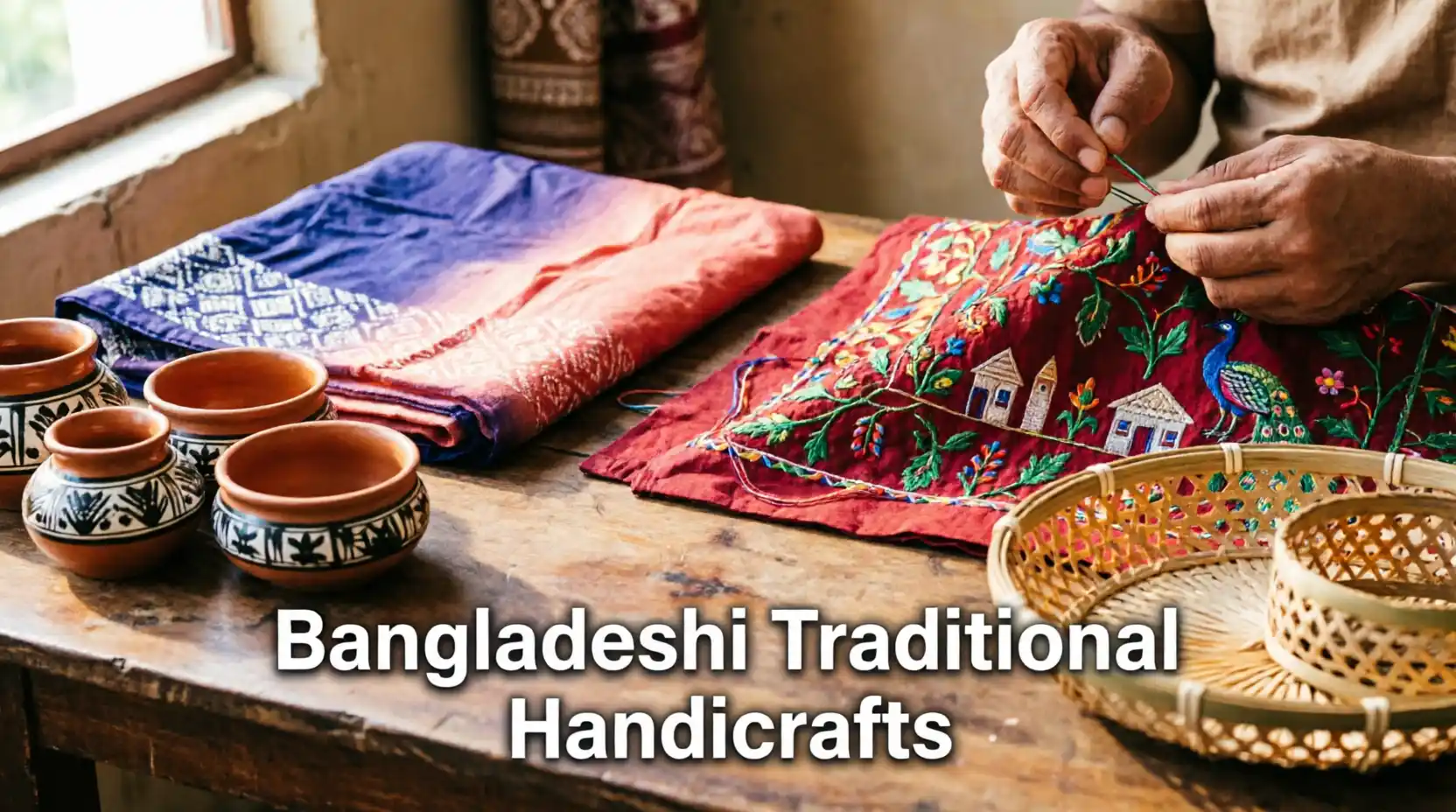
Bangladesh, a land where rivers weave through lush green deltas and monsoon rains nurture the soil, harbors a cultural treasure far more intricate than its natural beauty—traditional handicrafts that have been passed down through generations, carrying stories, skills, and soul in every thread, stitch, and stroke. From the legendary jamdani sarees that once adorned Mughal royalty to the humble nakshi kantha quilts that tell tales of rural life, Bangladeshi handicrafts represent a timeless legacy woven deeply into the nation's cultural fabric.
These aren't mere objects; they are living testaments to a civilization that has thrived along the banks of the Padma, Meghna, and Jamuna rivers for millennia. Each handwoven textile, each terracotta pot, each bamboo basket carries within it the wisdom of ancestors, the patience of master artisans, and the vibrant spirit of a people who have transformed simple materials into extraordinary works of art.
In an age of mass production and fast fashion, Bangladesh's traditional handicrafts stand as a beacon of sustainability, authenticity, and cultural pride. This comprehensive guide explores the rich tapestry of Bangladeshi handicrafts—their history, techniques, regional variations, and enduring significance—while celebrating the skilled artisans who keep these ancient traditions alive in the modern world.
The Historical Roots: Centuries of Craftsmanship
The story of Bangladeshi handicrafts is as old as civilization itself in this region. Archaeological evidence suggests that textile weaving, pottery, and metalwork flourished in Bengal as early as the 3rd century BCE during the Mauryan Empire.
Ancient Origins and Evolution
The Golden Age of Muslin (7th-18th Century):
Bangladesh's most legendary contribution to the world of textiles was muslin—a fabric so fine it was described as "woven air." Historical accounts from Roman, Arab, and Chinese traders speak of Bengali muslin with reverence. The Greek historian Megasthenes mentioned it in 300 BCE, while Arab traders called it Ab-e-Rawan (running water) and Baft Hawa (woven wind).
This extraordinary fabric, woven from the rare Phuti karpas cotton that grew along the banks of the Meghna River, was so delicate that an entire saree could pass through a wedding ring. It adorned Mughal emperors, European royalty, and was traded along the ancient Silk Road and maritime routes to Rome, Persia, and Southeast Asia.
Colonial Impact and Resilience:
The British East India Company recognized the value of Bengali textiles and established monopolistic control over the industry in the 18th century. However, their exploitative practices, combined with the Industrial Revolution's mechanized textile production in England, led to the systematic destruction of Bengal's handloom industry. Artisans were forced to abandon their craft, and many traditional techniques were nearly lost forever.
Yet, the spirit of craftsmanship survived in remote villages, passed from mother to daughter, master to apprentice, keeping the flame alive through centuries of adversity.
Cultural and Spiritual Significance
Bangladeshi handicrafts are deeply intertwined with the region's cultural and spiritual life:
- Religious Expression: Terracotta temples of Bishnupur and Puthia showcase intricate mythological scenes, while Islamic geometric patterns adorn textiles and metalwork
- Ritual and Ceremony: Nakshi kantha quilts were traditionally prepared for weddings and births, carrying blessings and protection
- Seasonal Festivals: Pohela Boishakh (Bengali New Year) features special crafts and textiles
- Daily Life: From bamboo fishing traps to clay cooking pots, crafts served practical purposes while embodying aesthetic values
The Crown Jewel: Jamdani Weaving
No discussion of Bangladeshi handicrafts is complete without celebrating jamdani—the UNESCO-recognized intangible cultural heritage that represents the pinnacle of handloom weaving artistry.
What Makes Jamdani Special?
Jamdani is a supplementary weft technique where intricate motifs are woven directly into the fabric during the weaving process, rather than being embroidered afterward. This painstaking technique requires exceptional skill and patience:
The Process:
- Cotton Preparation: Fine cotton yarn is spun, bleached, and dyed using natural or chemical dyes
- Warp Setting: Thousands of threads are meticulously arranged on the loom
- Weaving: Master weavers work in pairs—one managing the loom, the other adding supplementary weft threads to create motifs
- Pattern Creation: Using bamboo sticks and fingers, weavers insert additional threads to form intricate designs
- Time Investment: A single high-quality jamdani saree can take 3-6 months to complete
Traditional Motifs and Their Meanings
Jamdani designs are rich with symbolism drawn from nature, mythology, and daily life:
- Floral Patterns: Gota (circular motif), Buti (small flowers), Kalka (paisley/mango)—representing fertility and prosperity
- Geometric Designs: Charkona (four-cornered), Tilli (dots)—showcasing mathematical precision
- Natural Elements: Phool (flowers), Pata (leaves), Mayur (peacock)—celebrating nature's beauty
- Astronomical: Chand Tara (moon and stars)—reflecting cosmic harmony
Regional Variations
Dhakai Jamdani: The most famous variety, originating from the villages around Dhaka (Sonargaon, Rupganj, Siddhirganj). Known for its sheer texture and intricate white-on-white designs.
Tangail Jamdani: Features broader borders and bolder patterns, often with contrasting colors.
Shantipur Jamdani: Though technically from West Bengal, India, this style influences Bangladeshi weaving with its fine texture and delicate patterns.
UNESCO Recognition and Revival
In 2013, UNESCO inscribed Traditional Art of Jamdani Weaving on the Representative List of the Intangible Cultural Heritage of Humanity. This recognition has sparked renewed interest and efforts to preserve and promote this ancient craft.
Modern Revival Initiatives:
- Government Support: Bangladesh Handloom Board provides training, loans, and marketing support to weavers
- Fair Trade Organizations: Aarong, Aranya, and other social enterprises connect weavers to urban and international markets
- Fashion Integration: Contemporary designers incorporate jamdani into modern garments, making it relevant for younger generations
- Geographical Indication (GI) Tag: Dhakai Jamdani received GI status in 2016, protecting its authenticity
Nakshi Kantha: Embroidered Stories
If jamdani is Bangladesh's crown jewel, then nakshi kantha is its beating heart—the humble, embroidered quilt that carries the dreams, prayers, and daily realities of Bengali women.
Origins and Evolution
The word nakshi means "embroidered" or "decorated," and kantha refers to a quilt. Traditionally, nakshi kantha was made from old sarees, dhotis, and lungis layered together and stitched with running stitches, transforming worn-out cloth into something beautiful and functional.
The earliest references to kantha appear in 500-year-old texts, but the craft likely predates written records. It was primarily a domestic art practiced by rural women who had no formal training but possessed extraordinary creativity and skill.
The Art of Storytelling Through Stitch
What makes nakshi kantha extraordinary is its narrative quality. Each quilt tells a story:
Common Themes:
- Nature: Trees, flowers, birds, fish, and animals representing the rural landscape
- Religious Symbols: Lotus, swastika, om, and Islamic motifs reflecting Bangladesh's pluralistic culture
- Daily Life: Scenes of village life—farmers plowing, women grinding rice, children playing
- Cosmic Elements: Sun, moon, stars representing the universe
- Personal Expression: Some kanthas include the maker's name, date, or personal messages
Techniques and Styles
Stitch Types:
- Running Stitch (Bhorat): The foundational stitch, creating texture and pattern
- Satin Stitch: For filling larger areas
- Chain Stitch: Outlining motifs
- Buttonhole Stitch: Edging and borders
Regional Styles:
- Rajshahi/Natore: Known for intricate floral patterns and fine stitches
- Jamalpur/Mymensingh: Bold, large motifs with vibrant colors
- Sylhet: Distinctive use of red and green with geometric patterns
- Faridpur: Delicate work with nature-inspired designs
From Domestic Art to Global Recognition
For centuries, nakshi kantha remained a private, domestic art. However, in the 20th century, it gained recognition as a valuable art form:
Key Milestones:
- 1920s-30s: Artist and writer Jasimuddin documented rural kanthas, bringing them to urban attention
- 1980s: Social enterprises like Aarong began marketing nakshi kantha commercially, providing income to rural women
- 21st Century: Nakshi kantha motifs appear on sarees, clothing, home decor, and accessories
Contemporary Applications:
- Traditional quilts (still made for personal use and gifts)
- Fashion: Sarees, kurtas, jackets, bags
- Home decor: Wall hangings, cushion covers, table runners
- Contemporary art: Artists use kantha techniques for modern expression
Terracotta and Pottery: Earth's Enduring Art
Bangladesh's relationship with clay is ancient and profound. From the terracotta temples that dot the landscape to the humble earthen pot (matka) that cooled water before refrigeration, terracotta art is woven into the nation's identity.
Historical Significance
Archaeological excavations at Mahasthangarh, Paharpur, and Mainamati have unearthed terracotta plaques dating back to the 3rd century BCE, demonstrating a sophisticated tradition of clay art.
The terracotta temples of Bangladesh, particularly in the districts of Puthia, Bagerhat, and Kantaji, feature some of the most intricate terracotta work in South Asia. Built primarily between the 16th and 19th centuries, these temples display:
- Mythological Scenes: Episodes from the Ramayana, Mahabharata, and Puranas
- Floral and Geometric Patterns: Intricate borders and panels
- Daily Life: Scenes of hunting, fishing, farming, and social activities
- Animal and Bird Motifs: Elephants, horses, peacocks, and mythical creatures
Traditional Pottery: The Kumhar's Craft
The kumhar (potter) community has been essential to Bangladeshi life, creating functional and ceremonial objects:
Traditional Items:
- Matka/Ghora: Water storage pots that keep water cool through evaporation
- Handi: Cooking pots
- Pradip: Oil lamps used in religious ceremonies
- Toys and Figurines: Horses, elephants, dolls for children
- Decorative Items: Vases, planters, wall hangings
The Process:
- Clay Preparation: River clay is collected, cleaned, and mixed with water and organic materials
- Shaping: Using a potter's wheel (chak) or hand-building techniques
- Drying: Sun-drying for several days
- Firing: Traditional open-pit firing or kiln firing at 800-1000°C
- Finishing: Polishing, painting, or glazing (in some regions)
Regional Specialties
Dhamrai (Dhaka): Famous for terracotta plaques and decorative items
Kagmari (Tangail): Known for fine pottery and clay toys
Rupsa (Khulna): Traditional water pots and cooking vessels
Sylhet: Distinctive glazed pottery with green and brown tones
Contemporary Challenges and Innovation
Traditional pottery faces significant challenges:
- Plastic and Metal Competition: Cheaper, mass-produced alternatives have reduced demand for clay pots
- Environmental Concerns: Traditional firing methods contribute to air pollution
- Economic Pressures: Younger generations seek more lucrative professions
Innovative Responses:
- Eco-friendly Products: Clay water filters, biodegradable planters
- Artistic Revival: Contemporary artists using terracotta for sculpture and installation art
- Tourism Market: Decorative items for tourists and urban consumers
- Design Collaboration: Potters working with designers to create modern, functional pieces
Bamboo and Cane Crafts: Nature's Versatile Gift
Bangladesh's abundant bamboo and cane resources have given rise to a rich tradition of basketry and furniture-making that combines utility with artistry.
The Bamboo Economy
Bangladesh is home to over 45 species of bamboo, and rural communities have developed sophisticated techniques for harvesting, treating, and crafting this remarkable material.
Traditional Products:
- Fishing Traps (Dhol, Kula): Intricately woven traps for rivers and ponds
- Baskets (Kula, Dala): For storage, carrying goods, winnowing rice
- Mats (Chatai): Floor mats, sleeping mats, wall coverings
- Furniture: Chairs, tables, shelves, beds
- Agricultural Tools: Winnowing fans, grain storage containers
- Household Items: Fans, lampshades, decorative screens
Crafting Techniques
Material Preparation:
- Harvesting: Bamboo is cut at the right age (3-5 years) during the dry season
- Treatment: Soaking in water or chemical treatment to prevent insect damage
- Splitting: Bamboo is split into strips of various widths using specialized knives
- Smoothing: Strips are smoothed and shaped
Weaving Patterns:
- Plain Weave: Simple over-under pattern
- Twill Weave: Diagonal patterns
- Checkerboard: Alternating colors and textures
- Open Work: Decorative gaps for ventilation and aesthetics
Regional Specialties
Sylhet: Famous for fine cane furniture and decorative items
Chittagong Hill Tracts: Indigenous communities create distinctive bamboo crafts with tribal motifs
Barisal: Known for fishing equipment and agricultural tools
Mymensingh: Traditional baskets and household items
Sustainable and Eco-Friendly
Bamboo crafts are experiencing a renaissance due to their environmental benefits:
- Rapidly Renewable: Bamboo grows to maturity in 3-5 years
- Carbon Sequestration: Bamboo absorbs more CO2 than many trees
- Biodegradable: Unlike plastic, bamboo products decompose naturally
- Low Energy: Minimal processing energy compared to metal or plastic
Modern Applications:
- Eco-friendly packaging and disposable items
- Contemporary furniture design
- Architectural elements and interior design
- Fashion accessories (bags, jewelry, watches)
Other Notable Traditional Crafts
Shital Pati (Cool Mat) Weaving
The shital pati is a traditional mat woven from murta grass (Schinus terebinthifolius) that remains cool to the touch even in summer heat. This craft is particularly prominent in:
- Sylhet: The town of Jaintiapur is famous for high-quality shital pati
- Tangail: Known for fine, durable mats
The Process:
- Murta grass is harvested, dried, and split into thin strips
- Strips are dyed in natural colors (traditionally red, black, green)
- Skilled weavers create intricate geometric and floral patterns
- A single mat can take 2-4 weeks to complete
Shital pati was traditionally used by royalty and nobility, and fine specimens were presented as gifts to Mughal emperors.
Conch Shell and Ivory Work
Bangladesh has a long tradition of working with shankha (conch shell) and, historically, ivory:
Shankha Products:
- Bangles: Worn by married Hindu women as a symbol of matrimony
- Religious Items: Conch shells used in Hindu rituals
- Decorative Carvings: Intricate sculptures and ornaments
Ivory Work (Historical):
Before the ban on ivory trade, Bangladeshi artisans created exquisite ivory carvings. Today, artisans work with alternative materials like bone, horn, and synthetic substitutes.
Metalwork and Jewelry
Traditional Jewelry:
- Gold and Silver: Intricate filigree work, particularly in Dhaka and Chittagong
- Tribal Jewelry: Indigenous communities in the Hill Tracts create distinctive silver and bead jewelry
- Temple Jewelry: Traditional designs for religious ceremonies
Brass and Bronze:
- Statuary: Religious and decorative figures
- Household Items: Plates, bowls, water vessels
- Musical Instruments: Bells, cymbals
Wood Carving
Bangladesh's rich tradition of wood carving is evident in:
- Architectural Elements: Temple doors, window frames, pillars
- Furniture: Beds, chairs, chests with intricate carvings
- Boat Building: Traditional river boats with carved prows
- Toys and Decorative Items: Animals, dolls, masks
Regional specialties include the woodwork of Comilla (famous for its carved furniture) and Sylhet (known for architectural woodwork).
The Artisans: Keepers of Tradition
Behind every handicraft is an artisan—a skilled individual who has dedicated years, often decades, to mastering their craft. Understanding their lives, challenges, and aspirations is crucial to appreciating Bangladeshi handicrafts.
Demographics and Communities
Traditional crafts in Bangladesh are often community-based, with skills passed down through generations:
- Weavers (Tanti): Primarily Hindu community, though Muslim weavers are also prominent
- Potters (Kumhar): Found across religious communities
- Bamboo Workers: Often from indigenous or lower-income communities
- Embroiderers: Primarily rural women working from home
Economic Realities
Despite their skill and the value of their products, many artisans face significant economic challenges:
Low Income:
- A jamdani weaver may earn ৳5,000-10,000 ($50-100) per month
- Nakshi kantha makers often earn less than ৳3,000 ($30) monthly
- Seasonal work and irregular income create financial instability
Exploitation by Middlemen:
- Artisans often receive only 20-30% of the final retail price
- Lack of direct market access forces dependence on intermediaries
- Limited bargaining power
Lack of Social Security:
- No health insurance, pension, or retirement benefits
- Work-related health issues (eye strain, respiratory problems, back pain) go untreated
- No formal recognition or certification of skills
Health and Working Conditions
Traditional craftwork can be physically demanding:
- Weavers: Long hours in cramped positions, eye strain, respiratory issues from cotton dust
- Potters: Exposure to high temperatures, heavy lifting, silica dust
- Embroiderers: Eye strain, repetitive strain injuries, poor posture
Preserving Knowledge and Skills
Intergenerational Transfer:
Traditionally, skills were passed from parent to child through observation and practice. However, this system is breaking down as younger generations seek education and alternative careers.
Formal Training Programs:
- Bangladesh Small and Cottage Industries Corporation (BSCIC): Provides training and support
- NGOs: BRAC, Aarong, and others offer skill development programs
- Government Initiatives: National Skills Development Policy includes traditional crafts
Contemporary Challenges and Opportunities
Bangladeshi handicrafts stand at a crossroads, facing both significant challenges and exciting opportunities in the 21st century.
Major Challenges
1. Globalization and Mass Production:
- Cheap, machine-made imports undercut traditional products
- Fast fashion reduces demand for handwoven textiles
- Plastic alternatives replace bamboo, cane, and clay products
2. Changing Consumer Preferences:
- Younger generations prefer modern, Western-style products
- Urban consumers often view traditional crafts as "old-fashioned"
- Lack of awareness about the value of handmade products
3. Economic Pressures:
- Rising material costs
- Low profit margins
- Competition from mechanized production
- Lack of access to credit and capital
4. Environmental Concerns:
- Deforestation affecting bamboo and wood availability
- Pollution from traditional dyeing and firing processes
- Climate change affecting raw material availability
5. Skill Erosion:
- Younger generations migrating to cities for better opportunities
- Lack of formal recognition and certification
- Time-intensive nature of traditional crafts discourages new learners
Emerging Opportunities
1. Growing Global Interest in Sustainable Products:
- Increasing demand for eco-friendly, handmade products
- Fair trade movement creating ethical markets
- Conscious consumers willing to pay premium for authentic crafts
2. Digital Revolution:
- E-commerce platforms (Etsy, Amazon Handmade, local platforms) providing direct market access
- Social media enabling artisans to tell their stories and build brands
- Digital payment systems facilitating transactions
3. Government and NGO Support:
- Export promotion policies
- Training and capacity-building programs
- Financial support and microcredit
- Geographical Indication (GI) tags protecting authenticity
4. Fashion and Design Innovation:
- Contemporary designers incorporating traditional crafts into modern fashion
- International fashion houses featuring Bangladeshi textiles
- Cross-cultural collaborations creating new markets
5. Cultural Tourism:
- Growing interest in experiential tourism
- Craft villages becoming tourist destinations
- Workshop and demonstration opportunities
Supporting Bangladeshi Handicrafts: A Guide for Conscious Consumers
If you're inspired to support Bangladeshi artisans and preserve these timeless traditions, here's how you can make a difference:
Buying Authentic Products
Where to Buy:
- Fair Trade Organizations:
- Aarong: Bangladesh's largest fair trade retailer, supporting over 65,000 artisans
- Aranya: Known for natural dyes and handloom products
- Aarong's sister organizations: Proshika, BRAC
- Government Outlets:
- Bangladesh Handicrafts: Government-run stores in major cities
- Jatiya Karu Karja: National handicraft exhibitions
- Online Platforms:
- Etsy: Search for "Bangladeshi handicrafts" or specific items
- Local e-commerce: Daraz, Pickaboo (Bangladeshi platforms)
- Social media: Instagram and Facebook pages of artisan cooperatives
- Direct from Artisans:
- Visit craft villages (Sonargaon for jamdani, Dhamrai for terracotta)
- Attend craft fairs and exhibitions
- Connect with artisan cooperatives
How to Identify Authentic Products:
- Look for Imperfections: Handmade items have slight variations; perfect uniformity suggests machine production
- Check Labels: GI tags, fair trade certifications, artisan signatures
- Ask Questions: Where was it made? Who made it? What materials were used?
- Price Awareness: Authentic handmade products cost more than mass-produced items
Practicing Ethical Consumption
Fair Prices:
- Understand that handmade products require time and skill
- Don't haggle excessively; artisans deserve fair compensation
- Recognize that paying fair prices supports entire communities
Cultural Respect:
- Appreciate the cultural significance of crafts
- Avoid appropriating sacred or ceremonial items for fashion
- Learn about the stories and traditions behind products
Sustainable Choices:
- Choose natural, eco-friendly materials
- Buy quality items that will last
- Support artisans using sustainable practices
Spreading Awareness
- Share your purchases on social media, tagging artisans and organizations
- Educate friends and family about the value of handmade products
- Write reviews for artisan products and fair trade organizations
- Advocate for fair trade policies and artisan support programs
The Future of Bangladeshi Handicrafts
The future of Bangladeshi handicrafts depends on balancing preservation with innovation, tradition with modernity, and cultural heritage with economic viability.
Vision for Sustainability
1. Education and Skill Development:
- Integrate traditional crafts into school curricula
- Establish craft schools and training centers
- Create apprenticeship programs pairing masters with young learners
- Provide business and marketing training to artisans
2. Technology Integration:
- Use digital tools for design while maintaining hand production
- Develop e-commerce platforms specifically for Bangladeshi crafts
- Implement blockchain for supply chain transparency and authenticity
- Use social media for storytelling and brand building
3. Policy Support:
- Strengthen GI tag enforcement
- Provide tax incentives for handicraft businesses
- Establish craft clusters with shared infrastructure
- Create social security schemes for artisans
4. Market Development:
- Expand export markets through trade fairs and exhibitions
- Develop domestic market through awareness campaigns
- Create craft tourism circuits
- Partner with international fashion and design brands
5. Environmental Sustainability:
- Promote natural dyes and eco-friendly materials
- Implement sustainable harvesting of raw materials
- Reduce waste through efficient production methods
- Certify eco-friendly products
Innovation Within Tradition
The most successful preservation efforts don't freeze crafts in time; they allow them to evolve while maintaining their essential character:
Examples of Successful Innovation:
- Jamdani in Contemporary Fashion: Designers like Bibi Russell and international brands incorporating jamdani into modern silhouettes
- Nakshi Kantha on New Products: From traditional quilts to laptop sleeves, phone cases, and sneakers
- Bamboo Architecture: Modern buildings using traditional bamboo techniques
- Terracotta in Contemporary Art: Artists using traditional techniques for modern expression
Conclusion: A Living Legacy
Bangladeshi traditional handicrafts are more than objects; they are living expressions of a people's history, values, and creativity. From the ethereal beauty of jamdani to the heartfelt stories stitched into nakshi kantha, from the earthy warmth of terracotta to the versatile strength of bamboo, these crafts embody the soul of Bangladesh.
Yet this legacy is fragile. Each time an artisan abandons their craft for lack of income, each time a traditional technique is forgotten, each time a mass-produced imitation replaces a handmade original, we lose not just a product but a piece of human heritage.
The preservation of Bangladeshi handicrafts requires collective effort:
- Artisans must continue to hone their skills and adapt to changing times
- Government must provide support, protection, and infrastructure
- Businesses must create fair markets and sustainable supply chains
- Consumers must value authenticity and pay fair prices
- Educators must pass knowledge to the next generation
But perhaps most importantly, we must recognize that these crafts are not relics of the past—they are living traditions with relevance and value in the present and future. In a world increasingly dominated by mass production and digital interfaces, handmade crafts offer something irreplaceable: human connection, cultural continuity, environmental sustainability, and the beauty of imperfection.
When you hold a jamdani saree, you're holding centuries of skill, patience, and artistry. When you wrap yourself in a nakshi kantha, you're wrapped in stories of love, hope, and resilience. When you drink from a clay pot, you're tasting the earth itself.
These are not just crafts. They are Bangladesh's timeless legacy—woven in culture, stitched with artistry, and waiting to be cherished by generations yet to come.
Let us ensure that this legacy endures—not as a museum exhibit, but as a living, breathing, evolving tradition that continues to inspire, sustain, and connect us to our shared humanity.