

Low-Impact Workouts for Women: Burn Fat, Protect Knees
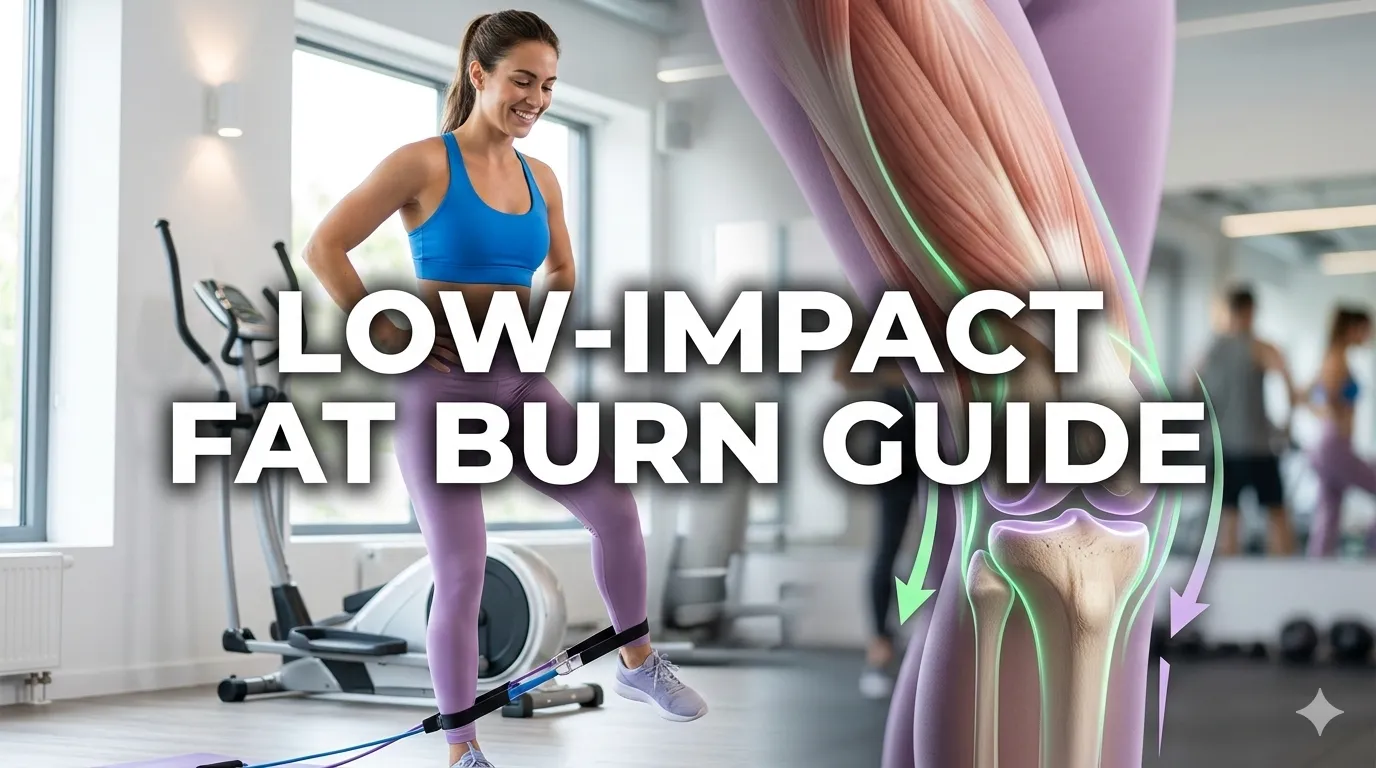
Effective Fat Burning Without the Joint Pain: Your Complete Guide
For many women, the path to fat loss feels like a choice between results and joint health. High-impact workouts promise quick calorie burn but often leave knees aching, while the fear of injury can keep you from exercising altogether. But what if you could burn fat effectively while protecting your knees? The answer lies in low-impact workouts—strategically designed movements that maximize calorie burn and muscle engagement while minimizing stress on your joints.
Low-impact doesn't mean low-intensity. This is one of the most persistent myths in fitness. Low-impact simply means at least one foot stays on the ground (or you're supported by water or equipment), reducing the force transmitted through your knees, hips, and ankles. You can still achieve high heart rates, significant calorie burn, and impressive strength gains—all while keeping your joints happy and healthy.
This comprehensive, science-backed guide is designed specifically for women who want to lose fat without sacrificing knee health. Whether you're recovering from an injury, managing arthritis, navigating hormonal changes that affect joint stability, or simply seeking a sustainable fitness approach, you'll discover evidence-based workout strategies, expert technique tips, and practical programming to help you reach your goals safely and effectively.
Why Knee Health Matters for Women's Fitness
The Unique Challenges Women Face
Women's knees face distinct biomechanical and hormonal challenges that make joint protection especially important:
Q-angle differences: Women typically have a wider pelvis, creating a larger quadriceps angle (Q-angle). This increases lateral pull on the kneecap, raising risk of patellofemoral pain and tracking issues during high-impact activities.
Hormonal influences: Estrogen affects ligament laxity. During certain menstrual cycle phases, pregnancy, or menopause, ligaments may be more relaxed, increasing knee instability and injury risk during dynamic movements.
Muscle activation patterns: Research shows women often rely more on quadriceps than hamstrings during landing and cutting movements. This imbalance increases anterior knee stress and ACL injury risk.
Higher osteoarthritis prevalence: Women are nearly twice as likely as men to develop knee osteoarthritis, particularly after menopause when estrogen's protective effects decline.
Scientific insight: Dr. Lisa Chen, sports medicine physician and women's health specialist, explains: "Women aren't 'fragile'—but we do have different biomechanics. Smart training that respects these differences isn't limiting; it's strategic. Low-impact workouts allow women to train hard, lose fat, and build strength while protecting the joints that keep us moving for life."
How High-Impact Exercise Affects Knees
Understanding the mechanics helps explain why low-impact alternatives are so valuable:
Ground reaction forces: Running generates forces 2-3 times your body weight with each step. Jumping can create forces 5-7 times body weight. These repetitive impacts accumulate stress on knee cartilage, ligaments, and tendons.
Cartilage wear: Articular cartilage has limited blood supply and heals slowly. Repeated high-impact loading without adequate recovery can accelerate wear, particularly in women with existing alignment issues.
Tendon strain: The patellar tendon (connecting kneecap to shin) absorbs significant force during jumping and landing. Overuse can lead to tendinopathy—a painful, slow-healing condition.
The good news: Low-impact exercises dramatically reduce these forces while still providing powerful metabolic and muscular benefits. You don't have to choose between results and joint health.
The Science of Fat Burning: Why Low-Impact Works
Calorie Burn Isn't Just About Impact
Many assume high-impact exercise burns more calories, but research tells a more nuanced story:
Heart rate is the key driver: Calorie burn correlates most strongly with heart rate and exercise duration, not impact level. A 30-minute elliptical session at 75% max heart rate can burn as many calories as 30 minutes of jogging at the same intensity—with far less knee stress.
Study evidence: A 2023 study in the Journal of Strength and Conditioning Research compared calorie expenditure across low-impact (elliptical, cycling, rowing) and high-impact (running, jump rope) exercises matched for heart rate. Results showed no significant difference in calorie burn, but significantly lower joint loading in the low-impact group.
The afterburn effect (EPOC): Excess post-exercise oxygen consumption—the calories burned after workout—depends on intensity and muscle engagement, not impact. Low-impact strength training and interval work can generate substantial EPOC.
Muscle Preservation: Critical for Long-Term Fat Loss
Preserving muscle mass is essential for sustainable fat loss because muscle tissue burns more calories at rest than fat tissue. Low-impact strength training offers unique advantages:
- Controlled loading: Resistance exercises allow precise control of joint angles and forces, reducing injury risk while effectively stimulating muscle growth
- Full range of motion: Low-impact movements often allow deeper, safer ranges of motion that maximize muscle engagement
- Recovery advantage: Less joint stress means faster recovery, enabling more frequent training and greater cumulative fat loss
Metabolic benefit: Building lean muscle through low-impact strength training increases your resting metabolic rate, helping you burn more calories 24/7—even while sleeping.
Top Low-Impact Exercises for Fat Burning and Knee Protection
Cardiovascular Options
Elliptical Training:
- Why it works: Mimics running motion without impact; engages upper and lower body simultaneously for higher calorie burn
- Knee benefits: Smooth, controlled motion minimizes shear forces on knee joint; adjustable resistance allows progressive overload
- Optimal protocol: 20-30 minutes at moderate intensity (60-75% max heart rate) or interval format: 1 min hard, 2 min easy x 8 rounds
- Form tips: Keep feet flat on pedals, engage core, avoid leaning heavily on handles
Stationary Cycling (Upright or Recumbent):
- Why it works: Excellent cardiovascular workout with minimal joint loading; easily adjustable intensity
- Knee benefits: Non-weight-bearing motion; recumbent bikes offer back support for those with additional concerns
- Optimal protocol: 30-45 minutes steady state or HIIT: 30 sec sprint, 90 sec recovery x 10 rounds
- Form tips: Adjust seat height so knee has slight bend at bottom of pedal stroke; keep knees tracking over toes
Rowing Machine:
- Why it works: Full-body engagement burns significant calories; builds strength and endurance simultaneously
- Knee benefits: Smooth sliding motion with controlled knee flexion; no impact forces
- Optimal protocol: 20 minutes steady rowing or intervals: 500m hard, 500m easy x 4 rounds
- Form tips: Drive with legs first, then lean back, then pull arms; reverse sequence on return; keep back straight
Water Aerobics and Swimming:
- Why it works: Water provides natural resistance for strength and cardio; buoyancy supports up to 90% of body weight
- Knee benefits: Near-zero impact; water resistance strengthens muscles supporting knees without joint stress
- Optimal protocol: 30-45 minutes of continuous movement or circuit: 3 min water jogging, 2 min aqua aerobics x 6 rounds
- Form tips: Maintain upright posture; engage core; use water noodles or weights for added resistance
Walking (Brisk or Incline):
- Why it works: Accessible, sustainable, and highly effective for fat loss when done consistently
- Knee benefits: Low-impact when done on soft surfaces; incline walking increases intensity without adding impact
- Optimal protocol: 45-60 minutes brisk walking (3.5-4 mph) or 30 minutes incline walking (8-12% grade)
- Form tips: Land heel-to-toe; engage glutes; avoid overstriding; use trekking poles for added stability if needed
Strength Training Options
Resistance Band Exercises:
- Why they work: Variable resistance challenges muscles through full range of motion; portable and versatile
- Knee benefits: Controlled tension minimizes joint shear; bands can assist or resist movement as needed
- Key exercises: Banded squats, lateral walks, glute bridges, standing leg curls, banded deadlifts
- Protocol: 2-3 sets of 12-15 reps per exercise; 2-3 times weekly
Bodyweight Strength (Modified):
- Why it works: Builds functional strength using your own body; easily scalable
- Knee benefits: Controlled movements with proper form minimize joint stress; progressions allow gradual loading
- Knee-friendly exercises:
- Wall sits (isometric quad strengthening)
- Glute bridges (posterior chain without knee flexion under load)
- Step-ups (controlled, single-leg strength)
- Modified lunges (shorter range, supported if needed)
- Clamshells and side-lying leg lifts (hip strength for knee stability)
Machine-Based Strength Training:
- Why it works: Guided motion paths ensure proper form; easily adjustable resistance
- Knee benefits: Controlled range of motion; machines like leg press allow heavy loading with minimal joint shear
- Key exercises: Leg press (feet high on platform to reduce knee shear), seated leg curl, hip abduction/adduction, chest press, lat pulldown
- Protocol: 2-3 sets of 10-12 reps; focus on controlled tempo (2 sec lift, 2 sec lower)
Hybrid Options: Best of Both Worlds
Low-Impact HIIT:
- Why it works: Combines calorie-torching intervals with joint-friendly movements
- Sample circuit:
- 30 sec elliptical sprint
- 30 sec resistance band rows
- 30 sec cycling sprint
- 30 sec bodyweight squats (shallow range)
- Rest 60 sec; repeat 4-6 rounds
- Benefits: Maximizes EPOC while keeping impact low; time-efficient (20 minutes total)
Tai Chi and Yoga (Dynamic Styles):
- Why they work: Improve balance, flexibility, and strength; reduce stress (which supports fat loss)
- Knee benefits: Controlled movements strengthen stabilizing muscles; improved proprioception reduces injury risk
- Best styles: Vinyasa or power yoga (avoid deep knee bends if sensitive); Tai Chi for gentle, flowing movement
- Protocol: 30-45 minutes, 2-3 times weekly
Programming Your Low-Impact Fat Loss Plan
Weekly Structure for Optimal Results
Beginner Plan (Weeks 1-4):
- Monday: 30 min elliptical (moderate pace)
- Tuesday: Resistance band circuit: squats, rows, chest press, glute bridges (2 rounds)
- Wednesday: Rest or gentle walking
- Thursday: 30 min stationary cycling
- Friday: Bodyweight strength: wall sits, step-ups, clamshells, planks (2 rounds)
- Saturday: 45 min brisk walk
- Sunday: Rest
Intermediate Plan (Weeks 5-12):
- Monday: Low-impact HIIT: 20 min intervals (elliptical/cycling)
- Tuesday: Machine strength training: leg press, seated row, chest press, lat pulldown (3 sets each)
- Wednesday: 30 min water aerobics or swimming
- Thursday: Resistance band circuit + core work (3 rounds)
- Friday: 45 min incline walking
- Saturday: Yoga or Tai Chi (30-45 min)
- Sunday: Rest
Advanced Plan (Weeks 13+):
- Monday: Low-impact HIIT: 25 min (rower/elliptical intervals)
- Tuesday: Strength training: compound lifts with controlled tempo (squats to box, Romanian deadlifts, etc.)
- Wednesday: Active recovery: walking + mobility work
- Thursday: Low-impact HIIT: 20 min circuit (bands + cardio)
- Friday: Strength training: upper body focus + core
- Saturday: Long steady cardio: 60 min cycling or elliptical
- Sunday: Rest
Progressive Overload Without Impact
To continue burning fat and building strength, you must progressively challenge your body. Here's how to do it safely:
Increase duration: Add 5 minutes to cardio sessions every 2 weeks.
Increase intensity: Raise resistance, incline, or pace while maintaining good form.
Increase frequency: Add an extra workout day once you're recovering well.
Increase complexity: Progress from two-legged to single-leg exercises; add unstable surfaces (with caution).
Track your progress: Keep a workout log noting resistance levels, duration, and how you feel. Small, consistent increases yield big results over time.
Form and Technique: Protecting Knees During Exercise
Universal Knee-Safe Form Principles
Align knees over toes: During squats, lunges, or step-ups, ensure knees track in line with your second toe. Letting knees collapse inward increases stress on ligaments and cartilage.
Avoid deep knee flexion under load: If you have knee sensitivity, limit squat or lunge depth to 90 degrees or less. You can still build strength effectively in this range.
Engage your glutes: Strong glutes stabilize the knee. Before lower-body exercises, activate glutes with a few bridges or clamshells.
Control the descent: Lowering phase (eccentric) is where most knee stress occurs. Take 2-3 seconds to lower into squats or lunges; avoid dropping quickly.
Warm up properly: Spend 5-10 minutes warming up with dynamic movements (leg swings, walking lunges, gentle cycling) to increase blood flow and prepare joints.
Exercise-Specific Form Cues
Elliptical: Keep feet flat on pedals; avoid bouncing or rocking; engage core to prevent leaning on handles.
Cycling: Adjust seat height so knee has 25-30 degree bend at bottom of pedal stroke; keep knees tracking forward, not wobbling side-to-side.
Rowing: Initiate movement with legs, not arms; keep back straight; avoid hyperextending knees at finish.
Resistance band squats: Keep chest up, weight in heels; push knees out slightly against band resistance; avoid letting knees cave in.
Step-ups: Lead with heel, not toe; keep knee aligned over ankle; avoid pushing off with back leg (reduces knee shear).
Nutrition Support for Fat Loss and Joint Health
Fueling Fat Loss Without Compromising Recovery
Caloric deficit done right: Aim for a moderate deficit of 300-500 calories below maintenance. This supports steady fat loss (0.5-1 lb/week) while preserving muscle and energy for workouts.
Protein priority: Consume 0.8-1.2 grams of protein per pound of body weight daily. Protein supports muscle preservation during fat loss and provides amino acids for joint tissue repair.
Anti-inflammatory foods: Include omega-3 rich foods (salmon, walnuts, flaxseed), colorful fruits and vegetables (antioxidants), and spices like turmeric and ginger to support joint health.
Hydration: Drink 2-3 liters of water daily. Proper hydration supports joint lubrication, nutrient transport, and metabolic function.
Supplements That Support Both Goals
Omega-3 fatty acids: 1-2 grams daily of EPA/DHA reduces inflammation and may support joint comfort.
Vitamin D: Essential for bone health and muscle function; many women are deficient. Aim for 1000-2000 IU daily (get levels tested).
Collagen peptides: Emerging research suggests 10-15 grams daily may support joint tissue repair and reduce exercise-related joint discomfort.
Magnesium: Supports muscle relaxation and recovery; 200-400 mg daily may help with post-workout soreness.
Consult your healthcare provider before starting any new supplement regimen, especially if you have medical conditions or take medications.
Recovery and Injury Prevention
Why Recovery Is Part of Fat Loss
Overtraining increases cortisol (a stress hormone that promotes fat storage, particularly around the abdomen) and raises injury risk. Smart recovery supports both fat loss and knee health:
Sleep: Aim for 7-9 hours nightly. Sleep is when growth hormone peaks, supporting muscle repair and fat metabolism.
Active recovery: Light walking, gentle yoga, or foam rolling on rest days increases blood flow to aid recovery without adding stress.
Listen to your body: Distinguish between normal muscle fatigue and joint pain. If knees ache during or after exercise, modify the movement or reduce intensity.
Prehab Exercises for Knee Resilience
Incorporate these 2-3 times weekly to strengthen knee-supporting muscles:
Terminal knee extensions: Sit with leg extended, towel under knee. Tighten quad to press knee down into towel; hold 5 seconds. Strengthens VMO (inner quad) for patellar tracking.
Clamshells: Lie on side, knees bent. Lift top knee while keeping feet together. Strengthens gluteus medius for knee stability.
Calf raises: Stand on edge of step, lower heels then raise up. Strengthens calves and Achilles, which support knee mechanics.
Hamstring curls (with band): Anchor band, loop around ankle, curl heel toward glute. Strengthens hamstrings to balance quad dominance.
Common Mistakes That Sabotage Low-Impact Fat Loss
Mistake 1: Going Too Easy
The problem: Assuming low-impact means low-effort, leading to workouts that don't challenge heart rate or muscles enough for fat loss.
The fix: Use heart rate monitoring or perceived exertion scale. Aim for moderate intensity (you can talk but not sing) for steady cardio; higher intensity (brief speech only) for intervals.
Mistake 2: Skipping Strength Training
The problem: Focusing only on cardio misses the muscle-building benefits that boost metabolism and protect joints long-term.
The fix: Include 2-3 strength sessions weekly. Even 20 minutes of resistance work yields significant benefits for fat loss and knee stability.
Mistake 3: Ignoring Form for Duration
The problem: Pushing through poor form to complete a workout increases injury risk and reduces effectiveness.
The fix: Prioritize quality over quantity. If form breaks down, reduce intensity or duration. Better to do 15 minutes with perfect form than 30 minutes with sloppy mechanics.
Mistake 4: Not Progressing
The problem: Doing the same workout indefinitely leads to plateaus as your body adapts.
The fix: Apply progressive overload principles: gradually increase resistance, duration, or complexity every 2-4 weeks.
Mistake 5: Neglecting Nutrition
The problem: Out-training a poor diet is nearly impossible for fat loss.
The fix: Pair your low-impact workouts with balanced nutrition focused on whole foods, adequate protein, and a moderate caloric deficit.
Special Considerations for Different Life Stages
Perimenopause and Menopause
Unique challenges: Declining estrogen affects joint lubrication, muscle mass, and fat distribution (more abdominal fat).
Adaptations:
- Prioritize strength training to combat muscle loss and support metabolism
- Include weight-bearing low-impact exercises (walking, elliptical) for bone health
- Allow extra recovery time; hormonal fluctuations affect recovery capacity
- Focus on anti-inflammatory nutrition to support joint comfort
Postpartum
Unique challenges: Hormonal changes affect ligament laxity; core and pelvic floor need rebuilding.
Adaptations:
- Get clearance from healthcare provider before starting exercise
- Start with walking and gentle pelvic floor exercises
- Avoid high-impact until core and pelvic floor are strong (often 3-6 months postpartum)
- Focus on functional movements that support daily caregiving tasks
Arthritis or Joint Pain
Unique challenges: Existing joint changes require extra care to avoid exacerbating symptoms.
Adaptations:
- Choose water-based exercises for minimal joint loading
- Focus on range-of-motion and strengthening exercises within pain-free ranges
- Work with a physical therapist to design a personalized program
- Use heat before exercise and ice after if helpful for symptom management
Tracking Progress Beyond the Scale
Meaningful Metrics for Low-Impact Fat Loss
Body measurements: Track waist, hips, and thigh circumference monthly. Fat loss often shows in measurements before the scale moves.
Strength gains: Note increases in resistance, reps, or duration. Getting stronger indicates muscle preservation or growth—critical for long-term fat loss.
Energy and mood: Improved daily energy, better sleep, and enhanced mood are valuable indicators of progress that scales can't measure.
Joint comfort: Reduced knee pain during daily activities or exercise is a major win. Track pain levels (1-10 scale) to monitor improvement.
Clothing fit: How your clothes fit is often the most motivating metric. Take photos monthly to visualize changes.
Frequently Asked Questions
Can I lose weight with only low-impact exercise?
Absolutely. Weight loss depends on creating a caloric deficit through diet and exercise. Low-impact workouts can burn significant calories when performed at appropriate intensity and duration. Combined with proper nutrition, they're highly effective for fat loss.
How long before I see results?
With consistent low-impact workouts (4-5 times weekly) and balanced nutrition, most women notice improved energy and strength within 2-4 weeks. Visible fat loss typically appears in 6-8 weeks. Sustainable results build over 3-6 months.
Is walking enough for fat loss?
Brisk walking (3.5-4 mph) for 45-60 minutes daily can support fat loss, especially when combined with strength training and proper nutrition. For faster results, add incline walking or interval formats to increase intensity.
Can I build muscle with low-impact strength training?
Yes. Muscle growth depends on progressive overload (gradually increasing challenge), not impact. Low-impact resistance training with adequate protein intake effectively builds and preserves muscle mass.
What if my knees still hurt during low-impact exercise?
Stop the exercise causing pain and consult a physical therapist or sports medicine provider. They can identify underlying issues (muscle imbalances, alignment problems) and recommend modifications or prehab exercises.
Conclusion: Stronger, Leaner, and Knee-Healthy
Low-impact workouts aren't a compromise—they're a smart, sustainable strategy for women who want to burn fat while protecting their knees. By understanding your unique biomechanics, choosing joint-friendly exercises, and applying evidence-based programming, you can achieve impressive results without pain or injury.
Remember: Consistency beats intensity. A 30-minute low-impact workout you can do consistently for months will yield far better results than a high-impact routine that leaves you injured and sidelined.
Start where you are. Choose one low-impact exercise from this guide to try this week. Master the form. Build the habit. Small, consistent actions compound into transformative change.
Your knees carry you through life. Protecting them isn't limiting your fitness—it's investing in your ability to stay active, strong, and independent for decades to come.
You deserve to feel strong and confident. With the right approach, you can burn fat, build strength, and protect your joints—all at once. Your strongest, healthiest self is within reach.
Begin today. Your body will thank you tomorrow, next month, and for years to come.