

Correcting Uneven Skin Tone: Clinical Guide to Causes and Treatments
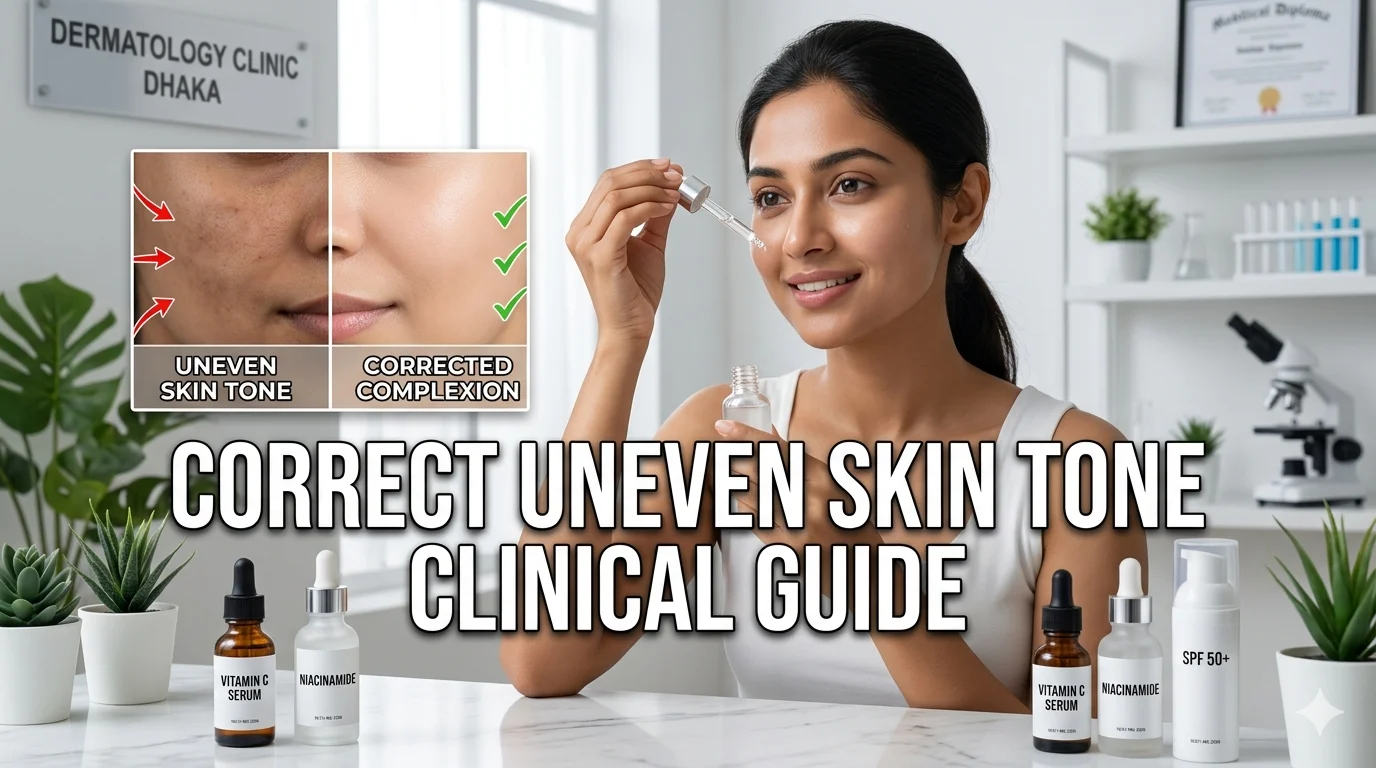
Uneven skin tone—whether manifesting as dark spots, patchy discoloration, melasma, or post-acne marks—is one of the most common concerns dermatologists address. It affects people of all ages, skin types, and ethnicities, yet the path to correction is rarely straightforward. With countless brightening products on the market and conflicting advice online, it's easy to feel overwhelmed, waste money on ineffective treatments, or worse, worsen discoloration through improper care.
The truth is, correcting uneven skin tone isn't about finding a magic ingredient—it's about understanding the why behind your discoloration and matching evidence-based treatments to the underlying cause. Hyperpigmentation isn't a single condition; it's a symptom with multiple potential drivers: sun exposure, inflammation, hormonal shifts, genetic predisposition, or a combination thereof. Effective correction requires a clinical approach: accurate diagnosis, targeted ingredients, consistent application, and realistic expectations.
This comprehensive guide delivers a medically grounded protocol for correcting uneven skin tone. You'll learn the biological mechanisms behind common forms of discoloration, discover which ingredients actually work (and which are just marketing), build a personalized treatment routine based on your skin type and concern, and understand when professional intervention is warranted. Whether you're addressing post-acne marks, melasma, sun spots, or general dullness, you'll find practical, science-backed strategies to achieve a more even, radiant complexion—safely and sustainably.
Understanding Uneven Skin Tone: The Biology of Discoloration
Before selecting treatments, it's essential to understand what causes uneven skin tone. Different types of discoloration require different approaches, and misidentification is a common reason treatments fail.
How Skin Color Is Determined
Skin tone is primarily determined by melanin, a pigment produced by cells called melanocytes. Two types of melanin exist:
- Eumelanin: Brown-black pigment; provides more UV protection
- Pheomelanin: Red-yellow pigment; provides less UV protection
The amount, type, and distribution of melanin determine your baseline skin tone. Uneven tone occurs when melanin production becomes dysregulated—either overproduced in certain areas (hyperpigmentation) or underproduced (hypopigmentation, less common in cosmetic concerns).
Key Types of Hyperpigmentation
| Type | Primary Cause | Typical Appearance | Common Locations |
|---|---|---|---|
| Sun Spots (Solar Lentigines) | Chronic UV exposure stimulating melanocytes | Flat, tan-brown spots with defined edges | Face, hands, shoulders, décolletage |
| Melasma | Hormonal triggers + UV exposure + genetic predisposition | Symmetric brown/gray-brown patches; often mask-like | Cheeks, forehead, upper lip, chin |
| Post-Inflammatory Hyperpigmentation (PIH) | Inflammation from acne, eczema, injury triggering excess melanin | Flat spots ranging from pink to dark brown; follows prior inflammation | Anywhere inflammation occurred; common on face, chest, back |
| Post-Inflammatory Erythema (PIE) | Damaged capillaries after inflammation (not melanin-related) | Red, pink, or purple marks; blanches when pressed | Common on face after acne, especially in lighter skin tones |
| General Dullness/Uneven Tone | Slowed cell turnover, surface debris, mild sun damage | Lack of radiance, subtle patchiness, tired appearance | Full face or exposed areas |
Critical Distinction: PIH (brown) vs. PIE (red) require different treatments. PIH responds to melanin-inhibiting ingredients; PIE responds to vascular-targeting ingredients and time.
Why Discoloration Persists: The Melanin Production Cycle
Understanding melanin synthesis helps explain why correction takes time:
- Trigger: UV exposure, inflammation, or hormones activate melanocytes
- Tyrosinase activation: This enzyme converts tyrosine to melanin
- Melanin transfer: Melanin is packaged into melanosomes and transferred to surrounding skin cells (keratinocytes)
- Surface appearance: Pigmented cells rise to skin surface over 28-56 days (skin turnover cycle)
- Resolution: Pigmented cells shed naturally; new, evenly pigmented cells replace them
Key Insight: Effective treatments interrupt this cycle at different points. But because skin turnover takes weeks, visible improvement typically requires 8-12 weeks of consistent use—regardless of product claims.
Phase 1: Accurate Diagnosis—Identifying Your Type of Discoloration
Treating uneven tone without knowing the cause is like shooting in the dark. Self-assessment plus professional guidance yields the best outcomes.
Self-Assessment Questions
Ask yourself these questions to narrow down the likely cause:
- When did discoloration appear?
- After acne/injury? → Likely PIH
- During pregnancy, on birth control, or with hormonal shifts? → Consider melasma
- Gradually over years with sun exposure? → Likely sun spots
- What color is the discoloration?
- Brown/gray-brown? → Melanin-related (PIH, melasma, sun spots)
- Red/pink/purple? → Vascular (PIE); requires different approach
- Is it symmetric?
- Symmetric patches on cheeks/forehead? → Melasma is likely
- Random spots where acne occurred? → PIH
- Does it change with sun exposure?
- Darkens with sun? → UV-sensitive (melasma, sun spots, PIH)
- No change? → May be more stubborn or vascular
When to See a Dermatologist
Professional evaluation is recommended if:
- Discoloration is widespread, rapidly changing, or asymmetrical
- Over-the-counter treatments haven't improved tone after 3-4 months of consistent use
- You have darker skin (Fitzpatrick IV-VI), where improper treatment can worsen pigmentation
- You suspect melasma (hormonal component requires specialized management)
- Discoloration is accompanied by texture changes, itching, or pain
What to Expect at a Dermatology Visit:
- Wood's lamp examination: Special light that helps distinguish epidermal vs. dermal pigmentation (critical for melasma treatment planning)
- Dermoscopy: Magnified examination to assess pigment pattern and rule out other conditions
- Medical history review: Medications, hormones, sun exposure habits, skincare routine
- Personalized treatment plan: Based on your specific type, skin tone, and goals
Phase 2: Foundational Care—Sun Protection and Barrier Support
No brightening treatment works without these two pillars. Skipping them wastes time, money, and effort.
Sun Protection: The Non-Negotiable First Step
Why Sunscreen Is Critical for Pigmentation:
- UV exposure stimulates melanocytes, triggering new pigment production
- Even brief, incidental sun exposure can reverse weeks of brightening progress
- Many brightening ingredients (retinoids, AHAs, vitamin C) increase sun sensitivity
- Visible light (especially blue light) can worsen melasma in darker skin tones
Sunscreen Selection for Pigmentation Concerns:
| Feature | Why It Matters | What to Look For |
|---|---|---|
| Broad-spectrum | Protects against both UVB (burning) and UVA (aging/pigment) | Label must state "broad-spectrum" |
| SPF 30-50 | SPF 30 blocks ~97% UVB; higher SPF offers marginal gains but encourages proper application | SPF 30 minimum; 50 if outdoors extensively |
| Iron oxides (tinted) | Block visible light, which can trigger melasma, especially in skin of color | Tinted mineral sunscreens or foundations with iron oxides |
| Mineral vs. chemical | Mineral (zinc/titanium) less likely to irritate sensitive or post-procedure skin | Mineral for sensitive skin; chemical for cosmetic elegance if tolerated |
| Water-resistant | Maintains protection during sweating or humidity | Label states "water-resistant (40 or 80 minutes)" |
Application Protocol:
- Use 1/4 teaspoon for face and neck (most people apply far less than needed)
- Apply as final step of morning routine, 15 minutes before sun exposure
- Reapply every 2 hours with direct sun exposure; use powder or spray SPF for touch-ups over makeup
- Don't skip on cloudy days—up to 80% of UV penetrates clouds
Recommended Options:
- For melasma/darker skin: EltaMD UV Clear Tinted SPF 46, Colorescience Sunforgettable SPF 50 (iron oxides)
- For sensitive skin: La Roche-Posay Anthelios Mineral SPF 50, Vanicream SPF 50
- For cosmetic elegance: Supergoop! Unseen Sunscreen SPF 40, ISDIN Eryfotona Ageless SPF 50+
Barrier Support: Creating a Receptive Canvas
A compromised skin barrier increases irritation risk, reduces treatment efficacy, and can trigger more pigmentation via inflammation.
Signs of Barrier Compromise:
- Stinging or burning when applying products
- Increased redness, dryness, or sensitivity
- Products that previously worked now cause irritation
Barrier-Supporting Ingredients:
- Ceramides: Restore lipid barrier; look for NP, AP, EOP subtypes in 3:1:1 ratio with cholesterol/fatty acids
- Niacinamide (4-5%): Strengthens barrier, reduces inflammation, inhibits melanin transfer
- Panthenol (B5): Soothes irritation, supports repair
- Glycerin/Hyaluronic Acid: Humectants that maintain hydration without heaviness
Application Strategy:
- Apply barrier-supporting moisturizer to damp skin after cleansing
- Use morning and night; reapply if skin feels tight during the day
- Layer under brightening actives to buffer potential irritation
Phase 3: Targeted Ingredients—The Clinical Brightening Toolkit
With diagnosis and foundation in place, select ingredients that target your specific type of discoloration. Not all brighteners work for all concerns.
Tyrosinase Inhibitors: Blocking Melanin Production at the Source
Vitamin C (L-Ascorbic Acid): The Gold Standard Antioxidant
- Mechanism: Inhibits tyrosinase, neutralizes free radicals that trigger pigment, boosts collagen
- Efficacy: Clinical studies show visible brightening in 8-12 weeks with consistent use [[18]]
- Formulation matters:
- Concentration: 10-20% ideal; higher isn't better and increases irritation risk
- pH: Must be under 3.5 for stability and penetration
- Stability: Look for opaque, air-tight packaging; vitamin C oxidizes (turns brown) when exposed to air/light
- Supporting ingredients: Vitamin E and ferulic acid boost stability and efficacy
- Application: Morning, after cleansing, before moisturizer and sunscreen
- Recommended: SkinCeuticals C E Ferulic (premium), Timeless 20% Vitamin C + E Ferulic (mid-range), Mad Hippie Vitamin C Serum (gentler sodium ascorbyl phosphate)
Niacinamide (Vitamin B3): The Multi-Tasking Brightener
- Mechanism: Inhibits melanosome transfer from melanocytes to keratinocytes; anti-inflammatory; barrier-supporting
- Efficacy: Studies show 5% niacinamide reduces hyperpigmentation and improves skin tone in 4-8 weeks
- Advantages:
- Well-tolerated across skin types, including sensitive and darker skin
- Compatible with most other actives (vitamin C, retinoids, AHAs)
- Addresses multiple concerns: tone, texture, redness, barrier
- Concentration: 4-5% is effective; 10% may irritate some skin types
- Application: Morning and/or night, after cleansing, before moisturizer
- Recommended: Paula's Choice 10% Niacinamide Booster (use sparingly), Glossier Super Pure, The Ordinary Niacinamide 10% + Zinc 1% (patch test first)
Tranexamic Acid: The Emerging Melasma Specialist
- Mechanism: Inhibits plasmin, a protein that triggers melanocyte activation in melasma; anti-inflammatory
- Efficacy: Clinical trials show topical tranexamic acid (2-5%) improves melasma with minimal irritation
- Best for: Melasma, stubborn PIH, cases unresponsive to traditional brighteners
- Application: Morning and/or night; compatible with most routines
- Recommended: The Inkey List Tranexamic Acid Night Treatment, Naturium Tranexamic Topical Acid 5%, prescription formulations via dermatologist
Azelaic Acid (10-20%): The Gentle Multi-Tasker
- Mechanism: Inhibits tyrosinase, anti-inflammatory, antimicrobial (helps acne-related PIH)
- Efficacy: FDA-approved for rosacea; studies show efficacy for melasma and PIH with less irritation than hydroquinone
- Advantages:
- Safe for pregnancy and sensitive skin
- Addresses acne and pigmentation simultaneously
- Well-tolerated in darker skin tones
- Application: Start with every-other-night; can increase to nightly if tolerated
- Recommended: The Ordinary Azelaic Acid Suspension 10% (OTC), Finacea 15% gel (prescription)
Exfoliants: Accelerating Pigmented Cell Turnover
AHAs (Glycolic, Lactic, Mandelic Acid): Surface Renewal
- Mechanism: Dissolve bonds between dead skin cells, accelerating shedding of pigmented cells
- Best for: Surface-level discoloration, dullness, mild sun spots
- Selection guide:
- Glycolic acid (smallest molecule): Most potent; best for resilient, non-sensitive skin
- Lactic acid: Gentler, hydrating; good for dry or sensitive skin
- Mandelic acid (largest molecule): Gentlest; ideal for darker skin tones or sensitive skin
- Application: Start with 1-2x weekly; increase frequency only if tolerated; always follow with moisturizer and sunscreen
- Caution: Over-exfoliation can trigger more pigmentation via inflammation—less is often more
Retinoids (Retinol, Retinaldehyde, Prescription): Cell Turnover Accelerators
- Mechanism: Increase cell turnover, disperse melanin clusters, enhance penetration of other brighteners
- Efficacy: Gold standard for photoaging; improves tone, texture, and clarity with consistent use
- Selection guide:
- Retinol (OTC): Start with 0.1-0.3%; build tolerance slowly
- Retinaldehyde (OTC): More potent than retinol; one conversion step to active form
- Tretinoin (prescription): Most potent; requires medical supervision
- Application protocol:
- Start 1-2x weekly on dry skin; buffer with moisturizer if irritation occurs
- Apply at night; always use sunscreen during the day
- Expect initial purging or dryness; visible tone improvement in 12+ weeks
Other Notable Brightening Agents
Kojic Acid:
- Mechanism: Tyrosinase inhibitor derived from fungi
- Efficacy: Effective but can be irritating; best in combination formulas
- Caution: Can cause contact dermatitis in sensitive skin; patch test first
Arbutin (Alpha-Arbutin):
- Mechanism: Natural tyrosinase inhibitor; gentler alternative to hydroquinone
- Efficacy: Clinical data supports efficacy for mild-moderate hyperpigmentation
- Advantage: Well-tolerated; suitable for long-term use
Hydroquinone (2-4%): The Potent but Controversial Option
- Mechanism: Directly inhibits tyrosinase and destroys melanocytes
- Efficacy: Gold standard for stubborn hyperpigmentation; fastest results
- Cautions:
- Potential for irritation, rebound pigmentation, or ochronosis (blue-black discoloration) with prolonged use, especially in darker skin
- Typically limited to 3-6 months of continuous use under medical supervision
- Not recommended during pregnancy
- Best practice: Use as a "pulse" treatment under dermatologist guidance, not as a long-term maintenance product
Phase 4: Building Your Personalized Brightening Routine
Effective correction requires strategic layering, not product overload. This framework adapts to your concern and skin type.
Sample Routines by Concern Type
For Post-Inflammatory Hyperpigmentation (PIH):
AM:
- Gentle cleanser
- Vitamin C serum (antioxidant protection + brightening)
- Niacinamide serum (inhibits melanin transfer + barrier support)
- Moisturizer with ceramides
- Tinted mineral sunscreen SPF 30+ (iron oxides for visible light protection)

PM:
- Gentle cleanser
- Azelaic acid 10% or tranexamic acid serum (target PIH)
- Moisturizer
- 2-3x weekly: Add retinol 0.1-0.3% after azelaic acid (buffer if sensitive)

Weekly:
- 1x gentle AHA exfoliation (mandelic or lactic acid) if tolerated
For Melasma:
AM:
- Gentle cleanser
- Tranexamic acid serum (melasma-specific)
- Vitamin C or niacinamide (supportive brightening)
- Moisturizer
- Tinted mineral sunscreen SPF 50+ (iron oxides essential; reapply every 2 hours outdoors)

PM:
- Gentle cleanser
- Azelaic acid 15-20% or prescription hydroquinone (if prescribed)
- Moisturizer with barrier-supporting ingredients
- Avoid retinoids initially if skin is sensitive; introduce later if tolerated

Critical: Strict sun avoidance + hat + sunglasses; melasma is highly UV/visible light-sensitive
For Sun Spots/General Dullness:
AM:
- Gentle cleanser
- Vitamin C serum
- Niacinamide (optional)
- Moisturizer
- Broad-spectrum sunscreen SPF 30+

PM:
- Gentle cleanser
- Retinol 0.3-0.5% (accelerates turnover of pigmented cells)
- Moisturizer
- 2-3x weekly: AHA exfoliant (glycolic or lactic acid) to enhance surface renewal

Note: Sun spots respond well to professional treatments (lasers, peels) if topicals aren't sufficient
Layering Actives Safely: The Compatibility Guide
| Ingredient | Best Paired With | Avoid Combining With | Timing Tip |
|---|---|---|---|
| Vitamin C | Niacinamide, sunscreen, hyaluronic acid | Retinoids (same routine); AHAs (same routine) | Use vitamin C in AM; retinoids/AHAs in PM |
| Niacinamide | Almost everything: vitamin C, retinoids, AHAs, peptides | Very low pH vitamin C ( |