

Dehydrated vs Dry Skin: Diagnostic Guide to Fix Texture
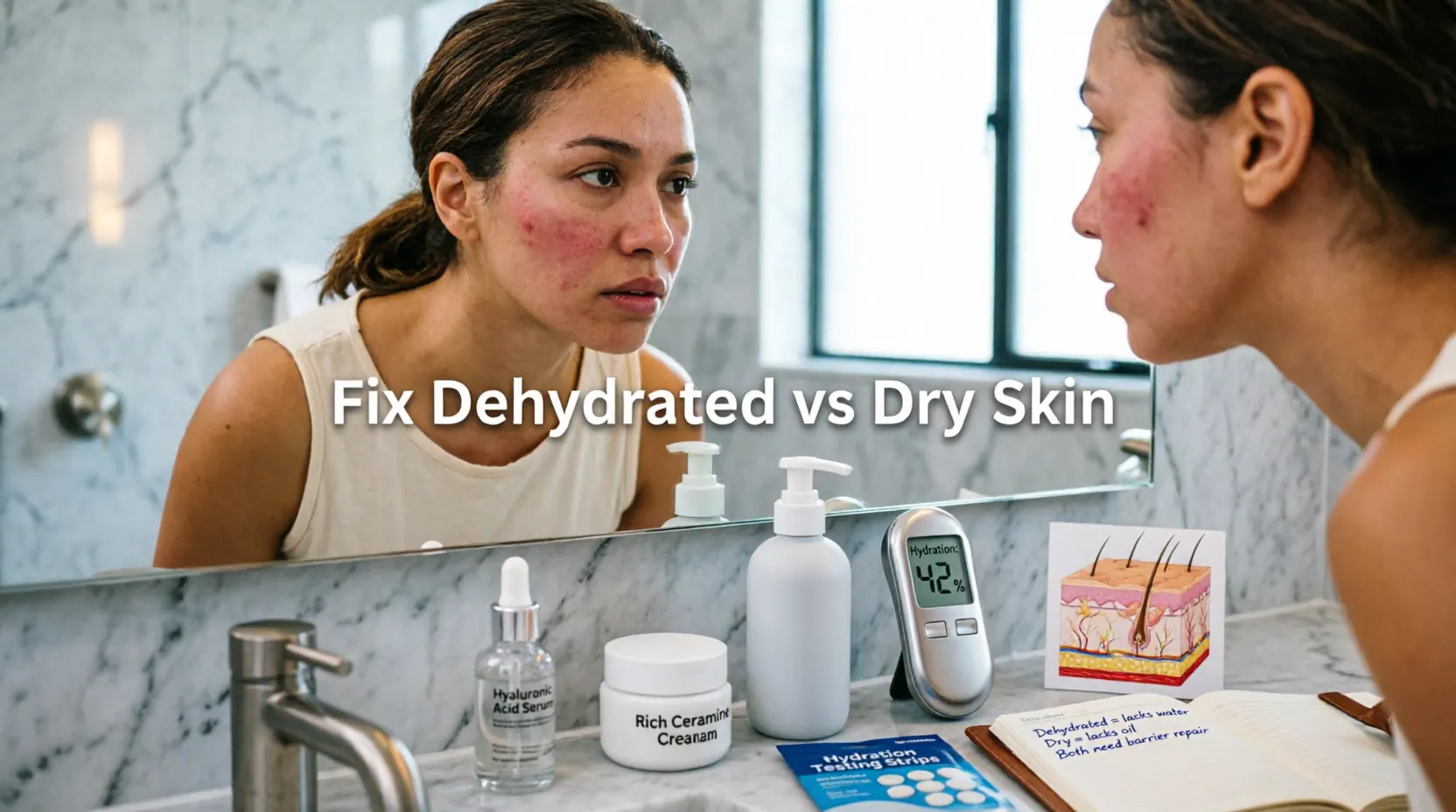
That rough, flaky, or tight feeling on your face isn't always what you think it is. Dehydrated vs. dry skin is one of the most commonly confused skincare concerns, and treating the wrong condition can actually make your texture problems worse. While both present with similar symptoms—flakiness, tightness, dullness—their underlying causes, biological mechanisms, and treatment approaches are fundamentally different.
Dry skin is a skin type characterized by insufficient oil (sebum) production, while dehydrated skin is a temporary condition where skin lacks water regardless of oil levels. This distinction matters because using rich, oil-based products on dehydrated skin can clog pores without addressing the root cause, while using lightweight, water-based products on truly dry skin won't provide the lipid support your barrier needs.
In this comprehensive, dermatologist-informed diagnostic guide, we'll decode the science behind skin hydration versus oil production, reveal the exact tests to identify whether your skin is dry, dehydrated, or both, share targeted treatment protocols for each condition, and provide expert strategies for restoring smooth, healthy texture. Whether you're dealing with persistent flakiness, rough patches, or a complexion that never feels quite balanced, you'll learn how to build a personalized routine that delivers real, lasting results.
Understanding the Difference: Dry Skin vs. Dehydrated Skin
Short answer: Dry skin is a genetic skin type lacking oil (sebum), while dehydrated skin is a temporary condition lacking water; dry skin needs lipid-rich products, while dehydrated skin needs water-binding humectants and barrier support.
Before treating texture issues, accurate diagnosis is essential. Here's how these conditions differ at a biological level:
Dry Skin: A Genetic Skin Type
What It Is:
- Dry skin (xerosis) is an inherent skin type determined by genetics
- Characterized by underactive sebaceous (oil) glands producing insufficient sebum
- Affects all ages but often worsens with hormonal changes and aging
- More common in Fitzpatrick skin types I-III and colder climates
Biological Mechanism:
- Sebaceous glands produce less sebum, the natural oil that lubricates skin
- Reduced lipids compromise the barrier's "mortar," increasing water loss
- Lower sebum means less natural protection against environmental stressors
- Results in chronic dryness, flakiness, and sensitivity
Key Characteristics:
- Texture: Rough, flaky, or scaly patches; may feel tight constantly
- Appearance: Dull, ashy, or grayish tone; visible fine lines from dehydration
- Sensation: Persistent tightness, itching, or discomfort
- Response to products: Absorbs rich creams quickly; lightweight products feel insufficient
- Seasonal pattern: Worsens in winter or low-humidity environments
Dehydrated Skin: A Temporary Condition
What It Is:
- Dehydrated skin is a temporary condition where skin lacks water, not oil
- Can affect any skin type: oily, combination, normal, or dry
- Caused by external factors: environment, lifestyle, skincare habits, or health
- Reversible with proper hydration and barrier support
Biological Mechanism:
- Transepidermal water loss (TEWL) exceeds water intake to skin cells
- Compromised barrier function allows moisture to escape rapidly
- Cells become shriveled, scattering light unevenly and creating dullness
- Can trigger rebound oil production in oily skin types
Key Characteristics:
- Texture: Rough or uneven but may feel oily in T-zone
- Appearance: Dull, lackluster; may show accentuated pores or fine lines
- Sensation: Tightness after cleansing that improves with moisturizer
- Response to products: Lightweight hydrators absorb well; rich creams may feel heavy
- Seasonal pattern: Can occur year-round; often triggered by travel, stress, or product changes
Can You Have Both?
Yes—many people experience "dry-dehydrated" skin:
- Genetically dry skin that's also temporarily dehydrated
- Requires both lipid replenishment AND water-binding hydration
- Treatment must address both oil deficiency and water loss
- Most common in aging skin, post-menopausal women, or harsh climates
The Diagnostic Framework: How to Identify Your Skin Type
Short answer: Use the bare-faced test, tissue test, product response assessment, and symptom tracking to determine if your skin is dry, dehydrated, or both—then match to targeted treatment for effective texture repair.
Accurate self-diagnosis guides effective treatment. Use this systematic approach:
Test #1: The Bare-Faced Test
Method:
- Cleanse face gently with pH-balanced cleanser
- Pat dry and apply NO products
- Wait 30-60 minutes
- Observe how skin feels and looks
Results Interpretation:
- Dry skin: Feels tight, rough, or flaky all over; may look dull or ashy
- Dehydrated skin: Feels tight initially but may develop oiliness in T-zone; looks dull but not necessarily flaky
- Combination: Tight cheeks with oily T-zone suggests dehydrated combination skin
- Normal: Comfortable, balanced feeling with no tightness or oiliness
Test #2: The Tissue Test
Method:
- Press clean, dry tissue gently against different facial areas
- Check for oil residue after 10 seconds
- Note which areas show oil and which don't
Results Interpretation:
- Dry skin: Little to no oil on tissue from any area
- Dehydrated oily skin: Oil on T-zone tissue but tightness on cheeks
- Dehydrated normal skin: Minimal oil but skin feels tight after cleansing
Test #3: The Product Response Assessment
Method: Track how skin responds to different product types over 1-2 weeks:
- Rich, oil-based moisturizer:
- Dry skin: Absorbs well, feels comfortable, reduces flakiness
- Dehydrated skin: May feel heavy or clog pores without resolving tightness
- Lightweight, water-based hydrator:
- Dry skin: Feels insufficient; tightness returns quickly
- Dehydrated skin: Absorbs well, provides temporary relief from tightness
- Hyaluronic acid serum:
- Dry skin: Helps but needs occlusive on top to prevent evaporation
- Dehydrated skin: Significant improvement in plumpness and comfort
Test #4: Symptom and Trigger Tracking
Track for 1-2 weeks:
- When does tightness occur? (after cleansing, midday, evening)
- What makes it better or worse? (products, weather, stress)
- Is flakiness constant or intermittent?
- Does oiliness appear in certain areas or times?
Pattern Recognition:
- Constant dryness/flakiness: Likely genetic dry skin
- Tightness that improves with hydration: Likely dehydration
- Tightness with oily T-zone: Dehydrated combination skin
- Seasonal worsening: Environmental dehydration factor
Why Texture Suffers: The Science Behind Rough, Flaky Skin
Short answer: Rough texture results from dead skin accumulation due to slowed cell turnover (dry skin) or shriveled cells from water loss (dehydrated skin); both scatter light unevenly and create visible flakiness requiring targeted intervention.
Understanding the biology behind texture issues helps you choose effective treatments:
How Dry Skin Creates Rough Texture
The Mechanism:
- Insufficient sebum means less natural exfoliation of dead cells
- Corneocytes (dead skin cells) accumulate on surface instead of shedding
- Buildup creates rough, uneven texture that emphasizes fine lines
- Compromised barrier allows irritants to penetrate, triggering inflammation
Visual Impact: Think of healthy skin like smooth paper vs. dry skin like sandpaper—light reflects unevenly, creating dull, rough appearance.
How Dehydrated Skin Creates Rough Texture
The Mechanism:
- Water loss causes skin cells to shrivel rather than remain plump
- Shriveled cells create micro-unevenness on skin surface
- Light scatters irregularly, creating dull, lackluster appearance
- Barrier dysfunction allows irritants to trigger inflammation and flakiness
Visual Impact: Think of hydrated skin like a plump grape vs. dehydrated skin like a raisin—surface becomes wrinkled and uneven.
The Role of Cell Turnover
Healthy Turnover:
- Dead cells shed every 28-40 days in young skin
- Fresh, smooth cells reach surface regularly
- Light reflects evenly for radiant appearance
Slowed Turnover (Dry Skin):
- Turnover slows to 40-60+ days with age or dryness
- Dead cells accumulate, creating rough texture
- Dull appearance as light scatters unevenly
Disrupted Turnover (Dehydrated Skin):
- Dehydration impairs enzyme function needed for shedding
- Cells don't detach properly, creating flaky patches
- Texture appears rough despite adequate oil production
Treatment Protocol for Dry Skin: Restoring Lipids
Short answer: Treat dry skin with lipid-rich cleansers, ceramide-containing moisturizers, facial oils, and occlusive ingredients that replenish the skin's natural oil barrier—avoiding water-based products that evaporate without sealing moisture.
Dry skin requires oil-based support to rebuild the compromised barrier:
Core Routine for Dry Skin
Morning:
- Cream or Oil Cleanser:
- Use non-foaming, lipid-rich formula
- Look for ingredients: squalane, jojoba oil, shea butter
- Avoid sulfates and high-pH formulas
- Recommended: CeraVe Hydrating Cleanser, La Roche-Posay Toleriane Hydrating Gentle Cleanser
- Hydrating Toner or Essence:
- Apply glycerin or hyaluronic acid formula to damp skin
- Provides initial hydration layer before oils
- Recommended: Hada Labo Gokujyun Lotion, Paula's Choice Enriched Calming Toner
- Lipid-Rich Serum:
- Choose formula with ceramides, cholesterol, fatty acids
- Replenishes barrier "mortar" between skin cells
- Recommended: SkinCeuticals Triple Lipid Restore 2:4:2, Dr. Jart+ Ceramidin Serum
- Rich Moisturizer:
- Apply cream with ceramides, shea butter, or squalane
- Seals in hydration and provides lasting lipid support
- Recommended: CeraVe Moisturizing Cream, La Roche-Posay Lipikar Balm AP+
- Mineral Sunscreen SPF 30+:
- Choose formula with added moisturizing ingredients
- Prevents UV damage that worsens dryness
- Recommended: EltaMD UV Clear Broad-Spectrum SPF 46, La Roche-Posay Anthelios Mineral Tinted SPF 50
Evening:
- Double Cleanse (if wearing makeup/sunscreen):
- First: Oil-based cleanser to dissolve makeup
- Second: Cream cleanser to remove residue
- Lipid-Replenishing Treatment:
- Apply facial oil or rich serum with ceramides
- Focus on driest areas (cheeks, around eyes)
- Recommended: The Ordinary 100% Plant-Derived Squalane, Biossance Squalane + Vitamin C Rose Oil
- Rich Night Cream:
- Apply thicker formula than morning for overnight repair
- Look for ingredients: peptides, ceramides, niacinamide
- Recommended: CeraVe Skin Renewing Night Cream, Kiehl's Ultra Facial Overnight Hydrating Mask
- Optional Occlusive:
- For very dry areas: thin layer of petrolatum or lanolin
- Seals in all previous layers for maximum repair
- Use sparingly to avoid clogging pores
Key Ingredients for Dry Skin
Ceramides:
- Mechanism: Replenish the "mortar" between skin cells; restore barrier integrity
- Best forms: Ceramide NP, AP, EOP in moisturizers or serums
- Evidence: Clinical studies show ceramides reduce TEWL by 30-50% in dry skin
Facial Oils:
- Mechanism: Mimic natural sebum; provide occlusive barrier to prevent water loss
- Best oils: Squalane, jojoba, rosehip, marula (non-comedogenic)
- Application: Apply to damp skin or mix with moisturizer for enhanced absorption
Shea Butter and Cocoa Butter:
- Mechanism: Rich emollients that soften rough texture and provide lasting hydration
- Best for: Very dry areas like cheeks, elbows, knees
- Caution: Can be comedogenic for acne-prone skin; patch-test first
Cholesterol and Fatty Acids:
- Mechanism: Work with ceramides to restore optimal 3:1:1 lipid ratio in barrier
- Best forms: Found in barrier-repair moisturizers and serums
- Evidence: Studies show balanced lipid ratios improve barrier function by 40-60%
Treatment Protocol for Dehydrated Skin: Restoring Water
Short answer: Treat dehydrated skin with humectant-rich products (hyaluronic acid, glycerin), barrier-supporting ingredients (niacinamide, panthenol), and occlusive layers to seal hydration—avoiding harsh actives that increase water loss.
Dehydrated skin requires water-binding hydration plus barrier support to prevent evaporation:
Core Routine for Dehydrated Skin
Morning:
- Gentle Cleanser:
- Use pH-balanced, non-stripping formula
- Avoid foaming cleansers that increase TEWL
- Recommended: CeraVe Hydrating Cleanser, Vanicream Gentle Facial Cleanser
- Humectant Serum:
- Apply hyaluronic acid, glycerin, or beta-glucan to damp skin
- Attracts water to skin cells for immediate plumping
- Recommended: The Ordinary Hyaluronic Acid 2% + B5, Paula's Choice Hyaluronic Acid Booster
- Barrier-Supporting Serum:
- Apply niacinamide 4-5% or panthenol to strengthen barrier
- Reduces inflammation and prevents further water loss
- Recommended: The Ordinary Niacinamide 10% + Zinc 1% (dilute if sensitive), La Roche-Posay Toleriane Double Repair Face Moisturizer
- Lightweight Moisturizer:
- Choose gel-cream or lotion with ceramides
- Seals in humectants without feeling heavy
- Recommended: Versed Dew Point Moisturizing Gel-Cream, CeraVe PM Facial Moisturizing Lotion
- Mineral Sunscreen SPF 30+:
- Choose formula with hydrating ingredients
- Prevents UV-induced barrier damage
- Recommended: EltaMD UV Clear Broad-Spectrum SPF 46, Supergoop Unseen Sunscreen SPF 40
Evening:
- Gentle Cleanser:
- Double cleanse only if wearing makeup or heavy sunscreen
- Use oil-based first step followed by gentle water-based cleanser
- Hydrating Toner or Essence:
- Apply multiple layers of hydrating toner to damp skin
- Builds hydration foundation before treatments
- Recommended: Hada Labo Gokujyun Lotion, COSRX Hyaluronic Acid Intensive Cream
- Targeted Treatment (Alternate Nights):
- Night 1, 3, 5: Gentle exfoliant (PHA or low-dose lactic acid) to remove dead cells
- Night 2, 4, 6: Barrier-repair serum with centella or madecassoside
- Night 7: Rest night—hydration only
- Moisturizer:
- Apply slightly richer formula than morning
- Look for ingredients: squalane, ceramides, peptides
- Optional Hydration Boost:
- For very dehydrated skin: apply hydrating sheet mask 1-2x/week
- Follow with moisturizer to seal in hydration
Key Ingredients for Dehydrated Skin
Hyaluronic Acid:
- Mechanism: Binds up to 1000x its weight in water; plumps shriveled cells
- Best forms: Multi-molecular weight formulas for surface and deep hydration
- Application: Apply to damp skin; seal with moisturizer to prevent evaporation
- Evidence: Clinical studies show HA increases skin hydration by 20-40% in 4 weeks
Glycerin:
- Mechanism: Classic humectant that draws water from environment and deeper skin layers
- Best forms: Found in toners, serums, and moisturizers
- Advantage: Well-tolerated by all skin types; works in low humidity
Niacinamide (4-5%):
- Mechanism: Strengthens barrier function; reduces TEWL; calms inflammation
- Best for: All skin types; especially beneficial for dehydrated oily or combination skin
- Evidence: Studies show 4-5% niacinamide reduces TEWL by 20-30% in 4 weeks
Panthenol (Provitamin B5):
- Mechanism: Attracts moisture; soothes irritation; supports barrier repair
- Best forms: Serums, moisturizers, or healing balms
- Advantage: Gentle enough for compromised or sensitive skin
Treatment for Dry-Dehydrated Skin: The Combined Approach
Short answer: Treat dry-dehydrated skin with layered hydration (humectants first), lipid replenishment (ceramides and oils), and occlusive sealing—addressing both water loss and oil deficiency for complete texture repair.
Many people need both approaches simultaneously:
The Layering Method
Step-by-Step Application:
- Cleanse gently: Use pH-balanced, non-stripping cleanser
- Apply to damp skin: Pat face until slightly damp (not dry)
- Layer humectants first: Hyaluronic acid or glycerin serum to attract water
- Add barrier support: Niacinamide or panthenol serum to strengthen barrier
- Replenish lipids: Ceramide serum or facial oil to restore oil barrier
- Seal with moisturizer: Rich cream to lock in all layers
- Optional occlusive: Thin petrolatum layer on extra-dry areas at night
Why This Order Matters:
- Humectants need water to bind—applying to damp skin maximizes efficacy
- Barrier-supporting ingredients work best on hydrated skin
- Lipids seal in the water attracted by humectants
- Moisturizer creates final protective layer to prevent evaporation
Product Pairing Examples
Morning Routine for Dry-Dehydrated Skin:
- Cleanser: CeraVe Hydrating Cleanser
- Serum 1: The Ordinary Hyaluronic Acid 2% + B5 (applied to damp skin)
- Serum 2: Paula's Choice 10% Niacinamide Booster (diluted)
- Oil: The Ordinary 100% Plant-Derived Squalane (2-3 drops)
- Moisturizer: CeraVe Moisturizing Cream
- SPF: EltaMD UV Clear Broad-Spectrum SPF 46
Evening Routine for Dry-Dehydrated Skin:
- Cleanser: Double cleanse with oil-based then cream cleanser
- Toner: Hada Labo Gokujyun Lotion (multiple layers)
- Treatment: Skin1004 Madagascar Centella Ampoule (soothing)
- Serum: Dr. Jart+ Ceramidin Serum (lipid replenishment)
- Moisturizer: La Roche-Posay Lipikar Balm AP+
- Optional: Thin layer of Aquaphor on extra-dry patches
Lifestyle Factors That Affect Skin Hydration
Short answer: Enhance texture repair by managing environmental humidity, staying hydrated internally, reducing stress, avoiding hot water, and protecting skin from UV and pollution—creating internal support for topical treatments.
Skincare alone isn't enough. These lifestyle habits create the optimal environment for hydration:
Environmental Management
Humidity Control:
- Use humidifier indoors during winter or in dry climates
- Maintain 40-60% humidity to reduce transepidermal water loss
- Place humidifier near bed for overnight hydration support
Temperature Protection:
- Avoid hot showers and baths that strip natural oils
- Use lukewarm water for cleansing (95-100°F / 35-38°C)
- Protect skin from extreme cold with scarves or protective balms
Internal Hydration and Nutrition
Water Intake:
- Drink 8-10 glasses of water daily to support cellular hydration
- Limit caffeine and alcohol, which can dehydrate skin
- Include hydrating foods: cucumber, watermelon, celery, soups
Nutrition for Barrier Health:
- Omega-3 fatty acids: Fatty fish, flaxseed, walnuts (support barrier lipids)
- Vitamin C: Citrus, berries, peppers (collagen synthesis)
- Vitamin E: Almonds, sunflower seeds, avocado (antioxidant protection)
- Zinc: Pumpkin seeds, chickpeas, lean meats (barrier repair)
- Ceramides: Sweet potatoes, soybeans, brown rice (replenish barrier lipids)
Stress and Sleep Management
Stress Impact:
- Chronic stress elevates cortisol, which impairs barrier repair
- Stress triggers inflammation that worsens dehydration
- Poor stress management disrupts sleep, creating vicious cycle
Solutions:
- Practice deep breathing or meditation 10 minutes daily
- Prioritize 7-9 hours of quality sleep nightly
- Create consistent sleep schedule for optimal skin repair
Sun and Pollution Protection
- Daily sunscreen: Apply mineral SPF 30+ every morning
- Antioxidant serums: Vitamin C or E to neutralize free radicals
- Protective clothing: Hats, sunglasses, UPF-rated fabrics
- Avoid peak sun: Seek shade between 10 AM - 4 PM
Common Mistakes That Worsen Dry or Dehydrated Skin
Avoid these errors that can sabotage your texture repair efforts:
Mistake #1: Using the Wrong Products for Your Condition
Why it hurts: Applying oil-rich products to dehydrated skin can clog pores without addressing water loss. Using water-based products on dry skin won't provide needed lipid support.
Fix: Accurately diagnose your skin type using the diagnostic framework. Choose products matched to your specific needs: lipids for dry skin, humectants for dehydrated skin, or both for combination.
Mistake #2: Over-Exfoliating
Why it hurts: Excessive exfoliation damages the barrier, increasing water loss and worsening both dryness and dehydration. Physical scrubs create micro-tears that compromise barrier function.
Fix: Limit exfoliation to 1-2x/week maximum. Choose gentle chemical exfoliants (PHA, low-dose lactic acid) over physical scrubs. If skin feels tight or stings, pause exfoliation and focus on barrier repair.
Mistake #3: Skipping Moisturizer or Using It Incorrectly
Why it hurts: Not moisturizing after cleansing allows rapid water loss. Applying moisturizer to dry skin reduces efficacy. Using the wrong formula (too light or too heavy) fails to address specific needs.
Fix: Apply moisturizer within 3 minutes of cleansing while skin is still damp. Choose formula matched to your skin type: rich creams for dry skin, lightweight gels for dehydrated oily skin, or layered approach for combination.
Mistake #4: Using Hot Water
Why it hurts: Hot water strips natural oils, dissolves protective lipids, and increases inflammation—worsening both dryness and dehydration.
Fix: Use lukewarm water only (95-100°F / 35-38°C). Test with wrist—should feel neutral, not warm. Finish with cool rinse to close pores and reduce inflammation.
Mistake #5: Expecting Overnight Results
Why it hurts: Barrier repair and texture improvement take 2-4 weeks minimum. Impatience leads to product-hopping, over-treating, or giving up before treatments have time to work.
Fix: Commit to a consistent routine for at least 4 weeks before evaluating results. Take weekly photos in consistent lighting to track subtle progress. Focus on how skin feels, not just how it looks.
Expert Tips for Faster Texture Repair
Tip #1: Apply Products to Damp Skin
After cleansing, pat skin until slightly damp (not dry), then apply serums and moisturizer. This traps water in the stratum corneum, enhancing hydration and product absorption.
Tip #2: Layer Strategically
Apply thinnest to thickest: hydrating toner → humectant serum → barrier serum → moisturizer → oil (if needed). Wait 1-2 minutes between layers for absorption.
Tip #3: Use a Humidifier Overnight
Run a humidifier in your bedroom to maintain 40-60% humidity while you sleep. This reduces transepidermal water loss and supports overnight barrier repair.
Tip #4: Patch-Test New Products
Before applying any new product to your face, test on a small area of jawline or behind ear for 48 hours. This prevents widespread reactions on compromised skin.
Tip #5: Track Your Progress
Keep a simple journal noting products used, skin feel, and texture changes. Patterns help you identify what works and adjust your routine accordingly.
Tip #6: Be Patient with Actives
When introducing exfoliants or other actives, start with lowest concentration and frequency (1x/week). Gradually increase as tolerated, monitoring for signs of over-exfoliation.
Frequently Asked Questions About Dry vs. Dehydrated Skin
Can dehydrated skin become dry skin?
Short answer: No—dehydrated skin is a temporary condition, while dry skin is a genetic type. However, chronic dehydration can weaken the barrier, making dry skin symptoms worse. Proper hydration can improve texture in both conditions.
Key distinction: Dehydration is reversible with proper care; dry skin requires ongoing lipid support but can be managed effectively.
How long does it take to fix dehydrated or dry skin texture?
Short answer: With consistent care, initial improvement occurs in 1-2 weeks, significant texture repair in 4-6 weeks, and optimal results at 8-12 weeks. Severe or long-standing issues may take longer.
Timeline depends on:
- Severity of initial damage
- Consistency of routine
- Avoidance of triggers (hot water, harsh products)
- Individual healing capacity and age
Can oily skin be dehydrated?
Short answer: Yes—dehydrated oily skin is common. Oil production and water content are separate concerns. Oily skin can lack water, leading to tightness, dullness, and rebound oil production as skin overcompensates for dehydration.
Treatment for dehydrated oily skin:
- Use gentle, pH-balanced cleanser (not foaming)
- Apply humectant serums (hyaluronic acid, glycerin) to damp skin
- Use lightweight, non-comedogenic moisturizer to seal hydration
- Avoid stripping products that trigger rebound oil
Should I exfoliate dry or dehydrated skin?
Short answer: Yes—but gently and strategically. Use chemical exfoliants (PHA, low-dose lactic acid) 1x/week max to remove dead cells without damaging barrier. Avoid physical scrubs on compromised skin.
Signs you're over-exfoliating:
- Increased tightness or flakiness
- Stinging with moisturizer application
- Redness or irritation
- Worsening texture instead of improvement
Can diet affect skin hydration?
Short answer: Yes—indirectly. Adequate water intake supports cellular hydration. Omega-3s, vitamins C and E, and zinc support barrier function. However, topical care has more immediate impact on texture; diet supports long-term results.
Supportive nutrition:
- Water: 8-10 glasses daily
- Omega-3s: fatty fish, flaxseed, walnuts
- Vitamin C: citrus, berries, peppers
- Vitamin E: almonds, sunflower seeds, avocado
- Zinc: pumpkin seeds, chickpeas, lean meats
When should I see a dermatologist for texture issues?
Short answer: Consult a dermatologist if: texture doesn't improve after 6-8 weeks of consistent care, is accompanied by pain/itching/oozing, appears suddenly or asymmetrically, or if you suspect an underlying condition like eczema or rosacea.
A dermatologist can:
- Rule out medical conditions affecting skin texture
- Prescribe barrier-repair medications or anti-inflammatory topicals
- Recommend professional treatments (chemical peels, laser)
- Provide personalized protocol based on skin analysis
The Bottom Line: Accurate Diagnosis Is the Foundation of Healthy Texture
Rough, flaky, or dull skin isn't a life sentence—it's a signal that your skin needs targeted support. By accurately diagnosing whether your skin is dry, dehydrated, or both, and choosing treatments matched to your specific needs, you can restore smooth, healthy texture and maintain radiance long-term.
Remember:
- Diagnose first: Use the bare-faced test, tissue test, and product response to identify your skin type
- Treat appropriately: Lipids for dry skin, humectants for dehydrated skin, or layered approach for combination
- Protect daily: SPF and gentle cleansing prevent further barrier damage
- Be patient: Texture repair takes 4-8 weeks of consistent care
- Support holistically: Hydration, nutrition, and stress management amplify topical results
- Listen to your skin: If a product stings or worsens texture, stop using it immediately
Your skin has an incredible capacity to renew when given the right conditions. Start tonight: gentle cleanse, apply targeted serum to damp skin, seal with appropriate moisturizer, and commit to consistent care. Take progress photos. Celebrate small improvements. And trust that with knowledge, consistency, and the right protocol, smooth, healthy texture is within reach.
You deserve to feel confident in your skin. With science-backed care, self-compassion, and realistic expectations, you can restore your natural texture—one gentle, consistent step at a time.