

Digital Marketing Trends 2026: SEO, Social and AI Strategies
What's Working in Digital Marketing Right Now: Your 2026 Playbook
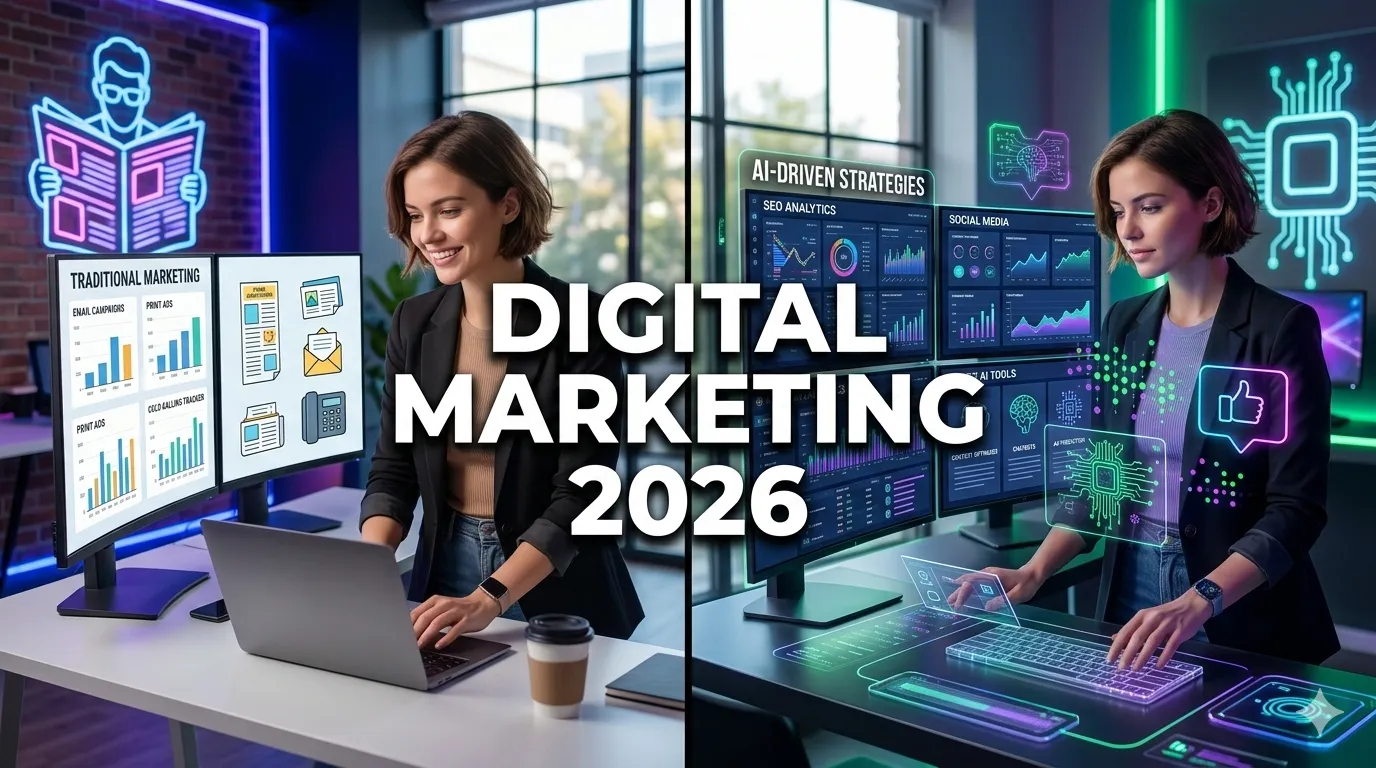
The digital marketing landscape in 2026 looks nothing like it did just a few years ago. Artificial intelligence has moved from experimental tool to essential infrastructure. Search algorithms prioritize user experience and expertise over keyword density. Social platforms reward authentic engagement over vanity metrics. And consumers expect hyper-personalized, value-driven interactions at every touchpoint.
If your marketing strategy hasn't evolved, you're not just falling behind—you're becoming invisible. The businesses thriving in 2026 aren't those with the biggest budgets; they're those that have mastered the intersection of SEO, social media, and AI-driven personalization to deliver genuine value at scale.
This comprehensive guide cuts through the noise to reveal what's actually working in digital marketing right now. Based on current data, expert insights, and real-world case studies, you'll discover actionable SEO tactics, social media strategies, and AI-powered approaches that drive measurable results. Whether you're a small business owner, marketing professional, or entrepreneur building an online brand, these insights will help you future-proof your strategy and outperform competitors in an increasingly crowded digital landscape.
The State of Digital Marketing in 2026: Key Shifts You Can't Ignore
AI Has Moved from "Nice-to-Have" to "Non-Negotiable"
What was once a competitive advantage is now table stakes. AI isn't replacing marketers—it's amplifying those who know how to use it strategically.
Current reality: 78% of high-performing marketing teams now use AI for at least three core functions: content ideation, audience segmentation, and performance optimization (Marketing AI Institute, 2026).
What this means for you: Ignoring AI tools isn't an option. But blindly automating everything isn't the answer either. The winners are those who use AI to enhance human creativity and strategic thinking—not replace it.
Search Is No Longer Just About Keywords
Google's algorithms have evolved to prioritize expertise, experience, authoritativeness, and trustworthiness (EEAT) alongside traditional ranking factors. User intent, content quality, and page experience now outweigh keyword density.
Featured snippet targeting: What is the biggest digital marketing shift in 2026? The move from keyword-focused SEO to intent-focused, experience-driven optimization. Success now requires creating content that genuinely solves user problems, demonstrates real expertise, and delivers exceptional page performance.
Social Media Rewards Authenticity Over Polish
Consumers are fatigued by overly produced content. Platforms like TikTok, Instagram Reels, and YouTube Shorts prioritize raw, authentic, value-driven content that feels human—not corporate.
Engagement truth: Posts that show behind-the-scenes processes, admit mistakes, or share real customer stories consistently outperform polished brand content by 3-5x in engagement rates.
SEO Strategies That Actually Work in 2026
EEAT Optimization: Building Trust That Ranks
Google's emphasis on Experience, Expertise, Authoritativeness, and Trustworthiness isn't going away—it's intensifying.
Practical EEAT implementation:
Experience: Show, don't just tell. Include case studies, before/after results, and real user testimonials. Add author bios that highlight relevant experience, not just credentials.
Expertise: Demonstrate depth through comprehensive guides, original research, and nuanced insights. Cite credible sources and link to authoritative references.
Authoritativeness: Earn backlinks from respected industry sites. Get quoted in media. Speak at events. Build a reputation that extends beyond your website.
Trustworthiness: Be transparent about data sources, methodologies, and potential conflicts. Include clear contact information, privacy policies, and secure checkout processes.
Quick win: Audit your top 10 pages for EEAT signals. Add author credentials, update outdated statistics, and include real-world examples to strengthen trust signals.
Intent-First Content Strategy
Keyword research is still valuable, but understanding user intent is now paramount.
Four intent types to target:
- Informational: Users seeking answers (e.g., "how to fix slow website")
- Navigational: Users looking for a specific site (e.g., "Facebook login")
- Commercial: Users researching before buying (e.g., "best email marketing tools")
- Transactional: Users ready to purchase (e.g., "buy SEO software discount")
Implementation framework:
- Map your keywords to intent types
- Create content that fully satisfies that intent
- Structure pages to guide users to next logical step
- Measure success by engagement and conversion, not just rankings
Example: For the query "AI content tools," an informational intent page would compare features and use cases. A commercial intent page would include detailed reviews and pricing. A transactional page would offer a limited-time discount with clear CTAs.
Technical SEO: The Foundation That Still Matters
While content and intent get attention, technical SEO remains critical for visibility.
2026 technical priorities:
- Core Web Vitals: Aim for LCP under 2.5s, FID under 100ms, CLS under 0.1
- Mobile-first indexing: Ensure mobile experience equals or exceeds desktop
- Structured data: Implement schema markup for articles, products, FAQs, and local business
- Page speed: Compress images, leverage browser caching, minimize JavaScript
- Secure connections: HTTPS is mandatory; consider HTTP/3 for performance gains
Tool recommendation: Use Google Search Console, PageSpeed Insights, and Screaming Frog to audit and monitor technical health monthly.
Voice and Visual Search Optimization
As smart speakers and visual search grow, optimizing for these formats is no longer optional.
Voice search tactics:
- Target conversational, long-tail keywords ("Where can I buy eco-friendly yoga mats near me?")
- Optimize for featured snippets (voice assistants often read these aloud)
- Include local schema markup for location-based queries
- Answer questions directly in content (voice searches are often question-based)
Visual search optimization:
- Use high-quality, original images with descriptive alt text
- Implement product schema with image URLs for e-commerce
- Optimize image file names with relevant keywords
- Consider Pinterest and Google Lens as discovery channels
Social Media Strategies Driving Real Results in 2026
Platform-Specific Content That Converts
One-size-fits-all social content is dead. Each platform demands tailored approaches.
TikTok/Reels strategy:
- Hook viewers in first 2 seconds with bold statement or visual
- Keep videos under 30 seconds for maximum completion rates
- Use trending audio but add unique brand twist
- Include clear, simple CTAs ("Save this for later," "Comment your answer")
- Post consistently (3-5x weekly) to stay in algorithm favor
LinkedIn strategy:
- Share insights, not just promotions—position as thought leader
- Use document posts (carousels) for higher engagement
- Engage authentically with comments within first hour of posting
- Tag relevant people/companies sparingly and strategically
- Mix personal stories with professional expertise
Instagram strategy:
- Prioritize Reels over static posts for reach
- Use Stories for behind-the-scenes and time-sensitive content
- Leverage Guides for evergreen resource collections
- Engage with niche hashtags (10k-100k posts) for targeted discovery
- Collaborate with micro-influencers for authentic reach
Community Building Over Follower Counting
Engagement rate matters far more than follower count in 2026.
Community-first tactics:
- Respond to every comment: Especially in first 60 minutes when algorithm weighs engagement heavily
- Ask questions: End posts with prompts that invite discussion
- Feature user content: Repost customer stories (with permission) to build loyalty
- Create exclusive groups: Facebook Groups, Discord servers, or LinkedIn Communities for superfans
- Host live sessions: QandAs, tutorials, or behind-the-scenes streams build real connection
Metrics that matter: Track comments, shares, saves, and click-throughs—not just likes or follower growth.
Short-Form Video: The Non-Negotiable Format
Video isn't just popular—it's essential. Short-form video drives the highest engagement across all platforms.
Short-form video best practices:
- Hook immediately: First frame must grab attention—use text overlay, bold visual, or intriguing question
- Value-first content: Teach something, solve a problem, or entertain meaningfully
- Vertical format: Always shoot in 9:16 for mobile optimization
- Captions are mandatory: 85% of videos are watched without sound
- Clear CTA: Tell viewers exactly what to do next
Content ideas that work:
- Quick tips or hacks in your niche
- Before/after transformations
- Myth-busting common misconceptions
- Day-in-the-life or behind-the-scenes
- Customer success stories (with permission)
AI-Driven Marketing Strategies That Scale
Personalization at Scale: Beyond "Hi [First Name]"
Generic personalization is table stakes. True AI-driven personalization adapts content, offers, and timing to individual behavior.
Advanced personalization tactics:
- Behavioral segmentation: Use AI to group users by actions (pages viewed, time on site, purchase history) not just demographics
- Dynamic content: Show different homepage banners, product recommendations, or CTAs based on user segment
- Predictive timing: Use AI to send emails or push notifications when each user is most likely to engage
- Adaptive journeys: Adjust email sequences or onboarding flows based on real-time user responses
Tools to explore: HubSpot, Klaviyo, Dynamic Yield, or Adobe Target for enterprise-level personalization.
AI Content Creation: Augmentation, Not Automation
AI writing tools are powerful—but misuse damages credibility and SEO performance.
Effective AI content workflow:
- Ideation: Use AI to generate topic ideas, headlines, and content outlines based on search data
- Drafting: Let AI create first drafts of routine content (product descriptions, FAQs, social captions)
- Human refinement: Add expertise, personality, original insights, and EEAT signals
- Fact-checking: Verify all claims, statistics, and recommendations
- Optimization: Use AI to suggest SEO improvements, then apply human judgment
What to avoid: Publishing AI content without human review. Google can detect low-effort AI content and may deprioritize it.
Predictive Analytics for Smarter Decisions
AI doesn't just automate tasks—it helps you anticipate trends and allocate resources wisely.
Predictive use cases:
- Churn prediction: Identify customers likely to cancel and intervene proactively
- Content performance: Forecast which topics or formats will resonate before creation
- Budget allocation: Use AI to recommend optimal spend across channels based on ROI patterns
- Trend spotting: Detect emerging keywords, topics, or customer needs before competitors
Getting started: Begin with one predictive model (e.g., email open rate optimization) before scaling to complex forecasting.
Integrating SEO, Social and AI: The Synergy Strategy
Content Repurposing That Multiplies Reach
Create once, distribute everywhere—with intelligent adaptation for each channel.
The repurposing framework:
- Start with pillar content: Create one comprehensive, SEO-optimized guide or research report
- Extract social snippets: Pull key insights, quotes, or stats for LinkedIn posts, Twitter threads, or Instagram carousels
- Create video summaries: Turn main points into short-form videos for TikTok/Reels
- Develop email series: Break content into a nurture sequence with personalized CTAs
- Update and refresh: Use AI to identify outdated sections and schedule quarterly reviews
Efficiency gain: One pillar piece can generate 15-20 derivative assets, maximizing ROI on content creation.
Data Loop Optimization
Use insights from each channel to improve performance across all channels.
Cross-channel learning:
- Social to SEO: High-engagement social topics reveal content gaps to address on your website
- SEO to social: Top-ranking keywords inform social content themes and hashtags
- AI to both: Use predictive analytics to identify which topics will perform well on both search and social
- User feedback: Comments, reviews, and support tickets reveal content improvements for all channels
Implementation tip: Hold monthly cross-functional reviews where SEO, social, and content teams share insights and align priorities.
Unified Customer Journey Mapping
Customers don't experience your brand in silos. Your marketing shouldn't either.
Journey-aware tactics:
- Awareness stage: Optimize blog content and social posts for discovery and education
- Consideration stage: Use retargeting ads, comparison guides, and case studies to build trust
- Decision stage: Offer personalized demos, limited-time incentives, or social proof to convert
- Retention stage: Deploy onboarding sequences, loyalty programs, and community access to reduce churn
AI enhancement: Use machine learning to identify which journey stage each user is in and serve appropriate content automatically.
Measuring What Matters: KPIs for 2026 Success
Beyond Vanity Metrics
Likes, followers, and pageviews feel good but don't pay bills. Focus on metrics that drive business outcomes.
SEO metrics that matter:
- Organic traffic growth (by intent type)
- Conversion rate from organic search
- Keyword rankings for commercial intent terms
- Featured snippet acquisition rate
- Core Web Vitals scores
Social metrics that matter:
- Engagement rate (comments + shares + saves ÷ impressions)
- Click-through rate to website
- Conversion rate from social traffic
- Community growth (not just followers)
- Customer acquisition cost by social channel
AI/automation metrics that matter:
- Time saved on repetitive tasks
- Personalization impact on conversion rates
- Predictive model accuracy
- ROI of AI tool investments
- Content performance lift from AI optimization
Attribution in a Multi-Touch World
Customers interact with your brand across multiple channels before converting. Single-touch attribution misrepresents reality.
Multi-touch attribution approaches:
- Linear: Equal credit to all touchpoints
- Time decay: More credit to touchpoints closer to conversion
- Position-based: 40% credit to first and last touch, 20% distributed to middle
- Algorithmic: AI models that assign credit based on actual contribution patterns
Practical start: Use Google Analytics 4's data-driven attribution or a simple position-based model before investing in complex algorithmic solutions.
Common Mistakes to Avoid in 2026
Over-Automating the Human Touch
The mistake: Using AI to replace all human interaction, resulting in robotic, impersonal experiences.
The fix: Automate repetitive tasks (scheduling, reporting, basic responses) but keep humans in the loop for strategy, creativity, and complex customer interactions.
Chasing Every New Platform
The mistake: Spreading resources thin by trying to be everywhere at once.
The fix: Master 2-3 platforms where your audience actually spends time. Depth beats breadth.
Ignoring Data Privacy Regulations
The mistake: Collecting and using customer data without proper consent or transparency.
The fix: Implement clear privacy policies, obtain explicit consent, and prioritize first-party data collection. Trust is a competitive advantage.
Publishing Without Optimization
The mistake: Creating great content but failing to optimize for search, social, or conversion.
The fix: Build optimization into your workflow: keyword research before writing, social hooks during drafting, and CTAs before publishing.
Getting Started: Your 90-Day Action Plan
Month 1: Audit and Align
- Conduct SEO audit: technical health, content gaps, EEAT signals
- Analyze social performance: identify top-performing content and platforms
- Map customer journey: document touchpoints and drop-off points
- Select 1-2 AI tools to test (start small)
- Define 3-5 KPIs that align with business goals
Month 2: Implement and Test
- Optimize 5-10 priority pages for EEAT and intent
- Launch one platform-specific content series (e.g., weekly Reels)
- Implement basic personalization (segmented email campaigns)
- Test one predictive use case (e.g., send-time optimization)
- Set up cross-channel tracking and attribution
Month 3: Analyze and Scale
- Review performance data against KPIs
- Double down on what's working; pause what isn't
- Refine AI workflows based on results
- Document processes for team training
- Plan next quarter's priorities based on insights
Frequently Asked Questions
Is AI content penalized by Google in 2026?
Google doesn't penalize AI content simply for being AI-generated. However, low-quality, unoriginal, or spammy content—whether human or AI-written—may rank poorly. Focus on creating helpful, expert content that serves user intent, and use AI as a tool to enhance (not replace) human expertise.
Which social platform should I prioritize in 2026?
Prioritize platforms where your target audience actively engages. For B2B: LinkedIn. For visual products: Instagram or Pinterest. For broad reach and discovery: TikTok or YouTube Shorts. Start with one platform, master it, then expand.
How much should I invest in AI marketing tools?
Start small: allocate 5-10% of your marketing budget to test 1-2 AI tools with clear use cases. Measure ROI rigorously. Scale investment only when tools demonstrate measurable impact on your defined KPIs.
Can small businesses compete with AI-driven marketing?
Absolutely. Many AI tools offer affordable or free tiers perfect for small businesses. Focus on niche expertise, authentic storytelling, and community building—areas where small brands often outperform larger competitors.
How do I balance automation with authenticity?
Automate tasks, not relationships. Use AI for data analysis, scheduling, and routine content—but keep human voice in customer interactions, brand storytelling, and strategic decisions. Authenticity is your differentiator.
Conclusion: Future-Proof Your Marketing Strategy
The digital marketing landscape in 2026 rewards those who embrace change without losing sight of fundamentals. SEO still matters—but it's about expertise and experience, not just keywords. Social media still drives engagement—but authenticity beats polish. AI still transforms capabilities—but human judgment remains irreplaceable.
Your competitive advantage isn't access to tools—it's how you use them. The businesses winning in 2026 aren't those with the biggest budgets or the flashiest tech. They're those that combine strategic SEO, authentic social engagement, and intelligent AI application to deliver genuine value to real people.
Start where you are. You don't need to overhaul everything overnight. Pick one insight from this guide to implement this week. Optimize one page for EEAT. Test one short-form video format. Experiment with one AI tool. Small, consistent actions compound into transformative results.
Stay curious, stay adaptable. Digital marketing will continue evolving. The mindset that serves you best isn't mastery of today's tactics—it's commitment to learning, testing, and iterating. That's how you build a strategy that thrives not just in 2026, but in whatever comes next.
The future of marketing is human-centered, AI-amplified, and value-driven. Your brand can lead that future. Start today.