

Dry vs. Dehydrated Skin: How to Identify Your Skin's True Needs
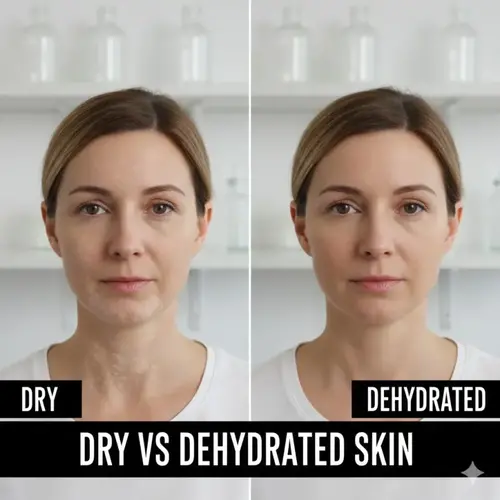
The Critical Distinction Why Dry and Dehydrated Skin Require Different Solutions
Many people use the terms "dry" and "dehydrated" interchangeably when describing their skin, but this confusion can lead to ineffective skincare and persistent problems. While both conditions involve a lack of moisture, they stem from different causes, present differently, and require distinct treatment approaches.
Dry skin is a skin type—largely determined by genetics and characterized by insufficient oil (sebum) production. It's a chronic condition that requires ongoing management with emollient-rich, oil-based products.
Dehydrated skin, on the other hand, is a temporary skin condition that can affect any skin type—including oily skin. It occurs when skin lacks water, not oil, and is often caused by external factors like environment, diet, or harsh skincare products.
Understanding this distinction matters because:- Using heavy oils on dehydrated skin won't address the underlying water deficiency- Using only hydrating products on dry skin won't compensate for lack of natural oils- Misdiagnosis leads to frustration, wasted products, and prolonged skin concerns
This guide will help you accurately identify your skin's true needs and build an effective, targeted routine.
Understanding Dry Skin A Skin Type Defined by Oil Deficiency
What Is Dry Skin?
Dry skin (xerosis) is an inherent skin type characterized by reduced sebum production from the sebaceous glands. Sebum is the skin's natural oil that lubricates, protects, and helps maintain the barrier function. When sebum production is insufficient, skin lacks the lipids necessary to retain moisture and maintain a healthy barrier.
Key Characteristics of Dry Skin:- Consistently feels tight, especially after cleansing- Appears rough, flaky, or scaly- Shows visible fine lines more prominently- Lacks natural radiance or glow- May experience itching or irritation- Pores appear very small or invisible- Makeup may appear patchy or settle into fine lines
Causes of Dry Skin:- Genetics: Primarily determined by your DNA and gland activity- Age: Sebum production naturally decreases with age- Hormonal changes: Menopause, thyroid disorders can reduce oil production- Climate: Cold, dry weather exacerbates dryness- Medical conditions: Eczema, psoriasis, hypothyroidism
The Science Behind Dry Skin:Dry skin has a compromised lipid barrier. The stratum corneum (outermost layer) lacks sufficient ceramides, cholesterol, and fatty acids—the "mortar" that holds skin cells together. This deficiency leads to:- Increased transepidermal water loss (TEWL)- Reduced protection against environmental aggressors- Impaired barrier function- Chronic moisture deficiency
Understanding Dehydrated Skin A Temporary Condition of Water Loss
What Is Dehydrated Skin?
Dehydrated skin is a temporary condition where skin lacks water, not oil. Unlike dry skin, dehydration can affect any skin type—oily, combination, normal, or dry. It's typically caused by external factors and can be reversed with proper care and lifestyle adjustments.
Key Characteristics of Dehydrated Skin:- Feels tight but may still appear oily or shiny- Looks dull and lackluster- Shows more pronounced fine lines (especially when pinched)- May feel rough despite adequate oil production- Can experience increased sensitivity- Skin may "tan" or darken more easily- Appears tired or "deflated"
The Pinch Test for Dehydration:Gently pinch a small area of skin on your cheek. If it takes a moment to bounce back and shows fine lines, you likely have dehydration. Well-hydrated skin snaps back immediately.
Causes of Dehydrated Skin:- Environmental factors: Low humidity, air conditioning, heating, wind- Lifestyle: Inadequate water intake, excessive caffeine or alcohol- Skincare habits: Over-cleansing, harsh products, over-exfoliation- Diet: High sodium, low water content foods- Stress: Elevates cortisol, which can impair barrier function- Medications: Diuretics, certain acne treatments- Sun exposure: UV damage compromises barrier function
The Science Behind Dehydrated Skin:Dehydrated skin has disrupted water balance within the epidermis. The skin's Natural Moisturizing Factor (NMF)—a collection of humectants including amino acids, urea, and lactic acid—becomes depleted. This leads to:- Reduced water-binding capacity- Compromised cellular function- Dull, lackluster appearance- Increased sensitivity and reactivity
How to Accurately Identify Your Skin's Condition
Assessment Method 1 The Timing Test
Observe when your skin feels uncomfortable:- Dry skin: Feels tight immediately after cleansing, before products absorb- Dehydrated skin: Feels tight throughout the day, especially in certain environments
Assessment Method 2 The Texture Test
Examine your skin's texture closely:- Dry skin: Consistently rough, flaky, or scaly texture- Dehydrated skin: May feel smooth but looks dull; fine lines more visible
Assessment Method 3 The Oil Test
Blot your skin with a tissue midday:- Dry skin: Little to no oil transfer; tissue remains mostly clean- Dehydrated skin: May show oil, especially in T-zone, despite feeling tight
Assessment Method 4 The Product Response Test
Notice how your skin reacts to products:- Dry skin: Absorbs rich creams quickly; still feels tight without emollients- Dehydrated skin: May feel greasy with heavy creams but still tight; responds well to hydrating serums
Assessment Method 5 The Seasonal Pattern
Track changes throughout the year:- Dry skin: Consistently dry year-round, worse in winter- Dehydrated skin: Fluctuates based on environment, stress, lifestyle
Can You Have Both?
Yes, it's possible to have dry AND dehydrated skin. This combination means your skin lacks both oil and water, requiring a comprehensive approach addressing both concerns.
Signs of Combined Dry and Dehydrated Skin:- Persistent flakiness AND dullness- Tightness with visible fine lines- Rough texture that doesn't improve with hydration alone- Requires both humectants and emollients for comfort
Targeted Solutions for Dry Skin
If you've identified dry skin, your routine should focus on replenishing lipids and reinforcing the barrier.
Key Ingredients for Dry Skin
Emollients (Smooth and Soften):- Squalane: Mimics skin's natural sebum; lightweight yet nourishing- Jojoba oil: Similar structure to human sebum; non-comedogenic- Shea butter: Rich in fatty acids; deeply nourishing- Ceramides: Restore barrier lipids; reduce TEWL
Occlusives (Seal in Moisture):- Petrolatum: Most effective occlusive; prevents water loss- Dimethicone: Silicone-based; creates protective barrier- Lanolin: Natural occlusive; highly effective but potential allergen- Beeswax: Natural barrier former; protective and soothing
Barrier-Repair Ingredients:- Niacinamide (Vitamin B3): Boosts ceramide production; strengthens barrier- Cholesterol: Essential barrier lipid; works synergistically with ceramides- Fatty acids (linoleic, linolenic): Support barrier structure and function
Dry Skin Routine Framework
Morning:1. Gentle, cream-based cleanser (or water-only rinse)2. Hydrating toner or essence (optional)3. Antioxidant serum (Vitamin C)4. Rich moisturizer with ceramides and emollients5. Facial oil (optional, for extra nourishment)6. Sunscreen (cream-based, SPF 30+)
Evening:1. Oil-based cleanser or balm (removes sunscreen/makeup)2. Gentle cream cleanser (if double cleansing)3. Hydrating essence or toner4. Treatment serum (niacinamide, peptides)5. Rich night cream or sleeping mask6. Facial oil (pressed into skin as final step)
Weekly Treatments:- Gentle exfoliation (1x/week max): Lactic acid or enzyme-based- Hydrating mask: Look for honey, aloe, or hyaluronic acid- Avoid: Clay masks, physical scrubs, high-percentage acids
Targeted Solutions for Dehydrated Skin
If you've identified dehydrated skin, your routine should focus on increasing water content and supporting the skin's water-binding capacity.
Key Ingredients for Dehydrated Skin
Humectants (Attract Water):- Hyaluronic acid: Holds 1000x its weight in water; multiple molecular weights- Glycerin: Classic humectant; draws moisture from environment- Urea: Natural NMF component; hydrates and gently exfoliates- Aloe vera: Soothing; provides lightweight hydration- Honey: Natural humectant; antimicrobial and healing
Water-Binding Agents:- Sodium PCA: Natural NMF component; excellent water retention- Amino acids: Building blocks of NMF; support hydration- Panthenol (Vitamin B5): Attracts and retains moisture; soothing- Allantoin: Hydrating; promotes healing
Barrier-Supporting Ingredients:- Niacinamide: Reduces TEWL; improves barrier function- Ceramides: Prevent water loss; restore barrier integrity- Fatty acids: Support barrier structure
Dehydrated Skin Routine Framework
Morning:1. Gentle, low-pH cleanser (gel or milky formula)2. Hydrating toner or essence (layer 2-3 times)3. Hyaluronic acid serum (apply to damp skin)4. Lightweight moisturizer with humectants5. Sunscreen (lightweight, non-drying formula)
Evening:1. Gentle cleanser (avoid stripping formulas)2. Hydrating toner/essence (multiple layers)3. Hydrating serum (hyaluronic acid, glycerin, panthenol)4. Lightweight moisturizer or gel-cream5. Optional: Facial mist throughout evening if needed
Weekly Treatments:- Hydrating sheet masks (2-3x/week)- Gentle exfoliation (1x/week): PHA or low-percentage AHA- Avoid: Over-exfoliation, alcohol-based toners, clay masks
The 7-Skin Method for Dehydrated Skin:This Korean skincare technique involves layering a hydrating toner or essence 7 times to deeply penetrate hydration. Apply a thin layer, wait 30 seconds, repeat. Adjust layers based on your skin's needs (3-7 layers).
Addressing Both Dry and Dehydrated Skin
If you have both conditions, you'll need a comprehensive approach that addresses oil and water deficiency.
Combined Routine Strategy
Layering Order (Thinnest to Thickest):1. Water-based hydrating toner/essence2. Hyaluronic acid or glycerin serum3. Lightweight emollient (squalane)4. Richer moisturizer with ceramides5. Facial oil (if needed for extra occlusion)
Key Principles:- Hydrate first: Apply water-based products to damp skin- Seal second: Follow with emollients and occlusives- Don't skip steps: Both humectants and emollients are essential
Common Mistakes to Avoid
Mistake 1: Using Only Heavy Creams on Dehydrated SkinProblem: Occlusive products without humectants trap existing moisture but don't add water.Solution: Layer hydrating serums under moisturizer.
Mistake 2: Over-Exfoliating Dehydrated SkinProblem: Stripping the barrier worsens dehydration and sensitivity.Solution: Limit exfoliation to 1x/week; use gentle acids (lactic, PHA).
Mistake 3: Skipping Moisturizer on Oily, Dehydrated SkinProblem: Oily skin can still be dehydrated; skipping moisturizer worsens water loss.Solution: Use lightweight, non-comedogenic moisturizers with humectants.
Mistake 4: Using Hot Water on Dry SkinProblem: Hot water strips natural oils, worsening dryness.Solution: Use lukewarm water; limit cleansing to 2x/day.
Mistake 5: Ignoring Environmental FactorsProblem: Humidity, heating, and air conditioning dramatically affect skin hydration.Solution: Use a humidifier; adjust routine seasonally.
Lifestyle Factors That Impact Skin Hydration
Internal Hydration:- Water intake: Aim for 2-3 liters daily; more if active or in dry climates- Electrolytes: Balance water with minerals (sodium, potassium, magnesium)- Water-rich foods: Cucumber, watermelon, oranges, celery
Dietary Support:- Omega-3 fatty acids: Support barrier function (fatty fish, flaxseed, walnuts)- Antioxidants: Protect barrier from oxidative stress (berries, leafy greens)- Vitamin C: Supports collagen and barrier health (citrus, bell peppers)- Limit: Excessive caffeine, alcohol, and high-sodium foods
Environmental Adjustments:- Humidifier: Add moisture to dry indoor air, especially while sleeping- Avoid: Prolonged hot showers, harsh soaps, over-exfoliation- Protect: Wear sunscreen; cover skin in extreme weather
Stress Management:- Cortisol impact: Chronic stress impairs barrier function and increases TEWL- Practices: Meditation, yoga, adequate sleep, gentle movement
When to Seek Professional Help
Consult a dermatologist if:- Severe dryness or dehydration persists despite proper care- You experience cracking, bleeding, or severe irritation- Over-the-counter products cause adverse reactions- You suspect an underlying condition (eczema, psoriasis, rosacea)- Sudden changes in skin condition occur
A dermatologist can:- Rule out medical conditions- Prescribe barrier-repair treatments- Recommend professional procedures (hydrafacial, gentle peels)- Provide personalized product recommendations
Realistic Expectations Timelines for Improvement
Dry Skin:- Immediate: Relief from tightness with proper emollients- 2-4 weeks: Improved barrier function, reduced flakiness- 6-8 weeks: Noticeable improvement in texture and comfort- Ongoing: Requires consistent maintenance
Dehydrated Skin:- Immediate: Plumping effect from humectants- 1-2 weeks: Improved radiance, reduced fine lines- 4-6 weeks: Restored barrier function, normalized hydration- Variable: Can resolve completely with proper care
Conclusion Empowered Skincare Through Accurate Diagnosis
Understanding whether your skin is dry, dehydrated, or both is the foundation of effective skincare. This knowledge empowers you to:- Choose products that address your skin's actual needs- Avoid wasting money on ineffective solutions- Build a routine that delivers real results- Respond appropriately to seasonal and environmental changes
Remember:- Dry skin is a skin type requiring oil-based nourishment- Dehydrated skin is a condition requiring water-based hydration- Both can coexist and require comprehensive care- Consistency and patience are essential for lasting improvement
Your skin is dynamic and responsive. By listening to its signals and providing targeted care, you can achieve the balanced, comfortable, radiant complexion you deserve.
For evidence-based skincare resources, personalized product recommendations, and expert guidance tailored to your skin's unique needs, explore trusted platforms that prioritize science, transparency, and individualized care. Your journey to healthy, balanced skin starts with understanding what your skin truly needs.
For thoughtfully curated skincare essentials, barrier-supporting formulations, and products designed to address both dry and dehydrated skin concerns, discover trusted options at TrustShopBD (www.trustshopbd.com). Each selection is chosen to support your journey toward balanced, hydrated, and healthy skin while respecting diverse skin types and individual needs.