

E-Commerce in Bangladesh: Future of Digital Trade in South Asia
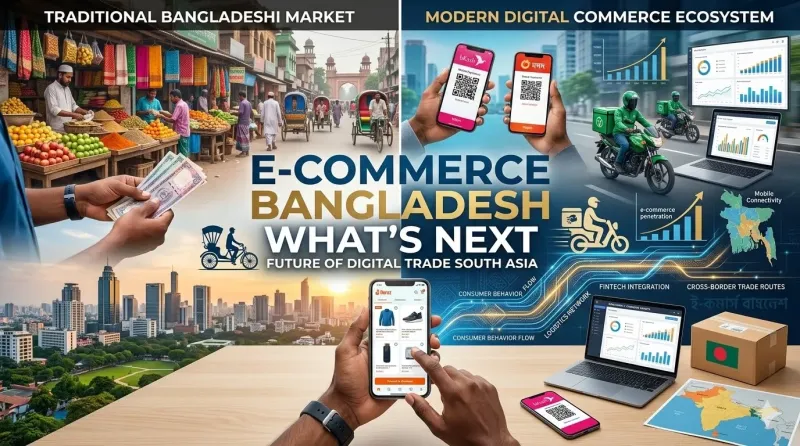
Bangladesh stands at a pivotal moment in its digital evolution. With over 130 million internet users, rapidly growing smartphone penetration, and a young, tech-savvy population, the country is poised to become a major player in South Asia's digital economy. But what does the future hold for e-commerce in Bangladesh? Beyond the simple act of adding items to a cart and checking out, a broader transformation is underway—one that encompasses mobile commerce, social selling, fintech integration, cross-border trade, and innovative logistics solutions that could redefine digital commerce across South Asia.
The e-commerce landscape in Bangladesh has already demonstrated remarkable resilience and growth. From the early days of basic online marketplaces to today's sophisticated platforms offering everything from groceries to electronics, fashion to financial services, the sector has evolved at a pace that has surprised even optimistic observers. Yet, this is just the beginning. As infrastructure improves, consumer behavior shifts, and technology advances, the next phase of Bangladesh's e-commerce journey promises to be even more transformative—not just for Bangladesh, but for the broader South Asian region.
This comprehensive guide explores what's next for e-commerce in Bangladesh and beyond. You'll discover emerging trends shaping the industry, understand the challenges and opportunities ahead, learn how Bangladesh fits into the larger South Asian digital trade ecosystem, and gain practical insights for entrepreneurs, businesses, and investors looking to capitalize on this dynamic market. Whether you're a local entrepreneur, an international brand considering expansion, or simply curious about the future of digital trade in South Asia, this guide will equip you with the knowledge to navigate what's coming next.
The Current State: Bangladesh's E-Commerce Landscape in 2026
Before projecting into the future, it's essential to understand where Bangladesh stands today. The country's e-commerce sector has matured significantly, yet retains enormous growth potential.
Market Size and Growth Trajectory
Key Statistics (2026 Estimates):
- Market Value: $3.5-4.5 billion USD, growing at 25-35% annually
- Internet Users: 130+ million (75%+ penetration)
- Smartphone Users: 110+ million, with affordable devices driving adoption
- Digital Payment Users: 70+ million active mobile financial service accounts
- E-commerce Penetration: Still only 3-5% of total retail, indicating massive headroom
Growth Drivers:
- Demographics: Median age of 27; young population comfortable with digital tools
- Infrastructure: Expanding 4G/5G networks, improving last-mile logistics
- Financial Inclusion: Mobile financial services (bKash, Nagad, Rocket) enabling digital transactions
- Government Support: Digital Bangladesh initiative, startup policies, e-commerce guidelines
- Consumer Behavior: Post-pandemic acceleration in online shopping adoption
Key Players and Market Dynamics
Major Platforms:
- Daraz (Alibaba Group): Leading marketplace with extensive product range, logistics network, and regional integration
- Chaldal: Pioneering quick commerce in groceries and essentials
- Pickaboo: Focused on electronics and lifestyle products with strong brand positioning
- Evaly/ShopUp: B2B and B2C models serving different market segments
- Social Commerce Platforms: Facebook/Instagram-based sellers, WhatsApp commerce, emerging dedicated apps
Market Characteristics:
- Cash on Delivery Dominance: 80-90% of transactions still COD, though digital payments growing rapidly
- Mobile-First: Over 90% of e-commerce traffic comes from mobile devices
- Trust Building: Consumer confidence improving but still a key barrier
- Regional Variation: Dhaka and major cities lead; rural adoption accelerating
Supporting Ecosystem
Logistics and Fulfillment:
- Pathao, RedX, Steadfast, Paperfly providing last-mile delivery
- Warehouse and fulfillment centers expanding beyond Dhaka
- Emerging cold chain solutions for perishables
Payment Infrastructure:
- Mobile Financial Services (MFS): bKash (70M+ users), Nagad, Rocket
- Card payments growing but still limited
- Emerging BNPL (Buy Now, Pay Later) solutions
- Cross-border payment solutions developing
Technology and Innovation:
- Local tech startups building e-commerce enablement tools
- AI/ML adoption for personalization, fraud detection, logistics optimization
- Cloud infrastructure improving with local and international providers
Emerging Trends Shaping Bangladesh's E-Commerce Future
Several interconnected trends are converging to reshape Bangladesh's digital commerce landscape. Understanding these is crucial for anyone looking to participate in the market's next phase.
1. Mobile Commerce (M-Commerce) Dominance
Why It Matters: Bangladesh is a mobile-first, and increasingly mobile-only, market. With affordable smartphones and expanding data coverage, mobile devices are the primary—and often only—way many consumers access the internet.
Key Developments:
- App-First Strategies: Platforms prioritizing mobile app experience over desktop
- Progressive Web Apps (PWAs): Lightweight, fast-loading experiences for low-bandwidth users
- Voice and Vernacular Interfaces: Bengali language support, voice search, and voice commerce emerging
- Super App Ambitions: Platforms integrating shopping, payments, services, and content in single apps
Implications for Businesses:
- Mobile optimization is non-negotiable
- App development and ASO (App Store Optimization) become critical competencies
- Lightweight, data-efficient experiences win in tier-2/3 cities and rural areas
2. Social Commerce and Influencer-Driven Sales
Why It Matters: Social media isn't just for discovery in Bangladesh—it's a primary sales channel. Trust in personal recommendations and community validation drives purchasing decisions.
Key Developments:
- Facebook/Instagram Shops: Integrated shopping features gaining traction
- WhatsApp Commerce: Order placement, customer service, and payments via WhatsApp
- Live Commerce: Live streaming product demonstrations and sales events
- Micro-Influencer Networks: Local creators driving sales in niche categories
- Community-Based Selling: Group buying, referral programs, community-driven deals
Implications for Businesses:
- Social media strategy must include direct sales capabilities
- Influencer partnerships require authentic, long-term relationships
- Community management becomes a core business function
- Content and commerce converge—entertainment drives transactions
3. Fintech Integration and Payment Innovation
Why It Matters: Payment friction has been a major barrier to e-commerce growth in Bangladesh. Fintech innovation is removing these barriers and enabling new business models.
Key Developments:
- Digital Wallet Expansion: bKash, Nagad adding e-commerce features, loyalty programs, credit
- BNPL (Buy Now, Pay Later): Emerging solutions enabling purchases without upfront payment
- QR Code Payments: Ubiquitous, low-friction payment method gaining adoption
- Cross-Border Payments: Solutions enabling international transactions for imports/exports
- Embedded Finance: E-commerce platforms offering credit, insurance, savings products
Implications for Businesses:
- Multiple payment options are essential; COD alone limits growth
- Partnerships with fintech providers can unlock new customer segments
- Financial services integration can increase customer lifetime value
- Trust and security in payments remain paramount
4. Quick Commerce and Hyperlocal Delivery
Why It Matters: Consumer expectations for speed are rising. Quick commerce (q-commerce) is redefining convenience and creating new categories of instant retail.
Key Developments:
- 10-30 Minute Delivery: Dark stores and micro-fulfillment centers enabling ultra-fast delivery
- Category Expansion: Beyond groceries to pharmacy, electronics, fashion, and more
- Subscription Models: Recurring deliveries for essentials
- Hyperlocal Partnerships: E-commerce platforms partnering with local retailers for inventory and fulfillment
Implications for Businesses:
- Speed is becoming a key differentiator
- Inventory management and last-mile logistics require sophisticated solutions
- Unit economics of quick commerce are challenging; profitability requires scale and efficiency
- Not all categories suit quick commerce; strategic category selection is critical
5. Cross-Border E-Commerce and Regional Integration
Why It Matters: Bangladesh doesn't exist in isolation. Regional trade agreements, digital infrastructure, and consumer demand are driving cross-border e-commerce growth across South Asia.
Key Developments:
- SAFTA and Digital Trade: South Asian Free Trade Area evolving to include digital commerce provisions
- Regional Marketplaces: Platforms like Daraz operating across Bangladesh, Pakistan, Sri Lanka, Nepal
- Export Enablement: Tools helping Bangladeshi SMEs sell internationally
- Import Solutions: Simplified processes for consumers to buy from international sellers
- Logistics Corridors: Improved cross-border shipping and customs processes
Implications for Businesses:
- Regional expansion opportunities for successful Bangladeshi brands
- International brands can access Bangladesh through regional platforms
- Regulatory compliance becomes more complex but also more standardized
- Cultural and linguistic adaptation remains essential for cross-border success
6. Sustainability and Ethical Commerce
Why It Matters: Younger consumers increasingly value sustainability. E-commerce's environmental impact and labor practices are coming under scrutiny.
Key Developments:
- Eco-Friendly Packaging: Biodegradable, reusable, or minimal packaging solutions
- Carbon-Neutral Delivery: Electric vehicles, route optimization, carbon offset programs
- Ethical Sourcing: Transparency in supply chains, fair labor practices
- Circular Economy: Resale, rental, and repair models emerging within e-commerce
- Consumer Awareness: Growing demand for sustainable options
Implications for Businesses:
- Sustainability is becoming a competitive advantage, not just a nice-to-have
- Transparency and authenticity in sustainability claims are critical
- Cost implications require strategic planning and potential premium pricing
- Early movers can build brand loyalty with conscious consumers
Challenges on the Horizon
While the opportunities are substantial, Bangladesh's e-commerce sector faces significant challenges that must be addressed for sustainable growth.
Infrastructure Limitations
Digital Infrastructure:
- Internet reliability and speed vary significantly outside major cities
- Power outages can disrupt operations and customer experience
- Cloud infrastructure costs and availability
Physical Infrastructure:
- Last-mile delivery challenges in rural and semi-urban areas
- Traffic congestion in Dhaka impacting delivery times
- Warehouse and fulfillment center availability outside Dhaka
Addressing the Gap:
- Public-private partnerships for infrastructure development
- Technology solutions for low-connectivity environments (offline-first apps, SMS-based ordering)
- Decentralized fulfillment networks
Trust and Consumer Protection
Ongoing Concerns:
- Product authenticity and quality concerns
- Data privacy and security awareness
- Fraud and scam prevention
- Dispute resolution and refund processes
Building Trust:
- Stronger regulatory frameworks and enforcement
- Platform-level verification and quality control
- Transparent policies and responsive customer service
- Consumer education initiatives
Talent and Skills Gap
Current Shortages:
- Digital marketing and e-commerce management expertise
- Data analytics and AI/ML capabilities
- Supply chain and logistics management skills
- Cybersecurity and compliance expertise
Developing Talent:
- Industry-academia partnerships for relevant curricula
- Upskilling programs for existing workforce
- Attracting diaspora talent and international expertise
- Creating career pathways in e-commerce and digital trade
Regulatory Evolution
Key Areas:
- Data protection and privacy regulations
- Cross-border trade and taxation frameworks
- Consumer protection and dispute resolution mechanisms
- Digital payment and fintech regulations
Balancing Act:
- Regulations must protect consumers without stifling innovation
- Regional harmonization can facilitate cross-border trade
- Industry engagement in policy development is essential
- Agile regulatory approaches that adapt to technological change
Bangladesh in the South Asian Digital Trade Ecosystem
Bangladesh's e-commerce future is intertwined with the broader South Asian region. Understanding regional dynamics is crucial for strategic planning.
Regional Market Comparison
| Country | E-Commerce Market Size (Est. 2026) | Key Strengths | Challenges |
|---|---|---|---|
| Bangladesh | $3.5-4.5B | Young population, mobile adoption, MFS leadership | Infrastructure gaps, trust building |
| India | $80-100B | Large market, tech talent, startup ecosystem | Regulatory complexity, competition |
| Pakistan | $2-3B | Young demographic, growing internet penetration | Economic volatility, payment infrastructure |
| Sri Lanka | $0.5-1B | High literacy, English proficiency | Small market size, economic challenges |
| Nepal | $0.3-0.6B | Growing digital adoption, tourism linkages | Infrastructure limitations, small market |
Opportunities for Regional Collaboration
Shared Infrastructure:
- Regional logistics networks and fulfillment centers
- Cross-border payment rails and currency conversion
- Shared technology platforms and tools
Knowledge and Talent Exchange:
- Best practice sharing on regulation, consumer protection, innovation
- Talent mobility and regional hiring
- Joint research and development initiatives
Market Access:
- Regional platforms enabling cross-border selling
- Harmonized standards for product quality and safety
- Streamlined customs and trade facilitation
Bangladesh's Competitive Advantages
Within the Region:
- Mobile Financial Services Leadership: bKash and Nagad are among the world's most successful MFS platforms
- Manufacturing Base: Strong garment and light manufacturing sectors enable unique product offerings
- Cost Competitiveness: Lower operational costs compared to some regional peers
- Demographic Dividend: Large, young, increasingly educated population
- Government Commitment: Digital Bangladesh vision providing policy support
Practical Strategies for Businesses and Entrepreneurs
For those looking to participate in Bangladesh's e-commerce future, here are actionable strategies based on emerging trends and market realities.
For Local Entrepreneurs and SMEs
1. Start Mobile-First, Think Mobile-Only
- Design your entire customer journey for mobile devices
- Optimize for low-bandwidth environments
- Consider Bengali language and voice interfaces
- Test on affordable, entry-level smartphones
2. Embrace Social Commerce
- Build your brand and sell directly through Facebook, Instagram, WhatsApp
- Develop authentic relationships with micro-influencers in your niche
- Experiment with live commerce and community-driven selling
- Invest in content creation that drives engagement and trust
3. Diversify Payment Options
- Offer COD but actively encourage digital payments with incentives
- Integrate with major MFS platforms (bKash, Nagad)
- Explore BNPL options for higher-value purchases
- Ensure seamless, secure checkout experience
4. Build Trust Through Transparency
- Provide clear product information, high-quality images, honest reviews
- Communicate openly about shipping times, return policies, and customer service
- Respond promptly to inquiries and resolve issues fairly
- Share your story and values to build emotional connection
5. Leverage Regional Opportunities
- Consider selling on regional platforms to access broader markets
- Explore export opportunities for unique Bangladeshi products
- Learn from successful models in India, Pakistan, and beyond
- Build partnerships with regional logistics and payment providers
For International Brands and Investors
1. Partner with Local Experts
- Collaborate with local e-commerce platforms, logistics providers, or agencies
- Hire local talent who understand consumer behavior and cultural nuances
- Engage with industry associations and government bodies
- Adapt global strategies to local realities
2. Invest in Infrastructure and Enablement
- Consider investments in logistics, payments, or technology enablers
- Support initiatives that build e-commerce capacity among SMEs
- Contribute to talent development through training and education programs
- Advocate for policies that support sustainable digital trade growth
3. Prioritize Long-Term Relationship Building
- Bangladesh rewards patience and commitment; quick exits rarely succeed
- Build trust with consumers through consistent quality and service
- Invest in brand building, not just performance marketing
- Engage with the broader ecosystem, not just your immediate business
4. Navigate Regulatory Landscape Proactively
- Stay informed about evolving e-commerce, data, and payment regulations
- Engage constructively with regulators and policymakers
- Build compliance into your operations from the start
- Consider regional regulatory harmonization in your strategy
Technology Enablers: What's Powering the Future
Behind the trends and strategies are technological innovations enabling Bangladesh's e-commerce evolution.
Artificial Intelligence and Machine Learning
Applications:
- Personalization: Product recommendations, dynamic pricing, targeted marketing
- Fraud Detection: Identifying suspicious transactions and behaviors
- Logistics Optimization: Route planning, demand forecasting, inventory management
- Customer Service: Chatbots, automated responses, sentiment analysis
- Visual Search: Image-based product discovery for mobile users
Adoption Considerations:
- Data quality and availability are prerequisites for effective AI
- Start with high-impact, well-defined use cases
- Balance automation with human oversight, especially for customer interactions
- Address ethical considerations around data use and algorithmic bias
Cloud Computing and Infrastructure
Benefits for E-Commerce:
- Scalability to handle traffic spikes and growth
- Cost efficiency through pay-as-you-go models
- Access to advanced tools (AI/ML, analytics, security) without heavy upfront investment
- Improved reliability and disaster recovery
Local Context:
- International providers (AWS, Google Cloud, Azure) expanding presence
- Local data center development improving latency and data sovereignty
- Hybrid approaches combining cloud and on-premises infrastructure
Internet of Things (IoT) and Smart Logistics
Applications:
- Warehouse Automation: Smart inventory tracking, robotic picking
- Delivery Tracking: Real-time location, temperature monitoring for perishables
- Vehicle Management: Route optimization, fuel efficiency, maintenance prediction
- Customer Experience: Smart lockers, contactless delivery, delivery notifications
Adoption Timeline:
- Basic tracking and notifications already widespread
- Advanced automation emerging in major fulfillment centers
- Widespread IoT adoption depends on connectivity and cost improvements
Blockchain and Web3 (Emerging)
Potential Applications:
- Supply Chain Transparency: Verifiable product provenance and authenticity
- Digital Identity: Secure, portable customer identities for seamless experiences
- Smart Contracts: Automated payments, escrow, and dispute resolution
- Loyalty and Tokens: Innovative reward systems and community engagement
Reality Check:
- Most applications remain experimental or pilot-stage in Bangladesh
- Regulatory clarity and infrastructure readiness are prerequisites
- Focus on solving real problems, not chasing technology trends
The Human Element: Skills, Culture, and Inclusion
Technology and strategy matter, but e-commerce's future in Bangladesh ultimately depends on people.
Building Digital Skills
Critical Competencies:
- Digital marketing and e-commerce management
- Data literacy and analytics
- Customer experience design
- Supply chain and logistics management
- Cybersecurity and compliance
Development Approaches:
- Formal education: Updated curricula in universities and technical institutes
- Industry training: Certifications, bootcamps, on-the-job learning
- Self-directed learning: Online courses, communities, mentorship
- Public programs: Government initiatives for digital skills development
Cultural Adaptation and Localization
Key Considerations:
- Language: Bengali-first interfaces, voice support, multilingual customer service
- Payment Preferences: COD remains important; digital payment education needed
- Trust Building: Personal relationships, community validation, transparent policies
- Content and Marketing: Culturally relevant messaging, local influencers, regional festivals
- Product Assortment: Local preferences, sizing, seasonal variations
Inclusive Growth
Ensuring Broad Participation:
- Rural Access: Affordable devices, connectivity, and logistics for semi-urban and rural consumers
- Women's Participation: Supporting female entrepreneurs and addressing safety concerns
- SME Enablement: Tools and training for small businesses to go digital
- Accessibility: Designing for users with disabilities and varying digital literacy
Business Case for Inclusion:
- Untapped markets represent significant growth opportunities
- Diverse teams build better products for diverse customers
- Inclusive practices build brand loyalty and social license to operate
Looking Ahead: Scenarios for 2030 and Beyond
While predictions are inherently uncertain, considering plausible scenarios helps with strategic planning.
Optimistic Scenario: Accelerated Digital Transformation
Key Drivers:
- Rapid infrastructure improvement (connectivity, logistics, payments)
- Supportive, agile regulatory environment
- Strong talent development and innovation ecosystem
- Successful regional integration and cross-border trade
Potential Outcomes:
- E-commerce reaches 10-15% of total retail by 2030
- Bangladesh emerges as a regional e-commerce hub
- Homegrown platforms compete successfully with international players
- Digital trade contributes significantly to GDP growth and job creation
Base Case Scenario: Steady, Uneven Progress
Key Drivers:
- Gradual infrastructure improvements with persistent gaps
- Regulatory evolution that balances innovation and protection
- Talent development keeping pace but not accelerating dramatically
- Regional integration progressing but facing political and economic headwinds
Potential Outcomes:
- E-commerce reaches 6-8% of total retail by 2030
- Market consolidates around a few major platforms with niche players
- Digital trade grows but remains concentrated in urban areas and certain categories
- Continued innovation but with persistent challenges in trust, logistics, and inclusion
Challenging Scenario: Headwinds and Disruption
Key Risks:
- Economic volatility impacting consumer spending and investment
- Regulatory uncertainty or overly restrictive policies
- Geopolitical tensions affecting regional trade and technology access
- Cybersecurity incidents or data breaches eroding consumer trust
Potential Outcomes:
- E-commerce growth slows; adoption plateaus below potential
- Market fragmentation with limited scale for most players
- International investors become more cautious; capital becomes scarce
- Focus shifts to survival and efficiency over innovation and expansion
Conclusion: Shaping the Future Together
The future of e-commerce in Bangladesh—and its role in South Asia's digital trade ecosystem—is not predetermined. It will be shaped by the choices of entrepreneurs, businesses, policymakers, investors, and consumers in the years ahead.
Key takeaways for navigating what's next:
- Mobile is non-negotiable: Design for mobile-first, mobile-only users
- Social is sales: Integrate social commerce into your core strategy
- Payments enable growth: Diversify payment options and embrace fintech innovation
- Trust is the foundation: Build transparency, quality, and service into everything you do
- Think regionally: Bangladesh's e-commerce future is connected to South Asia's
- Invest in people: Skills, culture, and inclusion are as important as technology
- Stay agile: The landscape will evolve; build adaptability into your strategy
For Bangladesh, the opportunity is profound. E-commerce can drive economic growth, create jobs, empower entrepreneurs, and improve access to goods and services for millions. But realizing this potential requires collaboration, innovation, and a commitment to inclusive, sustainable growth.
For entrepreneurs: The barriers to entry are lower than ever, but competition is intensifying. Focus on solving real problems for real customers, build for mobile and social, and don't underestimate the power of trust and community.
For businesses: Bangladesh's market is maturing but still offers first-mover advantages in many categories. Partner locally, adapt globally, and invest for the long term.
For investors: The risk-reward profile is compelling, but success requires patience, local knowledge, and active portfolio support. Look beyond pure-play e-commerce to enablers and infrastructure.
For policymakers: Create an environment that encourages innovation while protecting consumers. Engage with industry, learn from regional peers, and prioritize digital inclusion.
For consumers: Your choices matter. Support businesses that offer quality, fairness, and sustainability. Provide feedback, hold platforms accountable, and embrace the convenience and opportunity that digital trade offers.
The cart is just the beginning. Beyond it lies a future where digital trade connects communities, empowers entrepreneurs, and creates shared prosperity across Bangladesh and South Asia. That future is being built today—by you, by me, by all of us who choose to participate.
The question isn't whether e-commerce will transform Bangladesh. It's how we'll shape that transformation to create a digital economy that works for everyone.
The next chapter of Bangladesh's e-commerce story is unwritten. Let's write it together.