

Forehead Bumps: Fungal Acne vs Closed Comedones Guide
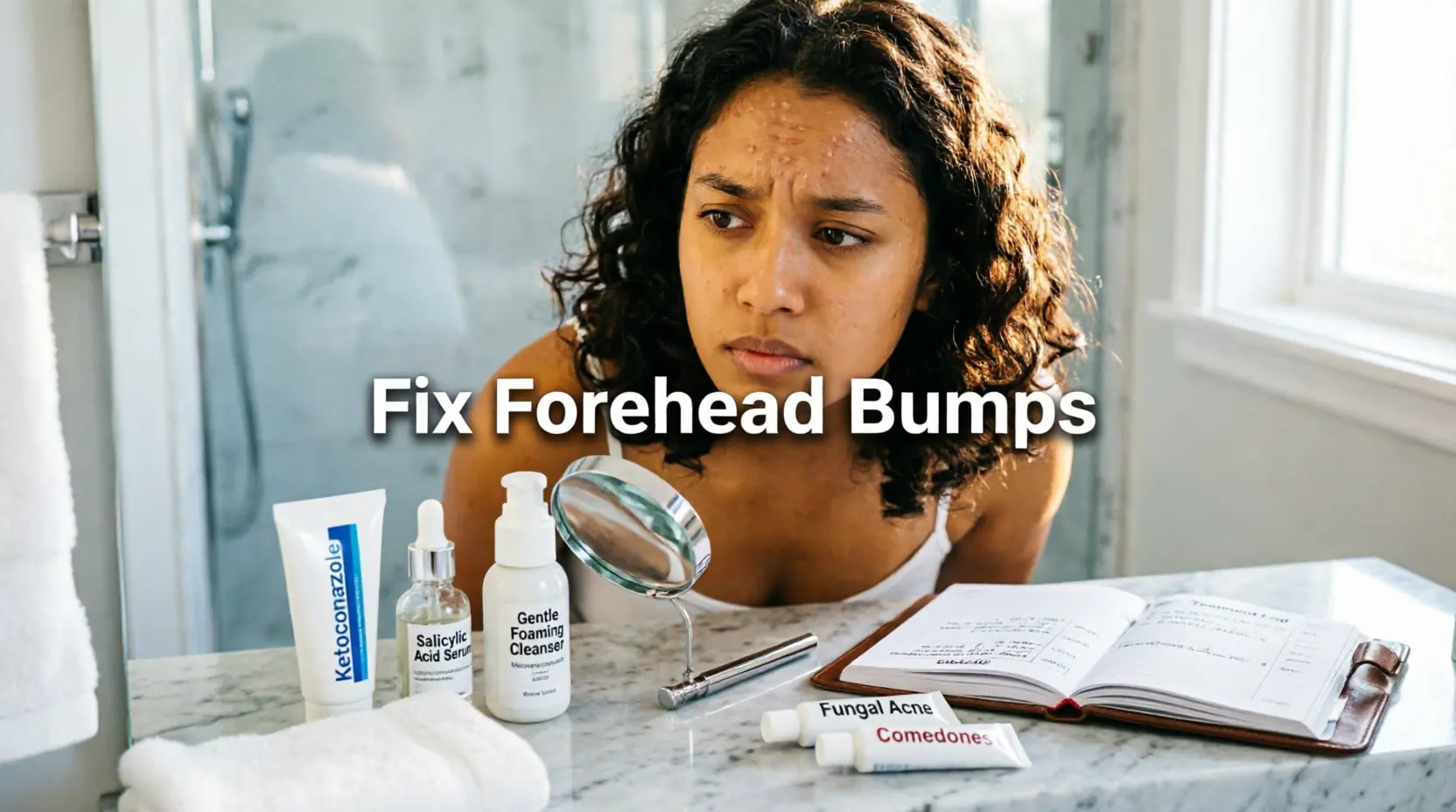
Those tiny, stubborn bumps on your forehead can be incredibly frustrating—especially when you're not sure what's causing them or how to treat them effectively. Forehead bumps are one of the most common skincare concerns, and the two most likely culprits are fungal acne (malassezia folliculitis) and closed comedones (whiteheads). While they may look similar at first glance, these conditions have completely different causes and require entirely different treatment approaches.
Using the wrong treatment can not only fail to clear your bumps but actually make them worse. Treating fungal acne with typical acne products can feed the yeast and cause more breakouts, while treating closed comedones with antifungal products won't address the underlying clogged pores. This is why accurate identification is crucial for getting results.
In this comprehensive, dermatologist-informed guide, we'll help you decode exactly what's causing your forehead bumps, reveal the key differences between fungal acne and closed comedones, share targeted treatment protocols for each condition, and provide expert strategies for preventing recurrence. Whether you're dealing with itchy, uniform bumps or stubborn whiteheads, you'll learn how to build a personalized treatment plan that actually works—so you can finally achieve the smooth, clear forehead you deserve.
Understanding Forehead Bumps: The Two Main Culprits
Short answer: Forehead bumps are most commonly caused by either fungal acne (an overgrowth of yeast in hair follicles) or closed comedones (clogged pores filled with oil and dead skin cells)—each requiring different diagnosis and treatment approaches.
Before diving into treatment, it's essential to understand what you're actually dealing with. The forehead is particularly prone to bumps because it has:
- High concentration of sebaceous glands: More oil production means more potential for clogging
- Hairline exposure: Hair products, oils, and styling products can migrate to the forehead
- Sweat accumulation: The forehead is a primary sweating zone
- Friction: Hats, headbands, bangs, and hands touching the face
These factors create the perfect environment for both fungal overgrowth and pore clogging, making the forehead a common battleground for skin concerns.
What Is Fungal Acne (Malassezia Folliculitis)?
Despite the name, fungal acne isn't actually acne—it's an infection of the hair follicles caused by an overgrowth of Malassezia yeast, which naturally lives on everyone's skin. When this yeast multiplies excessively, it causes inflammation and characteristic bumps.
Key characteristics:
- Uniform appearance: Bumps are all similar in size (1-2mm)
- Itchy: Often causes itching, especially when sweating
- Clustered: Appears in groups or clusters
- No blackheads: Typically no visible blackheads present
- Resistant to acne treatments: Doesn't improve with typical acne products
What Are Closed Comedones (Whiteheads)?
Closed comedones are a type of acne lesion where pores become clogged with sebum (oil), dead skin cells, and bacteria, but the pore remains closed at the surface, creating a small, flesh-colored or white bump.
Key characteristics:
- Variable size: Bumps range from tiny to several millimeters
- Not itchy: Generally don't cause itching
- Skin-colored or white: May have a white or yellowish tip
- Can progress: May develop into inflammatory acne (papules, pustules)
- Responds to acne treatments: Improves with salicylic acid, retinoids, etc.
Fungal Acne vs Closed Comedones: Key Differences
Short answer: Fungal acne causes itchy, uniform, monomorphic bumps that cluster together and worsen with humidity, while closed comedones are non-itchy, variable-sized whiteheads that respond to traditional acne treatments and don't typically cluster.
Understanding the differences is crucial for choosing the right treatment. Here's a detailed comparison:
Visual Appearance
Fungal Acne:
- Small, red or skin-colored bumps (1-2mm)
- All bumps look the same size and shape (monomorphic)
- Often appear in clusters or groups
- May have slight redness around each bump
- No visible "head" or white center
- Can look like a rash or small pimples
Closed Comedones:
- Small, flesh-colored or white bumps
- Variable sizes (some tiny, some larger)
- Scattered distribution, not necessarily clustered
- May have visible white or yellowish center
- Skin texture feels bumpy or rough
- Can see the clogged pore upon close inspection
Symptoms and Sensations
Fungal Acne:
- Itching: Often itchy, especially when sweating or in heat
- Burning: May cause mild burning sensation
- Worsens with: Humidity, sweat, occlusive products
- Improves with: Antifungal treatments, cool/dry conditions
Closed Comedones:
- No itching: Generally not itchy or painful
- No sensation: Usually no discomfort unless inflamed
- Worsens with: Heavy/oily products, lack of exfoliation
- Improves with: Exfoliation, retinoids, oil control
Location Patterns
Fungal Acne:
- Forehead (most common)
- Hairline
- Chest and back
- Upper arms
- Often symmetrical distribution
Closed Comedones:
- Forehead
- Chin
- Cheeks
- Nose
- Anywhere with active sebaceous glands
Response to Treatments
Fungal Acne:
- Worsens with: Antibiotics, typical acne treatments, feeding oils
- Improves with: Antifungal medications, anti-yeast ingredients
- No change with: Salicylic acid alone, benzoyl peroxide alone
Closed Comedones:
- Improves with: Salicylic acid, retinoids, benzoyl peroxide
- May worsen with: Antifungal treatments alone
- Responds to: Exfoliation, oil control, pore-clearing ingredients
What Causes Fungal Acne on the Forehead?
Short answer: Fungal acne is caused by overgrowth of Malassezia yeast in hair follicles, triggered by humidity, sweat, occlusive skincare, antibiotics, weakened immunity, or hormonal changes that disrupt the skin's natural balance.
Understanding the root causes helps you prevent recurrence:
The Role of Malassezia Yeast
Malassezia is a type of yeast (fungus) that naturally lives on everyone's skin, feeding on sebum (oil). It's part of the normal skin microbiome and usually doesn't cause problems. However, when certain conditions allow it to overgrow, it penetrates the hair follicle and causes inflammation—resulting in fungal acne.
Common Triggers for Overgrowth
Excessive Sweating and Humidity:
- Sweat creates a warm, moist environment perfect for yeast growth
- Not showering immediately after workouts allows yeast to multiply
- Hot, humid climates increase risk
Occlusive Skincare and Hair Products:
- Heavy oils (coconut oil, olive oil) feed Malassezia
- Thick creams and occlusive products trap moisture
- Hair oils, conditioners, and styling products migrate to forehead
- Fatty acid esters (like polysorbates) can feed yeast
Antibiotic Use:
- Antibiotics kill beneficial bacteria that keep yeast in check
- Disrupts the skin microbiome balance
- Can trigger fungal acne weeks or months after use
Weakened Immune System:
- Illness, stress, or immunosuppressive medications
- Reduces the body's ability to control yeast growth
Hormonal Changes:
- Increased androgens boost sebum production
- More oil = more food for Malassezia
- Common during puberty, pregnancy, or with PCOS
Tight Clothing and Headwear:
- Hats, headbands, and helmets trap sweat and heat
- Create friction that irritates follicles
- Prevent proper ventilation
What Causes Closed Comedones on the Forehead?
Short answer: Closed comedones form when pores become clogged with excess oil, dead skin cells, and bacteria—triggered by hormonal fluctuations, comedogenic products, inadequate exfoliation, diet, and genetic predisposition to acne.
Closed comedones are a form of acne vulgaris, and understanding their formation helps target treatment effectively:
The Comedone Formation Process
Closed comedones develop through a specific sequence:
- Excess sebum production: Hormones (especially androgens) stimulate oil glands to produce more sebum
- Abnormal keratinization: Dead skin cells don't shed properly and stick together
- Pore clogging: Oil and dead cells accumulate, forming a plug in the follicle
- Closed opening: The pore remains closed at the surface, trapping the contents inside
- Bump formation: The trapped material creates a small, raised bump under the skin
Common Causes and Triggers
Hormonal Fluctuations:
- Androgens increase sebum production
- Common during puberty, menstrual cycles, pregnancy
- PCOS and other hormonal imbalances
- Stress hormones (cortisol) can worsen oil production
Comedogenic Products:
- Heavy oils (coconut oil, cocoa butter, wheat germ oil)
- Thick creams and occlusive formulas
- Certain silicones (dimethicone in high concentrations)
- Lanolin and some fatty alcohols
- Hair products that migrate to forehead
Inadequate Exfoliation:
- Dead skin cells accumulate and clog pores
- Sluggish cell turnover (natural aging process)
- Not removing makeup or sunscreen thoroughly
Diet and Lifestyle:
- High-glycemic foods (sugar, white bread) may increase insulin and IGF-1, stimulating oil production
- Dairy consumption linked to acne in some individuals
- Lack of sleep increases cortisol and inflammation
- Stress exacerbates hormonal acne
Genetics:
- Family history of acne increases risk
- Naturally larger or more active oil glands
- Genetic predisposition to slower cell turnover
Environmental Factors:
- High humidity can increase oiliness
- Pollution can clog pores
- Friction from phones, hats, or hands touching face
How to Diagnose: Which One Do You Have?
Short answer: Diagnose forehead bumps by assessing symptoms (itching suggests fungal acne), appearance (uniform vs. variable size), response to previous treatments, and considering professional evaluation with skin scraping or biopsy for definitive diagnosis.
Accurate diagnosis is the foundation of effective treatment. Use this systematic approach:
Self-Assessment Questions
Ask yourself these key questions:
1. Do the bumps itch?
- Yes, especially when sweating: Likely fungal acne
- No itching at all: More likely closed comedones
2. Are all the bumps the same size?
- Yes, very uniform: Suggests fungal acne
- No, mixed sizes: Suggests closed comedones
3. Do they appear in clusters?
- Yes, grouped together: Fungal acne pattern
- No, scattered: Closed comedones pattern
4. Have you tried acne treatments?
- No improvement or worse: Could be fungal acne
- Some improvement: Likely closed comedones
5. Do you have them on chest/back too?
- Yes: Common with fungal acne
- No, just face: Could be either
The "Fungal Acne Test"
Try this at-home assessment:
- Apply antifungal cream: Use over-the-counter clotrimazole or ketoconazole cream on a small area for 3-5 days
- Observe changes: If bumps improve significantly, it's likely fungal acne
- No change: More likely closed comedones
Note: This isn't definitive but can provide clues.
Professional Diagnosis
For certainty, see a dermatologist who can:
1. Skin Scraping and KOH Test:
- Scrapes skin sample and examines under microscope
- Potassium hydroxide (KOH) preparation reveals yeast cells
- Definitive diagnosis of fungal acne
2. Visual Examination:
- Experienced dermatologists can often diagnose visually
- May use dermoscopy (magnified light) for closer inspection
3. Skin Biopsy (rare):
- Only if diagnosis is unclear
- Small sample examined histologically
Red Flags: See a Dermatologist If...
- Bumps are painful, oozing, or crusted
- Spreading rapidly
- No improvement after 4-6 weeks of appropriate treatment
- You're unsure of the diagnosis
- Bumps are affecting your quality of life
Treatment Protocol for Fungal Acne
Short answer: Treat fungal acne with antifungal medications (topical ketoconazole, selenium sulfide, or oral fluconazole), Malassezia-safe skincare, avoiding feeding oils, and lifestyle changes to reduce sweating and humidity exposure.
Fungal acne requires antifungal treatment—typical acne products won't work and may worsen it. Here's the comprehensive protocol:
Topical Antifungal Treatments
Ketoconazole (2% cream or shampoo):
- How to use: Apply cream twice daily to affected areas, or use shampoo as a face mask (leave on 5-10 minutes, then rinse)
- Speed: Improvement in 1-2 weeks; full clearance in 4-6 weeks
- Availability: Over-the-counter (Nizoral) or prescription strength
- Best for: Mild to moderate fungal acne
Selenium Sulfide (2.5% lotion or shampoo):
- How to use: Apply as 10-minute mask 2-3x/week, then rinse thoroughly
- Speed: 2-4 weeks for visible improvement
- Availability: Over-the-counter (Selsun Blue)
- Caution: Can be drying; follow with moisturizer
Ciclopirox (1% cream or gel):
- How to use: Apply twice daily to affected areas
- Speed: 2-4 weeks
- Availability: Prescription required
- Best for: Those who don't respond to ketoconazole
Zinc Pyrithione (1-2%):
- How to use: Use as cleanser or leave-on treatment
- Speed: 3-6 weeks
- Availability: Over-the-counter (in some cleansers and shampoos)
- Bonus: Also has antibacterial properties
Oral Antifungal Medications
For severe or widespread fungal acne unresponsive to topicals:
Fluconazole (Diflucan):
- Dosage: 150-300mg once weekly for 2-4 weeks
- Speed: Often clears within 1-2 weeks
- Availability: Prescription only
- Best for: Severe cases, chest/back involvement
- Caution: Requires liver function monitoring for long-term use
Itraconazole:
- Dosage: 200mg daily for 1-2 weeks
- Speed: Rapid improvement
- Availability: Prescription only
- Caution: More drug interactions than fluconazole
Malassezia-Safe Skincare Routine
Using the wrong products can feed the yeast and cause recurrence. Follow these guidelines:
Avoid These Ingredients:
- Fatty acids: Most oils except MCT oil and squalane
- Polysorbates: Polysorbate 20, 60, 80
- Esters: Most ingredients ending in "-ate" (isopropyl myristate, cetyl palmitate)
- Coconut oil, olive oil, almond oil: Feed Malassezia
- Heavy butters: Shea butter, cocoa butter
Safe Ingredients:
- MCT oil (C8, C10): Malassezia can't feed on it
- Squalane: Generally safe
- Hyaluronic acid: Hydrating and safe
- Niacinamide: Anti-inflammatory and safe
- Glycerin: Humectant, safe
- Mineral oil, petrolatum: Yeast can't feed on them
Lifestyle Modifications
- Shower immediately after sweating: Don't let sweat sit on skin
- Wear breathable fabrics: Cotton over synthetic materials
- Avoid tight headwear: Or wash hats/headbands frequently
- Keep hair off forehead: Or wash hair daily if it touches skin
- Use oil-free hair products: Or keep them away from hairline
- Change pillowcases frequently: 2-3x/week minimum
Treatment Protocol for Closed Comedones
Short answer: Treat closed comedones with exfoliating ingredients (salicylic acid, glycolic acid), retinoids (adapalene, tretinoin), benzoyl peroxide, non-comedogenic products, and consistent skincare to unclog pores and prevent new formation.
Closed comedones respond well to traditional acne treatments that promote cell turnover and clear clogged pores:
Topical Treatments
Retinoids (Gold Standard):
Adapalene 0.1% (Differin):
- Mechanism: Normalizes cell turnover, prevents clogging
- How to use: Apply pea-sized amount to entire forehead at night
- Frequency: Start 2-3x/week, build to nightly
- Speed: 8-12 weeks for significant improvement
- Availability: Over-the-counter
- Tip: Apply to dry skin; wait 20 minutes after cleansing
Tretinoin (Retin-A):
- Mechanism: Stronger retinoid, faster results
- Strengths: 0.025%, 0.05%, 0.1%
- How to use: Same as adapalene
- Speed: 6-12 weeks
- Availability: Prescription only
- Best for: Stubborn comedones
Salicylic Acid (BHA):
- Mechanism: Oil-soluble, penetrates pores to dissolve debris
- Concentration: 0.5-2%
- Forms: Cleanser, toner, serum, or spot treatment
- How to use: Apply once or twice daily
- Speed: 4-8 weeks for visible improvement
- Best for: Preventing new comedones
Glycolic Acid (AHA):
- Mechanism: Exfoliates surface, improves cell turnover
- Concentration: 5-10% for daily use; 10-20% for weekly treatment
- How to use: Apply at night, 2-3x/week
- Speed: 4-6 weeks
- Best for: Smoothing texture and preventing clogs
Benzoyl Peroxide:
- Mechanism: Kills bacteria, reduces inflammation, helps unclog pores
- Concentration: 2.5-5% (higher isn't necessarily better)
- How to use: Apply as leave-on treatment or wash
- Speed: 4-8 weeks
- Caution: Can be drying; use moisturizer
- Tip: Can bleach fabrics
Azelaic Acid (10-20%):
- Mechanism: Normalizes keratinization, anti-inflammatory
- How to use: Apply twice daily
- Speed: 8-12 weeks
- Best for: Sensitive skin, also helps with hyperpigmentation
- Availability: 10% OTC; 15-20% prescription
Professional Treatments
Chemical Peels:
- Types: Salicylic acid (20-30%), glycolic acid (30-70%), or Jessner's peel
- Frequency: Every 3-4 weeks for 3-6 sessions
- Best for: Multiple comedones, faster results
- Downtime: 3-7 days of peeling
Extraction:
- How it works: Professional manually removes comedones
- Best for: Immediate clearance of existing comedones
- Caution: Must be done by licensed professional to avoid scarring
- Frequency: As needed, usually monthly
Microdermabrasion:
- Mechanism: Mechanical exfoliation removes dead skin cells
- Frequency: Every 2-4 weeks
- Best for: Mild comedones, texture improvement
Skincare Routine for Closed Comedones
Morning:
- Gentle cleanser: Salicylic acid cleanser if tolerated
- Niacinamide serum: Regulates oil, minimizes pores
- Lightweight moisturizer: Oil-free, non-comedogenic
- Sunscreen SPF 30+: Non-comedogenic formula
Evening:
- Double cleanse: Oil-based cleanser followed by gentle foaming cleanser
- Active treatment: Retinoid or AHA/BHA (alternate nights if using both)
- Wait 20 minutes
- Moisturizer: Slightly richer than morning if needed
Product Selection Guidelines
Look for:
- "Non-comedogenic" or "won't clog pores" labels
- "Oil-free" formulas
- Lightweight, gel-based textures
- Ingredients like salicylic acid, niacinamide, retinoids
Avoid:
- Heavy oils (coconut, olive, wheat germ)
- Thick creams and butters
- Comedogenic ingredients (check comedogenicity ratings)
- Hair products that migrate to forehead
Can You Have Both? Treating Combination Cases
Short answer: Yes, it's possible to have both fungal acne and closed comedones simultaneously—treat fungal acne first with antifungals, then gradually introduce comedone treatments while monitoring for irritation or yeast overgrowth.
Some people experience both conditions at once, which can be particularly challenging. Here's how to approach it:
Identifying Combination Cases
You may have both if:
- Some bumps are itchy (fungal) while others aren't (comedones)
- Bumps are partially uniform but also variable in size
- Antifungal treatment helps somewhat but doesn't clear everything
- Acne treatments cause irritation without full clearance
Treatment Strategy for Both
Phase 1: Treat Fungal Acne First (Weeks 1-4)
- Use topical antifungal (ketoconazole or selenium sulfide)
- Avoid feeding oils and Malassezia-triggering ingredients
- Don't introduce retinoids or harsh exfoliants yet
- Focus on gentle, Malassezia-safe products
Phase 2: Add Comedone Treatment (Weeks 5-8)
- Continue antifungal 2-3x/week for maintenance
- Introduce gentle salicylic acid (0.5-1%) 2-3x/week
- Monitor for fungal acne flare-ups
- If yeast returns, reduce SA frequency
Phase 3: Maintenance (Week 9+)
- Use antifungal once weekly as prevention
- Continue salicylic acid or gentle retinoid
- Maintain Malassezia-safe routine
- Avoid known triggers for both conditions
Ingredients Safe for Both
- Niacinamide: Anti-inflammatory, regulates oil, Malassezia-safe
- Azelaic acid: Treats both fungal and comedonal acne
- Zinc pyrithione: Antifungal and antibacterial
- Squalane: Hydrating, Malassezia-safe, non-comedogenic
- Hyaluronic acid: Hydrating, safe for both
Ingredients to Avoid with Both
- Most fatty acids and oils
- Heavy, occlusive products
- Comedogenic esters
- Polysorbates
Prevention Strategies for Long-Term Clarity
Short answer: Prevent forehead bumps by maintaining consistent skincare, avoiding known triggers, using non-comedogenic and Malassezia-safe products, managing sweat and humidity, and addressing hormonal or lifestyle factors.
Once you've cleared your forehead bumps, prevention is key to keeping them away:
For Fungal Acne Prevention
- Weekly antifungal maintenance: Use ketoconazole shampoo as mask once weekly
- Avoid feeding oils: Stick to Malassezia-safe products long-term
- Shower after sweating: Never let sweat sit on skin
- Keep hair clean: Wash hair regularly if it touches forehead
- Change pillowcases: 2-3x/week minimum
- Avoid prolonged antibiotic use: If necessary, consider probiotic support
For Closed Comedones Prevention
- Continue retinoid: Use 2-3x/week for maintenance even after clearing
- Regular exfoliation: BHA 1-2x/week to keep pores clear
- Non-comedogenic products only: Check all skincare and makeup
- Double cleanse nightly: Remove all makeup, sunscreen, and oil
- Don't touch your face: Prevents transferring oil and bacteria
- Clean phone and glasses: Wipe daily with alcohol
Lifestyle Prevention for Both
- Manage stress: Cortisol worsens both conditions
- Get adequate sleep: 7-9 hours for skin repair
- Stay hydrated: Supports overall skin health
- Wear breathable fabrics: Cotton over synthetics
- Avoid tight headwear: Or wash frequently
- Keep hair off face: Or use oil-free products
Common Mistakes That Worsen Forehead Bumps
Avoid these errors that can sabotage your progress:
Mistake #1: Using Acne Treatments on Fungal Acne
Why it hurts: Antibiotics and typical acne products kill bacteria but not yeast, potentially making fungal acne worse by disrupting the microbiome balance.
Fix: Confirm diagnosis before treating. If bumps are itchy and uniform, try antifungal first.
Mistake #2: Over-Exfoliating
Why it hurts: Excessive exfoliation damages the barrier, causing inflammation that can worsen both fungal acne and comedones.
Fix: Limit exfoliation to 2-3x/week max. Use gentle formulas and monitor skin response.
Mistake #3: Picking or Squeezing
Why it hurts: Physical trauma causes inflammation, spreads bacteria/yeast, and can lead to scarring or post-inflammatory hyperpigmentation.
Fix: Keep hands off. Use hydrocolloid patches on accessible bumps. See a professional for extractions if needed.
Mistake #4: Using Heavy Oils on Forehead
Why it hurts: Coconut oil, olive oil, and other fatty oils feed Malassezia and clog pores, worsening both conditions.
Fix: Use only non-comedogenic, Malassezia-safe oils (MCT, squalane) or avoid oils entirely on forehead.
Mistake #5: Not Treating Long Enough
Why it hurts: Giving up after 1-2 weeks prevents treatments from working. Both conditions require 4-12 weeks for full results.
Fix: Commit to at least 8 weeks of consistent treatment before evaluating effectiveness.
Mistake #6: Skipping Moisturizer
Why it hurts: Dehydrated skin overproduces oil and has impaired barrier function, worsening both fungal acne and comedones.
Fix: Use lightweight, appropriate moisturizer for your condition (Malassezia-safe or non-comedogenic).
Frequently Asked Questions About Forehead Bumps
How long does it take to clear forehead bumps?
Short answer: Fungal acne typically improves in 2-4 weeks with antifungal treatment; closed comedones take 8-12 weeks with retinoids or exfoliants. Combination cases may take 12+ weeks.
Timeline depends on:
- Severity and duration of bumps
- Correctness of diagnosis and treatment
- Consistency of routine
- Individual skin response
Can diet affect forehead bumps?
Short answer: Yes—high-glycemic foods and dairy may worsen closed comedones by increasing insulin and IGF-1. For fungal acne, sugar may feed yeast. However, topical treatment is usually more impactful than diet alone.
Try reducing:
- Sugar and refined carbs
- Dairy (especially skim milk)
- Processed foods
Should I see a dermatologist for forehead bumps?
Short answer: See a dermatologist if: bumps persist after 6-8 weeks of appropriate OTC treatment, are severe or painful, you're unsure of the diagnosis, or they're affecting your quality of life.
A dermatologist can:
- Provide definitive diagnosis
- Prescribe stronger medications
- Perform professional extractions or peels
- Rule out other conditions
Can hormonal birth control help with forehead bumps?
Short answer: Birth control can help closed comedones by regulating hormones and reducing oil production, but may worsen fungal acne in some cases by altering the microbiome.
If considering birth control for acne:
- Discuss with dermatologist and gynecologist
- Combined pills (estrogen + progestin) are most effective for acne
- Some progestin-only methods may worsen acne
- Allow 3-6 months to see effects
Are forehead bumps permanent?
Short answer: No—both fungal acne and closed comedones are treatable and temporary. However, picking or severe inflammation can cause post-inflammatory hyperpigmentation or scarring that lasts longer.
Prevention is key:
- Treat early and appropriately
- Don't pick or squeeze
- Use sunscreen to prevent dark marks
- Maintain results with consistent skincare
Can I wear makeup with forehead bumps?
Short answer: Yes, but choose non-comedogenic, oil-free formulas and remove thoroughly. For fungal acne, ensure makeup is Malassezia-safe. Avoid heavy, occlusive foundations.
Makeup tips:
- Use mineral or powder foundations (less occlusive)
- Look for "non-comedogenic" labels
- Avoid products with feeding oils or esters
- Remove completely every night
- Clean brushes weekly
The Bottom Line: Accurate Diagnosis Is Everything
Forehead bumps don't have to be a permanent frustration. Whether you're dealing with fungal acne, closed comedones, or both, the key to clear skin lies in accurate diagnosis and targeted treatment.
Remember:
- Identify first: Itchy, uniform bumps = likely fungal acne; non-itchy, variable whiteheads = likely comedones
- Treat appropriately: Antifungals for fungal acne; retinoids and exfoliants for comedones
- Be patient: Results take 4-12 weeks of consistent treatment
- Prevent recurrence: Maintain with appropriate products and lifestyle habits
- Seek help when needed: Dermatologists can provide definitive diagnosis and stronger treatments
- Don't pick: Physical trauma causes scarring and prolongs healing
Your forehead can be smooth and clear—with the right approach. Start by assessing your symptoms, choose the appropriate treatment protocol, commit to consistency, and trust the process. Clear skin is within reach.
You deserve to feel confident without worrying about forehead bumps. With knowledge, patience, and the right products, you can achieve the smooth, healthy skin you've been working toward.