

Hormones and Skin Oil Balance: Science-Backed Guide
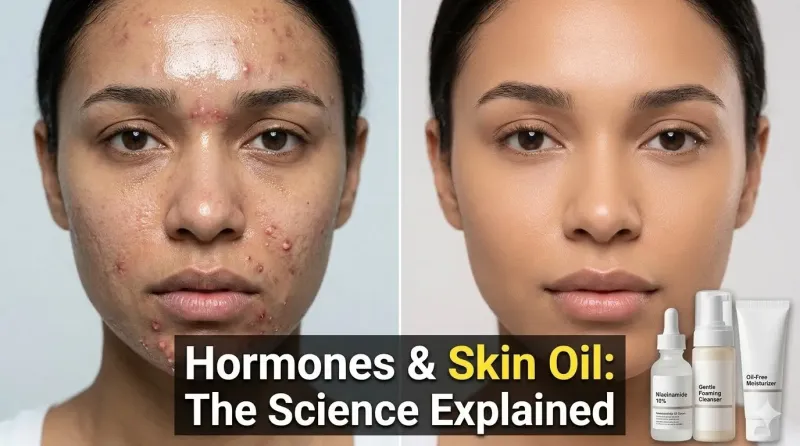
HOW HORMONE FLUCTUATIONS AFFECT SKIN OIL BALANCE THE SCIENCE-BACKED GUIDE
If you've ever noticed your skin becoming oilier before your period, experiencing unexpected breakouts during stressful weeks, or dealing with new oiliness during perimenopause, you've experienced the powerful connection between hormones and skin oil balance. This isn't coincidence—it's physiology.
Sebum, the oily substance produced by your skin's sebaceous glands, plays a crucial role in protecting and hydrating your skin. But when hormone fluctuations disrupt the delicate regulation of sebum production, the results can range from inconvenient shine to frustrating breakouts. For women, whose hormone levels shift naturally throughout the menstrual cycle, pregnancy, postpartum, and menopause—and who may also experience conditions like PCOS or thyroid disorders—understanding this connection is essential for effective skincare.
This guide explores the science behind how hormones influence skin oil production, identifies the key hormonal players and their effects, and provides evidence-based strategies for managing oil balance through every life stage. Whether you're navigating cyclical oiliness, hormonal acne, or menopausal skin changes, you'll find practical, dermatologist-backed solutions to help you maintain a balanced, healthy complexion.
Because understanding your hormones isn't just about managing symptoms—it's about working with your body's natural rhythms to support long-term skin health.
THE SCIENCE OF SEBUM HOW HORMONES REGULATE SKIN OIL
To understand how hormones affect oil balance, you first need to understand sebum and its regulation.
What Is Sebum and Why Does It Matter?
Sebum is a complex mixture of lipids (fats) produced by sebaceous glands, which are attached to hair follicles throughout your skin (except palms and soles). Its functions include:- Creating a protective barrier that prevents water loss- Delivering antioxidants (like vitamin E) to the skin surface- Supporting the skin microbiome with antimicrobial lipids- Keeping skin and hair supple and flexible
Sebum production is primarily regulated by androgens—hormones present in both men and women, though typically at higher levels in men. When androgen signaling increases, sebaceous glands enlarge and produce more sebum. When androgen signaling decreases, sebum production slows.
Key Hormones That Influence Skin Oil
1. Androgens (Testosterone, DHT, DHEA-S)- Primary stimulators of sebum production- Bind to androgen receptors in sebaceous glands, triggering increased lipid synthesis- Levels fluctuate during menstrual cycle, pregnancy, PCOS, and menopause- Even "normal" androgen levels can cause oiliness if skin receptors are highly sensitive
2. Estrogen- Generally suppresses sebum production by counteracting androgen effects- Levels peak mid-cycle (around ovulation) and drop pre-period- Declines significantly during perimenopause and menopause- Topical or systemic estrogen can reduce oiliness in some women
3. Progesterone- Effects on sebum are complex and dose-dependent- May increase oil production in some women, particularly pre-period- Synthetic progestins in birth control vary in androgenic activity
4. Cortisol (Stress Hormone)- Chronic elevation can increase androgen production and sebum output- Stress also impairs barrier function, making oiliness more noticeable- Creates a cycle: stress → oil → breakouts → more stress
5. Insulin and IGF-1- High-glycemic diets elevate insulin, which can stimulate androgen activity- Insulin resistance (common in PCOS) is strongly linked to increased sebum and acne- Managing blood sugar supports hormonal and skin balance
HOW THE MENSTRUAL CYCLE AFFECTS SKIN OIL
For many women, skin oiliness follows a predictable monthly pattern tied to hormonal shifts.
Follicular Phase (Days 1-14: Period to Ovulation)- Estrogen rises steadily, peaking at ovulation- Sebum production typically decreases; skin may appear clearer and more balanced- Ideal time for introducing active ingredients (retinoids, exfoliants) as skin is more resilient
Ovulation (Around Day 14)- Estrogen peaks; testosterone has a small surge- Some women experience a brief increase in oil or a "glow" from enhanced circulation- Skin is generally at its most balanced state
Luteal Phase (Days 15-28: Post-Ovulation to Period)- Progesterone rises; estrogen drops then rises again pre-period- Androgen activity relatively increases as estrogen's suppressing effect wanes- Sebum production often increases 20-30% pre-period- Pores may appear larger; breakouts more likely along jawline and chin
Premenstrual Phase (Days 25-28)- Estrogen and progesterone drop sharply if pregnancy doesn't occur- Relative androgen dominance peaks; oil production often highest- Inflammation may increase, making breakouts more likely and more inflamed- Skin barrier function can be temporarily compromised
Tracking your cycle alongside skin changes helps you anticipate oiliness and adjust your routine proactively rather than reactively.
HORMONAL TRANSITIONS PREGNANCY, POSTPARTUM, AND MENOPAUSE
Major life stages bring significant hormonal shifts that directly impact skin oil balance.
Pregnancy- Estrogen and progesterone surge dramatically, especially in first and third trimesters- Effects vary widely: some women experience reduced oil and clearer skin; others develop new oiliness or pregnancy acne- Increased blood volume and circulation can enhance skin "glow" but also increase sensitivity- Postpartum hormone drop can trigger shedding, dryness, or rebound oiliness as skin readjusts
Perimenopause and Menopause- Estrogen declines significantly; androgens become relatively more dominant- Many women experience new oiliness, enlarged pores, or hormonal acne in their 40s-50s- Skin may feel both oily and dehydrated—a sign of barrier compromise, not just excess oil- Topical retinoids, niacinamide, and gentle exfoliation become especially valuable
Polycystic Ovary Syndrome (PCOS)- Characterized by elevated androgens, insulin resistance, and irregular cycles- Persistent oily skin, enlarged pores, and hormonal acne (especially along jawline) are hallmark signs- Management requires a dual approach: skincare for symptoms + medical care for underlying hormonal imbalance- Ingredients like niacinamide, salicylic acid, and topical retinoids help manage oil and breakouts
Stress and Cortisol The Hidden Oil Trigger
Chronic stress doesn't just feel bad—it directly impacts skin oil through multiple pathways:- Cortisol stimulates adrenal androgen production, increasing sebum output- Stress impairs skin barrier function, making oil more visible and pores more prone to clogging- Inflammation from stress can worsen breakouts and delay healing- Stress-related behaviors (poor sleep, comfort eating, skipped skincare) compound the issue
Managing stress isn't just "self-care"—it's a legitimate strategy for balancing skin oil.
EVIDENCE-BASED STRATEGIES FOR MANAGING HORMONAL OILINESS
You can't stop hormonal fluctuations, but you can support your skin in responding to them more gracefully.
Strategy 1 Cycle-Synced Skincare
Align your routine with your hormonal rhythm:- Follicular phase: Introduce actives (retinoids, AHAs), focus on prevention- Ovulation: Maintain balanced routine; skin is typically resilient- Luteal phase: Increase oil-control measures (niacinamide, clay masks), avoid introducing new actives- Premenstrual: Focus on gentle cleansing, hydration, and spot treatments; avoid over-exfoliating
Strategy 2 Targeted Ingredients for Hormonal Oil Control
These ingredients have clinical support for managing hormone-related oiliness
Niacinamide (4-10%)- Regulates sebum production by modulating lipid synthesis pathways- Reduces inflammation and strengthens barrier function- Well-tolerated by most skin types; can be used morning and evening
Salicylic Acid (0.5-2%)- Oil-soluble BHA that penetrates pores to dissolve sebum and debris- Anti-inflammatory properties help calm hormonal breakouts- Use 2-3x weekly to avoid over-drying
Retinoids (Retinol, Adapalene, Prescription Tretinoin)- Normalize follicular keratinization, preventing clogged pores- Reduce sebaceous gland activity over time- Start slowly (2-3x weekly) to minimize irritation; always use sunscreen
Zinc (Topical or Oral)- Topical zinc PCA helps regulate sebum and has antimicrobial benefits- Oral zinc (30-45 mg elemental zinc) may reduce inflammatory acne in some studies- Consult a healthcare provider before supplementing
Green Tea Extract (EGCG)- Topical application may reduce sebum production and inflammation- Antioxidant properties protect against environmental stressors- Look for formulations with 2-3% EGCG for efficacy
Strategy 3 Gentle Cleansing Without Stripping
Over-cleansing can worsen oiliness by triggering compensatory sebum production.- Use a gentle, pH-balanced cleanser (pH 4.5-5.5) twice daily- Avoid hot water, which can strip lipids and irritate skin- Consider oil cleansing in the evening to dissolve sebum without disruption
Strategy 4 Hydration Is Not the Enemy
Oily skin still needs hydration. Dehydrated skin may overproduce oil to compensate.- Use lightweight, non-comedogenic hydrators with hyaluronic acid or glycerin- Apply to damp skin to maximize absorption- Avoid heavy occlusives on oily areas; reserve for dry zones if needed
Strategy 5 Support Hormonal Balance from Within
Skincare works best when supported by internal health:- Manage blood sugar: Prioritize protein, fiber, and healthy fats to minimize insulin spikes- Prioritize sleep: 7-9 hours supports cortisol regulation and skin repair- Consider adaptogens: Ashwagandha or rhodiola may help modulate stress response (consult provider)- Discuss hormonal options: Birth control or anti-androgen medications (like spironolactone) may help in persistent cases—under medical supervision
A SAMPLE CYCLE-SYNCED ROUTINE FOR HORMONAL OIL BALANCE
Here's a practical, adaptable framework you can customize to your cycle and skin needs.
Daily Foundation (All Phases):AM:1. Gentle cleanser or water rinse2. Niacinamide serum (4-5%)3. Lightweight, oil-free moisturizer with hyaluronic acid4. Broad-spectrum SPF 30+ (mineral formulas often gentler on hormonal skin)
PM:1. Double cleanse if wearing makeup/sunscreen: oil-based cleanser first, then gentle water-based cleanser2. Treatment active (rotate based on cycle phase—see below)3. Lightweight moisturizer; add a drop of squalane if skin feels tight
Phase-Specific Adjustments
Follicular Phase (Days 1-14):- PM Treatment: Retinol 0.3% or adapalene 2-3x weekly; gentle AHA (mandelic or lactic acid) on alternate nights- Focus: Prevention, cell turnover, barrier strengthening
Ovulation (Around Day 14):- Maintain routine; skin is typically balanced- Optional: Add a hydrating mask if skin feels tight from actives
Luteal Phase (Days 15-28):- PM Treatment: Pause retinoids if skin feels sensitive; increase niacinamide frequency; add salicylic acid 1-2x weekly for pore care- Add: Clay mask 1x weekly to absorb excess oil without over-drying- Focus: Oil regulation, breakout prevention, gentle care
Premenstrual (Days 25-28):- Simplify: Gentle cleanser, niacinamide, moisturizer, SPF- Spot treat: Benzoyl peroxide 2.5% or salicylic acid on emerging breakouts- Avoid: Introducing new products or aggressive exfoliation- Focus: Calming, barrier support, damage control
INGREDIENTS AND PRACTICES TO APPROACH WITH CAUTION
Some well-intentioned strategies can worsen hormonal oiliness.
Use with Caution:- Over-exfoliation: Stripping skin triggers compensatory oil production; limit chemical exfoliants to 2-3x weekly max- Harsh astringents: Alcohol-heavy toners may temporarily reduce oil but damage barrier long-term- Heavy occlusives on oily zones: Can trap sebum and worsen clogged pores; reserve for dry areas- Introducing multiple actives at once: Increases irritation risk; add one product at a time, wait 3-5 days between introductions
Avoid Completely:- Picking or squeezing hormonal breakouts: Increases inflammation, scarring risk, and post-inflammatory hyperpigmentation- Skipping sunscreen: UV exposure worsens inflammation and post-acne marks; oil-free mineral formulas are ideal for hormonal skin- Self-prescribing hormonal treatments: Anti-androgens and birth control require medical supervision
WHEN TO CONSULT A DERMATOLOGIST OR ENDOCRINOLOGIST
While many hormonal oil fluctuations can be managed with skincare and lifestyle, professional guidance is valuable in certain situations.
Consult a dermatologist if:- Oiliness is accompanied by persistent, painful, or scarring acne- Over-the-counter strategies haven't improved things after 8-12 weeks of consistent use- You suspect an underlying condition like PCOS or thyroid disorder- You're interested in prescription options (topical retinoids, oral medications, hormonal therapy)
Consult an endocrinologist or gynecologist if:- You have irregular periods, excess hair growth, or other signs of hormonal imbalance- You're considering hormonal birth control or anti-androgen therapy for skin- You're experiencing significant skin changes during perimenopause or menopause
What to expect:- Comprehensive evaluation of skin, medical history, and hormonal symptoms- Possible blood work to assess androgen levels, thyroid function, or insulin resistance- Personalized treatment plan that may combine topical care, oral medications, and lifestyle guidance
PREVENTING LONG-TERM IMBALANCE SUPPORTING SKIN THROUGH HORMONAL SHIFTS
Hormonal fluctuations are inevitable, but their impact on skin doesn't have to be disruptive.
Consistency Over Perfection:- A simple, consistent routine outperforms an elaborate, inconsistent one- Focus on barrier health: A resilient barrier regulates oil more effectively than aggressive oil-stripping
Track and Adapt:- Use a cycle-tracking app alongside a skin journal to identify patterns- Adjust products proactively based on your cycle rather than reacting to breakouts
Holistic Support:- Skincare works best alongside balanced nutrition, stress management, and quality sleep- Address root causes (insulin resistance, chronic stress) for lasting improvement
Patience and Self-Compassion:- Hormonal skin changes are not a personal failing—they're physiology- Progress may be gradual; celebrate small improvements and trust the process
FREQUENTLY ASKED QUESTIONS ABOUT HORMONES AND SKIN OIL
Q: Why does my skin get oilier right before my period?A: In the premenstrual phase, estrogen and progesterone drop while androgen activity remains relatively stable. This relative androgen dominance stimulates sebaceous glands, increasing sebum production. Inflammation also tends to rise, making breakouts more likely.
Q: Can birth control help balance hormonal oiliness?A: Yes, certain combined oral contraceptives (containing estrogen and progestin) can reduce androgen activity and sebum production. However, effects vary by formulation and individual; some progestins are more androgenic and may worsen oil. Discuss options with your healthcare provider.
Q: Does diet really affect hormonal skin oil?A: Indirectly, yes. High-glycemic foods can elevate insulin, which may stimulate androgen activity and sebum production. Dairy has been linked to acne in some studies, possibly due to hormones or growth factors. Focus on balanced meals with protein, fiber, and healthy fats to support stable blood sugar and hormones.
Q: Can I use retinoids if I have hormonal oily skin?A: Yes—retinoids are often especially helpful for hormonal oiliness and acne. Start with a low concentration (0.3% retinol or adapalene 0.1%) 2-3x weekly, and always use sunscreen. Expect an adjustment period of 4-8 weeks as skin normalizes.
Q: How long does it take to see improvement in hormonal oiliness?A: With consistent skincare, many notice reduced oil and fewer breakouts within 4-8 weeks. Hormonal interventions (like birth control or spironolactone) may take 3-6 months for full effect. Patience and consistency are essential.
Q: Can stress really make my skin oilier overnight?A: Yes. Acute stress elevates cortisol, which can stimulate androgen production and sebum output within hours. Chronic stress also impairs barrier function and healing, making oiliness and breakouts more persistent.
CONCLUSION WORKING WITH YOUR HORMONES, NOT AGAINST THEM
Hormone fluctuations are a natural part of being a woman—and they don't have to mean unpredictable, unmanageable skin. By understanding how estrogen, progesterone, androgens, and cortisol influence sebum production, you can anticipate changes, adjust your routine proactively, and support your skin through every life stage.
Remember the essentials:- Track your cycle: Patterns reveal opportunities for proactive care- Choose targeted ingredients: Niacinamide, salicylic acid, and retinoids have strong evidence for hormonal oil control- Support from within: Blood sugar management, stress reduction, and sleep amplify topical results- Seek help when needed: Dermatologists and endocrinologists are partners in hormonal skin health- Practice self-compassion: Hormonal skin changes reflect physiology, not personal failure
Your skin is a dynamic, responsive organ—not a problem to be solved. With informed, adaptable care, you can maintain balance, confidence, and radiance through every hormonal shift. Start with one small step today: track your cycle, add niacinamide to your routine, or prioritize an extra hour of sleep. Your most balanced skin is absolutely achievable.