
How Hair Quality Changes With Age in Women
The Evolving Strand Understanding Hair's Journey Through a Woman's Life
Hair is more than an aesthetic feature—it's a living tissue that reflects our internal health, hormonal landscape, and life experiences. For women, hair quality doesn't remain static; it evolves in predictable yet highly individual ways across decades. Many women notice subtle shifts in their 30s, more pronounced changes in their 40s and 50s, and continued adaptation beyond menopause.
Understanding these changes isn't about resisting aging—it's about responding with informed care. When you recognize that finer hair after menopause reflects hormonal shifts rather than personal failure, or that slower growth stems from cellular changes rather than inadequate effort, you can shift from frustration to strategic support.
This guide explores the science behind age-related hair changes in women, identifies the key biological mechanisms at play, and provides evidence-based strategies to support hair health at every life stage. Whether you're in your 20s seeking prevention, your 40s navigating transition, or your 60s embracing evolution, you'll find compassionate, practical guidance grounded in trichology, endocrinology, and dermatology.
The Biology of Hair Aging What Changes and Why
To understand how hair changes with age, we first need to understand the structures and processes involved:
Hair Follicle DynamicsEach hair grows from a follicle—a mini-organ embedded in the scalp that cycles through phases:- Anagen (growth): Typically 2-7 years; determines maximum hair length- Catagen (transition): ~2 weeks; follicle shrinks and detaches- Telogen (resting): ~3 months; hair sheds, follicle prepares to regrow
With age, these cycles shift:- Anagen phase shortens: Hair grows for less time before shedding, reducing maximum length- Telogen phase may lengthen: More hairs rest simultaneously, creating an appearance of thinning- Follicle miniaturization: Some follicles produce progressively finer, shorter hairs over time
Hormonal Influences on HairFemale hormones profoundly influence hair growth, texture, and retention:- Estrogen: Prolongs anagen phase, supports hair density and shine- Progesterone: Modulates sebum production and scalp health- Androgens (testosterone, DHT): In susceptible individuals, can contribute to follicle miniaturization- Thyroid hormones: Regulate metabolism of hair follicle cells
As women age, hormonal shifts—particularly during perimenopause and menopause—alter the environment in which hair grows, leading to observable changes.
Cellular and Structural ChangesBeyond hormones, intrinsic aging affects hair at the cellular level:- Melanocyte depletion: Pigment-producing cells decline, leading to gray/white hair- Keratin protein changes: Alterations in hair's structural protein affect strength and elasticity- Cuticle layer thinning: The protective outer layer becomes less robust, increasing porosity and vulnerability- Sebum production decline: Scalp produces less natural oil, contributing to dryness- Scalp circulation changes: Reduced blood flow may limit nutrient delivery to follicles
Now, let's explore how these mechanisms manifest across life stages.
Hair Changes by Life Stage What to Expect
Your 20s Peak Hair Health (With Early Warning Signs)
Typical Characteristics:- Robust growth rate: ~1.25 cm (0.5 inches) per month- High density: Maximum number of active follicles- Strong elasticity: Hair stretches and returns without breaking- Balanced sebum production: Natural shine without excessive oiliness
Potential Early Shifts:- Stress-related shedding: Telogen effluvium from academic, career, or lifestyle pressures- Styling damage: Heat, chemical treatments, or tight hairstyles may cause cumulative cuticle damage- Nutritional gaps: Inadequate iron, protein, or key micronutrients can subtly affect hair quality
Support Strategies for Your 20s:- Establish gentle handling habits: Minimize heat, use protective styles, avoid aggressive brushing- Prioritize foundational nutrition: Adequate protein, iron, zinc, and B vitamins support long-term follicle health- Protect from UV exposure: Sun damage accumulates; wear hats or use UV-protective hair products- Manage stress proactively: Chronic stress can trigger shedding; mindfulness, sleep, and movement support resilience
Your 30s Subtle Shifts Begin
Typical Characteristics:- Generally maintained density and texture for most women- Possible changes related to pregnancy/postpartum: Temporary shedding followed by recovery- Early signs of hormonal sensitivity: Some women notice increased shedding around menstrual cycles
Common Changes:- Slower recovery from damage: Hair may take longer to regain strength after chemical treatments- Increased dryness: Sebum production may begin declining, especially with frequent washing- Early graying: Genetic predisposition may lead to first gray strands
Support Strategies for Your 30s:- Introduce targeted hydration: Lightweight leave-in conditioners or hair oils to counteract emerging dryness- Monitor postpartum changes: Shedding after pregnancy is normal; support recovery with gentle care and nutrition- Begin preventive scalp care: Gentle massage, balanced cleansing, and avoiding buildup support follicle environment- Consider professional assessment: If shedding persists beyond 6 months, consult a dermatologist to rule out underlying causes
Your 40s Perimenopause and Transition
Typical Characteristics:- Hormonal fluctuations become more pronounced as perimenopause begins- Hair may feel different: finer, drier, or less responsive to previous routines
Common Changes:- Increased shedding: Estrogen decline can shorten anagen phase, leading to more hairs in telogen- Texture shifts: Hair may become finer, wirier, or less predictable in behavior- Slower growth: Reduced anagen duration means hair takes longer to reach previous lengths- Early thinning: Particularly at the part line or temples in genetically susceptible individuals- Gray progression: Melanocyte depletion accelerates; gray hairs may feel coarser or drier
Support Strategies for Your 40s:- Adjust expectations: Hair may require different products or techniques than in your 30s- Prioritize scalp health: A healthy scalp environment supports aging follicles; consider gentle exfoliation and circulation support- Embrace protein support: Mature hair benefits from hydrolyzed proteins that reinforce weakened keratin structures- Manage gray hair specifically: Gray strands lack pigment and often have altered porosity; use purple shampoos sparingly and prioritize moisture- Address hormonal context: If changes feel abrupt or distressing, discuss with a healthcare provider; hormone therapy may be an option for some
Your 50s and Beyond Post-Menopausal Adaptation
Typical Characteristics:- Estrogen levels stabilize at a lower baseline; androgen effects may become more prominent- Hair changes often become more consistent and predictable
Common Changes:- Reduced density: Follicle miniaturization may lead to visible thinning, especially at the crown- Finer diameter: Individual hairs may grow with smaller shaft diameter- Increased fragility: Thinner cuticle and altered keratin structure make hair more prone to breakage- Persistent dryness: Declining sebum production requires more intentional hydration- Slower growth and longer recovery: Hair cycles lengthen; regrowth after shedding takes more time
Support Strategies for Your 50s+:- Focus on preservation: Gentle handling becomes even more critical; minimize heat, tension, and chemical processing- Layer hydration: Combine internal hydration (water, omega-3s) with external moisturizers (creams, oils) suited to mature hair- Consider professional treatments: Low-level laser therapy, platelet-rich plasma (PRP), or prescription options may support density for some women- Embrace adaptive styling: Shorter cuts, layered styles, or textured looks can enhance volume and manageability- Celebrate gray hair: With proper care, gray and white hair can be luminous and strong; use clarifying treatments to prevent yellowing and moisturizing products to maintain softness
Key Mechanisms Behind Age-Related Hair Changes
Mechanism 1 Hormonal Shifts and Follicle Sensitivity
Estrogen Decline and Hair GrowthEstrogen supports hair by:- Prolonging the anagen (growth) phase- Supporting follicle health and scalp circulation- Modulating inflammation that can affect hair cycling
As estrogen declines during perimenopause and menopause:- Anagen phase shortens: Hair grows for less time before shedding- More follicles enter telogen simultaneously: Creates appearance of increased shedding or thinning- Scalp environment changes: May become drier or more sensitive
Androgen SensitivityWhile women produce less testosterone than men, aging can alter how hair follicles respond to androgens:- In genetically susceptible individuals, dihydrotestosterone (DHT) can contribute to follicle miniaturization- This process is typically more subtle in women than male pattern baldness, often presenting as diffuse thinning rather than receding hairline
Mechanism 2 Cellular Aging and Structural Changes
Keratin and Protein IntegrityHair is primarily composed of keratin, a structural protein. With age:- Keratin synthesis may decline, affecting hair strength- Disulfide bonds (which provide elasticity) can become less robust- Result: Hair feels finer, less elastic, and more prone to breakage
Cuticle Layer ChangesThe cuticle—hair's protective outer layer—becomes thinner and less cohesive with age:- Increased porosity: Hair absorbs and loses moisture more readily, leading to dryness or frizz- Reduced light reflection: Thinner cuticles scatter light differently, affecting perceived shine- Greater vulnerability: Compromised cuticles offer less protection against heat, UV, and mechanical stress
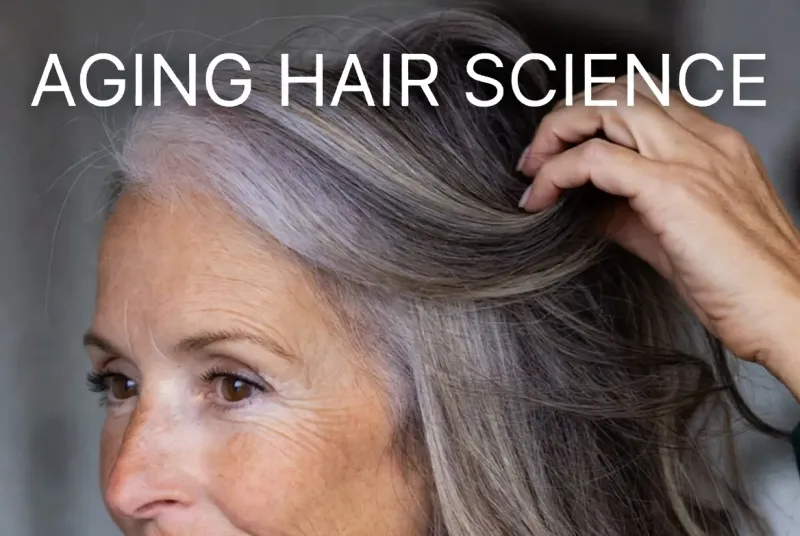
Melanocyte Depletion and Gray HairGray hair isn't just a color change—it's a structural shift:- Gray hairs often have altered texture: coarser, drier, or more wiry due to changes in medulla (inner core) structure- Reduced natural protection: Pigment provides some UV protection; gray hair may be more susceptible to sun damage- Different care needs: Gray hair often benefits from purple-toned products to neutralize yellowing and extra moisture to counteract dryness
Mechanism 3 Scalp Environment and Circulation
Sebum Production DeclineThe scalp's sebaceous glands produce less oil with age:- Natural lubrication decreases: Hair may feel drier, especially at the mid-lengths and ends- Scalp may become more sensitive: Less protective oil barrier can increase susceptibility to irritation
Circulation ChangesBlood flow to the scalp supports follicle nutrition and waste removal:- Age-related vascular changes may reduce nutrient delivery to follicles- Gentle scalp massage can support circulation and may enhance follicle environment
Evidence-Based Strategies to Support Aging Hair
Strategy 1 Adapt Your Cleansing and Conditioning Routine
Gentle, pH-Balanced Cleansing- Choose sulfate-free, low-pH shampoos that cleanse without stripping natural oils- Limit washing frequency if scalp feels dry; 2-3 times weekly may be sufficient for mature hair- Consider co-washing (conditioner-only washing) occasionally to preserve moisture
Targeted Conditioning- Focus conditioner on mid-lengths to ends where aging hair is most vulnerable- Look for ingredients that support mature hair: hydrolyzed proteins, ceramides, fatty alcohols- Use deep conditioning treatments weekly to reinforce moisture and strength
Gray Hair Specific Care- Use purple or blue shampoos sparingly (once every 1-2 weeks) to neutralize yellowing without over-drying- Follow with rich moisturizers to counteract potential dryness from toning products- Protect gray hair from UV exposure, which can cause yellowing and brittleness
Strategy 2 Prioritize Protein and Moisture Balance
Understanding the BalanceAging hair often needs both:- Protein: Reinforces weakened keratin structure; look for hydrolyzed wheat, silk, or keratin proteins- Moisture: Counteracts increased porosity and dryness; look for glycerin, hyaluronic acid, natural oils
Application Guidance- Apply protein treatments every 2-4 weeks; overuse can cause brittleness- Use moisturizing masks weekly or as needed based on hair feel- Layer products strategically: lightweight leave-ins under heavier creams or oils
Strategy 3 Minimize Mechanical and Thermal Stress
Gentle Handling Practices- Detangle with a wide-tooth comb starting from ends, working upward- Avoid brushing wet hair aggressively; use a wet brush or fingers when hair is saturated with conditioner- Limit tight hairstyles that create tension on follicles, especially at the hairline
Heat Styling Modifications- Use the lowest effective temperature; aging hair is more vulnerable to heat damage- Always apply a heat protectant containing polymers or silicones that form a protective barrier- Embrace heatless styling: overnight braids, flexi-rods, or fabric headbands create waves without heat
Strategy 4 Support Scalp Health as the Foundation
Scalp Care Practices- Gentle exfoliation: Use a soft scalp brush or chemical exfoliant (salicylic acid) monthly to remove buildup- Scalp massage: 3-5 minutes daily with fingertips can support circulation and relaxation- Avoid heavy product buildup at the roots, which can weigh hair down and irritate scalp
When to Consider Professional Scalp Treatments- If you experience persistent itching, flaking, or tenderness, consult a dermatologist- Professional treatments like platelet-rich plasma (PRP) or low-level laser therapy may support follicle health for some women
Strategy 5 Optimize Nutrition for Hair Support at Every Age
Key Nutrients for Aging Hair- Protein: Essential for keratin synthesis; aim for 1.0-1.2g per kg body weight daily- Iron: Supports oxygen delivery to follicles; include red meat, spinach, lentils, or fortified foods- Omega-3 fatty acids: Support scalp hydration and reduce inflammation; found in fatty fish, flaxseeds, walnuts- Biotin and B vitamins: Support cellular metabolism in hair follicles; found in eggs, nuts, whole grains- Vitamin D: Emerging research links adequate levels to hair cycling; consider testing if deficient- Antioxidants (vitamins C, E): Combat oxidative stress that accelerates aging; found in colorful produce
Hydration Matters- Adequate water intake supports overall cellular function, including hair follicles- Limit excessive caffeine or alcohol, which can contribute to dehydration
Strategy 6 Manage Expectations and Embrace Adaptive Styling
Realistic Timelines for Change- Hair grows ~1.25 cm (0.5 inches) per month; visible changes from new care routines take 3-6 months- Structural improvements (strength, elasticity) may take 6-12 months of consistent care- Density changes are often subtle and gradual; focus on overall health rather than dramatic reversal
Adaptive Styling Strategies- Shorter cuts can enhance volume and reduce weight on fine, aging hair- Layered styles create movement and dimension that enhance the appearance of fullness- Texturizing products (lightweight mousses, sea salt sprays) can add body without heaviness- Embrace your natural texture: Working with your hair's current behavior reduces damage from fighting it
When to Seek Professional Guidance
Consult a dermatologist or trichologist if:- You experience sudden, patchy, or severe hair loss- Shedding persists beyond 6 months despite gentle care and nutritional support- You notice scalp symptoms: persistent itching, pain, redness, or scaling- You have concerns about hormonal health, thyroid function, or other medical factors
A specialist can:- Perform scalp examination and hair pull test to assess shedding patterns- Order blood work to check for nutritional deficiencies, thyroid issues, or hormonal imbalances- Recommend medical treatments: minoxidil, spironolactone, or other options appropriate for women- Provide personalized guidance integrating lifestyle, topical care, and medical approaches
The Bigger Picture Hair as Part of Whole-Person Aging
While supporting hair health is a common goal, it's essential to maintain perspective
Hair Changes Are Normal- Aging hair reflects a life lived—not a failure to maintain youth- Gray hair, texture shifts, and density changes are natural parts of human biology- Beauty evolves; confidence and self-care matter more than conforming to a single ideal
Holistic Self-Care Supports Hair- Stress management, quality sleep, balanced nutrition, and joyful movement benefit hair alongside overall health- Approaching aging with curiosity and compassion creates space for grace at every stage
Avoiding Extremes- Aggressive treatments, extreme restriction, or over-manipulation can worsen hair fragility- Sustainable, gentle habits support long-term health more effectively than quick fixes
Conclusion Evolving with Grace, Not Resistance
If your hair feels different as you age, remember: this isn't a sign of failure or irreversible decline. It's information—a signal that your hair's needs have evolved alongside your life.
Understanding the biology behind these changes empowers you to respond with strategy rather than frustration. You don't need to chase the hair of your 20s. You can support your hair's current reality with informed care, adaptive styling, and self-compassion.
Start where you are. Choose one strategy from this guide to implement this week—perhaps adjusting your cleansing routine, adding a weekly protein treatment, or scheduling a scalp massage. Notice how your hair responds. Build from there.
Your hair tells a story—not just of genetics or products, but of decades of experiences, resilience, and growth. With mindful care and patience, you can honor that story at every age, cultivating strength, vitality, and confidence that evolve with grace.
For evidence-based hair care resources, gentle products, and expert guidance to support your hair health journey at any age, explore trusted platforms that prioritize science, transparency, and individualized care. Your path to healthy, confident hair starts with one intentional choice at a time.