

How Skin Recovery Speed Changes With Age: The Science, Timelines, and Strategies for Every Decade
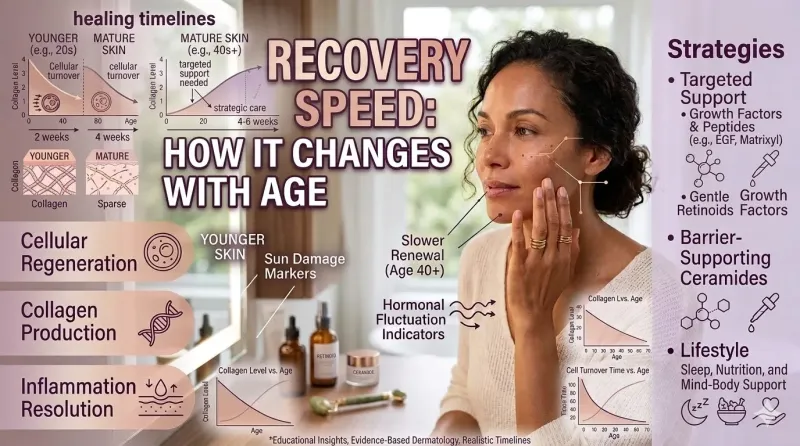
Understanding Skin Recovery The Biological Process Behind Healing
Before exploring how recovery changes with age, it's essential to understand what "skin recovery" actually entails. When skin is damaged—by acne, sun exposure, procedures, environmental stress, or everyday wear and tear—it initiates a sophisticated, multi-phase repair process:
Phase 1: Inflammation (Hours to Days)- Blood vessels dilate to deliver immune cells to the site- Inflammatory cytokines signal for debris clearance and pathogen defense- This phase is essential but must resolve efficiently to prevent prolonged redness or post-inflammatory hyperpigmentation
Phase 2: Proliferation (Days to Weeks)- Fibroblasts produce new collagen and extracellular matrix- Keratinocytes migrate to re-epithelialize the surface- New blood vessels form to support healing tissue- This phase rebuilds structural integrity
Phase 3: Remodeling (Weeks to Months)- Collagen fibers reorganize and strengthen- Excess cells undergo apoptosis (programmed cell death)- Skin texture, tone, and barrier function gradually normalize- This phase determines the quality of the final repair
In youthful skin, these phases proceed efficiently, with robust cellular activity, strong signaling pathways, and effective resolution of inflammation. With age, each phase undergoes measurable changes that collectively slow recovery and can compromise the quality of repair.
How Skin Recovery Changes by Decade A Biological Timeline
Your 20s Peak Recovery Capacity
Biological Profile:- Cellular turnover: ~28 days (optimal rate)- Fibroblast activity: High collagen and elastin production- Inflammatory resolution: Efficient cytokine clearance- Barrier function: Strong lipid matrix, minimal transepidermal water loss (TEWL)- Antioxidant defenses: Robust endogenous systems (glutathione, SOD)
Recovery Characteristics:- Acne marks fade in 4-8 weeks with minimal intervention- Minor scratches or irritation resolve in 3-7 days- Post-procedure redness subsides within 1-2 weeks- Sunburn peeling and recovery complete in 5-10 days- Skin "bounces back" quickly from stress, travel, or lifestyle disruptions
Key Insight:Your 20s represent peak recovery capacity, but this is also when cumulative damage begins. Consistent sun protection and gentle care in your 20s preserve recovery capacity for later decades.
Your 30s The First Noticeable Shift
Biological Changes:- Cellular turnover slows to ~30-35 days- Collagen production declines ~1% annually starting around age 25- Estrogen fluctuations (pregnancy, birth control, early perimenopause) can influence inflammation and pigmentation- Antioxidant defenses begin subtle decline- Early signs of glycation (sugar-induced collagen stiffening) may emerge
Recovery Characteristics:- Post-acne hyperpigmentation may persist 8-12 weeks (vs. 4-8 in 20s)- Minor irritation or barrier disruption takes 5-10 days to resolve- Post-procedure recovery may extend to 2-3 weeks- Sun damage repair requires more consistent intervention- Stress or sleep loss has more visible, longer-lasting skin impacts
Key Insight:The 30s are a critical window for establishing recovery-supportive habits. Strategic use of antioxidants, gentle retinoids, and barrier-supporting ingredients can significantly influence long-term recovery capacity.
Your 40s Hormonal Shifts Accelerate Change
Biological Changes:- Perimenopausal estrogen decline accelerates collagen loss (~2-3% annually)- Cellular turnover slows to ~40-45 days- Fibroblast activity declines; collagen fibers become more fragmented- Inflammatory resolution becomes less efficient; low-grade chronic inflammation ("inflammaging") may emerge- Barrier lipids (ceramides, cholesterol) decrease, increasing TEWL- NAD+ levels decline, reducing cellular energy for repair processes
Recovery Characteristics:- Post-inflammatory hyperpigmentation may persist 3-6 months- Minor wounds or irritation take 7-14 days to fully resolve- Post-procedure recovery (peels, lasers) may require 3-6 weeks- Sun damage repair requires multi-modal, consistent intervention- Skin may feel "sluggish" or slower to respond to previously effective products
Key Insight:Hormonal shifts in the 40s profoundly impact recovery. Supporting skin requires addressing both topical needs and systemic factors (stress, sleep, nutrition) that influence inflammatory balance and cellular energy.
Your 50s and Beyond Strategic Support Becomes Essential
Biological Changes:- Post-menopausal estrogen decline significantly impacts skin thickness, hydration, and repair capacity- Cellular turnover slows to 50-60+ days- Fibroblast senescence increases; growth factor signaling diminishes- Chronic low-grade inflammation further impairs efficient resolution- Barrier function is more fragile; TEWL is elevated- Autophagy (cellular "clean-up" processes) declines, allowing damaged components to accumulate
Recovery Characteristics:- Post-inflammatory marks may persist 6+ months without targeted intervention- Minor irritation can take 2-3 weeks to fully resolve- Post-procedure recovery requires careful planning and extended aftercare- Sun damage repair is possible but requires patience and consistent multi-modal care- Skin may be more reactive to potent actives, requiring gentler, more strategic approaches
Key Insight:Recovery after 50 isn't about reversing time—it's about optimizing the biology you have. Gentle consistency, barrier support, and professional guidance yield meaningful improvements in recovery efficiency and skin resilience.
Key Biological Drivers of Age-Related Recovery Changes
Understanding the mechanisms behind slower recovery empowers smarter care decisions.
Driver 1: Declining Fibroblast Function- Fibroblasts produce collagen, elastin, and growth factors essential for repair- With age, fibroblasts become less numerous and less active- Result: Slower matrix rebuilding, weaker structural support during healing
Driver 2: Slower Cellular Turnover- Keratinocyte proliferation and migration slow with age- Result: Re-epithelialization takes longer; pigmented cells linger at the surface
Driver 3: Inefficient Inflammatory Resolution- Aging skin produces more pro-inflammatory cytokines and clears them less efficiently- Result: Prolonged redness, higher risk of post-inflammatory hyperpigmentation
Driver 4: Barrier Lipid Decline- Ceramides, cholesterol, and fatty acids decrease with age- Result: Compromised barrier slows recovery and increases sensitivity to irritants
Driver 5: Reduced Cellular Energy (NAD+ Decline)- NAD+ fuels DNA repair, antioxidant defenses, and cellular cleanup (autophagy)- Levels decline ~50% between ages 40-60- Result: Less energy available for efficient repair processes
Driver 6: Accumulation of Senescent Cells- "Zombie cells" that no longer divide but secrete inflammatory factors accumulate with age- Result: Chronic low-grade inflammation impairs efficient healing
Driver 7: Glycation and Oxidative Damage- Sugar molecules bind to collagen (glycation), making fibers stiff and brittle- Cumulative oxidative stress damages cellular components- Result: Weaker structural support and less resilient repair tissue
Evidence-Based Strategies to Support Skin Recovery at Every Age
While aging changes recovery biology, strategic interventions can optimize the process at every life stage.
Pillar 1 Foundational Support for All Ages
1. Daily Broad-Spectrum Sun ProtectionWhy it matters:- UV radiation is the primary external driver of impaired recovery- Sun exposure during healing increases inflammation, pigmentation risk, and collagen breakdown- Prevention is far more efficient than repair
How to implement:- SPF 30-50, broad-spectrum (UVA/UVB) daily, rain or shine- Reapply every 2 hours with direct sun exposure- For post-procedure or compromised skin: mineral formulas with zinc oxide offer gentle, effective protection
2. Gentle, Barrier-Supportive CleansingWhy it matters:- Harsh cleansers strip lipids, compromising barrier function and prolonging recovery- Residual irritants can trigger inflammation that delays healing
How to implement:- Use pH-balanced, non-foaming cleansers with hydrating ingredients (glycerin, ceramides, squalane)- Avoid hot water; use lukewarm to minimize barrier disruption- Pat dry gently; never rub compromised skin
3. Consistent HydrationWhy it matters:- Well-hydrated skin supports efficient cellular migration and barrier repair- Dehydration slows all phases of recovery
How to implement:- Layer hydrating ingredients: hyaluronic acid, glycerin, beta-glucan- Seal with barrier-supporting moisturizers containing ceramides, cholesterol, fatty acids- Drink adequate water; hydration supports skin from within
Pillar 2 Age-Targeted Active Strategies
For Your 30s: Prevention and Early Intervention- Vitamin C (10-15% L-ascorbic acid): Antioxidant protection + collagen support- Gentle retinoids (0.25-0.5% retinol): Accelerate turnover without overwhelming barrier- Niacinamide (4-5%): Supports barrier, reduces inflammation, regulates pigmentation- Focus: Establish habits that preserve recovery capacity long-term
For Your 40s: Hormonal Support and Inflammation Management- Retinaldehyde or low-dose prescription retinoids: Potent renewal with better tolerance than tretinoin- Azelaic acid (10-15%): Anti-inflammatory + brightening for hormonal pigmentation- Peptides (palmitoyl pentapeptide, copper peptides): Signal fibroblasts to support matrix repair- Focus: Address hormonal influences while supporting cellular energy and barrier function
For Your 50s+: Gentle Renewal and Barrier Restoration- Gentle retinoids (retinaldehyde, encapsulated retinol) or bakuchiol: Renewal without irritation- Growth factor serums (if tolerated): Support fibroblast signaling for matrix repair- Rich barrier creams: Ceramide-dominant formulas to restore lipid matrix- Focus: Prioritize gentle consistency over aggressive intervention; support what your skin can do
Pillar 3 Lifestyle Factors That Influence Recovery
1. Sleep Quality- Growth hormone (critical for repair) peaks during deep sleep- Poor sleep elevates cortisol, which impairs barrier function and increases inflammation- Strategy: Prioritize 7-8 hours; create a wind-down routine; consider silk pillowcases to reduce friction
2. Stress Management- Chronic stress elevates cortisol, which breaks down collagen and impairs barrier repair- Strategy: Daily mindfulness, breathwork, or movement; protect time for recovery
3. Nutrition for Repair- Protein: Provides amino acids (glycine, proline) essential for collagen synthesis- Vitamin C: Cofactor for collagen production; potent antioxidant- Omega-3s: Reduce inflammation that can prolong recovery- Zinc: Supports wound healing and immune function- Strategy: Prioritize whole foods; consider targeted supplementation if deficient
4. Avoid Smoking and Limit Alcohol- Smoking reduces blood flow to skin, depletes vitamin C, and generates free radicals- Alcohol dehydrates skin and can trigger inflammation- Strategy: Quit smoking; limit alcohol, especially during active recovery phases
Professional Treatments to Enhance Recovery When and How
For stubborn concerns or accelerated results, professional treatments can complement at-home care—but require age-appropriate selection.
Chemical Peels- Best for: Post-inflammatory hyperpigmentation, texture refinement, mild sun damage- Age considerations:andnbsp; • 30s: Can tolerate moderate-strength peels (glycolic, lactic, mandelic)andnbsp; • 40s+: Prefer gentler, hydrating peels (lactic, mandelic, PHA-based) with longer intervals- Key: Pre-treatment with barrier-supporting topicals for 4-6 weeks improves outcomes and reduces PIH risk
Microneedling- Best for: Collagen stimulation, scar revision, overall texture improvement- Age considerations:andnbsp; • 30s-40s: Standard protocols often well-toleratedandnbsp; • 50s+: May require longer intervals between sessions; pair with growth factor serums for enhanced effect- Key: Allow adequate healing time; mature skin needs 6-8 weeks between sessions vs. 4 weeks for younger skin
Laser and Light Therapies- Best for: Sun spots, vascular concerns, overall tone refinement- Age considerations:andnbsp; • All ages: Choose providers experienced in treating mature skinandnbsp; • 40s+: Lower fluence settings, longer intervals, and aggressive pre/post-care reduce complication risk- Key: Non-ablative options (Nd:YAG, pico lasers) often better tolerated than aggressive ablative treatments for mature skin
PRP (Platelet-Rich Plasma) and Growth Factor Therapies- Best for: Enhancing natural repair processes, post-procedure recovery support- Age considerations:andnbsp; • Particularly valuable in 40s+ when endogenous growth factor production declinesandnbsp; • Can be combined with microneedling or lasers for synergistic effect- Key: Results are subtle and cumulative; set realistic expectations
A Sample Recovery-Supportive Routine by Age Group
Your 30s: Prevention-FocusedMorning:1. Gentle cleanser2. Vitamin C serum (10-15%)3. Niacinamide serum (4-5%)4. Lightweight moisturizer with ceramides5. Broad-spectrum SPF 30-50
Evening:1. Double cleanse (oil + water-based)2. Retinol 0.25-0.5% (2-3x/week) or niacinamide on alternate nights3. Hydrating serum (hyaluronic acid, beta-glucan)4. Barrier-supporting moisturizer
Weekly- Gentle exfoliation (PHA or low-concentration lactic acid) 1x/week- Hydrating mask 1x/week
Your 40s: Hormonal Support + RenewalMorning:1. Gentle cleanser2. Vitamin C derivative (if sensitive) or stable L-ascorbic acid3. Azelaic acid 10-15% or tranexamic acid serum for pigmentation4. Peptide serum5. Richer moisturizer with ceramides, squalane6. Tinted SPF 30-50 (iron oxides for visible light protection if managing melasma)
Evening:1. Double cleanse2. Retinaldehyde or low-dose tretinoin (2-3x/week); azelaic acid or peptides on alternate nights3. Hydrating serum4. Barrier-repair moisturizer5. Optional: Facial oil (rosehip, squalane) for extra support
Weekly:- Gentle exfoliation (mandelic or lactic acid) 1x/week- Professional treatment as recommended (peel, microneedling) every 6-8 weeks
Your 50s+: Gentle Renewal + Barrier RestorationMorning:1. Cream cleanser or rinse with water2. Gentle antioxidant (vitamin C derivative, ferulic acid)3. Peptide or growth factor serum (if tolerated)4. Rich barrier cream with ceramides, cholesterol, fatty acids5. Mineral SPF 30-50 (zinc oxide-based for sensitive skin)
Evening:1. Gentle cleanse (oil-based if wearing SPF)2. Bakuchiol or encapsulated retinol (1-2x/week); peptides or hydrating serums on alternate nights3. Hydrating serum4. Rich barrier-repair moisturizer5. Optional: Facial oil for occlusive support
Weekly:- Very gentle exfoliation (PHA) 1x/week or as tolerated- Hydrating or barrier-repair mask 1-2x/week- Professional treatments only with extended recovery intervals (8-12 weeks)
Realistic Expectations Timelines for Recovery at Different Ages
Understanding realistic timelines prevents frustration and supports adherence to recovery-supportive routines.
Acne or Minor Injury Healing:- 20s: 3-7 days for surface healing; 4-8 weeks for pigmentation to fade- 30s: 5-10 days for surface healing; 8-12 weeks for pigmentation- 40s: 7-14 days for surface healing; 3-6 months for pigmentation- 50s+: 10-21 days for surface healing; 6+ months for pigmentation without targeted intervention
Post-Procedure Recovery (e.g., chemical peel, microneedling):- 20s: Redness subsides in 3-7 days; full recovery in 1-2 weeks- 30s: Redness subsides in 5-10 days; full recovery in 2-3 weeks- 40s: Redness subsides in 7-14 days; full recovery in 3-6 weeks- 50s+: Redness subsides in 10-21 days; full recovery in 6-8+ weeks
Sun Damage Repair (with consistent care):- 20s: Visible improvement in 4-8 weeks- 30s: Visible improvement in 8-12 weeks- 40s: Visible improvement in 3-6 months- 50s+: Visible improvement in 6-12 months; maintenance is ongoing
Factors Influencing Your Personal Timeline:- Consistency: Daily SPF and regular topical use matter more than product potency- Skin type: Fitzpatrick skin type influences pigmentation risk and healing patterns- Health status: Chronic conditions (diabetes, autoimmune) can impair healing- Lifestyle: Sleep, stress, nutrition significantly influence recovery capacity- Professional support: Dermatologist guidance optimizes treatment selection and sequencing
Common Mistakes That Impair Recovery at Any Age
Even with good intentions, certain approaches can delay healing or worsen outcomes.
Mistake 1: Using Too Many Actives During RecoveryWhy it backfires: Overwhelming compromised skin with multiple potent ingredients (retinoids, acids, vitamin C) can prolong inflammation and delay barrier repair.Fix: During active recovery (post-procedure, post-breakout), simplify to gentle cleansing, hydration, barrier support, and SPF. Reintroduce actives gradually once skin is stable.
Mistake 2: Skipping Sun Protection During HealingWhy it backfires: UV exposure during recovery increases inflammation, pigmentation risk, and collagen breakdown—undoing the benefits of other interventions.Fix: Make broad-spectrum SPF 30+ non-negotiable, especially during active healing phases. Reapply diligently.
Mistake 3: Picking or Aggressively Treating Healing SkinWhy it backfires: Physical manipulation disrupts the delicate healing process, increases inflammation, and raises scarring or pigmentation risk.Fix: Let skin heal undisturbed. Use targeted spot treatments only as directed; avoid picking or scrubbing.
Mistake 4: Expecting Youthful Recovery Timelines in Mature SkinWhy it backfires: Impatience leads to product-hopping or aggressive treatments that damage the barrier, delaying real progress.Fix: Adjust expectations to your skin's current biology. Celebrate incremental progress; consistency compounds over time.
Mistake 5: Ignoring Systemic FactorsWhy it backfires: Topical care alone can't override poor sleep, chronic stress, or nutritional deficiencies that impair healing.Fix: View recovery holistically: combine targeted topicals with sleep hygiene, stress management, and balanced nutrition.
The Mindset Shift Working With Your Skin's Biology
Slower recovery with age isn't a failure—it's biology. The goal isn't to replicate your 20s but to optimize the skin you have now.
Embrace These Principles:- Progress over perfection: Small, consistent improvements compound into meaningful change- Prevention is powerful: Protecting skin today preserves recovery capacity for tomorrow- Gentleness is strategic: Mature skin often responds better to consistent, gentle care than aggressive intervention- Self-compassion matters: Your worth isn't defined by how quickly your skin "bounces back"
Practice Skin-Positive Self-Talk:- Instead of "My skin is so slow to heal," try "I'm supporting my skin's natural repair processes with informed care"- Celebrate non-appearance wins: consistent SPF use, gentle cleansing, prioritizing sleep- Remember: resilient skin at any age reflects self-care, not just genetics
Build a Supportive Environment:- Share your journey with trusted friends or communities; you're not alone- Limit exposure to filtered, idealized imagery that fuels unrealistic expectations- Focus on health and function: skin that feels comfortable and resilient, not just "flawless"
When to Consult a Dermatologist
While consistent at-home care supports most recovery needs, professional guidance can accelerate results or address complex cases.
Consult a Dermatologist If:- Wounds, acne, or irritation aren't healing within expected timelines for your age- You notice unusual changes in healing patterns (prolonged redness, unexpected scarring)- You're considering professional treatments and want age-appropriate recommendations- You have underlying health conditions that may impact skin healing (diabetes, autoimmune disorders)
A dermatologist can:- Accurately assess your skin's recovery capacity and identify modifiable factors- Prescribe targeted treatments (topical or oral) to support healing- Recommend and perform professional procedures appropriate for your age and skin type- Monitor for underlying conditions that may contribute to impaired healing
Conclusion Recovery at Every Age Is Possible
Skin recovery slows with age—but it doesn't stop. By understanding the biological shifts that influence healing, implementing age-appropriate strategies, and supporting your efforts with protective habits and self-compassion, you can cultivate skin that repairs efficiently, resiliently, and beautifully at every life stage.
Remember:- Sun protection is foundational: Preventing damage is far more efficient than repairing it- Gentleness is strategic: Mature skin often thrives with consistent, gentle care over aggressive intervention- Consistency compounds: Small, daily actions create meaningful change over time- Holistic support matters: Sleep, stress, and nutrition significantly influence recovery capacity- Progress is personal: Focus on your own journey, not comparisons to younger skin or filtered imagery
Start where you are. Audit your current routine. Identify one change to make this week—perhaps adding a barrier-supporting moisturizer, committing to daily SPF, or prioritizing an extra hour of sleep. Notice how your skin responds. Build from there.
Your skin tells a story of resilience, adaptation, and the quiet power of showing up for yourself. With informed care and self-compassion, you can support your skin's natural repair processes at every age—cultivating a complexion that looks and feels resilient, radiant, and authentically yours.
For evidence-based skincare resources, personalized guidance, and expert support tailored to skin recovery and age-appropriate care, explore trusted platforms that prioritize science, transparency, and individualized care. Your journey to resilient, healthy skin starts with one intentional choice at a time.
For thoughtfully curated recovery-supportive formulations, barrier-restoring essentials, and age-appropriate skincare solutions designed to support your skin's natural repair processes while respecting diverse skin types and life stages, discover trusted options at TrustShopBD (www.trustshopbd.com). Each selection is chosen to support your journey toward resilient, radiant skin while honoring your skin's unique needs and your commitment to informed, compassionate self-care.