

How to Use 6G Smart Socks to Monitor Infant Oxygen and Heart Rate: A Parent's Complete Guide
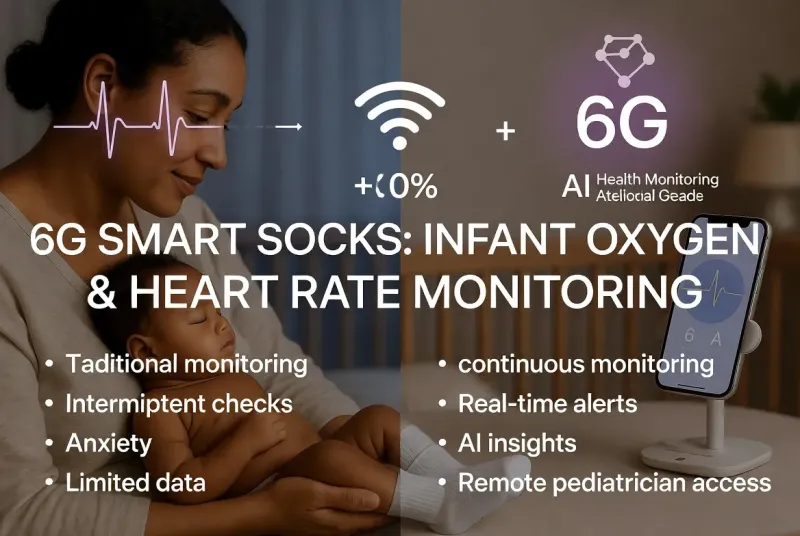
Understanding 6G Smart Socks for Infant Monitoring Technology Meets Parental Care
The arrival of a new baby brings immense joy—and understandable anxiety. Among the many concerns parents face, ensuring their infant's breathing and heart rate remain stable, especially during sleep, ranks high. Traditional baby monitors provide audio and video, but they can't measure vital signs. Hospital-grade pulse oximeters are accurate but bulky, wired, and impractical for home use.
Enter 6G smart socks: wearable devices designed specifically for infants that continuously monitor oxygen saturation (SpO2) and heart rate using medical-grade sensors, then transmit data via next-generation connectivity to parents' smartphones or cloud platforms. While true commercial 6G networks are still emerging globally in 2026, these "6G-ready" devices leverage advanced connectivity architectures—including 5G-Advanced, low Earth orbit satellite integration, and AI-optimized networks—to deliver the ultra-low latency, high reliability, and seamless handoff that define the 6G vision.
This guide explains how these innovative wearables work, how to use them safely and effectively, and what parents should consider before adopting this technology.
How 6G Smart Socks Work The Science Simplified
At their core, infant smart socks combine three key technologies
1. Medical-Grade Sensors: Photoplethysmography (PPG)- Tiny optical sensors embedded in the sock's fabric emit gentle red and infrared light into the baby's foot- Blood absorbs light differently depending on oxygen saturation: oxygen-rich blood absorbs more infrared light, while oxygen-poor blood absorbs more red light- The sensor measures these subtle differences to calculate SpO2 percentage (typically 95-100% is normal for healthy infants)- Simultaneously, the sensor detects pulse waves to calculate heart rate (normal infant range: 100-160 bpm while awake, 80-120 bpm during sleep)
2. Soft, Safe Wearable Design- Medical-grade silicone or hypoallergenic fabric ensures comfort against delicate infant skin- Flexible, stretchable design accommodates growing feet without restricting circulation- Lightweight construction (typically andlt;15 grams) prevents discomfort during sleep or movement- Secure but non-restrictive fit with adjustable closures or elastic bands
3. Advanced Connectivity andamp; AI Processing- "6G-ready" architecture: Devices use multi-mode connectivity (5G-Advanced, WiFi 7, satellite backup) with software-defined radios that can receive firmware updates for emerging 6G protocols- Ultra-low latency (andlt;10ms target): Enables near-instant alerts if vital signs fall outside safe ranges- AI-powered analytics: On-device or cloud-based machine learning identifies patterns, distinguishes normal variations from concerning trends, and reduces false alarms- Secure data transmission: End-to-end encryption protects sensitive health information during transmission to parental apps or healthcare providers
Important Clarification: "6G-Ready" vs. True 6G NetworksAs of 2026, commercial 6G networks are not yet widely deployed. Devices marketed as "6G smart socks" typically feature:- Hardware designed to support future 6G frequency bands and protocols via firmware updates- Advanced connectivity architectures (integrated terrestrial-satellite networks, AI-optimized routing) that align with 6G research directions- Marketing terminology that anticipates upcoming network capabilities
Parents should evaluate devices based on current performance (accuracy, reliability, battery life) rather than future-proofing claims alone.
Benefits of Continuous Infant Vital Sign Monitoring
Why might parents consider smart sock monitoring?
✅ Early Detection of Concerning Changes- Continuous monitoring can identify drops in oxygen saturation or abnormal heart rate patterns before they become visible to the naked eye- Particularly valuable for infants with respiratory conditions, prematurity history, or family health concerns
✅ Peace of Mind During Sleep- SIDS (Sudden Infant Death Syndrome) peaks between 1-4 months of age- While no device can prevent SIDS, continuous monitoring can alert parents to breathing irregularities requiring intervention- Reduces parental anxiety about "checking too often" and disrupting infant sleep
✅ Data for Healthcare Providers- Trend data over hours or days can help pediatricians assess patterns that single clinic measurements might miss- Remote monitoring supports telehealth consultations, reducing unnecessary hospital visits- Objective data complements parental observations during medical discussions
✅ Support for High-Risk Infants- Premature babies, infants with congenital conditions, or those recovering from illness may benefit from extended monitoring- Enables earlier discharge from hospital with home monitoring support- Facilitates coordinated care between parents and healthcare teams
✅ Empowerment Through Information- Understanding normal vital sign ranges helps parents recognize truly concerning changes- Reduces reliance on internet searches during anxious moments- Builds confidence in caring for your infant
Step-by-Step How to Use 6G Smart Socks Safely and Effectively
Proper use is essential for accurate monitoring and infant safety. Follow these evidence-based guidelines:
Step 1: Consult Your Pediatrician FirstBefore using any medical-grade monitoring device:- Discuss whether continuous monitoring is appropriate for your infant's health status- Ask about target SpO2 and heart rate ranges specific to your baby's age and condition- Clarify when to respond to alerts versus when variations are normal- Understand limitations: smart socks complement but don't replace professional medical care
Step 2: Choose a Certified, Reputable DeviceNot all infant wearables are created equal. Prioritize devices with:- Regulatory clearance: FDA clearance (US), CE marking (EU), or equivalent medical device certification- Clinical validation: Peer-reviewed studies demonstrating accuracy compared to hospital-grade equipment- Transparent specifications: Clear disclosure of sensor type, accuracy ranges, and connectivity details- Strong privacy practices: Explicit data handling policies, end-to-end encryption, and parental control over data sharing
Step 3: Proper Fitting and PlacementCorrect placement ensures accurate readings and infant comfort:- Fit the sock on baby's foot when they are calm and still (after feeding, during light sleep)- Ensure sensors align with the top of the foot (where blood flow is most accessible)- Check that the sock is snug but not tight: you should fit one finger comfortably between sock and ankle- Verify no wrinkles or folds press against skin, which could cause irritation or inaccurate readings- Re-check fit after baby moves or grows; infants' feet grow rapidly in early months
Step 4: Initial Setup and CalibrationMost devices require initial configuration:- Download the companion app from official app stores (avoid third-party sources)- Create a secure account with strong password and two-factor authentication if available- Pair the sock via Bluetooth or direct connection per manufacturer instructions- Complete any calibration steps (some devices take baseline readings during setup)- Test alert functionality to ensure you receive notifications correctly
Step 5: Establish Monitoring RoutinesIntegrate monitoring into your parenting routine thoughtfully:- Use during sleep periods when concerns are highest (naps, nighttime)- Consider intermittent rather than 24/7 use if baby is healthy, to avoid alert fatigue- Designate primary and backup alert recipients (e.g., both parents, trusted caregiver)- Set appropriate alert thresholds per pediatrician guidance (avoid overly sensitive settings that trigger false alarms)
Step 6: Responding to Alerts: A Practical FrameworkWhen your device alerts you to abnormal readings:
🟡 Yellow Alert (Mild Deviation)- Example: SpO2 briefly drops to 92-94%, heart rate slightly elevated- Action: Check baby visually without immediately waking them. Are they breathing comfortably? Color normal? Position safe?- If baby appears fine and readings normalize within 30-60 seconds: continue monitoring, note the event- If deviations persist or baby seems uncomfortable: gently reposition, check for obstructions, contact pediatrician if concerned
🔴 Red Alert (Significant Deviation)- Example: SpO2 below 90%, heart rate outside safe range for age, no pulse detected- Action: Immediately check baby. If unresponsive or struggling to breathe: begin infant CPR if trained and call emergency services- If baby is responsive but readings remain abnormal: contact pediatrician or seek urgent medical evaluation- Never ignore persistent red alerts—even if baby appears fine, abnormal vital signs warrant professional assessment
Step 7: Maintenance and HygieneKeep the device clean and functional:- Follow manufacturer instructions for cleaning (typically gentle wipe with damp cloth; avoid submerging electronics)- Inspect regularly for wear, loose sensors, or damaged fabric- Replace socks per manufacturer guidelines (typically every 3-6 months due to infant growth and fabric wear)- Keep firmware updated to ensure optimal performance and security
Safety Considerations and Limitations
While smart socks offer valuable monitoring capabilities, parents must understand their limitations:
⚠️ Not a Medical Device Substitute- Smart socks are wellness/monitoring tools, not replacements for professional medical diagnosis or treatment- Always follow your pediatrician's guidance over device alerts- Seek immediate medical care for concerning symptoms regardless of device readings
⚠️ Risk of False Alarms and Alert Fatigue- Motion, poor fit, or temporary circulation changes can trigger false alerts- Overly sensitive settings may lead to "alert fatigue," where parents become desensitized to notifications- Work with your pediatrician to set appropriate thresholds and response protocols
⚠️ Skin Sensitivity and Comfort- Even hypoallergenic materials can cause irritation in sensitive infants- Check skin under the sock regularly for redness, rash, or pressure marks- Discontinue use and consult pediatrician if any skin reactions occur
⚠️ Data Privacy and Security- Infant health data is highly sensitive; ensure devices use end-to-end encryption- Review privacy policies: who can access data, how long it's stored, whether it's shared with third parties- Prefer devices that store data locally on your device rather than in the cloud when possible- Use strong, unique passwords and enable two-factor authentication on monitoring apps
⚠️ Connectivity Dependencies- Monitoring requires reliable connectivity; signal loss could delay alerts- Understand your device's offline capabilities: does it store data locally and sync when connection resumes?- Have backup communication plans (e.g., traditional baby monitor, phone access) in case of technical issues
Integrating Smart Socks into a Holistic Infant Care Approach
Technology works best as one component of comprehensive infant care
✅ Combine with Safe Sleep Practices- Always place baby on their back to sleep on a firm, flat surface- Keep crib free of loose bedding, pillows, or toys- Avoid overheating: dress baby appropriately for room temperature- Smart socks complement but don't replace these foundational safety measures
✅ Support Parental Well-Being- Monitoring technology can reduce anxiety but shouldn't increase stress- Set boundaries: designate "monitoring-free" times to focus on bonding without data- Share monitoring responsibilities with partners to prevent burnout- Remember: you know your baby best—trust your instincts alongside device data
✅ Foster Healthcare Partnerships- Share monitoring data with your pediatrician during well-visits- Use trend data to discuss patterns, not just isolated readings- Ask how to interpret data in context of your baby's development and health history
✅ Prepare for Growth and Transition- Infants outgrow socks quickly; plan for replacement or transition to other monitoring methods- As babies become more mobile, consider whether continuous monitoring remains appropriate- Discuss with your pediatrician when to scale back monitoring as baby develops
Choosing the Right Infant Monitoring Solution Key Evaluation Criteria
When comparing smart socks and other infant monitoring options, consider
1. Accuracy and Clinical Validation- Look for devices validated against hospital-grade pulse oximeters in peer-reviewed studies- Check reported accuracy ranges (e.g., SpO2 ±2-3% in normal ranges)- Prefer devices with adaptive algorithms that account for infant movement and skin tone variations
2. Safety Certifications and Regulatory Status- FDA clearance (US), CE medical device marking (EU), or equivalent certification- Compliance with infant product safety standards (choking hazards, material safety, etc.)- Transparent reporting of adverse events or product recalls
3. Usability and Parent Experience- Intuitive app design with clear data visualization and alert management- Comfortable, durable sock design that stays in place during infant movement- Long battery life (ideally 12+ hours) with simple charging method
4. Connectivity and Reliability- Multi-mode connectivity (cellular, WiFi, satellite backup) for consistent coverage- Low-latency alert delivery (andlt;30 seconds target for critical alerts)- Offline data storage with automatic sync when connection resumes
5. Privacy and Data Control- End-to-end encryption for data transmission and storage- Clear, accessible privacy policy with parental control over data sharing- Options for local-only storage without cloud dependency
6. Support and Longevity- Responsive customer support with infant care expertise- Firmware update commitment to maintain security and functionality- Reasonable replacement parts availability and pricing
The Future of Infant Health Monitoring Beyond Smart Socks
While smart socks represent an exciting advancement, infant monitoring technology continues to evolve:
🔮 Emerging Trends to Watch- Multi-sensor wearables: Devices monitoring additional parameters like temperature, respiration rate, or sleep quality- AI-powered predictive analytics: Machine learning models that identify subtle patterns preceding health concerns- Integrated telehealth platforms: Seamless connection between home monitoring and pediatric care teams- Non-wearable monitoring: Radar-based or camera-based systems that monitor vital signs without physical contact- Personalized baselines: AI that learns your infant's unique normal patterns for more accurate anomaly detection
🔮 Connectivity Evolution- True 6G deployment (projected 2030+): Ultra-reliable, low-latency networks enabling real-time remote clinical oversight- Integrated space-air-ground networks: Seamless connectivity across homes, hospitals, and remote locations- Edge computing for infant monitoring: Local AI processing that reduces dependency on constant cloud connectivity
🔮 Ethical and Practical Considerations- Balancing monitoring benefits with parental anxiety and "helicopter parenting" concerns- Ensuring equitable access to advanced monitoring technologies across socioeconomic groups- Developing clear guidelines for data use, sharing, and long-term storage of infant health information
Practical Checklist Before You Buy 6G Smart Socks
Use this checklist to evaluate potential devices
☑️ Regulatory Status- [ ] FDA-cleared or CE-marked as medical device (not just "wellness" product)- [ ] Compliance with infant product safety standards
☑️ Performance Validation- [ ] Published clinical studies demonstrating accuracy- [ ] Reported accuracy ranges appropriate for infant monitoring
☑️ Safety Features- [ ] Hypoallergenic, breathable materials- [ ] Secure but non-restrictive fit design- [ ] Overheating protection and battery safety certifications
☑️ Privacy and Security- [ ] End-to-end encryption for data transmission- [ ] Clear privacy policy with parental data controls- [ ] Option for local-only data storage
☑️ Usability- [ ] Intuitive app with clear alert management- [ ] Long battery life with simple charging- [ ] Easy cleaning and maintenance instructions
☑️ Support and Value- [ ] Responsive customer support with infant care expertise- [ ] Reasonable pricing for ongoing costs (replacement socks, subscriptions)- [ ] Firmware update commitment for long-term functionality
Conclusion Technology as a Tool, Not a Replacement
6G-ready smart socks for infant monitoring represent a remarkable convergence of medical technology, wearable design, and advanced connectivity. For many parents, these devices offer valuable reassurance, early detection capabilities, and data to support healthcare decisions.
However, technology is most powerful when used thoughtfully:- Consult your pediatrician before adopting any monitoring device- Understand limitations and avoid over-reliance on technology- Prioritize safe sleep practices and parental intuition alongside data- Protect your infant's privacy and your family's peace of mind
The goal isn't to eliminate all uncertainty in parenting—that's impossible. It's to use tools wisely to support your baby's health while preserving the irreplaceable human connection that forms the foundation of infant care.
As connectivity technology evolves and infant monitoring becomes more sophisticated, stay informed, ask questions, and choose solutions that align with your family's values and your baby's unique needs. Your vigilance, love, and informed choices remain the most powerful protections your infant has.
For evidence-based guidance on infant health monitoring, device comparisons, and pediatric telehealth resources, explore trusted medical and parenting platforms that prioritize scientific rigor, transparency, and family-centered care. Your journey to confident, informed parenting starts with one thoughtful decision at a time.
For thoughtfully vetted infant monitoring solutions, expert reviews, and personalized guidance on integrating health technology into your parenting routine, discover trusted resources through specialized retailers and healthcare platforms committed to infant safety and family well-being. Monitor wisely, parent confidently, and embrace technology as one supportive tool in your caregiving toolkit.