

Minimalist Living: How to Declutter Your Home and Mind for Clarity
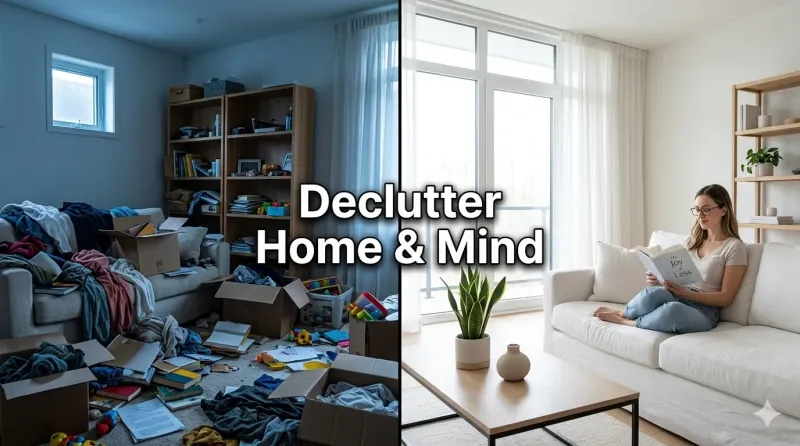
In a world that constantly urges us to acquire more—more possessions, more commitments, more distractions—the idea of minimalist living offers a refreshing alternative. Minimalism isn't about deprivation or living with nothing; it's about intentionally choosing what adds value to your life and releasing what doesn't. It's a pathway to clarity, calm, and freedom in both your physical space and your mental landscape.
Decluttering your home and mind isn't just a trendy lifestyle choice—it's a powerful practice backed by psychology and neuroscience. Research shows that cluttered environments increase cortisol levels (the stress hormone), reduce focus, and impair decision-making. Conversely, simplified spaces promote relaxation, creativity, and mental clarity. When we release physical clutter, we often experience a parallel release of mental clutter: fewer decisions, less overwhelm, and more space for what truly matters.
This comprehensive guide will walk you through the practical steps to embrace minimalist living, from decluttering your home room by room to cultivating a minimalist mindset that brings lasting peace. You'll discover evidence-based strategies for letting go of possessions, simplifying your schedule, and creating space for clarity and purpose. Whether you're feeling overwhelmed by stuff, stressed by busyness, or simply curious about living with more intention, this guide will equip you with the tools to transform your space and your life.
Understanding Minimalism: What It Is (and What It Isn't)
Before diving into practical steps, it's essential to clarify what minimalist living truly means. Misconceptions about minimalism can create unnecessary pressure or lead to unsustainable approaches.
What Minimalism Is
Intentionality: Minimalism is about making deliberate choices about what you allow into your life—possessions, commitments, relationships, and activities. It's asking: "Does this add value?"
Freedom: By releasing what doesn't serve you, you create space—physically, mentally, and emotionally—for what does. Minimalism is a path to freedom from consumerism, overwhelm, and distraction.
Personalization: There's no single "right" way to be minimalist. Your minimalism might look different from someone else's, and that's perfectly fine. It's about what works for your values and lifestyle.
Focus on Value: Minimalism isn't about having less for the sake of less; it's about making room for more of what matters: relationships, experiences, growth, and peace.
What Minimalism Isn't
Deprivation: Minimalism isn't about denying yourself things you enjoy. It's about choosing quality over quantity and ensuring your possessions serve a purpose or bring joy.
Aesthetic Perfection: Social media often portrays minimalism as stark white rooms with a single plant. Real minimalism is functional and personal—it doesn't require a specific aesthetic.
A One-Time Project: Minimalism isn't a weekend decluttering marathon. It's an ongoing practice of evaluation and intentionality.
Judgment of Others: Minimalism is a personal journey. It's not about imposing your choices on others or feeling superior for having less.
The Science Behind Minimalism
Research supports the benefits of simplified living:
- Reduced Stress: A UCLA study found that cluttered homes correlate with elevated cortisol levels, particularly in women [[18]]
- Improved Focus: Visual clutter competes for attention, reducing cognitive resources available for tasks [[22]]
- Better Decision-Making: Fewer possessions mean fewer daily decisions, preserving mental energy for important choices
- Enhanced Wellbeing: People who prioritize experiences over possessions report higher life satisfaction [[15]]
- Financial Freedom: Intentional spending reduces debt and increases savings, reducing financial stress
Preparing for Your Minimalist Journey
Successful decluttering starts with the right mindset and preparation. These foundational steps set you up for lasting success.
Clarify Your "Why"
Before you start letting go of possessions, get clear on your motivation. Your "why" will sustain you when decluttering gets challenging.
Reflective Questions:
- What feels overwhelming or stressful in my current life?
- What would I do with more time, space, or mental energy?
- What values do I want my home and life to reflect?
- How do I want to feel in my space?
Write Your Minimalist Vision:
"I am creating a home and life that feels calm, intentional, and aligned with my values. I release what no longer serves me to make space for what truly matters."
Start Small to Build Momentum
Trying to declutter your entire home in a weekend often leads to burnout. Instead, start with a small, manageable area to build confidence and momentum.
Good Starting Points:
- A single drawer (junk drawer, underwear drawer)
- One shelf in a closet or bookcase
- Your bathroom counter or medicine cabinet
- Your car or purse
The 15-Minute Rule: Set a timer for 15 minutes and declutter one small area. Stop when the timer goes off. This prevents overwhelm and makes the practice sustainable.
Gather Your Supplies
Having the right tools makes decluttering easier and more efficient.
Essential Supplies:
- Boxes or bags: Label four categories: Keep, Donate/Sell, Trash, Relocate (items that belong in another room)
- Cleaning supplies: Wipe down surfaces after decluttering
- Labels or markers: Clearly mark boxes for donation or relocation
- Timer: Use for focused decluttering sessions
- Journal: Reflect on your process and decisions
The Decluttering Process: Room by Room
Approach your home systematically. Here's a practical framework for decluttering each space.
The Four-Box Method
For every item you pick up, decide which of four categories it belongs to:
- Keep: Items you use regularly, love, or need
- Donate/Sell: Items in good condition that no longer serve you
- Trash/Recycle: Broken, expired, or unusable items
- Relocate: Items that belong in another room
Key Rule: Handle each item only once. Make a decision and move it to its designated box immediately.
Questions to Ask About Each Item
When deciding whether to keep an item, ask:
- Do I use this regularly? (If not used in the past year, likely not needed)
- Does this add value to my life? (Utility, joy, meaning)
- Does this align with who I am now? (Not who you were or hope to be)
- If I saw this in a store today, would I buy it?
- Does this serve a purpose or bring joy? (Marie Kondo's famous question)
Room-by-Room Guide
1. Entryway/Mudroom
- Goal: Create a calm transition space between outside and inside
- Declutter: Shoes, coats, bags, keys, mail
- Keep: Only current-season outerwear, essential daily items
- Organize: Hooks for coats, basket for keys, tray for mail
- Tip: Implement a "one in, one out" rule for shoes and bags
2. Living Room
- Goal: Create a space for relaxation and connection
- Declutter: Excess decor, outdated magazines, unused electronics, duplicate items
- Keep: Furniture you actually use, meaningful decor, essential electronics
- Organize: Conceal cords, use baskets for remotes, limit coffee table items
- Tip: Remove one decorative item from each surface; notice how the space feels
3. Kitchen
- Goal: Create an efficient, enjoyable cooking space
- Declutter: Duplicate utensils, unused appliances, expired food, chipped dishes
- Keep: Tools you use regularly, favorite dishes, essential appliances
- Organize: Group similar items, keep frequently used items accessible
- Tip: Do a "pantry purge" first—remove expired items, then assess what you actually use
4. Bedroom
- Goal: Create a restful sanctuary for sleep
- Declutter: Excess clothes, unread books, electronics, sentimental clutter
- Keep: Clothing you wear, meaningful items, essentials for rest
- Organize: Nightstand with only essentials, under-bed storage for off-season items
- Tip: Remove all non-sleep items from the bedroom; notice the difference in rest quality
5. Bathroom
- Goal: Create a clean, efficient self-care space
- Declutter: Expired products, duplicate items, unused samples, old towels
- Keep: Current skincare, essential toiletries, favorite towels
- Organize: Use drawer dividers, keep counters clear, store backups elsewhere
- Tip: Check expiration dates on makeup and skincare; discard anything expired
6. Home Office/Workspace
- Goal: Create a focused, productive environment
- Declutter: Old papers, unused supplies, broken electronics, excess decor
- Keep: Essential tools, current projects, meaningful inspiration
- Organize: Digital files, paper filing system, cable management
- Tip: Implement a daily "reset" routine: clear desk at end of workday
Letting Go: Emotional Strategies for Releasing Possessions
Decluttering isn't just logistical—it's emotional. These strategies help you release items with compassion and clarity.
Understanding Attachment
We hold onto possessions for various emotional reasons:
- Nostalgia: "This reminds me of a special time"
- Identity: "This represents who I am or want to be"
- Guilt: "I spent money on this; I should use it"
- Fear: "What if I need this someday?"
- Obligation: "This was a gift; I should keep it"
Reframe Your Thinking:
- Nostalgia: Take a photo of sentimental items before letting them go; the memory remains
- Identity: You are not your possessions; your value isn't tied to things
- Guilt: The money is already spent; keeping unused items doesn't recover the cost
- Fear: If you truly need something later, you can likely borrow, rent, or repurchase it
- Obligation: The giver's intention was your joy; if the item doesn't bring joy, it's okay to release it
The Thank-You Practice
For items with emotional weight, try this mindful release ritual:
- Hold the item and acknowledge its role in your life
- Say (silently or aloud): "Thank you for [specific purpose or memory]"
- Release it with gratitude: "I release you with love"
- Place it in the donate or recycle box
This practice honors the item's purpose while freeing you from attachment.
Dealing with "Just in Case" Items
The "just in case" mindset is a major barrier to decluttering. Try these strategies:
- The One-Year Rule: If you haven't used it in a year, you likely won't miss it
- The Replacement Test: If you needed this item today, could you easily replace it?
- The Storage Cost: Calculate the "rent" you pay to store unused items (space, mental energy)
- The Digital Alternative: Can manuals, recipes, or documents be digitized instead of kept?
Minimalist Mindset: Decluttering Your Mental Space
Physical decluttering is powerful, but true minimalist living extends to your mental and emotional landscape.
Identify Mental Clutter
Mental clutter manifests as:
- Overcommitment: Saying yes to too many activities, obligations, or relationships
- Information Overload: Constant news, social media, and digital consumption
- Perfectionism: Unrealistic standards that create stress and procrastination
- Comparison: Measuring your life against others' highlight reels
- Worry: Ruminating on past mistakes or future uncertainties
Practices for Mental Decluttering
1. Digital Minimalism
- Audit your apps: Delete apps you don't use regularly
- Curate your feed: Unfollow accounts that trigger comparison or negativity
- Set boundaries: Designate phone-free times (meals, bedtime, first hour of day)
- Batch notifications: Check email and messages at set times, not constantly
- Practice single-tasking: Focus on one activity at a time instead of multitasking
2. Schedule Simplification
- Review commitments: List all regular obligations; ask "Does this align with my values?"
- Learn to say no: Practice polite but firm boundaries: "Thank you for thinking of me, but I need to prioritize [X] right now"
- Buffer time: Schedule empty space between activities for transition and rest
- Protect priorities: Schedule important activities first; let less important things fill remaining time
3. Thought Management
- Morning pages: Write 3 pages of stream-of-consciousness thoughts each morning to clear mental clutter
- Meditation: Even 5-10 minutes daily helps observe thoughts without attachment
- Gratitude practice: List 3 things you're grateful for daily to shift focus from lack to abundance
- Worry time: Designate 10 minutes daily for worries; when worries arise outside that time, note them for later
4. Relationship Evaluation
- Quality over quantity: Invest deeply in a few meaningful relationships rather than spreading yourself thin
- Set boundaries: Communicate your needs clearly; it's okay to limit time with draining relationships
- Let go of expectations: Release the need for others to behave a certain way; focus on your responses
Maintaining Minimalism: Long-Term Strategies
Decluttering is just the beginning. These practices help you sustain a minimalist lifestyle.
The One-In, One-Out Rule
For every new item you bring into your home, remove one similar item. This prevents re-accumulation of clutter.
Examples:
- New shirt in → donate an old shirt
- New book in → donate or lend a book you've read
- New kitchen gadget in → remove a duplicate or unused tool
Regular Mini-Declutters
Schedule brief, regular decluttering sessions to maintain momentum:
- Daily: 5 minutes to reset one surface (nightstand, kitchen counter)
- Weekly: 15 minutes to tackle one small area (junk drawer, email inbox)
- Monthly: 30 minutes to review one category (clothes, pantry, digital files)
- Seasonally: 1-2 hours for deeper review (closet rotation, holiday decor)
Mindful Acquisition Practices
Prevent clutter at the source by being intentional about what you bring into your life:
Before Buying, Ask:
- Do I already own something that serves this purpose?
- Will I use this regularly, or is it an impulse purchase?
- Where will this live in my home?
- Does this align with my values and priorities?
- Can I borrow, rent, or buy this secondhand instead?
Implement Waiting Periods:
- For small purchases: Wait 24 hours before buying
- For larger purchases: Wait 30 days; if you still want/need it, reconsider
- Track items on a "want list" rather than buying immediately
Seasonal Reflection
Use seasonal changes as natural checkpoints for evaluation:
- Spring: Refresh and release; deep clean and declutter
- Summer: Simplify commitments; prioritize rest and connection
- Fall: Prepare and organize; set intentions for coming months
- Winter: Reflect and rest; evaluate the past year and plan ahead
Minimalist Living on a Budget
Minimalism isn't about spending money on "perfect" minimalist products. In fact, minimalism can save you money.
Free and Low-Cost Decluttering Strategies
- Use what you have: Repurpose containers, baskets, or furniture instead of buying new organizers
- Swap or borrow: Share tools, books, or equipment with neighbors instead of buying duplicates
- DIY solutions: Make your own cleaning products, decor, or gifts
- Library resources: Borrow books, movies, and tools instead of purchasing
- Buy secondhand: Thrift stores, Facebook Marketplace, and Buy Nothing groups offer quality items at low cost
Financial Benefits of Minimalism
- Reduced spending: Intentional purchasing reduces impulse buys and clutter
- Lower maintenance costs: Fewer possessions mean less cleaning, repairing, and replacing
- Increased savings: Money not spent on unnecessary items can go toward goals or experiences
- Debt reduction: Intentional spending helps pay down debt faster
- Freedom to choose: Financial flexibility allows for career changes, travel, or early retirement
Common Minimalist Mistakes to Avoid
Even with good intentions, certain pitfalls can derail your minimalist journey.
Mistake #1: All-or-Nothing Thinking
The trap: "If I can't be perfectly minimalist, why bother?"
The fix: Embrace progress over perfection. Minimalism is a spectrum; any step toward intentionality is valuable.
Mistake #2: Comparing Your Journey
The trap: "My minimalism doesn't look like theirs, so I'm doing it wrong."
The fix: Your minimalism should reflect your values, lifestyle, and needs—not someone else's Instagram feed.
Mistake #3: Decluttering Others' Belongings
The trap: Trying to minimalist your partner's, kids', or roommates' stuff.
The fix: Focus on your own belongings. Lead by example; invite others to join if they're interested, but respect their autonomy.
Mistake #4: Ignoring the Emotional Work
The trap: Focusing only on physical decluttering without addressing underlying habits or mindsets.
The fix: Pair physical decluttering with mindset practices: reflection, gratitude, boundary-setting.
Mistake #5: Rushing the Process
The trap: Trying to declutter everything in a weekend and burning out.
The fix: Go slowly. Sustainable minimalism is a marathon, not a sprint. Celebrate small wins.
Minimalism for Different Life Stages
Minimalist living looks different depending on your circumstances. Here's how to adapt the principles.
Minimalism with Kids
Strategies:
- Toy rotation: Keep a small selection of toys accessible; store the rest and rotate monthly
- Quality over quantity: Choose durable, open-ended toys that grow with your child
- Involve kids: Make decluttering a family activity; teach the value of giving
- Experience gifts: Request memberships, classes, or outings instead of physical gifts
- Model intentionality: Children learn from observing your relationship with possessions
Minimalism in Small Spaces
Strategies:
- Multi-functional furniture: Ottomans with storage, sofa beds, nesting tables
- Vertical storage: Use wall space for shelves, hooks, and organizers
- Hidden storage: Under-bed boxes, over-door organizers, furniture with built-in storage
- Regular editing: Small spaces require more frequent decluttering to prevent overwhelm
Minimalism on a Tight Schedule
Strategies:
- Micro-sessions: 5-10 minute decluttering bursts fit into busy days
- Habit stacking: Pair decluttering with existing habits (e.g., sort mail while coffee brews)
- Focus on high-impact areas: Prioritize spaces that affect daily stress (bedroom, workspace)
- Automate decisions: Create simple systems (capsule wardrobe, meal planning) to reduce daily choices
Frequently Asked Questions
How do I start minimalist living if I feel overwhelmed?
Start small and build momentum: - Choose one small area (a drawer, a shelf) and spend 15 minutes decluttering - Use the four-box method: Keep, Donate, Trash, Relocate - Celebrate completing that small area; let the sense of accomplishment motivate the next step - Remember: progress, not perfection. Every item you release creates space
What do I do with sentimental items I can't bear to part with?
Honor the memory without keeping the object: - Take a photo of the item before letting it go - Keep one representative item from a collection, not the entire collection - Create a "memory box" with a strict size limit for truly irreplaceable items - Practice the thank-you ritual to release items with gratitude - Remember: the memory lives in you, not in the object
How do I handle gifts from loved ones?
Balancing gratitude with intentionality: - Accept gifts graciously; the giver's intention was your joy - If an item doesn't serve you, it's okay to donate or repurpose it later - For future gifts, gently communicate preferences: "I'm trying to simplify, so experiences or consumables mean a lot to me" - Focus on the relationship, not the object; a heartfelt thank-you matters more than keeping the item
Will minimalism make my home feel cold or impersonal?
Minimalism is personal, not sterile: - Keep items that bring you joy or serve a purpose; minimalism isn't about emptiness - Incorporate texture, color, and meaningful decor that reflects your personality - Focus on quality over quantity: one beautiful piece you love is better than ten mediocre items - Your minimalist home should feel calm and authentic to you—not like a showroom
How do I maintain minimalism long-term?
Sustainability comes from systems, not willpower: - Implement the one-in, one-out rule to prevent re-accumulation - Schedule regular mini-declutters (daily, weekly, seasonal) - Practice mindful acquisition: pause before buying, ask intentional questions - Reconnect with your "why" regularly; remind yourself of the benefits you're creating - Be compassionate with yourself; minimalism is a practice, not a perfect state
Conclusion: Your Path to Clarity Starts Now
Minimalist living isn't about achieving a perfectly curated Instagram feed or owning exactly 100 items. It's about creating space—physically, mentally, and emotionally—for what truly matters to you. It's about releasing the weight of excess so you can move through life with more ease, intention, and peace.
The journey begins with a single step: picking up one item and asking, "Does this serve me?" That simple question, asked consistently, can transform your home and your life.
Key takeaways for your minimalist journey:
- Start small: One drawer, one shelf, one room at a time
- Clarify your why: Let your values guide your choices
- Be compassionate: Letting go is emotional; honor your attachments while creating space
- Focus on mindset: Physical decluttering is powerful, but mental minimalism brings lasting peace
- Maintain with systems: One-in-one-out, regular mini-declutters, mindful acquisition
- Embrace progress: Minimalism is a practice, not a destination
You don't need to do everything at once. You don't need to be perfect. You just need to begin.
Start today. Choose one small area. Set a timer for 15 minutes. Ask the question: "Does this serve me?" Let go of what doesn't. Notice the space you create—both in your room and in your mind.
Your clearer, calmer, more intentional life is waiting. One item, one decision, one breath at a time.
Welcome to minimalist living. Welcome to clarity.