

Skincare Tools 2026: Jade Rollers, Gua Sha and LED Devices Guide
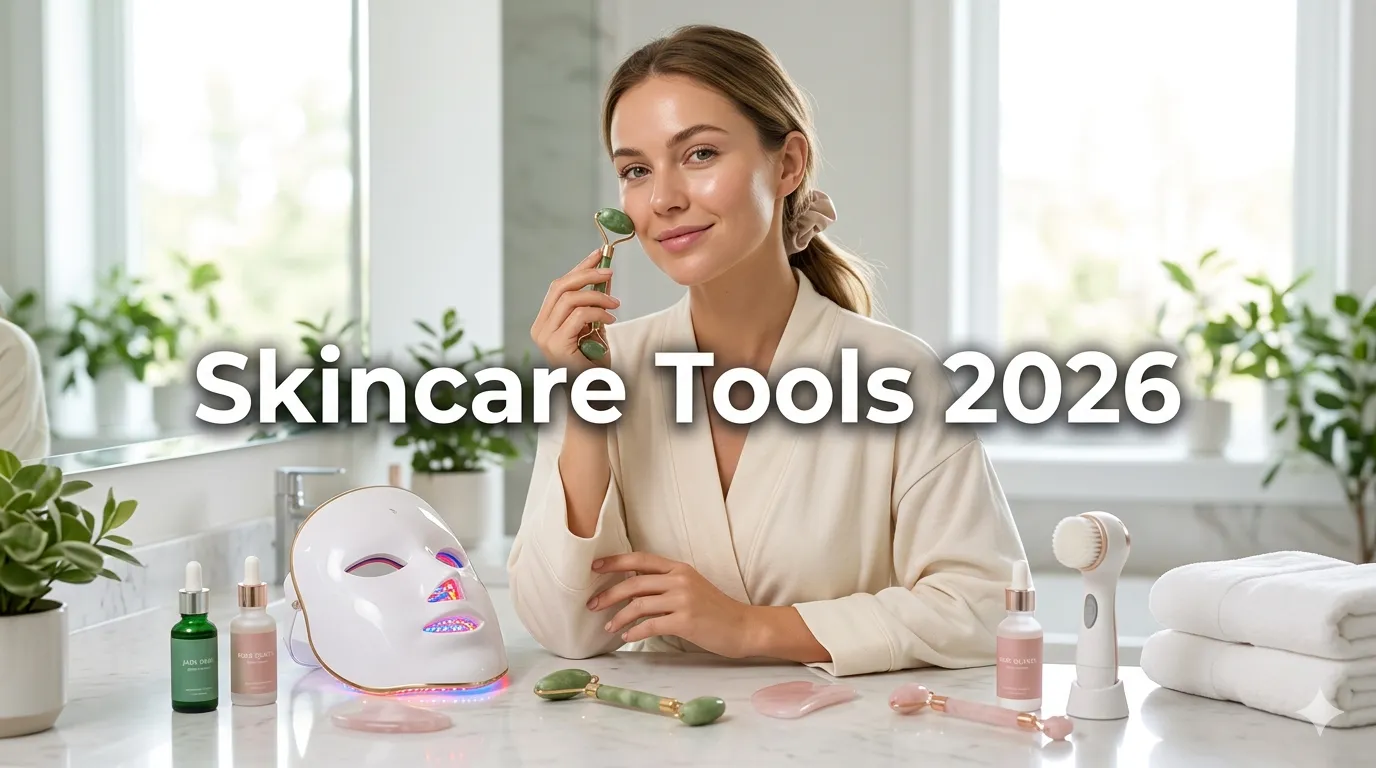
The Rise of At-Home Beauty Tools: Why 2026 Is the Year of DIY Skincare
The skincare industry has undergone a remarkable transformation in recent years, with at-home beauty tools moving from luxury indulgences to essential components of effective skincare routines. In 2026, the convergence of ancient wellness practices and cutting-edge technology has created an unprecedented array of tools that promise professional-level results from the comfort of your bathroom. From time-tested traditions like jade rolling and gua sha to innovative LED light therapy devices, these tools offer accessible ways to enhance skin health, boost circulation, and achieve that coveted glow.
Why at-home tools have exploded in popularity: The global pandemic accelerated a shift toward self-care at home, but the trend has evolved into something more substantial. Modern consumers are educated, discerning, and seeking cost-effective alternatives to expensive spa treatments and in-office procedures. At-home beauty tools deliver on multiple fronts: they're convenient, increasingly affordable, backed by growing scientific research, and offer the satisfaction of taking an active role in your skincare journey.
The 2026 skincare tool landscape: This year marks a pivotal moment where traditional tools have been refined through centuries of use, while technological innovations have made professional-grade devices accessible to consumers. The market now offers everything from authentic jade and rose quartz tools sourced ethically to FDA-cleared LED devices with clinically proven wavelengths.
What this guide covers: This comprehensive guide explores the most popular and effective at-home skincare tools available in 2026. You'll learn the science behind how they work, evidence-based benefits, proper techniques for maximum results, safety considerations, and how to integrate them into your existing skincare routine. Whether you're a complete beginner or looking to upgrade your current toolkit, this guide provides the knowledge you need to make informed decisions.
Key categories we'll explore:
- Facial massage tools: Jade rollers, rose quartz rollers, and gua sha stones
- Light therapy devices: LED masks and handheld devices for various skin concerns
- Cleansing devices: Sonic cleansing brushes and silicone cleansing tools
- Microcurrent devices: Tools for facial toning and lifting
- Derma rollers and microneedling tools: At-home collagen induction therapy
By the end of this guide, you'll understand which tools are worth the investment, how to use them safely and effectively, and how to create a personalized at-home treatment plan that delivers real results.
Jade Rollers: Ancient Wisdom Meets Modern Skincare
Jade rollers have transcended their status as a social media trend to become a staple in skincare routines worldwide. But beyond the aesthetic appeal and Instagram-worthy moments, do these tools actually deliver benefits? Let's explore the science, techniques, and best practices for incorporating jade rollers into your routine.
What is a jade roller? A jade roller is a handheld beauty tool consisting of a handle with two stone rollers—one larger for the face and one smaller for the delicate under-eye area. Traditionally made from jade (nephrite or jadeite), modern versions also come in rose quartz, amethyst, obsidian, and other semi-precious stones. The practice originated in China during the 7th century, where jade was revered for its healing properties and cool temperature.
How jade rollers work: The mechanism is elegantly simple: the cool stone glides across the skin, providing gentle pressure that stimulates circulation, promotes lymphatic drainage, and temporarily tightens the appearance of skin. The cooling effect of the stone (especially when refrigerated) helps constrict blood vessels, reducing puffiness and inflammation.
Evidence-based benefits:
- Improved circulation: The rolling motion increases blood flow to the skin, delivering oxygen and nutrients that promote a healthy glow
- Lymphatic drainage: Gentle pressure helps move lymphatic fluid, reducing puffiness and swelling, particularly around the eyes
- Enhanced product absorption: Rolling after applying serums and moisturizers helps products penetrate more deeply into the skin
- Temporary pore refinement: The cooling effect can temporarily tighten the appearance of pores
- Stress relief: The ritual of facial massage activates the parasympathetic nervous system, reducing stress and tension
- Reduced muscle tension: Regular use can help relax facial muscles, potentially minimizing the appearance of tension lines
What the science says: While rigorous clinical studies on jade rollers specifically are limited, research on facial massage and lymphatic drainage supports many of the claimed benefits. A 2017 study in the Journal of Physical Therapy Science found that facial massage improved blood circulation and skin elasticity. The cooling effect of jade is well-documented in dermatological literature as beneficial for reducing inflammation and puffiness.
Choosing the right jade roller:
- Authentic stone: Look for genuine jade or rose quartz from reputable sellers. Authentic jade feels cool to the touch and has natural variations in color
- Quality construction: The rollers should spin freely without wobbling. Metal components should be rust-resistant (stainless steel or brass)
- Size and weight: Choose a roller that feels comfortable in your hand. Heavier stones provide more pressure but may be tiring for extended use
- Stone type: Jade is traditionally associated with healing and balance; rose quartz is linked to love and gentle energy; amethyst is believed to have calming properties
Proper technique for maximum results:
- Preparation: Cleanse your face and apply your favorite serum, facial oil, or moisturizer. The roller glides more easily on lubricated skin and helps products absorb better.
- Start with the larger roller: Begin at the center of your forehead and roll outward toward your temples. Use gentle pressure—never press hard enough to cause discomfort.
- Move to the cheeks: Start at the nose and roll outward toward the ears, following your cheekbones. Use upward and outward motions.
- Address the jawline: Roll from the chin outward along the jawline toward the ears to help define the jawline and reduce puffiness.
- Switch to the smaller roller: Use the smaller roller for the delicate under-eye area, rolling from the inner corner outward. Use extremely gentle pressure.
- Finish with the neck: Roll downward from the jawline down the neck to encourage lymphatic drainage.
- Duration: Spend 5-10 minutes total, 2-3 times per week for best results.
Enhancing the experience:
- Refrigerate your roller: Store your jade roller in the refrigerator for an enhanced cooling effect that reduces puffiness more effectively
- Clean regularly: Wash with mild soap and water after each use to prevent bacterial buildup
- Pair with facial oil: Use with a facial oil to reduce friction and add nourishing benefits
- Be consistent: Results accumulate over time with regular use
Common mistakes to avoid:
- Pressing too hard, which can cause irritation or broken capillaries
- Rolling on dry skin, which creates friction and can damage the skin barrier
- Using on active acne or irritated skin, which can spread bacteria or worsen inflammation
- Neglecting to clean the roller, which can harbor bacteria
- Expecting overnight miracles—results are cumulative and subtle
Jade roller vs. rose quartz roller: Both stones offer similar mechanical benefits. Jade is slightly cooler and harder, while rose quartz is associated with gentle, loving energy and may retain coolness longer. Choose based on personal preference and aesthetic appeal—both are effective.
Gua Sha: The Ancient Art of Facial Sculpting
Gua sha has emerged as one of the most powerful at-home skincare tools, offering benefits that extend beyond surface-level beauty. This ancient Chinese healing technique has been adapted for facial use, providing a natural way to sculpt, lift, and rejuvenate the complexion.
What is gua sha? Gua sha (pronounced "gwah-shah") translates to "scraping sand" and has been used in traditional Chinese medicine for centuries to treat various ailments. The facial version uses a smooth, flat stone tool—typically jade, rose quartz, or bian stone—to gently scrape the skin in specific patterns. Unlike body gua sha, which can cause temporary redness (petechiae), facial gua sha uses much gentler pressure and should not cause bruising.
How gua sha works: The tool is glided across lubricated skin using specific techniques that:
- Stimulate microcirculation, bringing fresh oxygen and nutrients to skin cells
- Promote lymphatic drainage, reducing puffiness and removing toxins
- Release facial tension by relaxing tight muscles and fascia
- Stimulate collagen production through gentle mechanical stimulation
- Enhance product absorption by improving penetration
Scientific evidence: Research on facial gua sha specifically is emerging but promising. A 2021 study in the Journal of Traditional and Complementary Medicine found that facial gua sha increased microcirculation in the treated areas by up to 400%. Another study demonstrated improvements in skin elasticity and reduction in fine lines after regular use. The lymphatic drainage benefits are well-established in massage therapy literature.
Benefits of facial gua sha:
- Reduced puffiness: Particularly effective for morning puffiness and under-eye bags
- Improved facial contour: Regular use can help define the jawline and cheekbones
- Enhanced skin tone: Improved circulation creates a natural, healthy glow
- Reduced tension: Releases tightness in facial muscles, particularly in the jaw and forehead
- Fine line reduction: Regular use may help soften the appearance of fine lines
- Product enhancement: Helps serums and oils penetrate more deeply
- Stress relief: The ritual promotes relaxation and activates the parasympathetic nervous system
Choosing your gua sha tool:
- Material: Jade (cooling, traditional), rose quartz (gentle, loving energy), bian stone (infrared properties), or stainless steel (durable, very cooling)
- Shape: Look for a tool with various edges and curves to address different facial contours. A heart-shaped tool with notches is versatile for most face shapes
- Size: Should fit comfortably in your hand and allow you to reach all facial areas
- Quality: Smooth, polished edges without rough spots that could scratch the skin
Step-by-step gua sha technique:
- Preparation: Start with a clean face and apply a generous amount of facial oil or serum. The tool must glide smoothly—never use on dry skin.
- Hold the tool correctly: Hold the gua sha tool at a 15-45 degree angle to your skin, with the curved or notched edge against your face.
- Neck and décolletage: Start at the base of your neck and glide upward toward the jawline. Use long, sweeping strokes. Repeat 3-5 times on each side.
- Jawline: Place the notched part of the tool at the center of your chin. Glide along the jawline toward your ear. Repeat 3-5 times on each side to help define the jawline.
- Cheeks: Start at the corner of your mouth and glide upward along the cheekbone toward your temple. Use the curved edge. Repeat 3-5 times on each side.
- Under-eye area: Use the smallest curve or notch. Start at the inner corner and gently glide outward toward the temple. Use extremely light pressure. Repeat 3-5 times.
- Eyebrows and forehead: Start between the eyebrows and glide upward toward the hairline. Then work from the center of the forehead outward toward the temples. Repeat 3-5 times.
- Finish: End with gentle strokes down the sides of your neck to encourage lymphatic drainage.
Key technique tips:
- Pressure: Use light to medium pressure—enough to feel the tool but never painful. You should not see red marks or bruising.
- Speed: Move slowly and deliberately, about one inch per second
- Direction: Always move upward and outward to lift and sculpt
- Duration: Spend 5-15 minutes total, 3-5 times per week
- Consistency: Results improve with regular practice
Common mistakes to avoid:
- Using too much pressure, which can cause bruising or broken capillaries
- Scraping on dry skin, which causes friction and irritation
- Using on active breakouts or irritated skin
- Moving the tool in random directions instead of following lymphatic pathways
- Expecting dramatic results immediately—consistency is key
Enhancing your gua sha practice:
- Refrigerate the tool: Store in the refrigerator for enhanced depuffing effects
- Use with facial oil: Choose oils with beneficial ingredients like rosehip, jojoba, or squalane
- Combine with breathing: Take deep breaths as you work to enhance relaxation
- Clean thoroughly: Wash with soap and water after each use
- Set intentions: Use the time as a mindful self-care ritual
Gua sha for specific concerns:
- Puffiness: Focus on lymphatic drainage strokes down the neck and use gentle pressure around the eyes
- Jaw tension: Spend extra time on the jawline and use the notched edge to release tightness
- Forehead lines: Use upward strokes from the eyebrows to the hairline
- Dull skin: Increase the number of strokes to boost circulation
LED Light Therapy Devices: Science-Backed Skin Rejuvenation
LED (Light Emitting Diode) light therapy has transitioned from dermatologist offices to bathroom vanities, offering clinically proven benefits for various skin concerns. In 2026, at-home LED devices have become more affordable, powerful, and user-friendly than ever before.
What is LED light therapy? LED light therapy uses specific wavelengths of light to penetrate the skin at different depths, triggering biological processes that promote healing, reduce inflammation, and stimulate collagen production. Unlike UV light, LED light doesn't damage the skin—it's a form of photobiomodulation that harnesses the power of light to improve skin health.
How it works: Different wavelengths of light penetrate the skin at different depths and trigger specific cellular responses:
- Red light (630-700nm): Penetrates deeply to stimulate collagen and elastin production, reduce inflammation, and promote healing
- Blue light (400-470nm): Targets the surface to kill acne-causing bacteria (P. acnes) and reduce oil production
- Near-infrared light (700-1200nm): Penetrates deepest to reduce inflammation, promote healing, and relieve pain
- Green light (520-570nm): Targets melanin production to reduce hyperpigmentation and even skin tone
- Yellow light (570-590nm): Reduces redness, swelling, and inflammation; improves lymphatic flow
Scientific evidence: LED light therapy is one of the most researched at-home beauty tools. Multiple clinical studies support its efficacy:
- A 2014 study in the Journal of Clinical and Aesthetic Dermatology found that red LED light significantly improved skin complexion and skin feeling in 90% of subjects
- Research published in Photomedicine and Laser Surgery demonstrated that blue light therapy reduced acne lesions by up to 64%
- A 2019 review in Dermatologic Surgery concluded that LED therapy is effective for wound healing, acne treatment, and anti-aging
- Multiple studies show increased collagen production and improved skin elasticity with regular red light use
Benefits by wavelength:
Red Light Therapy:
- Stimulates collagen and elastin production
- Reduces fine lines and wrinkles
- Improves skin texture and tone
- Reduces inflammation and redness
- Promotes wound healing
- Increases circulation
Blue Light Therapy:
- Kills acne-causing bacteria
- Reduces active breakouts
- Regulates oil production
- Minimizes pore appearance
- Prevents future breakouts
Near-Infrared Light:
- Penetrates deepest into tissue
- Reduces inflammation and pain
- Promotes cellular repair
- Improves circulation
- Supports muscle recovery
Types of LED devices:
LED masks: Full-face masks that cover the entire face and sometimes the neck. They provide even coverage and are hands-free.
- Pros: Convenient, even coverage, multiple wavelengths, professional-level treatment
- Cons: More expensive, less portable, requires charging or batteries
- Best for: Comprehensive anti-aging, acne treatment, full-face rejuvenation
Handheld devices: Smaller, portable devices that you move across the face.
- Pros: Affordable, portable, targeted treatment, versatile
- Cons: Requires manual movement, takes longer to treat entire face
- Best for: Spot treatment, targeted concerns, travel, budget-conscious users
Combination devices: Tools that combine LED with other technologies like microcurrent, sonic vibration, or heat.
- Pros: Multiple benefits in one device, enhanced results
- Cons: More expensive, may be bulkier
- Best for: Users seeking comprehensive treatment
Choosing the right LED device:
- Wavelength: Ensure the device uses clinically proven wavelengths (red: 630-700nm, blue: 400-470nm)
- Power output: Look for devices with adequate irradiance (power density) for effective treatment
- FDA clearance: FDA-cleared devices have been tested for safety and efficacy
- Treatment time: Most effective devices require 10-20 minutes per session
- Number of LEDs: More LEDs generally provide better coverage and results
- Comfort: Masks should fit comfortably; handheld devices should be easy to maneuver
- Budget: Quality LED masks range from $100-$500+; handheld devices from $50-$300
How to use LED devices properly:
- Cleanse: Start with a clean, dry face. Remove all makeup, skincare products, and sunscreen.
- Protect your eyes: Most LED masks come with eye protection. Use it, especially with blue light. Never look directly at LED lights.
- Position the device: For masks, ensure proper fit. For handheld devices, hold 1-2 inches from skin.
- Set the wavelength: Choose the appropriate light color for your concern (red for anti-aging, blue for acne, etc.)
- Begin treatment: For masks, relax for the treatment duration (usually 10-20 minutes). For handheld devices, move slowly across the face in sections, spending 30-60 seconds per area.
- Frequency: Start with 3-5 times per week for 4-8 weeks, then maintain with 1-2 times weekly.
- Follow with skincare: Apply serums and moisturizers after treatment for enhanced absorption.
Safety considerations:
- Eye protection: Always use provided eye protection or keep eyes closed during treatment
- Photosensitivity: Avoid if taking photosensitizing medications (certain antibiotics, acne medications)
- Pregnancy: Consult your doctor before use during pregnancy
- Active skin conditions: Avoid using on active rashes, infections, or open wounds
- Thyroid conditions: Avoid directing light at the thyroid area if you have thyroid issues
- Epilepsy: Consult a doctor if you have a history of seizures triggered by light
Realistic expectations:
- Timeline: Most users see initial results after 4-6 weeks of consistent use
- Maintenance: Results require ongoing maintenance treatments
- Complementary care: LED therapy works best as part of a comprehensive skincare routine
- Individual variation: Results vary based on skin type, concern, and consistency
Maximizing results:
- Use consistently—results are cumulative
- Combine with quality skincare products
- Stay hydrated and maintain a healthy diet
- Protect skin from sun damage with daily SPF
- Be patient—collagen production takes time
Additional At-Home Beauty Tools Worth Considering
Beyond jade rollers, gua sha, and LED devices, several other tools can enhance your at-home skincare routine in 2026.
Cleansing Devices
Sonic cleansing brushes: These devices use sonic vibrations (hundreds to thousands of pulses per minute) to deep clean pores and remove makeup, dirt, and oil more effectively than manual cleansing.
Benefits:
- Removes up to 99% of dirt and oil
- Exfoliates gently
- Improves product absorption
- Can reduce breakouts
Considerations:
- Use 1-3 times weekly to avoid over-exfoliation
- Choose soft bristles for sensitive skin
- Replace brush heads every 3 months
- Not suitable for active acne or rosacea
Silicone cleansing devices: Made from medical-grade silicone, these use sonic pulsations to cleanse. They're more hygienic than bristle brushes and gentler on skin.
Benefits:
- Hygienic (silicone doesn't harbor bacteria)
- Gentle on sensitive skin
- Long-lasting (no replacement heads needed)
- Waterproof and easy to clean
Microcurrent Devices
Microcurrent devices use low-level electrical currents to stimulate facial muscles, promoting toning, lifting, and improved circulation.
Benefits:
- Temporarily lifts and tones facial muscles
- Improves facial contour
- Enhances circulation
- May boost collagen production
- Reduces appearance of fine lines
How to use:
- Apply conductive gel or serum
- Glide device upward along facial contours
- Use 2-5 times weekly for best results
- Results are cumulative and require maintenance
Considerations:
- Avoid if pregnant or have pacemaker
- Don't use on broken skin or active acne
- Results are temporary and require ongoing use
- Quality devices range from $100-$400
Derma Rollers and Microneedling Tools
Derma rollers use tiny needles to create micro-injuries in the skin, stimulating collagen production and enhancing product absorption.
Benefits:
- Stimulates collagen production
- Improves skin texture
- Reduces fine lines and scars
- Enhances product absorption
- Can improve hyperpigmentation
Safety considerations:
- Use needle length of 0.25-0.5mm for at-home use
- Sterilize before and after each use
- Replace every 2-3 months
- Use 1-2 times weekly maximum
- Never share with others
- Avoid on active acne or irritated skin
Professional vs. at-home: Professional microneedling uses longer needles (1.0-2.5mm) and should only be performed by trained professionals. At-home devices are much gentler and safer for DIY use.
Building Your Personalized At-Home Skincare Tool Kit
With so many tools available, it's important to choose strategically based on your skin concerns, budget, and lifestyle.
Assess your needs:
- Anti-aging: LED red light, microcurrent, jade roller/gua sha
- Acne: LED blue light, sonic cleansing brush
- Puffiness: Jade roller, gua sha, refrigerated tools
- Dull skin: Gua sha, LED red light, cleansing device
- Fine lines: LED red/near-infrared, microcurrent, derma roller
- Tension: Gua sha, jade roller
Starter kit (budget-friendly):
- Jade or rose quartz roller ($15-30)
- Gua sha stone ($15-30)
- Basic LED handheld device ($50-100)
- Total investment: $80-160
Intermediate kit:
- High-quality jade roller and gua sha set ($40-60)
- LED mask ($150-300)
- Silicone cleansing device ($50-100)
- Total investment: $240-460
Advanced kit:
- Premium jade/rose quartz tools ($60-100)
- Professional-grade LED mask ($300-500)
- Microcurrent device ($150-300)
- Sonic cleansing brush ($100-200)
- Derma roller ($20-40)
- Total investment: $630-1,140
Integration into your routine:
Morning (5-10 minutes):
- Cleanse with cleansing device (2-3x weekly)
- Jade roller or gua sha for depuffing
- Apply serums and moisturizer
- LED treatment (if using, 10-20 minutes)
Evening (10-15 minutes):
- Double cleanse (use cleansing device 2-3x weekly)
- Gua sha or jade roller for relaxation
- Apply treatment serums
- Microcurrent (2-3x weekly)
- LED treatment (if not done in morning)
Weekly treatments:
- Derma rolling (1-2x weekly)
- Extended LED session
- Longer gua sha or facial massage session
Maximizing Results: Best Practices for At-Home Tools
To get the most from your skincare tools, follow these evidence-based best practices.
Consistency is key: Results from at-home tools are cumulative. Use devices regularly according to manufacturer guidelines. Most require 4-8 weeks of consistent use to see noticeable results.
Proper technique matters: Take time to learn correct techniques. Watch tutorial videos, read instructions carefully, and practice proper form. Incorrect use can reduce effectiveness or cause irritation.
Clean and maintain your tools:
- Clean tools after each use to prevent bacterial growth
- Store in a clean, dry place
- Replace tools as recommended (brush heads every 3 months, derma rollers every 2-3 months)
- Inspect tools regularly for damage
Combine with quality skincare: Tools enhance but don't replace good skincare. Use with:
- Gentle, effective cleanser
- Targeted serums (vitamin C, retinol, hyaluronic acid)
- Quality moisturizer
- Daily broad-spectrum SPF 30+
Support from within:
- Stay hydrated (drink 8-10 glasses of water daily)
- Eat a balanced diet rich in antioxidants
- Get 7-9 hours of quality sleep
- Manage stress through meditation, exercise, or other practices
- Avoid smoking and limit alcohol
Be patient and realistic: At-home tools provide gradual, subtle improvements—not dramatic overnight transformations. Celebrate small victories and maintain realistic expectations.
Listen to your skin: If you experience irritation, redness, or discomfort, reduce frequency or discontinue use. Not all tools work for all skin types.
Document your progress: Take photos in consistent lighting every 2-4 weeks to track progress. Changes are often subtle and easier to see in photos than in the mirror.
Safety Considerations and Contraindications
While at-home skincare tools are generally safe when used properly, certain conditions require caution or avoidance.
Avoid or consult a doctor if you have:
- Active skin infections: Cold sores, impetigo, or fungal infections
- Active acne: Especially cystic or inflamed acne
- Rosacea or eczema flare-ups: Wait until skin is calm
- Open wounds or recent surgery: Wait until fully healed
- History of keloid scarring: Especially important for microneedling
- Pregnancy: Consult your OB-GYN before using electronic devices
- Pacemaker or heart conditions: Avoid microcurrent devices
- Epilepsy: Avoid LED devices if light-sensitive
- Thyroid conditions: Avoid directing devices at the thyroid area
- Recent cosmetic procedures: Wait until fully healed (consult your provider)
- Use of isotretinoin (Accutane): Wait 6 months after stopping before using microneedling or aggressive tools
General safety tips:
- Always patch test new tools on a small area first
- Start with the lowest intensity or shortest duration
- Never share tools with others
- Follow manufacturer instructions carefully
- Stop use if you experience pain, excessive redness, or irritation
- Keep tools away from eyes unless specifically designed for eye area
FAQs About At-Home Skincare Tools
How long does it take to see results from at-home skincare tools?
Results vary by tool and concern. Most users see initial improvements after 4-6 weeks of consistent use, with more significant results appearing after 8-12 weeks. LED therapy typically shows results in 4-8 weeks, while facial massage tools may provide immediate depuffing effects but require 6-8 weeks for structural improvements. Consistency is crucial—results are cumulative and require ongoing maintenance.
Can I use multiple tools together?
Yes, but introduce them gradually and don't overdo it. A good approach is to use cleansing devices 2-3x weekly, facial massage tools (jade roller/gua sha) daily or every other day, and LED therapy 3-5x weekly. Avoid using aggressive tools (derma rollers, strong microcurrent) on the same day. Listen to your skin and adjust frequency if you experience irritation.
Are expensive tools worth the investment?
Not necessarily. While premium tools often offer better quality, durability, and advanced features, many affordable options deliver excellent results. Focus on proven technologies (correct LED wavelengths, quality stones) rather than brand names. Read reviews, check for FDA clearance on electronic devices, and prioritize quality construction over luxury packaging.
Can at-home tools replace professional treatments?
At-home tools complement but don't fully replace professional treatments. They're excellent for maintenance and mild-to-moderate concerns, but severe issues (deep wrinkles, significant scarring, severe acne) may require professional intervention. Think of at-home tools as part of a comprehensive approach that includes professional care when needed.
How do I clean and maintain my tools?
Clean tools after each use: wash jade rollers and gua sha with mild soap and warm water, then dry thoroughly. Silicone cleansing devices can be rinsed and air-dried. LED masks should be wiped with a soft, damp cloth. Replace brush heads every 3 months and derma rollers every 2-3 months. Store tools in a clean, dry place away from direct sunlight.
Are these tools safe for sensitive skin?
Many tools are suitable for sensitive skin when used gently. Jade rollers and gua sha are generally well-tolerated. Choose silicone cleansing devices over bristle brushes. Use LED devices on lower settings initially. Always patch test and start with minimal pressure and frequency. Avoid aggressive tools like derma rollers if you have very sensitive or reactive skin.
Can I use these tools if I have acne?
It depends on the tool and acne severity. LED blue light is excellent for acne. Gentle cleansing devices can help keep pores clear. However, avoid jade rolling, gua sha, or microneedling on active, inflamed acne as this can spread bacteria and worsen breakouts. Wait until acne is under control before using massage tools.
Conclusion: Your Journey to Radiant, Healthy Skin
The world of at-home skincare tools in 2026 offers unprecedented opportunities to take control of your skin health from the comfort of your home. From the ancient wisdom of jade rollers and gua sha to the cutting-edge science of LED light therapy, these tools provide accessible, effective ways to enhance your complexion, address specific concerns, and indulge in meaningful self-care rituals.
The key to success lies not in owning every tool on the market, but in choosing wisely, using consistently, and integrating these practices into a holistic approach to skin health. Remember that tools are enhancers—they work best when combined with quality skincare products, healthy lifestyle habits, and realistic expectations.
Start your journey by identifying your primary skin concerns and selecting one or two tools that address them. Master proper technique, commit to consistent use, and be patient as results accumulate over time. Celebrate the ritual itself—the few minutes each day dedicated to caring for your skin—as much as the visible results.
Whether you're drawn to the meditative practice of gua sha, the science-backed benefits of LED therapy, or the simple pleasure of a jade roller, these tools offer more than just physical benefits. They provide a moment of pause in busy lives, a tangible way to nurture yourself, and the satisfaction of actively participating in your skin's health.
Your journey to radiant, healthy skin starts with a single step. Choose your tool, commit to the practice, and watch as consistent care transforms not just your complexion, but your relationship with self-care. Here's to glowing skin and the tools that help you achieve it.