

Stress Skin Changes: How Pressure Affects Appearance Over Time
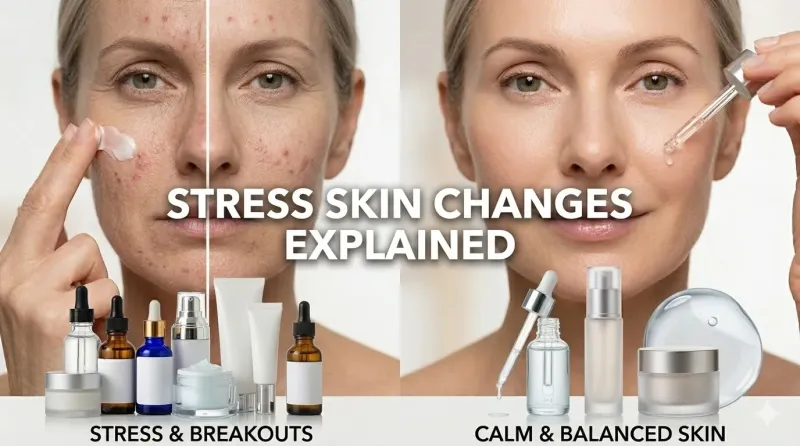
HOW STRESSFUL PERIODS CHANGE SKIN APPEARANCE GRADUALLY THE SCIENCE OF STRESS AND SKIN HEALTH
You've probably noticed it: during a demanding work project, a personal crisis, or an extended period of overwhelm, your skin doesn't look or feel its best. Maybe breakouts appear where they never have before. Perhaps your complexion looks duller, your fine lines seem more pronounced, or your skin feels unusually sensitive. These aren't coincidences—they're measurable, science-backed responses to stress that unfold gradually over weeks and months.
What makes stress-related skin changes particularly insidious is their subtlety. Unlike a sudden allergic reaction or sunburn, stress doesn't transform your skin overnight. Instead, it works quietly in the background, altering your skin's biology in ways that accumulate over time. By the time you notice significant changes—persistent dullness, new fine lines, recurring breakouts, or uneven tone—the underlying processes may have been active for months.
Understanding how stress gradually reshapes your skin isn't about assigning blame; it's about empowerment. When you recognize the connection between your mental state and your skin's appearance, you gain the ability to intervene earlier, protect your skin more effectively, and support your overall well-being with greater intention.
In this comprehensive guide, you'll discover the biological mechanisms linking stress to skin changes, learn to identify the gradual signs that stress is affecting your complexion, and get access to evidence-based strategies to protect and restore your skin during challenging times. Whether you're navigating a temporary high-pressure period or managing chronic stress, you'll find practical, dermatologist-backed solutions to help you maintain healthier, more resilient skin—no matter what life brings.
THE BIOLOGY OF STRESS HOW CORTISOL AND INFLAMMATION RESHAPE SKIN
To understand how stress changes skin appearance over time, you need to understand what happens inside your body when you experience psychological or emotional pressure.
The Stress Response Cascade
When your brain perceives a threat—whether a looming deadline, financial worry, or relationship conflict—it activates the hypothalamic-pituitary-adrenal (HPA) axis. This triggers the release of cortisol, your body's primary stress hormone, along with other compounds like adrenaline and inflammatory cytokines.
While this response evolved to help humans survive immediate physical dangers, modern chronic stress keeps these systems activated far longer than they were designed for. And your skin, as your body's largest organ, bears visible evidence of this prolonged activation.
How Cortisol Directly Affects Skin
Cortisol influences skin through multiple pathways that compound over time
Barrier Function Disruption: Cortisol reduces the production of ceramides and other lipids that form your skin's protective barrier. Over weeks to months, this leads to increased transepidermal water loss, leaving skin drier, more sensitive, and less resilient to environmental stressors.
Collagen Breakdown: Elevated cortisol suppresses collagen synthesis while increasing the activity of enzymes (matrix metalloproteinases) that break down existing collagen. This gradual process contributes to loss of firmness and the formation of fine lines—changes that become more noticeable over months of sustained stress.
Impaired Wound Healing: Stress slows the skin's natural repair processes. Minor irritations, micro-tears from cleansing, or post-breakout marks take longer to heal, allowing inflammation to persist and potentially leading to post-inflammatory hyperpigmentation.
Altered Sebum Production: Cortisol can stimulate sebaceous glands to produce more oil, particularly in hormone-responsive areas like the T-zone. Over time, this contributes to congestion, enlarged pores, and stress-related breakouts.
The Inflammation Connection
Chronic stress elevates systemic inflammation, which manifests visibly on skin through several gradual changes:
Persistent Redness: Low-grade inflammation causes blood vessels to remain dilated longer, leading to a chronically flushed or ruddy appearance that may evolve into visible capillaries or rosacea-like symptoms.
Dullness and Uneven Tone: Inflammatory compounds interfere with normal cell turnover and melanin distribution, resulting in a lackluster complexion and patchy discoloration that develops subtly over weeks.
Increased Sensitivity: An inflamed skin barrier becomes more reactive to products, weather changes, and environmental irritants, creating a cycle where minor triggers cause disproportionate responses.
THE GRADUAL SIGNS HOW STRESS CHANGES SKIN APPEARANCE OVER TIME
Stress-related skin changes rarely appear suddenly. Instead, they emerge through a series of subtle shifts that compound into visible differences. Recognizing these gradual signs allows for earlier intervention.
Weeks 1-4 Early Warning Signs
During the initial weeks of sustained stress, changes are often subtle but detectable if you're paying attention:
- Skin feels tighter or less comfortable after cleansing- Makeup doesn't apply as smoothly; texture feels slightly rougher- Occasional breakouts appear in unusual locations- Complexion lacks its usual radiance, appearing slightly flat or tired- Minor irritations (from products or weather) take longer to resolve
These early signals reflect initial barrier disruption and mild inflammatory activation. At this stage, simple adjustments—gentler cleansing, added hydration, stress-reduction practices—can often prevent further progression.
Weeks 4-12 Visible Changes Emerge
As stress continues without adequate management, changes become more apparent
- Dullness becomes persistent, not just a "tired day" appearance- Fine lines around eyes and mouth appear more pronounced, even at rest- Breakouts become more frequent or take longer to heal- Skin tone looks less even, with patches of redness or discoloration- Products that previously worked well now cause stinging or irritation
These changes reflect cumulative barrier compromise, ongoing collagen suppression, and sustained inflammatory activity. Intervention at this stage can still reverse many effects, but requires more consistent effort.
Months 3-6+ Established Patterns
With prolonged, unmanaged stress, skin changes may become entrenched
- Persistent dullness and uneven texture that doesn't resolve with routine care- Fine lines that remain visible even when skin is well-hydrated- Recurring breakouts in the same areas, with post-inflammatory marks that linger- Increased sensitivity requiring significant routine simplification- Signs of accelerated aging that seem disproportionate to chronological age
At this stage, skin has adapted to a chronically stressed state. Recovery is still possible but typically requires a multi-faceted approach addressing both topical care and underlying stress management.
THE STRESS-SKIN CYCLE HOW CHANGES COMPOUND OVER TIME
One of the most challenging aspects of stress-related skin changes is their self-reinforcing nature. What begins as a physiological response can evolve into a psychological-skin feedback loop that accelerates visible changes.
The Vicious Cycle Explained
1. Stress triggers cortisol release and inflammation2. Skin barrier weakens, leading to dryness, sensitivity, or breakouts3. Visible skin changes cause additional stress or self-consciousness4. Increased stress further elevates cortisol and inflammation5. Skin condition worsens, reinforcing the cycle
This cycle explains why stress-related skin issues can feel so persistent and why addressing only the topical symptoms often yields limited results. Breaking the cycle requires interventions at multiple points: reducing the stress response, supporting skin barrier repair, and managing the emotional impact of skin changes.
Individual Variability Why Stress Affects Skin Differently
Not everyone experiences stress-related skin changes in the same way or to the same degree. Several factors influence your personal susceptibility:
Genetic Predisposition: Some people naturally have more resilient skin barriers or less reactive inflammatory responses, making them less vulnerable to stress-induced changes.
Baseline Skin Condition: Those with pre-existing conditions like eczema, rosacea, or acne may experience more pronounced stress-related flares.
Lifestyle Factors: Sleep quality, nutrition, exercise habits, and existing skincare routines all modulate how stress manifests on skin.
Coping Strategies: Individuals with effective stress-management practices (mindfulness, therapy, social support) often show fewer visible skin changes during difficult periods.
IDENTIFYING STRESS-RELATED SKIN CHANGES VS. OTHER CAUSES
Because many skin concerns share similar appearances, it's important to distinguish stress-related changes from those caused by other factors. This helps ensure you're addressing the right underlying issue.
Clues That Point to Stress as a Primary Factor
- Timing: Changes coincide with identifiable stressful periods (work deadlines, life transitions, emotional challenges)- Pattern: Multiple concerns appear simultaneously (dullness + breakouts + sensitivity) rather than a single isolated issue- Fluctuation: Skin improves during lower-stress periods and worsens when pressure increases- Response to Stress Reduction: Visible improvements follow implementation of stress-management practices- Absence of Other Triggers: No recent product changes, sun exposure, or dietary shifts that would explain the changes
When to Consider Other Causes
Consult a dermatologist if you notice:- Sudden, severe changes that don't correlate with stress levels- Symptoms like pain, oozing, or rapid spreading that suggest infection or allergic reaction- Changes that persist despite significant stress reduction and consistent skincare- New moles, irregular spots, or other signs that warrant medical evaluation
STRATEGIES TO PROTECT SKIN DURING STRESSFUL PERIODS
While eliminating stress entirely isn't realistic, you can significantly mitigate its impact on your skin through targeted, evidence-based approaches.
Strategy 1 Simplify and Strengthen Your Skincare Routine
During high-stress periods, your skin barrier is more vulnerable. A simplified routine focused on barrier support reduces irritation risk while delivering essential protection.
Core Minimal Routine for Stress Periods:- Gentle, pH-balanced cleanser (cream or non-foaming formula)- Hydrating serum with barrier-supporting ingredients (ceramides, niacinamide, beta-glucan)- Lightweight moisturizer to seal in hydration- Broad-spectrum sunscreen (non-negotiable, as stress-compromised skin is more vulnerable to UV damage)
What to Temporarily Pause:- Strong exfoliants (AHAs, BHAs) unless specifically needed for congestion- Multiple active ingredients layered together (vitamin C + retinoid + acids)- New product introductions (wait until stress levels stabilize)- Physical scrubs or aggressive cleansing tools
Strategy 2 Prioritize Barrier-Repair Ingredients
When stress compromises your skin barrier, specific ingredients can help restore resilience more effectively than generic hydration.
Key Barrier-Supporting Ingredients:- Ceramides: Restore the lipid matrix that prevents water loss and protects against irritants- Niacinamide (4-5%): Strengthens barrier function, reduces inflammation, and improves resilience- Beta-Glucan: Soothes irritation while enhancing hydration and barrier repair- Panthenol (Vitamin B5): Supports healing and reduces transepidermal water loss- Squalane: A lightweight emollient that mimics skin's natural lipids without clogging pores
Application Tip: Apply barrier-supporting products to damp skin to enhance absorption and maximize hydration retention.
Strategy 3 Incorporate Stress-Reducing Skincare Rituals
The act of caring for your skin can itself become a stress-reduction practice when approached mindfully.
Mindful Skincare Practices:- Take 60 seconds to breathe deeply while cleansing, focusing on the sensation rather than rushing- Use gentle, upward motions when applying products to avoid tugging on stressed skin- Choose products with calming scents (if tolerated) like chamomile or lavender to engage the parasympathetic nervous system- End your evening routine with a brief moment of gratitude or reflection to transition into rest
These small practices won't eliminate stress, but they can interrupt the stress-skin cycle by creating moments of calm within your daily routine.
Strategy 4 Support Skin From Within Through Lifestyle
Topical care addresses symptoms; lifestyle adjustments address root causes. During stressful periods, these foundational habits become even more critical.
Sleep Optimization:- Aim for 7-9 hours of quality sleep nightly—this is when skin repairs barrier function and produces collagen- Maintain a consistent sleep schedule, even on weekends, to support circadian rhythm- Create a pre-sleep wind-down routine (dim lights, no screens 30-60 minutes before bed)
Nutrition for Stress Resilience:- Prioritize anti-inflammatory foods: fatty fish, berries, leafy greens, nuts, and seeds- Include adaptogenic herbs like ashwagandha or rhodiola (consult a healthcare provider first)- Stay hydrated: dehydration exacerbates stress-related skin dryness- Limit excess sugar and refined carbs, which can worsen inflammation and breakouts
Gentle Movement:- Regular moderate exercise improves circulation, delivering oxygen and nutrients to skin- Practices like yoga or tai chi combine physical movement with stress-reduction benefits- Avoid over-exercising during high-stress periods, as excessive intensity can elevate cortisol further
Strategy 5 Manage the Emotional Impact of Skin Changes
When stress affects your skin, the visible changes can create additional emotional distress. Addressing this psychological component is essential for breaking the stress-skin cycle.
Practical Approaches:- Practice self-compassion: Remind yourself that stress-related skin changes are temporary and physiological, not a personal failure- Limit mirror-checking: Frequent scrutiny can amplify anxiety about appearance- Focus on function over perfection: Celebrate what your skin does (protects, heals, senses) rather than fixating solely on appearance- Seek support: Talk with trusted friends, a therapist, or a dermatologist about skin concerns during stressful times
THE RECOVERY TIMELINE WHAT TO EXPECT WHEN STRESS DECREASES
Understanding realistic recovery expectations helps maintain motivation and prevents over-treatment during the healing process.
Immediate Improvements (Days to 1 Week):- Skin feels more comfortable and less tight after simplifying routine- Reduced redness or reactivity as barrier-supporting ingredients take effect- Improved sleep and hydration may bring subtle radiance within days
Short-Term Recovery (2-6 Weeks):- Noticeable improvement in hydration and texture as barrier function restores- Breakouts begin to heal more quickly with reduced inflammation- Dullness fades as cell turnover normalizes and circulation improves
Medium-Term Restoration (6-12 Weeks):- Fine lines appear softer as hydration and collagen support take effect- Skin tone becomes more even as post-inflammatory marks fade- Resilience improves: skin tolerates environmental changes and products better
Long-Term Resilience (3-6 Months+):- Sustained improvement in overall skin health with consistent care- Ability to reintroduce previously paused actives without irritation- Greater confidence in skin's ability to withstand future stressors
Factors That Influence Recovery Speed:- Duration and intensity of the stressful period- Consistency of barrier-supportive care during and after stress- Baseline skin health and genetic factors- Ongoing stress management practices
COMMON MISTAKES THAT DELAY RECOVERY FROM STRESS-RELATED SKIN CHANGES
Even with good intentions, certain approaches can prolong stress-related skin issues rather than resolve them.
Mistake #1 Over-Treating in Response to Changes
When skin looks dull or breaks out during stress, the impulse is often to add more products or stronger actives. This typically worsens barrier compromise and inflammation.
The Fix: Simplify, don't complicate. Focus on gentle cleansing, barrier support, and sun protection while stress levels are elevated.
Mistake #2 Ignoring the Stress-Skin Connection
Treating only the visible skin symptoms without addressing underlying stress management limits long-term results.
The Fix: Pair topical care with at least one stress-reduction practice (breathing exercises, brief walks, journaling) to address both sides of the equation.
Mistake #3 Expecting Overnight Reversal
Skin renewal takes time—especially after prolonged stress. Expecting dramatic improvements in days leads to frustration and product-hopping.
The Fix: Commit to a simplified, consistent routine for at least 4-6 weeks before evaluating results. Take progress photos to track subtle improvements.
Mistake #4 Skipping Sunscreen During Stress
Stress-compromised skin is more vulnerable to UV damage, which can accelerate aging and worsen pigmentation. Skipping sunscreen undermines all other efforts.
The Fix: Make sunscreen non-negotiable, even on low-motivation days. Choose a lightweight formula you enjoy using to improve adherence.
Mistake #5 Neglecting Professional Support When Needed
While many stress-related skin changes resolve with self-care, some situations benefit from professional guidance.
The Fix: Consult a dermatologist if changes are severe, persistent despite consistent care, or accompanied by pain, rapid spreading, or other concerning symptoms.
FREQUENTLY ASKED QUESTIONS ABOUT STRESS AND SKIN CHANGES
Can stress cause permanent skin damage?
Most stress-related skin changes are reversible with consistent care and stress management. However, prolonged, unmanaged stress can accelerate collagen breakdown and barrier damage that may contribute to premature aging over years. Early intervention minimizes long-term impact.
Why does my skin break out during stress even if I don't usually get acne?
Stress elevates cortisol, which can stimulate oil production and inflammation—two key factors in breakouts. Even if you're not typically acne-prone, temporary hormonal shifts during stress can trigger congestion. Focus on gentle care and barrier support rather than aggressive acne treatments.
Does reducing stress actually improve skin appearance?
Yes. Research shows that stress-reduction practices like mindfulness, adequate sleep, and social support correlate with improved skin barrier function, reduced inflammation, and faster healing. Topical care works best when paired with holistic stress management.
How can I tell if my skin changes are from stress versus aging?
Stress-related changes often fluctuate with your stress levels and may improve when pressure decreases. Aging-related changes tend to progress gradually regardless of stress. A dermatologist can help distinguish between the two and recommend appropriate care.
Can I prevent stress-related skin changes entirely?
Complete prevention isn't realistic—stress is a normal part of life. However, you can significantly reduce the severity and duration of skin changes by maintaining a resilient baseline routine, practicing stress management, and intervening early when you notice warning signs.
Should I change my skincare routine during stressful periods?
Yes, but simplify rather than overhaul. Temporarily pause strong actives, prioritize barrier-supporting ingredients, and maintain consistent sun protection. Once stress levels stabilize, you can gradually reintroduce your full routine.
WHEN TO CONSULT A DERMATOLOGIST OR MENTAL HEALTH PROFESSIONAL
While many stress-related skin changes respond well to self-care, professional support is valuable in certain situations.
Consult a Dermatologist If:- Skin changes are severe, painful, or rapidly worsening- Symptoms persist despite 6-8 weeks of consistent, simplified care- You notice new moles, irregular spots, or other signs requiring medical evaluation- You want personalized guidance on products or treatments for stress-compromised skin
Consult a Mental Health Professional If:- Stress feels unmanageable or interferes with daily functioning- Skin changes cause significant emotional distress or social avoidance- You'd benefit from evidence-based stress-management strategies (CBT, mindfulness-based therapy)- You're experiencing symptoms of anxiety, depression, or burnout
Integrated Care Approach
For many people, the most effective approach combines dermatological and mental health support. A dermatologist can address visible skin concerns while a therapist helps develop sustainable stress-management skills—creating a comprehensive strategy for both skin health and overall well-being.
MAINTAINING SKIN RESILIENCE LONG-TERM
Once you've navigated a stressful period and restored your skin, these practices help build lasting resilience against future challenges.
Continue Core Protective Habits- Maintain a simplified, barrier-focused routine even when skin looks good- Keep sunscreen as a non-negotiable daily step- Reintroduce actives gradually and monitor tolerance
Build Stress-Management Into Daily Life- Identify 1-2 brief practices you can sustain long-term (5-minute breathing, short walks, journaling)- Schedule regular check-ins with yourself to notice early stress signals- Cultivate social connections that provide emotional support
Listen to Your Skin's Signals- Notice early warning signs (tightness, dullness, sensitivity) and respond proactively- Adjust your routine seasonally or during anticipated high-stress periods- Avoid over-reacting to temporary fluctuations; focus on long-term trends
CONCLUSION COMPASSIONATE CARE FOR STRESSED SKIN
Stress-related skin changes aren't a personal failing—they're a physiological response to real challenges. By understanding how stress gradually reshapes your skin, you gain the power to intervene earlier, protect more effectively, and recover more completely.
Remember the keys to navigating stress and skin health:- Simplify during stress: A gentle, barrier-focused routine outperforms complex regimens when skin is vulnerable- Address both sides: Topical care works best when paired with stress-management practices- Practice patience: Skin renewal takes time; consistent care yields better results than quick fixes- Prioritize prevention: Building resilience before stressful periods reduces their visible impact- Seek support when needed: Professional guidance accelerates recovery and provides personalized strategies
Your skin is remarkably resilient. With compassionate, science-backed care—both topical and holistic—you can maintain healthier, more radiant skin through life's inevitable challenges. Start with one small step today: simplify your routine, take three deep breaths, or apply sunscreen with intention. Your skin, and your well-being, will thank you.