

Sudden Dry Patches in Women: Causes, Science and Solutions
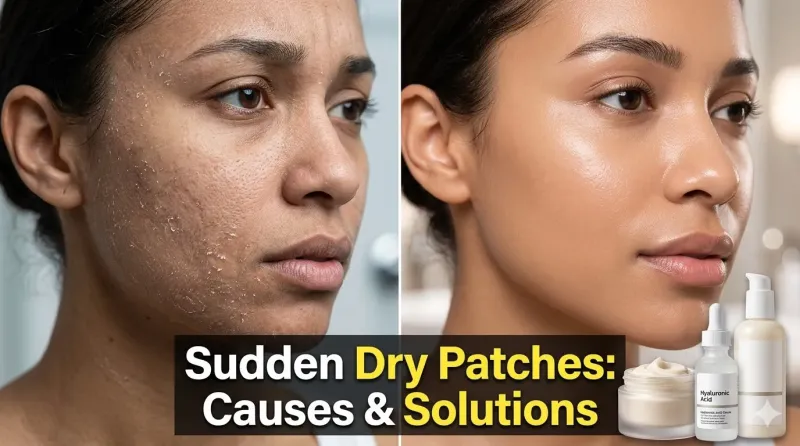
WHY SOME WOMEN EXPERIENCE SUDDEN DRY PATCHES CAUSES, SCIENCE andamp; SOLUTIONS
If you've ever woken up to find rough, flaky, or irritated patches on your face, arms, or body—despite following your usual skincare routine—you're not alone. Sudden dry patches are one of the most common yet frustrating skin concerns for women. They can appear seemingly overnight, disrupt your makeup application, cause discomfort or itching, and leave you wondering: What changed?
The truth is, sudden dry patches are rarely random. They are your skin's signal that something has shifted—whether in your environment, your hormones, your products, or your overall health. For women, whose skin is uniquely influenced by hormonal fluctuations, lifestyle demands, and environmental exposures, identifying the root cause is the first step toward effective healing.
This guide explores the science behind sudden dry patches in women, identifies the most common triggers (from hormonal shifts to skincare missteps), and provides an evidence-based protocol for restoring your skin's hydration, repairing your barrier, and preventing future flare-ups. Whether you're dealing with dryness on your cheeks, forehead, elbows, or legs, you'll find practical, dermatologist-backed strategies to help you heal with confidence.
Because healthy, hydrated skin isn't just about aesthetics—it's a reflection of your overall well-being.
UNDERSTANDING DRY PATCHES WHAT'S HAPPENING IN YOUR SKIN
Before addressing solutions, it's essential to understand what a "dry patch" actually is and why it appears suddenly.
What Is a Dry Patch?
A dry patch is a localized area of skin that has lost moisture, lipids, or both, resulting in:- Rough, flaky, or scaly texture- Tightness or discomfort- Redness or irritation (in some cases)- Increased sensitivity to products or environmental factors
The Skin Barrier Your First Line of Defense
Your skin's outermost layer, the stratum corneum, acts as a protective barrier. It consists of:- Corneocytes (skin cells) held together by lipids (ceramides, cholesterol, fatty acids)- Natural moisturizing factors (NMFs) that bind water to the skin- An acidic pH (4.5-5.5) that supports barrier function and microbiome health
When this barrier is compromised—by environmental stressors, harsh products, or internal factors—water escapes more easily (transepidermal water loss, or TEWL), and irritants penetrate more readily. The result: dry, irritated patches that feel rough, look flaky, and may become inflamed.
Why Do Dry Patches Appear Suddenly?
Unlike chronic dry skin, which develops gradually, sudden dry patches often signal an acute trigger:- A new product or ingredient that disrupted your barrier- A hormonal shift that altered your skin's oil production- An environmental change (weather, humidity, heating) that increased water loss- A temporary health factor (illness, stress, medication) that affected skin function
Understanding this distinction helps you respond appropriately: sudden patches often resolve quickly once the trigger is addressed, while chronic dryness may require longer-term management.
COMMON CAUSES OF SUDDEN DRY PATCHES IN WOMEN
Identifying the root cause is essential for effective treatment. Here are the most frequent triggers for women, backed by dermatological evidence.
1. Hormonal Fluctuations
Women's skin is uniquely sensitive to hormonal changes, which can directly impact oil production, hydration, and barrier function.
Key hormonal triggers:- Menstrual cycle: Estrogen and progesterone shifts in the luteal phase (pre-period) can reduce sebum production, leading to temporary dryness or sensitivity- Pregnancy: Hormonal surges can cause unpredictable skin changes, including sudden dry patches on the face, abdomen, or body- Perimenopause/menopause: Declining estrogen reduces skin's natural hydration, collagen production, and barrier resilience, often manifesting as sudden dryness- PCOS or thyroid disorders: Hormonal imbalances can disrupt skin barrier function and oil regulation
Signs it's hormonal:- Dry patches appear cyclically (e.g., pre-period)- Accompanied by other hormonal symptoms (acne, mood changes, irregular cycles)- Occur during known hormonal transitions (pregnancy, postpartum, perimenopause)
2. Environmental Stressors
Your skin constantly adapts to its environment. Sudden changes can overwhelm its ability to maintain hydration.
Common environmental triggers:- Seasonal shifts: Cold, dry winter air or indoor heating dramatically increases TEWL- Low humidity: Air conditioning, airplane travel, or arid climates strip moisture from skin- Hard water: High mineral content can leave residue that disrupts barrier function and irritates skin- Pollution: Particulate matter generates free radicals that damage barrier lipids and increase inflammation
Signs it's environmental:- Dry patches appear after travel, seasonal change, or exposure to dry/heated air- Improve when humidity increases or environment changes- Affect exposed areas (face, hands) more than covered skin
3. Skincare Product Reactions
Even well-intentioned skincare can trigger sudden dryness if it disrupts your barrier.
Common product-related triggers:- Over-exfoliation: Using AHAs, BHAs, or physical scrubs too frequently strips lipids and compromises barrier integrity- Harsh cleansers: Sulfates or high-pH formulas strip natural oils, leaving skin vulnerable- New active ingredients: Retinoids, vitamin C, or benzoyl peroxide can cause initial dryness or irritation as skin adjusts- Fragrance or preservative sensitivity: Even "natural" fragrances can trigger contact dermatitis in sensitive individuals
Signs it's product-related:- Dry patches appear shortly after introducing a new product or increasing frequency of actives- Accompanied by stinging, redness, or increased sensitivity- Improve when you pause the suspected product
4. Skin Conditions
Sometimes, sudden dry patches signal an underlying skin condition that requires targeted treatment.
Common conditions to consider:- Eczema (atopic dermatitis): Characterized by dry, itchy, inflamed patches that may flare suddenly due to triggers- Seborrheic dermatitis: Causes flaky, sometimes greasy patches, often on the scalp, eyebrows, or sides of nose- Psoriasis: Thick, silvery scales on red patches, often on elbows, knees, or scalp- Contact dermatitis: Allergic or irritant reaction causing localized dryness, redness, or itching
Signs it may be a skin condition:- Patches are intensely itchy, painful, or inflamed- Do not improve with basic moisturizing- Spread or worsen despite gentle care- Have a family history of eczema, psoriasis, or allergies
5. Dehydration and Nutritional Factors
Skin hydration starts from within. Internal factors can manifest as external dryness.
Key internal contributors:- Inadequate water intake: Dehydration reduces skin's ability to retain moisture- Essential fatty acid deficiency: Omega-3s support barrier lipids; low intake can compromise barrier function- Vitamin deficiencies: Vitamins A, D, E, and B-complex support skin barrier health and repair- High-sugar or processed diets: Can promote inflammation that weakens barrier function
Signs it's internal:- Dry patches appear alongside other signs of dehydration (fatigue, dark urine, dry lips)- Improve with dietary changes or supplementation- Occur during periods of illness, stress, or dietary restriction
6. Stress and Lifestyle Factors
Chronic stress impacts skin through multiple pathways, including barrier function.
Stress-related mechanisms:- Elevated cortisol: Can reduce skin's lipid production and impair barrier repair- Poor sleep: Disrupts skin's overnight repair processes- Medications: Some prescriptions (e.g., acne treatments, diuretics, retinoids) can cause dryness as a side effect
Signs it's stress-related:- Dry patches appear during high-stress periods- Accompanied by other stress symptoms (fatigue, sleep issues, tension)- Improve with stress-reduction practices
HOW TO DIAGNOSE YOUR DRY PATCHES A STEP-BY-STEP APPROACH
Before treating, identify the likely cause. This systematic approach helps you respond effectively.
Step 1 Track Timing and Patterns
Ask yourself:- When did the dry patches first appear?- Do they follow a pattern (e.g., pre-period, seasonal, after product use)?- Are they localized or widespread?
Step 2 Review Recent Changes
Consider:- New skincare products, ingredients, or routines- Environmental changes (travel, weather, heating/AC)- Health changes (illness, medication, stress, diet)- Hormonal shifts (cycle phase, pregnancy, menopause)
Step 3 Assess Symptoms
Note:- Texture: Flaky, scaly, rough, or cracked?- Sensation: Itchy, tight, stinging, or painful?- Appearance: Red, inflamed, or just dry?- Location: Face, body, or specific areas?
Step 4 Test Gentle Interventions
Try:- Pausing potential irritants (new products, actives)- Switching to a gentle, fragrance-free cleanser and moisturizer- Increasing hydration (water intake, humidifier)- Protecting skin from environmental stressors (sunscreen, barrier creams)
If patches improve within 3-7 days, the trigger was likely external or product-related. If not, consider professional evaluation.
EVIDENCE-BASED SOLUTIONS HOW TO HEAL SUDDEN DRY PATCHES
Once you've identified the likely cause, apply targeted strategies to restore your skin's barrier and hydration.
Solution 1 Repair Your Skin Barrier
The foundation of treating dry patches is supporting barrier repair.
Key ingredients:- Ceramides: Replenish barrier lipids; studies show 2-4% ceramide formulations improve barrier function within days- Cholesterol and fatty acids: Work synergistically with ceramides to restore barrier structure- Niacinamide (4-5%): Strengthens barrier, reduces inflammation, and improves hydration- Panthenol (Vitamin B5): Supports healing and hydration retention
Application tips:- Apply barrier-repair moisturizer to damp skin to lock in hydration- Use twice daily until patches resolve, then maintain 1x daily- Avoid layering too many actives while barrier is compromised
Solution 2 Gentle Cleansing and Hydration
Harsh cleansing exacerbates dryness. Switch to barrier-supportive practices.
Cleansing protocol:- Use a creamy, sulfate-free, pH-balanced cleanser (pH 4.5-5.5)- Cleanse with lukewarm water; avoid hot water which strips lipids- Limit cleansing to twice daily; rinse with water only in the morning if skin is very dry
Hydration strategy:- Apply a hydrating toner or essence with hyaluronic acid or glycerin to damp skin- Follow immediately with a barrier-repair moisturizer to seal in hydration- Consider a hydrating serum with sodium PCA or urea for extra support
Solution 3 Targeted Treatment for Underlying Causes
Address the root trigger for lasting resolution.
For hormonal dryness:- Use richer moisturizers pre-period or during hormonal transitions- Consider topical niacinamide or peptides to support barrier resilience- Discuss persistent issues with your healthcare provider; hormone therapy may help in some cases
For environmental dryness:- Use a humidifier indoors during dry seasons- Apply a protective barrier cream before exposure to cold or wind- Reapply moisturizer after handwashing or exposure to dry air
For product-related irritation:- Pause all non-essential actives (retinoids, exfoliants, vitamin C) until barrier recovers- Reintroduce one product at a time, waiting 3-5 days between introductions- Patch test new products on a small area before full-face application
For skin conditions:- Use over-the-counter hydrocortisone 1% for short-term relief of eczema flare-ups (max 7 days)- Try antifungal creams for suspected seborrheic dermatitis- Consult a dermatologist for persistent or severe patches; prescription treatments may be needed
Solution 4 Support from Within
Internal health supports external healing.
Nutritional support:- Increase omega-3 intake (fatty fish, flaxseed, walnuts) to support barrier lipids- Ensure adequate vitamins A, D, E, and B-complex through diet or supplementation- Stay hydrated: Aim for 2-3 liters of water daily, adjusted for activity and climate
Lifestyle adjustments:- Prioritize 7-9 hours of quality sleep for overnight skin repair- Practice stress-reduction techniques (meditation, yoga, deep breathing) to lower cortisol- Avoid smoking and limit alcohol, both of which can impair barrier function
A SAMPLE DAILY ROUTINE FOR HEALING DRY PATCHES
Here's a practical, adaptable routine designed to restore hydration and repair your barrier.
Morning (10 minutes):1. Gentle cleanse with lukewarm water or a creamy, sulfate-free cleanser2. Apply hydrating toner or essence to damp skin (hyaluronic acid or glycerin-based)3. Layer a barrier-repair serum with niacinamide or panthenol4. Apply a rich, ceramide-containing moisturizer to lock in hydration5. Finish with broad-spectrum SPF 30+ (mineral formulas are often gentler on compromised skin)
Evening (15 minutes):1. Double cleanse if wearing makeup/sunscreen: oil-based cleanser first, then gentle water-based cleanser2. Apply a hydrating essence or serum to damp skin3. Use a barrier-repair moisturizer with ceramides, cholesterol, and fatty acids4. For very dry patches, apply a thin layer of occlusive (petrolatum, squalane, or shea butter) as a final step5. Optional: Use a humidifier in your bedroom to support overnight hydration
Weekly Support:- Skip exfoliation until patches fully resolve- Use a hydrating mask with hyaluronic acid or centella asiatica 1-2x weekly- If using actives, reintroduce slowly: start with once weekly, monitor tolerance, then gradually increase
INGREDIENTS TO AVOID WHILE HEALING DRY PATCHES
Some ingredients can delay healing or worsen irritation. Temporarily pause these while your barrier recovers:
Avoid:- Physical scrubs or harsh exfoliants: Can further damage compromised barrier- High-concentration actives: Retinoids, strong AHAs/BHAs, or benzoyl peroxide can increase irritation- Fragrance (synthetic or essential oils): Common irritants for sensitive, compromised skin- Alcohol-denat or high-alcohol formulas: Can be drying and disruptive to barrier lipids- Hot water: Strips natural oils and increases TEWL
Reintroduce gradually:- Once patches have healed, reintroduce actives one at a time, starting with low frequency (1x/week)- Always patch test new products on a small area before full application- Monitor skin for 3-5 days before adding another new product
WHEN TO CONSULT A DERMATOLOGIST
While most sudden dry patches resolve with gentle care, professional evaluation is valuable in certain situations.
Consult a dermatologist if:- Patches are intensely itchy, painful, or inflamed- Dryness spreads, worsens, or does not improve after 1-2 weeks of consistent care- You suspect an underlying condition (eczema, psoriasis, contact dermatitis)- Patches are accompanied by other symptoms (fever, fatigue, joint pain)- You have a history of skin conditions or allergies
What to expect:- A thorough skin examination and discussion of your history, products, and symptoms- Possible patch testing to identify contact allergens- Prescription treatments if needed (topical steroids, calcineurin inhibitors, or other targeted therapies)- Personalized guidance on product selection and routine adjustments
PREVENTING RECURRENCE LONG-TERM BARRIER HEALTH
Once your patches have healed, these habits help maintain a resilient, hydrated barrier.
Daily Practices:- Continue using gentle, pH-balanced cleansers and barrier-supportive moisturizers- Apply sunscreen daily to protect barrier lipids from UV damage- Stay hydrated and maintain a nutrient-rich diet
Seasonal Adjustments:- In winter: Increase moisturizer richness, use a humidifier, protect skin from cold/wind- In summer: Focus on lightweight hydration and sun protection; avoid over-cleansing after sweating
Product Strategy:- Introduce new products slowly and patch test- Avoid over-exfoliation: Limit chemical exfoliants to 1-3x/week maximum, depending on skin tolerance- Rotate actives: Don't use multiple strong actives on the same day
Stress and Lifestyle:- Prioritize sleep and stress management to support skin's natural repair processes- Stay consistent with your routine; barrier health requires ongoing attention
FREQUENTLY ASKED QUESTIONS ABOUT SUDDEN DRY PATCHES
Q: Can dry patches be a sign of something serious?A: Usually not. Most sudden dry patches are due to temporary triggers like environmental changes, product reactions, or hormonal shifts. However, persistent, spreading, or symptomatic patches warrant professional evaluation to rule out underlying conditions.
Q: How long does it take for dry patches to heal?A: With consistent, gentle care, most dry patches improve within 3-7 days and fully resolve within 1-2 weeks. Barrier repair is a gradual process; patience and consistency are key.
Q: Should I exfoliate dry patches to remove flakiness?A: Avoid physical or chemical exfoliation while patches are active. Exfoliating compromised skin can worsen irritation and delay healing. Focus on hydration and barrier repair first; gentle exfoliation can be reintroduced once skin is fully healed.
Q: Can I wear makeup over dry patches?A: Yes, but choose hydrating, non-comedogenic formulas and apply gently. Avoid matte or long-wear foundations that can emphasize dryness. Prep skin with a rich moisturizer first, and consider using a hydrating primer.
Q: Are natural oils good for dry patches?A: Some oils (squalane, jojoba, rosehip) can support barrier repair and hydration. However, avoid heavy or comedogenic oils (coconut, cocoa butter) on the face if you're prone to breakouts. Always patch test first.
Q: Can stress really cause dry patches?A: Yes. Chronic stress elevates cortisol, which can reduce skin's lipid production and impair barrier repair. Stress-management practices (meditation, adequate sleep, exercise) support both mental and skin health.
MAINTAINING LONG-TERM SKIN RESILIENCE
Healthy skin is a long-term investment. These habits support ongoing barrier health and hydration
Consistency Over Intensity:- Gentle, consistent care outperforms aggressive, intermittent treatments- Focus on maintaining barrier health rather than chasing quick fixes
Listen to Your Skin:- Adjust your routine based on seasonal changes, hormonal shifts, or life stressors- If your skin feels tight, sensitive, or reactive, simplify your routine and focus on hydration
Professional Partnership:- Establish a relationship with a dermatologist for personalized guidance- Seek early evaluation for persistent concerns rather than self-treating indefinitely
CONCLUSION YOUR SKIN'S SIGNAL IS AN OPPORTUNITY
Sudden dry patches are not a flaw—they are your skin's intelligent signal that something needs attention. By understanding the common triggers for women, responding with evidence-based care, and supporting your barrier long-term, you can transform these moments of dryness into opportunities for deeper skin health.
Remember the essentials:- Identify the trigger: Hormones, environment, products, or health factors often hold the key- Repair, don't strip: Focus on barrier-supportive ingredients and gentle practices- Heal from within: Nutrition, hydration, and stress management support external healing- Prevent with consistency: Long-term barrier health requires ongoing attention- Seek help when needed: A dermatologist is your partner in skin health
Your skin is resilient, adaptive, and worthy of care. With informed, compassionate attention, you can restore hydration, heal dry patches, and cultivate a complexion that reflects your overall well-being. Start with one small step today: simplify your routine, apply a barrier-repair moisturizer, or drink an extra glass of water. Your healthiest, most radiant skin is absolutely achievable.