

Glass Hair Science: The Blueprint for Mirror-Like Shine
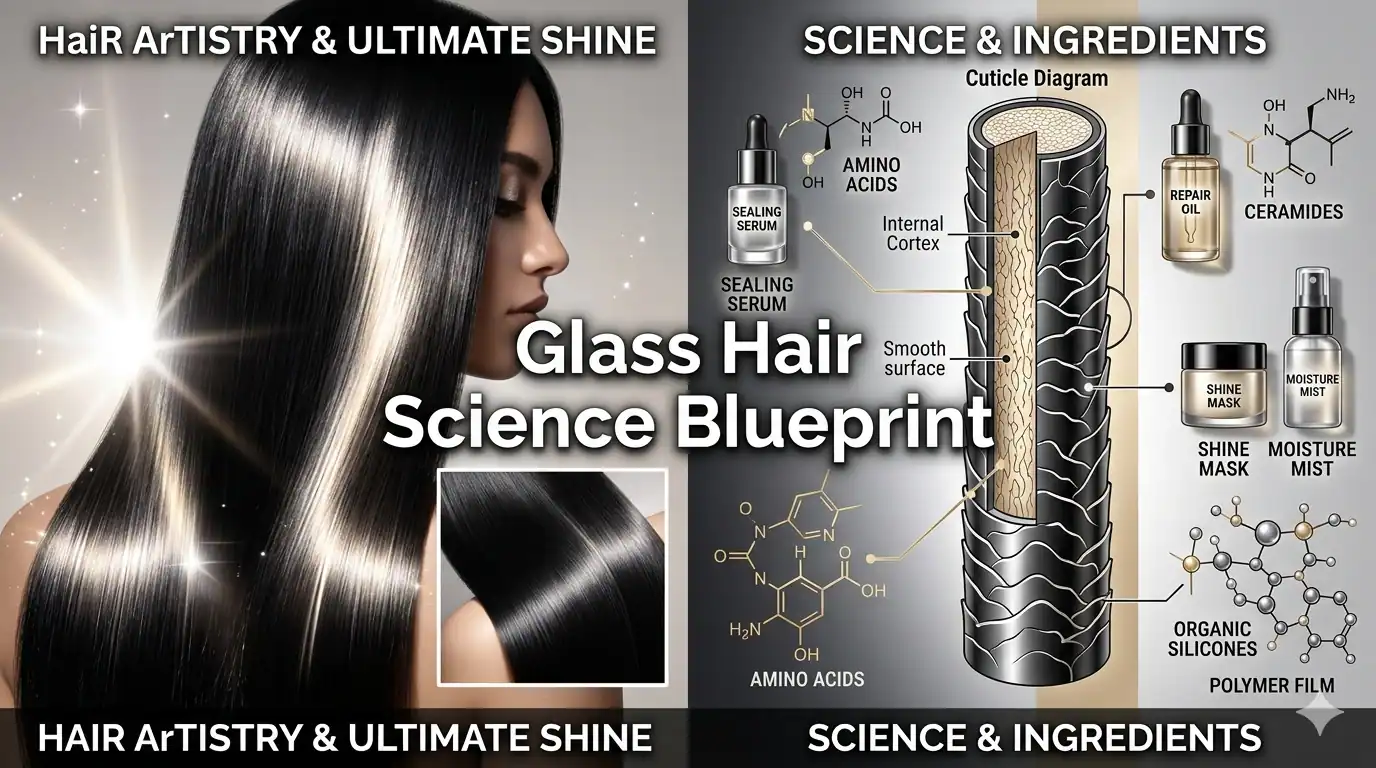
The Architecture of Gloss: Scientific Blueprint for Glass Hair
The glass hair trend has taken the beauty world by storm, with social media flooded with images of impossibly smooth, mirror-like strands that reflect light like polished glass. But this isn't just another fleeting beauty fad—it's a sophisticated understanding of hair physics, chemistry, and optics converging to create maximum shine. Glass hair represents the pinnacle of hair health and styling precision, where every strand lies perfectly flat, every cuticle is sealed, and light bounces off your hair like a mirror.
Achieving true glass hair goes far beyond slathering on shine serum or running a flat iron through your locks once. It requires understanding the scientific architecture of hair gloss: the role of cuticle alignment in light reflection, the importance of surface smoothness at the microscopic level, the chemistry of products that create optical illusions of shine, and the structural integrity needed to maintain that reflective surface. This comprehensive guide deconstructs the science behind glass hair, providing you with an evidence-based blueprint for achieving and maintaining that coveted mirror finish.
We'll explore the physics of light reflection on hair surfaces, the biological factors that determine your hair's natural shine potential, the chemical treatments and products that enhance reflectivity, and the styling techniques that create optical perfection. Whether your hair is naturally dull, damaged, frizzy, or simply not reaching its shine potential, understanding the science will empower you to build a customized protocol for glass hair that works with your unique hair biology, not against it.
Understanding Hair Structure: The Foundation of Shine
To master glass hair, you must first understand what you're working with. Hair is a complex biological structure composed primarily of keratin protein, organized in a hierarchical architecture that determines everything from strength to shine. Each strand consists of three distinct layers: the medulla (innermost core, often absent in fine hair), the cortex (middle layer containing pigment and structural proteins), and the cuticle (outermost protective layer).
The cuticle is where the magic of shine happens. Imagine roof shingles overlapping from root to tip—that's your cuticle structure. Each cuticle cell is a flat, scale-like structure approximately 0.5 micrometers thick and 40-50 micrometers long, composed of highly cross-linked keratin proteins surrounded by a lipid layer called the F-layer (18-MEA or 18-methyleicosanoic acid). When these cuticles lie flat and smooth, they create a uniform surface that reflects light coherently, producing the appearance of shine and gloss.
However, when cuticles are raised, damaged, or irregular, light scatters in multiple directions rather than reflecting uniformly. This diffusion creates the appearance of dullness, frizz, and roughness. The degree of cuticle damage directly correlates with perceived shine—healthy hair with intact cuticles can reflect up to 70% of incident light, while damaged hair may reflect less than 30%.
The F-layer is particularly crucial for glass hair. This hydrophobic lipid coating acts as nature's shine enhancer, repelling water, reducing friction between strands, and creating a smooth surface for light reflection. Chemical treatments, heat styling, UV exposure, and mechanical damage can strip away this lipid layer, leaving hair porous, rough, and dull. Understanding that shine isn't just about surface products but about preserving and enhancing this natural lipid barrier is fundamental to achieving glass hair.
Hair porosity—the hair's ability to absorb and retain moisture—also plays a critical role in shine. Low-porosity hair has tightly bound cuticles that resist moisture absorption but naturally reflect light well. High-porosity hair has gaps and holes in the cuticle layer, allowing moisture to enter easily but also escape quickly, resulting in frizz and dullness. Glass hair requires optimizing your hair's porosity through protein treatments, lipid replenishment, and cuticle sealing to create that smooth, reflective surface.
The Physics of Light Reflection: Why Hair Shines
Shine is fundamentally an optical phenomenon—the result of light interacting with your hair's surface. Understanding the physics helps you manipulate these principles for maximum gloss. When light hits a hair strand, several things can happen: it can be reflected (bounce off the surface), refracted (pass through and bend), absorbed (taken in by the hair), or scattered (deflected in multiple directions).
For glass hair, you want maximum specular reflection—mirror-like reflection where light bounces off at a predictable angle, creating that intense shine. This requires an extremely smooth surface at the microscopic level. Think of it like a mirror versus frosted glass: both are made of the same material, but the mirror's smooth surface creates clear reflection while the frosted glass's rough surface scatters light.
The angle of incidence equals the angle of reflection—this is why glass hair looks different from various angles. When you move your head, the light reflection shifts, creating that dynamic, liquid-like shine that characterizes true glass hair. This is also why glass hair photographs so dramatically; the camera captures these sharp light reflections that create the illusion of impossibly smooth, glossy strands.
Surface smoothness is quantified by what scientists call the "refractive index"—a measure of how much light bends when passing from one medium to another. Hair has a refractive index of approximately 1.55, similar to many plastics. When the cuticle is smooth and flat, light reflects cleanly off this surface. When the cuticle is rough or raised, light scatters diffusely, creating a matte appearance.
The diameter and shape of your hair also affect shine. Round hair shafts reflect light more uniformly than oval or irregularly shaped strands. This is one reason why some people naturally have shinier hair than others—it's partly genetic. However, you can enhance your hair's natural reflective properties through proper care, regardless of your genetic starting point.
Color also influences perceived shine. Darker hair appears shinier because the contrast between reflected light and the dark background is more dramatic. Light blonde or gray hair can be just as smooth and healthy but may appear less glossy because the light reflection is less contrasting. This is why glass hair on dark hair creates such a striking visual impact.
Cuticle Alignment: The Key to Mirror-Like Reflection
Achieving glass hair requires getting your cuticles to lie as flat as possible, creating that smooth, uniform surface essential for specular reflection. Multiple factors influence cuticle alignment, and understanding them allows you to manipulate your hair toward optimal smoothness.
pH balance is critical. Hair's natural pH is slightly acidic, around 4.5-5.5. At this pH, cuticles lie flat and tight. When hair is exposed to alkaline substances (pH above 7), such as harsh shampoos, chemical relaxers, or even hard water, the cuticles swell and lift, creating roughness and dullness. This is why acidic rinses and pH-balanced products are essential for glass hair. Apple cider vinegar rinses (pH 2-3) or citric acid treatments temporarily lower hair's pH, causing cuticles to contract and lie flat, instantly enhancing shine.
Heat styling, when done correctly, can actually help align cuticles. Flat irons and blow dryers use heat to temporarily reshape the hydrogen bonds in hair, allowing you to smooth cuticles into alignment. However, excessive heat (above 350°F/180°C) damages the cuticle, creating bubbles and cracks that permanently roughen the surface. The key is using moderate heat with proper heat protectant products that create a thermal barrier, allowing cuticle smoothing without damage.
Mechanical manipulation also affects cuticle alignment. Brushing hair when wet—when it's most vulnerable—can tear and lift cuticles. Always detangle gently with a wide-tooth comb starting from the ends and working upward. Brushing dry hair with a boar bristle brush helps distribute natural oils from root to tip, naturally smoothing cuticles and enhancing shine. The direction matters too: always brush in the direction of cuticle growth (root to tip) to avoid lifting the scales.
Chemical treatments like keratin treatments, Brazilian blowouts, and hair glosses work by either coating the hair with smoothing polymers or chemically bonding to the cuticle to keep it flat. These treatments can provide months of enhanced shine but require careful maintenance and can cause damage if overused. Understanding the chemistry helps you choose treatments that align with your glass hair goals without compromising hair health.
The Chemistry of Shine: Products That Create Glass Hair
The products you use are the building blocks of glass hair. Each category serves a specific function in creating and maintaining that mirror-like finish. Understanding the chemistry helps you choose effective products and use them strategically.
Silicones: Despite controversy, silicones remain the gold standard for instant shine. Dimethicone, cyclomethicone, and amodimethicone are large molecules that coat the hair shaft, filling in cuticle gaps and creating an incredibly smooth surface for light reflection. They're hydrophobic, meaning they repel water and humidity, maintaining smoothness in challenging conditions. The key is choosing the right silicone for your hair type and using clarifying shampoos periodically to prevent buildup. Water-soluble silicones like PEG-modified dimethicone provide shine without heavy buildup.
Hair Oils: Natural oils like argan, jojoba, marula, and coconut oil work differently than silicones. They penetrate the hair shaft to varying degrees, replenishing lipids and sealing the cuticle from within. Argan oil is particularly rich in vitamin E and fatty acids that enhance shine without heaviness. Jojoba oil closely mimics the hair's natural sebum, making it an excellent cuticle smoother. The molecular size of the oil determines penetration—smaller molecules like coconut oil penetrate deeply, while larger molecules like mineral oil sit on the surface providing immediate shine.
Serums and Gloss Sprays: These products combine silicones, oils, and polymers to create an instant glass hair effect. Light-reflecting particles like mica or silica add optical enhancement, literally bouncing light off your hair. Modern serums use advanced polymer technology to create flexible, breathable films that smooth without stiffness. Apply to damp hair for even distribution or to dry hair for instant gloss enhancement.
Protein Treatments: Hydrolyzed keratin, silk amino acids, and wheat protein fill in gaps in damaged cuticles, creating a smoother surface. These small protein fragments penetrate the hair shaft, strengthening from within while improving surface texture. However, too much protein can make hair brittle, so balance with moisturizing treatments. The ideal protein-moisture balance varies by individual—listen to your hair's response.
Acidic Rinse Products: Leave-in conditioners and rinses with citric acid, lactic acid, or apple cider vinegar lower hair's pH, causing cuticles to contract and lie flat. This is one of the fastest ways to enhance shine. Use once weekly or after clarifying to restore optimal pH and maximize reflectivity.
Heat Protectants: These aren't just for damage prevention—they're essential for glass hair. Quality heat protectants contain film-forming polymers that smooth the cuticle before heat application, ensuring that when you flat iron or blow dry, you're sealing cuticles flat rather than frying them. Look for products with both thermal protection and smoothing agents.
The Glass Hair Protocol: Step-by-Step Application
Achieving glass hair requires a systematic approach where each step builds on the previous one. This protocol maximizes cuticle alignment, surface smoothness, and light reflection.
Step 1: Clarify and Reset
Start with a clarifying shampoo to remove all product buildup, minerals, and oils that create a barrier between your hair and treatment products. Buildup creates a rough surface that scatters light. Use a sulfate-free clarifying shampoo with chelating agents like EDTA to remove hard water minerals. This resets your hair to its most receptive state. Limit clarifying to once weekly to avoid over-stripping natural oils.
Step 2: Deep Condition with Heat
Apply a deep conditioning mask rich in emollients and humectants. Cover with a shower cap and apply heat (either a heated cap or warm towel) for 20-30 minutes. Heat opens the cuticle slightly, allowing deeper penetration of conditioning agents. The mask should contain ingredients like shea butter, fatty alcohols, and hydrolyzed proteins. This step replenishes moisture and fills cuticle gaps.
Step 3: Acidic Rinse
After rinsing the mask, apply an acidic rinse—either diluted apple cider vinegar (1 part vinegar to 4 parts water) or a commercial pH-balancing rinse. Leave for 2-3 minutes, then rinse with cool water. This step closes and smooths the cuticle, creating the foundation for shine. The cool water temperature further helps contract the cuticle.
Step 4: Leave-In and Heat Protectant
Apply a leave-in conditioner followed by a heat protectant serum to damp, towel-dried hair. Use the "praying hands" method—smoothing product down the hair shaft in the direction of cuticle growth rather than scrunching, which can roughen the cuticle. Focus on mid-lengths to ends where damage is greatest.
Step 5: Tension Blow-Drying
Use a round brush and blow dryer to create tension while drying. Section hair and pull each section taut with the brush while directing the airflow down the hair shaft (root to tip). This technique smooths cuticles as they dry, setting them in a flat position. Always use the concentrator nozzle to focus airflow and prevent frizz. Dry each section completely before moving on—damp spots will frizz later.
Step 6: Flat Iron Sealing
Once hair is 100% dry, use a quality flat iron at moderate temperature (300-350°F for most hair types). Work in small sections, passing the iron slowly (one pass is ideal—multiple passes increase damage). The heat seals the cuticle flat and creates that glass-like smoothness. For extra shine, use the "chase method": apply a tiny amount of serum to each section immediately after flat ironing while the hair is still warm, allowing the product to bond to the smooth surface.
Step 7: Final Gloss Enhancement
Finish with a light mist of shine spray or a tiny amount of hair oil rubbed between palms and smoothed over the surface. Focus on the top layer where light hits most. Avoid the roots to prevent greasiness. This final step adds the optical enhancement that creates that mirror finish.
Maintaining Glass Hair: The Long-Term Strategy
Achieving glass hair is one thing; maintaining it is another. The mirror finish requires ongoing care to prevent damage, buildup, and cuticle disruption.
Nighttime Protection: Cotton pillowcases create friction that roughens cuticles overnight. Switch to a silk or satin pillowcase that allows hair to glide smoothly, preserving your glass hair finish. Alternatively, wrap hair in a silk scarf or bonnet. For longer hair, loosely braid or pineapple (loose high ponytail) to prevent tangling and friction.
Washing Frequency: Over-washing strips natural oils that contribute to shine. Aim for 2-3 times weekly, using dry shampoo between washes if needed. When you do wash, use lukewarm water for shampooing (hot water opens cuticles) and finish with a cool water rinse to seal. Always use sulfate-free shampoos that cleanse without stripping.
Regular Maintenance Treatments: Incorporate weekly deep conditioning, monthly protein treatments (if hair is damaged), and regular acidic rinses. Every 4-6 weeks, get a trim to remove split ends—damage travels up the hair shaft, and split ends scatter light, destroying the glass hair effect. Even a micro-trim (1/4 inch) makes a visible difference in shine.
Humidity Management: Humidity is the enemy of glass hair. Water vapor penetrates the hair shaft, causing it to swell and cuticles to lift, creating frizz. Use anti-humidity serums containing polymers that create a moisture barrier. In high humidity, consider protective styles or updos that minimize exposed surface area.
Avoiding Damage: Every chemical treatment, heat styling session, and mechanical manipulation causes cumulative damage. Minimize coloring, bleaching, and perming. When you do use heat, always use protectant and keep temperature moderate. Be gentle when detangling. Wear protective styles during swimming (chlorine and salt water are extremely damaging). These preventive measures preserve the cuticle integrity essential for glass hair.
Troubleshooting Common Glass Hair Challenges
Even with perfect technique, you may encounter obstacles. Here's how to address common issues:
Problem: Hair looks greasy, not glossy
Solution: You're likely using too much product or products that are too heavy for your hair type. Glass hair should look shiny but not oily. Switch to lighter serums and apply sparingly—start with a pea-sized amount and add more only if needed. Focus on ends rather than roots. Clarify to remove buildup and restart with lighter products.
Problem: Shine doesn't last
Solution: Your cuticles may be too damaged to hold a smooth surface, or you're not sealing products properly. Incorporate protein treatments to strengthen hair, ensure you're using heat to seal products into the hair shaft, and try a gloss treatment or glaze at a salon for longer-lasting results. Also check your water quality—hard water minerals create buildup that dulls hair.
Problem: Hair is shiny but feels dry
Solution: You're getting surface shine but lacking internal moisture. This often happens with silicone-heavy products that coat hair without nourishing it. Balance shine products with deep conditioning treatments. Use products with both emollients (for shine) and humectants (for moisture). Consider the LOC method (Liquid/Oil/Cream) to layer hydration effectively.
Problem: Frizz ruins the glass effect
Solution: Frizz indicates raised cuticles and moisture imbalance. Ensure you're sealing the cuticle with acidic rinses and cool water. Use anti-frizz serums containing silicones or natural oils. In humid conditions, use stronger hold products with humidity-resistant polymers. Consider a keratin treatment or Brazilian blowout for longer-term frizz control.
Frequently Asked Questions
Can naturally curly or textured hair achieve glass hair?
Yes, but it requires more work and may not look identical to straight glass hair. Curly hair can achieve incredible shine when curls are well-defined, moisturized, and sealed. The key is enhancing your natural texture rather than fighting it. Use the LOC method, seal with oils, and consider silk pressing occasionally for that mirror finish. Embrace that glass hair on curly textures looks like defined, shiny, healthy curls rather than stick-straight hair.
How long does it take to achieve glass hair?
You can see immediate improvement in shine after one proper glass hair styling session. However, truly healthy, naturally shiny hair that maintains the glass effect easily takes 3-6 months of consistent care. Damaged hair needs time to recover, and you can only repair so much—eventually, you need to trim away irreparable damage. Be patient and focus on progressive improvement rather than overnight transformation.
Is glass hair damaging?
The glass hair look itself isn't damaging, but some methods to achieve it can be if done improperly. Excessive heat styling, overuse of protein treatments, or heavy product buildup can cause damage. The key is balance: use heat protectant, moderate temperatures, regular deep conditioning, and periodic clarifying. Glass hair should be about enhancing your hair's natural health, not masking damage with products.
Can I achieve glass hair without heat styling?
Yes, though the effect may be less dramatic. Focus on cuticle-smoothing techniques like acidic rinses, silk pillowcases, gentle detangling, and high-quality smoothing serums. Try heatless styling methods like wrap drying, roller sets, or banding. While you may not get the same mirror-like finish as with flat ironing, you can achieve beautiful, healthy shine without heat.
What's the difference between glass hair and healthy hair?
Glass hair is a styling aesthetic characterized by extreme shine and smoothness, while healthy hair refers to the structural integrity of your strands. You can have healthy hair that isn't styled glass-straight, and you can temporarily create a glass hair look on damaged hair (though it won't last). The goal should be healthy hair that can easily achieve glass-like shine, not glass hair at the expense of health.
Conclusion: Building Your Glass Hair Foundation
Glass hair isn't magic—it's science. It's the result of understanding hair structure, manipulating light reflection, aligning cuticles, and using chemistry to create optical perfection. But beyond the aesthetics, the glass hair protocol is fundamentally about hair health. Smooth, reflective cuticles aren't just beautiful; they're protective, preventing moisture loss, reducing breakage, and maintaining strength.
The journey to glass hair is personal. Your protocol will differ based on your hair type, texture, damage level, and lifestyle. Some will achieve mirror shine in weeks; others will work toward it over months. The key is consistency, patience, and working with your hair's natural biology rather than against it.
Remember that glass hair is a destination, not a requirement. Healthy hair is always beautiful, whether it has mirror shine or natural texture. Use these principles to enhance your hair's best qualities, not to chase an impossible standard. When you understand the science, you have the power to make informed choices about your hair care, creating a routine that makes you feel confident and beautiful.
The architecture of gloss is built on a foundation of knowledge, quality products, and consistent care. Master these principles, adapt them to your unique hair, and you'll unlock your hair's maximum shine potential. Your glass hair journey starts now—with science as your blueprint and healthy hair as your foundation.