
The Art of Length Retention: Science-Backed Protocol 2026
Growing long hair is a goal shared by millions, yet fewer than 10% of people ever achieve significant length. Why? Because the secret to long hair isn't primarily about growth—it's about retention. Your hair grows an average of half an inch per month regardless of what you do. The difference between shoulder-length hair and waist-length hair isn't genetics alone; it's your ability to prevent breakage, minimize shedding, and maintain the integrity of every strand you grow.
In 2026, the science of hair care has evolved dramatically. We've moved beyond anecdotal remedies and into an era of biomimetic peptides, bond-building technology, personalized diagnostics, and evidence-based maintenance protocols. Understanding the structural biology of hair, the mechanics of breakage, and the latest innovations in hair science is no longer optional—it's essential for anyone serious about achieving their length goals.
This comprehensive guide delivers a science-backed protocol for length retention in 2026. You'll learn the biological factors that limit length, discover the ingredients and technologies that actually strengthen hair, build a maintenance routine grounded in research, and understand how lifestyle factors impact strand integrity. Whether you're recovering from damage, stuck at a length plateau, or starting your long hair journey, this protocol will equip you with the knowledge to keep every inch you grow.
Understanding Length Retention: The Science Behind the Strand
Before implementing any protocol, you must understand what you're working with. Hair retention is a game of structural integrity.
Growth vs. Retention: The Critical Distinction
Hair Growth:
- Determined by genetics, health, and scalp conditions
- Average rate: 0.5 inches (1.25 cm) per month
- Occurs at the follicle level within the scalp
- Limited by the anagen (growth) phase duration (2-7 years average)
Length Retention:
- Determined by care practices, manipulation, and environmental protection
- Occurs along the hair shaft (the visible strand)
- Limited by breakage, shedding, and mechanical damage
- Key Insight: You can have fast growth but zero retention if breakage equals growth rate
The Retention Equation:
Net Length Gain = Growth Rate - Breakage Rate

If Growth = 0.5 inches/month and Breakage = 0.5 inches/month → Net Gain = 0
If Growth = 0.5 inches/month and Breakage = 0.1 inches/month → Net Gain = 0.4 inches/month
Hair Structure and Weak Points
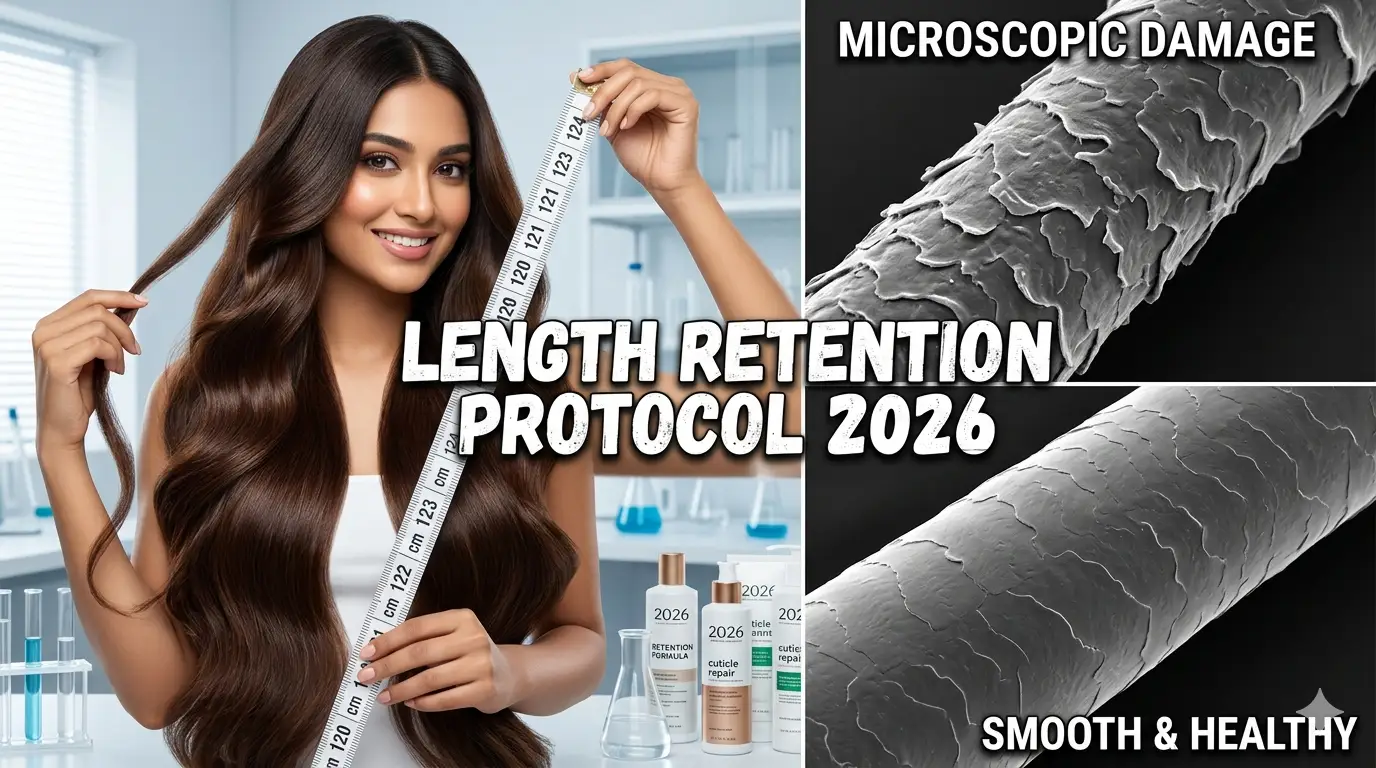
The Cuticle (Outer Layer):
- Protective scales that shield the inner cortex
- Damage here leads to moisture loss, friction, and tangling
- Once lifted or stripped, cuticles don't repair—they must be protected
The Cortex (Inner Layer):
- Contains keratin proteins and disulfide bonds that provide strength and elasticity
- Damage here leads to breakage, loss of elasticity, and permanent weakness
- Bond-building technology targets this layer specifically
Common Breakage Points:
- Ends: Oldest part of hair, most weathered, prone to splitting
- Nape of Neck: Friction from clothing and pillows
- Hairline/Edges: Fragile follicles, tension from styling
- Demarcation Line: Where chemically treated hair meets natural growth (weakest point)
Diagnostic Factors: Know Your Hair
Porosity:
- Low: Cuticles tightly closed; resists moisture, prone to buildup
- Medium: Cuticles slightly raised; balanced moisture retention
- High: Cuticles widely raised; absorbs moisture quickly but loses it quickly, prone to damage
- 2026 Testing: At-home porosity test kits now available with microscopic analysis
Elasticity:
- Healthy hair stretches 30-50% of its length when wet before returning
- Low elasticity = brittle, snaps easily (protein deficiency or damage)
- High elasticity = mushy when wet, doesn't hold style (moisture overload)
Density and Diameter:
- Density: Number of strands per square inch (low, medium, high)
- Diameter: Thickness of individual strand (fine, medium, coarse)
- Fine hair breaks more easily; coarse hair is stronger but can be dry
The 2026 Length Retention Protocol: Phase 1 - Foundation
Retention starts with a healthy scalp and strong new growth. This phase focuses on optimizing the foundation.
Step 1: Scalp Health Optimization
Why It Matters: A compromised scalp produces weaker hair from the root, setting you up for breakage before the hair even emerges.
Protocol:
- Weekly Scalp Exfoliation: Use salicylic acid or enzyme-based scalp scrubs to remove buildup that blocks follicles
- Blood Flow Stimulation: 4-minute daily scalp massage (studies show increased hair thickness after 24 weeks)
- Microbiome Balance: Use prebiotic scalp serums to support healthy flora and reduce inflammation
- Targeted Treatments: Rosemary oil (comparable to 2% minoxidil in some studies), caffeine serums, or peptide complexes for follicle support
2026 Tech: Smart scalp brushes with vibration settings and app tracking for massage consistency.
Step 2: Protein-Moisture Balance
The Science: Hair is 80-90% keratin (protein). It needs protein for strength and moisture for flexibility. Imbalance leads to breakage.
Signs of Protein Deficiency:
- Gummy or mushy hair when wet
- Excessive stretching without return
- Limp, lifeless strands
Signs of Protein Overload:
- Brittle, straw-like texture
- Snaps easily with little stretching
- Increased tangling and shedding
Protocol:
- Low Porosity: Light protein (hydrolyzed silk or wheat) every 4-6 weeks
- Medium Porosity: Moderate protein (hydrolyzed keratin) every 2-4 weeks
- High Porosity: Higher protein (hydrolyzed collagen or keratin) weekly or bi-weekly
- Always follow protein with moisture: Protein strengthens; moisture prevents brittleness
Step 3: Bond-Building Integration
The 2026 Standard: Bond-building technology repairs disulfide bonds within the cortex that are broken by chemical, thermal, and mechanical damage.
How It Works:
- Penetrates the hair shaft to reconnect broken sulfur bonds
- Restores internal strength, not just surface coating
- Compatible with most hair types and chemical treatments
Protocol:
- Pre-Wash Treatment: Apply bond builder before shampooing (leave for 10+ minutes)
- In-Service: Add to color or bleach formulas if chemically treating
- Maintenance: Use bond-building leave-ins or masks weekly for compromised hair
Key Ingredients: Bis-aminopropyl diglycol dimaleate, cysteamine, specialized peptide complexes.
The 2026 Length Retention Protocol: Phase 2 - Care & Maintenance
Once the foundation is set, daily and weekly care practices determine whether length is kept or lost.
Step 4: The Low-Manipulation Washing Routine
Frequency:
- Low Porosity: Every 7-10 days (prone to buildup)
- Medium Porosity: Every 5-7 days
- High Porosity: Every 3-5 days (loses moisture quickly)
- Adjust for lifestyle: Sweat, pollution, and product use may require more frequent washing
Technique:
- Pre-Detangle: Gently detangle dry or damp hair with slip-providing product before washing
- Focus Shampoo on Scalp: Let suds rinse through ends; avoid scrubbing lengths (causes tangling)
- Condition Mid-Lengths to Ends: Never apply heavy conditioner to scalp unless specifically formulated
- Detangle in Sections: Work in 4-6 sections with fingers or wide-tooth comb while conditioner is in
- Cool Water Rinse: Helps flatten cuticles and seal in moisture
2026 Innovation: Chelating shampoos for hard water areas (mineral buildup causes breakage).
Step 5: Moisture Sealing and Protection
The LCO/LOC Method (Updated for 2026):
| Method | Steps | Best For |
|---|---|---|
| LCO | Liquid (water/leave-in) → Cream → Oil | Low porosity (oil last seals without blocking moisture) |
| LOC | Liquid (water/leave-in) → Oil → Cream | High porosity (oil helps hold moisture before cream seal) |
Key Ingredients for 2026:
- Humectants: Glycerin, hyaluronic acid, honey (attract moisture)
- Emollients: Squalane, jojoba oil, shea butter (smooth and soften)
- Occlusives: Heavy oils, butters (seal in moisture; use sparingly on fine hair)
- Ceramides: Restore lipid barrier, reduce moisture loss
Heat Protection:
- Always use heat protectant before any thermal styling
- Look for ingredients that withstand high temps (dimethicone, specialized polymers)
- Limit heat styling to 1-2 times per week maximum
- Use lowest effective temperature (fine hair: 250-300°F; coarse hair: 350-400°F)
Step 6: Mechanical Damage Prevention
Brushing & Combing:
- Use detangling brushes with flexible bristles (e.g., wet brushes, loop-bristle brushes)
- Start from ends, work upward gradually
- Never brush soaking wet hair (most vulnerable state); damp with slip product is safer
- Clean brushes weekly to prevent product buildup transfer
Sleep Protection:
- Satin/Silk Pillowcase: Reduces friction by 40-50% compared to cotton
- Satin Bonnet/Scarf: Protects styles and reduces moisture loss
- Pineapple Method: Loose high ponytail for long hair to prevent tangling overnight
Environmental Protection:
- UV Protection: Hair sunscreen or hats (UV degrades keratin)
- Chlorine/Salt Water: Wet hair with clean water and apply conditioner before swimming; rinse immediately after
- Pollution: Antioxidant-rich hair serums to neutralize free radicals
The 2026 Length Retention Protocol: Phase 3 - Strategic Styling
How you wear your hair daily impacts retention more than almost any product.
Protective Styling Done Right
What Works:
- Low Manipulation: Styles that last 1-2 weeks without daily redoing (braids, twists, buns)
- Ends Tucked Away: Protects oldest, most fragile part of hair
- Loose Tension: Avoid tight styles that cause traction alopecia
What to Avoid:
- Excessive Weight: Heavy extensions can cause breakage at the root
- Long-Term Wear: Don't keep protective styles in longer than 8 weeks (risk of matting and buildup)
- Glues/Adhesives: Can cause severe damage during removal
2026 Trend: "Soft Protective Styling"—loose braids, silk-wrapped buns, and clip-in extensions that don't stress follicles.
Trimming Strategy: The Dusting Method
The Myth: "Cutting hair makes it grow faster." (False—growth happens at the scalp)
The Truth: Regular trims prevent splits from traveling up the shaft, preserving length.
Protocol:
- Frequency: Every 10-12 weeks for healthy hair; every 6-8 weeks for damaged/chemically treated hair
- Amount: 1/4 inch or less ("dusting") unless significant damage exists
- Method: Search and destroy individual split ends between trims
- Tool: Sharp professional shears (dull scissors cause more splitting)
Chemical Treatment Considerations
If You Color or Relax:
- Spacing: Allow 8-10 weeks between chemical services
- Overlap Prevention: Never apply relaxer to previously treated hair (causes breakage at demarcation line)
- Bond Building: Mandatory use of bond builders during chemical processes
- Protein Reinforcement: Increase protein treatments during chemical growth phases
- Consider Alternatives: Semi-permanent color, heat-free straightening methods, or embracing natural texture
Lifestyle Factors: The Internal Retention Support
External care is only half the equation. Internal health dictates hair quality from the root.
Nutrition for Hair Integrity
| Nutrient | Role in Hair | Food Sources | Supplement Consideration |
|---|---|---|---|
| Protein | Hair is made of keratin (protein) | Eggs, fish, lean meat, legumes | Collagen peptides if intake is low |
| Iron | Carries oxygen to hair follicles | Red meat, spinach, lentils | Only if deficient (get tested first) |
| Zinc | Supports hair tissue growth and repair | Oysters, pumpkin seeds, chickpeas | 15-30mg if deficient |
| Biotin (B7) | Keratin production (often overhyped) | Eggs, almonds, sweet potatoes | Only helpful if deficient (rare) |
| Omega-3s | Supports scalp health, adds shine | Salmon, flaxseeds, walnuts | 1000-2000mg fish oil daily |
| Vitamin D | Follicle cycling and health | Sunlight, fortified foods | Common deficiency; test levels |
Hydration:
- Dehydrated body = dehydrated hair
- Aim for 2-3 liters of water daily
- Limit excessive caffeine and alcohol (diuretics)
Stress Management
The Connection:
- Chronic stress elevates cortisol, which can push hair follicles into resting phase (telogen effluvium)
- Stress increases inflammation, affecting scalp health
- Stress-related habits (poor sleep, unhealthy eating) compound damage
Protocol:
- Prioritize 7-9 hours of quality sleep nightly (hair repair peaks during sleep)
- Practice stress-reduction techniques (meditation, exercise, therapy)
- Address underlying health issues (thyroid, hormonal imbalances, anemia)
Troubleshooting Common Retention Roadblocks
Even with a protocol, challenges arise. Here's how to diagnose and fix them.
Problem: "My Hair Won't Grow Past My Shoulders"
Likely Cause: Breakage equals growth rate (retention issue, not growth issue)
Solution:
- Assess manipulation: Are you styling too frequently?
- Check protein-moisture balance: Is hair brittle or mushy?
- Evaluate ends: Are they sealed and protected?
- Review heat usage: Can you reduce frequency or temperature?
Problem: "Excessive Shedding"
Normal: 50-100 hairs per day is normal shedding
Concerning: Clumps, visible thinning, or shedding lasting >3 months
Solution:
- Check for telogen effluvium (triggered by stress, illness, childbirth, major diet change)
- Review medications (some cause shedding)
- Get blood work (iron, vitamin D, thyroid, hormones)
- Be gentle during washing and detangling
- Consult a dermatologist or trichologist if persistent
Problem: "Single Strand Knots (Fairy Knots)"
Cause: Curly/coily hair types; dryness; friction
Solution:
- Increase moisture and slip during detangling
- Keep ends sealed and protected
- Minimize loose styles that allow strands to rub together
- Carefully snip individual knots (don't pull)
Problem: "Product Buildup Despite Washing"
Cause: Hard water, heavy products, insufficient cleansing
Solution:
- Use clarifying shampoo monthly
- Install shower filter for hard water
- Switch to lighter products (avoid heavy butters/oils if prone to buildup)
- Ensure thorough rinsing during washing
2026 Tools & Technology for Length Retention
Leverage technology to optimize your protocol.
Diagnostic Tools
- At-Home Microscopes: USB microscopes to examine cuticle damage and split ends
- Porosity Test Kits: Professional-grade testing for accurate product selection
- Scalp Analyzers: Apps and devices that assess scalp health and hair density
Smart Hair Care
- Temperature-Controlled Tools: Straighteners and dryers that auto-adjust heat based on hair type
- Ion Technology: Dryers that reduce static and frizz, minimizing damage
- UV-Protective Sprays: Advanced formulations for sun protection
Tracking & Accountability
- Hair Growth Apps: Track length, trims, products, and progress photos
- Reminder Systems: Alerts for deep conditioning, trims, and protein treatments
- Community Support: Online groups for accountability and troubleshooting
Frequently Asked Questions
How long does it take to see results from a length retention protocol?
Timeline expectations: - 4 weeks: Improved feel, reduced breakage during styling - 3 months: Visible reduction in split ends, better elasticity - 6 months: Measurable net length gain (1-2 inches retained) - 12 months: Significant length retention (3-6 inches net gain possible) Consistency is critical. Skipping steps undermines the protocol.
Do I need to use expensive products for length retention?
No. Effectiveness depends on ingredients and consistency, not price. - Invest in: Quality heat protectant, bond builder (if chemically treated), sharp shears - Save on: Basic cleansers, conditioners, oils (many affordable options work well) - Key: Read ingredient labels; focus on what works for your hair's porosity and needs
Can I grow long hair without using heat at all?
Absolutely. Heat-free methods (air drying, braids, twists, roller sets) are actually better for retention. - Benefits: Zero heat damage, improved natural texture health - Challenge: May take longer to dry; requires planning - Tip: If you must use heat, keep it occasional and protected
Is trimming really necessary if I want long hair?
Yes. Counterintuitive but essential. - Why: Split ends travel up the shaft, causing breakage higher up - Result: Small, regular trims preserve more length than avoiding trims and losing inches to breakage - Frequency: Every 10-12 weeks minimum for maintenance
Does cutting hair make it grow faster?
No. Growth occurs at the scalp follicle. Cutting ends has no biological effect on growth rate. However, trimming preserves length by preventing breakage, creating the appearance of faster growth through better retention.
What's the biggest mistake people make in length retention?
Inconsistency and impatience. - Inconsistency: Following protocol sporadically doesn't allow cumulative benefits - Impatience: Expecting overnight results leads to abandoning effective methods too soon - Comparison: Comparing your journey to others ignores genetic and structural differences Focus on your own progress, track it objectively, and trust the process.
Conclusion: Your Long Hair Journey Starts with Retention
Achieving long hair in 2026 isn't about magic potions or genetic luck. It's about understanding the science of your hair, implementing a consistent protocol, and protecting every strand you grow. Length retention is a marathon, not a sprint—but with the right knowledge and tools, it's entirely achievable.
Key takeaways for length retention success:
- Retention > Growth: Focus on preventing breakage, not just stimulating growth
- Know your hair: Porosity, elasticity, and density dictate your product choices
- Balance is key: Protein and moisture must be balanced for optimal strength
- Protect daily: Sleep, sun, heat, and manipulation all impact retention
- Trim strategically: Small, regular trims preserve more length long-term
- Support internally: Nutrition, hydration, and stress management matter
- Be consistent: Results compound over months and years, not days
Your hair tells a story of how you care for it. By adopting this science-backed protocol, you're not just growing hair—you're cultivating health, strength, and resilience. Every inch retained is a testament to your commitment.
Start today. Choose one element from this protocol to implement this week: perhaps a scalp massage routine, a bond-building treatment, or simply switching to a satin pillowcase. Small, intentional actions compound into transformative results over time.
Your longest, healthiest hair is waiting. Protect it, nurture it, and watch it thrive.
Here's to your length retention journey. May every strand stay strong.