

Slow Living in Dhaka: Finding Stillness in Chaos
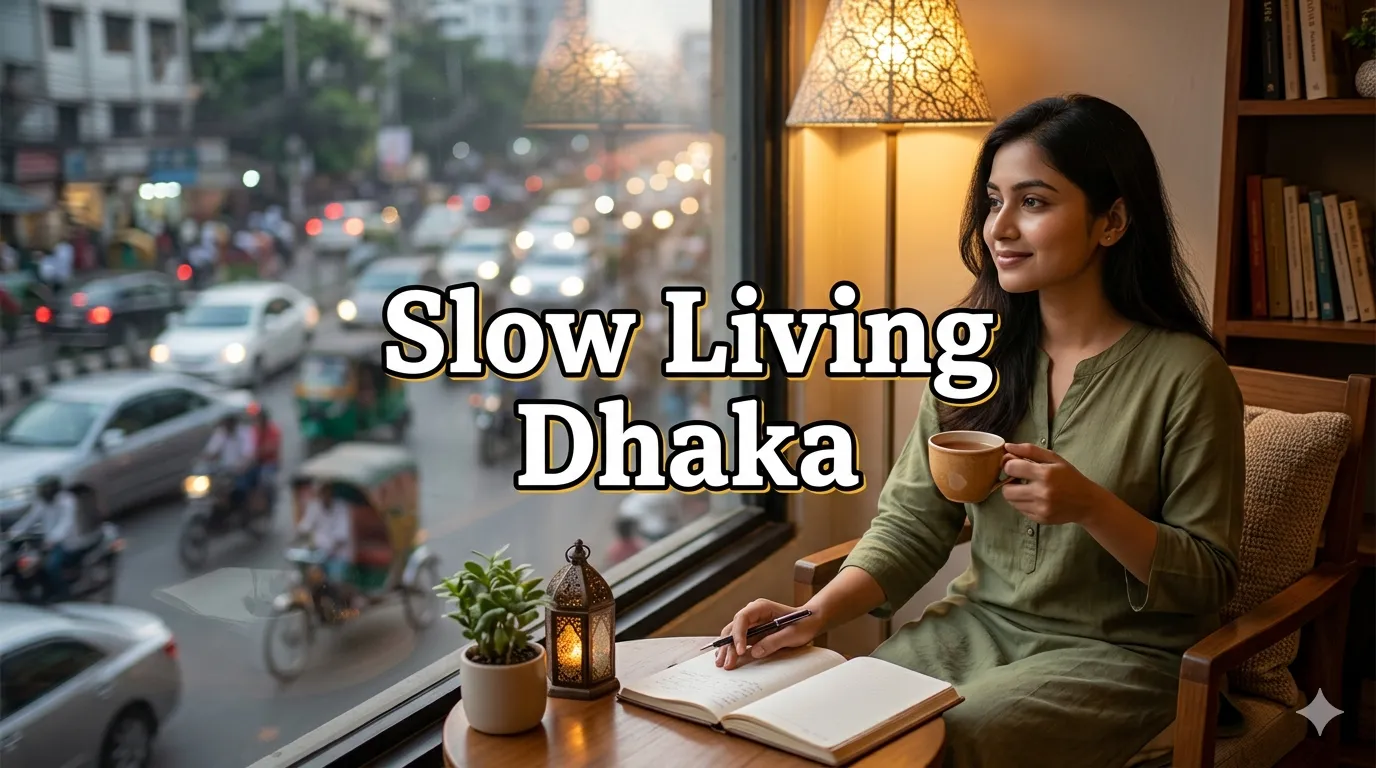
Dhaka. The name alone evokes a sensory overload for anyone who lives here. The relentless honking of CNGs, the gridlock traffic that turns a five-kilometer commute into a two-hour ordeal, the dense crowds at New Market or Gulshan, and the ever-present haze of pollution. Living in Dhaka often feels like being on a treadmill set to maximum speed—you run just to stay in place. In this fast-paced, hyper-connected metropolis, the idea of slow living might seem like a luxury reserved for the wealthy or a fantasy impossible to achieve. But what if slowing down wasn't about escaping the city, but rather changing how you move through it?
The art of slow living in Dhaka isn't about rejecting modernity or moving to a rural village. It's about intentionality. It's about carving out moments of stillness amidst the chaos, choosing quality over quantity, and reclaiming your time from the relentless demands of urban life. It's about finding a quiet corner in a noisy cafe, taking a mindful walk in Ramna Park instead of scrolling through social media during your break, or cooking a traditional meal instead of ordering fast food. It is a radical act of self-preservation in a city that constantly demands more of your energy.
This comprehensive guide explores how to practice slow living specifically within the context of Dhaka life. We will navigate the unique challenges of the city—from traffic congestion to work culture—and provide practical, actionable strategies to find peace without leaving your home or job. You'll discover hidden green spaces, mindfulness techniques tailored for small apartments, ways to detox digitally, and how to build a community that values presence over productivity. Whether you're a corporate professional burning out in Motijheel, a student overwhelmed in Nilkhet, or a parent juggling responsibilities in Dhanmondi, this guide will help you find stillness in the chaos.
Understanding Slow Living: What It Is and What It Isn't
Before diving into practical steps, it's crucial to debunk the myths surrounding slow living. In a city like Dhaka, where hustle culture is often worn as a badge of honor, slowing down can be misunderstood as laziness or lack of ambition.
Slow Living Is Not Laziness
There is a common misconception that slow living means doing nothing. In reality, it means doing things with purpose. It's not about abandoning your career or responsibilities; it's about approaching them with focus and presence rather than frantic multitasking. In Dhaka's competitive job market, this might mean setting boundaries on work hours, saying no to unnecessary meetings, or taking a proper lunch break instead of eating at your desk.
It's Not About Escaping the City
Many believe that to live slowly, you must leave Dhaka for a quiet village in Sylhet or the hills of Bandarban. While nature retreats are beneficial, slow living is primarily a mindset that can be practiced anywhere. You can practice mindfulness while stuck in a traffic jam at Farmgate. You can find stillness on a crowded bus by focusing on your breath. The goal is to cultivate inner peace regardless of external circumstances.
It's Not Expensive
The wellness industry often markets slow living as a luxury—expensive yoga retreats, organic imported food, or high-end meditation apps. However, true slow living in Dhaka is accessible. It's about drinking tea at a local stall instead of an expensive cafe, walking in a public park instead of going to a gym, or cooking simple local meals like khichuri instead of ordering expensive delivery. It's about simplifying, not spending.
The Core Principles of Slow Living
To practice slow living effectively, keep these core principles in mind:
- Intentionality: Make conscious choices about how you spend your time and energy.
- Presence: Focus on the current moment rather than worrying about the future or regretting the past.
- Connection: Prioritize meaningful relationships over superficial networking.
- Sustainability: Choose habits that are sustainable for your mental and physical health in the long run.
- Simplicity: Reduce clutter, both physical and mental, to create space for what matters.
The Dhaka Context: Unique Challenges to Slow Living
Practicing slow living in Dhaka comes with specific hurdles that you won't find in quieter cities. Acknowledging these challenges is the first step to overcoming them.
Traffic and Commuting Stress
Dhaka's traffic is legendary for its congestion. Spending hours commuting can drain your energy before your day even begins. The frustration of being stuck in a jam near Mohakhali or Karwan Bazar can trigger stress responses that linger throughout the day.
Slow Living Approach: Reframe commute time as "me time." Listen to audiobooks, podcasts, or calming music instead of news. Practice breathing exercises while waiting. If possible, adjust work hours to avoid peak traffic, or explore remote work options.
Noise Pollution
From construction work to loudspeakers and traffic horns, noise is constant in Dhaka. This sensory overload makes it difficult to find mental quiet.
Slow Living Approach: Invest in noise-canceling headphones for work or relaxation. Create a quiet corner in your home using heavy curtains or rugs to dampen sound. Schedule specific "quiet hours" where devices are turned off.
Work Culture and Expectations
The corporate culture in Dhaka often glorifies overworking. Late nights, weekend calls, and constant availability are common expectations. This makes it hard to disconnect and recharge.
Slow Living Approach: Set clear boundaries. Communicate your availability clearly to colleagues. Prioritize tasks so you can leave on time. Remember that rest is productive—it prevents burnout and improves long-term performance.
Urban Density and Lack of Space
Living in small apartments with limited personal space can feel claustrophobic. Finding a private spot for relaxation can be challenging in joint families or shared accommodations.
Slow Living Approach: Create a small sanctuary, even if it's just a corner of a room with a comfortable chair and a plant. Utilize rooftops or balconies early in the morning or late at night when the city is quieter.
Digital Overload
Dhaka is highly connected, with high smartphone penetration. Social media, news apps, and work messages create a constant stream of notifications that disrupt focus and peace.
Slow Living Approach: Implement digital detox periods. Turn off non-essential notifications. Designate phone-free zones in your home, such as the bedroom or dining table.
Creating a Slow Morning Routine in Dhaka
How you start your day sets the tone for everything that follows. In Dhaka, mornings are often rushed, leading to a reactive rather than proactive day. A slow morning routine can anchor you.
Wake Up Before the Rush
Try to wake up 30-60 minutes before the household wakes up or before the traffic peaks. This quiet time is precious. Use it for yourself, not for checking emails or social media.
Activity Ideas:
- Hydration: Drink a glass of water immediately to rehydrate.
- Movement: Do gentle stretching or yoga on your balcony or floor.
- Mindfulness: Spend 5-10 minutes meditating or practicing deep breathing.
- Journaling: Write down three things you're grateful for or set intentions for the day.
Mindful Breakfast
Instead of grabbing paratha on the go or skipping breakfast, sit down to eat. Even if it's simple—like rutti with tea or eggs—eat without distractions. No phone, no TV. Focus on the taste and texture of the food.
Local Tip: Embrace traditional breakfasts like chira doi or simple dal bhat which are lighter and easier to digest than heavy fried foods, helping you feel energized rather than sluggish.
Prepare the Night Before
Morning rush often stems from disorganization. Lay out your clothes, pack your bag, and prepare lunch the night before. This reduces decision fatigue and stress in the morning.
Finding Green Spaces: Nature in the Concrete Jungle
Access to nature is crucial for mental well-being. While Dhaka is densely built, there are pockets of greenery where you can reconnect with nature.
Ramna Park
Located in the heart of the city, Ramna Park is a sanctuary of trees and lakes. Walking here early in the morning or late in the evening can be incredibly restorative.
Slow Living Tip: Leave your phone in your bag. Walk without a destination. Observe the birds, the trees, and the light filtering through the leaves.
Suhrawardy Udyan
Another large open space in the city center. It's great for evening walks. The open sky helps you feel less confined by the surrounding buildings.
Botanical Garden and Zoo (Mirpur)
If you live in the northern part of the city, the Botanical Garden offers extensive greenery. It's less crowded on weekdays. Spending an hour here on a weekend can reset your nervous system.
Roof Gardens and Balconies
If you can't travel to a park, bring nature to you. Growing plants on your balcony or roof creates a personal green sanctuary. Tending to plants is a mindful activity that grounds you.
Plants to Grow: Money plant, snake plant, or local herbs like mint and basil. They are low maintenance and purify the air.
University Campuses
Areas like DU (Dhaka University) and BUET have lush campuses. While access might be restricted sometimes, peripheral areas often offer quiet walks under old trees.
Mindfulness Practices for Busy Dhakaites
You don't need to retreat to a meditation center to practice mindfulness. Integrate these practices into your daily routine.
Commute Meditation
Turn your traffic jam into a meditation session. Instead of honking or getting angry, focus on your breath.
Technique: Inhale for 4 counts, hold for 4, exhale for 4. Repeat. Notice the tension in your shoulders and release it. This transforms wasted time into self-care time.
Mindful Eating
Dhaka's food culture is rich, but we often eat while working or watching TV. Practice eating one meal a day mindfully.
How to: Put away distractions. Chew slowly. Notice the spices, the texture, the temperature. Express gratitude for the food. This improves digestion and satisfaction.
The 5-4-3-2-1 Grounding Technique
When feeling overwhelmed by the city's chaos, use this technique to ground yourself:
- 5: Acknowledge 5 things you see around you.
- 4: Acknowledge 4 things you can touch.
- 3: Acknowledge 3 things you hear.
- 2: Acknowledge 2 things you can smell.
- 1: Acknowledge 1 thing you can taste.
This brings your focus back to the present moment.
Breathwork Breaks
Take 2-minute breathing breaks during work. Step away from your screen. Close your eyes. Breathe deeply. This resets your focus and reduces stress hormones.
Digital Detox: Reclaiming Your Attention
In Dhaka, smartphones are ubiquitous. Constant connectivity leads to mental fatigue. A digital detox is essential for slow living.
Set Boundaries with Technology
Notification Audit: Turn off notifications for non-essential apps (social media, games, news). Keep only calls and messages from close family.
Screen-Free Zones: Designate the bedroom as a phone-free zone. Buy a traditional alarm clock instead of using your phone.
App Limits: Use screen time settings to limit usage of social media apps to 30 minutes a day.
The Weekend Detox
Try to disconnect for a few hours on the weekend. Spend time with family, read a physical book, cook, or walk without your phone.
Challenge: Try a "No Social Media Sunday." Notice how your mood and focus improve.
Curate Your Feed
If you use social media, curate your feed to inspire rather than depress. Unfollow accounts that make you feel inadequate. Follow accounts that promote mindfulness, art, or nature.
Slow Food: Embracing Traditional Cuisine
Fast food is convenient but often unhealthy and disconnected from our culture. Slow food is about enjoying traditional, home-cooked meals.
Cooking as Meditation
Cooking doesn't have to be a chore. Treat it as a creative process. Chop vegetables mindfully. Smell the spices as they toast. Enjoy the process of creating nourishment.
Local and Seasonal Ingredients
Buy vegetables from local markets (kacha bazar) instead of supermarkets. Seasonal produce tastes better and supports local farmers. Ingredients like spinach, pumpkin, and lentils are staples of Bangladeshi cuisine and are highly nutritious.
Shared Meals
Eat together as a family whenever possible. In Dhaka's busy life, dinner might be the only time everyone is together. Make it count. No phones at the table. Talk about your day.
Reduce Food Waste
Slow living involves respecting resources. Plan meals to avoid waste. Use leftovers creatively. Compost organic waste if you have space.
Building a Slow Community
Slow living is easier when you have support. Surround yourself with people who value presence over productivity.
Find Like-Minded Friends
Seek out friends who enjoy quiet activities—reading, walking, cooking—rather than just partying or shopping. Quality of friendships matters more than quantity.
Join Wellness Groups
Dhaka has a growing community of yoga practitioners, meditation groups, and book clubs. Joining these can provide structure and community support.
Examples: Look for yoga studios in Gulshan or Dhanmondi, or book clubs at libraries or cafes.
Practice Adda the Slow Way
Adda (casual conversation) is a core part of Bangladeshi culture. Instead of rushing adda, make it intentional. Meet at a quiet spot. Talk about meaningful topics. Listen deeply.
Work-Life Balance in Dhaka's Corporate Culture
Achieving balance in Dhaka's demanding work environment is challenging but necessary.
Set Clear Boundaries
Define your work hours. If you work 9-6, try not to check emails after 7 PM. Communicate this to your team. Protect your personal time.
Take Your Leave
Many professionals in Dhaka accumulate leave days without using them. Take your annual leave. Use it to rest, travel, or spend time with family. You are not a machine.
Prioritize Tasks
Use the Eisenhower Matrix to prioritize tasks. Focus on what's important, not just what's urgent. Delegate when possible.
Learn to Say No
You don't have to attend every event or take on every project. Saying no to non-essential tasks creates space for what matters.
Creating a Calm Home Environment
Your home should be a sanctuary from the city's chaos. Design your space to promote relaxation.
Declutter
Clutter creates mental noise. Go through your belongings and donate or discard what you don't need. A tidy space promotes a tidy mind.
Lighting
Use warm, soft lighting in the evenings instead of harsh tube lights. Candles or lamps can create a cozy atmosphere.
Scent
Use natural scents like incense (dhup), essential oils, or fresh flowers. Avoid synthetic air fresheners. Scents like sandalwood or lavender are calming.
Quiet Corner
Designate a specific spot for relaxation. A chair, a cushion, a bookshelf. Make it inviting. This is your retreat within your home.
Weekend Rituals for Restoration
Weekends should be for restoration, not just catching up on chores.
Saturday Morning Slow Start
Don't set an alarm. Wake up naturally. Enjoy a leisurely breakfast. Read the newspaper or a book.
Nature Outings
Visit a park, the riverfront (Buriganga), or a nearby garden. Spend time outdoors without a strict schedule.
Creative Hobbies
Engage in hobbies that don't involve screens. Painting, writing, gardening, or cooking. Creativity is restorative.
Rest Without Guilt
Napping is acceptable. Resting is productive. Don't feel guilty for taking a break. Your body and mind need it.
Overcoming Guilt and Social Pressure
Choosing slow living in a fast-paced society can attract criticism. People might call you lazy or unambitious.
Reframe the Narrative
Remind yourself that rest is essential for performance. You are not lazy; you are recharging. Your health is your greatest asset.
Lead by Example
When people see you calm, focused, and happy despite working less hours, they may start to question their own hustle. You inspire change by living differently.
Find Your Why
Connect with your deeper reason for slowing down. Is it for your health? Your family? Your peace? When your why is strong, external opinions matter less.
Frequently Asked Questions
Is slow living possible in Dhaka given the traffic and pollution?
Yes, but it requires adaptation. You can't control the traffic, but you can control your reaction to it. Use commute time for mindfulness. Create a clean, quiet space at home with air purifiers or plants. Focus on what you can control within your immediate environment.
How do I start slow living if I have a demanding job?
Start small. You don't need to quit your job. Begin with one habit, like a 10-minute morning meditation or a phone-free dinner. Gradually introduce more slow practices as you feel comfortable. Boundaries at work are key.
Does slow living mean I can't use technology?
No. Technology is a tool. Slow living means using technology intentionally rather than letting it use you. Use apps for meditation or learning, but limit mindless scrolling. It's about balance.
Is slow living expensive in Dhaka?
Not necessarily. Many slow living practices are free—walking, breathing, cooking at home, reading library books. It's more about mindset than money. Avoid consumerist traps that suggest you need to buy expensive wellness products to live slowly.
How do I deal with family who don't understand slow living?
Communicate your needs gently. Explain that this helps you be a better family member by reducing stress. Invite them to join you in some activities, like a family walk or a phone-free meal. Show them the benefits through your behavior.
Conclusion: Your Journey to Stillness Starts Now
Living in Dhaka doesn't have to mean living in a constant state of stress. The art of slow living is available to you, right here, right now, amidst the noise and the rush. It begins with a single choice: to pause. To breathe. To choose presence over productivity.
You don't need to wait for a weekend getaway to Sylhet or a vacation in Cox's Bazar to find peace. You can find it in your morning tea, in your commute, in your interactions with loved ones. By integrating these slow living practices into your Dhaka life, you reclaim your time, your energy, and your well-being.
Start today. Put down your phone. Take a deep breath. Look around you. Notice the light, the sounds, the moment. You are here. You are alive. And that is enough.
The chaos of Dhaka will continue. The traffic will still jam. The city will still rush. But you don't have to. You can be the stillness in the storm. You can live slowly, even in a fast city. Your peace is worth protecting.