

Bacne Treatment: Clinical Protocol to Clear Body Acne Fast
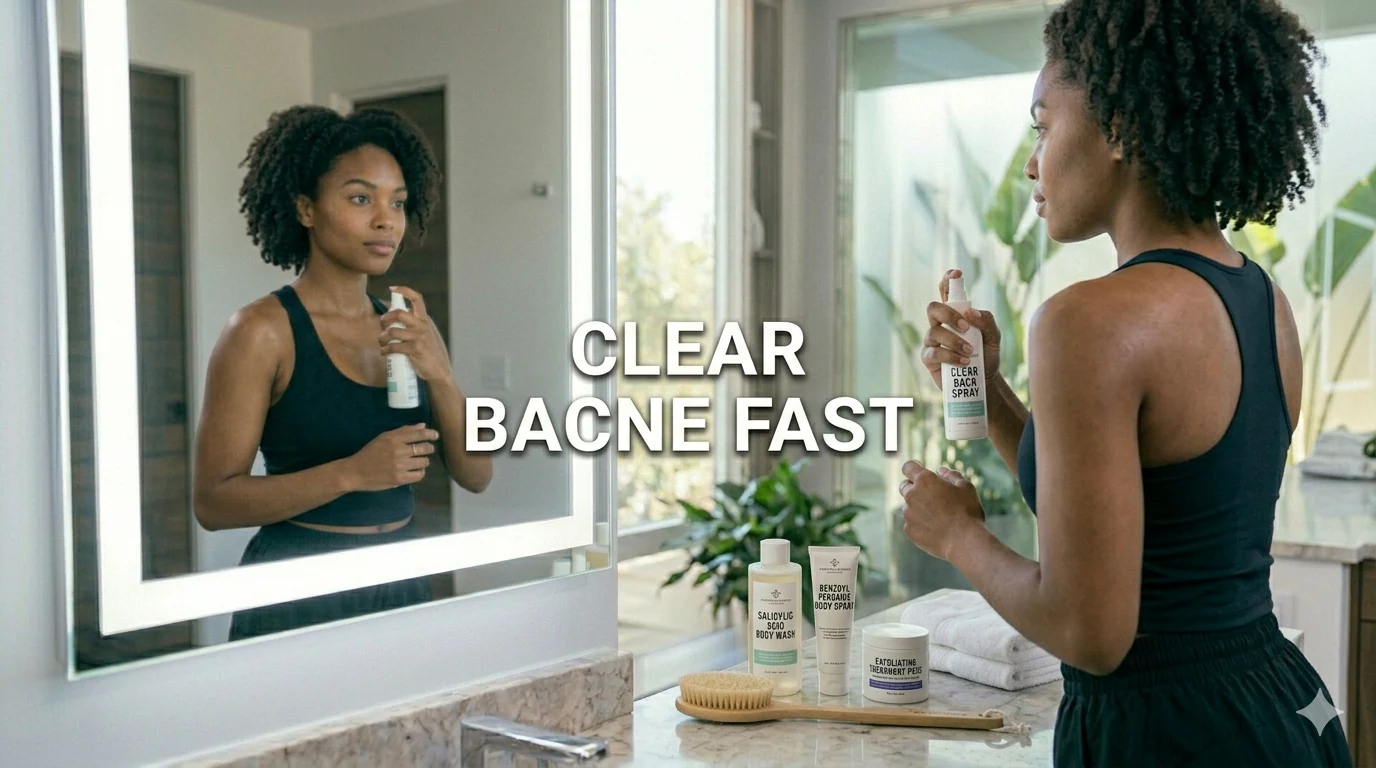
Back acne—commonly called bacne—is more than just an occasional breakout. It's a frustrating condition that affects up to 50% of people who experience facial acne, and it can persist well into adulthood. Unlike facial acne, bacne presents unique challenges: harder-to-reach areas, thicker skin, more sweat and friction, and clothing that traps oil and bacteria. But with the right clinical protocol, you can clear body acne faster than you think.
The good news? Body acne responds well to targeted treatment when you use the right combination of ingredients, hygiene practices, and lifestyle adjustments. Dermatologists recommend a multi-pronged approach that includes medicated cleansers, leave-on treatments, proper shower techniques, breathable clothing, and sometimes prescription interventions for stubborn cases. The key is consistency and using products formulated specifically for the thicker skin on your body.
In this comprehensive, dermatologist-informed guide, we'll decode the science behind body acne, reveal the exact clinical protocol for clearing bacne and chest acne quickly, share the most effective ingredients and products, and provide expert strategies for preventing recurrence. Whether you're dealing with occasional breakouts or persistent cystic acne on your back, shoulders, or chest, you'll learn how to build a personalized treatment plan that delivers visible results—without scarring or endless trial and error.
Understanding Body Acne: Why Bacne Happens
Short answer: Bacne occurs when hair follicles on the back, chest, and shoulders become clogged with oil, dead skin cells, and bacteria—triggered by hormones, sweat, friction, genetics, and environmental factors unique to body skin.
Body acne forms through the same basic mechanism as facial acne, but several factors make it more challenging to treat:
The Anatomy of Body Breakouts
Your back, chest, and shoulders have some of the highest concentrations of sebaceous (oil) glands on your body. When these glands produce excess sebum combined with:
- Dead skin cell buildup: Slower cell turnover on body skin leads to clogged pores
- Bacteria (C. acnes): Proliferates in clogged, oily follicles causing inflammation
- Hormonal fluctuations: Androgens stimulate oil production, especially during puberty, menstrual cycles, or stress
The result: whiteheads, blackheads, papules, pustules, or painful cystic nodules.
Why Bacne Is Different From Facial Acne
- Thicker skin: Body skin is 2-3x thicker than facial skin, requiring stronger concentrations of active ingredients
- Harder to treat: Difficult to reach and apply products evenly
- More friction: Clothing, backpacks, sports equipment, and seatbacks create constant irritation
- Increased sweat: Body accumulates more sweat and bacteria throughout the day
- Slower healing: Body skin has different healing properties, making post-inflammatory hyperpigmentation (PIH) and scarring more common
Common Triggers Specific to Body Acne
Acne mechanica: Friction, pressure, and heat from tight clothing, sports gear, or backpacks trap sweat and bacteria against skin
Sweat accumulation: Delayed showering after workouts allows sweat, oil, and bacteria to clog pores
Hair products: Conditioners, oils, and styling products runoff onto back and shoulders, clogging pores (called "pomade acne")
Laundry detergent: Harsh chemicals or fabric softeners can irritate skin and worsen breakouts
Humidity and heat: Hot, humid environments increase sweat and oil production
The Clinical Bacne Treatment Protocol: Step-by-Step
Short answer: A clinical protocol for clearing bacne includes daily medicated cleansing with benzoyl peroxide or salicylic acid, leave-on treatments with retinoids or acids, proper shower timing, breathable clothing, and consistent sun protection—delivered systematically for 6-12 weeks.
Phase 1: Foundation (Weeks 1-2)
Goal: Establish hygiene habits and introduce active ingredients gradually
Daily Shower Protocol
- Shower immediately after sweating: Within 30 minutes of workouts or heavy sweating to prevent pore clogging
- Use lukewarm water: Hot water strips natural oils and triggers rebound oil production
- Medicated body wash: Apply benzoyl peroxide (4-10%) or salicylic acid (2%) body wash to affected areas
- Lather and leave on skin for 2-3 minutes before rinsing (contact time is critical)
- Use a long-handled brush or washcloth to reach entire back evenly
- Rinse thoroughly—residue can irritate skin
- Wash hair first: Shampoo and condition hair before washing body to prevent product runoff from clogging back pores
- Gentle pat dry: Don't rub—use clean towel and pat skin dry to avoid irritation
Post-Shower Treatment
- Apply leave-on treatment: While skin is slightly damp, apply:
- Benzoyl peroxide spray (5.3-10%) for inflammatory acne
- OR salicylic acid spray (2%) for blackheads and congestion
- Use long-handled applicator or ask for help reaching entire back
- Moisturize (if needed): Use lightweight, non-comedogenic body lotion if skin feels dry or tight
- Look for "oil-free" and "won't clog pores" labels
- Avoid heavy creams on acne-prone areas
Phase 2: Active Treatment (Weeks 3-8)
Goal: Intensify treatment with additional actives and address different acne types
Morning Routine
- Quick rinse or medicated wash: If very oily, use salicylic acid body wash; otherwise, water rinse is sufficient
- Apply treatment spray: Benzoyl peroxide or salicylic acid spray
- Lightweight moisturizer: If using retinoid at night, hydrate in morning
- Sunscreen on exposed areas: SPF 30+ on shoulders, chest, and back if wearing revealing clothing
- Use oil-free, non-comedogenic spray or gel formula
- Reapply every 2 hours if outdoors
Evening Routine
- Medicated body wash: Benzoyl peroxide or salicylic acid (alternate if using both)
- Wait 15-20 minutes: Allow skin to dry completely
- Apply retinoid (3-4x/week): Adapalene 0.1% gel or prescription tretinoin
- Apply thin layer to entire affected area, not just spots
- Start 2-3x/week, build to nightly as tolerated
- Don't combine with benzoyl peroxide same night (can inactivate retinoid)
- On non-retinoid nights: Continue benzoyl peroxide or salicylic acid spray
- Moisturize: Apply lightweight lotion if experiencing dryness or peeling
Weekly Additions
- Chemical exfoliation: Use glycolic acid or lactic acid body lotion 2-3x/week on non-retinoid nights
- Clay mask: Apply sulfur or clay mask to back 1x/week for deep cleansing
- Change bed sheets: Wash sheets and pillowcases 2x/week in fragrance-free detergent
Phase 3: Maintenance (Weeks 9+)
Goal: Prevent recurrence and maintain clear skin
- Continue medicated wash: 3-4x/week (can reduce from daily)
- Maintain retinoid: 2-3x/week for ongoing cell turnover
- Spot treat: Use benzoyl peroxide on new breakouts immediately
- Keep hygiene habits: Shower after sweating, wear breathable fabrics, wash sheets regularly
Best Ingredients for Clearing Body Acne
Short answer: The most effective bacne-fighting ingredients include benzoyl peroxide, salicylic acid, retinoids (adapalene, tretinoin), glycolic acid, sulfur, and niacinamide—each targeting bacteria, exfoliation, or inflammation.
Benzoyl Peroxide (2.5-10%)
- Mechanism: Kills C. acnes bacteria, reduces inflammation, and helps unclog pores by removing excess oil and dead skin cells
- Concentration: 2.5% is as effective as 10% with less irritation; start low and increase if needed
- Speed: Visible improvement in 4-6 weeks; full results at 8-12 weeks
- Best for: Inflammatory acne (red, painful pimples and cysts)
- Forms: Body wash (leave on 2-3 min), spray (leave-on treatment), cream
- Caution: Can bleach fabrics—use white towels and sheets; may cause dryness or peeling
- Evidence: Gold standard for inflammatory body acne; reduces bacteria by 99.9%
Salicylic Acid (BHA, 0.5-2%)
- Mechanism: Oil-soluble beta hydroxy acid penetrates pores to dissolve sebum and dead skin; anti-inflammatory properties
- Concentration: 2% for body (higher than facial products due to thicker skin)
- Speed: 2-4 weeks for blackheads and congestion; 6-8 weeks for inflammatory acne
- Best for: Blackheads, whiteheads, and mild inflammatory acne
- Forms: Body wash, spray, lotion, pads
- Advantage: Less drying than benzoyl peroxide; can be used daily
- Evidence: Effective for comedonal acne; penetrates oil-filled pores better than AHAs
Adapalene (Differin, 0.1-0.3%)
- Mechanism: Third-generation retinoid that normalizes cell turnover, prevents clogged pores, and reduces inflammation
- Availability: 0.1% OTC; 0.3% prescription
- Speed: 8-12 weeks for visible results; full effect at 12-16 weeks
- Best for: All acne types; excellent for prevention and long-term maintenance
- Forms: Gel (best for oily skin), cream (for dry/sensitive)
- Advantage: More stable and less irritating than tretinoin; can be used with benzoyl peroxide (apply at different times)
- Caution: Causes initial purging (4-6 weeks); increases sun sensitivity—use SPF
- Evidence: FDA-approved for acne; as effective as prescription retinoids with better tolerability
Glycolic Acid (AHA, 5-15%)
- Mechanism: Water-soluble alpha hydroxy acid exfoliates surface skin, improves texture, and helps fade post-acne marks
- Concentration: 5-10% for daily use; 10-15% for weekly treatment
- Speed: 4-6 weeks for smoother texture; 8-12 weeks for hyperpigmentation
- Best for: Rough texture, post-inflammatory hyperpigmentation (PIH), dull skin
- Forms: Body lotion, toner, peel pads
- Advantage: Improves both active acne and marks; enhances penetration of other products
- Caution: Increases sun sensitivity; can sting on active breakouts
Sulfur (3-10%)
- Mechanism: Dries out excess oil, kills bacteria, and gently exfoliates dead skin cells
- Concentration: 3-5% for sensitive skin; 5-10% for oily/resilient skin
- Speed: 2-4 weeks for drying active breakouts
- Best for: Oily skin, inflammatory acne, as spot treatment
- Forms: Mask, wash, spot treatment
- Advantage: Gentle alternative for sensitive skin; anti-inflammatory
- Caution: Distinctive odor; can be drying
Niacinamide (2-5%)
- Mechanism: Reduces inflammation, regulates oil production, and strengthens skin barrier
- Speed: 4-8 weeks for reduced redness and oil control
- Best for: Red, inflamed acne; oily skin; sensitive skin types
- Forms: Body lotion, serum
- Advantage: Well-tolerated; can be combined with other actives
- Evidence: Studies show 4% niacinamide reduces inflammatory lesions by 50% in 8 weeks
Professional Treatments for Stubborn Bacne
Short answer: For moderate to severe bacne unresponsive to OTC treatments, professional options include prescription retinoids, oral antibiotics, hormonal therapy, chemical peels, laser treatments, and cortisone injections for cystic lesions.
Prescription Topicals
- Tretinoin (Retin-A, 0.025-0.1%): Stronger than adapalene; gold standard retinoid for acne
- Clindamycin + Benzoyl Peroxide: Combination therapy reduces bacteria and prevents antibiotic resistance
- Dapsone gel (5-7.5%): Anti-inflammatory; effective for inflammatory acne, especially in women
- Tazarotene: Most potent topical retinoid; for severe, resistant acne
Oral Medications
Oral Antibiotics (Doxycycline, Minocycline, Sarecycline)
- Mechanism: Reduce C. acnes bacteria and inflammation systemically
- Duration: 3-6 months maximum to prevent antibiotic resistance
- Best for: Moderate to severe inflammatory acne
- Caution: Sun sensitivity (especially doxycycline); GI upset; not for long-term use
Hormonal Therapy (For Women)
- Birth control pills: Regulate androgens that trigger oil production; FDA-approved options include Ortho Tri-Cyclen, Yaz, Estrostep
- Spironolactone (50-200mg/day): Anti-androgen that blocks testosterone's effect on oil glands
- Speed: 3-6 months for full effect
- Best for: Hormonal acne (jawline, cyclical breakouts)
- Caution: Requires monitoring; not safe during pregnancy
Isotretinoin (Accutane)
- Mechanism: Shrinks oil glands, normalizes cell turnover, reduces bacteria, and decreases inflammation
- Efficacy: 85-90% clearance rate; often permanent remission
- Duration: 5-6 months course
- Best for: Severe, cystic, scarring acne unresponsive to other treatments
- Caution: Requires strict monitoring (iPledge program); teratogenic (causes birth defects); side effects include dryness, mood changes, elevated lipids
In-Office Procedures
Cortisone Injections
- How it works: Diluted corticosteroid injected directly into cystic lesions
- Speed: Reduces size and pain within 24-48 hours
- Best for: Large, painful cysts before events
- Frequency: As needed for individual lesions
Chemical Peels (Body Peels)
- Types: Salicylic acid (20-30%), glycolic acid (30-70%), or Jessner's solution
- Frequency: Every 3-4 weeks for 3-6 sessions
- Best for: Moderate acne, texture, hyperpigmentation
- Downtime: 3-7 days of peeling
Laser and Light Therapies
- Blue light therapy: Kills C. acnes bacteria; 2-3 sessions/week for 4 weeks
- PDL (Pulsed Dye Laser): Reduces inflammation and redness
- Nd:YAG laser: Targets oil glands; reduces sebum production
- Best for: Inflammatory acne; patients who can't tolerate medications
- Cost: $200-600 per session; usually not covered by insurance
Common Mistakes That Worsen Bacne
Avoid these errors that can sabotage your progress:
Mistake #1: Not Leaving Medicated Wash on Long Enough
Why it hurts: Benzoyl peroxide and salicylic acid need 2-3 minutes of contact time to penetrate pores and kill bacteria. Rinsing immediately renders them ineffective.
Fix: Apply wash, lather, and leave on skin while you wash hair or shave. Set a timer if needed. Then rinse thoroughly.
Mistake #2: Picking or Squeezing Body Acne
Why it hurts: Picking spreads bacteria, increases inflammation, and dramatically raises risk of scarring and hyperpigmentation—especially on the back where skin heals slower.
Fix: Keep hands off. Use hydrocolloid patches on accessible areas. For cysts, see a dermatologist for cortisone injection.
Mistake #3: Wearing Tight, Non-Breathable Fabrics
Why it hurts: Synthetic fabrics trap sweat, oil, and bacteria against skin, creating perfect conditions for breakouts (acne mechanica).
Fix: Wear loose, breathable cotton or moisture-wicking fabrics. Change out of sweaty clothes immediately after workouts.
Mistake #4: Using Heavy Body Butters or Oils
Why it hurts: Coconut oil, cocoa butter, and heavy creams can clog pores on acne-prone areas, worsening breakouts.
Fix: Use "non-comedogenic," "oil-free," or "won't clog pores" labeled products on back, chest, and shoulders.
Mistake #5: Skipping Moisturizer
Why it hurts: Over-drying skin triggers rebound oil production and compromises barrier function, leading to more inflammation and breakouts.
Fix: Use lightweight, non-comedogenic moisturizer even on oily skin. Hydrated skin heals faster and tolerates actives better.
Mistake #6: Washing Hair After Body
Why it hurts: Conditioner and hair oils runoff onto clean back, clogging freshly washed pores.
Fix: Wash and condition hair first, then wash body last to remove any product residue.
Mistake #7: Expecting Overnight Results
Why it hurts: Impatience leads to over-treating, switching products too frequently, or giving up before treatments have time to work.
Fix: Commit to 8-12 weeks of consistent routine before evaluating results. Take monthly photos to track progress objectively.
Expert Tips for Faster Bacne Clearance
Tip #1: Use a Long-Handled Applicator
Invest in a back scrubber, long-handled brush, or spray applicator to ensure even product distribution across entire back. Uneven application leaves untreated areas where breakouts continue.
Tip #2: Layer Actives Strategically
Use benzoyl peroxide wash in morning, salicylic acid spray post-shower, and retinoid at night (on alternate nights from BP). This maximizes efficacy without over-irritating.
Tip #3: Protect Bedding
Benzoyl peroxide bleaches fabrics. Use white sheets and towels, or wear an old white t-shirt to bed if applying overnight treatments.
Tip #4: Shower Temperature Matters
Use lukewarm water, not hot. Hot water strips natural oils and triggers inflammation. Finish with cool rinse to close pores and reduce redness.
Tip #5: Treat Preventively
Apply treatment to entire affected area, not just visible breakouts. This prevents new acne from forming and treats microcomedones (invisible precursors).
Tip #6: Manage Stress
Stress elevates cortisol, which increases oil production and inflammation. Practice stress-reduction techniques (exercise, meditation, sleep) to support clear skin.
Tip #7: Watch Your Diet
Some studies link high-glycemic foods and dairy to increased acne. If breakouts persist, try reducing sugar, white bread, and skim milk for 4-6 weeks while monitoring changes.
Frequently Asked Questions About Bacne Treatment
How long does it take to clear bacne?
Short answer: With consistent treatment, you'll see initial improvement in 4-6 weeks, significant clearing in 8-12 weeks, and optimal results at 3-6 months. Severe or cystic acne may take 6-12 months.
Timeline depends on:
- Severity (mild vs. cystic)
- Treatment consistency
- Skin type and healing rate
- Whether you're using OTC or prescription treatments
Can I use facial acne products on my back?
Short answer: You can, but body skin is thicker and often requires higher concentrations. Facial products may be too weak or too expensive for large body areas. Use products specifically formulated for body acne when possible.
Exception: Adapalene gel works well on both face and body.
Should I exfoliate bacne?
Short answer: Yes—but use chemical exfoliants (salicylic acid, glycolic acid), not physical scrubs. Scrubs can irritate active acne and spread bacteria. Chemical exfoliation 2-3x/week helps unclog pores and smooth texture.
Why is my bacne getting worse?
Short answer: Common reasons include: initial purging from retinoids (normal, lasts 4-6 weeks), over-drying skin, using comedogenic products, not treating consistently, hormonal changes, or underlying triggers like friction or diet.
If worsening continues beyond 6-8 weeks, see a dermatologist to adjust your protocol.
Can bacne cause scarring?
Short answer: Yes—body acne is actually more prone to scarring than facial acne because back skin is thicker and heals differently. Cystic acne carries highest scarring risk.
Prevention: Treat early, don't pick, use retinoids to prevent clogs, and see a dermatologist for cystic lesions (cortisone injections prevent scarring).
Is bacne hormonal?
Short answer: It can be. Hormonal fluctuations (puberty, menstrual cycles, PCOS, stress) increase androgens that stimulate oil production. Hormonal bacne often appears on lower back, chest, and shoulders and worsens cyclically.
If you suspect hormonal acne, discuss options like birth control or spironolactone with a dermatologist.
When should I see a dermatologist for bacne?
Short answer: See a dermatologist if:
- OTC treatments haven't improved acne after 8-12 weeks
- You have painful, cystic, or scarring acne
- Bacne affects your quality of life or self-esteem
- You suspect hormonal causes
- You want faster results with prescription treatments
The Bottom Line: Clear Skin Is Within Reach
Bacne doesn't have to control your life or limit your clothing choices. With a systematic clinical protocol—medicated cleansing, targeted leave-on treatments, proper hygiene, and lifestyle adjustments—you can clear body acne and maintain smooth, confident skin.
Remember:
- Consistency is key: Daily habits matter more than perfect products
- Be patient: Skin renewal takes 8-12 weeks minimum
- Treat preventively: Apply actives to entire area, not just spots
- Protect your skin: Don't pick, wear breathable fabrics, shower after sweating
- Escalate when needed: If OTC fails, prescription treatments work
- You're not alone: Bacne affects millions—help is available
Start tonight: medicated wash, leave-on treatment, clean sheets, breathable sleepwear. Commit to 8 weeks. Take progress photos. And trust that with consistent care, your clearest skin is ahead.
You deserve to feel confident in your own skin. With the right protocol and patience, bacne can become a thing of the past.