

Future Smartphone Cameras: AI, Sensors and Computational Photo
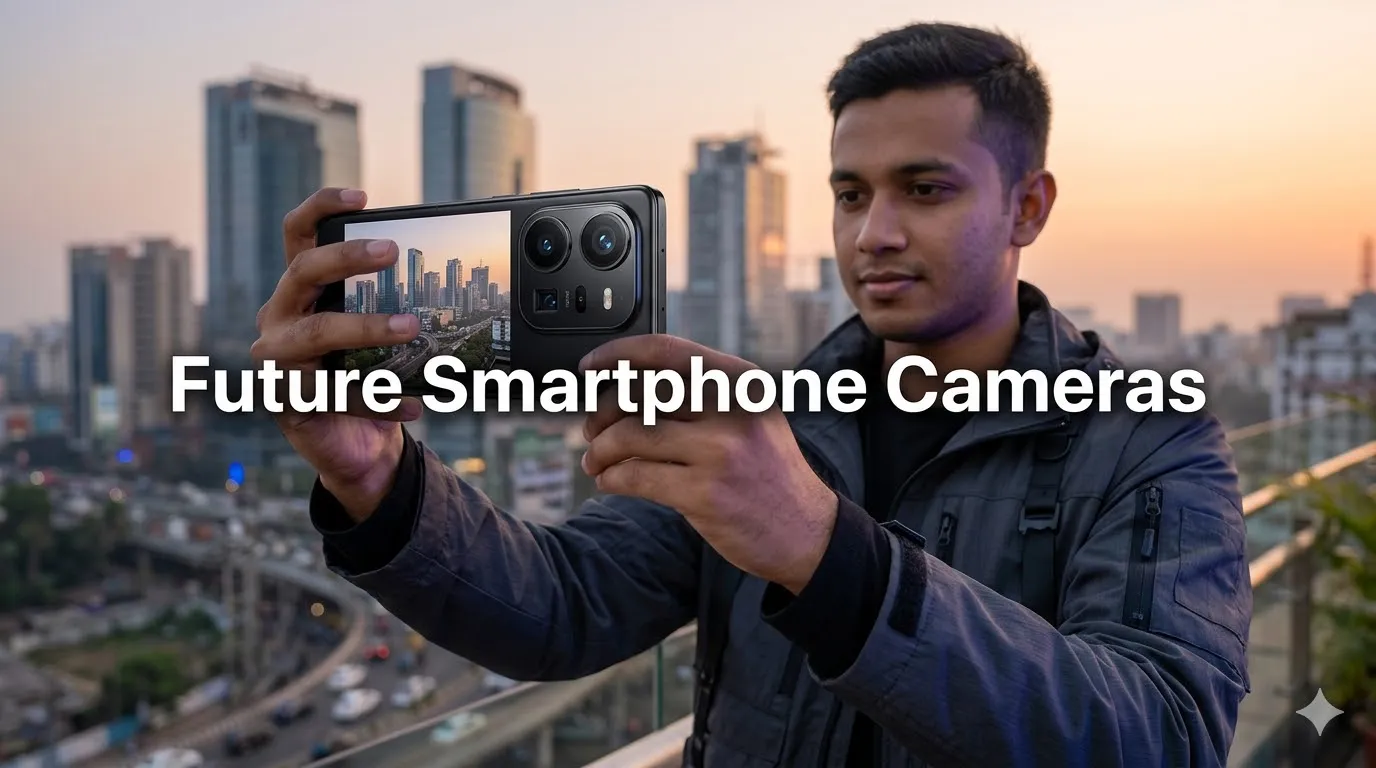
The Smartphone Camera Revolution: Where We Are in 2026
Smartphone cameras have undergone a remarkable transformation over the past decade. What began as simple, low-resolution sensors for casual snapshots has evolved into sophisticated imaging systems that rival dedicated cameras in many scenarios. As we navigate through 2026, the convergence of artificial intelligence, advanced sensor technology, and computational photography is pushing mobile photography into unprecedented territory.
Today's flagship smartphones don't just capture images—they interpret scenes, enhance details, correct flaws, and even generate content that wasn't physically present in the original frame. This isn't science fiction; it's the reality of modern smartphone photography, powered by technologies that were unimaginable just a few years ago.
Why smartphone cameras matter now more than ever:
- Accessibility: Billions of people carry powerful cameras in their pockets daily
- Instant sharing: Photos can be edited, enhanced, and shared globally in seconds
- AI integration: Intelligent processing makes great photography accessible to everyone
- Hardware innovation: Sensors, lenses, and processors continue to advance rapidly
- Creative potential: New computational techniques unlock artistic possibilities previously reserved for professionals
This comprehensive guide explores the cutting-edge technologies shaping the future of smartphone cameras, from AI-powered image processing to revolutionary sensor designs and the computational photography techniques that tie it all together.
Artificial Intelligence: The Brain Behind Modern Smartphone Photography
Artificial intelligence has become the invisible engine driving smartphone camera innovation. Unlike traditional cameras that simply record light, AI-enabled smartphones analyze, interpret, and enhance every image in real-time.
How AI transforms smartphone photography:
Scene Recognition and Optimization
Modern smartphone cameras use machine learning models trained on millions of images to instantly recognize scenes and subjects. When you point your phone at a sunset, a portrait, or a plate of food, the AI identifies the scenario and automatically adjusts settings for optimal results.
What AI detects and optimizes:
- Lighting conditions (backlit, low-light, harsh sunlight)
- Subject types (people, pets, food, landscapes, documents)
- Scene context (indoor, outdoor, night, macro)
- Composition elements (rule of thirds, leading lines, symmetry)
Based on this analysis, the camera adjusts exposure, white balance, focus priority, and processing algorithms—all before you even press the shutter button.
Computational Portrait Mode
Portrait mode, which creates that professional-looking background blur (bokeh), relies entirely on AI and computational photography. Smartphones don't have the large sensors and wide-aperture lenses of DSLRs, so they simulate depth of field through software.
How AI-powered portrait mode works:
- Depth mapping: AI analyzes multiple images or uses dedicated depth sensors to create a 3D map of the scene
- Subject segmentation: Machine learning models precisely identify and separate the subject from the background
- Edge refinement: AI smooths transitions between subject and background to avoid the "cutout" look
- Bokeh simulation: Algorithms generate realistic blur patterns that mimic optical lens characteristics
In 2026, these processes happen in milliseconds, with results that often surpass what was possible with optical systems just years ago.
AI-Enhanced Low-Light Photography
Night mode has become one of the most impressive demonstrations of AI in smartphone cameras. Instead of relying solely on larger sensors or wider apertures, smartphones use computational techniques to capture stunning low-light images.
The AI low-light workflow:
- Multi-frame capture: The camera takes dozens of exposures in rapid succession
- Alignment and stacking: AI aligns frames to compensate for hand movement and combines them to reduce noise
- Detail enhancement: Machine learning models recover details in shadows and highlights
- Color correction: AI adjusts white balance and saturation to maintain natural-looking colors in challenging light
The result: photos that appear to have been taken in daylight, even when the scene was nearly dark to the human eye.
Real-Time AI Editing and Enhancement
Beyond capture, AI is transforming post-processing. Many smartphones now apply intelligent edits automatically, or offer AI-powered tools that make professional-level editing accessible to everyone.
AI editing features in 2026:
- Smart HDR: Balances highlights and shadows automatically for dynamic range that matches human vision
- Object removal: AI identifies and seamlessly removes unwanted elements from photos
- Sky replacement: Machine learning detects skies and allows easy replacement with dramatic alternatives
- Face enhancement: Subtle AI adjustments improve skin tone, reduce blemishes, and enhance eyes—without the "over-processed" look
- Style transfer: Apply the aesthetic of famous photographers or artistic styles with a single tap
Generative AI and Computational Creativity
Perhaps the most controversial yet fascinating development is generative AI in smartphone cameras. Some 2026 flagships can now "fill in" missing details, extend backgrounds, or even generate entirely new elements based on context.
Examples of generative features:
- Outpainting: Extend the edges of a photo by generating plausible content beyond the original frame
- Detail synthesis: Enhance low-resolution areas by generating realistic high-frequency details
- Object generation: Add or modify elements in a scene while maintaining lighting and perspective consistency
While these capabilities raise important questions about authenticity and ethics, they also unlock creative possibilities previously unimaginable in mobile photography.
Sensor Technology: The Eyes of Smartphone Cameras
While AI handles the "brain" work, sensor technology forms the "eyes" of smartphone cameras. Advances in sensor design are enabling smaller devices to capture more light, resolve finer details, and perform better in challenging conditions.
Larger Sensors in Compact Bodies
One of the most significant trends is the steady increase in sensor size. Larger sensors capture more light, which translates to better low-light performance, reduced noise, and shallower depth of field.
2026 sensor developments:
- 1-inch type sensors: Now appearing in premium smartphones, offering DSLR-like light gathering in a pocketable device
- Stacked sensor designs: Layering circuitry behind the photodiodes increases light sensitivity without increasing size
- Global shutter technology: Captures the entire frame simultaneously, eliminating rolling shutter distortion in fast-moving scenes
- Quad-Bayer and Nonacell arrangements: Advanced pixel binning techniques that combine multiple pixels for better low-light performance while maintaining high resolution for detailed shots
Multi-Camera Arrays and Specialized Sensors
Modern smartphones don't rely on a single camera. Instead, they use arrays of specialized sensors, each optimized for different scenarios.
Typical 2026 smartphone camera array:
- Main wide sensor: High-resolution, large-pixel sensor for general photography
- Ultra-wide sensor: Captures expansive scenes with minimal distortion
- Periscope telephoto: Folded optics enable 5x-10x optical zoom in slim phone bodies
- Macro sensor: Dedicated close-up photography with extreme detail
- Depth sensor: Time-of-flight or structured light for accurate depth mapping
- Monochrome sensor: Captures luminance data for enhanced detail and low-light performance
AI seamlessly blends data from these sensors, selecting the best elements from each to create a single, optimized image.
Advanced Pixel Technology
Beyond sensor size, innovations at the pixel level are driving image quality improvements.
Key pixel advancements:
- Dual-gain pixels: Capture both bright and dark information simultaneously for exceptional dynamic range
- Backside illumination (BSI): Positions wiring behind the light-sensitive layer for improved light capture
- Micro-lens optimization: Focuses more light onto each pixel's sensitive area
- Color filter innovations: New filter arrays improve color accuracy and low-light sensitivity
Computational Sensor Fusion
The true power of modern smartphone cameras lies not in individual sensors, but in how AI combines data from multiple sources.
What sensor fusion enables:
- Super-resolution: Combining multiple frames to create images with higher effective resolution than any single sensor
- Extended dynamic range: Merging exposures to capture details in both bright highlights and deep shadows
- Motion compensation: Aligning and blending frames to eliminate blur from camera or subject movement
- Color consistency: Ensuring accurate, natural colors across all lenses and lighting conditions
Computational Photography: Software That Redefines Hardware Limits
Computational photography—the use of software algorithms to enhance or extend the capabilities of digital imaging—is perhaps the most transformative force in smartphone camera development. It allows small sensors and lenses to achieve results that would traditionally require much larger, more expensive equipment.
Multi-Frame Processing: The Foundation of Modern Smartphone Photography
Most "single" photos from smartphones are actually composites of dozens of frames captured in rapid succession.
How multi-frame processing works:
- Capture: When you press the shutter, the camera records a burst of images at different exposures and focus points
- Alignment: AI algorithms align frames to compensate for hand movement and subject motion
- Analysis: Each frame is evaluated for sharpness, noise, exposure, and color accuracy
- Selection and blending: The best elements from each frame are combined into a single optimized image
- Enhancement: Final processing applies sharpening, noise reduction, and color grading
This approach enables features like Night Mode, HDR+, and super-resolution zoom that would be impossible with single-frame capture.
AI-Powered Zoom: Beyond Optical Limitations
While optical zoom relies on moving lens elements, computational zoom uses AI to enhance digital zoom results.
Types of smartphone zoom in 2026:
- Optical zoom: True magnification via periscope or telephoto lenses (typically 3x-10x)
- Hybrid zoom: Combines optical zoom with computational enhancement for intermediate focal lengths
- AI super-resolution zoom: Uses machine learning to reconstruct details at extreme digital zoom levels (up to 100x)
AI zoom models are trained on millions of high-resolution images, learning to predict and generate realistic details that would otherwise be lost in digital enlargement.
Computational Depth and 3D Imaging
Smartphones are increasingly capable of capturing and utilizing depth information, enabling new creative and practical applications.
Depth capture methods:
- Stereo vision: Using multiple cameras to triangulate distance, like human eyes
- Time-of-flight (ToF): Measuring how long light takes to bounce back from subjects
- Structured light: Projecting patterns to map surface geometry
- AI monocular depth estimation: Predicting depth from a single image using machine learning
Applications of depth data:
- Portrait mode with adjustable background blur
- 3D scanning of objects and environments
- Augmented reality experiences with accurate occlusion
- Post-capture focus adjustment (refocusing after the shot)
- Depth-aware editing (adjusting elements based on distance)
Computational Video: Bringing Photo-Grade Processing to Motion
While much attention focuses on still photography, computational techniques are equally transformative for video.
AI video enhancements:
- Real-time HDR: Balancing exposure across frames for consistent dynamic range
- Electronic image stabilization: Using AI to smooth footage without mechanical gimbals
- Subject tracking: Keeping moving subjects in focus and properly exposed
- Noise reduction: Reducing grain in low-light video while preserving detail
- Frame interpolation: Generating intermediate frames for smoother slow-motion
Some 2026 smartphones can even apply computational photography techniques to video in real-time, bringing Night Mode, portrait blur, and AI enhancement to moving images.
Emerging Technologies Shaping Tomorrow's Smartphone Cameras
Looking beyond current capabilities, several emerging technologies promise to further revolutionize smartphone photography in the coming years.
Neural Processing Units (NPUs) Dedicated to Imaging
Specialized AI chips designed specifically for image processing are enabling more sophisticated computational photography without draining battery life.
NPU advantages:
- Faster processing: Dedicated hardware accelerates AI models for real-time enhancement
- Lower power consumption: Efficient design preserves battery life during intensive processing
- Advanced capabilities: Enables complex models that would be impractical on general-purpose processors
- On-device processing: Keeps sensitive image data private by avoiding cloud dependency
Liquid Lens and Adaptive Optics Technology
Traditional smartphone cameras use fixed-focus lenses or mechanical focus systems. Emerging liquid lens technology could enable continuous, instantaneous focus adjustment.
Potential benefits:
- Instant autofocus: No moving parts means faster, quieter focus adjustment
- Variable focal length: Potentially enabling true optical zoom without multiple lenses
- Improved low-light performance: Adaptive apertures that optimize for lighting conditions
- Enhanced macro capabilities: Extreme close-up focus without dedicated macro lenses
Event-Based Vision Sensors
Traditional image sensors capture full frames at fixed intervals. Event-based sensors, inspired by biological vision, record only changes in brightness at individual pixels.
Advantages for smartphone cameras:
- Extreme dynamic range: Capturing details in both bright highlights and deep shadows simultaneously
- Ultra-low latency: Responding to motion in microseconds rather than milliseconds
- Reduced data processing: Only transmitting changed pixels reduces computational load
- Better motion capture: Eliminating motion blur in fast-moving scenes
Quantum Dot and Perovskite Sensor Materials
Next-generation sensor materials could dramatically improve light sensitivity and color accuracy.
Potential improvements:
- Higher quantum efficiency: Converting more incoming light into usable signal
- Broader spectral sensitivity: Capturing wavelengths beyond visible light for specialized applications
- Improved color fidelity: More accurate color reproduction across diverse lighting conditions
- Lower noise: Cleaner images in challenging lighting
Practical Implications: What These Advances Mean for Users
Understanding the technology is valuable, but what matters most is how these advances improve the everyday photography experience.
For Casual Photographers
- Point-and-shoot excellence: AI handles complex settings, so anyone can capture great photos
- Consistent results: Computational processing reduces the impact of user error or challenging conditions
- Creative tools: Features like portrait mode, night photography, and AI editing make professional techniques accessible
- Instant sharing: High-quality images ready for social media without post-processing
For Enthusiasts and Professionals
- RAW computational photography: Access to multi-frame data for advanced post-processing
- Pro controls with AI assistance: Manual settings enhanced by intelligent suggestions and automation
- Hybrid workflows: Combining smartphone convenience with professional editing software
- Backup and B-roll capabilities: Using smartphones as secondary cameras with surprisingly capable results
For Content Creators
- All-in-one production: Capture, edit, and publish high-quality content from a single device
- Real-time enhancement: Live streaming with AI-powered stabilization, exposure, and color correction
- Vertical video optimization: Computational techniques designed for social media formats
- AI-assisted editing: Automated tools for cutting, color grading, and effects
Challenges and Considerations
While the future of smartphone cameras is exciting, several challenges warrant attention.
Battery Life and Processing Demands
Advanced computational photography requires significant processing power, which can drain batteries quickly. Manufacturers must balance feature richness with practical usability.
Mitigation strategies:
- More efficient NPUs and image signal processors
- Smart processing that activates advanced features only when beneficial
- Improved battery technology and fast charging
Privacy and Ethical Concerns
AI-powered cameras raise important questions about privacy, authenticity, and consent.
Key considerations:
- On-device processing to keep sensitive images private
- Clear indicators when AI has significantly altered an image
- Respectful defaults that don't automatically enhance or modify people without consent
- Transparency about data collection and usage in AI training
The Authenticity Question
As computational photography and generative AI advance, distinguishing between captured reality and algorithmic creation becomes increasingly difficult.
Approaches to maintaining trust:
- Metadata standards that document AI processing steps
- Optional "authentic mode" that limits computational enhancement
- Industry guidelines for ethical use of generative features
- User education about the capabilities and limitations of AI photography
FAQs About Future Smartphone Cameras
Will smartphone cameras replace dedicated cameras?
For most everyday photography, smartphones already match or exceed the results of entry-level dedicated cameras. However, professional applications requiring extreme resolution, specialized lenses, or complete creative control will continue to benefit from dedicated systems. The future is likely hybrid: smartphones for convenience and social sharing, dedicated cameras for specialized professional work.
How does AI affect photo authenticity?
AI enhancement can improve technical quality while preserving the essential truth of a scene. However, generative AI that adds or removes content raises authenticity questions. Look for cameras that offer transparency about processing and options to limit AI intervention when authenticity matters most.
Do larger sensors always mean better photos?
Not necessarily. While larger sensors generally capture more light, computational photography can compensate for smaller sensors through multi-frame processing and AI enhancement. The best results come from the combination of good hardware and sophisticated software, not sensor size alone.
How long until these technologies reach mid-range phones?
Typically, flagship features trickle down to mid-range devices within 12-24 months. Many 2026 computational photography techniques already appear in upper-mid-range phones, and broader adoption is accelerating as processing hardware becomes more affordable.
Can I turn off AI features if I prefer natural photos?
Most smartphones offer varying levels of control. Look for "Pro" or "Manual" modes that reduce AI intervention, or settings to disable specific enhancements like automatic beautification. Some brands also offer "authentic" or "documentary" modes that minimize computational processing.
How do I choose a smartphone based on camera capabilities?
Consider your primary use cases: casual snapshots benefit from strong AI automation; low-light photography requires good sensors and night mode; zoom needs periscope lenses; video demands stabilization and computational processing. Read real-world reviews, not just spec sheets, and test cameras in conditions similar to your typical use.
Conclusion: The Intelligent Camera in Your Pocket
The future of smartphone cameras isn't just about better hardware—it's about the intelligent fusion of sensors, AI, and computational photography that transforms how we capture, process, and share visual memories. In 2026 and beyond, your smartphone doesn't just record what it sees; it understands, enhances, and creatively interprets the world around you.
For users, this means unprecedented accessibility to high-quality photography. Complex techniques that once required professional equipment and expertise now happen automatically in the background, empowering anyone to capture stunning images. For enthusiasts, it opens new creative possibilities through computational tools that extend the boundaries of traditional photography.
As these technologies continue to evolve, the line between capture and creation will blur further. The challenge—and opportunity—lies in harnessing these powerful tools responsibly, maintaining authenticity where it matters while embracing creative potential where it inspires.
Whether you're documenting everyday moments, creating professional content, or simply sharing life with loved ones, the future of smartphone cameras promises to make every shot more beautiful, more expressive, and more meaningful. The intelligent camera revolution is here—and it fits in your pocket.