

Enterprise Blockchain 2026: The Invisible Infrastructure Powering Business
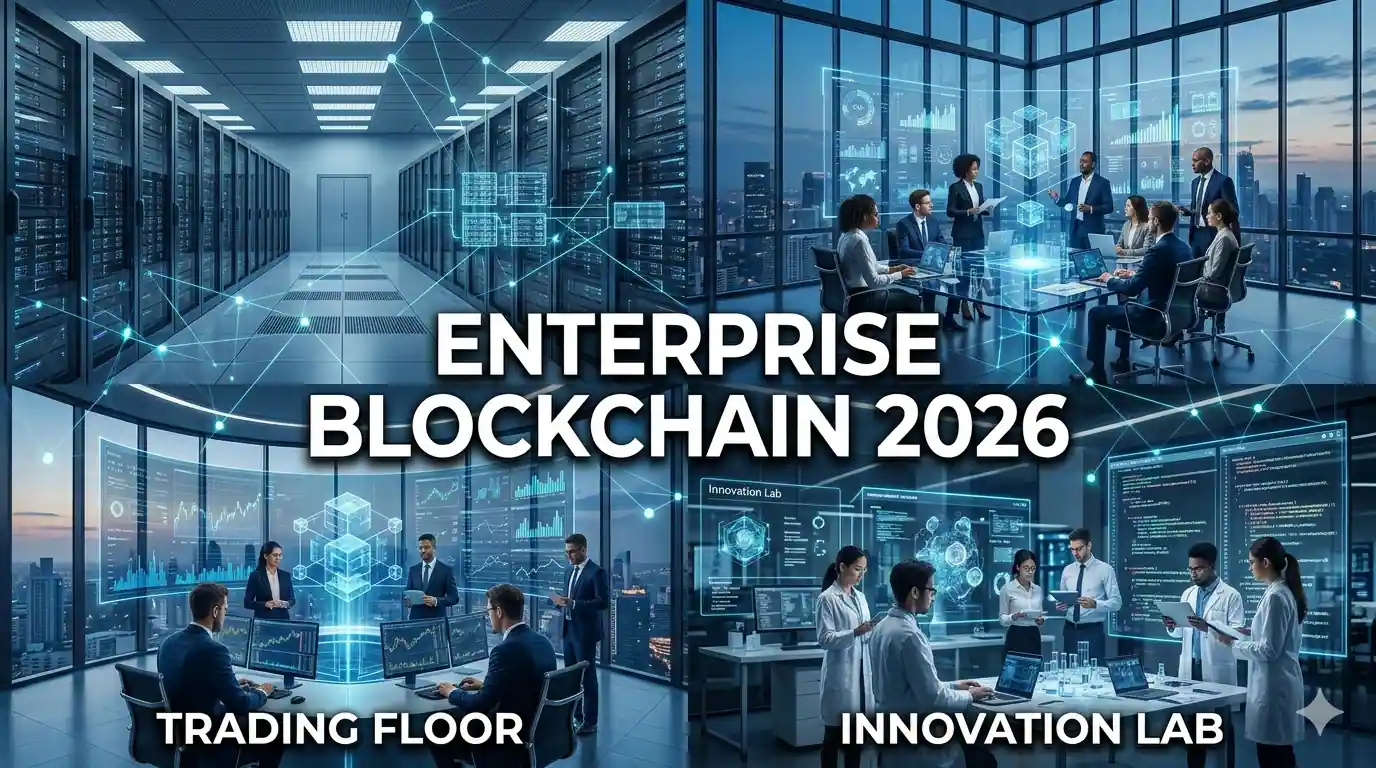
Enterprise Blockchain 2026: The Invisible Infrastructure Powering Business
By 2026, enterprise blockchain technology has evolved from experimental pilot projects to the invisible backbone of modern business operations. Unlike the cryptocurrency-focused blockchain applications that dominated early conversations, today's enterprise blockchain solutions operate seamlessly behind the scenes—verifying supply chain provenance, automating complex contracts, securing digital identities, and enabling instant cross-border settlements without drawing attention to the underlying technology. This transformation represents a fundamental shift in how organizations approach trust, transparency, and efficiency in an increasingly digital economy.
The term "invisible infrastructure" perfectly captures the mature state of enterprise blockchain in 2026. Just as consumers don't think about TCP/IP protocols when streaming video or sending email, business users increasingly interact with blockchain-powered systems without needing to understand the distributed ledger mechanics beneath. This invisibility is not a limitation but a hallmark of successful technology adoption: when infrastructure works flawlessly, it disappears into the background, enabling users to focus on outcomes rather than mechanisms.
This comprehensive guide explores how enterprise blockchain has become the silent engine powering critical business functions in 2026. We examine real-world implementations across industries, analyze the technology stack enabling scalable deployment, address persistent challenges and their solutions, and provide actionable insights for organizations evaluating or expanding their blockchain strategies. Whether you're a CTO assessing infrastructure investments, a operations leader seeking process improvements, or a strategist planning digital transformation, understanding blockchain's invisible role is essential for navigating the business landscape of 2026 and beyond.
Why Blockchain is Becoming Invisible Infrastructure
The evolution of enterprise blockchain toward invisibility follows a predictable technology adoption curve. Early implementations required significant education, custom development, and user adaptation. By 2026, several converging factors have enabled blockchain to recede into the infrastructure layer where it delivers maximum value with minimal friction.
First, standardization has matured. Industry consortia like Hyperledger, Enterprise Ethereum Alliance, and R3 Corda have established common frameworks, data models, and interoperability protocols that reduce integration complexity. Organizations no longer build blockchain networks from scratch; they configure pre-validated templates tailored to specific use cases like supply chain tracking or trade finance.
Second, cloud infrastructure has democratized access. Major cloud providers now offer blockchain-as-a-service platforms with one-click deployment, automated node management, and built-in monitoring. This abstraction layer allows businesses to leverage blockchain capabilities without maintaining specialized infrastructure teams or navigating complex consensus configurations.
Third, user experience design has improved dramatically. Modern enterprise blockchain applications present familiar interfaces—dashboards, APIs, mobile apps—that hide cryptographic complexity behind intuitive workflows. A procurement manager approving a smart contract-triggered payment experiences the same simplicity as processing a traditional invoice, while the blockchain layer handles verification, audit trails, and settlement automatically.
Finally, regulatory clarity has reduced adoption barriers. By 2026, key jurisdictions have established frameworks for digital signatures on blockchain, tokenized assets, and cross-border data sharing via distributed ledgers. This legal certainty enables enterprises to deploy blockchain solutions with confidence, accelerating integration into core business processes.
Key Use Cases Transforming Business Operations
Supply Chain Transparency and Provenance Tracking
Supply chain management represents the most mature enterprise blockchain application in 2026. Global manufacturers, retailers, and logistics providers leverage permissioned blockchain networks to create immutable, end-to-end visibility into product journeys from raw material to end consumer.
Consider a pharmaceutical company distributing temperature-sensitive vaccines. IoT sensors record storage conditions at each transit point, with data written to a blockchain shared among manufacturers, shippers, distributors, and healthcare providers. If a temperature excursion occurs, smart contracts automatically flag affected batches, trigger recalls, and notify relevant parties—all within minutes rather than days. The blockchain layer ensures data integrity without requiring participants to trust a central authority.
Food safety applications deliver similar value. Retailers can trace contaminated produce to its source farm within seconds, minimizing public health risks and brand damage. Consumers scanning QR codes access verified information about origin, handling practices, and sustainability credentials—building trust through transparency powered by invisible blockchain infrastructure.
Key Benefits: Reduced recall costs by 40-60%, faster dispute resolution, enhanced regulatory compliance, improved consumer trust, and streamlined supplier onboarding.
Financial Services and Instant Settlement
Enterprise blockchain has fundamentally reshaped back-office financial operations in 2026. While consumers may not notice, banks, asset managers, and corporate treasuries increasingly rely on distributed ledger technology for clearing, settlement, and reconciliation processes that once took days to complete.
Cross-border payments exemplify this transformation. Traditional correspondent banking networks involve multiple intermediaries, currency conversions, and sequential reconciliations that delay settlement and increase costs. Blockchain-based solutions enable direct peer-to-peer value transfer with atomic settlement—where payment and delivery occur simultaneously—reducing transaction times from 3-5 days to under 60 seconds while cutting costs by 50-80%.
Trade finance has seen similar disruption. Letters of credit, bills of lading, and invoice approvals that previously required physical document exchange and manual verification now execute via smart contracts on shared ledgers. All parties access a single source of truth, reducing fraud risks, accelerating cash flow, and freeing capital previously tied up in transit.
Key Benefits: Faster settlement cycles, lower operational costs, reduced counterparty risk, improved liquidity management, and enhanced auditability for regulatory reporting.
Digital Identity and Access Management
Enterprise blockchain solves persistent identity challenges by enabling self-sovereign identity frameworks where individuals and organizations control verifiable credentials without relying on centralized authorities. In 2026, this capability powers seamless, secure access across business ecosystems.
Consider employee onboarding across partner organizations. Instead of repeatedly submitting documents for background checks, certifications, or compliance training, professionals maintain a blockchain-verified digital wallet containing attested credentials. When engaging with a new client or contractor platform, they share only necessary attributes—proving certification status without revealing unnecessary personal data—via zero-knowledge proofs that preserve privacy while enabling trust.
Customer identity applications deliver similar value. Financial institutions use blockchain-based KYC utilities to share verified customer information securely, reducing duplicate verification efforts and accelerating account opening while maintaining strict data governance. The underlying blockchain infrastructure ensures consent management, audit trails, and revocation capabilities without exposing raw data to unnecessary parties.
Key Benefits: Reduced identity fraud, streamlined compliance workflows, enhanced user privacy, lower customer acquisition costs, and improved cross-organization collaboration.
Smart Contracts for Automated Business Logic
Smart contracts—self-executing agreements with terms directly written to code—have matured into reliable tools for automating complex business processes in 2026. Unlike early implementations that required extensive custom development, modern enterprise platforms offer visual builders, pre-audited templates, and robust testing frameworks that make smart contract deployment accessible to business analysts alongside developers.
Insurance claims processing illustrates the value. When a flight delay exceeds policy thresholds, oracle services feed verified flight data to a smart contract that automatically validates eligibility, calculates compensation, and initiates payment—resolving claims in minutes rather than weeks. All parties access the same immutable record of events and outcomes, reducing disputes and administrative overhead.
Procurement and invoicing workflows benefit similarly. Purchase orders, delivery confirmations, and invoice approvals execute via smart contracts that enforce agreed terms, trigger payments upon milestone completion, and maintain comprehensive audit trails. Finance teams gain real-time visibility into cash flow obligations while reducing manual reconciliation efforts.
Key Benefits: Faster process execution, reduced operational errors, lower administrative costs, improved compliance enforcement, and enhanced transparency for all stakeholders.
Technology Stack: What Powers Enterprise Blockchain in 2026
Understanding the infrastructure layer helps organizations evaluate solutions and plan implementations. Modern enterprise blockchain stacks comprise several integrated components:
- Consensus Layer: Permissioned networks use efficient consensus mechanisms like Raft, IBFT, or BFT variants that balance performance with finality guarantees, avoiding the energy intensity of proof-of-work systems.
- Smart Contract Runtime: Languages like Solidity, Chaincode, or Move execute business logic with formal verification tools ensuring correctness and security before deployment.
- Privacy and Confidentiality: Zero-knowledge proofs, private transactions, and channel architectures enable selective data sharing among network participants while maintaining overall ledger integrity.
- Interoperability Protocols: Cross-chain communication standards like IBC, CCIP, or enterprise-specific bridges allow value and data transfer between distinct blockchain networks without compromising security.
- Oracle Services: Trusted data feeds connect blockchain systems to external information sources—market prices, IoT sensor readings, regulatory databases—enabling smart contracts to respond to real-world events.
- Identity and Access Management: Decentralized identifier (DID) frameworks and verifiable credential standards integrate with existing enterprise identity systems for seamless authentication and authorization.
- Monitoring and Governance: Enterprise-grade tooling provides real-time network health metrics, performance analytics, and policy enforcement capabilities essential for production deployments.
Cloud providers have abstracted much of this complexity through managed services. AWS Managed Blockchain, Azure Blockchain Service, and Google Cloud Blockchain Node Engine offer pre-configured networks with automated scaling, backup, and security patching—allowing organizations to focus on business logic rather than infrastructure management.
Implementation Strategies for 2026 Success
Successful enterprise blockchain adoption follows a disciplined approach aligned with business objectives rather than technology enthusiasm. Organizations achieving measurable ROI in 2026 typically employ these strategies:
Start with High-Value, Contained Use Cases: Rather than attempting enterprise-wide transformation immediately, identify processes where blockchain's unique capabilities—immutability, shared truth, automated execution—solve specific pain points. Supply chain provenance, multi-party reconciliation, and regulated document workflows often deliver quick wins that build organizational confidence.
Design for Interoperability from Day One: Enterprise blockchain rarely operates in isolation. Ensure your architecture supports integration with existing ERP, CRM, and data systems through standardized APIs and data models. Plan for future connectivity with partner networks and industry utilities to avoid costly rework.
Prioritize Governance and Change Management: Technical implementation represents only part of the challenge. Establish clear governance frameworks defining participant roles, data ownership, dispute resolution, and upgrade processes before launching production networks. Invest in training and communication to align stakeholders across organizational boundaries.
Measure Business Outcomes, Not Just Technical Metrics: Track KPIs that matter to business leaders: process cycle time reduction, cost per transaction, error rates, compliance audit findings, and customer satisfaction scores. These metrics demonstrate value and guide iterative improvements.
Adopt a Phased Rollout Approach: Begin with pilot deployments involving trusted partners, validate assumptions with real data, then expand scope gradually. This approach manages risk while building the operational expertise needed for broader adoption.
Common Challenges and Practical Solutions
Despite maturity gains, enterprise blockchain implementations still encounter obstacles. Understanding these challenges and proven mitigation strategies accelerates success:
Scalability and Performance Concerns
Early blockchain systems struggled with transaction throughput and latency. By 2026, layer-2 scaling solutions, optimized consensus algorithms, and sharding techniques enable enterprise networks to process thousands of transactions per second with sub-second finality—sufficient for most business applications. For extreme-scale requirements, hybrid architectures combine blockchain for critical settlement with traditional databases for high-volume operational data.
Data Privacy and Regulatory Compliance
Businesses handling sensitive information require granular privacy controls. Modern enterprise platforms address this through private channels, encrypted payloads, and zero-knowledge proofs that verify data validity without exposing raw content. Coupled with robust consent management and audit capabilities, these features support compliance with GDPR, CCPA, and sector-specific regulations.
Integration Complexity
Connecting blockchain networks to legacy systems remains challenging. Standardized connectors, middleware platforms, and API-first design patterns simplify integration. Many organizations start with blockchain handling specific workflow steps while gradually expanding scope as integration patterns mature.
Talent and Expertise Gaps
Blockchain-specific skills remain scarce. Cloud-managed services reduce infrastructure expertise requirements, while low-code development tools enable business analysts to configure workflows. Strategic partnerships with specialized vendors and targeted training programs help build internal capabilities over time.
Measuring ROI and Business Value
Quantifying blockchain's impact requires tracking both efficiency gains and strategic advantages. Organizations in 2026 evaluate success across multiple dimensions:
- Operational Efficiency: Reduced manual reconciliation, faster dispute resolution, lower error rates, and decreased processing times directly impact cost structures.
- Risk Mitigation: Immutable audit trails, automated compliance checks, and enhanced transparency reduce fraud exposure, regulatory penalties, and reputational damage.
- Revenue Enablement: New business models like tokenized assets, usage-based pricing via smart contracts, and premium verified provenance create incremental revenue streams.
- Strategic Agility: Shared infrastructure with partners accelerates time-to-market for collaborative offerings and strengthens ecosystem relationships.
- Customer Trust: Transparent, verifiable processes enhance brand reputation and customer loyalty in an era of heightened scrutiny.
Leading organizations establish baseline metrics before implementation and track improvements through controlled pilots before scaling. This data-driven approach ensures blockchain investments deliver measurable business value rather than technological novelty.
Future Trends Beyond 2026
Enterprise blockchain continues evolving. Key trends shaping the next wave include:
AI-Blockchain Convergence: Combining distributed ledgers with artificial intelligence enables verifiable AI training data provenance, auditable model decisions, and decentralized machine learning marketplaces—addressing growing concerns about AI transparency and accountability.
Central Bank Digital Currency Integration: As CBDCs launch globally, enterprise blockchain networks will integrate with public monetary infrastructure, enabling programmable money flows for automated tax compliance, conditional payments, and real-time treasury management.
Sustainability Tracking: Blockchain's immutable audit capabilities support verified carbon credit trading, circular economy material tracking, and ESG reporting—helping organizations meet increasing regulatory and stakeholder demands for environmental accountability.
Quantum-Resistant Cryptography: Forward-looking implementations are adopting post-quantum cryptographic standards to protect long-lived blockchain assets against future computational advances.
Frequently Asked Questions
What is enterprise blockchain and how does it differ from public blockchain?
Enterprise blockchain refers to permissioned distributed ledger systems designed for business use cases. Unlike public blockchains like Bitcoin or Ethereum that allow open participation, enterprise networks control access through identity management, prioritize performance and privacy over decentralization, and integrate with existing business systems. They focus on solving specific business problems like supply chain transparency or multi-party reconciliation rather than enabling decentralized applications for public use.
Is enterprise blockchain secure for sensitive business data?
Yes, modern enterprise blockchain platforms incorporate multiple security layers. Private transactions and channels limit data visibility to authorized participants. Zero-knowledge proofs enable verification without exposing raw data. Robust identity management ensures only authenticated parties can submit transactions. Encryption protects data at rest and in transit. When properly configured and governed, enterprise blockchain can meet stringent security and compliance requirements for financial, healthcare, and government applications.
How long does it take to implement an enterprise blockchain solution?
Implementation timelines vary by complexity. Simple pilot projects with clear scope and trusted partners can launch in 3-6 months. Enterprise-wide deployments integrating with multiple legacy systems typically require 12-24 months. Cloud-managed services and pre-built industry templates have significantly reduced time-to-value compared to early blockchain adoption. Starting with contained use cases and expanding iteratively helps manage risk while demonstrating value early.
What skills does my team need to manage enterprise blockchain?
Core requirements include understanding of distributed systems concepts, smart contract development basics, and integration patterns with existing applications. Cloud-managed services reduce infrastructure management burdens. Many organizations supplement internal teams with specialized partners for initial deployment while building internal expertise through targeted training. Business analysts who understand process workflows are equally valuable as technical developers for successful implementations.
How do we ensure blockchain network participants collaborate effectively?
Successful multi-party blockchain networks require clear governance established before launch. Define participant roles, data ownership rules, dispute resolution processes, and upgrade procedures in formal agreements. Start with a small group of trusted partners to validate workflows before expanding. Invest in change management and communication to align stakeholders across organizational boundaries. Regular governance reviews ensure the network evolves to meet changing business needs.
Conclusion: Embracing Invisible Infrastructure
Enterprise blockchain in 2026 has achieved what mature technologies aspire to: it works so well that users don't notice it. This invisibility represents success, not obscurity. When distributed ledger technology seamlessly verifies supply chain provenance, automates complex contracts, secures digital identities, and enables instant settlements without demanding user attention, it delivers maximum business value with minimal friction.
Organizations that recognize blockchain as infrastructure—not as a standalone solution—position themselves to leverage its unique capabilities where they matter most. The focus shifts from "should we adopt blockchain?" to "which business processes benefit most from immutable shared truth, automated execution, and cryptographic verification?" This strategic framing drives practical implementations that deliver measurable ROI.
The journey toward invisible blockchain infrastructure requires disciplined execution: starting with high-value use cases, designing for interoperability, prioritizing governance, and measuring business outcomes. Cloud platforms, industry standards, and improved tooling have lowered barriers to entry, but success still depends on aligning technology choices with clear business objectives.
As we look beyond 2026, enterprise blockchain will continue evolving—converging with AI, integrating with digital currencies, supporting sustainability initiatives, and preparing for quantum-era security. Organizations that build foundational expertise now will be best positioned to capitalize on these emerging opportunities.
The invisible infrastructure powering business in 2026 isn't about blockchain for blockchain's sake. It's about leveraging distributed trust to solve real business problems more efficiently, securely, and collaboratively. When implemented thoughtfully, enterprise blockchain doesn't demand attention—it simply enables better outcomes, quietly and reliably, in the background where the most powerful infrastructure belongs.