

Split Ends: Can You Really Heal Them Without Cutting?
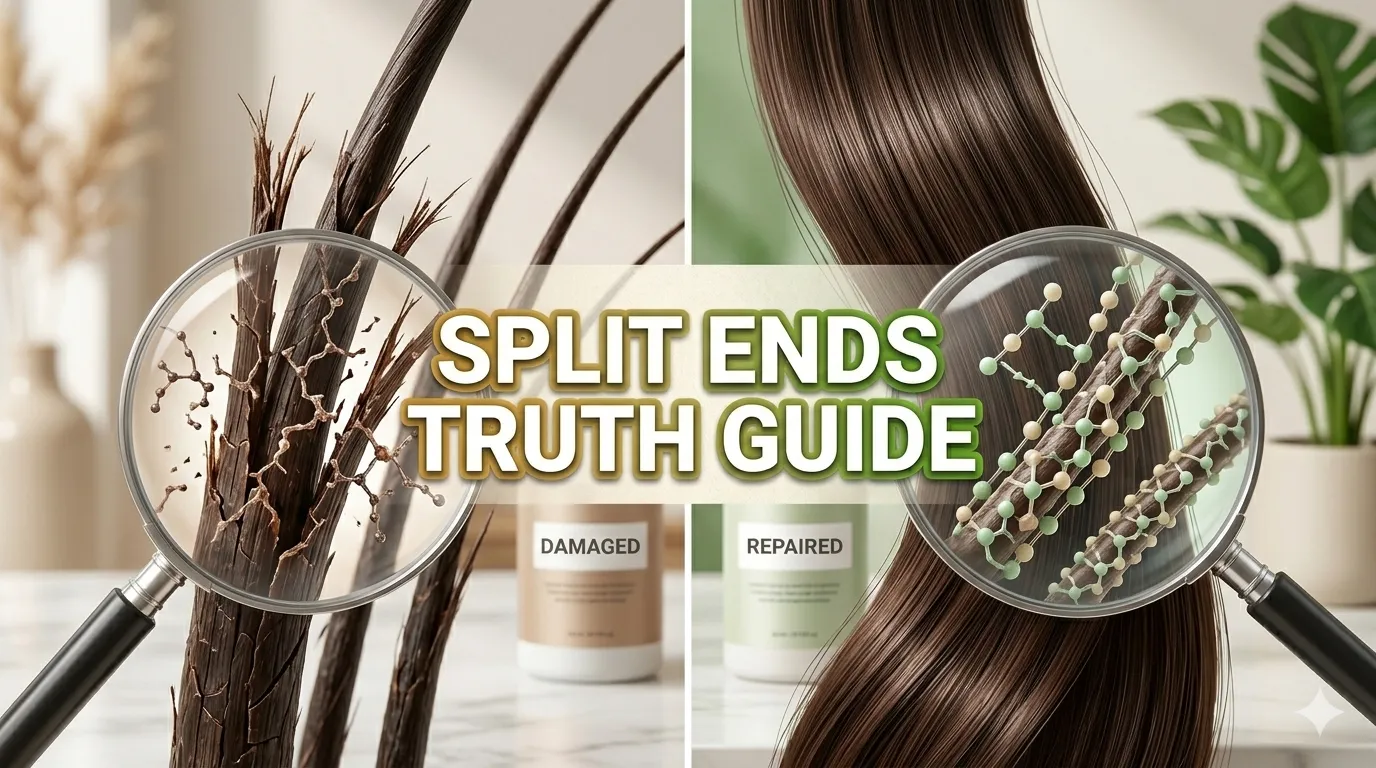
The Science of Split Ends and Whether True Repair Is Possible
Split ends. The bane of every person who wants long, healthy hair. You've seen the ads: serums that "seal," "fuse," or "repair" split ends instantly. You've heard the promises: "Heal your splits without the big chop!" But here's the uncomfortable truth that most beauty brands won't tell you: once a hair strand splits, it cannot be truly healed at the molecular level.
Yet before you reach for the scissors in frustration, there's important nuance to understand. While split ends cannot be permanently repaired, there are scientifically-backed strategies to temporarily bind them, prevent further damage, and—most importantly—stop new splits from forming. The key is understanding what's happening to your hair at the molecular level and managing expectations about what products can and cannot do.
This comprehensive, science-driven guide explores the molecular truth about split ends: what they are, why they form, whether "repair" products actually work, and how to minimize their appearance while preventing future damage. Whether you're trying to grow out your hair, recovering from chemical damage, or simply seeking healthier strands, you'll gain the knowledge to make informed decisions about your hair care routine.
Understanding Split Ends at the Molecular Level
What Is a Split End, Really?
A split end—scientifically termed trichoptilosis—occurs when the protective outer layer of the hair strand (the cuticle) wears away or breaks, exposing the inner cortex. Once the cortex is exposed, it begins to fray, causing the hair strand to split lengthwise.
Hair Structure 101:
The Cuticle: The outermost layer, composed of overlapping scales (like roof shingles) made of keratin. When intact, the cuticle:
- Protects the inner cortex from damage
- Reflects light for shine
- Prevents moisture loss
- Reduces friction between strands
The Cortex: The middle layer containing:
- Keratin proteins arranged in spirals
- Disulfide bonds (strong chemical bonds) that provide strength
- Hydrogen bonds (weaker bonds) that provide flexibility
- Moisture and natural pigments
The Medulla: The innermost core (often absent in fine hair), with minimal structural role.
How Split Ends Form: The Molecular Breakdown
Split ends don't appear overnight. They result from cumulative damage that progressively weakens the hair structure:
Stage 1: Cuticle Damage
- Mechanical stress (brushing, styling) lifts or chips cuticle scales
- Chemical treatments (coloring, perming) break disulfide bonds
- Heat styling denatures keratin proteins
- UV radiation and pollution generate free radicals that degrade cuticle lipids
Stage 2: Cortex Exposure
- Once cuticle scales are lost, the cortex becomes vulnerable
- Moisture escapes, causing dryness and brittleness
- Proteins begin to unravel and fray
Stage 3: Splitting
- The exposed cortex frays longitudinally
- The split can travel up the hair shaft if not addressed
- Multiple splits can form (feathering, tree splits, fork splits)
Scientific insight: Dr. Jennifer Marsh, hair scientist and former PandG researcher, explains: "Hair is dead tissue. Unlike skin, it has no living cells to regenerate or repair itself. Once the keratin structure is broken, there's no biological mechanism to rebuild it. Products can temporarily bind fragments, but they cannot restore the original molecular architecture."
The "Repair" Myth: What Products Actually Do
Temporary Binding vs. True Repair
Many products claim to "repair" split ends, but it's crucial to understand what they actually accomplish:
What They CAN Do:
- Temporarily bind split fragments: Polymers and silicones coat the hair, holding split ends together visually
- Smooth the cuticle: Ingredients like dimethicone fill gaps in the cuticle, reducing friction and improving appearance
- Add moisture: Humectants and emollients improve hair flexibility, reducing further breakage
- Provide protein: Hydrolyzed proteins can temporarily fill gaps in the cortex
- Protect from further damage: Heat protectants and UV filters prevent additional degradation
What They CANNOT Do:
- Rebuild broken disulfide bonds: Once these strong chemical bonds break, they cannot be reformed by topical products
- Regenerate lost cuticle scales: Dead hair cannot grow new protective layers
- Reverse protein degradation: Denatured keratin cannot be "un-denatured"
- Stop a split from traveling: Once a split forms, it will continue to fray unless physically removed
Ingredient Deep Dive: What Works and Why
1. Silicones (Dimethicone, Amodimethicone, Cyclomethicone)
- Mechanism: Form a flexible, water-resistant film that coats hair
- Benefits: Smooths cuticle, reduces friction, adds shine, temporarily binds splits
- Limitations: Washes out; doesn't repair; can build up if not clarified
- Best for: Immediate visual improvement, heat protection, manageability
2. Hydrolyzed Proteins (Keratin, Wheat, Silk, Collagen)
- Mechanism: Small protein fragments penetrate hair shaft, temporarily filling gaps
- Benefits: Strengthens hair, improves elasticity, reduces breakage
- Limitations: Effects are temporary; overuse can cause protein overload (brittleness)
- Best for: Damaged, porous hair needing temporary reinforcement
3. Bond-Building Technology (Olaplex, K18, etc.)
- Mechanism: Claim to rebuild broken disulfide bonds using proprietary chemistry
- Benefits: Some independent studies show improved strength and reduced breakage
- Limitations: Cannot fully restore original bond structure; effects vary by damage level
- Scientific note: Olaplex's bis-aminopropyl diglycol dimaleate can reconnect some broken bonds, but cannot rebuild hair that has been completely severed
4. Natural Oils (Argan, Coconut, Jojoba)
- Mechanism: Penetrate hair shaft (coconut oil) or coat surface (most oils)
- Benefits: Reduce moisture loss, add flexibility, improve shine
- Limitations: Don't repair splits; can weigh down fine hair
- Best for: Prevention and maintenance, not repair
5. Polymers and Film-Formers (PVP, Acrylates)
- Mechanism: Create flexible films that bind hair fragments
- Benefits: Temporarily seal splits, improve manageability
- Limitations: Wash out; can feel stiff or sticky if overused
- Best for: Short-term cosmetic improvement
Professional Treatments: Do They Work Better?
In-Salon "Split End Repair" Services
Many salons offer specialized treatments claiming to repair split ends. Here's what to expect:
Keratin Treatments:
- What they do: Infuse hair with hydrolyzed keratin and seal with heat
- Results: Smoother, stronger-feeling hair for 2-4 months
- Reality: Temporarily fills damage; doesn't heal splits; formaldehyde concerns in some formulas
Bond-Building Treatments (Olaplex No. 1 and 2, K18):
- What they do: Use proprietary chemistry to reconnect broken disulfide bonds
- Results: Measurable improvement in hair strength and elasticity in studies
- Reality: Most effective on chemically damaged hair; cannot repair completely severed strands
- Cost: $50-150+ per treatment
Protein Reconstruction Treatments:
- What they do: Apply concentrated protein to fill gaps in damaged hair
- Results: Temporary improvement in strength and texture
- Reality: Effects last 2-6 weeks; overuse causes brittleness
Sealing Treatments (Glosses, Glazes):
- What they do: Coat hair with polymers and silicones for instant shine
- Results: Immediate visual improvement; splits appear less visible
- Reality: Purely cosmetic; washes out in 1-3 shampoos
The Verdict on Professional Treatments
Professional treatments can provide meaningful temporary improvements, especially for chemically damaged hair. However:
- None can truly "heal" a split end at the molecular level
- Results are temporary and require maintenance
- Cost-benefit should be weighed against regular trims
- Best used as part of a comprehensive hair health strategy, not a standalone solution
At-Home Strategies: Managing Split Ends Without Cutting
Temporary Cosmetic Fixes
These approaches won't heal splits but can make them less visible and prevent further damage:
1. Split End Serums and Sealants
- How to use: Apply a pea-sized amount to ends of damp or dry hair
- Best ingredients: Dimethicone, amodimethicone, hydrolyzed keratin
- Recommended products:
- Olaplex No. 9 Bond Protector Nourishing Hair Serum
- Living Proof Restore Perfecting Spray
- John Frieda Frizz Ease Miraculous Recovery Serum
- Expectations: Immediate visual improvement; lasts until next wash
2. Leave-In Conditioners with Protein
- How to use: Apply to damp hair after washing, focusing on mid-lengths to ends
- Best ingredients: Hydrolyzed keratin, panthenol, glycerin, silicones
- Recommended products:
- It's a 10 Miracle Leave-In
- K18 Leave-In Molecular Repair Mask
- Briogeo Don't Despair, Repair! Leave-In Conditioner
- Expectations: Improved manageability, reduced breakage, temporary strengthening
3. Heat Protectants (Even If You Don't Style)
- Why: Environmental heat (sun, styling tools) worsens existing splits
- How to use: Spray or apply to damp hair before any heat exposure
- Best ingredients: Dimethicone, cyclomethicone, panthenol, UV filters
- Recommended products:
- CHI 44 Iron Guard Thermal Protection Spray
- Tresemme Thermal Creations Heat Tamer Spray
Prevention Strategies: Stop New Splits Before They Start
While you can't heal existing splits, you can absolutely prevent new ones:
1. Gentle Detangling
- Use a wide-tooth comb or detangling brush
- Start at ends and work upward
- Apply leave-in conditioner or detangling spray first
- Never brush wet hair aggressively (it's most vulnerable when wet)
2. Minimize Heat Styling
- Limit flat irons, curling wands, and blow dryers
- Always use heat protectant
- Use lowest effective temperature (under 350°F/177°C)
- Air dry when possible
3. Protect Hair While Sleeping
- Use a silk or satin pillowcase (reduces friction)
- Loosely braid or pineapple hair before bed
- Avoid tight elastics that cause breakage
4. Chemical Treatment Care
- Space out coloring, perming, or relaxing treatments
- Use bond-building treatments before/after chemical services
- Follow up with intensive conditioning
5. Regular Maintenance Trims
- Get "dusting" trims every 8-12 weeks (removing only 1/4 inch)
- Ask stylist to search for and remove individual splits
- Prevents splits from traveling up the hair shaft
The Role of Nutrition and Internal Health
Can Diet Affect Split Ends?
While nutrition won't repair existing splits, it influences the health of new hair growth:
Key Nutrients for Hair Strength:
Protein:
- Hair is 90% keratin (a protein)
- Inadequate protein intake leads to weak, brittle hair
- Target: 0.8-1.2g protein per kg body weight daily
- Sources: Lean meats, fish, eggs, legumes, Greek yogurt
Biotin (Vitamin B7):
- Supports keratin production
- Deficiency causes brittle hair (though supplementation only helps if deficient)
- Sources: Eggs, almonds, sweet potatoes, salmon
Omega-3 Fatty Acids:
- Support scalp health and hair shine
- Reduce inflammation that can weaken hair
- Sources: Fatty fish, flaxseeds, chia seeds, walnuts
Vitamins A, C, D, E:
- Antioxidants protect hair from oxidative damage
- Vitamin C supports collagen production
- Vitamin D receptors in hair follicles influence growth
- Sources: Colorful fruits/vegetables, fortified foods, sunlight
Minerals (Zinc, Iron, Selenium):
- Zinc supports protein synthesis and tissue repair
- Iron deficiency causes hair shedding and weakness
- Selenium protects against oxidative damage
Hydration and Hair Health
- Dehydrated hair is more prone to breakage
- Drink adequate water (2-3L daily)
- Use humidifier in dry climates
- Avoid excessive alcohol/caffeine (dehydrating)
When Cutting Is Actually Necessary
Signs It's Time for a Trim
Despite your best efforts, some splits cannot be managed cosmetically. Cut when:
- Splits are visible to the naked eye and affect appearance
- Splits travel up the shaft (more than 1-2 inches from end)
- Hair feels rough, tangled, or unmanageable despite products
- Breakage increases during brushing or styling
- Ends look white or translucent (sign of severe cortex damage)
- You have "fairy knots" (single-strand knots) that tangle and break
The "Dusting" Technique: Minimal Cutting for Maximum Retention
If you're trying to grow your hair, ask your stylist for "dusting" rather than a traditional trim:
- What it is: Removing only the very tips (1/8 to 1/4 inch) where splits occur
- How it's done: Stylist twists small sections and snips only protruding splits
- Benefits: Removes damage while retaining maximum length
- Frequency: Every 8-12 weeks for maintenance
DIY Split End Removal (With Caution)
If you choose to trim at home:
- Use sharp, professional hair scissors (never craft scissors)
- Work in good lighting with a magnifying mirror
- Twist small sections and snips only visible splits
- Remove no more than 1/4 inch total
- Stop if you're unsure—see a professional
Warning: Improper DIY trimming can cause more damage. When in doubt, see a professional.
Product Recommendations by Need
For Temporary Split End Binding
Budget:
- John Frieda Frizz Ease Miraculous Recovery Serum
- L'Oréal Paris EverPure Sulfate-Free Weightless Blow Dry Serum
Mid-Range:
- Olaplex No. 9 Bond Protector Nourishing Hair Serum
- Living Proof Restore Perfecting Spray
- Briogeo Farewell Frizz Rosarco Milk Leave-In Conditioning Spray
Luxury:
- K18 Leave-In Molecular Repair Hair Mask
- Oribe Split End Seal
- Christophe Robin Regenerating Mask with Prickly Pear Oil
For Prevention and Maintenance
Heat Protectants:
- CHI 44 Iron Guard Thermal Protection Spray
- Tresemme Thermal Creations Heat Tamer Spray
- GHD Heat Protect Spray
Leave-In Conditioners:
- It's a 10 Miracle Leave-In
- Redken Extreme Anti-Snap Leave-In Fortifier
- Amika The Kure Bond Repair Leave-In Conditioner
Deep Conditioning Treatments:
- Olaplex No. 8 Bond Intense Moisture Mask
- Briogeo Don't Despair, Repair! Deep Conditioning Mask
- K18 Biomimetic Hairscience Molecular Repair Mask
Managing Expectations: The Realistic Timeline
What to Expect When
Immediate (After Product Application):
- Splits appear less visible
- Hair feels smoother and more manageable
- Improved shine and reduced frizz
Short-Term (1-4 Weeks):
- Reduced breakage during styling
- Improved texture and elasticity
- Splits may still be present but less noticeable
Long-Term (1-3 Months):
- With prevention strategies, fewer new splits form
- Overall hair health improves
- Existing splits may still require trimming
Signs Your Strategy Is Working
- Less breakage when brushing or styling
- Hair feels stronger and more elastic
- Fewer new splits appearing at the ends
- Improved shine and manageability
- Longer intervals between needed trims
Common Myths About Split Ends Debunked
Myth 1: "Trimming Makes Hair Grow Faster"
Truth: Hair grows from the follicle in your scalp, not the ends. Trimming doesn't affect growth rate. However, regular trims prevent splits from traveling up the shaft, which can cause breakage that makes hair appear to grow slower.
Myth 2: "Natural Oils Can Heal Split Ends"
Truth: Oils like coconut or argan can moisturize and temporarily smooth the cuticle, but they cannot rebuild broken keratin bonds. They're excellent for prevention but not repair.
Myth 3: "If I Stop Using Heat, My Split Ends Will Heal"
Truth: Stopping heat prevents further damage, but existing splits won't heal. Dead hair cannot regenerate. Prevention is powerful; reversal is not possible.
Myth 4: "Protein Treatments Fix Everything"
Truth: Protein treatments temporarily strengthen hair by filling gaps, but overuse causes protein overload (brittleness). Balance protein with moisture, and remember: temporary reinforcement isn't permanent repair.
Myth 5: "Expensive Products Work Better"
Truth: Price doesn't guarantee efficacy. Many affordable products contain the same key ingredients (silicones, hydrolyzed proteins) as luxury brands. Focus on ingredient lists, not price tags.
Frequently Asked Questions
Can split ends be permanently repaired?
No. Hair is dead tissue with no regenerative capacity. Once the keratin structure splits, it cannot be biologically repaired. Products can temporarily bind fragments, but the only permanent solution is trimming.
How often should I trim to prevent split ends?
For most people, every 8-12 weeks. If you use heat frequently, color your hair, or have naturally fragile hair, consider every 6-8 weeks. For "dusting" (minimal trimming), every 8-12 weeks is sufficient.
Do bond-building products like Olaplex really work?
Yes, but with caveats. Olaplex and similar products can reconnect some broken disulfide bonds, improving hair strength and elasticity. However, they cannot repair completely severed strands or replace the need for trims. Best used preventatively or on chemically damaged hair.
Can I reverse split ends with home remedies?
No home remedy can truly repair split ends. Natural oils, eggs, or honey may temporarily smooth the cuticle or add moisture, but they cannot rebuild broken keratin. Focus on prevention rather than hoping for reversal.
Why do my split ends keep coming back after trimming?
Split ends recur due to ongoing damage: heat styling, chemical treatments, mechanical stress, or environmental factors. Trimming removes existing damage; preventing new damage requires changing habits and using protective products.
Is it okay to use split end serums daily?
Yes, most serums are safe for daily use. However, if you notice buildup (hair feels heavy or greasy), clarify weekly with a clarifying shampoo. Always apply to ends only, not roots.
Conclusion: Embracing Realistic Hair Health
The molecular truth about split ends is both limiting and liberating. Yes, you cannot truly heal a split end once it forms. But understanding this reality empowers you to focus on what you can control: preventing new damage, temporarily managing existing splits, and maintaining overall hair health.
Your action plan:
- Accept the truth: Split ends require trimming for permanent removal
- Use products strategically: Serums and bond-builders for temporary improvement
- Prevent aggressively: Minimize heat, protect from environment, gentle handling
- Trim regularly: Dusting trims every 8-12 weeks prevent splits from worsening
- Nourish internally: Support new growth with proper nutrition and hydration
Remember: Healthy hair isn't about perfection—it's about consistent care. Every gentle detangling session, every heat protectant application, every nutritious meal contributes to stronger, more resilient hair over time.
While the dream of healing split ends without cutting may be scientifically impossible, the goal of healthier, stronger, more beautiful hair is absolutely achievable. Focus on prevention, manage expectations, and celebrate progress—not perfection.
Your healthiest hair starts with honest science and consistent care. Embrace both, and you'll see real, lasting results.