

Pigmentation Protocol: Fastest Route to Clear Skin
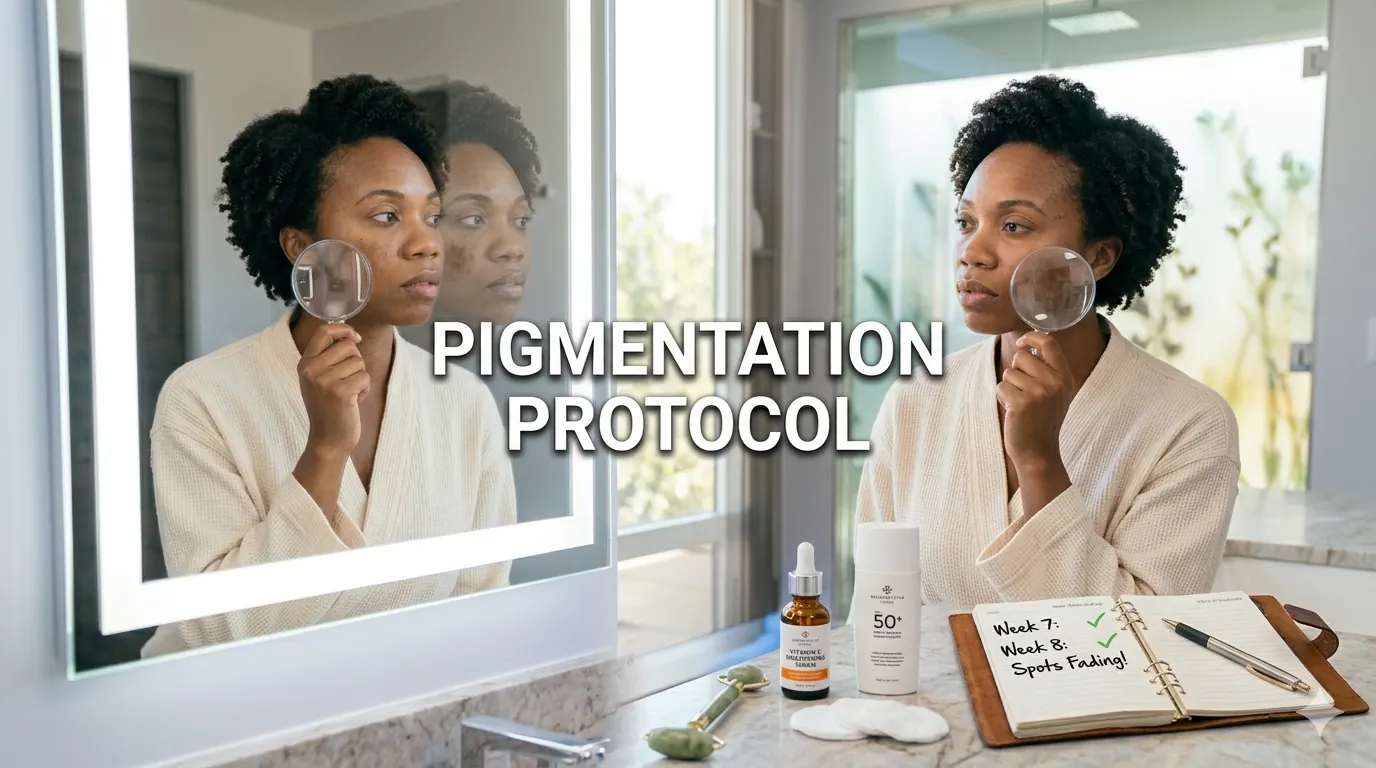
Dark spots don't discriminate. Whether triggered by sun exposure, acne scars, hormonal shifts, or inflammation, hyperpigmentation affects millions of people across all skin tones—and it's one of the most frustrating skin concerns to treat. The pigmentation protocol isn't about quick fixes or harsh bleaching; it's a strategic, science-backed approach to decoding your specific type of dark spots and implementing the fastest, safest route to clearer, more even-toned skin.
Understanding pigmentation starts with recognizing that not all dark spots are created equal. Melasma responds differently than post-inflammatory hyperpigmentation (PIH), which differs from sun spots or age spots. Using the wrong treatment for your specific type can waste months—or worse, worsen the problem. The key lies in accurate identification, targeted ingredient selection, consistent sun protection, and realistic timeline expectations.
In this comprehensive, dermatologist-informed guide, we'll decode the different types of hyperpigmentation, reveal the most effective treatments for each, share the exact protocol for accelerating clarity, and provide expert strategies for preventing recurrence. Whether you're dealing with stubborn melasma, acne marks, or sun damage, you'll learn how to build a personalized action plan that delivers visible results without compromising your skin's health.
Understanding Hyperpigmentation: Types, Triggers, and Mechanisms
Short answer: Hyperpigmentation occurs when melanocytes produce excess melanin in response to triggers like UV exposure, inflammation, hormones, or injury—resulting in dark spots that vary by type, depth, and treatment response.
Your skin's color comes from melanin, produced by cells called melanocytes. When these cells become overactive or dysregulated, they deposit excess pigment in the epidermis (surface layer) or dermis (deeper layer), creating visible dark spots. The location and cause determine both appearance and treatment approach.
Post-Inflammatory Hyperpigmentation (PIH)
What it is: Dark marks left behind after skin inflammation or injury—most commonly from acne, eczema, bug bites, or aggressive skincare.
Appearance: Flat spots ranging from pink/red (in lighter skin) to brown/black (in deeper skin tones)
Mechanism: Inflammation triggers melanocytes to overproduce melanin as part of the healing response
Timeline: Can fade naturally in 3-24 months, but treatment accelerates this significantly
Key insight: PIH is more common and severe in Fitzpatrick skin types III-VI (medium to deep skin tones)
Melasma
What it is: Hormonally-driven pigmentation, often triggered by pregnancy, birth control, or hormone therapy combined with sun exposure
Appearance: Symmetrical brown or gray-brown patches on cheeks, forehead, upper lip, or chin
Mechanism: Hormonal fluctuations (especially estrogen and progesterone) sensitize melanocytes to UV light
Timeline: Chronic condition requiring long-term management; can improve but often recurs
Key insight: Melasma is notoriously stubborn and requires combination therapy plus strict sun protection
Sun Spots (Solar Lentigines)
What it is: Cumulative UV damage creating discrete dark spots on sun-exposed areas
Appearance: Well-defined brown spots on face, hands, shoulders, and décolletage
Mechanism: Chronic UV exposure causes localized melanocyte proliferation
Timeline: Permanent without treatment; won't fade significantly on their own
Key insight: Prevention through daily SPF is far easier than reversal
Age Spots (Seborrheic Keratoses)
What it is: Benign growths that appear with age, often confused with sun spots
Appearance: Raised, waxy, stuck-on appearance in tan, brown, or black
Mechanism: Accumulation of pigmented keratinocytes (not just melanin)
Timeline: Permanent without professional removal
Key insight: Topical treatments don't work—requires physical removal by a dermatologist
Decoding Your Dark Spots: A Diagnostic Framework
Short answer: Identify your pigmentation type by examining pattern (scattered vs. symmetrical), timing (after acne vs. gradual), location (sun-exposed vs. hormone-sensitive areas), and depth (surface brown vs. deeper gray)—then match to targeted treatment.
Before investing in treatments, accurately diagnose your pigmentation type using this framework:
Question 1: When Did It Appear?
- After acne, injury, or rash? → Likely PIH
- During pregnancy or after starting birth control? → Likely melasma
- Gradually over years of sun exposure? → Likely sun spots
- Suddenly with raised, waxy texture? → Likely seborrheic keratosis
Question 2: What's the Pattern?
- Scattered, irregular spots? → PIH or sun spots
- Symmetrical patches on both cheeks? → Melasma
- Uniform spots on hands/face? → Solar lentigines
- Linear pattern following injury? → PIH
Question 3: What Color Is It?
- Brown/tan: Epidermal (surface-level) pigmentation—responds well to topicals
- Gray/blue: Dermal (deep) pigmentation—requires professional treatments
- Red/pink: Post-inflammatory erythema (PIE), not true pigmentation—needs vascular treatments
Question 4: Where Is It Located?
- Cheeks, forehead, upper lip: Classic melasma distribution
- Anywhere acne occurred: PIH
- Hands, face, shoulders: Sun damage
- Shins (especially in women): Often dermal melanosis—harder to treat
The Wood's Lamp Test
Dermatologists use a Wood's lamp (UV light) to determine pigmentation depth:
- Epidermal: Appears darker under UV light—better prognosis with topicals
- Dermal: No change or lighter under UV—requires lasers or deeper treatments
- Mixed: Partial darkening—combination approach needed
While you can't replicate this at home, understanding depth helps set realistic expectations: surface pigmentation fades faster than deep.
The Fastest Ingredients for Pigmentation: Evidence-Based Options
Short answer: The most effective pigmentation-fighting ingredients include hydroquinone (gold standard), retinoids, vitamin C, niacinamide, azelaic acid, kojic acid, tranexamic acid, and alpha arbutin—each targeting melanin production through different mechanisms.
Not all brightening ingredients are created equal. Here's what actually works, ranked by efficacy and speed:
Prescription-Strength Actives
Hydroquinone (2-4%)
- Mechanism: Inhibits tyrosinase (key enzyme in melanin production) and destroys melanocytes
- Speed: Visible results in 4-8 weeks; maximum effect at 12-16 weeks
- Best for: Melasma, stubborn PIH, sun spots
- Protocol: Use for 3-4 months max, then take 1-2 month break to prevent rebound pigmentation
- Caution: Can cause irritation; rare risk of ochronosis (paradoxical darkening) with prolonged use in deep skin tones
Tretinoin (Retin-A)
- Mechanism: Increases cell turnover, disperses melanin, enhances penetration of other actives
- Speed: 8-12 weeks for visible improvement
- Best for: PIH, melasma (especially combined with hydroquinone)
- Protocol: Start 2-3x/week, build to nightly as tolerated
- Caution: Causes initial purging and sensitivity; requires strict SPF
Triple Combination Cream (Hydroquinone 4% + Tretinoin 0.05% + Fluocinolone 0.01%)
- Mechanism: Synergistic effect—hydroquinone blocks melanin, tretinoin enhances penetration, steroid reduces inflammation
- Speed: Fastest topical option—results in 4-6 weeks
- Best for: Moderate to severe melasma
- Protocol: Apply nightly for 8 weeks, then maintenance 2-3x/week
- Caution: Prescription only; steroid component limits long-term use
Over-the-Counter Powerhouses
Vitamin C (L-Ascorbic Acid 10-20%)
- Mechanism: Antioxidant that inhibits tyrosinase and neutralizes free radicals from UV exposure
- Speed: 8-12 weeks for visible brightening
- Best for: Overall radiance, sun damage prevention, mild PIH
- Protocol: Apply to clean, dry skin every morning before SPF
- Tip: Look for stabilized formulas with ferulic acid and vitamin E for enhanced efficacy
Niacinamide (5-10%)
- Mechanism: Blocks melanosome transfer from melanocytes to skin cells
- Speed: 4-8 weeks for visible improvement
- Best for: PIH, melasma, general uneven tone
- Protocol: Use morning and/or night; well-tolerated by most skin types
- Bonus: Also reduces inflammation and strengthens barrier
Azelaic Acid (10-20%)
- Mechanism: Inhibits tyrosinase and reduces inflammation
- Speed: 8-12 weeks
- Best for: PIH from acne, melasma (safe in pregnancy), sensitive skin
- Protocol: Apply 1-2x daily; can combine with other actives
- Advantage: Gentle enough for reactive skin; also treats active acne
Alpha Arbutin (2-3%)
- Mechanism: Natural hydroquinone derivative that inhibits tyrosinase
- Speed: 8-12 weeks
- Best for: Mild to moderate pigmentation, sensitive skin
- Protocol: Use morning and/or night; pairs well with vitamin C
- Safety: Gentler alternative to hydroquinone with lower irritation risk
Tranexamic Acid (2-5%)
- Mechanism: Blocks plasmin, reducing melanocyte activation and inflammation
- Speed: 8-12 weeks
- Best for: Melasma, PIH, vascular component of pigmentation
- Protocol: Apply 1-2x daily; available in topical and oral forms (oral requires prescription)
- Emerging evidence: Particularly effective for melasma when combined with other actives
Kojic Acid (1-2%)
- Mechanism: Fungal-derived tyrosinase inhibitor
- Speed: 8-12 weeks
- Best for: Sun spots, melasma, general brightening
- Protocol: Use at night; can be sensitizing so start slowly
- Caution: May cause contact dermatitis in sensitive individuals
The Complete Pigmentation Protocol: Step-by-Step Action Plan
Short answer: Implement a 4-phase protocol: (1) identify and eliminate triggers, (2) build a targeted topical routine with proven actives, (3) add professional treatments for stubborn cases, and (4) maintain results with strict sun protection and consistent skincare.
Phase 1: Foundation (Weeks 1-2)
Goal: Stop the bleeding—prevent new pigmentation while preparing skin for treatment
Actions:
- Start daily broad-spectrum SPF 50+—non-negotiable, even indoors. Reapply every 2 hours if near windows or outdoors.
- Identify and treat active inflammation—you can't fade PIH while still breaking out. Use gentle acne treatments or see a dermatologist.
- Repair your barrier—irritated skin produces more pigment. Use ceramide-rich moisturizer and avoid harsh scrubs.
- Eliminate triggers—stop picking, reduce heat exposure (hot yoga, saunas), and review medications that cause photosensitivity.
Phase 2: Active Treatment (Weeks 3-12)
Goal: Attack existing pigmentation with targeted actives
Morning Routine:
- Gentle cleanser
- Vitamin C serum (10-20% L-ascorbic acid)
- Niacinamide serum (5-10%)
- Moisturizer
- Broad-spectrum SPF 50+ (tinted mineral SPF provides additional visible light protection for melasma)
Evening Routine:
- Double cleanse (oil-based followed by gentle foaming)
- Active treatment (choose ONE to start):
- Hydroquinone 2-4% (prescription or OTC depending on region)
- Retinoid (tretinoin prescription or retinol OTC)
- Azelaic acid 10-20%
- Alpha arbutin 2-3%
- Wait 20 minutes
- Moisturizer with ceramides
Weekly Additions:
- Chemical exfoliation 1-2x/week (AHA like glycolic or lactic acid, 5-10%)
- Hydrating mask to support barrier
- Avoid physical scrubs—they worsen PIH
Important: Introduce one active at a time, waiting 2 weeks before adding another. This prevents irritation that can worsen pigmentation.
Phase 3: Acceleration (Weeks 13-24)
Goal: Enhance results with professional treatments for stubborn pigmentation
Professional Options (choose based on pigmentation type and skin tone):
- Chemical Peels:
- Glycolic acid (20-70%): Good for epidermal pigmentation
- TCA (10-20%): Deeper penetration for resistant cases
- Jessner's peel: Combination for melasma and PIH
- Frequency: Every 3-4 weeks for 3-6 sessions
- Laser and Light Therapies:
- Pico lasers: Gold standard for pigmentation—shatters melanin with minimal heat
- Q-switched Nd:YAG: Safest for deeper skin tones (Fitzpatrick IV-VI)
- IPL (Intense Pulsed Light): Best for sun spots in lighter skin (I-III)
- Fractional non-ablative: Good for mixed epidermal/dermal pigmentation
- Frequency: 3-6 sessions, 4-6 weeks apart
- Microneedling with Brightening Serums:
- Enhances penetration of vitamin C, tranexamic acid, or growth factors
- Safe for all skin tones when performed correctly
- Frequency: 3-6 sessions, 4 weeks apart
- Cryotherapy:
- Freezing individual sun spots with liquid nitrogen
- Quick, effective for discrete lesions
- Risk of hypopigmentation in deeper skin tones
Phase 4: Maintenance (Ongoing)
Goal: Prevent recurrence and maintain clarity
Actions:
- Continue daily SPF 50+—pigmentation will return without this
- Maintenance actives: Continue niacinamide, vitamin C, and gentle retinoid
- Pulse hydroquinone: If using, cycle 3 months on, 3 months off
- Quarterly professional treatments: Maintenance peels or laser as needed
- Monitor for triggers: Address breakouts immediately to prevent new PIH
Professional Treatments: What Works Best for Each Type
Short answer: Match treatment to pigmentation type and skin tone: PIH responds to chemical peels and microneedling; melasma needs combination therapy with oral tranexamic acid and gentle lasers; sun spots respond to IPL and cryotherapy; dermal pigmentation requires pico or Q-switched lasers.
For Post-Inflammatory Hyperpigmentation (PIH)
Best options:
- Chemical peels (glycolic, salicylic, or mandelic): 4-6 sessions, 3-4 weeks apart
- Microneedling with vitamin C or tranexamic acid: 3-6 sessions
- Pico laser: 2-4 sessions for stubborn cases
Avoid: Aggressive lasers that can cause more inflammation and worsen PIH
For Melasma
Best options:
- Oral tranexamic acid (250mg 2x/day): 3-6 months under medical supervision
- Triple combination cream: First-line topical treatment
- Low-fluence Q-switched Nd:YAG: Gentle laser safe for melasma
- Chemical peels (mandelic or glycolic): Maintenance every 4-6 weeks
Caution: Heat and aggressive lasers can worsen melasma—choose experienced providers
For Sun Spots (Solar Lentigines)
Best options:
- IPL (Intense Pulsed Light): 1-3 sessions for lighter skin tones
- Cryotherapy: Single treatment for discrete spots
- Pico laser: 1-2 sessions, safe for all skin tones
- TCA peel (spot treatment): 1-2 sessions
Note: These respond fastest—often visible improvement after one treatment
For Dermal Pigmentation
Best options:
- Q-switched Nd:YAG laser: 4-8 sessions
- Pico laser: 3-6 sessions
- Combination with topicals: Essential for maintenance
Reality check: Dermal pigmentation is most stubborn—requires patience and combination approach
Common Mistakes That Worsen Pigmentation
Even with the best intentions, these errors can sabotage your progress:
Mistake #1: Skipping Sunscreen or Using Inadequate SPF
Why it hurts: UV exposure is the #1 trigger for melanin production. Even 10 minutes of unprotected sun can undo weeks of treatment.
Fix: Use SPF 50+ broad-spectrum daily, reapply every 2 hours, and wear hats/sunglasses. For melasma, choose tinted mineral SPF with iron oxides to block visible light.
Mistake #2: Using Too Many Actives at Once
Why it hurts: Irritation triggers inflammation, which triggers more pigmentation—the opposite of your goal.
Fix: Introduce one active every 2 weeks. If skin feels tight, red, or stings, scale back and focus on barrier repair.
Mistake #3: Picking at Acne or Scabs
Why it hurts: Physical trauma causes immediate inflammation and guaranteed PIH, especially in deeper skin tones.
Fix: Use hydrocolloid patches on active breakouts, keep hands off, and treat acne aggressively to prevent lesions in the first place.
Mistake #4: Expecting Overnight Results
Why it hurts: Impatience leads to over-treatment, irritation, and giving up too soon. Pigmentation takes months to fade.
Fix: Commit to 12 weeks minimum before evaluating results. Take monthly photos in consistent lighting to track progress objectively.
Mistake #5: Ignoring Heat and Visible Light
Why it hurts: Melasma and PIH are triggered not just by UV but also by heat (cooking, hot yoga) and visible light (screens, indoor lighting).
Fix: Use tinted SPF with iron oxides, avoid excessive heat exposure, and consider blue light-blocking strategies if you have melasma.
Mistake #6: Using Hydroquinone Indefinitely
Why it hurts: Long-term use can cause rebound pigmentation, ochronosis (paradoxical darkening), and skin thinning.
Fix: Limit to 3-4 months continuous use, then take 1-2 month break. Switch to non-hydroquinone brighteners during breaks.
Expert Tips for Accelerating Results
Tip #1: Layer Actives Strategically
Use vitamin C in the morning (antioxidant protection) and retinoids at night (cell turnover). Never layer hydroquinone with benzoyl peroxide—can cause temporary dark staining.
Tip #2: Optimize Product Penetration
Apply actives to damp skin (except retinoids—apply to dry skin to reduce irritation). Wait 20-30 minutes between layers to prevent pilling and ensure absorption.
Tip #3: Support from Within
Oral supplements can enhance topical treatment:
- Vitamin C (500-1000mg/day): Antioxidant support
- Polypodium leucotomos extract (240-480mg/day): Oral photoprotection
- Tranexamic acid (oral, prescription): For melasma
- Glutathione: Evidence mixed but some patients report benefit
Tip #4: Treat the Whole Face
Don't spot-treat individual dark spots—apply brightening actives to the entire face to prevent new spots and ensure even tone.
Tip #5: Document Progress
Take photos weekly in consistent lighting (same time, same place, no makeup). Pigmentation fades gradually and it's hard to notice day-to-day changes.
Frequently Asked Questions About Pigmentation Treatment
How long does it take to fade dark spots?
Short answer: Epidermal pigmentation typically fades in 3-6 months with consistent treatment; dermal pigmentation takes 6-12+ months. PIH fades faster than melasma; sun spots respond quickest to professional treatments.
Timeline depends on:
- Depth (surface vs. deep)
- Type (PIH, melasma, sun spots)
- Skin tone (deeper tones take longer)
- Treatment consistency
- Sun protection adherence
Can pigmentation be permanently removed?
Short answer: Sun spots can be permanently removed with laser or cryotherapy. PIH typically fades completely with treatment. Melasma is chronic—can be controlled but often recurs with triggers like sun, heat, or hormones.
Maintenance is key: even after clearing, continued SPF and occasional topical treatment prevent recurrence.
Is hydroquinone safe?
Short answer: Hydroquinone is safe when used correctly—2-4% concentration for 3-4 months maximum, followed by a break. Long-term unsupervised use carries risks of ochronosis (especially in Fitzpatrick IV-VI) and rebound pigmentation.
Always use under dermatologist guidance, pair with daily SPF, and cycle on/off rather than using continuously.
What's the best ingredient for sensitive skin?
Short answer: Azelaic acid (10-20%), niacinamide (5-10%), and alpha arbutin (2-3%) are gentle yet effective for sensitive skin. Avoid hydroquinone, high-strength retinoids, and aggressive peels until barrier is strong.
Start with one active at low concentration, patch test first, and prioritize barrier repair with ceramides and gentle hydration.
Can I treat pigmentation during pregnancy?
Short answer: Yes—safe options include azelaic acid, vitamin C, niacinamide, glycolic acid (low concentration), and mineral SPF. Avoid hydroquinone, retinoids, oral tranexamic acid, and most professional treatments.
Melasma often improves postpartum but strict sun protection during pregnancy prevents worsening.
Why is my pigmentation getting worse?
Short answer: Common reasons include inadequate sun protection, ongoing inflammation (active acne), irritation from over-treatment, heat exposure, hormonal triggers, or using the wrong treatment for your pigmentation type.
Audit your routine: Are you using SPF daily? Picking at skin? Using too many actives? Exposed to heat? If yes, address these first before adding more treatments.
The Bottom Line: Your Path to Clearer Skin
Pigmentation doesn't have to be permanent. With the right protocol—accurate diagnosis, targeted ingredients, professional treatments when needed, and unwavering sun protection—you can achieve significantly clearer, more even-toned skin.
Remember:
- Identify your type: PIH, melasma, or sun spots require different approaches
- Be patient: Meaningful results take 3-6 months minimum
- Protect relentlessly: SPF 50+ daily is non-negotiable
- Treat inflammation: You can't fade PIH while still breaking out
- Combine strategically: Topicals + professional treatments + oral support = fastest results
- Maintain forever: Pigmentation recurs without ongoing care
Your skin has an incredible capacity to heal and renew. Give it the right tools, consistency, and time—and clarity will follow.
Start today. Your clearest skin is worth the investment.