

Large Pores: Why You Can't Close Them But Can Minimize
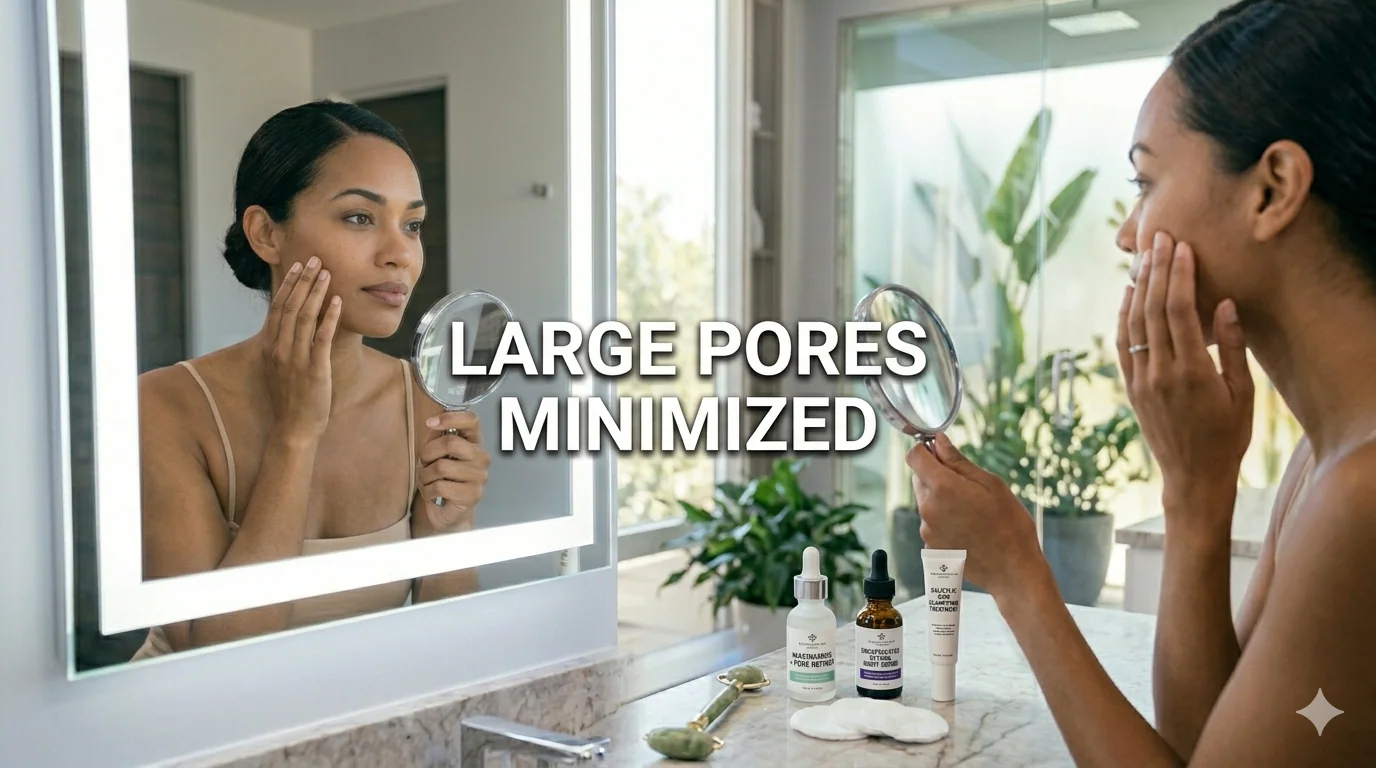
Let's start with a truth that might surprise you: you cannot close your pores. Not permanently, not with any product, not with ice, not with lasers. Pores are essential anatomical structures—they're the openings of hair follicles and sebaceous (oil) glands that allow sebum to reach your skin's surface, keeping it lubricated and protected. Without pores, your skin couldn't function.
But here's the good news: while you can't erase or seal pores shut, you can significantly minimize their appearance. With the right understanding of what makes pores look larger and a strategic, consistent skincare approach, you can achieve smoother-looking skin with less visible pores. The key lies in managing oil production, supporting skin elasticity, keeping pores clear of debris, and using ingredients that create an optical blurring effect.
In this comprehensive, dermatologist-informed guide, we'll decode the science behind pore size, explain why pores appear larger in some people, reveal the most effective strategies for minimizing their appearance, and debunk common myths that waste your time and money. Whether you're dealing with genetically large pores, oil-related enlargement, or age-related changes, you'll learn how to build a personalized routine that delivers visible refinement—without false promises or harsh treatments.
What Pores Actually Are (And Why They Can't Be "Closed")
Short answer: Pores are permanent openings of hair follicles and oil glands that serve essential functions; they have no muscles to open or close, so "closing" them is anatomically impossible—but their appearance can be minimized through targeted skincare.
Understanding pore anatomy is the first step to managing expectations and choosing effective treatments:
Pore Structure and Function
Every visible "pore" on your face is actually the opening of a pilosebaceous unit, which includes:
- Hair follicle: The channel through which hair grows
- Sebaceous gland: Produces sebum (oil) to lubricate skin and hair
- Arrector pili muscle: Tiny muscle that causes goosebumps (but doesn't control pore size)
Sebum travels up the follicle and exits through the pore opening. This process is essential for:
- Maintaining skin hydration and barrier function
- Protecting against bacteria and environmental stressors
- Keeping hair shafts flexible and healthy
Because pores serve these vital functions, your body has no mechanism to seal them shut. Any product claiming to "close pores" is using marketing language, not scientific fact.
Why Pores Appear to "Open" and "Close"
You may have heard that hot water "opens" pores and cold water "closes" them. This is a myth—but it persists because pores can appear to change size temporarily:
- Heat and steam: Cause blood vessels to dilate and sebum to liquefy, making pores look more visible temporarily
- Cold temperatures: Cause vasoconstriction (narrowing of blood vessels), which can make pores appear smaller for a short time
- Cleansing: Removing oil and debris from inside the pore reduces its visible diameter
These are optical illusions, not structural changes. The pore opening itself remains the same size.
The Real Factors That Affect Pore Appearance
While you can't change your pore anatomy, several modifiable factors influence how visible pores appear:
- Sebum production: More oil stretches the pore opening and makes it more noticeable
- Pore blockages: Dead skin cells, oil, and debris accumulate inside pores, stretching them outward
- Skin elasticity: Loss of collagen and elastin with age causes pores to sag and appear larger
- Sun damage: UV exposure breaks down collagen around pores, reducing structural support
- Inflammation: Acne and irritation cause swelling that distends pore openings
- Genetics: Baseline pore size and density are largely inherited
Effective pore-minimizing strategies target these modifiable factors—not the impossible goal of "closing" pores.
Why Pores Look Larger: The 5 Key Contributors
Short answer: Pores appear larger due to excess oil production, clogged debris, loss of skin elasticity, sun damage, and inflammation—each requiring different targeted approaches for visible improvement.
1. Excess Sebum Production
Oily skin types naturally have more visible pores because:
- Sebum fills and stretches the pore opening
- Oil reflects light, making pores more noticeable
- Excess oil attracts dirt and dead skin cells, leading to clogs
Who's affected: Typically those with Fitzpatrick skin types III-V, hormonal fluctuations (puberty, menstrual cycle, PCOS), or genetic predisposition to oiliness.
2. Clogged Pores (Comedones)
When dead skin cells, oil, and bacteria accumulate inside pores, they form:
- Blackheads (open comedones): Oxidized debris visible at the pore opening
- Whiteheads (closed comedones): Trapped debris under a thin layer of skin
These blockages physically stretch the pore wall outward, making pores appear larger and more textured.
3. Loss of Skin Elasticity
As skin ages, collagen and elastin production decline. This affects pores because:
- Collagen provides structural support around pore openings
- When support weakens, pores sag and appear more oval or stretched
- Loss of firmness makes texture more visible overall
This is why pores often appear larger in your 30s and beyond, even if oil production decreases.
4. Sun Damage and Photoaging
Chronic UV exposure accelerates collagen breakdown and causes:
- Thickening of the outer skin layer (stratum corneum), making pores look more prominent
- Weakening of the dermal support structure around pores
- Uneven skin tone that creates contrast, making pores more noticeable
Sun damage is a leading but often overlooked contributor to enlarged pore appearance.
5. Inflammation and Acne
Inflammatory acne damages pore structure through:
- Swelling that temporarily distends pore openings
- Scarring that alters pore shape and texture
- Post-inflammatory hyperpigmentation that creates visual contrast around pores
Even after acne clears, the structural changes can leave pores appearing larger long-term.
The Most Effective Ingredients for Minimizing Pore Appearance
Short answer: The best pore-minimizing ingredients include niacinamide, retinoids, salicylic acid, AHAs, clay, and peptides—each targeting oil control, exfoliation, collagen support, or optical blurring to reduce visible pore size.
Not all "pore-minimizing" products deliver results. These evidence-backed ingredients actually work:
Niacinamide (Vitamin B3, 2-10%)
- Mechanism: Regulates sebum production, strengthens skin barrier, reduces inflammation, and improves skin elasticity
- Speed: Visible improvement in 4-8 weeks
- Best for: All skin types, especially oily or combination skin
- Protocol: Use morning and/or night; pairs well with most actives
- Evidence: Multiple studies show 2-5% niacinamide significantly reduces pore appearance and oiliness
Retinoids (Retinol, Retinal, Tretinoin)
- Mechanism: Increases cell turnover, prevents clogging, stimulates collagen production, and normalizes pore lining
- Speed: 8-12 weeks for visible refinement
- Best for: Aging skin, acne-prone skin, texture concerns
- Protocol: Start 2-3x/week at night, build to nightly as tolerated; always use SPF
- Caution: Can cause initial purging and sensitivity; avoid during pregnancy
Salicylic Acid (BHA, 0.5-2%)
- Mechanism: Oil-soluble exfoliant that penetrates pores to dissolve debris and reduce clogging
- Speed: Immediate clarification; visible refinement in 2-4 weeks
- Best for: Oily, acne-prone skin with blackheads or congestion
- Protocol: Use 2-4x/week in cleanser, toner, or leave-on treatment
- Tip: Follow with hydrating products to prevent over-drying
Alpha Hydroxy Acids (AHAs: Glycolic, Lactic, Mandelic)
- Mechanism: Water-soluble exfoliants that remove dead skin cells, improve texture, and enhance radiance
- Speed: 4-8 weeks for smoother appearance
- Best for: Dull skin, uneven texture, mild congestion
- Protocol: Use 1-3x/week at night; start with lower concentrations (5-10%)
- Caution: Increases sun sensitivity—daily SPF is essential
Clay (Kaolin, Bentonite, Rhassoul)
- Mechanism: Absorbs excess oil and impurities, creating a temporary tightening effect
- Speed: Immediate visual refinement; cumulative benefits with regular use
- Best for: Oily skin, weekly deep cleansing
- Protocol: Use as mask 1-2x/week; don't let dry completely to avoid over-stripping
- Tip: Mix with hydrating ingredients (aloe, honey) for sensitive skin
Peptides and Collagen-Boosters
- Mechanism: Signal skin to produce more collagen, improving elasticity and structural support around pores
- Speed: 8-12 weeks for visible firming
- Best for: Aging skin, loss of firmness, enlarged pores from elasticity loss
- Protocol: Use morning and/or night in serums or moisturizers
- Best paired with: Vitamin C (AM) and retinoids (PM) for synergistic collagen support
Optical Blurring Agents (Silica, Dimethicone, Mica)
- Mechanism: Create a smooth surface that diffuses light, making pores less visible instantly
- Speed: Immediate visual effect
- Best for: Makeup prep, special occasions, quick refinement
- Protocol: Apply as primer or finishing product; doesn't treat underlying causes
- Note: Cosmetic effect only—combine with treatment ingredients for long-term results
The Complete Pore-Minimizing Routine: Step-by-Step
Short answer: Build a consistent routine with gentle cleansing, targeted actives (niacinamide, retinoid, BHA), hydration, and daily SPF—adjusting frequency based on skin tolerance and concerns.
Morning Routine
- Gentle Cleanser: Use a pH-balanced, non-stripping cleanser to remove overnight oil without disrupting barrier
- Niacinamide Serum (2-5%): Apply to damp skin to regulate oil and refine appearance
- Vitamin C Serum (Optional): Add antioxidant protection and collagen support if tolerated
- Lightweight Moisturizer: Hydrate with oil-free, non-comedogenic formula
- Broad-Spectrum SPF 30+: Non-negotiable—sun damage worsens pore appearance long-term
Evening Routine
- Double Cleanse (if wearing makeup/SPF): Oil-based cleanser followed by gentle water-based cleanser
- Active Treatment (Choose ONE to start):
- Retinoid: 2-3x/week for collagen support and cell turnover
- Salicylic Acid: 2-4x/week for pore-clearing exfoliation
- AHA: 1-3x/week for surface smoothing (alternate with BHA)
- Wait 20 Minutes: Allow actives to absorb before next step
- Hydrating Serum or Moisturizer: Support barrier with ceramides, hyaluronic acid, or peptides
- Optional: Clay Mask 1-2x/Week: Use after cleansing for deep oil absorption
Weekly Additions
- Chemical Exfoliation: 1-2x/week with AHA or BHA (don't combine with retinoid same night)
- Hydrating Mask: 1x/week to support barrier and prevent over-drying
- Gentle Facial Massage: 2-3x/week to improve circulation and lymphatic drainage
Important Guidelines
- Introduce one active at a time: Wait 2 weeks before adding another to monitor tolerance
- Don't over-exfoliate: More isn't better—irritation worsens pore appearance
- Hydrate consistently: Dehydrated skin produces more oil, worsening pores
- Be patient: Visible refinement takes 8-12 weeks of consistent use
Professional Treatments for Pore Refinement
Short answer: Professional options like chemical peels, laser resurfacing, microneedling, and extractions can enhance pore appearance when combined with consistent at-home care—but require realistic expectations and skilled providers.
Chemical Peels
- How they work: Remove outer skin layers to unclog pores, stimulate collagen, and improve texture
- Best types: Salicylic acid (oil-soluble for pores), glycolic acid (surface smoothing), TCA (deeper remodeling)
- Frequency: Every 4-6 weeks for 3-6 sessions
- Downtime: 1-7 days depending on peel strength
- Best for: Congested pores, mild texture issues, oily skin
Laser and Light Therapies
- Non-ablative fractional lasers (Fraxel, Clear + Brilliant): Stimulate collagen with minimal downtime; 3-5 sessions needed
- Ablative lasers (CO2, Erbium): More dramatic results but longer recovery; best for significant texture concerns
- IPL (Intense Pulsed Light): Targets redness and pigmentation that make pores more visible
- Best for: Aging-related pore enlargement, sun damage, stubborn texture
- Caution: Requires experienced provider; higher risk of post-inflammatory hyperpigmentation in deeper skin tones
Microneedling (with or without Radiofrequency)
- How it works: Creates micro-injuries to trigger collagen production and skin remodeling
- With RF: Adds heat to deepen collagen stimulation for more dramatic results
- Frequency: 3-6 sessions, 4-6 weeks apart
- Downtime: 1-3 days of redness
- Best for: Loss of elasticity, acne scarring, enlarged pores from aging
Professional Extractions
- How they work: Manual removal of blackheads and debris by licensed esthetician or dermatologist
- Benefits: Immediate clarification; reduces stretching from clogs
- Frequency: Every 4-8 weeks as maintenance
- Caution: Must be performed sterilely to avoid scarring or infection
- Best for: Persistent blackheads, congestion not responding to topicals
What to Avoid
- Pore vacuums: Can cause broken capillaries and bruising with minimal long-term benefit
- Aggressive physical scrubs: Cause micro-tears and inflammation that worsen pore appearance
- At-home "pore strips": Remove surface debris temporarily but don't address underlying causes; can irritate skin
- Over-extraction: Picking or squeezing at home risks scarring and enlarged pores
Common Myths About Pores (And the Truth)
Let's debunk the most persistent pore myths that waste time and money:
Myth #1: "Ice or Cold Water Closes Pores"
Truth: Cold causes temporary vasoconstriction, which may make pores appear smaller for minutes, but doesn't change pore structure. It's a cosmetic trick, not a treatment.
Better approach: Use cold therapy for calming inflammation, but rely on niacinamide, retinoids, and SPF for actual refinement.
Myth #2: "Pore Strips Remove Blackheads Permanently"
Truth: Pore strips pull out surface debris but don't prevent re-accumulation. They can also irritate skin and stretch pores with repeated use.
Better approach: Use salicylic acid regularly to keep pores clear from within, combined with gentle cleansing.
Myth #3: "Large Pores Mean Dirty Skin"
Truth: Pore size is largely genetic. While clogs can make pores appear larger, cleanliness alone won't change your baseline anatomy.
Better approach: Focus on oil control, exfoliation, and collagen support—not shame or over-cleansing.
Myth #4: "You Can Shrink Pores with Astringents"
Truth: Alcohol-based toners temporarily tighten skin by dehydrating it, but this triggers rebound oil production and barrier damage.
Better approach: Use niacinamide or witch hazel (alcohol-free) to regulate oil without stripping.
Myth #5: "Pores Open and Close Like Muscles"
Truth: Pores have no muscular structure. They don't "open" with steam or "close" with cold—they're static openings.
Better approach: Understand that steam helps loosen debris for easier cleansing, but doesn't structurally change pores.
Myth #6: "Expensive Products Work Better on Pores"
Truth: Ingredient concentration, formulation stability, and consistency matter more than price. Many affordable products contain effective pore-minimizing actives.
Better approach: Prioritize proven ingredients (niacinamide, salicylic acid, retinoids) over marketing claims or luxury packaging.
Expert Tips for Maximizing Pore-Minimizing Results
Tip #1: Layer Actives Strategically
Use niacinamide in the morning (oil control) and retinoids at night (collagen support). Never layer salicylic acid with retinoids same night—alternate to avoid irritation.
Tip #2: Don't Skip Moisturizer
Dehydrated skin overproduces oil, worsening pore appearance. Even oily skin needs lightweight, non-comedogenic hydration.
Tip #3: Use Sunscreen Daily—Even Indoors
UV damage breaks down collagen around pores. Tinted mineral SPF with iron oxides also blocks visible light that worsens pigmentation around pores.
Tip #4: Manage Expectations with Photos
Take monthly photos in consistent lighting. Pore refinement is subtle and gradual—photos help you see progress your eyes might miss day-to-day.
Tip #5: Address Hormonal Triggers
If pores worsen cyclically (e.g., premenstrually), discuss hormonal options with a dermatologist. Spironolactone or birth control may help regulate oil production.
Tip #6: Be Gentle with Extraction
If you must extract at home, do it after a warm shower when pores are softened, use clean tools, and never force. Better yet, leave extractions to professionals.
Frequently Asked Questions About Large Pores
Can pore size be reduced permanently?
Short answer: No—your genetic pore size is fixed. However, you can permanently improve their appearance by controlling oil, preventing clogs, supporting collagen, and protecting from sun damage.
Think of it like managing hair texture: you can't change your genes, but consistent care creates the healthiest, most refined version of your natural baseline.
Why do pores look larger at night?
Short answer: Pores often appear more visible in the evening due to accumulated oil, sweat, makeup, and environmental debris throughout the day—not because they've physically enlarged.
Evening cleansing removes this buildup, making pores look smaller again. This is why consistent double cleansing is key for pore appearance.
Do pores get larger with age?
Short answer: Yes—pores often appear larger with age due to collagen loss, decreased elasticity, and cumulative sun damage, even if oil production decreases.
Prevention is powerful: daily SPF and early retinoid use can significantly slow age-related pore enlargement.
Can diet affect pore size?
Short answer: Indirectly. High-glycemic diets and dairy may increase inflammation and sebum production in some people, worsening pore appearance—but evidence is individual and not universal.
If you suspect dietary triggers, try an elimination approach while maintaining your topical routine. Don't restrict unnecessarily without professional guidance.
Is it normal to have visible pores?
Short answer: Absolutely. Visible pores are normal anatomy—not a flaw. Even models and celebrities have pores; lighting, makeup, and editing create the illusion of "poreless" skin.
Healthy skin has visible pores. The goal isn't invisibility—it's refinement, clarity, and confidence in your natural texture.
When should I see a dermatologist about pores?
Short answer: Consult a dermatologist if: pores are accompanied by persistent acne, scarring, sudden changes in texture, or if at-home care isn't improving appearance after 3-4 months of consistency.
A dermatologist can assess underlying causes (hormonal, inflammatory, structural) and prescribe targeted treatments like tretinoin, oral medications, or professional procedures.
The Bottom Line: Embrace Refinement, Not Perfection
Large pores aren't a problem to be solved—they're a normal part of skin anatomy. The goal isn't porelessness (an impossible, airbrushed ideal) but refinement: clearer, smoother, healthier-looking skin that you feel confident in.
Remember:
- Pores can't close: They're essential structures—focus on minimizing appearance, not elimination
- Consistency beats intensity: Gentle, regular care outperforms aggressive, sporadic treatments
- Prevention is powerful: Daily SPF and early retinoid use protect against age-related enlargement
- Ingredients matter: Niacinamide, retinoids, and salicylic acid have the strongest evidence for visible refinement
- Professional help has its place: For stubborn concerns, skilled providers can enhance results safely
- Self-compassion is key: Healthy skin has texture. Your worth isn't measured by pore visibility
Start where you are. Choose one evidence-backed ingredient. Commit to 8-12 weeks of consistent use. Protect your skin daily. And trust that refinement—not perfection—is the path to confident, healthy skin.
Your pores are part of your story. Care for them with knowledge, patience, and kindness. The results will follow.