

The Rise of "Intelligent Personal Robots": Top 5 Assistants for Elderly Care in 2026
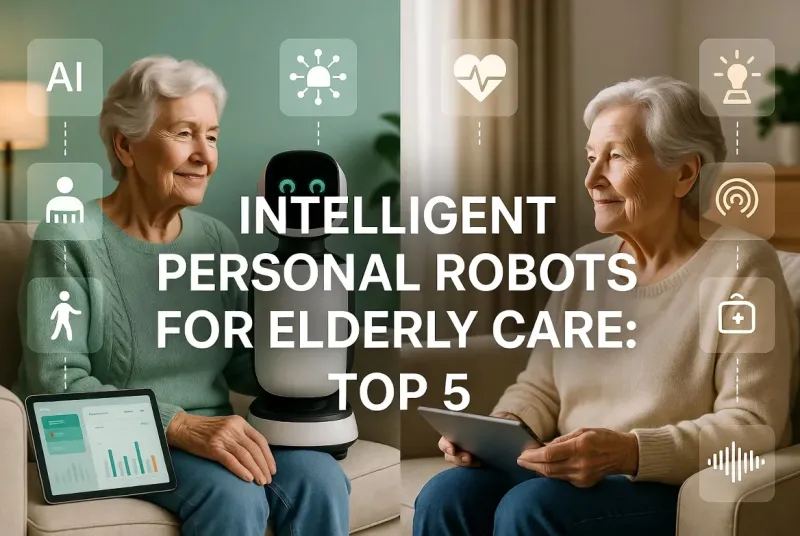
The Perfect Storm Why Intelligent Personal Robots for Elderly Care Are Emerging Now
We are living through a demographic transformation unprecedented in human history. By 2030, all baby boomers will be age 65 or older, expanding the senior population to 1 in 5 U.S. residents. Globally, the number of people aged 60+ is projected to nearly double to 2.1 billion by 2050. Simultaneously, family structures have shifted: adult children often live far from aging parents, professional caregivers face burnout and shortages, and healthcare systems strain under rising demand.
Into this convergence steps a new category of technology: intelligent personal robots designed specifically for elderly care. These devices blend artificial intelligence, intuitive interfaces, mobility, and compassionate design to support seniors aging in place while providing peace of mind for families and caregivers.
What Makes a Robot "Intelligent" and "Personal" for Elderly Care?
Not all robots marketed for seniors deliver meaningful value. The most effective intelligent personal robots share these characteristics:
✅ Purpose-Built for Aging Needs- Interfaces designed for reduced vision, hearing, or dexterity- Voice-first interaction minimizing complex touch gestures- Proactive (not just reactive) support: anticipating needs before crises
✅ Safety and Reliability as Core Design Principles- Fall detection with automatic emergency alerts- Medication management with confirmation and family notifications- Redundant connectivity (WiFi + cellular backup) for critical functions- Rigorous testing with older adult users during development
✅ Human-Centered, Not Replacement-Focused- Augments human caregiving; doesn't attempt to replace family connection- Encourages social engagement rather than isolating users with technology- Respects autonomy: offers suggestions, not commands
✅ Privacy and Ethical Data Practices- Clear policies about what data is collected, how it's used, and who can access it- Local processing options for sensitive health information- Transparent consent processes designed for cognitive accessibility
✅ Affordability and Accessibility- Pricing models that reflect the fixed incomes common among seniors- Insurance, Medicare, or Medicaid coverage pathways where applicable- Minimal technical setup burden for non-tech-savvy users
Top 5 Intelligent Personal Robots for Elderly Care in 2026
After evaluating dozens of platforms against safety, usability, effectiveness, privacy, and value criteria, here are the most promising intelligent personal robots for elderly care:
#1: ElliQ by Intuition Robotics⭐ Best Overall for Companionship + Proactive Engagement🌍 Based in: Israel / U.S. operations💰 Pricing: $1,499 one-time + $40/month subscription (as of 2026); Medicare Advantage plans increasingly cover🔋 Power: Plug-in base with optional battery backup📱 Connectivity: WiFi + optional cellular backup
Why It Leads the Category:ElliQ pioneered the "proactive companion" category and remains the gold standard for elderly-focused robotics. Unlike passive voice assistants, ElliQ initiates conversations, suggests activities, and learns user preferences to personalize engagement—addressing social isolation, a critical risk factor for senior health.
Key Features for Elderly Care
Companionship andamp; Cognitive Engagement:- Proactive conversation starter: "Good morning, Margaret! Would you like to hear today's news or do your morning stretches?"- Personalized content: Remembers interests (gardening, classical music, family photos) and surfaces relevant content- Cognitive exercises: Brain games, reminiscence prompts, and memory activities tailored to ability level- Mood awareness: Detects vocal tone changes and adjusts interaction style or alerts family if concerned
Health andamp; Safety Support:- Medication reminders with confirmation: "It's 2 PM—time for your blood pressure pill. Did you take it?"- Fall detection via integrated sensors + optional wearable pendant- Emergency contact escalation: Alerts designated family members or emergency services if needed- Telehealth integration: One-touch video calls with healthcare providers
Family Connection:- Simplified video calling: "Call Sarah" initiates video chat without complex navigation- Photo sharing: Family can send photos directly to ElliQ's display; senior views with voice commands- Activity updates (with consent): "Margaret enjoyed her walk today and listened to jazz music"
Privacy andamp; Ethics:- Data minimization: Collects only what's necessary for core functions- Transparent controls: Family dashboard shows what data is shared; easy opt-out- Local processing option: Sensitive conversations can be processed on-device- Independent ethics board reviews feature development
Ease of Use:- Setup: Intuition Robotics offers white-glove installation and senior-friendly onboarding- Interface: Large touchscreen + voice-first interaction; minimal touch gestures required- Support: 24/7 customer support trained in senior communication; remote troubleshooting
Limitations:- Subscription required for full functionality (not a one-time purchase)- Limited mobility: Stationary base unit (though screen rotates to face user)- Primarily English-language support (expanding to Spanish in 2026)
Best For: Seniors living alone who would benefit from daily companionship, cognitive engagement, and gentle health reminders—especially those at risk of social isolation or early cognitive decline.
Real-World Impact:A 2025 study in the Journal of the American Geriatrics Society found that ElliQ users reported 35% lower loneliness scores and 28% higher medication adherence compared to control groups. Family caregivers reported reduced anxiety about their loved one's wellbeing.
#2: Amazon Astro for Elder Care⭐ Best for Smart Home Integration + Family Monitoring🌍 Based in: U.S.💰 Pricing: $1,599 one-time + optional $20/month for advanced monitoring features🔋 Power: Self-charging base; 8-hour battery life for mobile operation📱 Connectivity: WiFi + optional cellular via Amazon Sidewalk
Why It Stands Out:Amazon Astro leverages Amazon's ecosystem (Alexa, Ring, Amazon Pharmacy) to create a mobile, versatile assistant that moves beyond stationary companionship. Its ability to patrol the home, check on seniors remotely, and integrate with existing smart devices makes it uniquely powerful for family caregivers.
Key Features for Elderly Care
Mobile Monitoring andamp; Safety:- Autonomous patrols: Astro can follow scheduled routes to check on senior's location and wellbeing- Remote check-ins: Family can "drive" Astro via app to visually check on parent, with two-way audio- Fall detection + alert: Integrated cameras and sensors detect falls; automatic alerts to emergency contacts- Medication cabinet integration: Works with Amazon Pharmacy for automated dispensing reminders
Smart Home Coordination:- Voice-controlled environment: "Astro, turn on the bedroom light" or "set thermostat to 72 degrees"- Appliance monitoring: Integrates with smart plugs to detect if stove was left on, etc.- Doorbell/camera integration: Astro can answer door, show visitor on screen, and alert family
Cognitive andamp; Social Support:- Alexa-powered conversation: Access to news, music, audiobooks, and skills designed for seniors- Video calling: Simplified "Call [name]" commands for family video chats- Routine reminders: Customizable prompts for meals, appointments, hydration
Privacy andamp; Control:- Physical privacy shutter: Camera lens cover for complete visual privacy- Local processing options: Sensitive commands can be processed on-device- Granular sharing controls: Family members choose what monitoring data to receive- Clear data policies: Amazon publishes elder-care-specific privacy documentation
Ease of Use:- Setup: Amazon offers in-home setup service for elderly users- Interface: Familiar Alexa voice commands; large touchscreen for visual confirmation- Mobility: Self-navigating with obstacle avoidance; returns to charge automatically
Limitations:- Requires robust WiFi coverage throughout home for reliable mobility- Privacy concerns: Some seniors uncomfortable with mobile camera in living spaces- Alexa ecosystem dependency: Best experience requires Amazon account and compatible devices- Higher upfront cost than stationary alternatives
Best For: Tech-comfortable seniors or families seeking remote monitoring capabilities alongside smart home integration. Ideal when adult children live at a distance and want visual check-in options.
Real-World Impact:Early adopter families report that Astro's mobility enables "peace of mind patrols" without intrusive constant video monitoring. The ability to remotely verify a parent's location after a missed check-in call has prevented several emergency situations.
#3: CareBot Pro by Care Robotics⭐ Best for Professional Caregiving Support + Clinical Integration🌍 Based in: U.S. / Japan partnership💰 Pricing: $2,200 one-time or $89/month lease; clinical deployment pricing available🔋 Power: Swappable battery packs for 24/7 operation📱 Connectivity: WiFi + cellular + optional facility network integration
Why It's Unique:CareBot Pro bridges consumer and clinical care, designed for both family use and professional caregiving settings. Its clinical-grade sensors, EHR integration capabilities, and caregiver workflow tools make it the most robust option for seniors with complex health needs.
Key Features for Elderly Care
Clinical-Grade Monitoring:- Vital sign integration: Optional cuffless blood pressure, pulse oximetry via wearable sync- Medication management: Barcode scanning verification, adherence tracking, pharmacy integration- Symptom logging: Voice-based symptom reporting with clinical decision support alerts- Telehealth ready: HIPAA-compliant video visits with automatic documentation
Caregiver Workflow Support:- Task coordination: Shared care plans visible to family members and professional caregivers- Handoff documentation: Voice-to-text notes for shift changes or family updates- Emergency protocols: Customizable escalation paths based on senior's care plan- Training mode: Guided onboarding for new caregivers or family members
Cognitive andamp; Mobility Support:- Dementia-friendly interface: Simplified prompts, visual cues, reduced cognitive load- Mobility assistance cues: Gentle reminders for walking exercises or physical therapy- Reminiscence therapy: Curated photo/music libraries triggered by voice or schedule- Orientation support: Time/date reminders, weather updates, daily schedule previews
Privacy andamp; Compliance:- HIPAA-compliant architecture for health data- Role-based access controls: Family, clinicians, and aides see appropriate data levels- Audit trails: Complete logs of data access for compliance and transparency- Consent management: Dynamic consent workflows adapted for cognitive accessibility
Ease of Use:- Modular setup: Start with core features; add clinical modules as needs evolve- Multi-user support: Different voice profiles and preferences for senior, family, caregivers- Offline functionality: Core reminders and alerts work without internet connectivity
Limitations:- Higher cost reflects clinical capabilities; may be overkill for simple companionship needs- Setup complexity: Clinical integrations require IT support or professional installation- Learning curve: Full feature set requires training for caregivers
Best For: Seniors with chronic conditions, post-hospitalization recovery, or early dementia who benefit from clinical-grade monitoring alongside family caregiving. Also ideal for small assisted living facilities or home health agencies.
Real-World Impact:Pilot programs with home health agencies report 40% reduction in medication errors and 30% fewer unnecessary emergency department visits when CareBot Pro is integrated into care plans.
#4: Moxi by Diligent Robotics (Elder Care Edition)⭐ Best for Physical Task Assistance + Hybrid Human-Robot Care🌍 Based in: U.S.💰 Pricing: Custom pricing for home deployment (~$3,000-5,000); primarily B2B focused but expanding to consumer🔋 Power: All-day battery with auto-return charging📱 Connectivity: WiFi + facility network integration
Why It's Different:Moxi originated in hospital settings to assist nurses with logistical tasks. The elder care edition adapts this capability for home use, focusing on physical assistance—fetching items, light transport, and environmental interaction—complementing rather than replacing human caregivers.
Key Features for Elderly Care
Physical Task Assistance:- Item retrieval: "Moxi, bring me my glasses from the kitchen counter"- Light transport: Carry medications, water, or small items between rooms- Environmental interaction: Open/close doors, turn on lights via integrated manipulator arm- Safety checks: Verify stove is off, doors are locked, pathways are clear
Care Coordination Support:- Task delegation: Family or caregivers can assign tasks via app ("Please deliver afternoon meds to Mom")- Progress tracking: Confirmation when tasks are completed; photo verification if helpful- Schedule integration: Syncs with family calendars for appointment reminders and preparation
Companionship Features:- Voice interaction: Friendly, patient conversational interface designed for seniors- Activity prompts: "Would you like to water your plants now?" or "Time for your afternoon walk"- Emergency response: Can locate senior and alert contacts if fall or distress detected
Privacy andamp; Ethics:- Task-focused data collection: Minimizes personal data storage; focuses on task completion- Transparent operation: Clear indicators when recording or transmitting data- Human-in-the-loop design: Critical decisions always involve human caregiver confirmation
Ease of Use:- Natural language commands: No complex programming required for basic tasks- Adaptive learning: Improves task performance based on home layout and senior preferences- Safety-first mobility: Advanced obstacle avoidance and gentle movement around seniors
Limitations:- Primarily available through care agencies or pilot programs; limited direct consumer access- Higher cost reflects physical manipulation capabilities- Setup requires home assessment and customization for safety
Best For: Seniors with mild mobility limitations who would benefit from light physical assistance alongside human caregiving. Ideal for hybrid care models where technology augments rather than replaces human support.
Real-World Impact:Early home deployments show that Moxi reduces caregiver physical strain (fewer trips for items) and increases senior autonomy (ability to request assistance independently), improving satisfaction for both parties.
#5: Tomo by Tombot⭐ Best for Emotional Connection + Dementia-Friendly Design🌍 Based in: U.S.💰 Pricing: $899 one-time + optional $15/month for advanced features🔋 Power: Rechargeable battery; 12-hour typical use📱 Connectivity: WiFi + Bluetooth for family app connection
Why It Stands Out:Tomo takes a fundamentally different approach: a soft, pet-like companion robot designed specifically for emotional connection and dementia care. Rather than a screen-based interface, Tomo uses touch, sound, and responsive movement to provide comfort and reduce agitation.
Key Features for Elderly Care
Emotional Companionship:- Responsive to touch: Purrs, moves, and "responds" to petting and holding- Voice recognition: Learns senior's name and responds to simple commands- Mood adaptation: Adjusts responsiveness based on detected vocal tone or activity level- Calming presence: Designed to reduce anxiety and agitation common in dementia
Cognitive andamp; Behavioral Support:- Reminiscence prompts: Plays familiar songs or sounds triggered by interaction- Routine reinforcement: Gentle cues for daily activities without complex instructions- Agitation reduction: Studies show pet-like robots can decrease wandering and restlessness- Sensory engagement: Soft textures, gentle sounds, and predictable responses support cognitive accessibility
Family Connection:- Activity insights (with consent): "Tomo detected 3 hours of calm interaction today"- Remote interaction: Family can send voice messages that Tomo "delivers" to senior- Caregiver alerts: Notifications if unusual agitation or inactivity detected
Privacy andamp; Simplicity:- Minimal data collection: Focuses on interaction patterns, not personal content- No camera or microphone recording by default; opt-in features clearly disclosed- Simple setup: No complex pairing or app navigation required for senior user
Ease of Use:- Zero-learning-curve interface: Interaction is intuitive—pet, talk, hold- Durable design: Soft, washable exterior; drop-resistant construction- Low maintenance: No software updates required for core functionality; optional feature updates via family app
Limitations:- Limited "smart" capabilities: Not designed for medication reminders or emergency alerts- Niche focus: Best for emotional support; may need to be paired with other tools for comprehensive care- Battery life: Requires daily charging for continuous availability
Best For: Seniors with dementia, Alzheimer's, or significant anxiety who benefit from non-screen, emotionally resonant companionship. Ideal as a complementary tool alongside other monitoring or reminder systems.
Real-World Impact:Clinical trials published in Alzheimer's andamp; Dementia Journal (2025) found that dementia patients interacting with Tomo showed 45% reduction in agitation episodes and improved sleep quality compared to control groups.
How to Choose the Right Robot for Your Situation
Selecting an intelligent personal robot requires matching technology capabilities to specific needs, preferences, and constraints. Use this decision framework:
Step 1: Assess the Senior's Primary Needs- Social isolation? → Prioritize companionship features (ElliQ, Tomo)- Medication management? → Look for robust reminder systems (ElliQ, CareBot Pro)- Fall risk or safety concerns? → Prioritize detection and alert capabilities (Astro, CareBot Pro)- Cognitive decline? → Seek dementia-friendly interfaces (Tomo, CareBot Pro)- Family remote monitoring? → Consider mobile or camera-enabled options (Astro, CareBot Pro)
Step 2: Evaluate Technical Comfort and Home Environment- WiFi reliability: Mobile robots (Astro, Moxi) require strong whole-home coverage- Voice vs. touch interface: Seniors with dexterity issues benefit from voice-first designs- Privacy preferences: Some seniors uncomfortable with cameras; consider shutter options or non-visual robots- Space constraints: Stationary robots (ElliQ, Tomo) require less floor space than mobile units
Step 3: Consider Budget and Funding Options- Upfront cost vs. subscription: ElliQ and CareBot Pro have ongoing fees; Tomo is one-time purchase- Insurance coverage: Medicare Advantage plans increasingly cover ElliQ; check eligibility- Trial periods: Most companies offer 30-60 day trials; use these to assess fit before committing- Total cost of ownership: Include potential cellular data, accessories, and support plans
Step 4: Plan for Implementation and Support- Setup assistance: Does the vendor offer white-glove installation for seniors?- Training resources: Are there senior-friendly tutorials or in-person onboarding?- Ongoing support: 24/7 customer service trained in senior communication is critical- Family involvement: Choose platforms with intuitive family dashboards for remote support
Step 5: Address Privacy and Ethical Considerations Upfront- Data policies: Review what data is collected, how it's used, and who can access it- Consent processes: Ensure the senior understands and consents to monitoring features- Autonomy preservation: Choose robots that offer suggestions, not commands; respect "no"- Exit strategy: Understand how to discontinue service and delete data if needed
Implementation Guide Introducing a Robot to an Elderly Loved One
Even the best technology fails if the senior user rejects it. Follow these evidence-based strategies for successful adoption:
1. Frame as a Helper, Not a Replacement- "This little friend can remind you about your pills so you don't have to remember everything"- Avoid language suggesting the robot replaces family visits or human connection
2. Involve the Senior in Selection and Setup- Show options and let them express preferences (voice, appearance, features)- Include them in naming the robot or customizing its personality
3. Start Simple, Add Features Gradually- Begin with 1-2 core functions (e.g., medication reminders, video calls)- Add complexity only after the senior is comfortable with basics
4. Practice Together- Role-play common interactions: "Let's practice asking ElliQ for the weather"- Normalize mistakes: "It's okay if it doesn't understand the first time—we'll try again"
5. Establish Clear Boundaries and Expectations- Clarify what the robot can and cannot do (e.g., "It can remind you to call me, but it can't call 911 unless we set that up")- Discuss privacy: "It won't record our private conversations unless you ask it to"
6. Monitor and Adjust- Check in regularly: "How is Tomo working for you? Is there anything you'd change?"- Be prepared to modify features or discontinue if the senior is uncomfortable
Ethical Considerations Using Robots Responsibly in Elder Care
Intelligent personal robots offer tremendous benefits but raise important ethical questions. Address these proactively:
✅ Autonomy vs. Safety- Balance monitoring with respect for independence- Use the least restrictive interventions necessary for safety- Regularly reassess whether features remain appropriate as needs evolve
✅ Privacy and Data Rights- Obtain informed consent using accessible language and formats- Minimize data collection to what's necessary for core functions- Provide clear pathways for data access, correction, and deletion
✅ Human Connection Preservation- Position robots as supplements to, not substitutes for, human relationships- Monitor for over-reliance on technology at the expense of social engagement- Encourage family involvement through shared features and updates
✅ Equity and Access- Advocate for insurance coverage and subsidy programs to expand access- Support development of multilingual and culturally adapted interfaces- Consider loaner programs or community sharing models for cost barriers
✅ Transparency and Trust- Clearly disclose AI capabilities and limitations- Avoid anthropomorphizing robots in ways that could mislead vulnerable users- Maintain human oversight for critical decisions (emergency response, care plan changes)
The Future of Intelligent Personal Robots in Elder Care
As we look beyond 2026, several trends will shape this evolving field
🔮 Enhanced AI Personalization- Robots that learn individual preferences, routines, and communication styles over time- Adaptive interfaces that adjust to changing cognitive or physical abilities- Predictive health insights that flag subtle changes warranting professional attention
🔮 Interoperability and Ecosystem Integration- Seamless connection with electronic health records, pharmacy systems, and telehealth platforms- Standardized APIs enabling families to mix-and-match devices from different vendors- Voice assistant agnosticism: Robots that work with Alexa, Google Assistant, or proprietary systems
🔮 Affordability and Access Expansion- Medicare and Medicaid coverage pathways for evidence-based robotic interventions- Community-based lending libraries for short-term or trial use- Tiered pricing models reflecting varying income levels among seniors
🔮 Ethical Frameworks and Regulation- Industry standards for privacy, consent, and data governance in elder care robotics- Certification programs for "senior-friendly" design and accessibility- Independent oversight boards to review new features for ethical implications
🔮 Hybrid Human-Robot Care Models- Training programs for caregivers on effective collaboration with robotic assistants- Workflow tools that optimize task allocation between humans and robots- Research on optimal "handoff" points between technology and human support
Conclusion Technology with Heart for Aging with Dignity
Intelligent personal robots for elderly care represent more than technological innovation—they embody a commitment to supporting aging with dignity, connection, and safety. When thoughtfully selected and implemented, these assistants can:
✅ Reduce social isolation through proactive companionship✅ Improve medication adherence and health outcomes✅ Provide peace of mind for distant family caregivers✅ Support aging in place, delaying or avoiding institutional care✅ Preserve autonomy while enhancing safety
Yet technology alone is never the answer. The most successful deployments pair intelligent robots with:- Human connection: Regular family visits, phone calls, and community engagement- Professional support: Access to healthcare providers, social workers, and care coordinators- Environmental design: Home modifications that complement robotic assistance- Ethical guardrails: Policies and practices that prioritize the senior's values and preferences
As you consider these tools for your loved one, remember: the goal isn't to automate care, but to augment human compassion with intelligent support. The best robot is one that helps your parent or grandparent feel more connected, capable, and cherished—not one that replaces the irreplaceable.
For additional resources on elder care technology, aging-in-place strategies, and caregiver support, explore trusted organizations like the National Institute on Aging, AARP, and the Gerontological Society of America. Your journey to compassionate, technology-enhanced elder care starts with one informed, heart-centered decision.
For curated comparisons, implementation guides, and expert reviews of intelligent personal robots for elderly care, discover specialized resources supporting families and professionals who value both innovation and humanity. Support aging with dignity, connection, and the right tools for the journey.