
The Science of Strands: Why Women’s Hair Texture Changes After 30
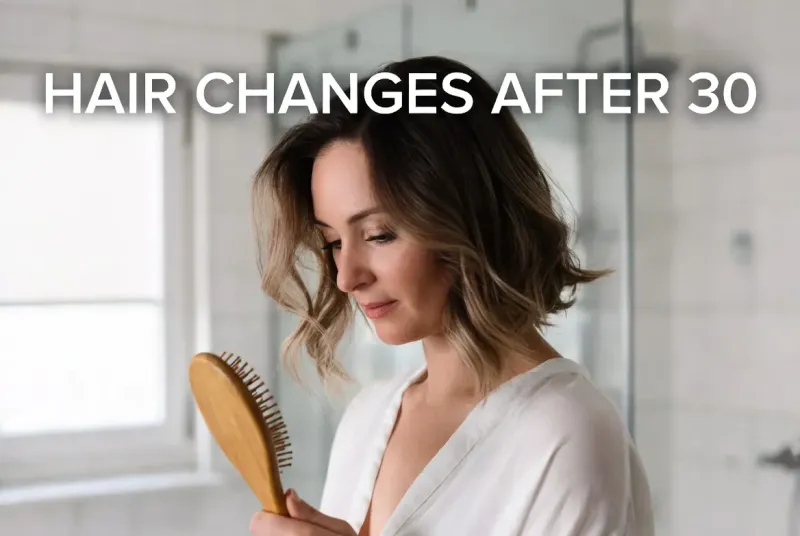
The Evolving Strand Understanding Hair Texture Changes After 30
For many women, turning 30 brings a subtle but noticeable shift in how their hair looks and feels. You might maintain the same washing routine, use the same products, and eat the same diet, yet your hair behaves differently. Curls may loosen. Straight hair might become wiry. Shine may diminish. Dryness may persist despite heavy conditioning. These changes can be frustrating, even confusing, leading many to wonder if they're doing something wrong.
The answer lies not in product failure, but in biology.
Hair texture is determined by the shape of the hair follicle, the integrity of the hair shaft, and the health of the scalp environment. All of these factors are influenced by internal physiology—particularly hormones—and external exposures. After 30, women undergo significant physiological shifts that directly impact hair structure. Understanding these mechanisms is the first step toward adapting your care routine to support your hair's evolving needs.
This guide explores the science behind why hair texture changes after 30. We'll examine the roles of hormones, collagen, sebum production, cellular turnover, and environmental accumulation. Whether you're seeking to maintain curl definition, combat dryness, or simply understand your changing strands, you'll find evidence-based strategies grounded in trichology, endocrinology, and dermatology.
The Biology of Hair Texture What Determines How Hair Feels?
To understand why texture changes, we first need to understand what creates texture in the first place.
Hair Shaft StructureEach hair strand is composed of three layers:- Cuticle: The outermost protective layer of overlapping scales. When flat and smooth, hair feels soft and reflects light (shine). When lifted or damaged, hair feels rough and looks dull.- Cortex: The middle layer containing keratin proteins and pigment (melanin). This layer determines strength, elasticity, and curl pattern.- Medulla: The innermost core, present in thicker hairs, contributing to overall structure.
Texture is influenced by:- Follicle Shape: Round follicles produce straight hair; oval follicles produce wavy hair; flattened follicles produce curly or coily hair.- Cuticle Integrity: Smooth cuticles feel silky; damaged cuticles feel coarse.- Moisture-Protein Balance: Adequate moisture provides flexibility; adequate protein provides strength. Imbalance leads to brittleness or mushiness.- Sebum Coating: Natural oils from the scalp coat the shaft, adding smoothness and protection.
When any of these components shift due to aging or hormonal changes, texture follows.
Hormonal Shifts The Primary Driver of Texture Change
Hormones are the conductors of the hair orchestra. After 30, hormonal fluctuations become more pronounced, directly influencing hair structure.
Estrogen Decline and Hair QualityEstrogen is profoundly beneficial for hair. It:- Prolongs the anagen (growth) phase, allowing hair to grow longer and thicker- Supports collagen production, which maintains scalp elasticity and follicle health- Enhances sebum production, providing natural lubrication for the hair shaft- Increases hair shaft diameter, contributing to fullness
After 30, and especially during perimenopause (which can begin in the mid-30s for some women), estrogen levels begin to fluctuate and eventually decline. This leads to:- Reduced scalp collagen: Follicles may become less secure, affecting hair anchorage and growth quality- Decreased sebum: Hair becomes drier, rougher, and more prone to static and frizz- Thinner hair shafts: Individual strands may grow with reduced diameter, feeling finer or weaker- Slower growth: Hair may not reach previous lengths before shedding
Androgen Sensitivity and Texture ShiftsWhile estrogen declines, relative androgen (testosterone, DHT) activity may become more prominent. Androgens affect hair differently depending on genetic sensitivity:- Scalp hair: In genetically susceptible individuals, androgens can miniaturize follicles, leading to finer, weaker hair (female pattern hair loss)- Facial/body hair: Androgens may stimulate coarser hair growth in unwanted areas- Texture change: Some women report hair becoming wirier or coarser as hormonal balance shifts
Thyroid Function and Hair TextureThyroid hormones regulate metabolism in all cells, including hair follicles. Subclinical hypothyroidism (mild underactivity) becomes more common after 30:- Hypothyroidism: Often causes dry, brittle, coarse hair that feels like straw- Hyperthyroidism: May cause fine, soft hair that sheds excessively- Impact: Even subtle thyroid shifts can alter texture without dramatic weight changes
Progesterone FluctuationsProgesterone supports hair growth and counteracts androgen effects. During perimenopause, progesterone often declines before estrogen:- Reduced protection against androgen effects- Potential increase in shedding or texture changes- May contribute to increased oiliness or dryness depending on individual balance
Cellular Aging Collagen, Turnover, and Scalp Health
Beyond hormones, the aging process itself affects the structures that support hair.
Collagen Decline and Scalp ElasticityCollagen is the structural protein that provides elasticity and strength to skin and scalp. Production declines by approximately 1% per year after age 30:- Scalp becomes less elastic: Follicles may not be held as securely, affecting growth angle and quality- Reduced support for follicles: May contribute to thinner hair shafts- Impact on texture: Less supportive scalp environment can lead to weaker, less resilient hair
Slower Cellular TurnoverSkin and scalp cell turnover slows with age:- Dead skin cells accumulate on the scalp more readily- Can lead to buildup that weighs hair down or blocks follicles- May contribute to dullness and rough texture- Slower healing: Scalp takes longer to recover from irritation or damage
Reduced Sebum ProductionSebaceous glands become less active with age:- Less natural lubrication for hair shafts- Hair feels drier, rougher, and more prone to tangling- Increased susceptibility to static and frizz- May require more intensive conditioning than in younger years
Diminished Scalp CirculationMicrocirculation to the scalp may decrease with age and sedentary lifestyle:- Reduced nutrient delivery to follicles- Slower waste removal from follicle environment- May contribute to weaker hair growth and altered texture
Cumulative Environmental Damage The History Written on Your Strands
Hair is a record of your history. Damage accumulated over decades doesn't disappear; it manifests as texture changes.
UV Exposure AccumulationYears of sun exposure degrade hair proteins:- Keratin degradation leads to weakness and roughness- Lipid layer oxidation contributes to dryness and frizz- Color-treated hair is especially vulnerable to UV-induced texture changes- Cumulative effect: By 30, years of exposure add up, even if damage wasn't visible earlier
Heat Styling HistoryRegular use of flat irons, curling wands, and blow dryers takes a toll:- Cuticle damage accumulates over time- Bubble hair (internal steam damage) may develop from excessive heat- Loss of elasticity: Hair doesn't bounce back as well after styling- Texture shift: Previously smooth hair may become frizzy or coarse
Chemical Processing HistoryColoring, perming, relaxing, or bleaching alters hair structure:- Repeated processing weakens the cortex- Porosity increases: Hair absorbs and loses moisture unpredictably- Texture becomes inconsistent: Some strands feel healthy, others feel damaged- By 30, years of processing may catch up, manifesting as dryness or breakage
Mechanical Damage AccumulationBrushing, towel drying, and styling habits create micro-damage:- Cuticle lifting from aggressive brushing- Elastic band damage causing breakage- Friction from pillowcases contributing to roughness- Cumulative effect: Hair feels less smooth despite similar care routine
Specific Texture Shifts What Women Report After 30
While individual experiences vary, certain patterns emerge commonly after 30.
Curl Pattern LooseningMany women with curly or wavy hair report curls becoming looser or less defined:- Hormonal shifts affect follicle shape slightly- Reduced elasticity means curls don't spring back as tightly- Increased weight from products or buildup can weigh curls down- Dryness contributes to frizz rather than defined curl clusters
Straight Hair Becoming WiryWomen with straight hair may notice strands feeling coarser or wirier:- Reduced sebum leads to less smoothness- Cuticle damage accumulates, creating friction- Hormonal shifts may alter shaft diameter inconsistently- Hair may feel thicker but less manageable
Increased Dryness and FrizzNearly universal report after 30:- Decreased sebum production- Reduced ability to retain moisture (porosity changes)- Cumulative damage makes hair more susceptible to humidity- Hair feels rougher despite conditioning
Thinning Alongside Texture ChangeSome women experience both texture and density changes:- Individual strands become finer (miniaturization)- Overall volume decreases- Texture may feel softer but weaker- Scalp becomes more visible
Loss of ShineDullness is a common complaint:- Cuticle damage scatters light instead of reflecting it- Reduced sebum reduces natural gloss- Buildup from products accumulates more easily on aging hair- Hair looks less vibrant despite health
Actionable Strategies Supporting Hair Texture After 30
You can't stop aging, but you can support your hair through the transition. These evidence-based strategies address the root causes of texture changes.
Strategy 1 Adjust Hydration and Protein Balance
Why It MattersAging hair often struggles with moisture retention and protein integrity:- Dryness requires increased hydration- Weakness requires protein support- Balance is critical: Too much protein makes hair brittle; too much moisture makes it mushy
Implementation- Hydrating ingredients: Look for hyaluronic acid, glycerin, aloe vera, panthenol- Protein ingredients: Hydrolyzed wheat, silk, or keratin proteins (use moderately)- Deep conditioning: Weekly masks to replenish moisture and strength- Leave-in conditioners: Provide ongoing hydration throughout the day
Porosity Consideration- Low porosity (common with buildup): Use lightweight liquids, apply heat to help penetration- High porosity (common with damage): Use heavier creams and oils to seal moisture- Adjust based on how hair feels, not just age
Strategy 2 Prioritize Scalp Health as the Foundation
Why It MattersHealthy hair grows from a healthy scalp. Aging scalp needs specific support:- Circulation supports nutrient delivery- Cleanliness prevents buildup that weighs hair down- Balance prevents irritation that affects growth quality
Implementation- Scalp massage: 3-5 minutes daily to stimulate circulation- Gentle exfoliation: Monthly scalp scrubs or chemical exfoliants (salicylic acid) to remove buildup- Scalp serums: Ingredients like peptides, caffeine, or rosemary oil may support follicle health- Avoid heavy products at roots: Prevents weighing hair down and clogging follicles
Strategy 3 Modify Washing and Conditioning Routine
Why It MattersYour 20s routine may not serve your 30s hair:- Reduced sebum means less frequent washing may be beneficial- Increased dryness means more intensive conditioning is needed- Gentle handling prevents further damage
Implementation- Washing frequency: Adjust based on scalp oiliness, not habit (may need less frequent washing)- Shampoo choice: Sulfate-free, pH-balanced formulas to avoid stripping- Conditioning focus: Apply generously from mid-lengths to ends- Water temperature: Lukewarm water prevents stripping natural oils; cool rinse seals cuticles
Strategy 4 Protect Against Further Damage
Why It MattersPreventing new damage is as important as repairing old damage:- Aging hair is more vulnerable to breakage- Cumulative damage accelerates texture changes- Protection preserves existing quality
Implementation- Heat protection: Always use heat protectant before styling; lower temperature settings- UV protection: Hats, scarves, or UV-protective hair products- Gentle drying: Microfiber towels or cotton t-shirts instead of rough towels- Protective styling: Braids, buns, or loose styles that reduce friction and manipulation
Strategy 5 Support Hair from Within Through Nutrition
Why It MattersHair reflects internal health. Nutritional needs shift with age:- Protein requirements may increase to support keratin synthesis- Essential fatty acids support scalp hydration- Micronutrients support follicle function
Implementation- Protein: Aim for 1.0-1.2g per kg body weight daily (lean meats, fish, eggs, legumes, tofu)- Omega-3s: Support scalp health and reduce inflammation (fatty fish, flaxseeds, walnuts)- Iron: Supports oxygen delivery to follicles (red meat, spinach, lentils, fortified foods)- Biotin and B vitamins: Support cellular metabolism (eggs, nuts, whole grains, leafy greens)- Vitamin D: Emerging research links adequate levels to hair cycling (sun exposure, fortified foods, supplementation if deficient)- Hydration: Adequate water intake supports all cellular functions including hair growth
Strategy 6 Manage Stress for Hair Health
Why It MattersChronic stress elevates cortisol, which affects hair:- Can trigger shedding (telogen effluvium)- May affect sebum production- Impairs nutrient absorption and utilization
Implementation- Stress-reduction practices: Meditation, yoga, breathwork, or enjoyable hobbies- Sleep hygiene: 7-9 hours nightly supports repair and hormonal balance- Exercise: Moderate activity reduces stress hormones and improves circulation- Professional support: Therapy or counseling if stress feels unmanageable
Strategy 7 Consider Professional Treatments
Why It MattersSome texture changes benefit from professional intervention:- Deep conditioning treatments penetrate more effectively- Scalp treatments address underlying conditions- Professional guidance ensures appropriate product selection
Implementation- In-salon masks: Professional-grade products for intense hydration or protein support- Scalp treatments: Exfoliation, stimulation, or medicated treatments if needed- Trimming: Regular trims (every 8-12 weeks) remove damaged ends that contribute to rough texture- Consultation: Trichologist or dermatologist for persistent texture changes or shedding
When to Seek Medical Guidance
While texture changes are often normal, consult a healthcare provider if:- Changes are sudden or dramatic- Texture changes accompany significant hair loss- You experience scalp symptoms: pain, itching, scaling, redness- You have other symptoms: fatigue, weight changes, mood shifts, temperature intolerance- You suspect underlying conditions: thyroid dysfunction, hormonal imbalances, nutritional deficiencies
Diagnostic Tools May Include- Blood work (thyroid panel, hormone levels, iron/ferritin, vitamin D, zinc)- Scalp examination (dermoscopy to assess follicle health)- Hair pull test (to assess shedding rate)- Biopsy (rarely, for specific conditions)
Treatment Options May Include- Hormone therapy (if appropriate for menopausal symptoms)- Medications for thyroid or other conditions- Topical treatments (minoxidil for thinning, medicated shampoos for scalp conditions)- Nutritional supplementation based on deficiencies
The Bigger Picture Hair Texture as Part of Whole-Person Aging
While maintaining hair quality is a common goal, it's essential to maintain perspective
Texture Changes Are Normal- Aging hair reflects a life lived—not a failure to maintain youth- Texture shifts are natural parts of human biology- Beauty evolves; confidence and self-care matter more than conforming to a single ideal
Holistic Self-Care Supports Hair- Stress management, quality sleep, balanced nutrition, and joyful movement benefit hair alongside overall health- Approaching aging with curiosity and compassion creates space for grace at every stage
Avoiding Extremes- Over-treating hair with excessive products can worsen texture- Restrictive dieting can impair hair health- Sustainable, balanced habits support long-term quality more effectively than quick fixes
Conclusion Embracing Your Evolving Strands
If your hair texture has changed after 30, remember: this isn't a sign of failure or lack of effort. It's information—a signal that your hair's needs have evolved alongside your biology.
Understanding the science behind these changes empowers you to respond with strategy rather than frustration. You don't need to chase the hair of your 20s. You can support your hair's current reality with informed care, adjusted routines, and self-compassion.
Start where you are. Choose one strategy from this guide to implement this week—perhaps adjusting your conditioning routine, adding a scalp massage, or prioritizing protein at breakfast. Notice how your hair responds. Build from there.
Your hair tells a story—not just of genetics or products, but of decades of experiences, resilience, and adaptation. With mindful care and patience, you can support its health and vitality at every stage, cultivating strength and beauty that evolve with grace.
For evidence-based hair care resources, gentle products, and expert guidance to support your hair health journey at any age, explore trusted platforms that prioritize science, transparency, and individualized care. Your path to healthy, confident hair starts with one intentional choice at a time.
For thoughtfully curated hair care essentials, scalp support, hydration treatments, and products designed to complement the evolving needs of mature hair, discover trusted options at TrustShopBD (www.trustshopbd.com). Each selection is chosen to support your journey toward strength, vitality, and confident well-being while respecting diverse hair types, textures, and life stages.