

Natural Butt Lifting and Toning: No-Equipment Home Workout
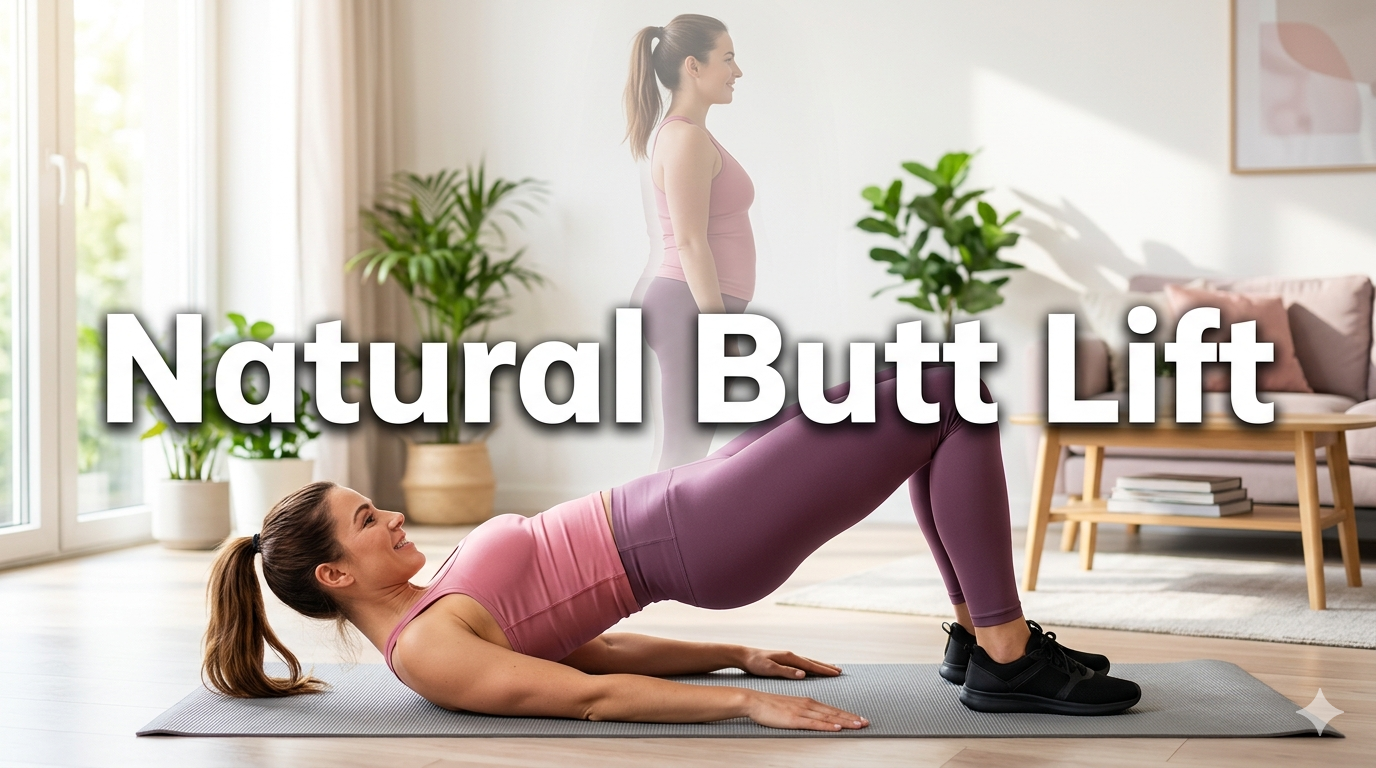
Your Complete Guide to Natural Butt Lifting and Toning at Home
Want a firmer, lifted, and more toned backside without stepping foot in a gym or buying expensive equipment? You're in the right place. Natural butt lifting and toning exercises are not only effective but also accessible to anyone, anywhere. This comprehensive guide will walk you through everything you need to know about building stronger, shapelier glutes using just your bodyweight—from the science behind glute development to a complete workout plan you can start today.
The best part? You don't need fancy machines, heavy weights, or a gym membership to see real results. With consistency, proper form, and the right exercises, you can transform your glutes from the comfort of your living room. Whether you're a beginner just starting your fitness journey or someone looking to enhance your current routine, this guide provides actionable, expert-backed strategies for natural butt enhancement.
Understanding Glute Anatomy: Why Targeted Exercises Work
The Three Glute Muscles You Need to Know
Before diving into exercises, it's essential to understand what you're working with. Your glutes aren't just one muscle—they're a group of three distinct muscles that work together to create shape, strength, and function:
Gluteus maximus: This is the largest muscle in your body and the primary driver of butt size and shape. It's responsible for hip extension (moving your leg backward) and external rotation. When people talk about "building a bigger butt," they're primarily targeting the gluteus maximus.
Gluteus medius: Located on the side of your hip, this muscle is crucial for creating that rounded, lifted appearance. It stabilizes your pelvis and moves your leg away from your body (abduction). Weak gluteus medius muscles can lead to a flat or sagging appearance, even if your gluteus maximus is strong.
Gluteus minimus: The smallest of the three, this muscle works alongside the medius to stabilize and abduct the hip. While smaller, it plays an important role in overall glute function and shape.
Why this matters: A well-rounded glute workout targets all three muscles, not just the maximus. This creates balanced development, better function, and that coveted lifted, rounded look.
How Muscles Grow: The Science of Hypertrophy
Muscle growth, or hypertrophy, occurs when muscle fibers experience tension and microscopic damage during exercise. Your body repairs this damage by fusing muscle fibers together, creating new protein strands that increase muscle size and strength.
For natural butt lifting, you need to create enough stimulus through resistance. While weights are one form of resistance, your bodyweight—when used correctly through proper exercise selection, volume, and progression—can be equally effective, especially for beginners to intermediate fitness levels.
The key principles for muscle growth include:
- Progressive overload: Gradually increasing difficulty
- Time under tension: Controlling movements for maximum muscle engagement
- Proper form: Ensuring the right muscles do the work
- Adequate recovery: Allowing muscles time to repair and grow
- Nutrition: Fueling your body with enough protein and calories
The Benefits of Bodyweight Glute Training
Why No-Equipment Workouts Are Effective
Bodyweight exercises offer unique advantages that make them ideal for butt lifting and toning:
Accessibility: You can work out anywhere, anytime—no gym membership, no commute, no waiting for equipment. This consistency is crucial for seeing results.
Functional strength: Bodyweight exercises often engage multiple muscle groups and mimic real-life movements, building strength that translates to daily activities and athletic performance.
Lower injury risk: Without heavy external loads, there's less stress on joints and connective tissue, making bodyweight training safer for beginners and those with joint concerns.
Cost-effective: Free workouts mean you can invest your money elsewhere—whether in quality nutrition, comfortable workout clothes, or saving for future fitness goals.
Scalability: Bodyweight exercises can be modified to match any fitness level. As you get stronger, you can increase reps, slow down tempo, add pauses, or progress to more challenging variations.
What Results Can You Expect?
With consistent effort (3-5 workouts per week) and proper nutrition, here's a realistic timeline:
Weeks 1-4: You'll notice improved muscle activation and mind-muscle connection. Your glutes will feel more engaged during exercises, and you may experience initial soreness as your muscles adapt.
Weeks 4-8: Visible changes begin. You may notice improved firmness, better posture, and clothes fitting differently. Strength increases noticeably.
Weeks 8-12: More pronounced lifting and toning. Friends and family may start commenting on your progress. You'll feel stronger and more confident.
3-6 months: Significant transformation with consistent effort. Noticeable lift, improved shape, and increased strength. This is when the real magic happens.
Remember: Results vary based on genetics, starting point, nutrition, sleep, and consistency. Focus on progress, not perfection.
Essential Natural Butt Lifting Exercises
1. Glute Bridges: The Foundation Movement
Glute bridges are the cornerstone of any butt-lifting routine. They isolate the glutes effectively and can be done anywhere.
How to do it: Lie on your back with knees bent and feet flat on the floor, hip-width apart. Arms rest at your sides. Squeeze your glutes and push through your heels to lift your hips toward the ceiling until your body forms a straight line from shoulders to knees. Hold for 1-2 seconds at the top, then lower with control.
Key form cues: Keep your core engaged, avoid arching your lower back excessively, and focus on squeezing your glutes at the top. Your ribs should stay down, not flared.
Progressions: Single-leg glute bridges, glute bridge marches, or adding a resistance band above your knees.
Reps and sets: Start with 3 sets of 15-20 reps, resting 30-60 seconds between sets.
2. Squats: The King of Lower Body Exercises
Squats work your entire lower body but are particularly effective for the gluteus maximus when performed with proper depth and form.
How to do it: Stand with feet shoulder-width apart, toes slightly turned out. Keep your chest up and core engaged. Push your hips back as if sitting in a chair, then bend your knees to lower down. Go as low as you can while maintaining a flat back—ideally until your thighs are parallel to the floor or lower. Drive through your heels to return to standing, squeezing your glutes at the top.
Key form cues: Keep your knees tracking over your toes (don't let them cave inward), maintain an upright torso, and push through your heels, not your toes.
Variations: Sumo squats (wider stance), pulse squats, jump squats, or squat holds.
Reps and sets: 3-4 sets of 12-15 reps.
3. Lunges: Unilateral Strength and Shape
Lunges work each leg independently, addressing muscle imbalances and creating balanced glute development.
How to do it: Stand tall with feet together. Step forward with one leg, lowering your hips until both knees are bent at approximately 90 degrees. Your front knee should stay directly above your ankle, not pushed forward. Your back knee should hover just above the floor. Push through your front heel to return to starting position. Alternate legs or complete all reps on one side before switching.
Key form cues: Keep your torso upright, engage your core, and don't let your front knee collapse inward.
Variations: Reverse lunges (easier on knees), walking lunges, lateral lunges (targets gluteus medius), or curtsy lunges.
Reps and sets: 3 sets of 10-12 reps per leg.
4. Donkey Kicks: Targeted Glute Activation
Donkey kicks isolate the gluteus maximus and are excellent for creating that lifted appearance.
How to do it: Start on all fours with hands under shoulders and knees under hips. Keeping your knee bent at 90 degrees, lift one leg up behind you until your thigh is parallel to the floor. Squeeze your glute at the top, then lower with control without letting your knee touch the floor. Complete all reps on one side before switching.
Key form cues: Keep your core engaged to prevent your lower back from arching. Don't swing your leg—control the movement. Focus on using your glute, not your lower back.
Progressions: Add pulses at the top, slow down the tempo, or try fire hydrants (lifting leg out to the side).
Reps and sets: 3 sets of 15-20 reps per leg.
5. Clamshells: Sculpting the Side Glutes
Clamshells specifically target the gluteus medius, essential for creating a rounded, full appearance and preventing the "flat butt" look.
How to do it: Lie on your side with legs stacked and knees bent at 45 degrees. Rest your head on your lower arm. Keeping your feet together, lift your top knee as high as you can without rotating your pelvis backward. Pause at the top, then lower with control.
Key form cues: Keep your hips stacked—don't roll backward. Move slowly and with control. You should feel this on the side of your hip/glute.
Progressions: Add a resistance band above your knees, increase reps, or try side-lying leg lifts.
Reps and sets: 3 sets of 15-20 reps per side.
6. Bulgarian Split Squats: Advanced Glute Builder
This challenging exercise provides intense glute activation and is highly effective for building strength and shape.
How to do it: Stand a few feet in front of a couch, bed, or sturdy chair. Place the top of one foot behind you on the elevated surface. Lower your body by bending your front knee until your thigh is parallel to the floor. Keep your torso slightly leaned forward to emphasize glute engagement. Push through your front heel to return to starting position.
Key form cues: Keep most of your weight on your front leg. Don't let your front knee cave inward. Control the descent—don't drop down quickly.
Reps and sets: 3 sets of 8-12 reps per leg.
7. Hip Thrusts: Maximum Glute Activation
Hip thrusts are similar to glute bridges but with your upper back elevated, allowing for greater range of motion and glute engagement.
How to do it: Sit on the floor with your upper back against a couch or sturdy surface. Knees bent, feet flat on the floor. Drive through your heels to lift your hips up, squeezing your glutes at the top until your body forms a straight line from shoulders to knees. Lower with control.
Key form cues: Keep your chin tucked to your chest, ribs down, and focus on squeezing your glutes—not arching your back.
Reps and sets: 3-4 sets of 12-15 reps.
Your Complete 4-Week Home Workout Plan
Week 1-2: Foundation Phase
Frequency: 3 days per week (e.g., Monday, Wednesday, Friday)
Workout A:
- Glute bridges: 3 sets x 15 reps
- Bodyweight squats: 3 sets x 12 reps
- Donkey kicks: 3 sets x 12 reps per leg
- Clamshells: 2 sets x 15 reps per side
- Plank: 3 sets x 20-30 seconds
Workout B:
- Hip thrusts: 3 sets x 12 reps
- Reverse lunges: 3 sets x 10 reps per leg
- Fire hydrants: 3 sets x 12 reps per side
- Glute bridge march: 3 sets x 20 steps
- Side plank: 2 sets x 15 seconds per side
Rest: At least one day between workouts. Use rest days for light walking or stretching.
Week 3-4: Progression Phase
Frequency: 4 days per week (e.g., Monday, Tuesday, Thursday, Friday)
Workout A:
- Single-leg glute bridges: 3 sets x 10 reps per leg
- Squat pulses: 3 sets x 20 pulses
- Bulgarian split squats: 3 sets x 8 reps per leg
- Clamshells with pause: 3 sets x 15 reps per side
- Donkey kick pulses: 3 sets x 15 pulses per leg
Workout B:
- Hip thrusts with hold: 3 sets x 12 reps (2-second hold at top)
- Walking lunges: 3 sets x 12 steps per leg
- Curtsy lunges: 3 sets x 10 reps per leg
- Side-lying leg lifts: 3 sets x 15 reps per side
- Glute bridge with abduction: 3 sets x 12 reps
Progression tips: Increase reps before moving to harder variations. Slow down your tempo (3 seconds down, 1 second up). Add 1-2 second pauses at the hardest part of each exercise.
Proper Form: Avoiding Common Mistakes
Mistake 1: Not Engaging the Glutes
Many people perform glute exercises but don't actually feel them working. This happens when other muscles (like hamstrings or lower back) compensate.
The fix: Before each set, do a "glute activation" exercise. Squeeze your glutes as hard as you can for 10 seconds, release, and repeat 3 times. This wakes up the mind-muscle connection. During exercises, consciously think about squeezing your glutes, not just moving your body.
Mistake 2: Using Momentum Instead of Control
Swinging your legs or bouncing through exercises reduces effectiveness and increases injury risk.
The fix: Slow down. Each rep should take 2-3 seconds. Pause briefly at the top of each movement. If you can't control the movement, reduce reps or choose an easier variation.
Mistake 3: Neglecting the Mind-Muscle Connection
Going through the motions without focusing on the working muscle limits results.
The fix: Before each exercise, place your hand on your glute to feel it contract. Visualize the muscle working. Quality over quantity always wins.
Mistake 4: Skipping Warm-Up and Cool-Down
Jumping straight into intense exercises or stopping abruptly can lead to injury and reduced performance.
The fix: Spend 5 minutes warming up with dynamic movements (leg swings, hip circles, bodyweight squats). Cool down with static stretching (pigeon pose, figure-four stretch, hamstring stretch) for 5-10 minutes.
Nutrition for Glute Growth and Toning
Fueling Muscle Development
Exercise creates the stimulus for growth, but nutrition provides the building blocks. You can't out-train a poor diet.
Protein intake: Aim for 0.8-1 gram of protein per pound of body weight daily. Good sources include eggs, chicken, fish, Greek yogurt, legumes, tofu, and protein powder if needed.
Caloric needs: To build muscle, you need a slight caloric surplus (200-300 calories above maintenance). To tone while losing fat, aim for a small deficit (200-300 calories below maintenance) while keeping protein high.
Carbohydrates: Don't fear carbs—they fuel your workouts. Focus on complex carbs like oats, sweet potatoes, quinoa, and brown rice, especially around workout times.
Healthy fats: Essential for hormone production, which affects muscle growth. Include avocados, nuts, seeds, and olive oil.
Hydration: Drink at least 8-10 glasses of water daily. Muscles are about 75% water, and dehydration impairs performance and recovery.
Foods That Support Glute Development
- Lean proteins: chicken breast, turkey, fish, eggs
- Complex carbs: oats, sweet potatoes, quinoa, brown rice
- Healthy fats: avocados, almonds, walnuts, olive oil
- Vegetables: spinach, broccoli, Brussels sprouts
- Fruits: berries, bananas, apples
- Dairy or alternatives: Greek yogurt, cottage cheese, fortified plant milks
Recovery and Rest: When Growth Actually Happens
Why Rest Days Are Non-Negotiable
Muscles don't grow during workouts—they grow during recovery. When you exercise, you create microscopic tears in muscle fibers. During rest, your body repairs these tears, making muscles stronger and larger.
Sleep: Aim for 7-9 hours of quality sleep nightly. This is when growth hormone peaks and muscle repair is most active.
Rest days: Take at least 1-2 full rest days per week. Active recovery (light walking, gentle yoga, stretching) is fine, but avoid intense glute workouts on consecutive days.
Listen to your body: Persistent soreness, fatigue, irritability, or decreased performance are signs you need more rest. Pushing through can lead to injury and burnout.
Stretching and Mobility Work
Tight muscles limit your range of motion and increase injury risk. Incorporate these stretches post-workout:
- Pigeon pose: 30-60 seconds per side
- Figure-four stretch: 30 seconds per side
- Kneeling hip flexor stretch: 30 seconds per side
- Hamstring stretch: 30 seconds per leg
- Child's pose: 1-2 minutes
Tracking Progress: Beyond the Scale
How to Measure Real Results
The scale doesn't tell the whole story. Muscle is denser than fat, so you might not see dramatic weight changes even as your body transforms.
Take progress photos: Every 2-4 weeks, take photos in the same lighting, same outfit, and same poses (front, side, back). Visual changes are often more apparent in photos than in the mirror.
Measurements: Use a measuring tape to track hip and glute circumference monthly. Measure at the widest part of your hips/glutes.
Strength gains: Are you doing more reps? Using harder variations? Feeling stronger? These are all signs of progress.
How clothes fit: Notice if pants fit differently around the hips and glutes. This is often the first sign others notice.
Energy and confidence: Improved mood, energy levels, and body confidence are valuable indicators of success.
Common Questions About Natural Butt Lifting
How long does it take to see results from bodyweight glute exercises?
Most people notice initial changes in 4-6 weeks with consistent training (3-4 times weekly) and proper nutrition. Significant transformation typically takes 3-6 months. Genetics, starting fitness level, and adherence to your program all influence your timeline.
Can you really build muscle without weights?
Absolutely. Bodyweight exercises create enough resistance for muscle growth, especially for beginners to intermediate levels. The key is progressive overload—gradually increasing difficulty through more reps, slower tempo, harder variations, or reduced rest time.
Why aren't my glutes growing even though I'm working out?
Common reasons include: not eating enough protein or calories, insufficient training volume or intensity, poor form (not actually engaging glutes), inadequate recovery, or unrealistic expectations. Review your program, nutrition, and form to identify gaps.
Should I feel sore after every workout?
No. Muscle soreness (DOMS) is normal when starting or changing your routine, but it's not required for growth. Consistent training reduces soreness as your body adapts. Focus on progressive overload and proper form, not soreness.
Can I do glute exercises every day?
Not recommended. Glutes need 48 hours of recovery between intense workouts. Training them daily prevents proper muscle repair and growth. Aim for 3-4 quality sessions per week with rest days in between.
Staying Motivated: Tips for Long-Term Success
Building Sustainable Habits
Consistency beats intensity every time. Here's how to stay on track:
Set specific goals: Instead of "get a bigger butt," try "complete 3 workouts this week" or "master single-leg glute bridges by month 2."
Schedule workouts: Treat exercise like an unbreakable appointment. Put it in your calendar and honor it.
Find your why: Connect your workouts to deeper values—health, confidence, strength, setting an example. This fuels motivation when willpower fades.
Celebrate small wins: Did you complete all your workouts this week? Add 2 more reps? Feel stronger? Acknowledge these victories.
Be patient and kind to yourself: Progress isn't linear. Some weeks will be better than others. Miss a workout? Get back on track tomorrow. Perfection isn't the goal—consistency is.
Conclusion: Your Journey to a Stronger, Lifted, and Toned Backside
Natural butt lifting and toning without equipment is not only possible—it's effective, accessible, and sustainable. By understanding glute anatomy, mastering proper form, following a structured workout plan, fueling your body correctly, and prioritizing recovery, you can achieve real, lasting results from the comfort of your home.
Remember: Transformation takes time, consistency, and patience. There are no overnight miracles, but there are proven methods that work when applied consistently. Your body is capable of amazing changes when you give it the right stimulus, nutrition, and rest.
Start where you are. Use what you have. Do what you can. Every squat, every bridge, every lunge is an investment in a stronger, more confident you. The journey of a thousand miles begins with a single step—or in this case, a single rep.
You've got this. Your stronger, lifted, toned glutes are waiting. All you need to do is begin.