
Why Hair Becomes More Fragile With Age: Causes & Solutions
It starts subtly: your hair doesn't bounce back after styling, strands snap more easily when brushing, or your ponytail feels noticeably thinner. For many women and men over 40, hair fragility becomes an unwelcome companion—a frustrating reminder that aging affects more than just skin. But understanding why hair becomes more fragile with age is the first step toward reclaiming strength, resilience, and confidence.
Hair fragility isn't simply "getting older." It's the result of specific, identifiable biological shifts: hormonal changes that alter hair structure, cumulative damage from decades of styling, nutritional shifts that affect keratin production, and environmental factors that compound over time. The good news? While we can't stop aging, we can support our hair's changing needs with targeted care that addresses the root causes of fragility.
This comprehensive guide delivers an evidence-based exploration of why hair becomes more fragile with age and what you can do about it. You'll learn the biological mechanisms behind age-related hair changes, discover which ingredients actually strengthen mature hair (and which worsen breakage), build a personalized routine that supports hair resilience, and understand when professional evaluation is warranted. Whether you're noticing increased shedding, struggling with breakage, or simply seeking to preserve your hair's health as you age, you'll find practical, medically grounded strategies to support stronger, more resilient hair at every stage of life.
Understanding Hair Structure: The Foundation of Fragility
Before exploring why hair becomes fragile with age, it's essential to understand what healthy hair is made of—and how aging alters its fundamental architecture.
The Anatomy of a Hair Strand
Three Key Layers:
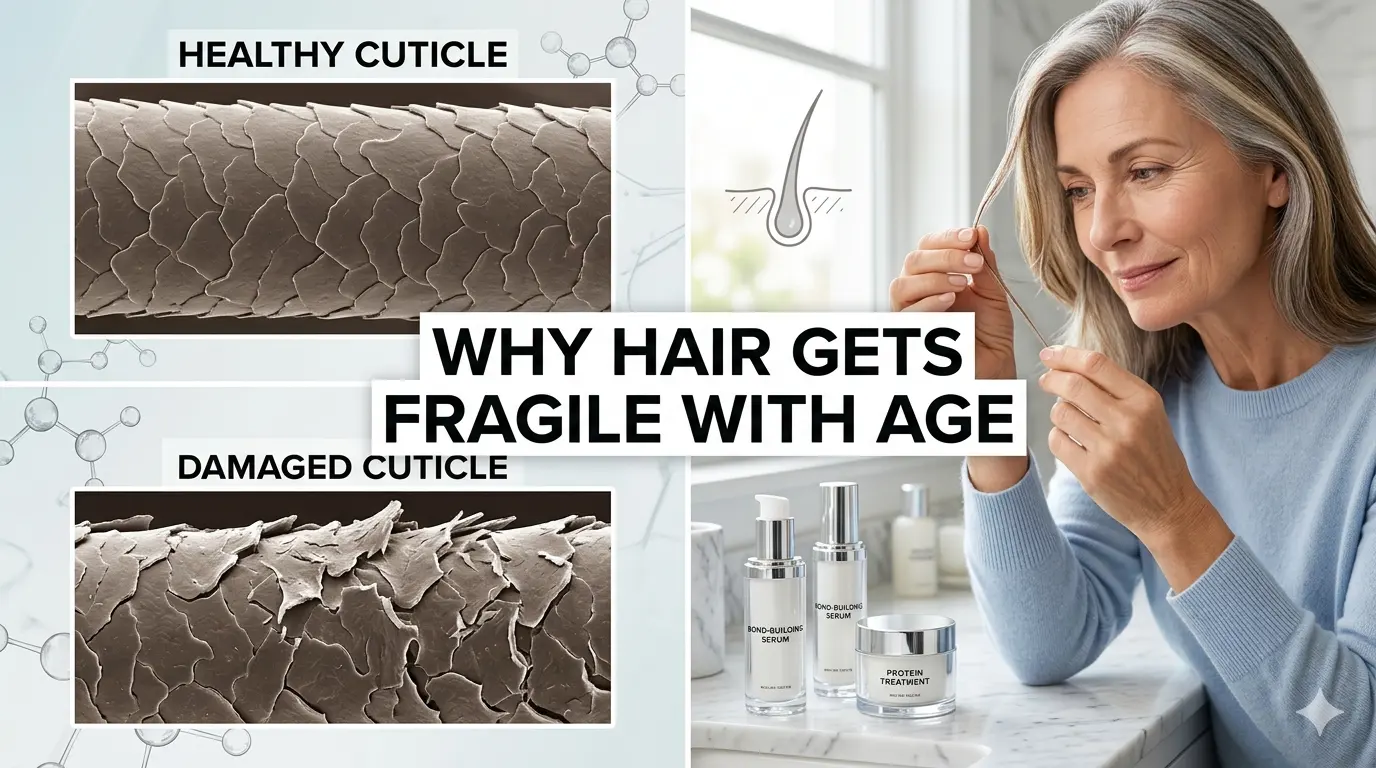
- Cuticle: The outermost layer of overlapping, scale-like cells that protect inner layers; when intact, it reflects light for shine and shields against damage
- Cortex: The middle layer containing keratin proteins, melanin (pigment), and structural bonds (disulfide, hydrogen, salt) that provide strength, elasticity, and color
- Medulla: The innermost core (present in thicker hairs); less relevant to fragility but contributes to overall structure
Key Bonds That Maintain Strength:
- Disulfide bonds: Strong chemical bonds between keratin proteins; broken by chemical treatments, heat, and oxidative stress
- Hydrogen bonds: Weaker bonds broken by water and heat; reform when hair dries
- Salt bonds: Ionic bonds affected by pH changes; contribute to elasticity
Key Insight: Hair fragility occurs when these structural components degrade faster than the body can repair or replace them. Aging accelerates this imbalance through multiple biological pathways.
How Aging Alters Hair Structure
| Structural Change | How It Increases Fragility | Typical Onset |
|---|---|---|
| Thinner cortex | Reduced keratin density = less structural strength; hair snaps more easily under tension | Gradual from late 30s; accelerates after menopause/andropause |
| Weakened cuticle | Lifted or missing cuticle scales expose cortex to damage; increases moisture loss and breakage | Cumulative from chemical/heat exposure; noticeable after 40 |
| Reduced disulfide bonds | Fewer strong chemical bonds = less elasticity and tensile strength | Accelerates with oxidative stress and hormonal shifts after 40 |
| Decreased melanin | Gray/white hair has different structural properties; often coarser yet more brittle | Variable; typically begins 40s-50s |
| Slower follicle turnover | Longer resting phases = older, more weathered strands remain on scalp longer | Noticeable from mid-40s onward |
Why Fragility Feels "Sudden"
Several factors create the perception of abrupt change:
- Threshold effect: Structural decline is gradual until a minor trigger (new product, stress, illness) pushes hair over the edge into visible breakage
- Hormonal shifts: Perimenopause and andropause involve rapid hormonal fluctuations that can trigger noticeable hair changes within months
- Cumulative damage: Decades of heat styling, coloring, or environmental exposure finally manifest as fragility when repair capacity declines
- Nutritional gaps: Age-related changes in digestion or appetite may create deficiencies that suddenly impact hair quality
Understanding that "sudden" fragility often reflects accumulated changes—not a single event—helps frame effective, compassionate solutions.
Phase 1: The Hormonal Drivers of Hair Fragility
For most people over 40, hormonal shifts are the primary biological driver of increased hair fragility. Understanding these changes is key to targeted care.
Estrogen Decline and Hair Structure (Women)
What Estrogen Does for Hair:
- Stimulates keratin production: Supports the synthesis of strong, resilient hair proteins
- Prolongs growth phase: Keeps hairs in anagen (growth) phase longer, reducing shedding
- Supports scalp circulation: Enhances blood flow to follicles, delivering nutrients for strong hair
- Maintains sebum production: Natural oils protect hair shaft and maintain flexibility
What Happens When Estrogen Declines:
- Keratin synthesis slows, producing thinner, weaker hair shafts
- Growth phase shortens; more hairs enter resting (telogen) phase simultaneously
- Scalp circulation may decrease, limiting nutrient delivery to follicles
- Sebum production drops, leaving hair drier and more prone to snapping
- Result: Hair becomes finer, drier, and more fragile—often within 1-3 years of perimenopause onset
Key Insight: These changes don't just affect hair density—they fundamentally alter the structural integrity of each strand, making breakage more likely even with gentle handling.
Androgen Changes and Hair Fragility (Men and Women)
Testosterone and DHT:
- In genetically susceptible individuals, dihydrotestosterone (DHT) can miniaturize follicles
- Miniaturized follicles produce finer, shorter hairs with weaker structural integrity
- While often associated with pattern hair loss, this process also increases strand fragility
Age-Related Androgen Shifts:
- Men: Gradual decline in testosterone after 30 may alter hair growth cycles
- Women: Relative increase in androgens as estrogen drops can trigger follicle sensitivity
- Both: Hormonal imbalances can disrupt the delicate balance of hair growth and shedding
Thyroid Function and Hair Health
Why Thyroid Matters:
- Thyroid hormones regulate cell metabolism, including hair follicle activity
- Hypothyroidism (more common after 40) slows hair growth and produces dry, brittle strands
- Hyperthyroidism can cause fine, fragile hair that sheds easily
- Thyroid disorders often coincide with perimenopause, compounding hair changes
Screening Recommendation:
- If hair fragility coincides with fatigue, weight changes, or temperature sensitivity, request thyroid testing (TSH, free T4, free T3)
- Treating thyroid imbalance often improves hair strength within 3-6 months
Phase 2: Structural and Nutritional Factors
Beyond hormones, age-related changes in hair structure and nutrition directly impact fragility.
Protein and Keratin Decline
The Biology:
- Hair is 80-90% keratin, a structural protein
- With age, protein synthesis slows; the body prioritizes vital organs over hair production
- Result: New hairs grow with less keratin density, making them inherently weaker
Nutritional Support Strategies:
| Nutrient | Role in Hair Strength | Food Sources | Supplement Consideration |
|---|---|---|---|
| Protein | Provides amino acids for keratin synthesis | Eggs, fish, lean meat, legumes, Greek yogurt | Collagen peptides if dietary intake is low |
| Biotin (B7) | Supports keratin infrastructure | Eggs, almonds, sweet potatoes, salmon | Only if deficient (rare); high doses can interfere with lab tests |
| Zinc | Supports protein synthesis and follicle health | Oysters, beef, pumpkin seeds, chickpeas | 15-30 mg zinc picolinate if deficient |
| Iron | Carries oxygen to follicles for protein production | Red meat, spinach, lentils, fortified cereals | Iron bisglycinate if ferritin |


0 Comments