

Why Sitting All Day Alters Female Body Contour
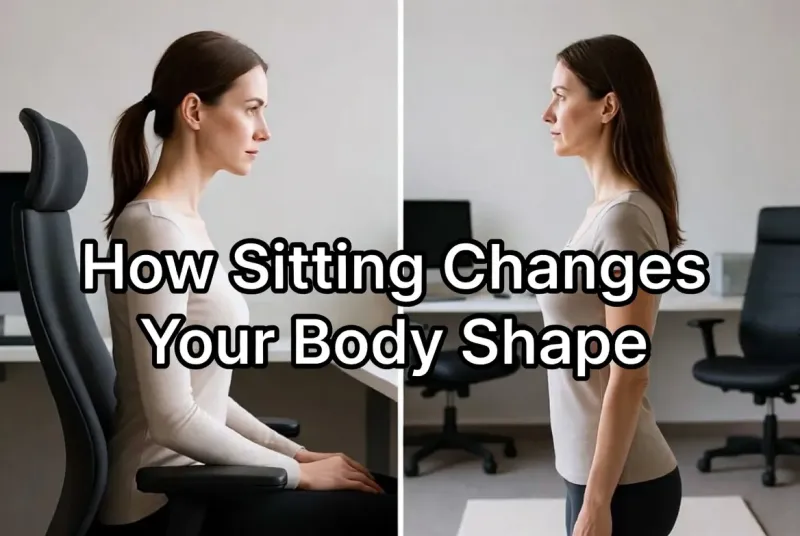
WHY SITTING ALL DAY ALTERS FEMALE BODY CONTOUR THE SCIENCE OF SEDENTARY POSTURE
If you've noticed changes in your posture, body shape, or how your clothes fit after months or years of desk work, you're not imagining things. Prolonged sitting doesn't just make you feel stiff—it actively reshapes your body's alignment, muscle balance, and visible contour. For women, whose bodies are subject to unique hormonal, structural, and biomechanical factors, the effects of a sedentary lifestyle can be particularly pronounced.
This isn't about body shaming or promoting an unrealistic aesthetic ideal. It's about understanding the biomechanics of how your body adapts to the positions you hold most frequently—and using that knowledge to maintain strength, alignment, and comfort throughout your life. When you sit for extended periods, your muscles, joints, and connective tissues respond by shortening, lengthening, weakening, or tightening in predictable patterns. Over time, these adaptations become your "new normal," altering how you stand, move, and appear.
The good news? These changes are largely reversible. With targeted movement, strategic ergonomic adjustments, and consistent postural awareness, you can counteract the effects of sitting and restore a balanced, resilient body contour. This guide explores the science behind how sitting alters female body shape, identifies the specific muscular and skeletal adaptations involved, and provides an evidence-based protocol for reclaiming your alignment.
Whether you work from home, in an office, or simply spend significant time seated for leisure, you'll find practical, expert-backed strategies to protect your posture, support your body's natural architecture, and feel more confident in how you move through the world.
THE BIOMECHANICS OF SITTING HOW YOUR BODY ADAPTS TO PROLONGED SEATED POSTURE
To understand how sitting changes your body contour, you first need to understand what happens to your musculoskeletal system when you remain seated for hours at a time. The human body is designed for movement; when held in a static position, it adapts in ways that prioritize short-term comfort over long-term function.
Muscle Length-Tension Relationships
Muscles operate on a principle called length-tension relationship: they generate optimal force when at their ideal resting length. When a muscle is held in a shortened position for extended periods (like hip flexors when sitting), it adapts by becoming chronically tight. Conversely, muscles held in a lengthened position (like glutes when sitting) can become weak and inhibited—a phenomenon known as reciprocal inhibition.
Key muscle adaptations from prolonged sitting:- Hip flexors (iliopsoas, rectus femoris): Chronically shortened and tight- Gluteus maximus: Lengthened, weakened, and neurologically inhibited ("glute amnesia")- Hamstrings: Shortened and tight, contributing to pelvic pull- Abdominals: Often disengaged, leading to reduced core stability- Upper back muscles (rhomboids, lower trapezius): Lengthened and weakened from rounded shoulders- Chest muscles (pectorals): Shortened and tight, pulling shoulders forward- Neck extensors: Overworked from forward head posture
These imbalances create predictable postural patterns that alter your visible body contour.
Pelvic Position and Spinal Alignment
Your pelvis is the foundation of your posture. When you sit, especially with poor ergonomics, your pelvis tends to posteriorly tilt (tuck under), flattening the natural lumbar curve. Over time, this can lead to two common compensatory patterns when you stand:
Anterior Pelvic Tilt: The pelvis tilts forward, increasing the arch in the lower back. This posture often creates the appearance of a protruding lower abdomen, even in individuals with low body fat. It's frequently associated with tight hip flexors and weak glutes/abdominals.
Posterior Pelvic Tilt: The pelvis tucks under, flattening the lumbar curve. This can create a "slouched" appearance with reduced natural spinal curves, potentially contributing to a less defined waistline and altered hip contour.
Both patterns affect how your torso, hips, and legs align, changing your silhouette.
Fascial Adaptations
Fascia—the connective tissue surrounding muscles, organs, and structures—also adapts to prolonged positions. When held in a shortened state, fascia can become stiff and restrictive, limiting mobility and contributing to a "bound" feeling in the body. This fascial tension can subtly alter how your body drapes and moves, affecting contour.
THE FEMALE-SPECIFIC FACTORS WHY WOMEN EXPERIENCE UNIQUE CONTOUR CHANGES
While sitting affects all bodies, women experience some distinct considerations due to anatomical, hormonal, and lifestyle factors.
Pelvic Anatomy and Hormonal Influence
Women have a wider pelvis designed for childbirth, which influences biomechanics and posture. Additionally, hormonal fluctuations (particularly estrogen and relaxin) affect ligament laxity and joint stability. During certain phases of the menstrual cycle, pregnancy, or perimenopause, increased joint mobility can make postural adaptations from sitting more pronounced or harder to correct.
Core and Pelvic Floor Considerations
Women's core stability is closely linked to pelvic floor function. Prolonged sitting can contribute to pelvic floor dysfunction (either hypertonicity or weakness), which in turn affects abdominal contour, posture, and even breathing patterns. A compromised pelvic floor can contribute to a protruding lower abdomen that doesn't respond to traditional core exercises.
Clothing and Cultural Factors
Women's clothing—particularly high-heeled shoes, restrictive waistbands, or certain undergarments—can compound postural issues initiated by sitting. High heels, for example, shift the center of gravity forward, increasing lumbar lordosis and potentially exacerbating anterior pelvic tilt.
Pregnancy and Postpartum Considerations
For women who have been pregnant, the abdominal wall and pelvic floor undergo significant changes. Returning to prolonged sitting postpartum without addressing these changes can reinforce imbalances, affecting long-term contour and function.
COMMON POSTURAL SYNDROMES FROM PROLONGED SITTING
Several recognizable postural patterns emerge from chronic sitting. Understanding these helps you identify your own adaptations and target corrections effectively.
Lower Crossed Syndrome
This pattern involves:- Tight hip flexors and lumbar extensors- Weak abdominals and gluteal muscles- Result: Anterior pelvic tilt, increased lumbar lordosis, protruding abdomen
Visual impact: Creates the appearance of a "swayback" posture with a more prominent lower belly, even with low body fat.
Upper Crossed Syndrome
This pattern involves:- Tight upper trapezius, levator scapulae, and pectorals- Weak deep neck flexors, lower trapezius, and serratus anterior- Result: Forward head posture, rounded shoulders, thoracic kyphosis
Visual impact: Creates a "hunched" appearance with a less defined neckline and shoulders, potentially contributing to a shorter-looking neck and altered upper body contour.
Combined Sitting Posture Syndrome
Many individuals exhibit elements of both patterns, creating a full-body postural adaptation:- Forward head and rounded shoulders- Increased or decreased lumbar curve- Anterior or posterior pelvic tilt- Internally rotated hips and knees
Visual impact: Alters the entire body silhouette, potentially making the torso appear shorter, the abdomen more prominent, and the overall posture less balanced.
HOW SITTING ALTERS SPECIFIC BODY CONTOUR AREAS
Let's examine how prolonged sitting affects visible body regions, one by one.
The Abdomen Why the Lower Belly Protrudes
One of the most common concerns is a protruding lower abdomen despite overall leanness. This isn't always about fat—it's often about posture and muscle function.
Contributing factors:- Anterior pelvic tilt rotates the pelvis forward, positioning the abdomen more anteriorly- Weak transverse abdominis (the body's natural "corset" muscle) fails to provide internal support- Tight hip flexors pull the pelvis into tilt, accentuating abdominal protrusion- Poor breathing patterns (chest breathing vs. diaphragmatic) reduce core engagement
Result A persistent lower belly pooch that doesn't respond to crunches or diet alone.
The Hips and Glutes Loss of Definition
Sitting directly impacts the muscles that shape your hips and rear.
Contributing factors:- Gluteal inhibition: When you sit, glutes are lengthened and neurologically "turned off." Over time, they weaken and lose tone.- Hip flexor tightness: Pulls the pelvis into tilt, altering hip alignment and potentially creating the appearance of "hip dips" or less rounded glutes.- Reduced blood flow: Prolonged sitting compresses blood vessels, potentially affecting muscle nutrition and recovery.
Result A flatter, less defined gluteal contour and altered hip shape.
The Back and Waist Loss of Natural Curves
Your spine's natural curves contribute to an aesthetically balanced silhouette. Sitting can flatten or exaggerate these curves.
Contributing factors:- Flattened lumbar curve from posterior pelvic tilt in sitting- Exaggerated thoracic curve from rounded shoulders- Compensatory cervical extension from forward head posture
Result A less defined waistline, altered torso proportions, and potential discomfort.
The Neck and Shoulders Forward Head and Rounded Shoulders
These changes affect your upper body contour significantly.
Contributing factors:- Tight pectorals pull shoulders forward- Weak upper back muscles fail to counterbalance this pull- Forward head posture increases the appearance of a "dowager's hump" or neck strain
Result A less elongated neck, rounded shoulder line, and potential tension headaches.
THE COMPOUNDING EFFECTS TIME, INTENSITY, AND INDIVIDUAL VARIABILITY
Not everyone who sits experiences the same degree of contour change. Several factors influence your personal susceptibility.
Duration and Frequency
The more hours per day you spend sitting, and the fewer movement breaks you take, the more pronounced adaptations become. Research suggests that breaking up sitting time every 30 minutes significantly reduces negative adaptations.
Movement Quality Outside of Sitting
Your activities outside of sitting matter. If you engage in regular strength training, mobility work, or posture-aware movement, you can offset many sitting-related adaptations. Conversely, a completely sedentary lifestyle compounds the effects.
Individual Anatomy and History
Pre-existing conditions (scoliosis, previous injuries), genetic factors (joint laxity, muscle fiber type), and life events (pregnancy, surgery) all influence how your body responds to prolonged sitting.
Footwear and Daily Habits
Wearing high heels, carrying heavy bags on one shoulder, or sleeping in poor positions can reinforce sitting-related postural patterns.
STRATEGIES TO COUNTERACT SITTING-RELATED CONTOUR CHANGES
The encouraging news: your body is adaptable. With consistent, targeted interventions, you can reverse many sitting-related adaptations and restore balanced alignment.
Strategy 1 Optimize Your Seated Ergonomics
Prevention starts with how you sit.
Key Adjustments:- Chair height: Feet flat on floor, knees at ~90 degrees, hips slightly above knees- Lumbar support: Maintain natural lumbar curve with a cushion or built-in support- Monitor position: Top of screen at or slightly below eye level, arm's length away- Keyboard/mouse: Elbows at ~90 degrees, wrists neutral, shoulders relaxed- Footrest: Use if feet don't reach floor comfortably
Pro Tip: Set a timer to check your posture every 20-30 minutes. Small, frequent corrections are more effective than occasional perfect posture.
Strategy 2 Incorporate Movement Breaks
Your body craves variety. Regular movement breaks prevent adaptive shortening and maintain circulation.
Effective Break Activities (2-3 minutes every 30-60 minutes):- Stand and walk briefly- Perform gentle hip flexor stretches- Do shoulder rolls and chest openers- Practice diaphragmatic breathing to engage core- Stand on one leg to challenge balance and glute activation
Strategy 3 Targeted Stretching for Tight Muscles
Address the muscles that shorten from sitting.
Essential Stretches:- Hip flexor lunge stretch: Kneel on one knee, tuck pelvis, gently lean forward- Chest opener: Clasp hands behind back, gently lift arms while opening chest- Hamstring stretch: Sit on edge of chair, extend one leg, hinge at hips- Neck side stretch: Gently tilt ear toward shoulder, hold 20-30 seconds per side
Frequency Hold each stretch 20-30 seconds, repeat 2-3 times daily.
Strategy 4 Strengthening for Weak Muscles
Activate the muscles that lengthen and weaken from sitting.
Key Exercises:- Glute bridges: Lie on back, knees bent, lift hips while squeezing glutes- Bird-dog: On hands and knees, extend opposite arm and leg while keeping core stable- Rows (with resistance band): Pull elbows back, squeezing shoulder blades together- Dead bugs: Lie on back, arms toward ceiling, alternate lowering opposite arm/leg while keeping core engaged- Plank variations: Build core stability without straining the neck or lower back
Frequency 2-3 times per week, focusing on form over intensity.
Strategy 5 Postural Awareness and Integration
Make good posture a habit, not a chore.
Practical Techniques:- Wall check: Stand with back against wall; head, shoulders, hips, and heels should lightly touch- Mirror feedback: Use a mirror to observe your posture during daily activities- Cue words: Use reminders like "shoulders back," "chin tucked," or "core engaged"- Breath awareness: Practice diaphragmatic breathing to naturally engage deep core muscles
Strategy 6 Full-Body Movement Practices
Incorporate activities that promote balanced strength and mobility.
Recommended Practices:- Yoga: Enhances flexibility, strength, and body awareness- Pilates: Focuses on core stability and postural alignment- Strength training: Builds muscle balance and metabolic health- Walking or hiking: Encourages natural gait patterns and cardiovascular health
A SAMPLE DAILY PROTOCOL FOR COUNTERACTING SITTING EFFECTS
Here's a practical, time-efficient routine you can integrate into a busy schedule.
Morning (5-7 minutes):- Cat-cow stretch: 1 minute to mobilize spine- Hip flexor stretch: 30 seconds per side- Chest opener: 30 seconds- Glute activation: 10 glute bridges- Postural check: Stand tall, engage core, take 3 deep breaths
During Work Day (2-3 minutes every hour):- Stand and walk briefly- Shoulder rolls: 10 forward, 10 backward- Neck side stretch: 20 seconds per side- Seated spinal twist: Gentle rotation to each side
Evening (10-15 minutes):- Foam rolling or self-massage for tight areas (hip flexors, upper back)- Strengthening circuit: Bird-dog (10/side), rows (15), dead bugs (10/side)- Final stretch: Hamstring, chest, and neck stretches- Diaphragmatic breathing: 2-3 minutes to calm nervous system and engage core
Weekly Additions:- 2-3 strength training sessions focusing on posterior chain (glutes, hamstrings, back)- 1-2 mobility or yoga sessions for flexibility and body awareness- Regular walking or low-impact cardio for circulation and overall health
COMMON MISTAKES THAT UNDERMINE POSTURAL CORRECTION
Even with good intentions, certain approaches can hinder progress.
Mistake #1: Over-Stretching Without StrengtheningStretching tight muscles is important, but if you don't also strengthen the opposing weak muscles, imbalances persist.
The Fix Pair every stretch with a strengthening exercise for the antagonist muscle group.
Mistake #2: Seeking Quick FixesPostural adaptations developed over months or years won't reverse in days. Expecting rapid results leads to frustration and abandonment.
The Fix: Commit to consistent, small efforts. Track subtle improvements in comfort and alignment, not just appearance.
Mistake #3: Ignoring Breathing PatternsShallow, chest-dominant breathing fails to engage the deep core muscles that support posture.
The Fix: Practice diaphragmatic breathing daily. Place a hand on your belly; it should rise on inhalation and fall on exhalation.
Mistake #4: Using Pain as a GuideWaiting until you feel pain to address posture means adaptations are already advanced.
The Fix Use proactive postural checks and movement breaks, not pain, as your trigger for action.
Mistake #5: Focusing Only on AestheticsWhile contour changes are visible, the primary goal should be function, comfort, and long-term health.
The Fix: Prioritize how you feel—reduced tension, improved energy, better movement—over how you look. Appearance improvements will follow.
MEASURING PROGRESS HOW TO TRACK POSTURAL IMPROVEMENT
Use these indicators to assess your progress beyond the mirror.
Functional Indicators:- Reduced muscle tension or discomfort in neck, shoulders, or lower back- Improved ease of movement in daily activities- Better balance and stability during standing or walking- Enhanced breathing capacity and core engagement
Visual Indicators:- More balanced shoulder alignment (less rounding)- Reduced protrusion of lower abdomen when standing naturally- Improved head position (ears aligned over shoulders)- More defined gluteal contour with consistent strengthening
Behavioral Indicators:- Increased awareness of posture throughout the day- Automatic correction of slouching without conscious effort- Greater consistency with movement breaks and exercises
Take progress photos monthly from the side and back to observe subtle changes in alignment. Remember: postural improvement is often more noticeable to you in how you feel than in dramatic visual shifts.
FREQUENTLY ASKED QUESTIONS ABOUT SITTING AND BODY CONTOUR
Can sitting actually change my body shape permanently?
While prolonged sitting creates adaptive changes in muscle length, strength, and posture, these are largely reversible with consistent intervention. True "permanent" changes are rare unless sitting is combined with other factors like significant weight gain, aging, or medical conditions. The key is addressing adaptations before they become entrenched.
How long does it take to see improvements in posture and contour?
Many people notice reduced tension and improved comfort within 2-4 weeks of consistent practice. Visible changes in alignment and contour typically emerge over 8-12 weeks, as muscles adapt and postural habits shift. Long-term maintenance requires ongoing attention.
Do I need special equipment to correct sitting-related posture issues?
No. While tools like resistance bands, foam rollers, or ergonomic chairs can help, the most important factors are awareness, consistency, and proper technique. Many effective exercises require only your body weight and a small space.
Can I reverse anterior pelvic tilt from sitting?
Yes. Anterior pelvic tilt responds well to a combination of hip flexor stretching, glute and abdominal strengthening, and postural awareness. Consistency is key—daily attention yields better results than occasional intense effort.
Is standing all day a better alternative to sitting?
Not necessarily. Prolonged standing creates its own set of challenges (foot pain, venous issues, joint compression). The goal isn't to replace sitting with standing, but to incorporate regular movement and position changes throughout the day.
Should I see a physical therapist for posture correction?
If you experience pain, significant asymmetry, or limited progress with self-care, a physical therapist can provide personalized assessment and guidance. They can identify specific imbalances and design a targeted program for your needs.
WHEN TO CONSULT A HEALTHCARE PROFESSIONAL
While most sitting-related postural changes can be addressed with self-care, professional guidance is valuable in certain situations:
Consult a Physical Therapist or Healthcare Provider If:- You experience persistent pain in your neck, back, hips, or joints- You notice significant asymmetry (one shoulder higher, one hip rotated)- You have a history of injury, surgery, or medical conditions affecting posture- Self-care efforts don't yield improvement after 8-12 weeks of consistency- You experience numbness, tingling, or weakness in limbs
A professional can provide:- Detailed postural and movement assessment- Manual therapy to address soft tissue restrictions- Personalized exercise prescription- Guidance on ergonomic modifications- Referral to other specialists if needed (e.g., for pelvic floor dysfunction)
MAINTAINING LONG-TERM POSTURAL HEALTH
Once you've made improvements, these practices help sustain them.
Integrate Movement Into Daily Life- Take the stairs instead of the elevator- Walk or bike for short errands- Stand or pace during phone calls- Use a standing desk option part-time
Cultivate Body Awareness- Check in with your posture several times daily- Notice tension patterns and address them early- Practice mindfulness or body scan meditations to enhance awareness
Prioritize Recovery- Ensure adequate sleep for tissue repair- Manage stress, which contributes to muscle tension- Stay hydrated to support tissue health
Adapt to Life Changes- Adjust your routine during pregnancy, postpartum, or aging- Modify exercises as your fitness level changes- Reassess ergonomics if your work setup changes
CONCLUSION RECLAIMING YOUR BODY'S NATURAL ALIGNMENT
Prolonged sitting doesn't have to dictate your body's contour or comfort. By understanding the biomechanics of how your body adapts to seated postures—and implementing targeted, consistent strategies—you can counteract these changes and restore balanced alignment.
Remember the essentials:- Movement is medicine: Regular position changes prevent adaptive shortening- Balance is key: Stretch tight muscles, strengthen weak ones- Awareness drives change: Postural checks turn correction into habit- Patience yields results: Consistent small efforts compound over time- Function first: Prioritize comfort and mobility; aesthetic improvements follow
Your body is remarkably adaptable. With informed, compassionate care, you can maintain a strong, aligned, and resilient physique regardless of how much time you spend seated. Start with one small change today—a posture check, a brief stretch, or a mindful breath—and build from there. Your balanced, confident posture is absolutely achievable.