

Why Some Women Develop Neck Texture Before Face Aging: Causes and Prevention
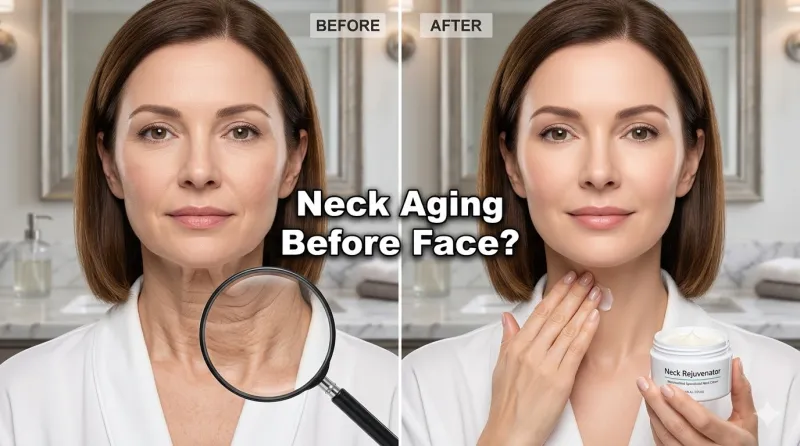
It is a confusing and often frustrating phenomenon for many women: you look in the mirror and see a smooth, radiant, seemingly ageless face, but when you tilt your head up or turn to the side, your neck reveals a different story. Horizontal lines, crepey texture, vertical bands, or a general lack of firmness appear on the neck long before similar signs show up on the cheeks or forehead. This discrepancy challenges the common assumption that the face and neck age in unison.
The reality is that the skin on your neck is biologically distinct from the skin on your face. It is thinner, more delicate, and possesses fewer oil glands and hair follicles. Furthermore, the neck is subjected to unique mechanical stresses and environmental exposures that the face often avoids due to diligent skincare habits. When combined with modern lifestyle factors like "tech neck," these elements create a perfect storm where the neck becomes the first area to betray your age, even if your facial skin remains pristine.
Understanding why this happens is the first step toward correcting it. This comprehensive guide delves into the anatomical differences between facial and neck skin, explores the specific lifestyle culprits accelerating neck aging, and provides a science-backed roadmap to restore texture, firmness, and youthfulness to this often-neglected area.
The Biological Reality: How Neck Skin Differs from Facial Skin
To understand why the neck ages differently, we must first acknowledge that it is not simply an extension of the face; it is a distinct anatomical zone with unique vulnerabilities.
1. Thinner Epidermis and Dermis
The skin on the anterior (front) and lateral (side) neck is significantly thinner than facial skin. The epidermis (outer layer) has fewer cell layers, and the dermis (structural layer) contains less collagen and elastin density. This thinness makes the neck more transparent, allowing underlying structures like muscles and veins to show through, and makes it more susceptible to damage from UV radiation and friction. Because the structural support is weaker to begin with, any loss of collagen results in visible sagging and wrinkling much faster than on the thicker skin of the cheeks or forehead.
2. Fewer Sebaceous (Oil) Glands
Facial skin, particularly in the T-zone, is rich in sebaceous glands that produce sebum, a natural oil that keeps the skin hydrated, supple, and protected. The neck, however, has very few oil glands. This lack of natural lubrication means the neck is prone to chronic dryness. Dry skin highlights texture issues, making fine lines appear deeper and the surface look rougher or "crepey." Without that natural oily barrier, the neck loses moisture rapidly (Transepidermal Water Loss), accelerating the appearance of aging.
3. Lower Melanin Protection
Studies suggest that the neck may have slightly lower melanin activity compared to the face. Melanin is the pigment that protects skin from UV damage. With less natural protection, the neck is more vulnerable to photoaging—the breakdown of collagen and elastin caused by sunlight. This leads to earlier formation of sun spots, leathery texture, and loss of elasticity.
4. Different Muscle Structure
The face has complex, small muscles attached to the skin that allow for expressive movements. The neck, however, is dominated by the platysma, a broad, thin sheet of muscle that runs from the chest up to the jaw. As we age, this muscle can separate or lose tone, leading to vertical bands (often called "turkey neck") and horizontal ringing. Because the skin is so tightly adhered to this moving muscle sheet, repetitive motion creates deep etching over time.
The Lifestyle Culprit: "Tech Neck" and Mechanical Stress
While biology loads the gun, lifestyle often pulls the trigger. In the 21st century, a new phenomenon has accelerated neck aging dramatically: "Tech Neck."
The Mechanics of Tech Neck
The average human head weighs about 10-12 pounds. When held in a neutral, upright position, the neck supports this weight effortlessly. However, for every inch the head tilts forward (as when looking down at a smartphone, tablet, or laptop), the effective weight on the cervical spine increases exponentially. At a 60-degree angle (typical texting posture), the neck supports nearly 60 pounds of pressure.
This constant, repetitive folding of the skin creates dynamic wrinkles. Just as frowning creates forehead lines, looking down thousands of times a day etches permanent horizontal lines into the front of the neck. Unlike facial expressions which vary, the "looking down" motion is static and prolonged for hours daily, causing the collagen fibers in the neck to break down and reform in a folded pattern. Over time, these dynamic lines become static wrinkles that remain visible even when the head is held high.
Sleep Positions and Friction
How you sleep also plays a significant role. Side sleeping or stomach sleeping forces the neck into a twisted or compressed position for 6-8 hours every night. This mechanical compression, combined with friction against cotton pillowcases, breaks down collagen and creates sleep lines. Since the neck skin is thin and lacks oil, it recovers from this nightly trauma much slower than the face, leading to permanent creasing.
The Skincare Gap: Neglect and Product Migration
Perhaps the most ironic cause of premature neck aging is the very routine designed to protect the face. There is a pervasive habit of stopping skincare application at the jawline.
The Sunscreen Boundary
Many people diligently apply SPF 50 to their faces every morning but stop abruptly at the chin. The neck, being more vulnerable to UV rays, receives full exposure without protection. Over years, this cumulative sun damage destroys collagen and elastin in the neck while the face remains protected. This discrepancy explains why a woman might have a wrinkle-free face but a sun-damaged, textured neck.
The Retinol and Acid Avoidance
Active ingredients like retinoids, AHAs (glycolic acid), and BHAs are staples of anti-aging facial routines. However, many people avoid using these on the neck due to fears of irritation. While the neck is sensitive, avoiding actives entirely means missing out on the only proven ingredients that stimulate collagen production. Without this stimulation, the neck's natural collagen depletion goes unchecked.
Conversely, some people apply their potent facial actives to the neck without modification. Because the neck has a weaker barrier, high concentrations of retinol or acids can cause inflammation. Chronic low-grade inflammation leads to "inflammaging," which accelerates collagen breakdown. The key is not avoidance, but adaptation—using gentler formulations or buffering techniques specifically for the neck.
Hormonal Influences on Neck Texture
Hormones play a pivotal role in skin health, and the neck is particularly sensitive to hormonal fluctuations, especially estrogen.
Estrogen and Collagen Synthesis
Estrogen receptors are abundant in skin tissue. Estrogen stimulates the production of collagen, hyaluronic acid, and improves skin thickness and hydration. As women approach their late 30s and perimenopause, estrogen levels begin to fluctuate and eventually decline.
The Neck as a Canary in the Coal Mine
Because the neck already has less collagen and fewer oil glands than the face, it is often the first area to show the effects of dropping estrogen. The sudden drop in support leads to rapid thinning of the skin and loss of elasticity, manifesting as "crepey" texture (resembling crinkled paper). This hormonal shift can happen even if facial skin still retains enough reserve to look smooth, creating a visible disconnect between the two areas.
Thyroid Health
The thyroid gland is located in the neck. Thyroid disorders (hypothyroidism or hyperthyroidism) can directly affect the skin texture in this region. Hypothyroidism, for instance, can cause the skin to become dry, rough, and thickened, while hyperthyroidism can lead to thinning and fragility. Sometimes, what looks like premature aging is actually an undiagnosed thyroid issue manifesting locally.
Types of Neck Aging: Identifying Your Texture Issue
Not all neck aging looks the same. Identifying your specific concern helps tailor the solution.
1. Horizontal Lines (Necklace Lines)
These are the rings that run across the front of the neck. They are primarily caused by repetitive flexion (looking down) and genetic predisposition. They are often deep and difficult to erase completely once formed.
2. Vertical Bands (Platysmal Bands)
These are the vertical cords that become visible when you clench your teeth or speak. They are caused by the separation and laxity of the platysma muscle. This is more common in older age but can appear earlier in those with low muscle tone or significant weight loss.
3. Crepey Texture
This refers to the overall thin, wrinkled, paper-like quality of the skin. It is caused by a combination of sun damage, dehydration, and loss of collagen/elastin due to aging and hormones.
4. Laxity and Sagging (Jowls)
This is the loss of definition along the jawline and the drooping of skin under the chin. It results from gravity, bone resorption (the jawbone shrinks with age), and fat pad displacement.
Actionable Solutions: Restoring Neck Texture
Reversing or preventing neck aging requires a dedicated approach that acknowledges the area's unique sensitivity.
1. Extend Your Sunscreen
This is the single most important step. Apply your broad-spectrum SPF 30+ generously to your face, neck, and décolletage every single day, rain or shine. Reapply if you are outdoors. Consider using a powder SPF for easy reapplication over clothes or makeup during the day.
2. Introduce Neck-Safe Actives
You need collagen stimulation, but gently.
- Retinol/Retinal: Use a retinol product formulated for the neck or a low-concentration facial retinol (0.1% - 0.3%). Apply it 2-3 times a week initially, always followed by a rich moisturizer. Look for encapsulated retinol which releases slowly to reduce irritation.
- Peptides: Copper peptides and signal peptides (like Matrixyl) are excellent for the neck. They stimulate collagen without the irritation risk of retinoids. They are safe for daily use.
- Vitamin C: Apply a stable Vitamin C serum to the neck in the morning to boost collagen and protect against free radical damage from UV and pollution.
- AHAs: Use a mild lactic acid or mandelic acid toner once a week to exfoliate dead skin cells and improve texture. Avoid strong glycolic peels unless supervised.
3. Hydrate Aggressively
Combat the lack of oil glands by layering hydration.
- Humectants: Apply a hyaluronic acid or glycerin-based serum to damp skin.
- Emollients/Occlusives: Seal that water in with a rich cream containing ceramides, shea butter, or squalane. At night, you can even use a thin layer of petrolatum (Vaseline) over your neck cream to lock in moisture (slugging), provided you don't break out.
4. Correct Posture and Movement
- Tech Neck Awareness: Hold your phone at eye level. Raise your laptop screen. Be mindful of how often you look down.
- Neck Exercises: Gentle yoga poses like "Lion's Breath" or specific neck stretches can help tone the platysma muscle and improve circulation. However, avoid excessive repetitive flexion.
5. Professional Treatments
For established texture issues, topicals have limits. Dermatological procedures can offer significant improvement:
- Microneedling with RF (Radiofrequency): Stimulates deep collagen production to tighten skin and smooth lines.
- Laser Resurfacing: Fractional lasers can remove sun damage and stimulate remodeling of the skin texture.
- Ultherapy: Uses ultrasound energy to lift and tighten the underlying muscle and tissue.
- Biostimulators: Injectables like Sculptra or Radiesse can stimulate the body's own collagen production in the neck area, improving thickness and texture over time.
- Botox: Can be used strategically to relax the platysmal bands, smoothing vertical cords.
Myths vs. Facts About Neck Aging
Myth: "Face creams work fine on the neck."
Fact: While some do, many face creams are too potent or too light for the neck. The neck needs richer hydration and gentler actives. Dedicated neck creams are formulated with this balance in mind.
Myth: "Once you have neck lines, they are permanent."
Fact: Deep structural lines may require medical intervention to fully erase, but their appearance can be significantly softened with consistent skincare, sun protection, and posture correction. Crepey texture can often be reversed substantially with hydration and collagen stimulation.
Myth: "Only old people get neck wrinkles."
Fact: Due to tech usage and sun neglect, women in their 20s and early 30s are increasingly developing horizontal neck lines. Prevention should start early.
Myth: "Massaging the neck makes it sag."
Fact: Gentle upward massage improves lymphatic drainage and circulation, reducing puffiness and promoting product absorption. It does not cause sagging; gravity and collagen loss do. Just use light pressure and upward strokes.
Conclusion: Don't Stop at the Chin
The discrepancy between a youthful face and an aging neck is a common but solvable issue. It stems from a perfect storm of biological vulnerability, modern lifestyle habits, and skincare neglect. By understanding that the neck is a distinct entity requiring specific care—more hydration, gentler actives, and rigorous sun protection—you can bridge the gap between your face and neck.
Start today by extending your sunscreen, checking your phone posture, and introducing a dedicated neck treatment to your routine. Your neck supports your head every second of every day; it deserves the same attention and respect you give your face. With consistency and the right approach, you can restore texture, firmness, and confidence, ensuring that your neck tells the same youthful story as your face.
April 3, 2026 6:19 PM