

Why Some Women Develop Uneven Skin Tone After 35: The Science, Solutions, and Realistic Expectations
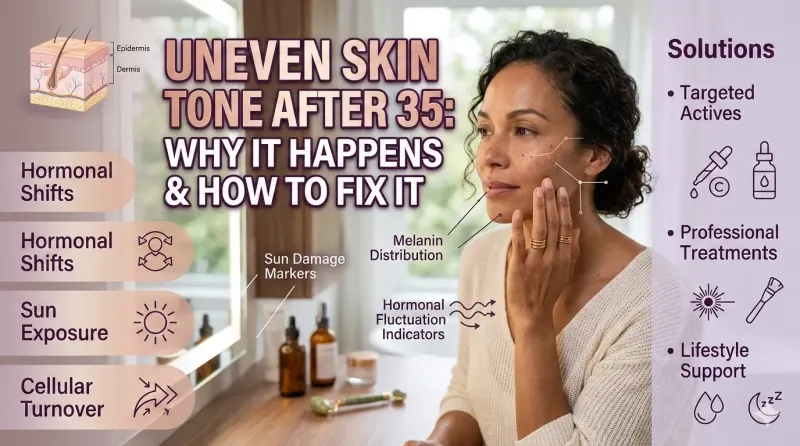
Understanding Uneven Skin Tone After 35 It's Not Just "Aging"
Uneven skin tone—medically termed dyschromia or hyperpigmentation—refers to areas of skin that appear darker, lighter, or differently textured than the surrounding complexion. While it can occur at any age, many women notice a distinct shift after 35. This isn't coincidence; it reflects fundamental changes in skin biology, hormonal balance, and cumulative environmental exposure.
Before exploring solutions, it's essential to understand why uneven tone emerges or worsens during this life stage. The causes are interconnected, not isolated.
The Biological Shifts Driving Post-35 Uneven Tone
Factor 1: Hormonal Fluctuations and Melanocyte Activity- Estrogen decline: Beginning in the mid-30s, estrogen levels gradually decrease, altering how melanocytes (pigment-producing cells) respond to triggers- Progesterone shifts: Fluctuations during perimenopause can stimulate melanin production, particularly in sun-exposed areas- Melasma connection: Hormonally-driven melasma often emerges or worsens in the 30s-40s, presenting as symmetrical brown/gray patches on cheeks, forehead, or upper lip- Mechanism: Hormones upregulate tyrosinase, the enzyme that catalyzes melanin production, making skin more reactive to UV exposure, inflammation, or heat
Factor 2: Cumulative Sun Exposure and Photoaging- Lifetime UV damage: By 35, most people have accumulated decades of sun exposure, even with sunscreen use- Photoaging effects: UV radiation triggers melanocyte activation, breaks down collagen, and impairs cellular repair mechanisms- Delayed manifestation: Sun damage often becomes visible in the 30s-40s as skin's repair capacity declines- Result: Solar lentigines (sun spots), mottled pigmentation, and uneven texture become more apparent
Factor 3: Slower Cellular Turnover- Natural deceleration: Skin cell renewal slows from ~28 days in youth to 40-60+ days after 35- Consequence: Pigmented cells linger longer at the surface, making dark spots more visible and persistent- Compounding effect: Slower turnover reduces efficacy of topical brightening agents, requiring longer treatment timelines
Factor 4: Barrier Function Changes- Increased transepidermal water loss (TEWL): Mature skin retains less moisture, compromising barrier integrity- Heightened sensitivity: A weakened barrier is more reactive to irritants, increasing risk of post-inflammatory hyperpigmentation (PIH)- Vicious cycle: Inflammation triggers melanin production; impaired barrier slows healing
Factor 5: Lifestyle and Environmental Amplifiers- Chronic stress: Elevates cortisol, which can stimulate melanocyte activity and impair barrier repair- Sleep disruption: Reduces overnight repair processes critical for pigment regulation- Dietary factors: High-glycemic diets may promote inflammation that exacerbates pigmentation- Pollution exposure: Particulate matter generates free radicals that trigger melanin production
Common Types of Uneven Tone After 35
Understanding the specific type of discoloration guides effective treatment
Type 1: Melasma- Appearance: Symmetrical brown/gray patches on cheeks, forehead, nose, or upper lip- Triggers: Hormones (pregnancy, birth control, perimenopause), UV exposure, heat, visible light- Challenge: Notoriously stubborn; requires multi-modal, long-term management- Key insight: Sun protection is non-negotiable; visible light (from screens, lighting) can also trigger flares
Type 2: Solar Lentigines (Sun Spots)- Appearance: Discrete, well-defined brown spots on sun-exposed areas (face, hands, décolletage)- Cause: Cumulative UV exposure triggering localized melanin overproduction- Challenge: Prevent new spots while fading existing ones- Key insight: Daily broad-spectrum SPF 30+ is the single most effective preventive measure
Type 3: Post-Inflammatory Hyperpigmentation (PIH)- Appearance: Flat brown/gray marks left after acne, eczema, insect bites, or minor injuries heal- Mechanism: Inflammation stimulates melanocytes to overproduce pigment during healing- Challenge: Mature skin heals slower, making PIH more persistent- Key insight: Gentle care during active inflammation prevents worsening; treat early
Type 4: General Dullness and Mottling- Appearance: Overall loss of radiance with patchy light/dark areas, not discrete spots- Causes: Slower cell turnover, dehydration, mild cumulative damage, lifestyle factors- Challenge: Requires holistic approach addressing multiple contributing factors- Key insight: Consistency with gentle exfoliation, hydration, and antioxidant protection yields gradual improvement
Evidence-Based Strategies for Restoring Even Tone
Effective management requires a multi-pronged approach tailored to mature skin's needs. Aggressive treatments that work for younger skin may irritate or worsen discoloration after 35.
Pillar 1 Foundational Protection and Prevention
1. Daily Broad-Spectrum Sun Protection (Non-Negotiable)Why it matters:- UV exposure is the primary driver of most post-35 pigmentation concerns- Even incidental exposure (driving, near windows) contributes to cumulative damage- Visible light (HEV) can trigger melasma; tinted sunscreens with iron oxides offer added protection
How to implement:- Choose SPF 30-50, broad-spectrum (UVA/UVB) sunscreen daily, rain or shine- Reapply every 2 hours with direct sun exposure; use powder or spray formulas for touch-ups over makeup- For melasma: Opt for tinted mineral or hybrid formulas containing iron oxides to block visible light- Don't forget often-missed areas: ears, neck, décolletage, hands
Pro tip: Layer antioxidant serum (vitamin C) under sunscreen for synergistic protection against UV and pollution-induced pigmentation.
2. Gentle, Consistent CleansingWhy it matters:- Harsh cleansers strip natural lipids, compromising barrier function and increasing inflammation risk- Residual makeup or sunscreen can clog pores and trigger post-inflammatory pigmentation
How to implement:- Use pH-balanced, non-foaming cleansers with hydrating ingredients (glycerin, ceramides, squalane)- Double cleanse at night if wearing sunscreen/makeup: oil-based cleanser first, followed by gentle water-based cleanser- Avoid physical scrubs; opt for soft cleansing cloths if desired
Pillar 2 Targeted Topical Actives for Pigment Regulation
These ingredients work through different mechanisms to address uneven tone. For mature skin, start low, go slow, and prioritize barrier support.
1. Vitamin C (L-Ascorbic Acid or Stable Derivatives)Why it works:- Potent antioxidant that neutralizes free radicals triggering melanin production- Inhibits tyrosinase activity, reducing new pigment formation- Brightens existing discoloration and enhances radiance- Boosts collagen synthesis, supporting overall skin quality
How to use:- Choose 10-20% L-ascorbic acid with ferulic acid and vitamin E for stability and efficacy, or gentler derivatives (magnesium ascorbyl phosphate, tetrahexyldecyl ascorbate) if sensitive- Apply in the morning after cleansing, before moisturizer and sunscreen- Store in opaque, airtight container away from heat/light to prevent oxidation- Expect visible brightening in 8-12 weeks with consistent use
Mature skin consideration: If L-ascorbic acid causes stinging, start with lower concentration (5-10%) or switch to a derivative; barrier support is critical.
2. Niacinamide (Vitamin B3)Why it works:- Reduces transfer of melanin from melanocytes to skin cells, visibly lightening discoloration- Strengthens skin barrier, reducing inflammation and PIH risk- Minimizes redness and improves overall tone uniformity- Well-tolerated by most skin types, including sensitive mature skin
How to use:- Choose 4-5% concentration for optimal efficacy with minimal irritation risk- Apply morning and/or evening after cleansing, before moisturizer- Pairs well with most ingredients, including vitamin C, retinoids, and exfoliants- Visible results typically in 8-12 weeks
Mature skin consideration: Niacinamide's barrier-supporting properties make it especially valuable for post-35 skin prone to dryness or sensitivity.
3. Retinoids (Retinol, Retinaldehyde, or Prescription Options)Why they work:- Accelerate cellular turnover, helping shed pigmented surface cells more efficiently- Inhibit tyrosinase activity and disrupt melanin transfer pathways- Stimulate collagen production, improving overall texture and radiance- Enhance penetration and efficacy of other brightening actives
How to use:- Start with low concentration (0.25-0.5% retinol or 0.1% adapalene) 2-3 nights/week- Apply to dry skin; wait 20 minutes before moisturizing to minimize irritation- Use the "sandwich method" if sensitive: moisturizer → retinoid → moisturizer- Always pair with daily broad-spectrum SPF; retinoids increase sun sensitivity- Expect initial adjustment (4-8 weeks); visible pigment improvement in 3-6 months
Mature skin consideration: If prescription tretinoin feels too strong, retinaldehyde offers a potent OTC alternative that converts to retinoic acid in one step with less irritation.
4. Azelaic Acid (10-20%)Why it works:- Inhibits tyrosinase and reduces melanin production in overactive melanocytes- Anti-inflammatory properties calm redness and reduce PIH risk- Particularly effective for melasma and post-acne discoloration- Generally well-tolerated, even by sensitive or rosacea-prone skin
How to use:- Apply once or twice daily after cleansing, before moisturizer- Can be used morning or evening; pairs well with niacinamide and vitamin C- Visible results typically in 8-12 weeks- May cause mild tingling initially; start with every-other-day use if sensitive
Mature skin consideration: Azelaic acid's dual brightening and anti-inflammatory action makes it ideal for mature skin prone to both pigmentation and sensitivity.
5. Tranexamic Acid (Topical 2-5%)Why it works:- Inhibits plasmin, a protein that triggers melanocyte activation in response to UV or inflammation- Particularly effective for melasma and stubborn post-inflammatory discoloration- Works synergistically with other brightening agents- Emerging research supports efficacy with minimal irritation risk
How to use:- Apply once or twice daily after cleansing, before moisturizer- Often formulated with niacinamide, licorice extract, or other brighteners for enhanced effect- Visible results typically in 8-12 weeks- Generally well-tolerated; patch test if you have sensitive skin
Mature skin consideration: Tranexamic acid's targeted mechanism makes it valuable for hormonal melasma that's resistant to other treatments.
Pillar 3 Gentle Exfoliation to Support Renewal
Slower cellular turnover after 35 means pigmented cells linger longer. Gentle exfoliation helps shed them without compromising barrier function.
1. PHAs (Polyhydroxy Acids: Gluconolactone, Lactobionic Acid)Why they work:- Larger molecular size than AHAs means gentler penetration, ideal for sensitive mature skin- Provide hydration while exfoliating, supporting barrier function- Improve texture and radiance without irritation risk
How to use:- Start with 1-2x/week; increase to 3x/week if tolerated- Apply after cleansing, before serums and moisturizer- Always follow with moisturizer and daily SPF
2. Low-Concentration AHAs (Lactic Acid 5-10%, Mandelic Acid)Why they work:- Lactic acid offers hydration alongside exfoliation; mandelic acid is larger and gentler- Effective for surface discoloration and texture refinement- Less irritating than glycolic acid for mature or sensitive skin
How to use:- Start with once weekly; monitor tolerance before increasing frequency- Avoid combining with retinoids on same night initially- Always use SPF the following day
Avoid: High-concentration glycolic acid (andgt;10%) or frequent physical scrubs, which can irritate mature skin and worsen pigmentation.
Pillar 4 Professional Treatments for Stubborn Concerns
When topicals aren't enough, professional procedures can accelerate results—but require careful selection for mature skin.
1. Chemical Peels (Superficial to Medium Depth)Best for: Solar lentigines, mild melasma, general dullnessOptions:- Mandelic or lactic acid peels: Gentle, hydrating, ideal for sensitive mature skin- Modified Jessner's peel: Effective for melasma with lower irritation risk than traditional formulas- Low-concentration TCA (10-15%): For more stubborn discoloration; requires expert application
Key considerations:- Pre-treatment with brightening topicals for 4-6 weeks improves outcomes and reduces PIH risk- Post-peel care is critical: gentle cleansing, intensive hydration, strict sun protection- Allow 4-6 weeks between sessions; mature skin heals slower
2. Laser and Light Therapies (With Caution)Best for: Discrete sun spots, overall tone refinementOptions:- Low-fluence Q-switched Nd:YAG: Effective for melasma with lower PIH risk in darker skin tones- Pico-second lasers: Target pigment with minimal heat, reducing inflammation risk- IPL (Intense Pulsed Light): Effective for sun spots but higher PIH risk in darker skin; requires expert settings
Key considerations:- Melasma can worsen with aggressive laser treatment; choose providers experienced in treating mature, pigmentation-prone skin- Pre- and post-treatment topical regimens are essential to optimize results and prevent rebound pigmentation- Multiple sessions typically needed; results develop gradually over 3-6 months
3. Microneedling with Brightening SerumsBest for: Overall texture, mild discoloration, enhancing topical absorptionHow it works: Creates micro-channels to enhance penetration of brightening actives while stimulating collagenKey considerations:- Use sterile, professional-grade devices only- Pair with gentle, non-irritating serums (niacinamide, tranexamic acid, vitamin C derivatives)- Allow 4-6 weeks between sessions for mature skin recovery
A Sample Routine for Uneven Tone After 35
Morning (10 minutes):1. Gentle cleanse: pH-balanced, hydrating cleanser (1 min)2. Antioxidant serum: Vitamin C (10-15% L-ascorbic acid or stable derivative) (1-2 min)3. Targeted treatment: Niacinamide 4-5% or tranexamic acid serum (1 min)4. Moisturizer: Barrier-supporting formula with ceramides, squalane, or peptides (1 min)5. Sunscreen: Broad-spectrum SPF 30-50; tinted if managing melasma (2-3 min)
Evening (15 minutes):1. Double cleanse: Oil-based cleanser followed by gentle water-based cleanser (3-4 min)2. Treatment rotation (choose one per night):andnbsp; andnbsp;- Retinoid night (2-3x/week): Retinol 0.25-0.5% or retinaldehyde (1-2 min)andnbsp; andnbsp;- Brightening night (alternate evenings): Azelaic acid 10-15% or tranexamic acid serum (1-2 min)andnbsp; andnbsp;- Recovery night (1-2x/week): Hydrating serum with niacinamide or beta-glucan (1-2 min)3. Moisturizer: Richer formula with barrier-supporting ingredients (2 min)4. Optional: Facial oil (rosehip, squalane) for extra hydration if needed (1 min)
Weekly Enhancements:- Gentle exfoliation: PHA or low-concentration lactic acid 1x/week (replace evening treatment)- Hydrating mask: 1x/week to support barrier function during active treatment- Professional treatment: As recommended by dermatologist (peels, laser, etc.)
Realistic Expectations Timelines and Patience
Uneven tone after 35 requires consistent, long-term management—not quick fixes. Understanding realistic timelines prevents frustration and supports adherence.
Short-Term (4-8 Weeks):- Improved hydration and comfort with barrier-supporting products- Subtle brightening with consistent antioxidant and niacinamide use- Reduced redness and inflammation with gentle care- Skin feels smoother with gentle exfoliation
Medium-Term (2-4 Months):- Visible lightening of post-inflammatory marks with azelaic acid or tranexamic acid- Improved overall radiance and tone uniformity with retinoid use- Reduced appearance of sun spots with consistent SPF and brightening actives- Better resilience: skin less reactive to minor triggers
Long-Term (4-12+ Months):- Significant improvement in melasma or stubborn discoloration with multi-modal approach- Sustained even tone with maintenance routine- Enhanced skin quality: improved texture, firmness, and radiance beyond pigment correction- Prevention of new discoloration through consistent protection and care
Factors Influencing Your Timeline:- Consistency: Daily SPF and regular topical use matter more than product potency- Type of discoloration: PIH often fades faster than hormonal melasma- Skin sensitivity: Gentler approaches may take longer but reduce rebound risk- Lifestyle factors: Stress management, sleep quality, and diet influence outcomes- Professional support: Dermatologist guidance optimizes treatment selection and sequencing
Common Mistakes to Avoid
Even with good intentions, certain approaches can worsen uneven tone after 35.
Mistake 1: Using Too Many Actives at OnceWhy it backfires: Overwhelming skin with multiple potent ingredients (retinoids, acids, vitamin C) can compromise the barrier, causing irritation that triggers more pigmentation.Fix: Introduce one new active at a time; wait 2-4 weeks before adding another. Prioritize barrier support alongside brightening.
Mistake 2: Skipping or Inconsistent Sun ProtectionWhy it backfires: UV exposure is the primary driver of most post-35 pigmentation; skipping SPF undoes the benefits of all other treatments.Fix: Make broad-spectrum SPF 30+ a non-negotiable daily habit. Reapply with sun exposure. Use tinted formulas for melasma.
Mistake 3: Over-Exfoliating to "Speed Up" ResultsWhy it backfires: Aggressive physical scrubs or frequent chemical exfoliation can damage the barrier of mature skin, leading to increased sensitivity, redness, and post-inflammatory pigmentation.Fix: Limit exfoliation to 1-2x/week with gentle PHAs or low-concentration AHAs. Prioritize hydration and barrier repair.
Mistake 4: Expecting Overnight ResultsWhy it backfires: Impatience leads to product-hopping or aggressive treatments that damage the barrier, delaying real progress.Fix: Commit to a consistent routine for at least 8-12 weeks before evaluating efficacy. Take progress photos to track subtle changes.
Mistake 5: Ignoring Hormonal and Lifestyle FactorsWhy it backfires: Topical care alone can't override hormonal fluctuations, chronic stress, or poor sleep that influence pigmentation.Fix: View tone correction holistically: combine targeted topicals with stress management, quality sleep, and balanced nutrition.
The Mindset Shift Progress Over Perfection
Uneven tone after 35 isn't a flaw to be "fixed"—it's a reflection of your skin's journey. The goal isn't flawless uniformity but healthy, radiant skin that reflects your vitality at this life stage.
Embrace These Principles:- Consistency compounds: Small, daily actions create meaningful change over time- Prevention is powerful: Protecting skin today prevents new discoloration tomorrow- Self-compassion matters: Your worth isn't defined by skin perfection- Adaptation is key: Your routine should evolve as your skin and life change
Practice Skin-Positive Self-Talk:- Instead of "I need to erase these spots," try "I'm supporting my skin's health with informed care"- Celebrate non-appearance wins: consistent SPF use, gentle cleansing, stress reduction- Remember: radiant skin at any age reflects self-care, not just genetics
Build a Supportive Environment:- Share your journey with trusted friends or communities; you're not alone- Limit exposure to filtered, idealized imagery that fuels unrealistic expectations- Focus on health and function: skin that feels comfortable and resilient, not just "flawless"
When to Consult a Dermatologist
While consistent at-home care improves most uneven tone concerns, professional guidance can accelerate results or address complex cases.
Consult a Dermatologist If:- Over-the-counter products haven't improved discoloration after 3-4 months of consistent use- You suspect melasma or have symmetrical facial pigmentation- Discoloration is accompanied by texture changes, itching, or rapid spreading- You're interested in prescription options (hydroquinone, tretinoin, tranexamic acid) or professional procedures
A dermatologist can:- Accurately diagnose the type of discoloration (melasma vs. PIH vs. sun damage)- Prescribe targeted treatments with higher efficacy than OTC options- Recommend and perform professional procedures appropriate for mature skin- Monitor for underlying conditions that may contribute to pigmentation changes
Conclusion Radiant Skin at Every Stage
Uneven skin tone after 35 is common, manageable, and often a sign of skin that has lived fully—not a mark against it. By understanding the biological, hormonal, and environmental factors at play, implementing a strategic, evidence-based routine, and supporting your efforts with protective habits and self-compassion, you can cultivate a complexion that looks and feels more even, luminous, and confident.
Remember:- Sun protection is foundational: Daily SPF prevents new damage while you repair existing concerns- Gentle consistency outperforms aggressive shortcuts: Mature skin thrives on patience and care- Multi-modal approaches work best: Combine topicals, lifestyle support, and professional guidance as needed- Progress is personal: Focus on your own journey, not comparisons to filtered imagery- Radiance reflects holistic health: Skin is one expression of your overall wellbeing
Start where you are. Audit your current routine. Identify one change to make this week—perhaps adding a vitamin C serum, committing to daily SPF, or scheduling a dermatology consult. Notice how your skin responds. Build from there.
Your skin tells a story of resilience, adaptation, and the quiet power of showing up for yourself. With informed care and self-compassion, you can cultivate skin that not only looks more even but feels like a reflection of your strength, wisdom, and intention.
For evidence-based skincare resources, personalized guidance, and expert support tailored to mature skin concerns like uneven tone, explore trusted platforms that prioritize science, transparency, and individualized care. Your journey to radiant, even-toned skin starts with one intentional choice at a time.
For thoughtfully curated brightening formulations, barrier-supporting essentials, and skincare solutions designed to address uneven tone in mature skin while respecting diverse skin types and concerns, discover trusted options at TrustShopBD (www.trustshopbd.com). Each selection is chosen to support your journey toward a more even, luminous complexion while honoring your skin's unique needs and your commitment to informed, compassionate self-care.