
Why Vagus Nerve Stimulation (VNS) Gadgets are the New Wellness Essential
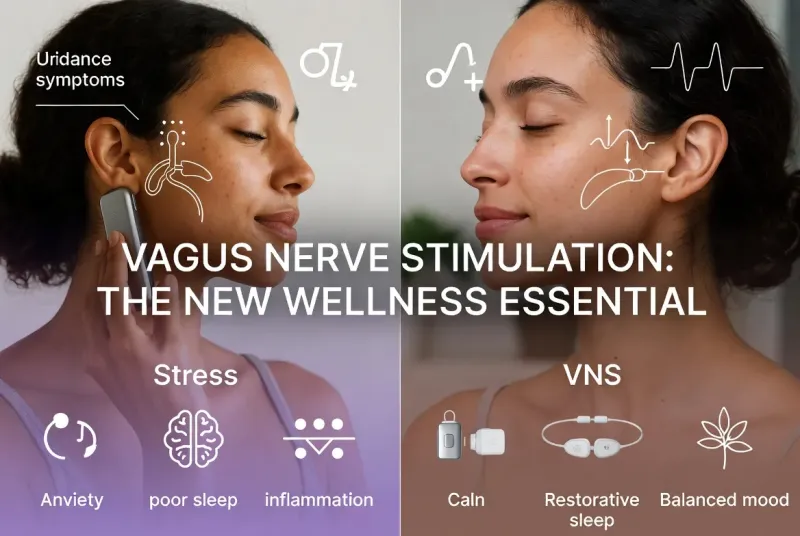
Understanding the Vagus Nerve Your Body's Superhighway for Calm
Before evaluating VNS gadgets, it's essential to understand what the vagus nerve is and why stimulating it matters for wellness.
What Is the Vagus Nerve?
The vagus nerve (cranial nerve X) is the longest cranial nerve in your body, extending from your brainstem through your neck and chest to your abdomen. It's a key component of the parasympathetic nervous system—the branch of your autonomic nervous system responsible for "rest and digest" functions that counterbalance the "fight or flight" stress response.
Key Functions of the Vagus Nerve:- Regulates heart rate and blood pressure- Controls digestion and gut motility- Modulates inflammation through the cholinergic anti-inflammatory pathway- Influences mood, anxiety, and emotional regulation via brain-gut communication- Supports immune function and stress resilience- Affects sleep quality and circadian rhythm regulation
Why Vagal Tone Matters
"Vagal tone" refers to the activity level of your vagus nerve. Higher vagal tone is associated with:- Better stress resilience and faster recovery from stressors- Lower resting heart rate and improved heart rate variability (HRV)- Reduced inflammation and stronger immune function- Improved digestion and gut health- Enhanced emotional regulation and reduced anxiety- Better sleep quality and circadian alignment
Conversely, low vagal tone is linked to chronic stress, anxiety disorders, depression, inflammatory conditions, digestive issues, and poor stress recovery.
How Vagus Nerve Stimulation Works
VNS works by delivering gentle electrical, acoustic, or mechanical stimulation to vagus nerve branches, triggering parasympathetic activation. There are two main approaches:
1. Invasive VNS (Clinical)- Surgically implanted device stimulates the cervical vagus nerve in the neck- FDA-approved for treatment-resistant epilepsy and depression- Requires surgery, battery replacement, and medical supervision- Not relevant for consumer wellness gadgets
2. Non-Invasive VNS (Consumer Wellness)- Transcutaneous auricular VNS (taVNS): Stimulates auricular branch of vagus nerve in the ear- Transcutaneous cervical VNS (tcVNS): Stimulates cervical vagus nerve in the neck- Acoustic or vibrational stimulation: Uses sound or vibration to indirectly activate vagal pathways- Breathwork-guided devices: Combine biofeedback with vagal activation techniques
Consumer VNS gadgets use low-intensity electrical currents (typically 0.5-5 mA), specific frequencies (1-30 Hz), and targeted electrode placement to safely stimulate vagus nerve branches without surgery.
The Science What Does Research Say About VNS for Wellness?
While invasive VNS has robust clinical evidence for epilepsy and depression, research on consumer-grade non-invasive VNS for general wellness is emerging but promising.
Evidence-Supported Benefits
1. Stress and Anxiety Reduction- Multiple studies show taVNS reduces cortisol levels and subjective stress ratings- A 2021 meta-analysis in Brain Stimulation found taVNS significantly reduced anxiety symptoms compared to sham stimulation- Mechanism: VNS activates parasympathetic pathways, reducing sympathetic "fight or flight" activity
2. Improved Sleep Quality- Research indicates VNS before bedtime can improve sleep onset and quality- A 2022 pilot study in Sleep Medicine found taVNS increased slow-wave sleep and reduced nighttime awakenings- Mechanism: Parasympathetic activation promotes relaxation conducive to sleep; vagus nerve influences circadian regulation
3. Enhanced Heart Rate Variability (HRV)- HRV is a key marker of autonomic balance and stress resilience- Studies consistently show VNS increases HRV, indicating improved parasympathetic tone- Higher HRV correlates with better emotional regulation, cardiovascular health, and longevity
4. Reduced Inflammation- The vagus nerve modulates inflammation via the cholinergic anti-inflammatory pathway- Early research suggests VNS may reduce inflammatory markers like IL-6 and TNF-α- Potential implications for autoimmune conditions, chronic pain, and metabolic health
5. Improved Digestive Function- Vagus nerve controls gut motility, enzyme secretion, and gut-brain communication- Preliminary studies suggest VNS may help with functional gastrointestinal disorders- Mechanism: Enhanced vagal signaling supports healthy digestion and gut microbiome balance
Limitations and Research Gaps:- Most studies are small, short-term, or industry-funded- Optimal stimulation parameters (frequency, intensity, duration) not yet standardized- Long-term safety data for daily consumer use still limited- Individual responses vary based on anatomy, health status, and device settings
Types of VNS Gadgets What's Available in 2026
Consumer VNS devices fall into several categories, each with distinct mechanisms and use cases
Category 1 Auricular (Ear-Based) VNS Devices
How They Work:- Electrodes clip onto or insert into the outer ear (concha or tragus)- Stimulate the auricular branch of the vagus nerve (Arnold's nerve)- Typically use low-frequency electrical pulses (1-25 Hz)
Popular Examples:- NEMOS® (tVNS®): CE-marked medical device; ear-clip design; clinically studied- Pulsetto: Wearable neck/ear device; app-controlled; multiple stimulation modes- Xen by Neuvana: Earbud-style device; combines music with vagus nerve stimulation- Truvaga: Handheld device with ear electrode attachment; FDA-cleared for anxiety
Pros:- Non-invasive and easy to use- Auricular branch is accessible and well-studied- Portable and discreet for on-the-go use
Cons:- Ear anatomy varies; electrode fit affects effectiveness- Some users report mild ear discomfort or tingling- Requires consistent placement for reliable stimulation
Best For Users seeking portable, discreet stress relief; those who prefer ear-based stimulation.
Category 2 Cervical (Neck-Based) VNS Devices
How They Work:- Electrodes placed on the side of the neck stimulate cervical vagus nerve branches- Often use gentle electrical pulses or vibrational stimulation- May include biofeedback to optimize placement and intensity
Popular Examples:- gammaCore®: FDA-cleared for migraine and cluster headache; handheld cervical stimulator- Sensate: Wearable pendant using resonant frequency vibration (not electrical) to stimulate vagal pathways- Apollo Neuro: Wrist-worn device using gentle vibrations to influence autonomic balance
Pros:- Direct access to major vagus nerve branches in neck- Some devices offer adjustable intensity and targeted programs- May provide stronger or more consistent stimulation than ear-based devices
Cons:- Neck placement requires more precision and may feel less discreet- Cervical stimulation may cause mild throat sensation or muscle twitching in some users- Generally larger and less portable than ear-based options
Best For: Users seeking stronger stimulation; those managing specific conditions like migraines; users comfortable with neck-based devices.
Category 3 Acoustic/Vibrational VNS Devices
How They Work:- Use specific sound frequencies, vibrations, or resonant tones to indirectly activate vagal pathways- Often combine stimulation with guided breathwork or meditation- Non-electrical approach may appeal to users wary of electrical stimulation
Popular Examples:- Sensate: Uses infrasonic vibrations transmitted through the sternum to stimulate vagal afferents- Dodow: Metronome light device that guides breathwork to enhance vagal tone- HeartMath Inner Balance: Combines HRV biofeedback with coherence-building techniques
Pros:- Non-electrical; may feel more natural or comfortable for some users- Often integrate with mindfulness practices for synergistic effects- Generally very safe with minimal contraindications
Cons:- Mechanism is less direct than electrical stimulation; effects may be subtler- Research base is smaller compared to electrical taVNS/tcVNS- May require more consistent practice to achieve noticeable benefits
Best For: Users preferring non-electrical approaches; those integrating VNS with meditation or breathwork; individuals with contraindications to electrical stimulation.
Category 4 Multi-Modal Wellness Devices with VNS Features
How They Work:- Combine VNS with other wellness technologies: HRV biofeedback, guided meditation, sleep tracking, etc.- Offer comprehensive nervous system support beyond stimulation alone
Popular Examples:- Apollo Neuro: Wearable vibration device with app-based programs for sleep, focus, relaxation- Muse S: Headband combining EEG neurofeedback with guided meditation and sleep tracking- Whoop: Fitness tracker with HRV monitoring and recovery insights (indirect vagal support)
Pros:- Holistic approach addresses multiple aspects of nervous system health- Data tracking helps users understand their progress and personalize use- Often include educational content to support long-term wellness habits
Cons:- Higher cost and complexity than dedicated VNS devices- VNS component may be less powerful than single-function devices- May require subscription fees for full feature access
Best For: Users seeking comprehensive wellness tracking; those who value data-driven insights; individuals wanting to combine VNS with other practices.
How to Use VNS Gadgets Safely and Effectively
Maximizing benefits while minimizing risks requires informed, intentional use.
Step 1 Choose the Right Device for Your Goals
Match device type to your primary wellness objective:- Stress/anxiety relief: Auricular or cervical VNS with adjustable intensity- Sleep improvement: Devices with bedtime programs or acoustic stimulation- HRV optimization: Multi-modal devices with biofeedback integration- Digestive support: Cervical VNS (vagus nerve has strong gut connections)- General wellness: Multi-modal or acoustic devices for gentle, consistent use
Step 2 Start Low and Go Slow
- Begin with the lowest intensity setting for 5-10 minutes- Gradually increase duration to 15-20 minutes as tolerated- Increase intensity only if you feel no discomfort and want stronger effects- Consistency matters more than intensity: daily short sessions often outperform occasional long ones
Step 3 Optimize Timing and Context
- For stress relief: Use during or after stressful events, or as a preventive morning/evening practice- For sleep: Use 30-60 minutes before bedtime in a calm, dim environment- For focus: Some users report benefits using VNS before demanding cognitive tasks- Avoid using while driving, operating machinery, or in situations requiring full alertness
Step 4 Combine with Complementary Practices
VNS works best as part of a holistic wellness routine:- Pair with diaphragmatic breathing to enhance parasympathetic activation- Use alongside mindfulness or meditation for synergistic calming effects- Support with adequate sleep, nutrition, and movement for foundational nervous system health- Track your responses (mood, sleep, HRV) to personalize your protocol
Step 5 Monitor for Side Effects and Adjust
Common, mild side effects (usually temporary):- Tingling or tingling sensation at stimulation site- Mild headache or neck discomfort (cervical devices)- Temporary lightheadedness or relaxation-induced drowsiness
Stop use and consult a healthcare provider if you experience:- Persistent pain, burning, or skin irritation at electrode sites- Significant dizziness, fainting, or heart rhythm changes- Worsening anxiety, mood changes, or unusual symptoms
Safety Considerations and Contraindications
While generally safe for healthy adults, VNS gadgets aren't appropriate for everyone.
Avoid or Consult a Doctor Before Use If You:- Have a pacemaker, implantable defibrillator, or other implanted electronic device- Have epilepsy or a history of seizures (unless using a medically-supervised device)- Are pregnant or breastfeeding (limited safety data)- Have cardiac arrhythmias, uncontrolled hypertension, or significant cardiovascular disease- Have skin conditions, infections, or open wounds at intended stimulation sites- Take medications that affect heart rhythm or nervous system function- Have a history of fainting, vasovagal syncope, or autonomic dysfunction
General Safety Tips:- Purchase devices from reputable manufacturers with clear safety certifications (FDA, CE, etc.)- Follow manufacturer instructions for electrode placement, intensity, and duration- Keep devices clean and replace electrodes as recommended to prevent skin irritation- Don't share electrode components with others to avoid cross-contamination- Store devices safely away from children and pets
What to Look for When Buying a VNS Gadget
Not all VNS devices are created equal. Use these criteria to evaluate options
1. Evidence and Transparency- Does the manufacturer cite peer-reviewed research supporting their device?- Are stimulation parameters (frequency, intensity, waveform) clearly disclosed?- Is there independent third-party testing or clinical validation?
2. Safety Certifications- FDA clearance (US), CE marking (EU), or equivalent regulatory approval- Clear contraindications and safety guidelines in user documentation- Quality manufacturing standards (ISO certifications, etc.)
3. Usability and Design- Comfortable, secure electrode placement that works with your anatomy- Intuitive controls and clear instructions for first-time users- Portable design if you plan to use it outside home
4. Customization and Flexibility- Adjustable intensity, frequency, and session duration- Multiple programs for different goals (stress, sleep, focus, etc.)- App integration for tracking progress and personalizing protocols
5. Support and Longevity- Responsive customer service and clear warranty terms- Firmware updates to improve functionality or add features- Availability of replacement parts (electrodes, batteries, etc.)
6. Value and Cost- Upfront device cost plus any subscription fees for app features- Compare features and evidence against price to assess true value- Consider long-term costs: electrode replacements, battery life, etc.
Sample VNS Wellness Protocol for Beginners
Week 1-2: Foundation- Device: Choose one beginner-friendly device (e.g., auricular clip or acoustic pendant)- Timing: Evening, 30 minutes before bed- Duration: 10 minutes at lowest intensity- Practice: Combine with 5 minutes of diaphragmatic breathing before stimulation- Track: Note sleep quality, morning mood, and any sensations in a journal
Week 3-4: Consistency- Increase duration to 15 minutes if well-tolerated- Add a morning session (5-10 minutes) for stress prevention- Experiment with slight intensity increases only if no discomfort- Continue pairing with breathwork or brief meditation
Week 5-8: Personalization- Adjust timing based on your goals: evening for sleep, morning for stress resilience, midday for anxiety relief- Try different programs or frequencies if your device offers options- Integrate with other wellness practices: yoga, nature time, digital detox- Review your journal to identify patterns and optimize your protocol
Beyond Week 8: Maintenance- Aim for consistent daily or near-daily use for sustained benefits- Periodically reassess your goals and adjust your protocol accordingly- Consider cycling: 5 days on, 2 days off, or monthly breaks to prevent adaptation- Share your experience with a healthcare provider if using VNS for specific health concerns
Integrating VNS with Other Wellness Practices
VNS gadgets work best as part of a holistic approach to nervous system health.
Complementary Practices
1. Breathwork and Meditation- Diaphragmatic breathing naturally stimulates the vagus nerve- Pair VNS with box breathing (4-4-4-4) or coherent breathing (5-6 breaths/minute)- Use VNS to deepen meditation states or ease into mindfulness practice
2. Movement and Exercise- Gentle movement (yoga, tai chi, walking) supports vagal tone- Avoid intense exercise immediately before or after VNS if you're sensitive to autonomic shifts- Use VNS post-workout to enhance parasympathetic recovery
3. Sleep Hygiene- VNS before bed can support relaxation and sleep onset- Combine with other sleep hygiene practices: cool, dark room; consistent schedule; screen curfew- Track sleep metrics to assess VNS impact on your rest quality
4. Nutrition and Gut Health- Vagus nerve connects brain and gut; support both ends of the axis- Prioritize fiber, fermented foods, and anti-inflammatory nutrients- Stay hydrated; dehydration can affect autonomic function
5. Social Connection and Nature Time- Positive social interactions and time in nature naturally boost vagal tone- Use VNS as a tool to enhance, not replace, these foundational wellness practices
The Future of VNS Technology
Consumer VNS is evolving rapidly. Emerging trends to watch
1. Personalized Stimulation Protocols- AI-driven devices that adapt intensity and frequency based on real-time biofeedback- Integration with wearables to optimize timing based on HRV, sleep stages, or stress markers
2. Multi-Target Neuromodulation- Devices stimulating multiple nerves (vagus + trigeminal + spinal) for synergistic effects- Combined electrical, acoustic, and light-based stimulation for enhanced outcomes
3. Improved Accessibility and Affordability- Lower-cost options bringing VNS technology to broader audiences- Insurance coverage expanding as evidence grows for specific conditions
4. Enhanced Research and Standardization- Larger, longer-term studies to clarify optimal use parameters- Development of consensus guidelines for consumer VNS safety and efficacy
5. Integration with Digital Therapeutics- VNS devices paired with app-based cognitive behavioral therapy, mindfulness training, or health coaching- Closed-loop systems that adjust stimulation based on user-reported symptoms or physiological data
Common Misconceptions About VNS Gadgets
Myth 1: "VNS gadgets can replace medication or therapy for anxiety/depression"Reality: While VNS may support mental wellness, it's not a substitute for professional treatment of clinical conditions. Use as a complementary tool, not a replacement.
Myth 2: "More intensity or longer sessions always mean better results"Reality: VNS works through subtle neuromodulation. Gentle, consistent stimulation often outperforms aggressive protocols. Follow evidence-based guidelines.
Myth 3: "VNS works instantly like a quick fix"Reality: Nervous system adaptation takes time. Most users report cumulative benefits over weeks of consistent use, not immediate transformation.
Myth 4: "All VNS devices are equally effective"Reality: Device design, stimulation parameters, and build quality vary significantly. Research and choose devices with transparent specifications and evidence.
Myth 5: "VNS is risk-free because it's non-invasive"Reality: While generally safe, VNS has contraindications and potential side effects. Informed, cautious use is essential.
When to Consult a Healthcare Professional
While many people use VNS gadgets for general wellness, consult a healthcare provider if:- You have a diagnosed medical condition (cardiac, neurological, psychiatric, autoimmune)- You're considering VNS for a specific health concern rather than general wellness- You experience unexpected or persistent side effects- You're pregnant, breastfeeding, or managing complex medication regimens- You want to integrate VNS with other treatments or therapies
A knowledgeable provider can help you:- Assess whether VNS is appropriate for your situation- Recommend evidence-based devices and protocols- Monitor for interactions with medications or conditions- Adjust your approach based on your progress and responses
Conclusion VNS Gadgets as Tools, Not Magic Bullets
Vagus nerve stimulation gadgets represent an exciting convergence of neuroscience, technology, and wellness. For many users, these devices offer a tangible, accessible way to support parasympathetic activation, reduce stress, improve sleep, and enhance overall nervous system resilience.
However, VNS gadgets are tools—not magic bullets. Their effectiveness depends on:- Choosing a well-designed, evidence-informed device- Using it consistently and appropriately for your goals- Integrating it with foundational wellness practices (sleep, nutrition, movement, connection)- Maintaining realistic expectations about outcomes and timelines
As research continues to evolve, consumer VNS technology will likely become more personalized, accessible, and integrated into holistic health approaches. For now, informed, intentional use of current devices can be a valuable addition to your wellness toolkit.
Remember: the goal isn't to outsource your nervous system regulation to a gadget. It's to use technology as one support among many to cultivate greater resilience, presence, and well-being in your daily life.
For evidence-based guidance on vagus nerve health, VNS device comparisons, and personalized wellness strategies, explore trusted resources that prioritize scientific rigor, transparency, and holistic health. Your journey to nervous system balance starts with one informed choice at a time.
For thoughtfully curated VNS devices, wellness technology reviews, and expert guidance on integrating neuromodulation into your self-care routine, discover trusted options through specialized retailers committed to informed consumer education and holistic wellness. Support your nervous system, honor your body's wisdom, and embrace technology as a tool for thriving.