

Why Your Skin Looks Different in Natural vs Indoor Light
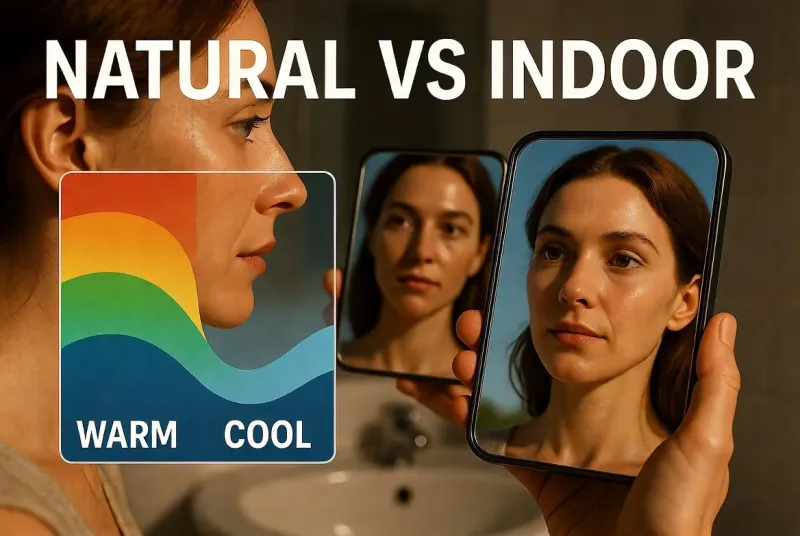
The Lighting Illusion Why Your Skin Never Looks the Same Twice
If you've ever applied makeup in your bathroom, felt confident, then stepped outside and questioned every decision—you've experienced one of beauty's most universal truths: lighting changes everything. The same skin can appear radiant, dull, even-toned, or patchy depending solely on the light source illuminating it. This isn't a flaw in your skin or your mirror; it's a fundamental property of how light interacts with human tissue, pigments, and perception.
Understanding this phenomenon isn't just interesting—it's empowering. When you know how different lighting conditions affect your skin's appearance, you can make smarter choices about makeup application, skincare assessment, photography, and even virtual presentations. This guide breaks down the science, offers practical strategies, and provides culturally adapted tips for Bangladeshi women navigating diverse lighting environments.
The Science How Light Shapes Skin Perception
To understand why skin looks different under various lights, we need to explore three key properties of light:
1. Color Temperature (Measured in Kelvin)Color temperature describes whether light appears warm (yellowish) or cool (bluish):- Natural daylight: Typically 5000-6500K (neutral to cool), providing balanced, full-spectrum illumination- Morning/evening sunlight: 2000-4000K (warm), casting golden tones that flatter most skin- Incandescent bulbs: 2700-3000K (warm yellow), common in older Bangladeshi homes- LED/fluorescent lights: 3000-5000K (variable), often with uneven spectral output- Phone/computer screens: 6000K+ (cool blue), which can emphasize redness or sallowness
Why it matters: Warm light tends to soften imperfections and enhance golden undertones; cool light can reveal redness, discoloration, or texture more starkly.
2. Color Rendering Index (CRI)CRI measures how accurately a light source reveals true colors compared to natural daylight (CRI 100):- Natural sunlight: CRI ~100 (excellent color accuracy)- Quality LED bulbs: CRI 90+ (good accuracy)- Cheap fluorescent tubes: CRI 70-80 (colors appear muted or shifted)- Many budget indoor lights in Bangladesh: CRI below 80, causing skin tones to look unnatural
Why it matters: Low-CRI lighting distorts color perception, making foundation matching, skincare assessment, and even self-perception unreliable.
3. Direction and DiffusionHow light hits your face dramatically affects what you see:- Direct overhead light: Creates harsh shadows under eyes, nose, and chin; emphasizes texture- Front-facing diffused light: Flattens features, minimizes shadows, creates even appearance- Side lighting: Reveals texture, pores, and contour; can be unflattering or informative depending on goal- Backlighting: Creates silhouette effect; skin details become harder to assess
Why it matters: The same skin can look smooth under soft, frontal light and textured under directional, harsh light—even with identical color temperature.
Natural Light The Gold Standard for Skin Assessment
Why daylight is considered the most reliable lighting for evaluating skin
Full Spectrum Coverage:Sunlight contains all visible wavelengths, allowing your eyes (and cameras) to perceive skin tone, undertones, and discoloration accurately. This is why makeup artists and dermatologists recommend checking foundation matches near a window.
Balanced Intensity:Natural daylight provides even illumination without the extreme contrast of many artificial sources. This helps reveal true texture without exaggerating minor imperfections.
Dynamic but Predictable:While daylight changes throughout the day (warmer at sunrise/sunset, cooler at midday), these shifts follow predictable patterns you can learn to work with.
Bangladesh-Specific Considerations:- Monsoon season: Overcast skies create soft, diffused daylight ideal for makeup application- Summer midday: Intense, direct sunlight can be harsh; seek shaded, indirect natural light- Urban settings: Buildings and pollution can filter light; north-facing windows often provide most consistent illumination
Practical Tip: For the most reliable skin assessment, check your complexion in indirect natural light near a window between 10 AM and 2 PM, when daylight is most neutral.
Indoor Lighting Common Types and Their Effects on Skin
Most of us spend the majority of our time under artificial light. Understanding common indoor sources helps you anticipate how your skin will appear:
Incandescent/Halogen Bulbs (Warm Yellow Light)- Color temperature: 2700-3000K- Effect on skin: Adds warmth, softens redness, can make skin appear more golden or tan- Common in: Older Bangladeshi homes, decorative lamps, some bathroom fixtures- Pros: Flattering for evening looks; minimizes appearance of dark circles- Cons: Can mask true foundation match; may hide redness that becomes visible outdoors
Fluorescent Tube Lights (Cool, Often Harsh)- Color temperature: 4000-5000K (but spectral quality often uneven)- Effect on skin: Can emphasize grayness, sallowness, or redness; creates unflattering shadows- Common in: Offices, schools, many Bangladeshi households, retail spaces- Pros: Bright illumination for tasks- Cons: Low CRI distorts colors; flicker can cause eye strain affecting perception
LED Bulbs (Variable Quality)- Color temperature: Ranges 2700K-6500K depending on bulb- Effect on skin: Highly variable; quality LEDs with high CRI render skin accurately; cheap LEDs can create unnatural tones- Common in: Modern homes, smartphones, ring lights, newer fixtures- Pros: Energy-efficient; available in multiple color temperatures- Cons: Inconsistent quality; blue-rich LEDs may emphasize pigmentation or redness
Smartphone/Computer Screens (Cool Blue Light)- Color temperature: Often 6000K+- Effect on skin: Can make skin appear paler, emphasize dark circles or redness; creates flat, two-dimensional appearance- Common in: Video calls, selfies, social media browsing- Pros: Convenient for quick checks- Cons: Poor color accuracy; directional light creates unflattering shadows
Mixed Lighting Scenarios (Very Common in Bangladesh)Many spaces combine multiple light sources: ceiling fluorescent + table lamp + window daylight. This creates competing color temperatures that confuse both eyes and cameras, often making skin appear uneven or "off."
Practical Strategy: When assessing skin or applying makeup indoors, try to use a single, consistent light source. If possible, supplement with a daylight-balanced LED bulb (5000K, CRI 90+) for more reliable color rendering.
The Mirror Paradox Why Your Reflection Lies (Sort Of)
Mirrors themselves don't distort your appearance—but the lighting around them absolutely does. Consider these common scenarios:
Bathroom Mirror Under Warm Bulbs:- Skin appears warmer, smoother, more even- Redness and discoloration are minimized- Foundation may look perfectly matched indoors but appear too light or ashy outdoors
Bedroom Mirror Under Mixed Lighting:- Competing light sources create uneven illumination- One side of face may appear different from the other- Makes consistent makeup application challenging
Phone Front Camera in Selfie Mode:- Screen light illuminates face from below (unflattering angle)- Auto-beauty filters may smooth texture artificially- Color processing varies by device, affecting skin tone accuracy
Why This Matters for Skincare:If you only assess your skin under flattering indoor light, you may miss:- True extent of hyperpigmentation or redness- Whether your sunscreen leaves a white cast- If your moisturizer is adequately hydrating (dry patches may be hidden)- Whether your foundation oxidizes or changes color outdoors
Solution: Build a "lighting audit" into your routine. Check your skin and makeup in at least two conditions: your primary indoor lighting and natural daylight. This dual-check system helps you make choices that work in real-world conditions.
Practical Strategies Working With Light, Not Against It
Strategy 1: Create a Reliable Makeup Application Setup- Invest in a daylight-balanced LED bulb (5000K, CRI 90+) for your vanity or bathroom- Position your mirror near a window for natural light access- If using a ring light, choose one with adjustable color temperature to mimic daylight- Apply foundation in the lighting where you'll spend most of your day, then verify in natural light before leaving
Bangladesh-Specific Tip: In rental homes where bulb replacement isn't possible, keep a portable LED makeup mirror with daylight setting for critical application steps.
Strategy 2: Master the Two-Light Check for Foundation Matching1. Test foundation shades along your jawline in natural daylight (indirect, near a window)2. Verify the match under your most common indoor lighting (office, home, etc.)3. Choose the shade that looks most seamless in both conditions4. If shades differ significantly, consider a custom mix or consult a professional
Why jawline? This area shows the transition between face and neck tone, helping ensure your foundation doesn't create a visible line.
Strategy 3: Optimize Lighting for Skincare PhotographyWhether documenting progress or sharing routines online, lighting affects how your skin appears in photos:- Use indirect natural light whenever possible (near a window, not direct sun)- Avoid overhead lighting that creates harsh shadows under eyes- If using artificial light, position it in front of you, slightly above eye level- Consider a simple reflector (white foam board or paper) to bounce light and soften shadows- Edit minimally: Over-processing can misrepresent your actual skin condition
Bangladesh-Specific Tip: During monsoon season, overcast days provide beautifully diffused natural light ideal for skincare photos. In summer, early morning or late afternoon light is softer than harsh midday sun.
Strategy 4: Prepare for Video Calls and Virtual MeetingsWith remote work and online classes common, looking your best on camera matters:- Position your main light source in front of you, not behind (avoid backlighting)- Use a ring light or desk lamp with daylight bulb to illuminate your face evenly- Adjust screen brightness to reduce eye strain and improve color perception- Test your camera preview in the lighting you'll use during the call- Remember: Most cameras compress color and detail; what looks "perfect" on screen may appear different in person
Pro Tip: If your indoor lighting is unavoidably unflattering, wear clothing in colors that complement your skin tone under that light (e.g., warm tones under incandescent, cool tones under fluorescent).
Strategy 5: Understand Seasonal and Geographic Light VariationsLighting isn't static—it changes with time of day, season, and location:- Morning light (golden hour): Warm, soft, flattering; ideal for photos but may mask imperfections- Midday light: Neutral, bright, revealing; best for accurate color assessment- Evening light: Warm again, but often dimmer; can create shadows- Monsoon vs. dry season in Bangladesh: Overcast skies provide diffused light; clear days offer intense, directional sunlight
Adaptation Strategy: Keep a mental note of how your skin looks under different conditions. If you know your foundation appears lighter in evening light, you can adjust application accordingly.
The Psychology of Lighting and Self-Perception
Beyond the physics, lighting affects how we feel about our skin
The "Golden Hour" Effect:Warm, soft light triggers positive emotional associations (sunrise, sunset, warmth), which can make us perceive our skin more favorably. This isn't deception—it's a legitimate emotional response to pleasant stimuli.
Harsh Light Anxiety:Bright, cool, directional lighting (like fluorescent office lights) can feel clinical or unflattering, triggering self-criticism. Recognizing this as a lighting effect, not a skin flaw, reduces unnecessary distress.
Social Media Distortion:Filters, ring lights, and editing create unrealistic standards. Remember: most "flawless" skin online is a product of optimized lighting and post-processing, not unattainable perfection.
Mindful Practice: When you notice your skin looking "different" in a new lighting condition, pause and ask: Is my skin actually different, or is the light revealing information I don't usually see? Both are valid—learning to read both perspectives builds a more complete, compassionate self-image.
Troubleshooting Common Lighting-Related Skin Concerns
Issue: Foundation looks perfect indoors but ashy or orange outdoorsSolution: Always verify foundation matches in natural daylight. If indoor lighting is warm, it may mask cool undertones; if cool, it may exaggerate warmth. Choose a shade that bridges both environments.
Issue: Skin appears uneven or patchy under office lightingSolution: Fluorescent lights often have low CRI and uneven spectral output. If possible, add a small daylight LED task light to your workspace. Alternatively, use a color-correcting primer to neutralize lighting-induced discoloration.
Issue: Dark circles look worse on video callsSolution: Cool, frontal screen light emphasizes under-eye shadows. Add a soft, warm light source slightly below your camera to fill shadows. Concealer with peach/salmon undertones can also counteract blue-purple tones under cool light.
Issue: Skincare products look different in photos vs. in personSolution: Camera sensors process color differently than human eyes. For accurate documentation, use consistent lighting (preferably natural daylight) and minimal editing. Note lighting conditions when tracking progress.
Issue: Makeup photographs differently than it looks in the mirrorSolution: Mirrors reflect light; cameras capture it. Test your makeup under the lighting conditions where photos will be taken. For event photography, ask about the venue's lighting in advance.
Building Lighting Awareness Into Your Routine
You don't need a studio setup to work with light effectively. Simple habits make a difference
Morning Routine:- Apply skincare and makeup near a window for natural light assessment- Do a quick check under your primary indoor lighting before leaving- Keep a small mirror in your bag for midday touch-ups in varied lighting
Evening Routine:- Remove makeup under the same lighting you applied it to assess true coverage and wear- Note any areas where product broke down—this informs future choices
Weekly Practice:- Once a week, assess your skin in multiple lighting conditions to track true progress- Photograph your skin in consistent natural light for accurate progress documentation
Seasonal Adjustment:- In brighter months, you may need slightly more coverage or different undertones- In dimmer seasons, focus on products that enhance radiance without relying on lighting tricks
Cultural and Contextual Considerations for Bangladeshi Women
Navigating lighting in Bangladesh presents unique considerations
Urban vs. Rural Lighting:- City apartments may have mixed lighting (fluorescent ceiling + decorative lamps + window light)- Rural homes may rely more on natural light or single-bulb fixtures- Adaptation: Identify your most consistent light source and use it as your "anchor" for critical tasks
Religious and Cultural Events:- Evening gatherings often use warm, decorative lighting- Daytime events may have intense sunlight or shaded outdoor areas- Strategy: Choose versatile makeup that adapts across conditions; carry blotting papers and powder for touch-ups
Climate Impact:- High humidity can affect how products wear under different lights (e.g., dewy finishes may appear greasy in harsh light)- Monsoon diffused light is forgiving; summer direct sun is revealing- Adaptation: Adjust product formulas seasonally; prioritize long-wear, humidity-resistant products in humid months
Modesty and Presentation:- For those who wear hijab or other head coverings, lighting on the face becomes even more critical for overall presentation- Strategy: Ensure your primary lighting illuminates your face evenly; consider a small, portable light for important occasions
The Bigger Picture Lighting as a Tool, Not a Judge
Understanding how light affects your skin's appearance isn't about chasing perfection in every condition—it's about gaining agency. When you know:- Why your skin looks different in various lights- How to assess your skin accurately- How to present your best self in the lighting you encounter
...you can make choices that serve your real life, not just a single idealized scenario.
Your skin is not "wrong" because it looks different under fluorescent lights. Your makeup isn't "bad" because it photographs unexpectedly. Light is information. Learning to read it helps you work with your skin, not against it.
Conclusion See Your Skin Clearly, in Any Light
The next time you notice your skin looking different in a new lighting environment, remember: this isn't a flaw—it's physics. Light shapes perception, and understanding that relationship gives you power to make informed choices about skincare, makeup, photography, and self-presentation.
You don't need perfect lighting to have great skin. You need awareness, adaptability, and compassion for the fact that human skin is complex, dynamic, and beautiful in all its variations.
Start where you are. Try one strategy from this guide this week—perhaps checking your foundation in natural light, or adding a daylight bulb to your vanity. Notice what you learn. Build from there.
Your skin tells a story. With mindful attention to light, you can ensure that story is seen clearly, authentically, and kindly—whether in golden daylight, soft indoor glow, or the cool light of a video call.
For thoughtfully curated lighting solutions, makeup tools, and skincare products designed to perform beautifully across varied lighting conditions, explore trusted local resources that prioritize quality, accessibility, and cultural relevance. Your journey to confident, well-lit skin starts with one intentional choice at a time.
For premium lighting accessories, makeup mirrors with adjustable color temperature, and skincare products formulated to look flawless in any light, discover thoughtfully selected options at TrustShopBD (www.trustshopbd.com). Each product is chosen to support your confidence and self-expression across Bangladesh's diverse lighting environments.