

5 Businesses Capitalizing on Sustainable Tech Recycling Growth
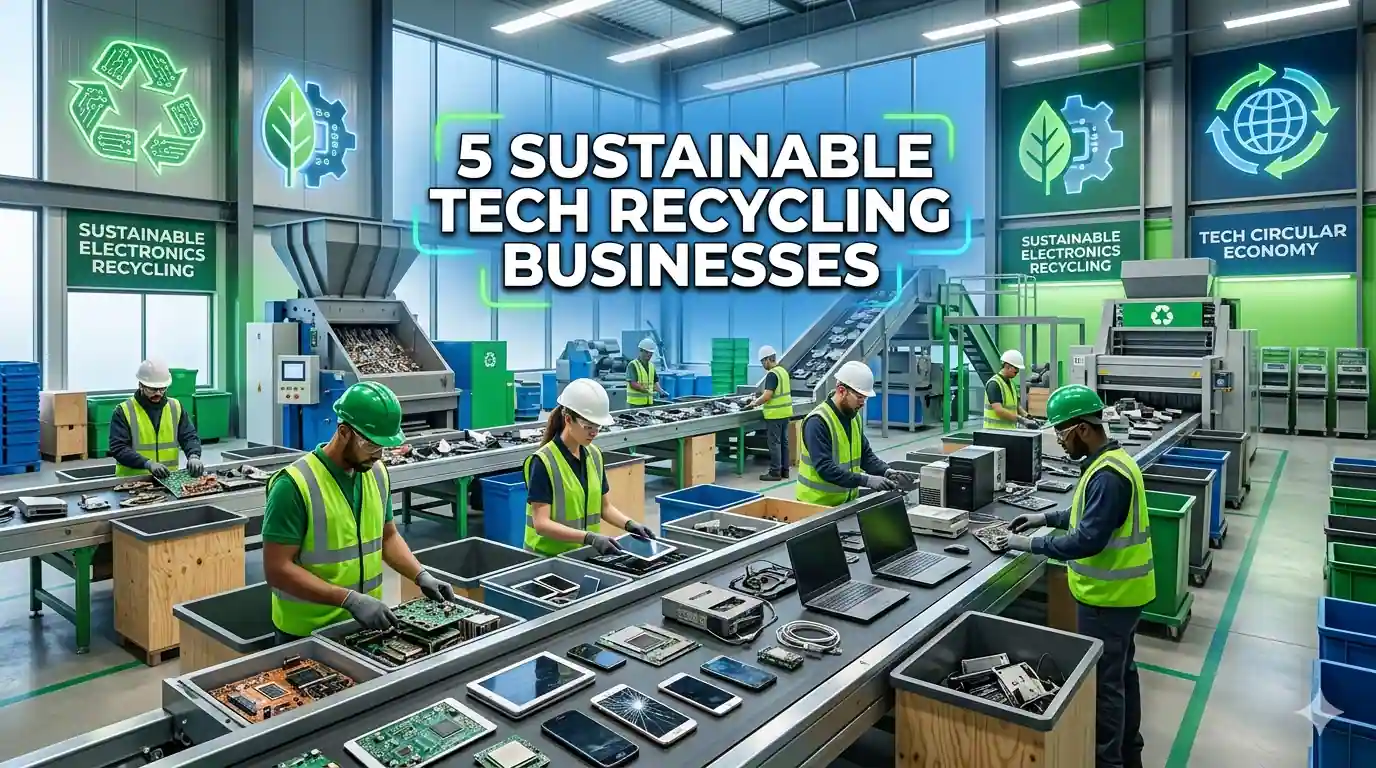
Introduction to the Sustainable Tech Recycling Revolution
The global technology revolution has created an unprecedented challenge and opportunity: electronic waste. As consumers and businesses upgrade devices at an accelerating pace, mountains of discarded smartphones, laptops, servers, and other electronics accumulate worldwide. This e-waste crisis has spawned a thriving industry focused on sustainable technology recycling, presenting lucrative business opportunities for entrepreneurs who recognize the intersection of environmental responsibility and profitability.
The global e-waste recycling market was valued at approximately $52.4 billion in 2023 and is projected to reach $90.8 billion by 2030, growing at a compound annual growth rate of 8.2 percent. This explosive growth is driven by several converging factors: increasing electronic consumption, stricter environmental regulations, growing consumer awareness about sustainability, and the valuable materials hidden in discarded devices. Each year, the world generates over 53 million metric tons of e-waste, yet only about 17 percent is formally recycled, leaving enormous potential for business expansion.
Within this expanding market, innovative entrepreneurs are building profitable businesses that address different segments of the tech recycling value chain. From specialized component recovery to comprehensive device refurbishment, from rare earth metal extraction to circular economy consulting, diverse business models are emerging to capture value from what was once considered waste. These ventures not only generate substantial revenue but also contribute to environmental sustainability, resource conservation, and the transition toward a circular economy.
This comprehensive guide explores five distinct business categories successfully capitalizing on sustainable tech recycling industry growth. We examine their business models, revenue streams, market opportunities, operational requirements, and growth potential. Whether you are an entrepreneur seeking to enter this dynamic sector or an investor evaluating opportunities in the green technology space, understanding these business models provides crucial insights into one of the most promising industries of the 21st century.
Business Model 1: Specialized E-Waste Collection and Logistics Services
Market Opportunity and Value Proposition
The first critical link in the tech recycling value chain is collection and logistics. Specialized e-waste collection services address a fundamental challenge: getting discarded electronics from homes, businesses, and institutions to recycling facilities efficiently, securely, and compliantly. This business model focuses on the front end of the recycling process, creating value through convenience, compliance, and secure data destruction.
The e-waste collection and logistics market is experiencing robust growth as regulations tighten and corporate sustainability commitments expand. Businesses generating electronic waste face complex compliance requirements regarding proper disposal, data security, and environmental responsibility. Many organizations lack the infrastructure and expertise to manage e-waste internally, creating demand for specialized collection services that handle everything from pickup scheduling to documentation and certification.
Successful collection businesses differentiate themselves through comprehensive service offerings including scheduled pickups, on-site collection events, secure data destruction, detailed reporting for compliance audits, and transparent chain-of-custody documentation. By providing end-to-end logistics solutions, these companies become trusted partners rather than simple waste haulers, commanding premium pricing and long-term contracts.
Revenue Streams and Profitability
E-waste collection businesses generate revenue through multiple streams:
- Collection Fees: Charging businesses and institutions for pickup services, typically based on volume, weight, or number of items. Commercial clients may pay $50 to $500 per pickup depending on scale.
- Data Destruction Services: Premium fees for certified data wiping or physical destruction of storage devices, ranging from $10 to $50 per device with proper documentation.
- Compliance Documentation: Fees for generating certificates of recycling, data destruction certificates, and environmental compliance reports required for audits.
- Material Recovery Sharing: Revenue sharing agreements with downstream recyclers where collection companies receive a percentage of recovered material value.
- Government and Municipal Contracts: Long-term contracts for managing community e-waste collection programs, often providing stable recurring revenue.
- Corporate Sustainability Programs: Comprehensive service contracts with large corporations requiring ongoing e-waste management across multiple locations.
Profit margins for collection and logistics businesses typically range from 15 to 30 percent, with well-established operations achieving higher margins through route optimization, volume efficiencies, and value-added services. The key to profitability lies in maximizing collection density, minimizing transportation costs, and developing recurring revenue through long-term contracts.
Operational Requirements and Startup Costs
Starting an e-waste collection business requires moderate capital investment and specific operational capabilities:
- Transportation: Fleet of vehicles ranging from vans for small-scale operations to box trucks for commercial collections. Initial vehicle investment ranges from $30,000 to $150,000.
- Warehousing: Secure storage facility for temporary holding before transfer to recycling partners. Costs vary by location but typically $2,000 to $10,000 monthly.
- Licensing and Permits: Waste transporter licenses, environmental permits, and business registrations varying by jurisdiction, typically $1,000 to $10,000.
- Insurance: Comprehensive liability, cargo, and environmental impairment coverage, typically $5,000 to $20,000 annually.
- Technology: Route optimization software, customer relationship management systems, and tracking platforms, $5,000 to $20,000 initial investment.
- Staffing: Drivers, warehouse personnel, and administrative staff. Initial team of 3 to 5 employees.
Total startup costs typically range from $100,000 to $300,000 depending on scale, geographic coverage, and whether vehicles and facilities are purchased or leased.
Growth Strategies and Market Expansion
Successful collection businesses scale through strategic expansion:
- Geographic Expansion: Extending service areas to adjacent cities and regions once local market is saturated
- Service Diversification: Adding related services like IT asset disposition, equipment refurbishment, or general waste management
- Technology Integration: Implementing advanced tracking, customer portals, and automated reporting to improve efficiency and customer experience
- Strategic Partnerships: Forming alliances with municipalities, corporations, and recycling facilities to secure steady volume
- Acquisition: Purchasing smaller collection operations to rapidly expand geographic footprint and customer base
Business Model 2: Device Refurbishment and Resale Operations
The Circular Economy Advantage
Device refurbishment and resale represents one of the most visible and profitable segments of the sustainable tech recycling industry. This business model extends the lifecycle of electronic devices by restoring them to functional condition and selling them to secondary markets, creating value through both environmental impact and economic returns.
The global refurbished electronics market was valued at $58.3 billion in 2023 and is projected to reach $113.4 billion by 2030, growing at 10.1 percent annually. This growth is fueled by increasing consumer acceptance of refurbished products, corporate sustainability initiatives, and the significant cost savings refurbished devices offer compared to new equipment. For businesses and budget-conscious consumers, refurbished electronics provide 40 to 60 percent savings while maintaining reliable performance.
Refurbishment operations create value by acquiring used devices through various channels, performing comprehensive testing and repairs, upgrading components when beneficial, and selling through multiple distribution channels. The most successful operations develop expertise in specific device categories, establish efficient repair processes, and build strong relationships with both suppliers and buyers.
Revenue Model and Profit Margins
Refurbishment businesses generate revenue through device sales with margins varying significantly by device type, condition, and market demand:
- Smartphones: Acquisition costs range from $20 to $300 depending on model and condition. Refurbished units sell for $100 to $800, yielding gross margins of 30 to 50 percent.
- Laptops and Computers: Business laptops acquired for $100 to $400 can be refurbished and sold for $300 to $900, achieving 35 to 45 percent margins.
- Tablets: iPads and Android tablets purchased for $50 to $250 resell for $150 to $600 after refurbishment.
- Enterprise Equipment: Servers, networking gear, and specialized equipment often yield higher margins of 40 to 60 percent due to specialized knowledge requirements.
- Component Harvesting: Extracting valuable components like screens, batteries, and memory from non-repairable devices for resale or use in repairs.
- Bulk Sales to Resellers: Selling graded and tested devices in volume to international markets or secondary retailers at lower margins but higher velocity.
Successful refurbishment operations achieve net profit margins of 15 to 25 percent after accounting for labor, facilities, testing equipment, and overhead. Volume and operational efficiency are critical drivers of profitability.
Operational Infrastructure Requirements
Establishing a professional refurbishment operation requires specific infrastructure and capabilities:
- Facility: Clean, organized workspace with adequate lighting, ESD protection, and security. Space requirements range from 1,000 to 10,000 square feet depending on volume, costing $2,000 to $15,000 monthly.
- Testing Equipment: Diagnostic tools, software licenses, and testing platforms specific to device types. Initial investment of $10,000 to $50,000.
- Repair Tools and Parts Inventory: Specialized tools, replacement screens, batteries, and components. Parts inventory typically requires $20,000 to $100,000.
- Data Wiping Systems: Certified software and hardware for secure data erasure meeting industry standards like NIST 800-88.
- Quality Control Processes: Standardized testing procedures, grading systems, and documentation protocols.
- Skilled Technicians: Trained staff capable of diagnosis, repair, and quality assurance. Labor costs represent 30 to 40 percent of operating expenses.
- Sales Channels: E-commerce platforms, B2B relationships, retail partnerships, or marketplace presence on platforms like eBay, Amazon Renewed, or specialized B2B marketplaces.
Startup costs for a modest refurbishment operation typically range from $150,000 to $400,000, scaling significantly for high-volume or specialized operations.
Market Positioning and Competitive Advantages
Refurbishment businesses differentiate through several strategies:
- Specialization: Focusing on specific brands, device types, or market segments to develop deep expertise and efficient processes
- Quality Certification: Obtaining industry certifications like R2, e-Stewards, or ISO standards that build customer trust
- Warranty and Support: Offering comprehensive warranties and technical support that rival new device manufacturers
- Sustainability Story: Communicating environmental impact metrics like carbon savings and e-waste diverted to appeal to conscious consumers
- B2B Focus: Serving businesses seeking cost-effective IT equipment with volume discounts and asset management services
- International Markets: Exporting refurbished devices to emerging markets where demand for affordable technology is strong
Business Model 3: Precious Metal and Rare Earth Element Recovery
The Hidden Value in E-Waste
Precious metal and rare earth element recovery represents the most technically sophisticated and potentially lucrative segment of tech recycling. Electronic devices contain significant quantities of valuable materials including gold, silver, platinum, palladium, copper, and rare earth elements like neodymium and dysprosium. Extracting these materials from e-waste is often more economical and environmentally friendly than traditional mining.
A single metric ton of smartphones contains approximately 300 grams of gold, 3 kilograms of silver, and 100 kilograms of copper, compared to one ton of gold ore which yields just 5 grams of gold. This concentration makes e-waste an attractive source of precious metals. The global e-waste precious metal recovery market was valued at $9.8 billion in 2023 and is projected to reach $16.2 billion by 2030, driven by increasing e-waste volumes, rising precious metal prices, and advancing recovery technologies.
Recovery operations employ various technologies including mechanical processing, hydrometallurgical processes using chemical solutions, pyrometallurgical smelting at high temperatures, and emerging bioleaching techniques using microorganisms. The choice of technology depends on scale, capital availability, environmental regulations, and target materials.
Revenue Potential and Economics
Precious metal recovery businesses generate revenue through material sales with values tied to commodity markets:
- Gold Recovery: With gold prices around $2,000 per ounce, recovering even small quantities generates significant revenue. One ton of circuit boards can yield 200 to 400 grams of gold worth $400 to $800.
- Silver Extraction: Silver prices around $25 per ounce make recovery economically viable, with one ton of electronics containing 2 to 3 kilograms of silver worth $50 to $75.
- Copper Recovery: While lower value per unit, copper exists in large quantities. Prices around $4 per pound make bulk recovery profitable.
- Palladium and Platinum: These platinum group metals command premium prices of $1,000 to $3,000 per ounce and are found in catalytic converters and certain electronic components.
- Rare Earth Elements: Neodymium, dysprosium, and other rare earths critical for magnets and electronics are increasingly valuable due to supply constraints and growing demand.
- Processing Fees: Some operations charge fees to process e-waste for other recyclers, generating revenue from both fees and recovered materials.
Profit margins vary significantly based on technology, scale, and operational efficiency. Well-optimized operations achieve gross margins of 25 to 40 percent on recovered materials, though net margins are lower after accounting for substantial capital costs, energy consumption, chemical expenses, and environmental compliance.
Capital Requirements and Technical Complexity
Precious metal recovery is capital-intensive and technically complex:
- Facility and Infrastructure: Industrial-scale facilities with specialized ventilation, waste treatment systems, and safety infrastructure. Costs range from $500,000 to $10 million depending on scale and technology.
- Processing Equipment: Shredders, separators, furnaces, chemical reactors, electroplating systems, and refining equipment requiring $200,000 to $5 million in investment.
- Environmental Controls: Air filtration, wastewater treatment, hazardous material handling systems essential for regulatory compliance, costing $100,000 to $2 million.
- Licensing and Permits: Extensive environmental permits, hazardous waste handling licenses, and air/water discharge permits requiring significant time and $50,000 to $500,000 in costs.
- Technical Expertise: Chemists, metallurgists, environmental engineers, and skilled operators commanding premium salaries.
- Working Capital: Funds for purchasing e-waste feedstock, chemicals, and covering operational expenses before material sales, typically $200,000 to $2 million.
Total startup costs for a small to medium-scale recovery operation typically range from $1 million to $10 million, making this the most capital-intensive tech recycling business model.
Emerging Technologies and Innovation Opportunities
The recovery sector is experiencing technological innovation creating opportunities for differentiated approaches:
- Bioleaching: Using bacteria and fungi to extract metals with lower environmental impact and energy consumption than traditional methods
- Ionic Liquids: Advanced solvents offering selective metal recovery with reduced toxicity
- Automated Sorting: AI-powered systems using sensors and machine learning to identify and separate high-value components
- Urban Mining: Integrated facilities combining collection, preprocessing, and advanced recovery in circular economy hubs
- Partnership Models: Collaborating with electronics manufacturers for take-back programs and design-for-recycling initiatives
Business Model 4: IT Asset Disposition and Data Center Decommissioning
Serving Enterprise and Institutional Clients
IT Asset Disposition (ITAD) and data center decommissioning services address the specialized needs of enterprises, government agencies, and institutions managing large-scale technology refreshes and facility closures. This business model combines secure data destruction, asset recovery, environmental compliance, and comprehensive documentation to serve high-value corporate clients.
The global ITAD market was valued at $2.1 billion in 2023 and is projected to reach $4.3 billion by 2030, growing at 10.8 percent annually. This growth is driven by accelerating technology refresh cycles, stringent data security regulations, corporate sustainability commitments, and the increasing complexity of managing technology assets at scale.
ITAD providers offer end-to-end services including asset inventory and tracking, secure data sanitization or destruction, equipment evaluation and valuation, remarketing of recoverable assets, environmentally compliant recycling of non-recoverable items, and detailed reporting for compliance audits. The value proposition centers on risk mitigation, regulatory compliance, value recovery, and sustainability.
Service Offerings and Revenue Streams
ITAD businesses generate revenue through multiple streams:
- Service Fees: Charging for collection, data destruction, and processing services. Enterprise contracts typically range from $10,000 to $500,000 depending on volume and complexity.
- Value Sharing: Sharing proceeds from remarketed equipment with clients, typically on a 50/50 to 70/30 split favoring the client.
- Data Destruction Certification: Premium fees for certified data wiping, physical destruction, and chain-of-custody documentation required for compliance.
- Asset Management Software: Subscription fees for platforms providing real-time tracking, reporting, and compliance documentation.
- Consulting Services: Advising on technology refresh planning, sustainability reporting, and compliance strategy.
- On-Site Services: Premium pricing for on-site data center decommissioning, equipment removal, and facility clearing.
Profit margins for ITAD services typically range from 20 to 35 percent, with higher margins on service fees and lower margins on value-sharing arrangements. Building long-term enterprise relationships provides recurring revenue and predictable volumes.
Operational Capabilities and Certifications
Success in ITAD requires specific capabilities and credentials:
- Security Infrastructure: Secure facilities with controlled access, video surveillance, and chain-of-custody protocols meeting industry standards.
- Data Destruction Technology: Certified software for data wiping meeting NIST 800-88 standards, degaussing equipment, and physical destruction capabilities including shredders.
- Industry Certifications: R2, e-Stewards, ISO 27001 for information security, ISO 14001 for environmental management, and NAID AAA certification for data destruction.
- Insurance: Comprehensive coverage including cyber liability, errors and omissions, and environmental impairment typically $1 million to $10 million in coverage.
- Skilled Personnel: IT professionals, data security specialists, logistics coordinators, and compliance officers.
- Technology Platform: Asset tracking software, customer portals, and reporting systems providing transparency and audit trails.
- Remarketing Channels: Relationships with refurbishers, brokers, and secondary markets to maximize asset recovery value.
Startup costs for an ITAD operation typically range from $500,000 to $2 million, with significant investment in security infrastructure, certifications, and technology platforms.
Client Acquisition and Relationship Management
ITAD businesses succeed through strategic client development:
- Enterprise Sales: Direct sales teams targeting IT directors, CIOs, and procurement officers at large corporations
- Channel Partnerships: Relationships with IT consultants, managed service providers, and technology vendors who refer clients
- Government Contracts: Pursuing public sector opportunities requiring specific certifications and competitive bidding
- Industry Specialization: Developing expertise in regulated industries like healthcare, finance, and government with specific compliance needs
- Account Management: Dedicated account managers ensuring service excellence and identifying expansion opportunities
- Thought Leadership: Publishing content on data security, sustainability, and compliance to build credibility and attract clients
Business Model 5: Circular Economy Consulting and Technology Solutions
Enabling the Broader Ecosystem
Circular economy consulting and technology solutions represents a high-value, knowledge-based business model serving the broader tech recycling ecosystem. Rather than physically handling e-waste, these businesses provide expertise, software, and strategic guidance helping manufacturers, recyclers, brands, and governments optimize their circular economy initiatives.
The global circular economy consulting market is experiencing rapid growth as organizations face increasing pressure to reduce waste, improve sustainability, and comply with emerging regulations like the European Union's Circular Economy Action Plan and extended producer responsibility laws. Companies across sectors are investing in circular strategies, creating demand for specialized expertise and technology solutions.
This business model encompasses diverse services including circular economy strategy development, product design for recyclability, supply chain optimization, reverse logistics planning, sustainability reporting, regulatory compliance advisory, and technology platforms for tracking materials, managing take-back programs, and optimizing recycling operations.
Service Portfolio and Revenue Models
Circular economy consultants and technology providers generate revenue through various models:
- Consulting Projects: Fixed-price or time-and-materials engagements for strategy development, audits, and implementation support. Projects typically range from $25,000 to $500,000.
- Software as a Service: Subscription-based platforms for material tracking, recycling management, or sustainability reporting. Monthly subscriptions range from $500 to $10,000 depending on scale.
- Licensing Fees: Licensing proprietary methodologies, frameworks, or technologies to other consultants or organizations.
- Training and Certification: Educational programs teaching circular economy principles, earning $1,000 to $5,000 per participant.
- Retainer Agreements: Ongoing advisory relationships providing continuous support and strategic guidance, typically $5,000 to $50,000 monthly.
- Implementation Support: Hands-on assistance deploying circular economy initiatives, often billed at $150 to $500 per hour.
Profit margins for consulting businesses typically range from 30 to 50 percent after accounting for personnel costs and overhead. Software businesses achieve higher margins of 70 to 90 percent after initial development costs are recovered.
Expertise and Capability Requirements
Success in circular economy consulting requires diverse expertise:
- Technical Knowledge: Deep understanding of materials science, recycling technologies, product design, and supply chain dynamics
- Regulatory Expertise: Knowledge of environmental regulations, extended producer responsibility laws, and sustainability reporting standards
- Business Strategy: Ability to align circular economy initiatives with business objectives and financial performance
- Data Analytics: Skills in analyzing material flows, environmental impacts, and economic outcomes
- Technology Development: For software providers, capabilities in platform development, user experience design, and system integration
- Credentials: Advanced degrees in engineering, environmental science, or business, plus certifications like LEED, CECP, or sustainability credentials
Startup costs for consulting businesses are relatively modest, typically $50,000 to $200,000 for initial operations, while technology platform development requires $200,000 to $2 million depending on complexity.
Market Positioning and Growth Strategies
Circular economy businesses differentiate through:
- Industry Specialization: Focusing on specific sectors like electronics, automotive, or consumer goods to develop deep expertise
- Technology Integration: Combining consulting with proprietary software tools that provide ongoing value
- Thought Leadership: Publishing research, speaking at conferences, and contributing to industry standards development
- Partnership Networks: Collaborating with recyclers, technology providers, and certification bodies to offer comprehensive solutions
- Global Reach: Serving multinational clients with operations across multiple jurisdictions and regulatory environments
- Measurable Outcomes: Demonstrating quantifiable environmental and financial benefits to build credibility and justify fees
Common Challenges and How to Overcome Them
Regulatory Complexity and Compliance
All tech recycling businesses face complex and evolving regulatory landscapes including environmental regulations governing waste handling, transportation, and disposal; data security and privacy laws requiring secure data destruction; international trade regulations affecting cross-border e-waste movements; and extended producer responsibility laws shifting costs to manufacturers. Overcoming these challenges requires investing in compliance expertise, maintaining current certifications, implementing robust documentation systems, and engaging with industry associations to stay informed about regulatory changes.
Market Volatility and Commodity Price Fluctuations
Businesses recovering materials or reselling devices face revenue volatility from fluctuating commodity prices, changing demand for refurbished electronics, and currency exchange rate variations. Mitigation strategies include diversifying revenue streams, hedging commodity exposure where possible, developing long-term contracts with price adjustment mechanisms, maintaining operational flexibility to scale up or down, and focusing on value-added services less sensitive to commodity prices.
Technology Obsolescence and Rapid Change
The fast pace of technological change creates challenges in maintaining relevant capabilities and equipment. Successful businesses invest in continuous training, maintain flexible infrastructure adaptable to new device types, monitor technology trends to anticipate shifts, and develop partnerships with manufacturers for early access to information about new products.
Expert Tips for Success in Tech Recycling
Build Strategic Partnerships
Success in tech recycling depends on strong relationships across the value chain. Develop partnerships with electronics manufacturers for take-back programs, collection services for steady feedstock, downstream recyclers for materials you cannot process, technology providers for advanced solutions, industry associations for knowledge sharing and advocacy, and government agencies for contracts and compliance guidance.
Invest in Technology and Automation
Technology differentiation creates competitive advantages through automated sorting systems increasing throughput and accuracy, software platforms improving customer experience and operational efficiency, data analytics optimizing pricing and inventory management, tracking systems ensuring chain of custody and compliance, and advanced processing equipment improving recovery rates and material purity.
Prioritize Transparency and Certification
Building trust requires third-party certifications like R2, e-Stewards, and ISO standards, detailed reporting on environmental impact and material recovery, transparent pricing and value-sharing arrangements, regular audits and compliance verification, and clear communication about processes and outcomes.
Frequently Asked Questions
Which tech recycling business model requires the least capital to start?
E-waste collection and logistics services typically require the least capital, with startup costs ranging from $100,000 to $300,000. Circular economy consulting also has relatively low barriers to entry at $50,000 to $200,000. In contrast, precious metal recovery requires $1 million to $10 million, making it the most capital-intensive option.
What certifications are essential for tech recycling businesses?
Key certifications include R2 or e-Stewards for responsible recycling practices, NAID AAA for data destruction, ISO 14001 for environmental management, ISO 27001 for information security, and state-specific waste transporter and processor licenses. Requirements vary by business model and jurisdiction.
How profitable are tech recycling businesses?
Profitability varies significantly by model and execution. Collection services achieve 15 to 30 percent margins, refurbishment operations 15 to 25 percent, precious metal recovery 10 to 25 percent after substantial capital costs, ITAD services 20 to 35 percent, and consulting 30 to 50 percent. Scale, operational efficiency, and value-added services drive profitability.
Can I start a tech recycling business part-time?
Collection services and consulting can potentially start part-time, but most tech recycling businesses require full-time commitment due to operational complexity, customer service demands, and regulatory requirements. Consider starting with consulting or collection while building capital and expertise before expanding to more complex operations.
Conclusion: Seizing Opportunities in Sustainable Tech Recycling
The sustainable tech recycling industry offers diverse business opportunities ranging from collection and logistics to advanced material recovery, from device refurbishment to strategic consulting. Each business model presents unique advantages, challenges, and capital requirements, allowing entrepreneurs to choose paths aligned with their resources, expertise, and ambitions.
Success in this dynamic sector requires more than technical capabilities; it demands commitment to environmental sustainability, adherence to rigorous compliance standards, investment in technology and innovation, building trust through transparency and certification, and developing strategic partnerships across the value chain. Businesses that excel in these areas position themselves for long-term growth while contributing to the critical mission of reducing e-waste, conserving resources, and advancing the circular economy.
As global e-waste volumes continue rising and regulatory pressure intensifies, the sustainable tech recycling industry will only grow in importance and opportunity. Entrepreneurs who enter this space now, armed with knowledge, preparation, and commitment to excellence, can build profitable businesses that make a meaningful environmental impact while capturing value from the technology revolution's inevitable byproducts.
The question is not whether sustainable tech recycling represents a viable business opportunity, but which model best matches your capabilities and which segment of this expanding market you will serve. The time to act is now, as the industry enters a period of accelerated growth and transformation.


0 Comments