

5 Profitable Business Ideas in Renewable Energy Maintenance
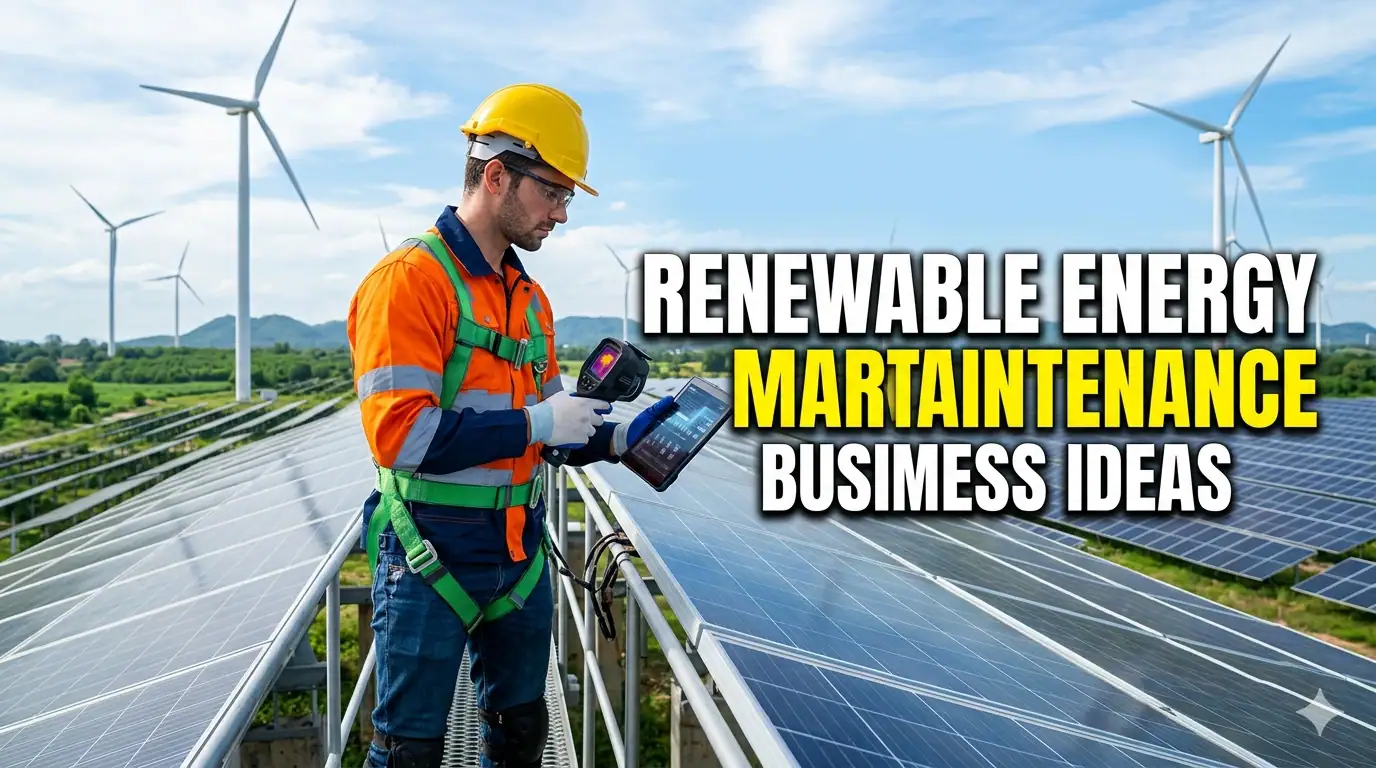
Introduction to Renewable Energy Maintenance Opportunities
The renewable energy sector is experiencing unprecedented growth, creating lucrative business opportunities for entrepreneurs who recognize the critical need for maintenance services. The global renewable energy operations and maintenance market was valued at US$ 7371 million in 2025 and is anticipated to reach US$ 14500 million by 2032, representing tremendous potential for new business ventures.
As countries worldwide commit to carbon neutrality and sustainable energy transitions, the installed base of solar panels, wind turbines, battery storage systems, and electric vehicle charging infrastructure continues to expand exponentially. However, these systems require regular maintenance, inspection, and repair to operate at peak efficiency and ensure long-term reliability. This creates a massive service gap that savvy entrepreneurs can fill with specialized maintenance businesses.
Unlike traditional energy sectors that have matured over decades, the renewable energy maintenance industry is still emerging, offering first-mover advantages and less saturated markets. Whether you are a skilled technician looking to start your own company or an investor seeking profitable ventures in the green economy, renewable energy maintenance presents multiple pathways to success.
Why Renewable Energy Maintenance Matters Now
The Growing Demand for Specialized Services
The renewable energy market size was valued at $1078.7 billion in 2025 and is projected to grow from $1138.71 billion in 2026 to $1838.57 billion by 2034, creating an expanding customer base for maintenance services. This growth trajectory means more solar installations, wind farms, energy storage facilities, and EV charging networks will require ongoing care and attention.
Several factors drive the critical need for professional maintenance services in the renewable energy sector. First, renewable energy systems represent significant capital investments for homeowners, businesses, and utilities. Protecting these investments through proper maintenance ensures optimal performance and return on investment. Second, many renewable energy systems operate in harsh environmental conditions, from desert solar farms to offshore wind turbines, requiring specialized knowledge and equipment for proper upkeep.
Third, regulatory requirements and warranty conditions often mandate regular inspections and maintenance to keep systems compliant and warranties valid. Finally, as renewable energy becomes integrated into critical infrastructure and grid systems, reliability becomes paramount, making professional maintenance not just beneficial but essential.
Market Growth Projections
The renewable energy project operation and maintenance market is forecasted to expand from USD 6.3 billion in 2026 to USD 12.59 billion by 2035, demonstrating the sector's robust growth potential. The 10.3 percent CAGR indicates a significant increase in demand for operations and maintenance services over the forecast period from 2025 to 2033. This growth is fueled by increasing renewable energy installations worldwide and the recognition that proper maintenance directly impacts system longevity and energy output.
Employment growth for wind turbine service technicians alone is projected to increase approximately 50 percent from 2024 to 2034, much faster than average occupations. According to the Global Wind Energy Council, the world needs 532,000 new wind technicians by 2028, highlighting the massive skills gap and business opportunity in this sector.
Business Idea 1: Solar Panel Cleaning and Inspection Services
Market Opportunity and Profitability
Solar panel cleaning and inspection represents one of the most accessible entry points into renewable energy maintenance. The average profit margin for a solar panel cleaning business typically falls between 30 percent and 50 percent, making it an attractive venture for entrepreneurs with modest startup capital. A stable, well-run solar panel cleaning operation should target an operating margin of 25 to 35 percent once scale is achieved.
The business model is straightforward: solar panels accumulate dust, pollen, bird droppings, and other debris that significantly reduce energy production efficiency. Studies show that dirty solar panels can lose 15 to 25 percent of their energy output, translating to substantial revenue losses for system owners. This creates a compelling value proposition for regular cleaning services.
Service Offerings
A comprehensive solar panel maintenance business can offer multiple revenue streams:
- Regular Cleaning Services: Monthly, quarterly, or biannual cleaning contracts for residential, commercial, and utility-scale solar installations
- Inspection Services: Detailed assessments detecting damage, wear, and efficiency issues using thermal imaging and electrical testing
- Performance Monitoring: Ongoing system performance analysis and reporting to identify issues before they become critical
- Minor Repairs: Replacing damaged panels, fixing mounting hardware, and addressing electrical connection issues
- Warranty Compliance Inspections: Documentation and reporting required to maintain manufacturer warranties
Startup Requirements
Starting a solar panel cleaning business requires relatively modest investment compared to other renewable energy ventures. Essential equipment includes water-fed pole systems, purified water filtration, soft brushes, safety harnesses, and potentially drone technology for large-scale inspections. For residential work, initial investment can range from $5,000 to $15,000, while commercial-scale operations may require $50,000 to $100,000 in equipment and vehicles.
Training and certification in solar system safety, electrical awareness, and working at heights are essential. Many regions require specific licenses for working on grid-connected electrical systems, so understanding local regulations is crucial.
Revenue Potential
Residential solar panel cleaning typically generates $150 to $400 per service visit, while commercial installations can command $500 to $2,000 or more depending on system size. Utility-scale solar farms may pay $5,000 to $20,000 for comprehensive cleaning and inspection services. A well-established business with recurring contracts can generate annual revenues of $200,000 to $500,000 or more with proper marketing and service quality.
Business Idea 2: Wind Turbine Maintenance and Repair Services
Industry Demand and Growth
Wind turbine maintenance represents one of the fastest-growing career and business opportunities in the renewable energy sector. Wind turbine technicians are among the fastest-growing careers in America, with jobs expected to increase 60 percent between 2023 and 2033. By 2027, it is projected that more than 574,000 technicians will be required for the construction, installation, operation, and maintenance of wind energy systems globally.
This massive demand stems from the aging wind turbine fleet requiring increased maintenance and the continuous installation of new turbines worldwide. As turbines grow larger and more sophisticated, the complexity of maintenance increases, creating opportunities for specialized service providers.
Service Categories
Wind turbine maintenance businesses can specialize in several areas:
- Preventive Maintenance: Scheduled inspections, lubrication, component testing, and system adjustments to prevent failures
- Corrective Maintenance: Emergency repairs and component replacement when failures occur
- Predictive Maintenance: Advanced monitoring using vibration analysis, thermal imaging, and oil analysis to predict failures before they happen
- Blade Repair: Specialized services for repairing cracks, erosion, and lightning damage on turbine blades
- Electrical Systems Maintenance: Generator, transformer, and control system servicing
- Gearbox and Bearing Services: Specialized mechanical maintenance for critical drivetrain components
Technical Requirements and Training
Wind turbine maintenance requires significant technical expertise and safety training. Technicians must be comfortable working at extreme heights, often 200 to 300 feet above ground, in challenging weather conditions. Essential certifications include:
- Global Wind Organisation (GWO) basic safety training
- Electrical safety and high voltage certification
- Hydraulic systems training
- Mechanical systems expertise
- First aid and rescue certification
- Confined space entry training
Starting a wind turbine maintenance business requires substantial investment in specialized equipment including service vehicles, lifting equipment, diagnostic tools, and safety gear. Initial capital requirements typically range from $100,000 to $500,000 depending on service scope and scale.
Revenue Models
Wind turbine maintenance contracts are typically structured as long-term service agreements (TSAs) spanning 5 to 10 years. Annual maintenance contracts for individual turbines can range from $10,000 to $30,000 per turbine depending on size, age, and service level. A business maintaining 20 to 50 turbines can generate annual revenues of $500,000 to $1.5 million or more.
Emergency repair services command premium rates, often $150 to $300 per hour plus parts and equipment. Specialized services like blade repair can generate $5,000 to $50,000 per repair depending on damage extent.
Business Idea 3: Battery Energy Storage System Maintenance
Emerging Market Opportunity
Battery energy storage systems (BESS) represent one of the fastest-growing segments in renewable energy infrastructure. As solar and wind installations increasingly pair with battery storage to provide grid stability and energy independence, the need for specialized BESS maintenance services explodes.
Battery system maintenance includes thermal imaging inspections, electrical connection torque checks, and software updates that must be performed regularly to ensure safety and performance. Despite their robustness, battery systems require periodic maintenance such as electrolyte level checks, cleaning, and terminal inspections to prevent issues like sulfation and capacity degradation.
Service Offerings
A comprehensive BESS maintenance business can provide:
- Routine Inspections: Monthly or quarterly visual inspections checking for physical damage, corrosion, and connection integrity
- Performance Testing: Capacity testing, charge-discharge cycle analysis, and efficiency monitoring
- Thermal Management: Cooling system maintenance, temperature monitoring, and thermal runaway prevention
- Battery Management System (BMS) Services: Software updates, calibration, and diagnostics
- Safety System Testing: Fire suppression system inspection, gas detection testing, and emergency shutdown verification
- Preventive Maintenance: Scheduled component replacement, cleaning, and system optimization
- Emergency Response: 24/7 troubleshooting and repair services for critical systems
Technical Expertise Required
BESS maintenance requires specialized knowledge in electrical systems, chemistry, thermal management, and safety protocols. Technicians should have training in:
- Lithium-ion battery technology and chemistry
- High voltage DC systems and safety
- Power electronics and inverter systems
- Thermal management and HVAC systems
- Fire safety and emergency response
- SCADA and monitoring systems
- Cybersecurity for connected systems
Certifications from battery manufacturers, electrical safety organizations, and fire safety agencies enhance credibility and may be required for certain contracts.
Market Potential
The battery storage market is experiencing exponential growth as utilities, businesses, and homeowners invest in energy independence and grid services. Commercial and utility-scale BESS installations typically require annual maintenance contracts ranging from $5,000 to $50,000 or more depending on system size and complexity.
Residential battery systems, while smaller, represent a growing market with maintenance contracts typically $500 to $2,000 annually. A BESS maintenance business serving a mix of residential, commercial, and utility clients can generate substantial recurring revenue with proper client acquisition and service quality.
Business Idea 4: EV Charging Station Maintenance and Support
Rapidly Expanding Infrastructure
Electric vehicle adoption is accelerating globally, driving massive deployment of EV charging infrastructure. This expansion creates urgent demand for reliable maintenance and support services to keep charging stations operational and user-friendly. EV charging station owners need to be aware of warranties, maintenance, service, and support to ensure reliability and return from their stations.
Through regular visual inspections, careful cleaning, software updates, remote monitoring, and periodic professional maintenance, charging station operators can ensure optimal performance and minimize downtime. General maintenance for charging infrastructure includes storing charging cables securely to prevent damage, checking parts periodically, and keeping equipment clean and functional.
Service Portfolio
EV charging station maintenance businesses can offer comprehensive services including:
- Preventive Maintenance: Scheduled inspections, cleaning, and testing to prevent failures
- Hardware Repairs: Cable replacement, connector repairs, screen fixes, and payment system troubleshooting
- Software Updates: Firmware upgrades, security patches, and feature enhancements
- Network Connectivity: WiFi, cellular, and ethernet troubleshooting and optimization
- Electrical System Maintenance: Circuit breaker testing, grounding verification, and power quality analysis
- 24/7 Support Services: Remote diagnostics, customer support, and emergency response
- Installation and Commissioning: New station setup, testing, and activation
- Compliance Inspections: Safety certifications and regulatory compliance verification
Technical Requirements
EV charging station maintenance requires expertise in multiple technical domains:
- Electrical systems and high voltage safety (Level 2 and DC fast charging)
- Network connectivity and IoT systems
- Payment processing and software platforms
- Customer service and user experience
- Multiple charging standards (CCS, CHAdeMO, Tesla, J1772)
- Load management and grid integration
Technicians should have electrical licensing appropriate for their jurisdiction and manufacturer-specific training for major charging equipment brands.
Business Model and Revenue
EV charging maintenance can be structured through various revenue models:
- Service Contracts: Annual or monthly maintenance agreements ranging from $200 to $2,000 per charger annually depending on type and usage
- Per-Visit Pricing: On-demand service calls at $150 to $300 per hour plus parts
- Network Management: Comprehensive remote monitoring and support at $50 to $200 per charger monthly
- Installation Services: Commissioning and activation at $500 to $3,000 per station
A business maintaining 100 to 500 charging stations through service contracts can generate annual revenues of $200,000 to $1 million or more with scalable operations.
Business Idea 5: Geothermal Heat Pump Maintenance Services
Niche Market with Steady Demand
Geothermal heat pump systems offer exceptional energy efficiency for heating and cooling but require specialized maintenance to maintain performance. Geothermal heat pumps require less maintenance than gas, oil-fueled systems, and air-to-water heat pumps, but they still need regular professional attention to ensure optimal operation and longevity.
Unlike traditional HVAC systems, geothermal systems have unique components including ground loops, heat exchangers, and specialized refrigerant systems that require specific expertise. This specialization creates opportunities for dedicated service providers with less competition than general HVAC maintenance.
Service Components
Comprehensive geothermal heat pump maintenance includes:
- Ground Loop Inspection: Examining ground loops for leaks, damage, or signs of soil erosion that could affect system performance
- Heat Exchanger Maintenance: Cleaning and inspecting heat exchangers for corrosion, scaling, and efficiency
- Refrigerant System Service: Checking refrigerant levels, pressure testing, and leak detection
- Electrical System Testing: Verifying connections, controls, and safety systems
- Fluid Analysis: Testing loop fluid for proper concentration, pH, and contamination
- Compressor and Pump Maintenance: Lubrication, vibration analysis, and performance testing
- Thermostat and Controls Calibration: Ensuring accurate temperature control and system optimization
Training and Certification
Geothermal system maintenance requires specialized training beyond standard HVAC certification. Technicians should pursue:
- GeoExchange certification or equivalent
- Advanced refrigerant handling certification
- Ground source heat pump installation and maintenance training
- Hydronic systems expertise
- Electrical systems certification
Manufacturer-specific training from major geothermal equipment brands enhances credibility and may be required for warranty work.
Market Opportunity
While geothermal systems represent a smaller market segment compared to solar or wind, they offer steady, recurring revenue with less competition. Annual maintenance contracts for residential geothermal systems typically range from $300 to $800, while commercial systems can command $2,000 to $10,000 or more annually.
Geothermal systems have long lifespans with ground loops lasting over 50 years, creating decades-long customer relationships. A specialized geothermal maintenance business serving 200 to 500 residential and commercial clients can generate sustainable annual revenues of $300,000 to $1 million with high customer retention rates.
Common Mistakes to Avoid in Renewable Energy Maintenance Businesses
Inadequate Training and Safety Protocols
One of the most critical mistakes new renewable energy maintenance businesses make is underinvesting in training and safety. Working with high voltage electrical systems, at extreme heights, or with complex battery chemistry requires rigorous training and strict safety protocols. Cutting corners in this area can lead to catastrophic accidents, liability issues, and business failure.
Underpricing Services
Many entrepreneurs enter the renewable energy maintenance market without fully understanding the true costs of specialized equipment, insurance, training, and certifications. Underpricing services to win contracts may generate initial business but leads to unsustainable operations and inability to reinvest in necessary equipment and training.
Neglecting Insurance and Liability Protection
Renewable energy maintenance involves significant risks including electrical hazards, working at heights, and potential damage to expensive equipment. Inadequate insurance coverage can bankrupt a business after a single incident. Comprehensive general liability, workers compensation, professional liability, and equipment insurance are essential investments.
Ignoring Technology and Software
Modern renewable energy systems generate vast amounts of data that can optimize maintenance schedules and predict failures. Businesses that fail to invest in monitoring software, customer relationship management systems, and mobile field service applications miss opportunities for efficiency and competitive advantage.
Poor Customer Communication
Renewable energy system owners often lack technical expertise and need clear communication about maintenance needs, issues, and recommendations. Businesses that use excessive jargon, fail to provide detailed reports, or don't educate clients about system performance miss opportunities to build trust and secure long-term contracts.
Expert Tips for Success in Renewable Energy Maintenance
Specialize and Differentiate
While offering multiple services can seem attractive, specializing in specific technologies or market segments often leads to greater success. Becoming known as the expert in offshore wind turbine blade repair, utility-scale solar maintenance, or commercial BESS services allows you to command premium pricing and attract higher-quality clients.
Build Manufacturer Partnerships
Establishing relationships with renewable energy equipment manufacturers can provide access to specialized training, certification programs, warranty work, and referral networks. Many manufacturers maintain lists of authorized service providers and actively refer customers to qualified technicians.
Invest in Predictive Maintenance Technology
Predictive maintenance is emerging as a cutting-edge approach to renewable energy system maintenance. Investing in thermal imaging cameras, vibration analysis tools, drone inspection systems, and AI-powered monitoring platforms positions your business at the forefront of the industry and allows you to offer higher-value services.
Focus on Recurring Revenue
The most successful renewable energy maintenance businesses build their revenue base on long-term service contracts rather than one-time repairs. Offering comprehensive maintenance packages with scheduled inspections, priority response, and performance guarantees creates predictable revenue streams and stronger client relationships.
Stay Current with Industry Trends
The renewable energy sector evolves rapidly with new technologies, regulations, and best practices emerging constantly. Committing to continuous learning through industry conferences, manufacturer training, professional associations, and technical publications ensures your business remains competitive and compliant.
Frequently Asked Questions
How much capital is needed to start a renewable energy maintenance business?
Startup capital requirements vary significantly by specialty. Solar panel cleaning businesses can start with $5,000 to $15,000 for residential services, while wind turbine maintenance may require $100,000 to $500,000 for equipment, vehicles, and certifications. BESS and EV charging maintenance typically need $50,000 to $200,000 in initial investment. Securing adequate working capital for the first 6 to 12 months of operations is essential regardless of specialty.
What certifications are required for renewable energy maintenance work?
Required certifications depend on your specialty and jurisdiction. Common requirements include electrical licensing, OSHA safety training, manufacturer-specific certifications, GWO certification for wind work, and specialized training in battery systems or solar technology. Many regions require specific licenses for working on grid-connected electrical systems. Research local regulations and client requirements carefully before launching.
How profitable are renewable energy maintenance businesses?
Profitability varies by specialty and business model. Solar panel cleaning typically achieves 30 to 50 percent profit margins, while wind turbine maintenance can generate substantial revenues with proper scaling. The key to profitability is securing long-term service contracts, maintaining high customer retention, controlling operational costs, and continuously expanding technical capabilities to offer higher-value services.
Is there enough demand for renewable energy maintenance services?
Demand for renewable energy maintenance services is strong and growing rapidly. With renewable energy capacity projected to grow at 8 to 10 percent annually through 2030 and hundreds of thousands of new technicians needed globally, the market offers substantial opportunities. The aging renewable energy infrastructure also requires increasing maintenance, creating sustained demand for years to come.
Can I start a renewable energy maintenance business without technical experience?
While technical experience is highly valuable, it is possible to start a renewable energy maintenance business by hiring qualified technicians and focusing on business development and operations. However, understanding the technical aspects of the systems you service is crucial for quality control, client communication, and making informed business decisions. Consider partnering with experienced technicians or investing in comprehensive training before launching.
Conclusion: Your Path to Renewable Energy Maintenance Success
The renewable energy maintenance sector offers exceptional opportunities for entrepreneurs willing to invest in training, equipment, and building strong client relationships. With the global renewable energy operations and maintenance market projected to reach $14.5 billion by 2032, the timing for entering this industry has never been better.
Whether you choose to focus on solar panel cleaning, wind turbine maintenance, battery storage services, EV charging infrastructure, or geothermal systems, success requires commitment to safety, continuous learning, and delivering exceptional service quality. The businesses that thrive will be those that embrace technology, build long-term client relationships through recurring service contracts, and stay ahead of industry trends.
The transition to renewable energy is not just an environmental imperative but an economic opportunity. By establishing a renewable energy maintenance business, you position yourself at the intersection of profitability and sustainability, contributing to a cleaner energy future while building a rewarding and financially successful enterprise. The question is not whether there is opportunity in renewable energy maintenance, but which specialty aligns best with your skills, resources, and ambitions.
Start by assessing your current skills and resources, identifying the specialty that matches your capabilities and market demand in your region, investing in proper training and certifications, and building relationships with equipment manufacturers and potential clients. With dedication and strategic planning, your renewable energy maintenance business can become a cornerstone of the clean energy economy while providing substantial financial rewards.


0 Comments