

Analog Sunday 2026: Digital Detox Trend Taking Over
What Is Analog Sunday—and Why Is Everyone Talking About It?
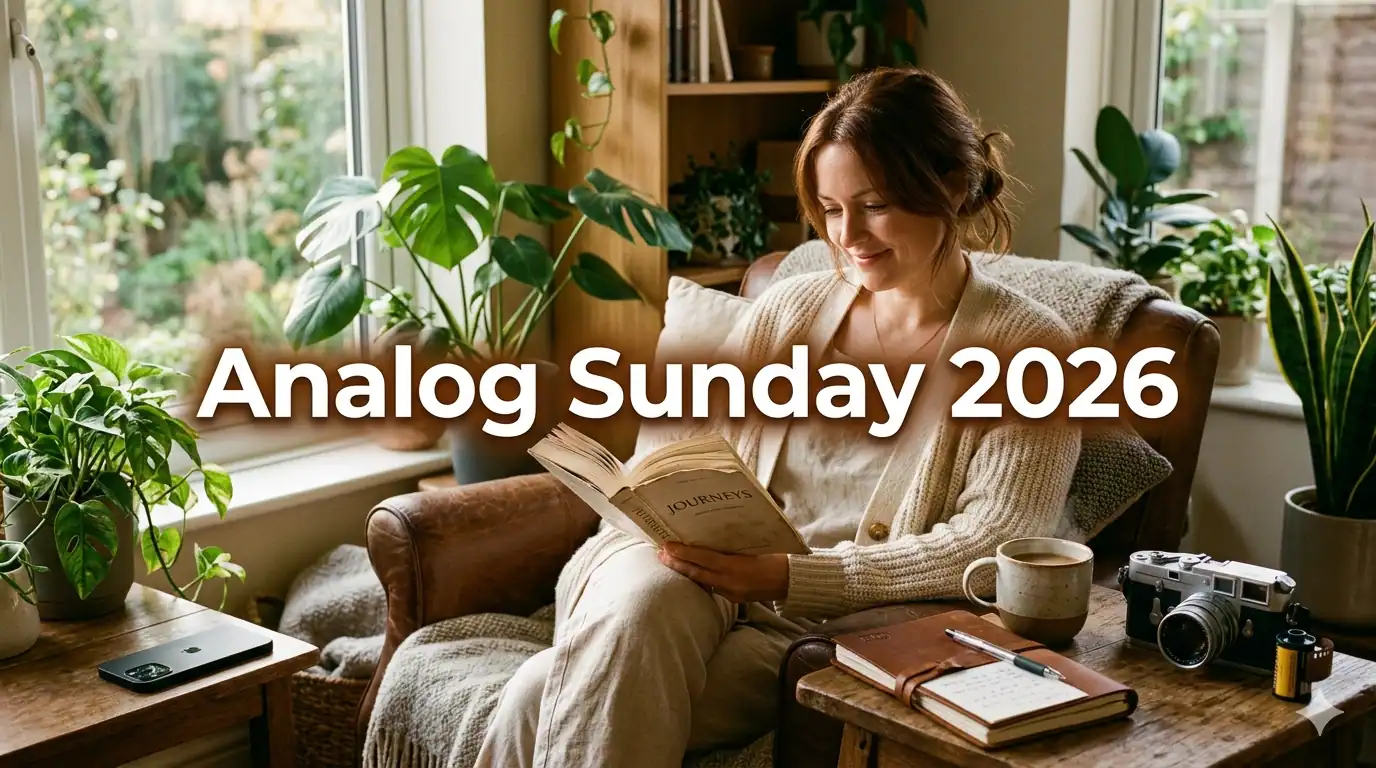
Imagine a Sunday where your phone stays in another room. No scrolling through social media, no checking emails, no endless news feeds. Instead, you sip coffee while reading a physical book, write in a paper journal, take a walk in nature, cook a meal from scratch, or simply sit with your thoughts. This isn't a fantasy—it's Analog Sunday, the lifestyle trend that's quietly taking over 2026.
Analog Sunday is a intentional practice of unplugging from digital devices for one full day each week—typically Sunday—to reconnect with offline activities, real-world relationships, and your own inner rhythm. It's not about rejecting technology entirely; it's about creating a sacred boundary that protects your mental space, creativity, and well-being in an increasingly hyperconnected world.
The trend has exploded in popularity for a simple reason: people are exhausted. After years of remote work blurring boundaries, algorithm-driven content hijacking attention, and the constant pressure to be "always on," millions are seeking relief. Analog Sunday offers a sustainable, accessible antidote—a weekly reset that requires no special equipment, no expensive retreats, and no drastic lifestyle overhaul. Just one day, intentionally offline.
In this comprehensive guide, we'll explore why Analog Sunday has become the most popular lifestyle trend of 2026, the science-backed benefits of regular digital detoxes, practical ways to design your own Analog Sunday ritual, and how to sustain the practice long-term. Whether you're a digital minimalism curious beginner or a seasoned unplugging advocate, you'll find actionable insights to reclaim your time, attention, and peace.
What you'll learn in this guide:
- The origins and rise of the Analog Sunday movement
- Science-backed benefits of weekly digital detoxes
- How to design a personalized Analog Sunday ritual
- Common challenges and how to overcome them
- How Analog Sunday complements other wellness practices
- Real stories from people who've transformed their lives
- Resources to deepen your analog practice
The Rise of Analog Sunday: Why 2026 Is the Tipping Point
Analog Sunday didn't emerge in a vacuum. It's the culmination of several cultural, technological, and psychological shifts that reached a critical mass in 2026.
The Burnout Epidemic
By 2026, digital fatigue had reached crisis levels. A global survey by the World Health Organization found that 68% of adults reported feeling "constantly overwhelmed" by digital demands. The average person checks their phone 150+ times per day, spends over 7 hours daily on screens, and experiences decision fatigue from endless content choices. Analog Sunday offers a structured, guilt-free escape from this cycle.
The Backlash Against Algorithmic Living
People are waking up to how algorithms shape their thoughts, emotions, and behaviors. Social media feeds, news recommendations, and shopping suggestions are designed to maximize engagement—not well-being. Analog Sunday is a conscious rebellion: one day where you choose what to think about, what to read, and how to spend your attention—without external manipulation.
The Slow Living Movement Goes Mainstream
Slow living—prioritizing intentionality, presence, and quality over speed and quantity—has evolved from niche lifestyle blogs to a global cultural shift. Analog Sunday fits perfectly within this ethos: it's a weekly practice of slowing down, savoring moments, and engaging deeply with simple pleasures.
Post-Pandemic Reevaluation of Time
The pandemic forced many people to reconsider what matters most. With remote work eliminating commutes and blurring work-life boundaries, people gained time—but often filled it with more screen time. Analog Sunday helps reclaim that time for rest, creativity, and connection—the very things that sustain us long-term.
Community and Shared Ritual
Unlike solitary self-care practices, Analog Sunday has a powerful social dimension. When friends, families, or online communities commit to unplugging together, it creates accountability, shared language, and collective reinforcement. Hashtags like #AnalogSunday and #ScreenFreeSunday have fostered global communities exchanging ideas, encouragement, and inspiration.
The Science Behind the Benefits: Why Unplugging Works
Analog Sunday isn't just a feel-good trend—it's backed by growing research on digital detoxes, attention restoration, and mental health.
Restoring Attention and Cognitive Function
Constant digital stimulation fragments attention and depletes cognitive resources. A 2025 study in Computers in Human Behavior found that participants who took a 24-hour digital break showed significant improvements in sustained attention, working memory, and creative problem-solving compared to a control group. The brain, it turns out, needs downtime to consolidate learning and restore focus.
Reducing Stress and Anxiety
Screen time, especially on social media, is linked to elevated cortisol (the stress hormone) and increased anxiety. A 2026 meta-analysis in Journal of Affective Disorders concluded that regular digital detoxes significantly reduce perceived stress and anxiety symptoms. Analog Sunday provides a predictable, weekly opportunity for the nervous system to downshift from "fight-or-flight" to "rest-and-digest."
Improving Sleep Quality
Blue light from screens suppresses melatonin production, disrupting sleep cycles. But the impact goes beyond light: the mental stimulation of scrolling, arguing online, or consuming distressing news activates the brain when it should be winding down. People who practice Analog Sunday report falling asleep faster, sleeping more deeply, and waking up more refreshed.
Enhancing Real-World Connection
Paradoxically, being constantly "connected" digitally can leave people feeling lonely. Analog Sunday encourages face-to-face interaction, shared activities, and undivided attention—key ingredients for deep, satisfying relationships. A 2025 Harvard study found that people who prioritized offline social time reported higher levels of belonging and life satisfaction.
Boosting Creativity and Insight
Boredom and unstructured time are catalysts for creativity. When the brain isn't flooded with external input, it turns inward, making novel connections and generating original ideas. Many writers, artists, and innovators credit Analog Sunday-style practices with their breakthrough moments.
Designing Your Analog Sunday: A Step-by-Step Framework
There's no single "right" way to practice Analog Sunday. The key is intentionality and consistency. Use this flexible framework to design a ritual that fits your life.
Step 1: Define Your Boundaries
Clarity prevents ambiguity and guilt. Decide in advance:
- Timeframe: Will you unplug from Saturday night to Sunday night? Sunrise to sunset? Choose what's realistic.
- Devices: Will you turn off your phone, put it in another room, or use a basic "dumb phone" for emergencies only?
- Exceptions: Are there non-negotiable exceptions (e.g., a family emergency contact)? Define them upfront to avoid decision fatigue in the moment.
Pro Tip: Write your boundaries down and share them with household members or close friends. Accountability increases follow-through.
Step 2: Prepare the Day Before
Success hinges on preparation. On Saturday:
- Charge devices: Ensure your phone, laptop, etc., are charged in case of true emergencies.
- Set auto-replies: Let contacts know you'll be offline Sunday and when you'll respond.
- Plan analog activities: Choose 2-3 offline activities you're excited about (see ideas below).
- Gather supplies: Get books, journals, art supplies, ingredients, or maps ready so you're not scrambling Sunday morning.
Step 3: Create a Morning Ritual
How you start Analog Sunday sets the tone. Consider:
- Wake without an alarm: If possible, let your body wake naturally.
- Mindful movement: Gentle stretching, yoga, or a short walk to ground yourself.
- Analog breakfast: Prepare and eat a meal without screens—focus on flavors, textures, and conversation.
- Set an intention: Take 2 minutes to reflect: "What do I need most today? Rest? Creativity? Connection?"
Step 4: Choose Your Analog Activities
The heart of Analog Sunday is engaging in offline activities that nourish you. Mix and match based on your energy and interests:
For Rest and Restoration:
- Read a physical book or magazine
- Take a nap or practice yoga nidra
- Enjoy a long bath with candles and music (from a non-smart speaker)
- Practice meditation or breathwork
For Creativity and Expression:
- Journal with pen and paper
- Draw, paint, or craft
- Play a musical instrument
- Cook or bake a new recipe from a physical cookbook
For Connection and Community:
- Host or attend an in-person gathering (coffee, walk, board games)
- Write and mail a handwritten letter
- Volunteer locally
- Have a device-free conversation with a loved one
For Nature and Movement:
- Go for a hike, bike ride, or long walk
- Garden or tend to houseplants
- Practice outdoor yoga or tai chi
- Simply sit outside and observe
For Reflection and Growth:
- Review your week in a journal: wins, lessons, intentions
- Plan the upcoming week with a paper planner
- Listen to a podcast or audiobook (downloaded beforehand) while doing a quiet activity
- Practice gratitude: list 3 things you're thankful for
Step 5: Navigate the Inevitable Challenges
Even with the best intentions, obstacles arise. Prepare for them:
"But what if someone needs me?"
- Designate one trusted person as your emergency contact
- Use a basic phone that only calls/texts (no apps)
- Remember: most "urgent" things can wait 24 hours
"I feel anxious without my phone."
- This is normal—your brain is withdrawing from constant stimulation
- Practice grounding techniques: 5-4-3-2-1 sensory exercise, deep breathing
- Start with shorter unplugged periods (e.g., Sunday morning only) and build up
"My family/friends aren't on board."
- Invite, don't demand: "I'm trying Analog Sunday—want to join me for coffee?"
- Lead by example: share your positive experiences without preaching
- Respect others' choices while honoring your own boundaries
Step 6: Close the Day Intentionally
How you transition back to digital life matters. Before reconnecting:
- Reflect: What did you enjoy most? What felt challenging? What will you carry into the week?
- Reconnect gradually: Don't immediately dive into email or social media. Start with one intentional task.
- Express gratitude: Acknowledge the gift of this offline time.
Common Pitfalls and How to Avoid Them
Even well-meaning practitioners can stumble. Learn from these common mistakes.
Pitfall 1: All-or-Nothing Thinking
The trap: "If I check my phone once, I've failed, so I might as well give up."
The fix: Progress, not perfection. If you slip up, gently redirect without self-judgment. One check-in doesn't erase the benefits of hours offline.
Pitfall 2: Over-Scheduling Your Analog Time
The trap: Filling every minute with "productive" analog activities, turning rest into another task.
The fix: Leave white space. Allow for boredom, spontaneity, and simply being. Analog Sunday is about presence, not performance.
Pitfall 3: Using Analog Activities as Digital Substitutes
The trap: Reading an e-book on a tablet, listening to a podcast while scrolling Instagram, or "journaling" in a notes app.
The fix: Commit to truly analog: physical books, pen and paper, offline music sources. The medium matters as much as the message.
Pitfall 4: Neglecting the "Why"
The trap: Going through the motions without connecting to your deeper intention.
The fix: Regularly revisit your reasons for practicing Analog Sunday. Write them down. Let them guide your choices when motivation wanes.
Pitfall 5: Isolating Yourself
The trap: Assuming Analog Sunday must be a solo practice.
The fix: Invite others to join you. Shared analog time deepens relationships and strengthens commitment.
Integrating Analog Sunday with Other Wellness Practices
Analog Sunday doesn't exist in a vacuum. It synergizes beautifully with other holistic habits.
Pair with Mindful Movement
Combine your analog day with gentle exercise: a walk in the park, yoga at home, or stretching while listening to nature sounds. Movement enhances the mental clarity and stress relief of digital detoxing.
Complement with Digital Minimalism
Analog Sunday is a weekly reset; digital minimalism is an ongoing philosophy. Use Sunday to reflect: Which apps serve me? Which drain me? Then curate your digital environment accordingly during the week.
Enhance with Journaling
Use your Analog Sunday journaling time to process the week, set intentions, and track your analog practice. Over time, you'll see patterns and progress that fuel motivation.
Support with Sleep Hygiene
Analog Sunday naturally supports better sleep. Amplify this by maintaining consistent sleep/wake times, creating a calming bedtime ritual, and keeping devices out of the bedroom all week.
Align with Seasonal Living
Let Analog Sunday evolve with the seasons: cozy indoor activities in winter, nature immersion in spring, outdoor gatherings in summer, reflective practices in fall. This keeps the practice fresh and attuned to natural rhythms.
Real Stories: How Analog Sunday Changed Lives
Hearing from others who've embraced the practice can inspire and guide your own journey.
Maria, 34, Marketing Manager
"I used to spend Sundays catching up on work emails and scrolling, feeling more stressed than when I started. After three months of Analog Sunday, I've reclaimed my weekend. I read more, cook with my partner, and actually feel rested on Monday. My productivity during the week has improved because I'm not burning out."
James, 28, Graduate Student
"As a PhD student, I felt guilty taking breaks. Analog Sunday taught me that rest is productive. I use Sundays for deep reading (physical books!), long walks to process ideas, and handwritten notes for my research. My creativity and focus have skyrocketed."
Priya, 42, Parent of Two
"With kids, 'unplugging' felt impossible. We started small: no devices during Sunday breakfast and an afternoon park visit. Now our whole family looks forward to Analog Sunday. The kids play more imaginatively, and we actually talk. It's become our favorite family tradition."
David, 51, Small Business Owner
"I thought I couldn't afford to be offline. But Analog Sunday forced me to delegate and trust my team. Ironically, my business runs smoother because I'm not micromanaging via phone. And I'm a better leader when I'm rested and present."
Getting Started: Your First Analog Sunday Checklist
Ready to try Analog Sunday? Use this simple checklist to launch your practice:
One Week Before:
- Reflect: What do I hope to gain from Analog Sunday?
- Research: Browse analog activity ideas that excite you
- Inform: Let key contacts know you'll be offline one day a week
The Day Before:
- Charge devices and set emergency protocols
- Set email/social media auto-replies
- Prepare supplies for your chosen analog activities
- Plan simple, nourishing meals
Analog Sunday Morning:
- Power down devices and store them out of sight
- Begin with a mindful ritual (stretching, tea, intention-setting)
- Engage in your first analog activity
During the Day:
- Stay present: When urges to check your phone arise, pause and breathe
- Embrace boredom: Let your mind wander without filling the space
- Connect deeply: Give full attention to people and activities
Sunday Evening:
- Reflect briefly on your experience
- Reconnect with devices gradually and intentionally
- Celebrate your commitment—no matter how it went
Frequently Asked Questions
What if my job requires being available on Sundays?
Negotiate boundaries where possible: "I'm offline Sunday mornings but available after 2 PM for true emergencies." If full unplugging isn't feasible, start with a half-day or a few screen-free hours. Even small breaks yield benefits.
Can I use my computer for creative work on Analog Sunday?
It depends on your intention. If your goal is to disconnect from reactive digital consumption (email, social media), using a computer for focused creative work may align with that. However, if you find screens pull you into distraction, opt for truly analog tools (pen, paper, physical instruments) to protect your focus.
How do I handle FOMO (fear of missing out)?
FOMO is natural at first. Remind yourself: you're not missing out—you're opting in to something more valuable: presence, rest, and real connection. Over time, the peace of Analog Sunday outweighs the anxiety of missing digital updates.
What if I live with people who aren't practicing Analog Sunday?
Communicate your intentions respectfully: "I'm trying this for my well-being; I'd love your support." Create a dedicated analog space in your home. Lead by example—your calm presence may inspire others to join, even partially.
Can I listen to music or podcasts on Analog Sunday?
If you download content beforehand and listen on a non-smart device (e.g., MP3 player, vinyl, CD), yes. The key is avoiding the pull of algorithms, notifications, and endless scrolling. Curated, intentional media consumption can complement analog time.
How long until I notice benefits?
Many people report feeling calmer and more rested after their first Analog Sunday. Deeper benefits—improved focus, creativity, relationship quality—often build over 4-8 weeks of consistent practice. Track your experience in a journal to notice subtle shifts.
Resources to Deepen Your Analog Practice
Continue your journey with these curated resources:
Books:
- Digital Minimalism by Cal Newport
- How to Do Nothing by Jenny Odell
- The Art of the Analog by Sarah Wilson
Communities:
- r/AnalogSunday on Reddit
- #AnalogSunday on Instagram (for inspiration, not scrolling!)
- Local "Slow Living" meetups via Meetup.com
Tools:
- Freedom or Cold Turkey apps to block distractions during the week
- Physical planners: Passion Planner, Bullet Journal method
- Analog hobby kits: journaling, film photography, knitting
Conclusion: Reclaim Your Time, One Sunday at a Time
Analog Sunday isn't about rejecting the digital world—it's about remembering that you are more than your online presence. In a culture that equates busyness with worth and connectivity with value, choosing to unplug is a radical act of self-respect.
The beauty of Analog Sunday lies in its simplicity and flexibility. It doesn't require perfection, expensive gear, or drastic life changes. It asks only for your intention: one day, consciously offline, to rest, create, connect, and simply be.
As this trend continues to grow in 2026 and beyond, it reflects a deeper cultural shift: a collective recognition that well-being isn't found in more notifications, but in more presence. In more depth, not more speed. In real connection, not just digital contact.
You don't have to wait for the "right time" to start. This Sunday could be your first Analog Sunday. Power down. Pick up a book. Take a walk. Write a letter. Breathe. Notice what unfolds when you give your attention the gift of space.
Your time is your life. Analog Sunday is an invitation to spend it wisely—one peaceful, present, unplugged day at a time.
Unplug to reconnect. Rest to rise. One Sunday at a time.


0 Comments