

How Product Fatigue Affects Female Skin: Science and Solutions
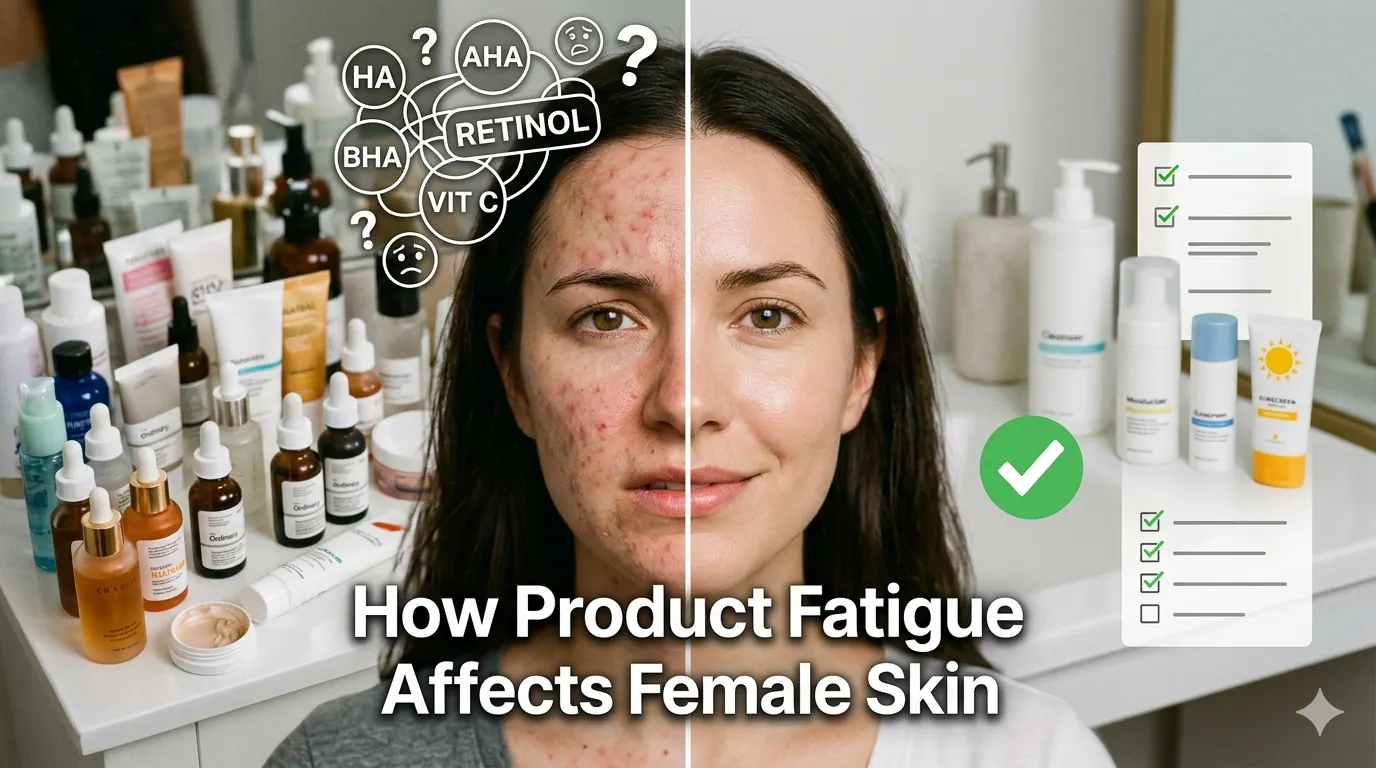
In an era of endless skincare innovation, viral product recommendations, and "10-step routine" culture, many women find themselves caught in a paradox: the more products they use, the worse their skin seems to look. Redness appears where there was none. Breakouts emerge despite "acne-fighting" formulas. Skin feels tight, sensitive, or strangely dull despite layers of serums and creams. This phenomenon—known as product fatigue—is more common than you might think, and it's not a sign that your skin is "difficult" or that you're doing skincare wrong. It's a predictable physiological response to overwhelming your skin with too many products, conflicting ingredients, or excessive active exposure.
Product fatigue occurs when the cumulative burden of multiple skincare products—whether from using too many at once, constantly switching formulations, or layering incompatible actives—overwhelms the skin's natural regulatory systems. The result isn't just wasted money; it's compromised barrier function, disrupted microbiome balance, increased sensitivity, and ironically, the opposite of the radiant, healthy skin we're seeking.
This comprehensive, science-backed guide explores how product fatigue affects female skin, explains the biological mechanisms behind overload-related skin issues, identifies the specific signs to watch for, and provides evidence-based strategies to simplify, recover, and rebuild a routine that actually delivers results. Whether you're feeling overwhelmed by product choices, experiencing unexplained sensitivity, or simply wondering why your elaborate routine isn't yielding the glow you expected, you'll find practical, research-supported insights to help you achieve healthier, more resilient skin with less.
What Is Product Fatigue? Defining the Phenomenon
Before addressing solutions, it's essential to understand what product fatigue actually is—and what it isn't.
Product Fatigue vs. Product Incompatibility vs. Skin Sensitivity
These terms are often confused, but they represent distinct issues:
Product Fatigue:
- Definition: Skin stress resulting from cumulative exposure to too many products, ingredients, or actives
- Key feature: Symptoms develop gradually as product load increases
- Primary cause: Quantity and complexity of routine, not necessarily specific ingredients
- Resolution: Simplification and strategic reduction of product load
Product Incompatibility:
- Definition: Negative reactions from combining specific ingredients that conflict chemically or functionally
- Key feature: Symptoms appear shortly after introducing a specific combination
- Primary cause: Ingredient conflicts (e.g., vitamin C + niacinamide at wrong pH, retinoids + strong acids)
- Resolution: Identifying and separating incompatible ingredients
True Skin Sensitivity:
- Definition: Heightened reactivity to specific ingredients due to genetics, conditions, or barrier damage
- Key feature: Consistent reactions to specific ingredients regardless of routine complexity
- Primary cause: Individual skin biology, underlying conditions (rosacea, eczema), or compromised barrier
- Resolution: Identifying and avoiding trigger ingredients; barrier repair
Why the distinction matters: Misdiagnosing product fatigue as sensitivity can lead to unnecessarily restrictive routines; misdiagnosing sensitivity as fatigue can delay addressing true triggers. Understanding the difference guides effective solutions.
The Modern Context: Why Product Fatigue Is Increasing
Several cultural and commercial factors contribute to rising product fatigue:
Social Media and Influencer Culture:
- Constant exposure to "must-have" products creates pressure to try everything
- Before/after photos and viral trends suggest dramatic results are achievable with the "right" products
- Algorithm-driven content reinforces the idea that more products = better results
Marketing and Product Proliferation:
- The global skincare market exceeds $180 billion, with thousands of new products launching annually
- Brands often market products as essential rather than optional
- "Layering" is promoted as a technique without clear guidance on limits or compatibility
Beauty Standards and Self-Care Culture:
- Elaborate skincare routines are framed as acts of self-care and empowerment
- Women may feel pressure to invest time and money in skincare as part of "doing beauty right"
- The line between self-care and self-criticism can blur, driving overconsumption
Information Overload:
- Conflicting advice from dermatologists, estheticians, influencers, and forums creates confusion
- Women may try multiple approaches simultaneously, increasing product load
- Difficulty distinguishing evidence-based guidance from marketing claims
The Science: How Product Overload Affects Skin Biology
Product fatigue isn't just a subjective feeling—it triggers measurable biological changes in skin. Understanding these mechanisms explains why "more" often equals "less" when it comes to skincare results.
Barrier Function Disruption
The Mechanism:
- Each product applied to skin introduces potential disruptors: surfactants, preservatives, fragrances, actives
- Multiple products increase cumulative exposure to these potential irritants
- Over time, this can compromise the lipid matrix (ceramides, cholesterol, fatty acids) that comprises the skin barrier
- A compromised barrier increases transepidermal water loss (TEWL), allowing irritants to penetrate more easily
Impact on Skin:
- Increased dryness, tightness, or flakiness despite using moisturizers
- Heightened sensitivity to products that previously felt comfortable
- Redness, stinging, or burning with product application
- Paradoxical oiliness as skin attempts to compensate for barrier impairment
Evidence: Studies show that frequent product application, especially with active ingredients, can measurably increase TEWL and reduce barrier lipid content within weeks.
Microbiome Disruption
The Mechanism:
- Skin hosts a diverse community of beneficial microorganisms (the microbiome) that support barrier function, immunity, and inflammation regulation
- Many skincare ingredients (preservatives, surfactants, certain actives) have antimicrobial properties
- Using multiple products increases exposure to these antimicrobial agents
- Result: Reduced microbial diversity and disruption of beneficial species
Impact on Skin:
- Increased susceptibility to breakouts or fungal acne
- Heightened inflammation and redness
- Slower healing from irritation or minor damage
- Reduced resilience to environmental stressors
Evidence: Emerging research links skincare product complexity to reduced skin microbiome diversity, with implications for barrier health and inflammation.
Ingredient Conflicts and Reduced Efficacy
The Mechanism:
- Certain ingredients don't work well together chemically or functionally
- Examples: Vitamin C (acidic) + niacinamide (neutral pH) can reduce efficacy of both; retinoids + strong acids can cause excessive irritation
- Layering multiple actives can overwhelm skin's capacity to process them effectively
- Some ingredients compete for absorption pathways, reducing penetration of all
Impact on Skin:
- Reduced efficacy of individual products (wasted money and effort)
- Increased irritation from incompatible combinations
- Confusion about what's actually working or causing issues
Evidence: Dermatological research confirms that certain ingredient combinations reduce efficacy or increase irritation risk, supporting the value of strategic, simplified routines.
Sensory Overload and Neurological Response
The Mechanism:
- Skin contains sensory nerves that respond to temperature, texture, chemicals, and pressure
- Multiple products introduce multiple sensory stimuli: fragrances, cooling agents, tingling actives, varying textures
- Cumulative sensory input can trigger neurological responses interpreted as irritation or discomfort
Impact on Skin:
- Stinging, burning, or itching without visible inflammation
- Heightened reactivity to environmental factors (temperature changes, wind)
- Difficulty tolerating products that were previously comfortable
Evidence: Neurodermatology research shows that sensory nerve activation can contribute to perceived skin sensitivity independent of visible inflammation.
The "More Is Better" Fallacy: Why Quantity Doesn't Equal Quality
The Absorption Limit:
- Skin can only absorb a finite amount of product at one time
- Applying multiple serums or layers doesn't increase absorption; it often leads to pilling, waste, or surface buildup
- Excess product on the surface can trap debris, interfere with natural shedding, or create a breeding ground for microbes
The Dilution Effect:
- Layering multiple products can dilute the concentration of key actives
- Example: Applying a vitamin C serum followed by three other serums may reduce vitamin C penetration and efficacy
The Adaptation Challenge:
- Skin needs time to adapt to new ingredients or formulations
- Constantly introducing new products prevents adaptation and makes it impossible to identify what's helping or harming
Recognizing Product Fatigue: Signs and Symptoms
Identifying product fatigue early allows for timely intervention before more significant damage occurs.
Early Warning Signs (Weeks of Overload)
1. Subtle Sensitivity or Stinging
- What it feels like: Products that previously felt comfortable now cause mild tingling, stinging, or warmth
- Where it appears: Often on cheeks, around eyes, or areas with thinner skin
- Why it happens: Early barrier compromise allows greater penetration of ingredients, triggering sensory nerves
- When to act: Address at first notice; early intervention prevents progression
2. Unexplained Dryness or Tightness
- What it feels like: Skin feels tight after cleansing or appears slightly flaky despite moisturizing
- Where it appears: Often cheeks, jawline, or around the nose
- Why it happens: Cumulative product exposure compromises barrier lipids, increasing water loss
- When to act: Address before dryness leads to visible flaking or irritation
3. Inconsistent Results
- What you notice: Products seem to work one week, not the next; results are unpredictable
- Why it happens: Too many variables make it impossible to isolate what's effective
- When to act: Simplify to identify what truly works for your skin
Intermediate Signs (Weeks to Months of Overload)
4. Increased Breakouts or Congestion
- What you see: New breakouts, blackheads, or milia despite "acne-fighting" products
- Where it appears: Often in areas where multiple products are layered (forehead, chin, cheeks)
- Why it happens: Microbiome disruption, pore-clogging from product buildup, or irritation-triggered inflammation
- When to act: Address before breakouts become chronic or lead to scarring
5. Persistent Redness or Flushing
- What you see: Skin appears red, flushed, or blotchy, especially after product application
- Where it appears: Often cheeks, nose, or areas of frequent product application
- Why it happens: Inflammation from ingredient conflicts, barrier compromise, or sensory overload
- When to act: Address before redness becomes chronic or triggers rosacea-like symptoms
6. Dullness or Lack of Radiance
- What you see: Skin appears tired, lackluster, or "gray" despite using brightening products
- Why it happens: Barrier impairment, microbiome disruption, or inflammation scatter light instead of reflecting it evenly
- When to act: Address before dullness becomes entrenched or accelerates visible aging
Advanced Signs (Months+ of Unmanaged Overload)
7. Chronic Sensitivity or Reactivity
- What you experience: Skin reacts to almost any product, environmental change, or touch
- Why it happens: Cumulative barrier damage and inflammation create a hypersensitive state
- When to act: Seek professional guidance; recovery may require medical support
8. Paradoxical Worsening Despite "Treatment"
- What you experience: Adding more products to address issues makes them worse
- Why it happens: Overload creates a cycle where each new product adds to the burden
- When to act: Pause all non-essential products; focus on barrier repair and simplification
Why Women Are Particularly Susceptible to Product Fatigue
While product fatigue can affect anyone, several factors make women especially vulnerable.
Marketing and Cultural Pressures
Targeted Marketing:
- Skincare marketing disproportionately targets women with messages about "fixing" perceived flaws
- Product launches often emphasize novelty over necessity
- Women may feel pressure to try new products to stay "current" or "effective" in their routines
Social Comparison:
- Social media showcases elaborate routines and dramatic transformations
- Women may compare their skin to filtered images or curated routines, driving overconsumption
- The fear of "missing out" on a breakthrough product fuels constant experimentation
Biological Factors
Thinner Skin:
- Women have 20-25% thinner skin than men
- Thinner barrier is more permeable to ingredients and more vulnerable to cumulative irritation
- Result: Product fatigue symptoms may appear sooner or more pronouncedly in women
Hormonal Influences:
- Hormonal fluctuations (menstrual cycle, pregnancy, perimenopause) affect skin barrier function and sensitivity
- During hormonally sensitive periods, skin may be more vulnerable to product overload
- Result: Product fatigue may coincide with or be amplified by hormonal shifts
Role Demands and Time Pressure
Multiple Responsibilities:
- Women often juggle career, caregiving, and personal responsibilities
- Skincare may become a rare "me time" activity, leading to overcompensation with products
- Result: The desire for maximum results in minimal time drives product layering and experimentation
Evidence-Based Strategies to Recover from Product Fatigue
Recovering from product fatigue requires a strategic, patient approach that prioritizes skin health over product quantity.
Phase 1: The Reset (Weeks 1-2)
Step 1: Pause and Simplify
- Stop all non-essential products: Pause actives (retinoids, acids, vitamin C), exfoliants, and treatment serums
- Keep only the essentials:
- Gentle, low-pH cleanser
- Simple, fragrance-free moisturizer with barrier-supporting ingredients
- Broad-spectrum sunscreen (mineral if sensitive)
- Goal: Reduce product load to allow skin barrier to begin repairing without additional stress
Step 2: Support Barrier Repair
- Apply moisturizer to damp skin: Enhances absorption of hydrating ingredients
- Focus on barrier-supporting ingredients:
- Ceramides: Replenish structural lipids
- Niacinamide (4-5%): Strengthens barrier, reduces inflammation
- Panthenol (Vitamin B5): Soothes and supports repair
- Squalane: Lightweight emollient that mimics skin's natural sebum
- Avoid potential irritants: Fragrance, essential oils, high concentrations of actives during reset phase
Step 3: Monitor and Document
- Track symptoms: Note changes in sensitivity, dryness, redness, or breakouts
- Take photos: Consistent lighting/angle helps track visual changes objectively
- Be patient: Barrier repair takes time; expect initial improvements in 3-7 days, significant recovery in 2-4 weeks
Phase 2: Strategic Reintroduction (Weeks 3-6)
Step 4: Reintroduce One Product at a Time
- Wait 5-7 days between new products: Allows time to assess tolerance and efficacy
- Start with the most beneficial: Prioritize products addressing your primary concern
- Patch test: Apply new product to small area (behind ear or inner arm) for 3 days before full-face use
- Document response: Note any changes in skin comfort, appearance, or tolerance
Step 5: Prioritize Compatibility
- Research ingredient interactions: Avoid combining ingredients known to conflict
- Separate actives by time: Use vitamin C in AM, retinoids in PM; avoid layering strong acids with retinoids
- Consider pH compatibility: Apply low-pH products (vitamin C, AHAs) before higher-pH products
- Limit actives: Start with one active ingredient; add a second only if first is well-tolerated and showing results
Step 6: Optimize Application Technique
- Use recommended amounts: More isn't better; excess product can cause buildup or irritation
- Allow absorption time: Wait 1-2 minutes between layers to prevent pilling or reduced efficacy
- Apply with gentle pressure: Pat or press products in rather than rubbing vigorously
- Focus on target areas: Apply treatment products only where needed (e.g., retinoid to forehead/chin, not entire face if only those areas need it)
Phase 3: Long-Term Maintenance (Week 7+)
Step 7: Establish a Sustainable Routine
- Define your core routine: 3-5 products that address your primary concerns without overload
- Build in flexibility: Allow for seasonal adjustments or occasional treatments without overhauling the entire routine
- Schedule "product holidays": Periodically simplify routine (e.g., one weekend monthly) to give skin a break
Step 8: Practice Mindful Product Selection
- Ask before buying: "Does this address a specific need my current routine doesn't meet?"
- Finish before replacing: Use products fully before buying replacements to avoid accumulation
- Research thoroughly: Look beyond marketing claims to ingredient lists and evidence
- Trust your skin: If a product causes discomfort, discontinue regardless of reviews or recommendations
Building a Product-Fatigue-Resistant Routine: A Practical Framework
Preventing future product fatigue requires a strategic approach to routine building.
The Core Four: Essential Categories for Every Routine
Focus on these four categories before adding extras:
1. Gentle Cleanser
- Purpose: Remove impurities without compromising barrier
- Key features: Low-pH, non-foaming or low-foaming, fragrance-free
- Usage: Once daily (PM); water rinse in AM if skin isn't oily
2. Targeted Treatment (Optional but Strategic)
- Purpose: Address primary concern (aging, acne, pigmentation, etc.)
- Key features: Evidence-backed active at appropriate concentration
- Usage: Start 1-2x weekly; increase frequency only if well-tolerated
- Rule: One treatment active at a time until skin adapts
3. Barrier-Supporting Moisturizer
- Purpose: Hydrate, support barrier function, seal in previous products
- Key features: Contains ceramides, niacinamide, or other barrier-supporting ingredients
- Usage: Apply to damp skin after treatment; adjust texture seasonally
4. Sunscreen (Non-Negotiable)
- Purpose: Protect against UV damage that accelerates aging and compromises barrier
- Key features: Broad-spectrum SPF 30+, suitable for your skin type
- Usage: Apply generously every morning; reapply with sun exposure
Adding Extras: The Strategic Approach
Once your core routine is established and well-tolerated, consider adding one extra category at a time:
Hydrating Serum:
- Add if: Skin feels tight or dehydrated despite moisturizer
- Best ingredients: Hyaluronic acid, glycerin, beta-glucan
- Application: Apply to damp skin before moisturizer
Antioxidant Serum:
- Add if: Concerned about environmental damage or dullness
- Best ingredients: Vitamin C, vitamin E, ferulic acid, green tea extract
- Application: Apply in AM before sunscreen
Exfoliant:
- Add if: Texture is rough or dull despite hydration
- Best options: PHAs or low-concentration AHAs for sensitive skin
- Application: Start 1x weekly; increase only if well-tolerated
Rule of thumb: Wait 4-6 weeks after adding one extra before considering another. This allows time to assess efficacy and tolerance.
Seasonal and Life-Stage Adjustments
Seasonal Changes:
- Winter: May need richer moisturizer or added hydration; reduce exfoliation frequency
- Summer: May prefer lighter textures; ensure sunscreen is sweat-resistant
- Transition seasons: Monitor skin closely; adjust one product at a time
Hormonal Changes:
- Menstrual cycle: Skin may be more sensitive premenstrually; simplify routine during this window
- Pregnancy/postpartum: Prioritize gentle, pregnancy-safe ingredients; expect temporary sensitivity
- Perimenopause/menopause: Barrier support becomes even more critical; consider adding targeted treatments for hormonal skin changes
Product Recommendations for Recovery and Prevention
These products are formulated to support skin recovery from product fatigue and resist future overload.
For Gentle Cleansing
- CeraVe Hydrating Facial Cleanser: Ceramides, hyaluronic acid, non-foaming, pH-balanced
- La Roche-Posay Toleriane Hydrating Gentle Cleanser: Niacinamide, ceramides, thermal water
- Vanicream Gentle Facial Cleanser: Minimalist, fragrance-free, ideal for sensitive or fatigued skin
- Krave Beauty Matcha Hemp Hydrating Cleanser: Antioxidants, gentle surfactants, calming
For Barrier Repair and Support
- Stratia Liquid Gold: Ceramides, cholesterol, fatty acids in ideal ratio for barrier repair
- Illiyoon Ceramide Ato Soothing Gel: High ceramide content in lightweight, soothing gel
- Paula's Choice Omega+ Complex Moisturizer: Ceramides, fatty acids, cholesterol for barrier support
- First Aid Beauty Ultra Repair Cream: Colloidal oatmeal, ceramides, soothing for sensitive skin
- Dr. Jart+ Ceramidin Cream: Five-ceramide complex for intensive barrier repair
For Gentle, Strategic Treatment
- The Ordinary Niacinamide 10% + Zinc 1%: Affordable, effective for barrier support and oil regulation
- Paula's Choice 10% Niacinamide Booster: Versatile formula that can be mixed with moisturizer
- Beauty of Joseon Glow Serum: Propolis and niacinamide for hydration and barrier support
- Paula's Choice Clinical 0.3% Retinol + 2% Bakuchiol: Gentle retinol alternative for sensitive or fatigued skin
For Sun Protection
- EltaMD UV Clear Broad-Spectrum SPF 46: Mineral-chemical hybrid, niacinamide, ideal for sensitive skin
- La Roche-Posay Anthelios Mineral Ultra-Light Fluid SPF 50: Mineral formula, lightweight, non-irritating
- Paula's Choice RESIST Super-Light Wrinkle Defense SPF 30: Mineral sunscreen with antioxidants, anti-aging focused
- Black Girl Sunscreen Make It Hybrid SPF 50: Lightweight chemical formula, inclusive, non-white-cast
Common Mistakes That Worsen Product Fatigue
Mistake 1: Adding More Products to "Fix" Problems Caused by Overload
The Problem: Experiencing irritation or breakouts from product fatigue, then reaching for additional "treatment" products.
Why It Backfires: Adding more products increases the burden on already-stressed skin, worsening the cycle.
The Fix: When skin reacts, simplify first. Remove potential irritants before adding treatments.
Mistake 2: Following Trends Without Considering Compatibility
The Problem: Adopting viral routines or products without assessing how they fit with your existing routine.
Why It Backfires: Trending products may conflict with your current actives or overwhelm your skin's capacity.
The Fix: Research ingredient compatibility; introduce one new product at a time; prioritize evidence over hype.
Mistake 3: Ignoring Application Technique
The Problem: Using too much product, layering too quickly, or applying with excessive pressure.
Why It Backfires: Poor technique can cause pilling, reduced efficacy, or physical irritation that mimics product fatigue.
The Fix: Use recommended amounts; allow absorption time between layers; apply with gentle patting motions.
Mistake 4: Expecting Immediate Results
The Problem: Switching products frequently when results aren't immediate.
Why It Backfires: Skin needs 4-8 weeks to show measurable improvements; product-hopping prevents any product from working effectively.
The Fix: Commit to a simplified routine for at least 8 weeks before evaluating results; track progress objectively.
Mistake 5: Neglecting Internal Factors
The Problem: Focusing only on topical products while ignoring stress, sleep, nutrition, or hormonal health.
Why It Backfires: Skin health is systemic; internal imbalances can undermine even the most perfectly simplified topical routine.
The Fix: Support skin from within: manage stress, prioritize sleep, eat nutrient-dense foods, and address hormonal concerns with a healthcare provider.
When to Seek Professional Help
While many cases of product fatigue can be managed with self-care, certain signs warrant professional evaluation.
Consult a Dermatologist If:
- Skin shows signs of infection (pus, warmth, spreading redness)
- Product fatigue symptoms persist despite 4-6 weeks of consistent simplification and barrier support
- You suspect an underlying condition (rosacea, eczema, contact dermatitis)
- Skin changes are significantly impacting your quality of life or self-esteem
Consider a Licensed Esthetician If:
- You want personalized product recommendations for your skin type and concerns
- You're interested in professional treatments (gentle peels, LED therapy) to support recovery
- You need guidance on rebuilding your routine after product fatigue
Frequently Asked Questions
How do I know if my skin issues are from product fatigue or something else?
Key differentiators:
- Product fatigue: Symptoms developed gradually as product load increased; improve with simplification
- Allergic reaction: Symptoms appear shortly after introducing a specific product; may include hives, swelling, or intense itching
- Underlying condition: Symptoms persist despite simplification; may include specific patterns (rosacea: central facial redness; eczema: itchy, scaly patches)
If unsure, consult a dermatologist for proper diagnosis.
Can I ever use multiple serums or actives again after recovering from product fatigue?
Yes—with strategic caution:
- Reintroduce one active at a time; wait 4-6 weeks between additions
- Separate actives by time of day or alternate days to reduce cumulative exposure
- Monitor skin response closely; discontinue if sensitivity returns
- Remember: More actives don't always equal better results; sometimes less is more
How long does it take to recover from product fatigue?
Timeline varies based on severity and consistency of care:
- Mild fatigue: 1-2 weeks with simplification and barrier support
- Moderate fatigue: 3-6 weeks with consistent simplification, barrier repair, and stress management
- Severe fatigue: 6-12 weeks or longer; may require professional guidance
Consistency matters more than intensity—small, daily actions compound to create meaningful recovery.
Can product fatigue cause permanent damage?
Most product fatigue is reversible with proper care. However, chronic, unmanaged overload can contribute to:
- Persistent barrier impairment leading to chronic sensitivity
- Accelerated aging from repeated inflammation
- Scarring from severe or prolonged breakouts
The key is early intervention: addressing product fatigue when signs first appear prevents long-term consequences.
How do I handle social pressure to try new products?
Strategies for staying simplified despite external noise:
- Remember your goals: What works for someone else may not work for your skin
- Research before buying: Look for ingredient lists and reviews from people with similar skin concerns
- Set boundaries: It's okay to say "I'm happy with my routine right now"
- Allow controlled experimentation: Try one new product every few months without overhauling your core routine
- Focus on results: Let your skin's health—not trends—guide your choices
Conclusion: Less Is More for Healthier, Happier Skin
Product fatigue is a powerful reminder that skincare isn't about accumulation—it's about intentionality. In a culture that often equates more products with better results, choosing simplicity is a radical act of self-trust and skin wisdom.
The science is clear: skin has limits. It can only absorb so much, adapt to so many changes, and tolerate so many potential irritants. By respecting these limits and building routines that prioritize quality over quantity, compatibility over novelty, and consistency over experimentation, you create the conditions for truly healthy, radiant skin.
Recovering from product fatigue isn't about deprivation—it's about liberation. Liberation from the pressure to try everything. Liberation from the confusion of conflicting advice. Liberation to focus on what truly works for your unique skin.
Key Takeaways:
- Product fatigue is real and reversible: Skin stress from overload has measurable biological causes and can be addressed with strategic simplification.
- Less is often more: A simplified routine with well-chosen, compatible products yields better results than an elaborate routine with conflicting actives.
- Barrier health is foundational: Supporting your skin's natural barrier function is more important than layering multiple treatment products.
- Consistency beats novelty: Sticking with a proven routine yields better long-term results than constantly chasing the next trending product.
- Listen to your skin: Your skin's responses—comfort, sensitivity, radiance—are your best guide for routine adjustments.
- Self-compassion matters: Product fatigue isn't a failure; it's a signal. Respond with knowledge, patience, and kindness.
Start today. Choose one action from this guide: pause non-essential products, apply moisturizer to damp skin, or simply observe your skin without judgment. Small, consistent steps create meaningful change.
Your skin doesn't need more products. It needs clarity, consistency, and care. By embracing the power of less, you're not just simplifying your routine—you're creating space for your skin to thrive.
Trust your skin. Simplify with intention. Radiate with confidence.


0 Comments