

How to Design Circadian-Syncing Lighting for Your Home
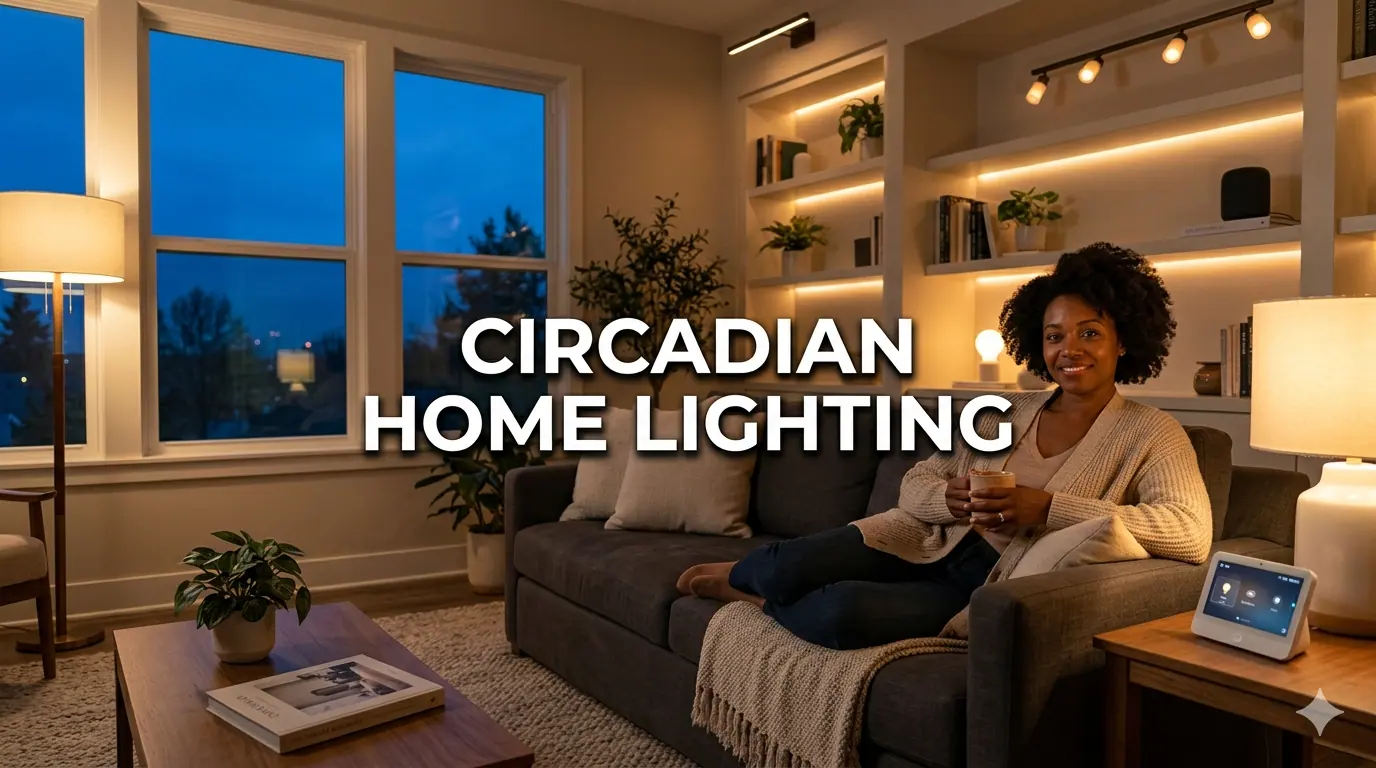
Your home's lighting affects far more than visibility—it directly influences your sleep quality, energy levels, mood, and long-term health. Circadian-syncing lighting aligns your indoor environment with your body's natural 24-hour biological clock, supporting better rest, sharper focus, and improved overall wellness.
Most homes rely on static, one-size-fits-all lighting that ignores the dynamic nature of human circadian rhythms. This mismatch can suppress melatonin production, disrupt sleep cycles, and contribute to fatigue, mood swings, and even metabolic issues. By designing a thoughtful circadian lighting plan, you create an environment that actively supports your biology rather than working against it.
In this comprehensive guide, we'll walk you through the science of circadian lighting, explain exactly how to design a layered lighting plan for every room in your home, and share practical tips for choosing the right bulbs, fixtures, and controls. Whether you're building a new home or upgrading your current space, you'll learn how to harness light as a powerful tool for better health and wellbeing.
Understanding Circadian Rhythms and Light
Short answer: Circadian rhythms are your body's internal 24-hour clock that regulates sleep, hormone production, and cellular repair. Light is the primary signal that synchronizes this clock, with blue-rich morning light promoting alertness and warm, dim evening light supporting melatonin production and sleep readiness.
Your circadian system is incredibly sensitive to light exposure. Specialized cells in your eyes called intrinsically photosensitive retinal ganglion cells (ipRGCs) detect light intensity and color temperature, sending signals directly to your brain's suprachiasmatic nucleus—the master clock that orchestrates bodily functions.
Here's how light affects your circadian rhythm throughout the day:
- Morning (6 AM - 12 PM): Bright, blue-rich light (5000K-6500K color temperature) suppresses melatonin, boosts cortisol naturally, and signals wakefulness. This exposure sets your circadian clock for the day ahead.
- Afternoon (12 PM - 6 PM): Moderate brightness with neutral white light (3500K-4500K) maintains alertness without overstimulation. Natural daylight remains ideal.
- Evening (6 PM - 10 PM): Warm, dim light (2700K-3000K) allows melatonin to rise naturally, preparing your body for sleep. Blue light exposure during this window can delay sleep onset by 1-3 hours.
- Night (10 PM - 6 AM): Minimal light exposure with very warm tones (2200K or lower) or complete darkness supports deep sleep and cellular repair processes.
When your home lighting contradicts these natural patterns—such as bright overhead lights at 9 PM or dim, warm light at 7 AM—your circadian system receives conflicting signals. Over time, this misalignment contributes to sleep disorders, reduced cognitive performance, weakened immune function, and increased risk of chronic diseases.
The Three Key Elements of Circadian Lighting
Short answer: Effective circadian lighting requires attention to intensity (brightness measured in lux), color temperature (measured in Kelvin), and timing (when specific light qualities are used throughout the day).
Designing a circadian-syncing lighting plan means optimizing these three elements for each space and time of day.
1. Light Intensity (Brightness)
Brightness matters as much as color. Your circadian system responds to melanopic lux—a measure of light that specifically affects circadian rhythms—rather than standard lux measurements.
Recommended intensity levels:
- Morning activation: 250-500 melanopic lux at eye level for 30-60 minutes after waking
- Daytime productivity: 150-300 melanopic lux for sustained alertness
- Evening wind-down: Below 50 melanopic lux to avoid melatonin suppression
- Night navigation: 5-10 melanopic lux (very dim red or amber) for safety without disruption
Most homes provide inconsistent intensity—too dim in the morning and too bright at night. Circadian lighting corrects this imbalance through strategic fixture placement and dimming controls.
2. Color Temperature (Light Quality)
Color temperature, measured in Kelvin (K), determines whether light appears warm (yellow/orange) or cool (blue/white). This dramatically affects circadian signaling:
- 6500K-5000K (Cool/Daylight): High blue content, maximally alerting. Best for morning routines and task lighting before 2 PM.
- 4000K-3500K (Neutral White): Balanced spectrum for afternoon activities without excessive stimulation.
- 3000K-2700K (Warm White): Reduced blue light, suitable for evening relaxation after sunset.
- 2200K and below (Amber/Red): Minimal circadian disruption, ideal for nighttime use.
Tunable white LED bulbs that adjust color temperature throughout the day are the foundation of circadian lighting design.
3. Timing and Duration
When you expose yourself to specific light qualities matters more than the total daily exposure. Strategic timing amplifies benefits:
- Morning light within 1 hour of waking anchors your circadian rhythm more effectively than midday exposure
- Consistent evening dimming starting 2-3 hours before bed supports natural melatonin rise
- Avoiding bright light between 10 PM - 6 AM prevents circadian phase delays
Automated lighting schedules ensure consistency even when willpower falters.
Room-by-Room Circadian Lighting Design
Short answer: Each room serves different functions at different times, requiring customized circadian lighting strategies. Prioritize morning spaces (bedroom, bathroom, kitchen) for bright, cool light and evening spaces (living room, bedroom) for warm, dimmable options.
Bedroom: Sleep Sanctuary
Your bedroom lighting should support both morning alertness and evening relaxation.
Morning strategy:
- Install tunable bulbs in overhead fixtures set to 5000K-6500K for 30 minutes after waking
- Use smart bulbs that gradually brighten 15 minutes before your alarm (sunrise simulation)
- Position a light therapy lamp (10,000 lux) near your morning routine area for 20-30 minutes
Evening strategy:
- Replace overhead lights with table lamps at eye level or below to reduce intensity
- Use bulbs rated 2700K or lower after sunset
- Install dimmer switches to reduce brightness to 10-20% in the hour before bed
- Add plug-in amber nightlights (2200K) for nighttime bathroom trips
Avoid: Bright overhead lights after 8 PM, blue-rich reading lights, and screens without blue light filters.
Bathroom: Morning Activation Zone
The bathroom is often your first light exposure—make it count.
Optimal setup:
- Install bright vanity lighting (4000K-5000K) at eye level on both sides of the mirror to simulate natural daylight
- Avoid overhead-only lighting that creates shadows and reduces effectiveness
- Choose bulbs with high CRI (90+) for accurate color rendering during grooming
- Add a dimmer to reduce intensity for evening routines
Pro tip: If your bathroom lacks windows, invest in a daylight-mimicking LED panel (5000K, 300+ lux at face level) to compensate for missing natural light.
Kitchen: All-Day Functionality
Kitchens serve multiple purposes from early breakfast prep to late-night snacks, requiring flexible lighting.
Layered approach:
- Ambient: Ceiling fixtures with tunable white bulbs (3000K-5000K range) on dimmers
- Task: Under-cabinet LED strips (4000K) for food preparation areas
- Accent: Warm pendant lights (2700K) over dining areas for evening meals
Schedule:
- 6 AM - 12 PM: 4500K-5000K at 80-100% brightness
- 12 PM - 6 PM: 3500K-4000K at 60-80% brightness
- 6 PM - 10 PM: 2700K-3000K at 30-50% brightness
- 10 PM+: Amber nightlights only (2200K, 10% brightness)
Living Room: Evening Relaxation Hub
Living rooms typically see the most evening use, making warm, dimmable lighting essential.
Design principles:
- Prioritize floor and table lamps over overhead lighting to reduce intensity and create cozy pools of light
- Use bulbs rated 2700K or lower for all evening fixtures
- Install smart plugs or dimmers on all lamps for easy adjustment
- Add blackout curtains to prevent streetlight intrusion
Avoid: Recessed ceiling lights that create harsh downward illumination, cool white bulbs (4000K+), and bright TV backlighting that contradicts ambient light levels.
Home Office: Productivity Without Burnout
Home offices require bright, alerting light during work hours but should transition to evening modes after hours.
Optimal configuration:
- Position desk perpendicular to windows for balanced natural light
- Use a task lamp with adjustable color temperature (3000K-5000K) set to 4000K-5000K during work hours
- Add ambient lighting to reduce screen contrast strain
- Install smart bulbs that automatically shift to 2700K after 6 PM if you work late
Critical: Never work in a dark room with only screen illumination—this creates extreme contrast that strains eyes and disrupts circadian signaling.
Hallways and Stairs: Safe Navigation
These transitional spaces need circadian-aware lighting for safety without sleep disruption.
Solutions:
- Install motion-sensor nightlights with amber LEDs (2200K) at floor level
- Set brightness to 5-10% of daytime levels
- Use timers to ensure lights auto-off after 2-3 minutes
This provides enough illumination for safe movement without triggering alertness or melatonin suppression.
Choosing the Right Bulbs and Fixtures
Short answer: Prioritize tunable white LED bulbs with wide color temperature ranges (2200K-6500K), high CRI (90+), dimmability, and smart controls. Avoid fixed-temperature bulbs and cheap LEDs with flicker or poor color rendering.
Bulb Specifications That Matter
When shopping for circadian-friendly bulbs, check these specifications:
Color Temperature Range:
- Best: Tunable white bulbs offering 2200K-6500K range
- Good: Separate bulbs for different zones (2700K for evening, 5000K for morning)
- Avoid: Single-temperature bulbs unless matched perfectly to room function
Color Rendering Index (CRI):
- Choose CRI 90+ for accurate color perception and better visual comfort
- CRI below 80 creates dull, unnatural lighting that strains eyes
Dimmability:
- Ensure bulbs are compatible with your dimmer switches (check manufacturer specifications)
- Look for "smooth dimming" that maintains color quality at low levels
Flicker Rate:
- Choose bulbs labeled "flicker-free" or with flicker percentage below 5%
- Invisible flicker causes headaches, eye strain, and circadian disruption
Smart Features:
- WiFi or Zigbee-enabled bulbs allow automated scheduling and remote control
- Compatible ecosystems: Philips Hue, LIFX, Nanoleaf, Wyze, or generic Tuya/Smart Life bulbs
Fixture Placement for Circadian Impact
Where you place lights matters as much as bulb specifications:
- Eye-level or above: Morning light should reach your eyes directly. Position lamps and fixtures so light hits your face during morning routines.
- Bias upward: Indirect lighting that bounces off ceilings creates softer, more natural illumination than harsh downward beams.
- Layer sources: Combine ambient, task, and accent lighting to create flexibility throughout the day.
- Avoid glare: Position lights to prevent direct view of bulbs, which causes squinting and reduces light's circadian benefits.
Smart Controls and Automation
Short answer: Automation removes the guesswork from circadian lighting. Use smart bulbs, dimmers, and scheduling apps to automatically adjust color temperature and brightness based on time of day, sunrise/sunset, or your personal schedule.
Essential Automation Strategies
1. Sunrise/Sunset Syncing
Configure smart bulbs to adjust based on local sunrise and sunset times:
- 30 minutes before sunrise: Gradually brighten bedroom lights to 2700K
- Sunrise: Shift to 5000K-6500K at 80% brightness
- Sunset: Transition to 2700K at 50% brightness
- 2 hours after sunset: Dim to 2200K at 20% brightness
Most smart lighting apps (Philips Hue, LIFX, Smart Life) offer built-in sunrise/sunset automation.
2. Circadian Rhythm Scheduling
Create time-based scenes that match your daily rhythm:
- Morning Boost (6 AM - 10 AM): 5000K-6500K, 80-100% brightness
- Midday Focus (10 AM - 2 PM): 4000K-5000K, 70-80% brightness
- Afternoon Calm (2 PM - 6 PM): 3500K-4000K, 60% brightness
- Evening Wind-Down (6 PM - 10 PM): 2700K-3000K, 30-40% brightness
- Night Mode (10 PM - 6 AM): 2200K or amber, 10% brightness or off
3. Motion Sensors for Nighttime
Install motion-activated amber nightlights in hallways and bathrooms:
- Set to 5-10% brightness maximum
- Use 2200K or red-spectrum LEDs
- Auto-off after 2-5 minutes
This prevents fumbling for switches while avoiding full alertness.
4. Voice and App Control
Enable quick adjustments through:
- Voice commands: "Alexa, set living room to evening mode"
- App scenes: One-tap activation of pre-configured lighting
- Physical switches: Smart dimmers for manual control without phone
Recommended Smart Lighting Systems
Premium option: Philips Hue
- Most reliable ecosystem with extensive bulb and fixture options
- Excellent automation and third-party integrations
- Higher cost but superior quality and longevity
Budget option: Wyze or Smart Life bulbs
- Affordable tunable white bulbs ($10-15 each)
- Basic scheduling and automation features
- Good for testing circadian lighting before major investment
Mid-range: LIFX or Nanoleaf
- No hub required (WiFi-based)
- High-quality color rendering and smooth dimming
- Good balance of features and price
Common Circadian Lighting Mistakes to Avoid
Even well-intentioned lighting plans can undermine circadian health if you make these common errors:
Mistake #1: Relying Solely on Overhead Lighting
Why it hurts: Ceiling fixtures create downward light that misses your eyes, reducing circadian impact. They also tend to be too bright for evening use and too harsh for relaxation.
Fix: Add eye-level lamps for morning light exposure and use dimmable, warm-toned fixtures for evening. Prioritize layered lighting over single-source solutions.
Mistake #2: Using Cool White Bulbs in Evening Spaces
Why it hurts: Bulbs rated 4000K or higher suppress melatonin for 2-3 hours after exposure, delaying sleep onset and reducing sleep quality.
Fix: Audit all bulbs in bedrooms, living rooms, and dining areas. Replace anything above 3000K with warm white (2700K) or tunable alternatives.
Mistake #3: Ignoring Blue Light from Screens
Why it hurts: Even perfect ambient lighting can't compensate for phone, tablet, or TV screens emitting intense blue light after dark.
Fix:
- Enable Night Shift (iOS) or Night Light (Android) settings after sunset
- Install f.lux or similar software on computers
- Use blue light blocking glasses if screen use after 8 PM is unavoidable
- Switch to e-ink readers for bedtime reading
Mistake #4: Inconsistent Lighting Schedules
Why it hurts: Circadian rhythms thrive on consistency. Random lighting patterns confuse your biological clock, negating benefits of good bulb choices.
Fix: Automate lighting changes based on time or sunrise/sunset. Even on weekends, maintain similar light exposure patterns to anchor your circadian rhythm.
Mistake #5: Overlooking Light Pollution from Outside
Why it hurts: Streetlights, neighbor's lights, and digital billboards can penetrate bedrooms, suppressing melatonin and fragmenting sleep.
Fix:
- Install blackout curtains or shades in bedrooms
- Use sleep masks if complete darkness isn't achievable
- Seal light gaps around windows and doors
- Remove or cover LED indicator lights on electronics
Mistake #6: Skipping Morning Light Exposure
Why it hurts: Without bright morning light, your circadian clock drifts later each day, making it harder to fall asleep at night and wake up refreshed.
Fix: Prioritize 20-30 minutes of bright light (natural or artificial) within one hour of waking. Make this non-negotiable, even on cloudy days or weekends.
Expert Tips for Maximizing Circadian Lighting Benefits
Tip #1: Combine Light with Movement
Morning light exposure is more effective when paired with physical activity. Take a walk outside, do yoga near a window, or exercise in a brightly lit room to amplify circadian signaling.
Tip #2: Track Your Response
Keep a simple sleep journal noting:
- Time of first light exposure
- Evening lighting habits
- Sleep onset time and quality
- Daytime energy levels
Adjust your lighting plan based on patterns you observe over 2-4 weeks.
Tip #3: Prioritize Natural Light When Possible
No artificial bulb perfectly replicates sunlight. Maximize window exposure during daytime by:
- Keeping blinds open during daylight hours
- Positioning workspaces near windows
- Taking outdoor breaks midday
Tip #4: Use Red Light for Nighttime Needs
Red light (620-750nm wavelength) has minimal impact on melatonin production. Use red nightlights, red-spectrum bulbs, or red LED strips for nighttime navigation, reading, or bathroom visits.
Tip #5: Adjust Seasonally
Your circadian lighting needs change with seasons:
- Winter: Increase morning light intensity and duration to compensate for shorter days. Consider a 10,000 lux light therapy lamp.
- Summer: Use blackout curtains to prevent early sunrise from disrupting sleep. Extend evening dimming periods during long daylight hours.
Frequently Asked Questions About Circadian Lighting
How long does it take to see benefits from circadian lighting?
Short answer: Most people notice improved sleep onset within 3-7 days of consistent circadian lighting. Full benefits—including better sleep quality, increased daytime energy, and improved mood—typically emerge after 2-4 weeks of adherence.
Your circadian system adjusts gradually. The first week often brings earlier sleepiness in the evening and easier morning wake-ups. By week 3-4, sleep becomes more consolidated, and daytime alertness stabilizes. Consistency is crucial—skipping morning light or using bright screens late at night can reset progress.
Can circadian lighting help with shift work or jet lag?
Short answer: Yes—strategic light exposure can help shift workers and travelers adjust their circadian rhythms, though it requires careful timing and may not fully eliminate challenges of non-standard schedules.
For shift workers:
- Use bright light (5000K-6500K, 300+ lux) during night shifts to maintain alertness
- Wear blue-blocking glasses during commute home to prevent morning light from delaying sleep
- Create complete darkness in bedroom for daytime sleep using blackout curtains and eye masks
- Use bright light immediately upon waking (even if afternoon) to anchor shifted rhythm
For jet lag:
- Seek bright light exposure at local morning time to advance your clock when traveling east
- Avoid bright light in local evening to prevent further delay when traveling west
- Use melatonin supplements (0.5-3mg) 2-3 hours before desired bedtime to accelerate adjustment
Do I need expensive smart bulbs, or will regular bulbs work?
Short answer: You can create effective circadian lighting with regular bulbs by manually switching between warm and cool bulbs or using lamps with different color temperatures. However, smart bulbs make automation effortless and significantly improve consistency.
Budget approach:
- Use 5000K bulbs in morning spaces (bathroom, kitchen)
- Use 2700K bulbs in evening spaces (bedroom, living room)
- Manually turn off cool lights after sunset
- Use plug-in dimmers for basic brightness control
Smart bulb advantages:
- Automatic transitions eliminate willpower requirements
- Gradual changes feel more natural than abrupt switches
- Remote control allows adjustments without disrupting routines
- Long-term consistency is easier to maintain
Start with 3-5 smart bulbs in high-impact areas (bedroom, bathroom, main living space) and expand as budget allows.
What if my home has limited natural light?
Short answer: Artificial circadian lighting becomes even more critical in low-natural-light homes. Invest in high-quality light therapy lamps and maximize tunable LED fixtures to compensate for missing daylight.
Solutions for low-light homes:
- Place a 10,000 lux light therapy lamp in your morning routine area for 20-30 minutes daily
- Install high-CRI, tunable white bulbs in all fixtures to simulate natural light variation
- Use mirrors strategically to reflect and amplify available light
- Choose light-colored paint and decor to increase light reflection
- Consider full-spectrum LED panels for rooms without windows
Is blue light always bad for circadian health?
Short answer: No—blue light is essential for circadian health in the morning and midday but becomes disruptive after sunset. Timing, not elimination, is the key.
Blue wavelengths (460-480nm) are the most potent circadian signals. In the morning, they:
- Suppress melatonin appropriately
- Boost alertness and cognitive performance
- Anchor your circadian clock to the 24-hour day
- Improve mood through serotonin production
The problem arises when blue light exposure continues into evening hours, delaying melatonin release and pushing your circadian clock later. The solution isn't blue light avoidance—it's strategic timing.
Creating Your Circadian Lighting Action Plan
Ready to transform your home into a circadian-supportive environment? Follow this step-by-step action plan:
Week 1: Assessment and Planning
- Audit current bulbs: Note color temperature and location of every bulb in your home
- Identify priority rooms: Start with bedroom, bathroom, and main living space
- Set a budget: Determine how many smart bulbs or fixtures you can invest in initially
- Choose a system: Select Philips Hue, LIFX, Wyze, or another ecosystem
Week 2: Morning Optimization
- Install bright, cool-white bulbs (5000K-6500K) in bathroom and kitchen
- Set up a light therapy lamp near your morning routine area
- Program smart bulbs to brighten gradually 15 minutes before wake time
- Commit to 20-30 minutes of bright light within one hour of waking
Week 3: Evening Transformation
- Replace bedroom and living room bulbs with warm-white (2700K) or tunable options
- Install dimmer switches or smart plugs on all lamps
- Set automation to shift to 2700K at sunset and 2200K two hours before bed
- Enable blue light filters on all screens after 8 PM
Week 4: Refinement and Consistency
- Add motion-sensor amber nightlights in hallways and bathrooms
- Fine-tune automation schedules based on your actual sleep/wake times
- Track sleep quality and energy levels to identify what's working
- Expand to secondary spaces (home office, dining room) as budget allows
The Long-Term Impact of Circadian-Aligned Living
Designing a circadian-syncing lighting plan is more than a home improvement project—it's an investment in your long-term health. Research consistently links proper circadian alignment to:
- Better sleep quality: Faster sleep onset, deeper sleep stages, and more refreshing rest
- Improved mood: Reduced risk of depression and anxiety through regulated serotonin and melatonin
- Enhanced cognitive function: Sharper focus, better memory, and faster reaction times
- Stronger immune system: Proper circadian timing optimizes immune cell function and inflammation control
- Metabolic health: Aligned circadian rhythms support healthy weight, blood sugar regulation, and hormone balance
- Cardiovascular protection: Consistent sleep-wake cycles reduce blood pressure and heart disease risk
Your home's lighting shapes your biology in profound ways. By designing an environment that honors your circadian rhythms, you create a foundation for better sleep, sustained energy, and vibrant health. Start small, stay consistent, and let light become your most powerful wellness tool.
Transform your home, one bulb at a time. Your body will thank you.


0 Comments