

How to Introduce Allergen-Safe Solid Foods: Latest Medical Guidelines for Infant Feeding
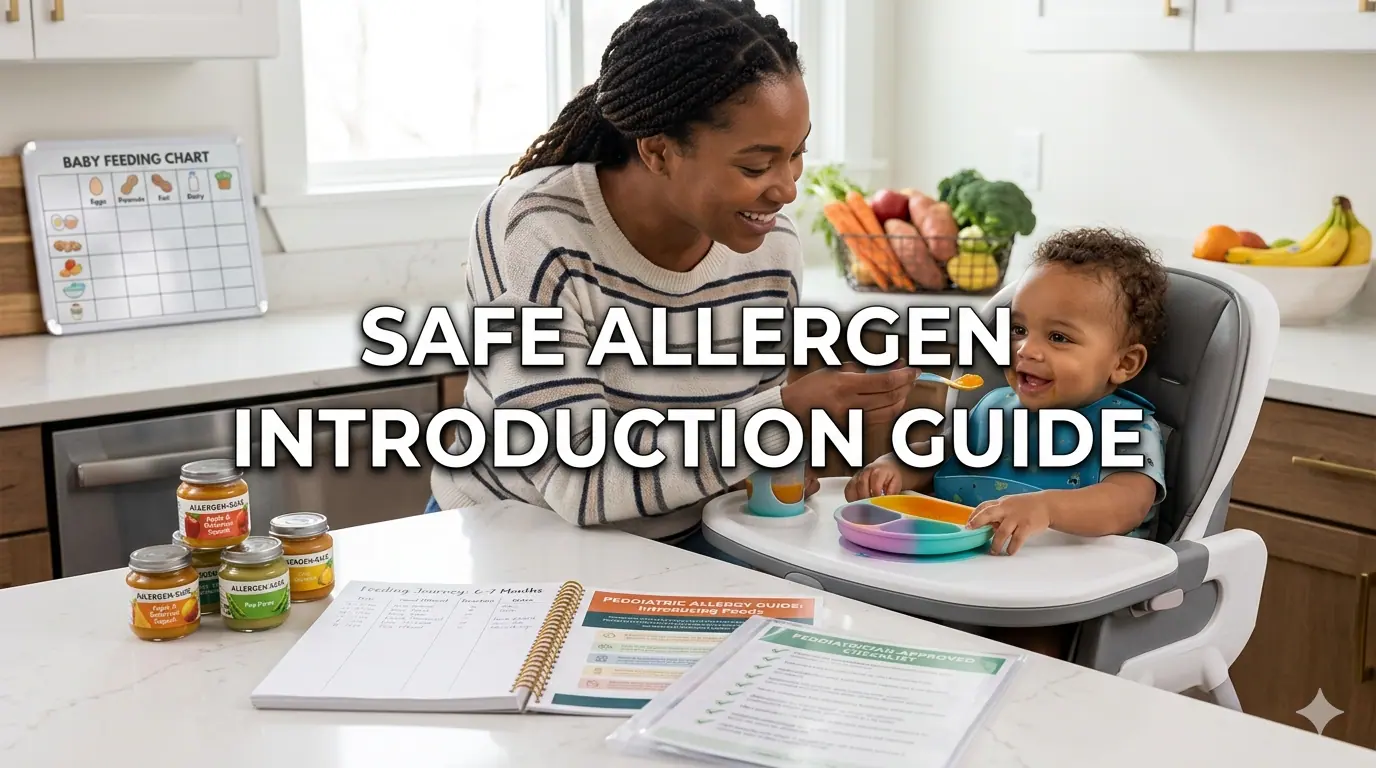
Introducing solid foods to your baby is one of the most exciting—and anxiety-provoking—milestones in parenthood. For parents concerned about food allergies, the question isn't just when to start solids, but how to introduce potentially allergenic foods safely. The good news? Groundbreaking research over the past decade has transformed our understanding of infant feeding and allergy prevention. Early, intentional introduction of allergenic foods—guided by the latest medical evidence—can actually reduce your baby's risk of developing food allergies, rather than increase it.
For decades, parents were advised to delay introducing common allergens like peanuts, eggs, and dairy until age 2 or 3. Today, major health organizations including the American Academy of Pediatrics (AAP), the National Institute of Allergy and Infectious Diseases (NIAID), and the World Allergy Organization (WAO) recommend the opposite: introducing allergenic foods early, typically between 4-6 months of age, once your baby shows signs of readiness for solids. This paradigm shift is based on landmark studies like the LEAP (Learning Early About Peanut Allergy) and EAT (Enquiring About Tolerance) trials, which demonstrated that early exposure significantly reduces allergy risk in both high-risk and general-population infants.
In this comprehensive, evidence-based guide, we'll decode the latest medical guidelines for introducing allergen-safe solid foods, explain which infants are at higher risk for food allergies, provide a step-by-step protocol for safely introducing the top 9 allergens, and share practical strategies for monitoring reactions and building a diverse, nutritious diet. Whether your baby has eczema, a family history of allergies, or no known risk factors, you'll learn how to confidently navigate this critical window of opportunity for allergy prevention.
Understanding the Science: Why Early Allergen Introduction Works
Short answer: Early introduction of allergenic foods (4-6 months) trains the infant immune system to recognize food proteins as safe, promoting oral tolerance rather than allergic sensitization—especially critical during the "immune window" before 12 months.
To understand why timing matters, it helps to understand infant immune development:
The "Immune Window" Concept
What Happens in the First Year:
- Infant immune systems are highly adaptable in the first 4-12 months
- Oral exposure to food proteins during this window promotes regulatory T-cell development
- Regulatory T-cells teach the immune system to tolerate food proteins
- Delayed exposure may miss this critical window, increasing sensitization risk
Key Research Findings:
- LEAP Study (2015): High-risk infants who consumed peanut protein 3x/week from 4-11 months had an 81% lower risk of peanut allergy at age 5
- EAT Study (2016): Early introduction of six allergenic foods (peanut, egg, milk, sesame, fish, wheat) from 3 months reduced food allergy prevalence in the general population
- Meta-analyses (2020-2024): Consistent evidence that early peanut and egg introduction reduces allergy risk by 40-70%
Oral Tolerance vs. Sensitization
Oral Tolerance (The Goal):
- Immune system encounters food protein via the digestive tract
- Regulatory T-cells develop and suppress allergic responses
- Result: Baby tolerates the food without reaction
Sensitization (What We Want to Avoid):
- Immune system first encounters food protein through broken skin (e.g., eczema) or environmental exposure
- Without oral exposure, immune system may misidentify protein as a threat
- Result: Allergic antibodies (IgE) develop, leading to potential allergic reactions upon later ingestion
Practical Implication: Introducing allergenic foods orally—before environmental exposure leads to sensitization—helps steer the immune system toward tolerance.
Who Is at Higher Risk for Food Allergies?
Short answer: Infants with moderate-to-severe eczema, existing food allergies, or a family history of allergic conditions (asthma, eczema, food allergy) are at higher risk and may benefit from earlier, more structured allergen introduction—often with allergist guidance.
Not all babies have the same allergy risk. Understanding your baby's risk level helps tailor the introduction approach:
High-Risk Infants
Criteria (per NIAID Guidelines):
- Moderate-to-severe eczema: Persistent, inflamed, itchy rash requiring prescription treatment
- Existing food allergy: Already diagnosed with allergy to one food (e.g., egg)
- Both eczema AND family history: Increases risk further
Recommended Approach:
- Discuss allergen introduction with pediatrician or allergist before starting solids
- Consider allergy testing (skin prick or blood test) before introducing peanut or egg
- Introduce peanut-containing foods between 4-6 months, after other solids are tolerated
- Introduce under medical supervision if test results are positive or eczema is severe
Mild-to-Moderate Risk Infants
Criteria:
- Mild eczema (occasional, easily managed with moisturizers)
- Family history of allergic conditions but no personal eczema or food allergy
Recommended Approach:
- No testing needed before introduction
- Introduce allergenic foods at home around 6 months, after baby tolerates a few non-allergenic solids
- Follow step-by-step introduction protocol (see below)
Low-Risk Infants
Criteria:
- No eczema, no food allergy, no family history of allergic conditions
Recommended Approach:
- Introduce allergenic foods along with other solids around 6 months
- No special testing or supervision needed
- Follow general introduction guidelines
Readiness Signs: When to Start Solids (Including Allergens)
Short answer: Start solids—including allergenic foods—when your baby shows developmental readiness (typically 4-6 months): good head control, ability to sit with support, loss of tongue-thrust reflex, and interest in food.
Timing matters more than calendar age. Look for these readiness cues:
Developmental Readiness Signs
Physical Milestones:
- Head control: Can hold head steady without support
- Sitting ability: Can sit with minimal support (high chair, lap)
- Tongue-thrust reflex fading: No longer automatically pushes food out with tongue
- Hand-to-mouth coordination: Reaches for objects and brings them to mouth
Behavioral Cues:
- Interest in food: Watches you eat, reaches for your food, opens mouth when spoon approaches
- Increased hunger: Seems unsatisfied after milk feeds, wakes more frequently at night
- Chewing motions: Moves jaw in up-and-down motion when food is offered
Age Guidelines by Risk Level
| Risk Level | Recommended Introduction Window | Key Considerations |
|---|---|---|
| High-risk | 4-6 months | Consult allergist first; introduce peanut early after other solids tolerated |
| Mild-moderate risk | Around 6 months | Introduce after baby tolerates 2-3 non-allergenic solids |
| Low-risk | Around 6 months | Introduce allergens along with other solids; no special precautions needed |
Important: Do not start solids before 4 months. Early introduction (


0 Comments