

How to Use Decentralized Finance (DeFi) for Low-Fee B2B Cross-Border Payments: A Complete Guide
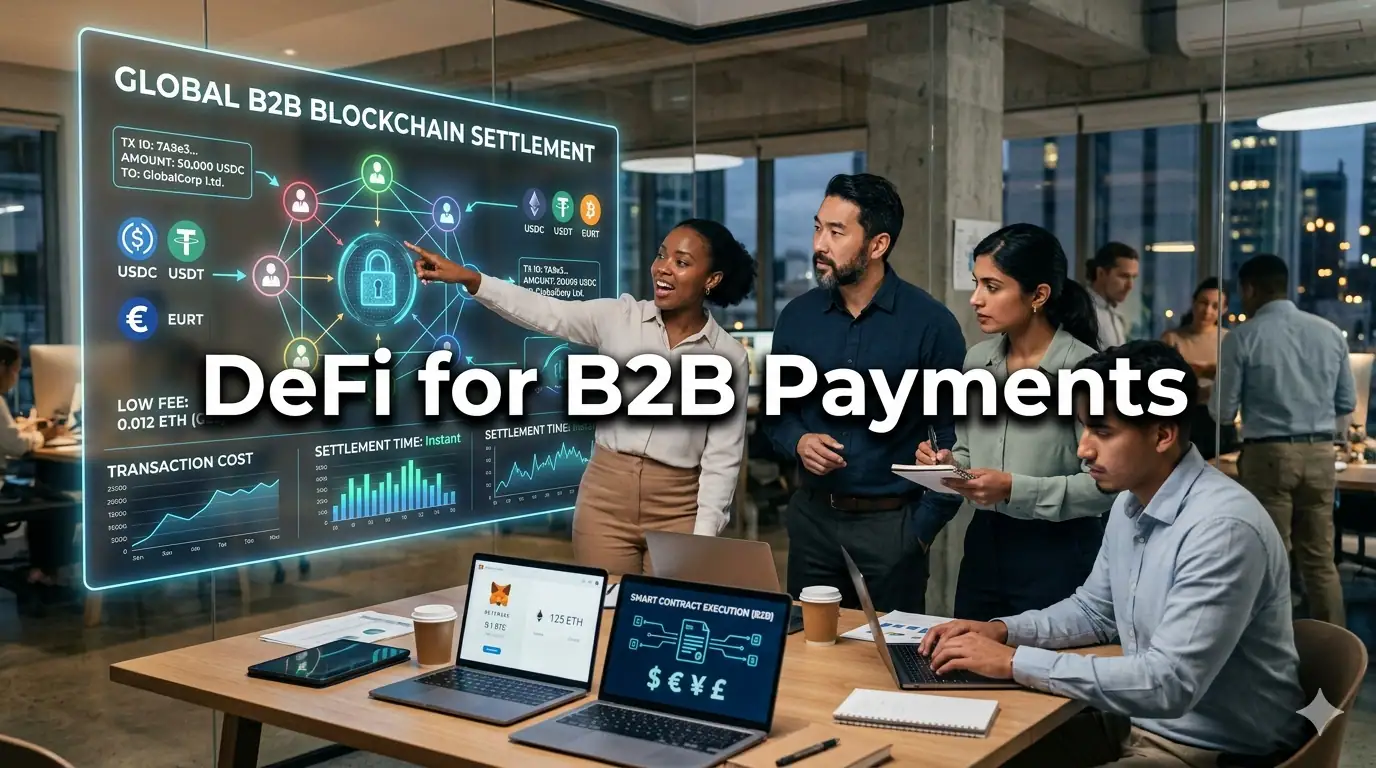
International business transactions have long been plagued by high fees, slow settlement times, and opaque banking processes. Traditional wire transfers can take 3-5 business days and cost upwards of $50-$100 per transaction, eating into profit margins for small and medium-sized enterprises (SMEs). Decentralized Finance (DeFi) offers a revolutionary alternative: enabling low-fee B2B cross-border payments that settle in minutes, cost fractions of a dollar, and operate transparently on the blockchain.
For businesses engaged in import/export, freelancing, or global supply chains, integrating DeFi into payment operations isn't just about adopting crypto—it's about optimizing cash flow, reducing overhead, and gaining financial sovereignty. By leveraging stablecoins, smart contracts, and decentralized protocols, businesses can bypass intermediaries like correspondent banks and payment processors, retaining more value for every transaction.
In this comprehensive, expert-level guide, we'll decode how DeFi works for B2B payments, identify the best tools and stablecoins for business use, provide a step-by-step implementation strategy, and highlight critical compliance and risk management considerations. Whether you're a startup looking to pay overseas contractors or an established enterprise optimizing supply chain payments, you'll learn how to harness blockchain technology for efficient, cost-effective global finance.
Understanding DeFi in the B2B Context
Short answer: DeFi for B2B payments uses blockchain technology to facilitate direct, peer-to-peer transactions without traditional banking intermediaries, utilizing stablecoins to minimize volatility and smart contracts to automate settlement.
To understand why DeFi is transformative for business payments, it helps to compare it with the traditional system:
Traditional B2B Cross-Border Payments
The Process:
- Sender initiates wire transfer via local bank
- Transaction passes through correspondent banks (SWIFT network)
- Multiple intermediaries deduct fees at each step
- Recipient receives funds 3-5 days later, often with unknown final amount
Pain Points:
- High Costs: Wire fees, FX spread, intermediary charges (3-5% of transaction value)
- Slow Settlement: Days of waiting impacts cash flow and supplier relationships
- Lack of Transparency: Difficult to track transaction status in real-time
- Accessibility: Banks may reject transactions from certain regions or industries
DeFi-Based B2B Payments
The Process:
- Sender converts fiat to stablecoin (e.g., USDC, USDT) via on-ramp
- Stablecoin sent directly to recipient's wallet via blockchain
- Transaction settles in minutes (or seconds on Layer 2 networks)
- Recipient converts stablecoin to local fiat via off-ramp or holds as digital asset
Advantages:
- Low Fees: Network gas fees typically $0.01-$5.00 regardless of transaction size
- Fast Settlement: Near-instant confirmation 24/7/365
- Transparency: All transactions visible on public ledger (block explorer)
- Accessibility: Anyone with internet access can participate, no bank account required
Key Components of DeFi B2B Payments
Short answer: Successful DeFi payments rely on stablecoins for value stability, blockchain networks for settlement, wallets for storage, and compliant on/off-ramps for fiat conversion.
1. Stablecoins: The Bridge Between Fiat and Crypto
Volatility is the biggest barrier to crypto adoption in business. Stablecoins solve this by pegging their value to stable assets like the US Dollar.
Top Stablecoins for Business:
- USDC (USD Coin): Fully reserved, regulated, widely accepted, transparent audits. Best for compliant businesses.
- USDT (Tether): Highest liquidity, widely supported on exchanges. Good for trading and quick transfers.
- DAI: Decentralized, collateralized by crypto assets. Good for businesses wanting decentralized exposure.
- EURS/EURC: Euro-pegged stablecoins for European business operations.
Selection Criteria:
- Regulatory Compliance: Choose stablecoins with clear legal status in your jurisdiction.
- Liquidity: Ensure easy conversion to fiat in recipient's country.
- Blockchain Support: Ensure both sender and recipient use compatible networks (e.g., Ethereum, Polygon, Solana).
2. Blockchain Networks: Choosing the Right Rail
Different blockchains offer different trade-offs between speed, cost, and security.
Ethereum (Layer 1):
- Pros: Most secure, widest DeFi ecosystem, highest liquidity.
- Cons: High gas fees during congestion ($5-$50+ per transaction).
- Best For: Large transactions where security outweighs cost.
Layer 2 Solutions (Polygon, Arbitrum, Optimism):
- Pros: Ethereum security with significantly lower fees ($0.01-$0.10) and faster speeds.
- Cons: Slightly more complex bridge process.
- Best For: Frequent, smaller B2B payments.
High-Performance Chains (Solana, Avalanche):
- Pros: Extremely fast (seconds), very low fees.
- Cons: Smaller DeFi ecosystem, occasional network stability concerns.
- Best For: High-volume, low-value micro-payments.
3. Wallets and Custody Solutions
Businesses need secure ways to store and manage digital assets.
Self-Custody Wallets (MetaMask, Trust Wallet):
- Pros: Full control, no third-party risk.
- Cons: User responsible for security (private keys), no recourse if lost.
- Best For: Tech-savvy teams, smaller amounts.
Institutional Custody (Fireblocks, Coinbase Prime):
- Pros: Insurance, multi-signature security, compliance tools, integration with accounting software.
- Cons: Higher fees, KYC requirements.
- Best For: Enterprises, large transaction volumes, regulated industries.
4. On-Ramps and Off-Ramps
Converting between fiat currency and crypto is essential for most businesses.
Centralized Exchanges (Coinbase, Binance, Kraken):
- Easy fiat deposit/withdrawal via bank transfer.
- Require KYC/AML compliance.
- Good liquidity for major stablecoins.
DeFi On-Ramps (MoonPay, Ramp, Transak):
- Integrated directly into dApps or websites.
- Support credit/debit card payments.
- Slightly higher fees but more convenient.
Step-by-Step Guide: Implementing DeFi Payments for Your Business
Short answer: Implementing DeFi payments involves setting up compliant wallets, choosing stablecoins, educating your team, establishing standard operating procedures (SOPs), and integrating with accounting systems.
Phase 1: Preparation and Compliance (Weeks 1-2)
1. Legal and Regulatory Review:
- Consult legal counsel regarding crypto regulations in your jurisdiction and recipient's jurisdiction.
- Understand tax implications (capital gains, VAT, withholding tax).
- Ensure compliance with AML (Anti-Money Laundering) and KYC (Know Your Customer) laws.
2. Select Payment Partners:
- Choose exchanges or custody providers that support business accounts.
- Verify they operate in both sender and recipient countries.
- Check fee structures for fiat-to-crypto and crypto-to-fiat conversions.
3. Internal Policy Development:
- Create SOPs for approving crypto payments.
- Define who has access to wallets (multi-signature recommended).
- Establish security protocols (hardware wallets, 2FA, password managers).
Phase 2: Setup and Testing (Weeks 3-4)
1. Wallet Setup:
- Set up business wallets (preferably multi-sig for security).
- Backup private keys/seed phrases securely (offline, multiple locations).
- Test with small amounts before scaling.
2. Counterparty Onboarding:
- Educate suppliers/contractors on receiving crypto payments.
- Provide guides on setting up wallets and converting to fiat.
- Agree on stablecoin type and blockchain network to avoid errors.
3. Pilot Transaction:
- Execute a small test transaction (e.g., $100 USDC).
- Verify settlement time, fees, and recipient's ability to off-ramp.
- Document the process for future reference.
Phase 3: Integration and Scaling (Month 2+)
1. Accounting Integration:
- Use crypto accounting software (e.g., Cryptio, Bitwave) to track transactions.
- Ensure proper booking for tax reporting.
- Reconcile blockchain transactions with internal ledgers.
2. Automation (Smart Contracts):
- For recurring payments, consider using smart contracts for automated settlement.
- Example: Release payment automatically upon delivery confirmation (oracle integration).
- Reduces administrative overhead and payment disputes.
3. Risk Management:
- Monitor stablecoin peg stability (rare but possible de-pegging events).
- Diversify across multiple stablecoins if transaction volume is high.
- Keep only necessary operating funds in hot wallets; store reserves in cold storage.
Real-World Use Cases for DeFi B2B Payments
Short answer: DeFi payments are ideal for paying overseas contractors, settling import/export invoices, managing supply chain payments, and facilitating remittances for multinational teams.
Case Study 1: Paying Global Freelancers
Scenario: A US-based marketing agency employs designers in Pakistan, developers in Ukraine, and writers in Philippines.
- Traditional Method: Wire transfers cost $50 each, take 3 days, freelancers lose 3-5% on FX fees.
- DeFi Method: Agency buys USDC, sends via Polygon network ($0.01 fee, 2 minutes). Freelancers receive full amount, convert to local fiat via local exchange.
- Savings: 95% reduction in fees, 90% faster settlement, improved freelancer satisfaction.
Case Study 2: Import/Export Settlement
Scenario: A Kenyan coffee exporter sells to a German importer.
- Traditional Method: Letter of Credit (LC) involves banks, high fees, slow documentation processing.
- DeFi Method: Smart contract holds USDC in escrow. Upon shipment confirmation (via digital bill of lading), funds release automatically.
- Benefits: Reduced counterparty risk, faster cash flow for exporter, lower transaction costs for importer.
Case Study 3: Supply Chain Micro-Payments
Scenario: A manufacturer pays multiple small suppliers for raw materials weekly.
- Traditional Method: Batch payments once a month to minimize wire fees, causing cash flow strain for suppliers.
- DeFi Method: Daily or weekly payments via stablecoin with negligible fees.
- Benefits: Improved supplier relationships, better cash flow management, real-time payment tracking.
Risks and Challenges to Consider
Short answer: While DeFi offers significant benefits, businesses must manage risks related to volatility (mitigated by stablecoins), smart contract vulnerabilities, regulatory uncertainty, and operational security.
1. Regulatory Uncertainty
The Challenge: Crypto regulations vary widely by country and are evolving rapidly. Some jurisdictions may restrict crypto use for business payments.
Mitigation:
- Stay updated on local regulations (e.g., MiCA in Europe, SEC guidelines in US).
- Work with compliant exchanges and custody providers.
- Maintain detailed records for tax and audit purposes.
2. Smart Contract Risk
The Challenge: Bugs or vulnerabilities in smart contract code can lead to fund loss.
Mitigation:
- Use audited, established protocols (e.g., Aave, Compound, Curve).
- Avoid experimental or unaudited dApps for business funds.
- Start with small amounts to test functionality.
3. Operational Security
The Challenge: Private key loss, phishing attacks, or employee error can result in irreversible fund loss.
Mitigation:
- Use multi-signature wallets requiring multiple approvals for transactions.
- Implement hardware wallets (Ledger, Trezor) for cold storage.
- Train staff on security best practices (recognizing phishing, securing seeds).
- Consider institutional custody solutions for large holdings.
4. Stablecoin De-Pegging
The Challenge: Rarely, stablecoins may lose their peg to the underlying asset (e.g., UST collapse in 2022).
Mitigation:
- Stick to fully reserved, regulated stablecoins (USDC, USDT).
- Monitor reserve audits and issuer health.
- Convert to fiat promptly upon receipt if holding crypto is not part of treasury strategy.
5. Liquidity and Off-Ramping
The Challenge: Recipients in some regions may struggle to convert stablecoins to local fiat currency.
Mitigation:
- Verify off-ramp availability in recipient's country before initiating payments.
- Use stablecoins with high global liquidity (USDC, USDT).
- Consider peer-to-peer (P2P) exchanges if traditional off-ramps are limited.
Tools and Platforms for B2B DeFi Payments
Short answer: Several platforms specialize in facilitating crypto payments for businesses, offering invoicing, compliance, and conversion services.
Payment Processors
- BitPay: Established processor, supports invoicing, converts crypto to fiat automatically.
- Coinbase Commerce: Easy integration for online businesses, supports multiple coins.
- Request Finance: Web3-native invoicing and payment streaming, great for recurring payments.
- Stable: Specialized in stablecoin payments for businesses, compliance-focused.
Treasury Management
- Fireblocks: Institutional-grade custody, transfer, and settlement infrastructure.
- Safe (formerly Gnosis Safe): Multi-signature wallet standard for DAOs and businesses.
- Entangle: Cross-chain payment infrastructure for enterprises.
Accounting and Tax
- Cryptio: Automates crypto accounting, integrates with Xero/QuickBooks.
- Bitwave: Real-time crypto accounting and tax compliance.
- Koinly: Tax reporting software supporting multiple chains and wallets.
The Future of DeFi in B2B Finance
Short answer: As regulations clarify and infrastructure matures, DeFi is poised to become a standard layer of global finance, offering programmable money, instant settlement, and unprecedented financial inclusion for businesses.
Emerging Trends
- Real-World Assets (RWA): Tokenizing invoices, real estate, or commodities on-chain to use as collateral for DeFi loans.
- CBDCs (Central Bank Digital Currencies): Government-issued digital currencies may integrate with DeFi rails for regulated cross-border payments.
- Identity Solutions: Decentralized Identity (DID) protocols will streamline KYC/AML compliance without sacrificing privacy.
- Payment Streaming: Paying employees or contractors by the second (e.g., Sablier protocol) rather than bi-weekly.
Adoption Barriers Falling
- User Experience: Wallets and interfaces are becoming more intuitive, reducing the technical barrier.
- Insurance: Crypto insurance products are emerging to protect against hacks and smart contract failures.
- Banking Integration: Traditional banks are beginning to offer crypto custody and settlement services.
Frequently Asked Questions
Is using DeFi for B2B payments legal?
Short answer: In most jurisdictions, yes, but it depends on local regulations. Businesses must comply with tax laws, AML/KYC requirements, and any specific crypto regulations in their country. Always consult legal counsel before implementation.
What if the recipient doesn't want crypto?
Short answer: Use a payment processor that automatically converts crypto to fiat upon receipt. The sender pays in stablecoin, the processor converts it, and the recipient receives local currency in their bank account.
How do I handle accounting for crypto payments?
Short answer: Treat crypto payments like foreign currency transactions. Record the fiat value at the time of transaction. Use crypto accounting software to track gains/losses and generate tax reports.
Can I reverse a DeFi transaction if I make a mistake?
Short answer: No. Blockchain transactions are irreversible. Always test with small amounts first and double-check wallet addresses before sending.
What about volatility risk?
Short answer: Use stablecoins (USDC, USDT) pegged to fiat currencies to minimize volatility. Convert to fiat promptly if you don't want crypto exposure on your balance sheet.
The Bottom Line: DeFi is the Future of Efficient B2B Finance
Decentralized Finance offers a compelling solution to the inefficiencies of traditional cross-border payments. By leveraging stablecoins, blockchain networks, and smart contracts, businesses can significantly reduce costs, accelerate settlement times, and gain greater control over their financial operations.
Key Takeaways:
- Cost Savings: Reduce transaction fees from 3-5% to less than 1%.
- Speed: Settlement in minutes instead of days improves cash flow.
- Transparency: Blockchain ledger provides immutable record of all transactions.
- Accessibility: Enable payments to regions underserved by traditional banking.
- Compliance is Key: Work with legal counsel and compliant providers to navigate regulations.
- Security First: Implement multi-sig wallets, cold storage, and staff training.
- Start Small: Pilot with trusted partners before scaling to critical payments.
While challenges remain around regulation and education, the trajectory is clear: DeFi is becoming an integral part of global business finance. Companies that adopt these technologies early will gain a competitive advantage through efficiency, cost savings, and financial innovation.
Ready to optimize your cross-border payments? Start by evaluating your current payment pain points, researching compliant stablecoin solutions, and consulting with financial advisors experienced in digital assets. The future of B2B finance is decentralized, efficient, and accessible—and it's available today.


0 Comments