
How Women Can Preserve Natural Hair Bounce: Expert Guide to Healthy, Voluminous Hair
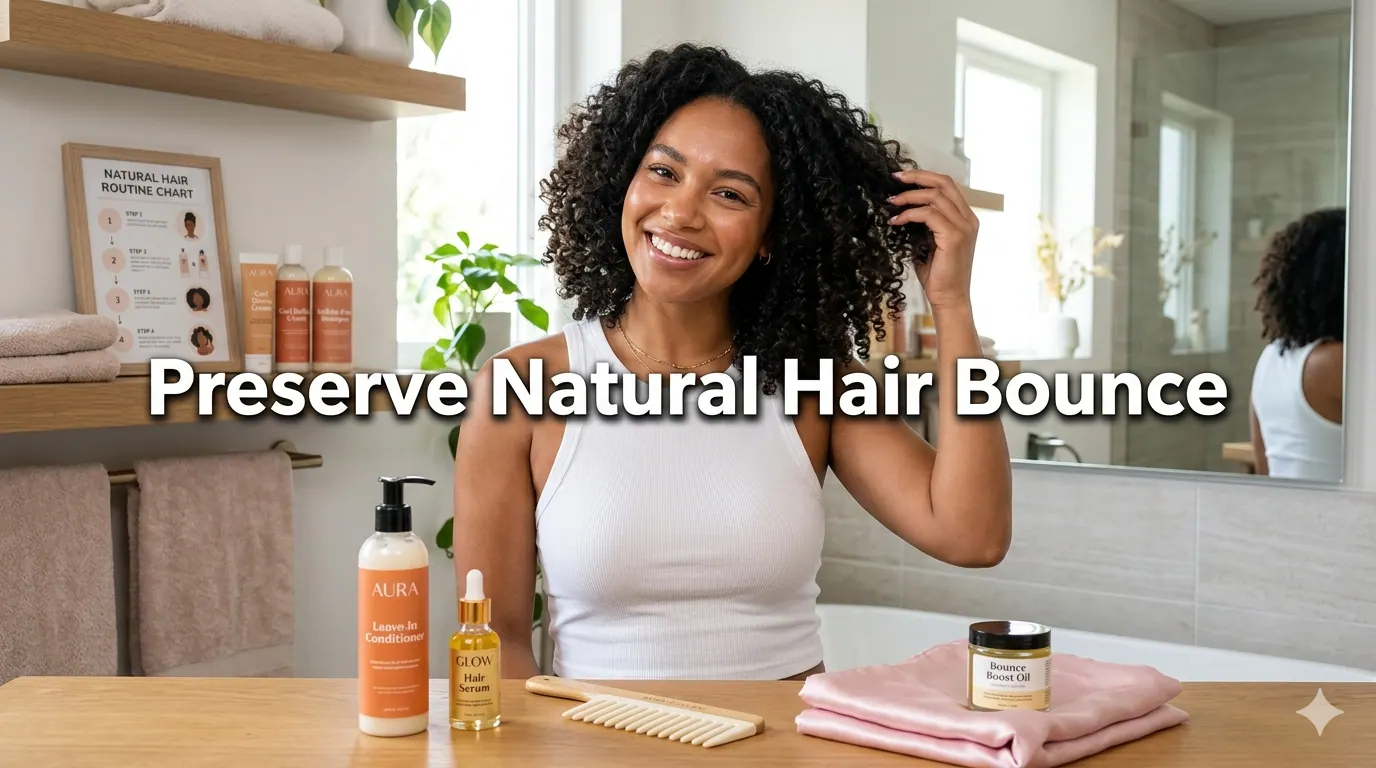
That effortless, springy movement in healthy hair isn't just about genetics—it's the result of understanding your hair's structure and giving it the right care. Natural hair bounce is one of the most sought-after qualities in women's hair, yet many struggle to maintain it due to damage, improper care, or misunderstanding what truly creates that coveted movement. The truth is, bouncy hair isn't about heavy products or aggressive styling—it's about preserving your hair's natural elasticity, moisture balance, and structural integrity.
Hair bounce comes from the hair's ability to stretch and return to its original shape—a property called elasticity. When hair is healthy, well-moisturized, and protected from damage, it naturally moves with life and energy. But when hair is dry, over-processed, or weighed down by heavy products, that bounce disappears, leaving hair limp, flat, or lifeless.
In this comprehensive, expert-informed guide, we'll decode the science behind hair bounce, reveal the hidden factors that rob hair of its natural movement, share the exact routine dermatologists and trichologists recommend for preserving bounce, and provide practical strategies for maintaining voluminous, healthy hair long-term. Whether you have straight, wavy, curly, or coily hair, you'll learn how to build a personalized routine that enhances your hair's natural bounce without relying on temporary fixes or damaging treatments.
Understanding Hair Bounce: The Science of Elasticity and Movement
Short answer: Hair bounce comes from elasticity—the hair's ability to stretch up to 30% and return to its original shape—supported by a healthy protein-moisture balance, intact cuticle layer, and proper hydration.
Before learning how to preserve bounce, understanding what creates it is essential:
The Structure of Bouncy Hair
The Cuticle Layer:
- Outer layer of overlapping scales that protect the inner hair shaft
- When smooth and intact, cuticles reflect light and allow hair to move freely
- Damage (heat, chemicals, friction) lifts cuticles, causing friction and dullness
- Lifted cuticles trap moisture unevenly, reducing elasticity
The Cortex:
- Middle layer containing keratin proteins and moisture
- Responsible for hair's strength, elasticity, and natural pattern
- Protein-moisture balance in cortex determines bounce
- Damage to cortex (from bleach, excessive heat) permanently reduces elasticity
The Protein-Moisture Balance:
- Protein (keratin): Provides structure and strength
- Moisture (water, humectants): Provides flexibility and softness
- Balance: Too much protein = brittle, stiff hair; too much moisture = limp, weak hair
- Ideal: Hair stretches 20-30% and returns to original length without breaking
What Actually Creates "Bounce"
Elasticity:
- Healthy hair stretches when pulled and springs back when released
- This "spring-back" action creates visible movement and bounce
- Elasticity depends on intact disulfide bonds and hydrogen bonds in keratin
Lightweight Hydration:
- Well-hydrated hair is flexible and moves easily
- Heavy oils or butters weigh hair down, reducing movement
- Lightweight humectants (glycerin, hyaluronic acid) hydrate without weight
Cuticle Smoothness:
- Smooth cuticles reduce friction between strands
- Less friction = hair slides easily, creating movement
- Rough cuticles cause tangling and static, killing bounce
Root Volume:
- Healthy scalp and roots provide lift at the base
- Product buildup or heavy styling at roots flattens hair
- Lightweight root-lifting techniques enhance overall bounce
What Robs Hair of Its Natural Bounce
Short answer: Heat damage, chemical processing, product buildup, improper washing, protein-moisture imbalance, and environmental stress are the primary factors that reduce hair elasticity and kill natural bounce.
Identifying what's stealing your bounce is the first step to restoring it:
Heat and Chemical Damage
Heat Styling:
- Flat irons, curling wands, and blow dryers above 300°F damage keratin bonds
- Repeated heat exposure denatures proteins, reducing elasticity permanently
- Signs: Hair feels brittle, snaps easily, lacks spring when stretched
Chemical Processing:
- Bleaching, coloring, perming, or relaxing breaks disulfide bonds in cortex
- Once broken, these bonds don't fully regenerate
- Result: Hair becomes porous, weak, and loses bounce
- Signs: Hair feels mushy when wet, stretches without returning, breaks easily
Product Buildup and Heavy Formulas
Buildup from Products:
- Silicones, waxes, and heavy oils accumulate on hair shaft
- Buildup weighs hair down, preventing natural movement
- Also blocks moisture from penetrating, causing dryness underneath
- Signs: Hair feels coated, looks dull, products don't absorb well
Heavy Styling Products:
- Thick creams, butters, and gels add weight that flattens hair
- Especially problematic for fine or medium-textured hair
- Signs: Hair looks greasy, feels heavy, lacks volume at roots
Improper Washing and Drying Techniques
Over-Washing:
- Strips natural oils that protect and lubricate hair
- Leads to dryness, brittleness, and reduced elasticity
- Signs: Scalp feels tight, hair feels straw-like, increased breakage
Under-Washing:
- Allows oil, sweat, and product buildup to accumulate
- Weighs hair down and blocks moisture absorption
- Signs: Hair looks flat, feels greasy at roots, lacks movement
Rough Drying:
- Rubbing hair with towel creates friction that lifts cuticles
- Lifted cuticles cause tangling, frizz, and breakage
- Signs: Hair feels rough, tangles easily, looks frizzy
Protein-Moisture Imbalance
Too Much Protein:
- Overuse of protein treatments makes hair stiff and brittle
- Hair loses flexibility and snaps instead of stretching
- Signs: Hair feels hard, straw-like, breaks when stretched
Too Much Moisture:
- Over-hydrating without protein support makes hair weak and limp
- Hair stretches excessively and doesn't return to shape
- Signs: Hair feels mushy when wet, lacks definition, goes flat quickly
Environmental and Lifestyle Factors
UV Exposure:
- Sunlight breaks down keratin proteins and fades color
- Weakens hair structure, reducing elasticity
- Signs: Hair feels dry, color fades, increased breakage
Hard Water:
- Minerals (calcium, magnesium) build up on hair shaft
- Creates roughness, dullness, and reduces product effectiveness
- Signs: Hair feels rough, color looks dull, products don't lather well
Poor Nutrition:
- Protein, iron, biotin, and omega-3 deficiencies affect hair health
- Weak hair from within lacks strength and bounce
- Signs: Slow growth, increased shedding, brittle texture
The Bounce-Preserving Routine: Expert-Approved Steps
Short answer: Preserve natural hair bounce with a balanced routine: gentle cleansing, lightweight hydration, protein-moisture balance, heat protection, and minimal manipulation—adjusted for your hair type and texture.
This evidence-based protocol supports elasticity and movement:
Step 1: Gentle, Balanced Cleansing
Choose the Right Shampoo:
- For fine/medium hair: Volumizing or clarifying shampoo (sulfate-free)
- For thick/curly hair: Moisturizing or co-wash formula
- Key ingredients: Mild surfactants (cocamidopropyl betaine), glycerin, panthenol
- Avoid: Heavy sulfates, silicones, or waxes that cause buildup
Washing Technique:
- Focus shampoo on scalp, let suds rinse through lengths
- Use lukewarm water—hot water strips natural oils
- Massage scalp gently with fingertips, not nails
- Rinse thoroughly to prevent residue
- Frequency: 2-3x/week for most hair types; adjust based on oiliness
Clarifying Wash (Monthly):
- Use a clarifying shampoo once a month to remove buildup
- Follow with deep conditioner to restore moisture
- Essential for maintaining bounce in product-heavy routines
Step 2: Lightweight, Targeted Conditioning
Rinse-Out Conditioner:
- Apply from mid-lengths to ends—avoid roots to prevent flattening
- Leave on 2-3 minutes, then rinse with cool water to seal cuticles
- Key ingredients: Hydrolyzed proteins, fatty alcohols, lightweight oils
- Recommended: Living Proof Restore Conditioner, Briogeo Be Gentle Be Kind, Olaplex No.5
Leave-In Conditioner (Optional):
- Use lightweight, sprayable formulas for fine/medium hair
- Creamier formulas work for thick/curly hair
- Apply to damp hair, focusing on ends
- Key ingredients: Glycerin, panthenol, hydrolyzed keratin
- Recommended: Kérastase Resistance Extentioniste, It's a 10 Miracle Leave-In
Deep Conditioning (Weekly):
- Use a protein-moisture balanced mask once weekly
- Apply to clean, damp hair; cover with shower cap
- Leave on 10-20 minutes, then rinse thoroughly
- Alternate between protein-focused and moisture-focused masks
- Recommended: Olaplex No.8 (moisture), ApHogee Two-Step Protein Treatment (protein)
Step 3: Smart Styling for Maximum Bounce
Heat Protection (Non-Negotiable):
- Always apply heat protectant before any heat styling
- Look for formulas with polymers that create a protective barrier
- Key ingredients: Dimethicone, cyclomethicone, hydrolyzed proteins
- Recommended: Tresemmé Thermal Creations, GHD Heat Protect Spray
Heat Styling Guidelines:
- Keep tools below 300°F (150°C) for fine hair, 350°F (175°C) for thick hair
- Use tools with ceramic or tourmaline plates for even heat distribution
- Limit heat styling to 2-3x/week maximum
- Always use a heat protectant—no exceptions
Heat-Free Styling Options:
- Diffusing: Use a diffuser attachment on low heat/cool setting
- Air-drying: Apply mousse or foam for volume, then let air dry
- Rollers or flexi-rods: Create bounce without heat damage
- Braiding or twisting: Create natural waves overnight
Root Volume Techniques:
- Flip hair upside down while drying for instant lift
- Use a volumizing mousse or root-lifting spray at the scalp
- Try velcro rollers at roots while hair dries
- Avoid heavy products at the scalp—they weigh hair down
Step 4: Maintenance and Protection
Nighttime Care:
- Sleep on a silk or satin pillowcase to reduce friction
- Loosely braid or pineapple hair to prevent tangling
- Apply a lightweight overnight serum to ends if needed
- Avoid tight elastics that cause breakage
Regular Trims:
- Get a trim every 8-12 weeks to remove split ends
- Split ends travel up the shaft, causing breakage and reducing bounce
- Even small "dusting" trims make a difference
Protective Styling:
- Use loose, low-manipulation styles on high-friction days
- Avoid tight ponytails or buns that stress the hairline
- Rotate styles to prevent constant stress on the same areas
Best Ingredients for Preserving Hair Bounce
Short answer: Key bounce-preserving ingredients include hydrolyzed proteins (keratin, wheat, silk), lightweight humectants (glycerin, panthenol), silicones for slip (dimethicone), and natural oils (argan, jojoba) used sparingly—each supporting elasticity without weight.
Hydrolyzed Proteins
- Mechanism: Small protein fragments penetrate hair shaft to reinforce keratin structure
- Benefits: Improve elasticity, reduce breakage, add strength without stiffness
- Types: Hydrolyzed keratin, wheat protein, silk protein, soy protein
- Best for: Damaged, color-treated, or low-elasticity hair
- Usage: 1-2x/week in masks or leave-ins; avoid daily use to prevent overload
- Evidence: Studies show hydrolyzed proteins improve hair elasticity by 15-30%
Lightweight Humectants
- Mechanism: Attract moisture from air to hair, keeping it flexible and hydrated
- Benefits: Maintain moisture balance without heaviness; enhance natural movement
- Types: Glycerin, panthenol (pro-vitamin B5), hyaluronic acid, propylene glycol
- Best for: All hair types; especially beneficial in dry climates
- Usage: Daily in leave-ins or stylers; layer under sealants in humid climates
- Caution: In very humid conditions, humectants can attract too much moisture—balance with light sealants
Lightweight Silicones
- Mechanism: Create a smooth, protective film that reduces friction and adds shine
- Benefits: Improve slip for detangling, reduce frizz, enhance movement
- Types: Dimethicone, cyclomethicone, amodimethicone (lighter, more volatile)
- Best for: Fine to medium hair that needs slip without weight
- Usage: In serums, leave-ins, or heat protectants; clarify monthly to prevent buildup
- Myth busting: Not all silicones are heavy—volatile silicones evaporate, leaving no residue
Natural Oils (Used Strategically)
- Mechanism: Seal moisture in hair shaft; provide lightweight lubrication
- Benefits: Reduce frizz, add shine, protect from environmental damage
- Best oils for bounce: Argan oil, jojoba oil, grapeseed oil (lightweight, non-greasy)
- Avoid for bounce: Coconut oil, castor oil, shea butter (too heavy for fine/medium hair)
- Usage: 2-3 drops on ends only; avoid roots and mid-lengths for fine hair
- Pro tip: Mix oil with a lightweight leave-in for even distribution
Volumizing Polymers
- Mechanism: Coat hair shaft with lightweight film that adds body and lift
- Benefits: Create instant volume and bounce without damage
- Types: PVP/VA copolymer, acrylates copolymer, cellulose derivatives
- Best for: Fine, flat, or limp hair needing instant lift
- Usage: In mousses, root-lifting sprays, or volumizing shampoos
- Caution: Can build up over time—clarify regularly
Hair Type-Specific Bounce Strategies
Short answer: Fine hair needs lightweight products and root lift; thick hair needs moisture and weight distribution; curly hair needs definition and hydration; color-treated hair needs protein support and UV protection—tailor your routine to your unique needs.
Fine or Thin Hair
Challenges:
- Easily weighed down by heavy products
- Prone to oiliness at roots, dryness at ends
- Needs volume at roots without sacrificing movement
Bounce-Preserving Strategy:
- Cleansing: Volumizing shampoo 3-4x/week; clarify monthly
- Conditioning: Lightweight conditioner on ends only; skip roots
- Styling: Root-lifting mousse or spray; avoid heavy creams
- Products: Look for "volumizing," "lightweight," "fine hair" labels
- Avoid: Heavy oils, butters, silicones at roots
Recommended Products:
- Shampoo: Living Proof Full Shampoo, Ouai Fine Hair Shampoo
- Conditioner: Kérastase Densifique Fondant, Briogeo Blossom & Bloom
- Styler: Oribe Grandiose Mousse, Bumble and bumble Thickening Foam
Thick or Coarse Hair
Challenges:
- Prone to dryness and frizz
- Needs moisture but can handle richer products
- Heavy products can weigh down natural movement
Bounce-Preserving Strategy:
- Cleansing: Moisturizing shampoo 2-3x/week; clarify as needed
- Conditioning: Rich conditioner or mask on mid-lengths and ends
- Styling: Lightweight cream or serum for definition; avoid heavy gels
- Products: Look for "moisturizing," "frizz-control," "definition" labels
- Avoid: Over-applying heavy products—less is more
Recommended Products:
- Shampoo: Olaplex No.4, SheaMoisture Coconut & Hibiscus
- Conditioner: Moroccanoil Moisture Repair, Pattern Heavy Conditioner
- Styler: DevaCurl SuperCream, Ouidad Advanced Climate Control
Curly or Wavy Hair
Challenges:
- Needs hydration to maintain curl pattern and bounce
- Prone to frizz and dryness
- Heavy products can stretch curls, reducing bounce
Bounce-Preserving Strategy:
- Cleansing: Co-wash or sulfate-free shampoo 1-2x/week
- Conditioning: Deep condition weekly; use leave-in for daily moisture
- Styling: Apply products to soaking wet hair; scrunch to encourage bounce
- Drying: Diffuse on low heat or air-dry; avoid rough towel drying
- Products: Look for "curl-defining," "hydrating," "frizz-control" labels
Recommended Products:
- Cleanser: As I Am Coconut CoWash, Curlsmith Cleansing Conditioner
- Conditioner: Curlsmith Moisture Memory Recyclator, Camille Rose Curl Love
- Styler: DevaCurl Ultra Defining Gel, Ouidad Curl Quencher Moisturizing Gel
Color-Treated or Chemically Processed Hair
Challenges:
- Chemical processing weakens hair structure and reduces elasticity
- Color fades faster with improper care
- Needs extra protein and moisture support
Bounce-Preserving Strategy:
- Cleansing: Color-safe, sulfate-free shampoo 2-3x/week
- Conditioning: Protein-moisture balanced treatments weekly
- Protection: UV-protective products; heat protectant always
- Products: Look for "color-safe," "repair," "bond-building" labels
- Avoid: Clarifying shampoos too frequently; high heat styling
Recommended Products:
- Shampoo: Olaplex No.4, Redken Color Extend Magnetics
- Conditioner: Olaplex No.5, Pureology Strength Cure
- Treatment: Olaplex No.3, K18 Leave-In Molecular Repair Mask
Lifestyle Factors That Support Hair Bounce
Short answer: Support hair bounce from within by eating protein-rich foods, staying hydrated, managing stress, protecting hair from UV and pollution, and avoiding tight hairstyles that cause breakage.
Nutrition for Elastic Hair
Protein:
- Hair is 90% keratin (protein); adequate intake supports structure
- Sources: Eggs, fish, lean meats, beans, Greek yogurt
- Goal: 0.8-1g protein per kg body weight daily
Iron and Zinc:
- Iron supports oxygen delivery to hair follicles; zinc supports protein synthesis
- Sources: Red meat, spinach, lentils, pumpkin seeds, oysters
- Deficiency signs: Increased shedding, brittle texture, slow growth
Omega-3 Fatty Acids:
- Support scalp health and hair shine
- Sources: Fatty fish, flaxseed, chia seeds, walnuts
- Goal: 2-3 servings of fatty fish weekly or 1-2g supplement daily
Biotin and B-Vitamins:
- Support keratin production and overall hair health
- Sources: Eggs, almonds, sweet potatoes, whole grains
- Note: Biotin supplements only help if deficient; food sources preferred
Hydration and Scalp Health
Water Intake:
- Dehydrated body = dehydrated hair
- Goal: 8-10 glasses water daily
- Signs of dehydration: Dry scalp, brittle ends, dull appearance
Scalp Care:
- Healthy scalp = healthy hair growth
- Gentle scalp massage 2-3x/week boosts circulation
- Avoid heavy oils on scalp if prone to oiliness
- Exfoliate scalp monthly with gentle scrub or salicylic acid treatment
Stress Management
How Stress Affects Hair:
- Chronic stress elevates cortisol, which can trigger hair shedding
- Stress-related shedding (telogen effluvium) reduces overall density and bounce
- Stress also affects sleep and nutrition, indirectly impacting hair health
Stress-Reduction Strategies:
- Practice mindfulness or meditation 10 minutes daily
- Prioritize 7-9 hours of quality sleep
- Exercise regularly to boost circulation and reduce cortisol
- Seek support for chronic stress or anxiety
Environmental Protection
UV Protection:
- Sunlight breaks down keratin and fades color
- Wear hats or use UV-protective hair products outdoors
- Look for products with UV filters or antioxidants
Pollution Defense:
- Air pollution deposits particles on hair, causing buildup and dullness
- Rinse hair after heavy pollution exposure
- Use antioxidant-rich products to neutralize free radicals
Hard Water Solutions:
- Install a shower filter to reduce mineral buildup
- Use a chelating shampoo monthly to remove minerals
- Follow with a moisturizing mask to restore balance
Common Mistakes That Kill Hair Bounce
Avoid these errors that can sabotage your bounce-preserving efforts:
Mistake #1: Overusing Heavy Products
Why it hurts: Thick creams, butters, and oils weigh hair down, flattening roots and reducing movement. What feels nourishing can actually suffocate hair's natural bounce.
Fix: Choose lightweight, water-based products. Apply heavy products only to ends if needed. Less is more—start with a small amount and add only if necessary.
Mistake #2: Skipping Heat Protectant
Why it hurts: Heat above 300°F denatures keratin proteins, permanently reducing elasticity. Without protection, each heat session chips away at your hair's bounce potential.
Fix: Always apply a heat protectant before any heat styling. Keep tools at the lowest effective temperature. Limit heat styling to 2-3x/week maximum.
Mistake #3: Ignoring the Protein-Moisture Balance
Why it hurts: Too much protein makes hair stiff and brittle; too much moisture makes it weak and limp. Both extremes kill bounce.
Fix: Assess your hair's needs: if it feels stiff, add moisture; if it feels mushy, add protein. Alternate treatments and listen to your hair's feedback.
Mistake #4: Rough Towel Drying
Why it hurts: Rubbing hair with a towel creates friction that lifts cuticles, causing frizz, tangles, and breakage—all of which reduce bounce.
Fix: Gently squeeze excess water with a microfiber towel or cotton t-shirt. Never rub. Let hair air-dry partially before styling.
Mistake #5: Over-Washing or Under-Washing
Why it hurts: Over-washing strips natural oils, causing dryness; under-washing allows buildup that weighs hair down. Both extremes reduce movement.
Fix: Find your hair's ideal washing frequency (usually 2-3x/week). Adjust based on oiliness, activity level, and product use.
Mistake #6: Ignoring Regular Trims
Why it hurts: Split ends travel up the hair shaft, causing breakage and reducing overall hair health. Damaged ends can't bounce.
Fix: Get a trim every 8-12 weeks, even if just a "dusting" to remove split ends. Healthy ends = healthy movement.
Expert Tips for Instant and Long-Term Bounce
Tip #1: Flip and Shake
For instant volume, flip hair upside down and gently shake roots while drying. This lifts roots and creates natural movement without product.
Tip #2: Cool Rinse Finish
End your shower with a cool water rinse to seal cuticles. Smooth cuticles reflect light and reduce friction, enhancing bounce and shine.
Tip #3: Layer Products Strategically
Apply products in order of weight: leave-in conditioner → serum → light oil. This ensures even distribution without buildup.
Tip #4: Protect Hair While Sleeping
Sleep on a silk pillowcase and loosely braid or pineapple hair. This reduces friction and preserves style, so hair wakes up bouncy.
Tip #5: Refresh, Don't Rewash
On non-wash days, refresh hair with a dry shampoo at roots or a light mist of leave-in conditioner on ends. This maintains bounce without over-washing.
Tip #6: Listen to Your Hair
Hair needs change with seasons, health, and styling. If bounce decreases, reassess your routine—your hair will tell you what it needs.
Frequently Asked Questions About Hair Bounce
How long does it take to restore hair bounce?
Short answer: With consistent care, you may notice improved movement in 2-4 weeks. Significant bounce restoration takes 8-12 weeks as new, healthy hair grows and damaged ends are trimmed.
Timeline depends on:
- Severity of damage (heat, chemical, mechanical)
- Consistency of bounce-preserving routine
- Hair growth rate (average 0.5 inches/month)
- Regular trims to remove damaged ends
Can damaged hair regain bounce?
Short answer: Severely damaged hair (broken bonds from bleach or excessive heat) can't fully regenerate elasticity, but you can improve appearance and prevent further damage. Focus on protecting new growth and trimming damaged ends.
Strategies for damaged hair:
- Use bond-building treatments (Olaplex, K18) to repair some damage
- Minimize heat and chemical processing
- Focus on protein-moisture balance
- Get regular trims to remove the most damaged sections
Does cutting hair make it bounce more?
Short answer: Not directly, but removing damaged, split ends allows healthy hair to move freely, creating the appearance of more bounce. Healthy ends reflect light better and tangle less, enhancing overall movement.
Trimming benefits:
- Removes weight from damaged ends
- Prevents split ends from traveling up the shaft
- Improves overall hair health and appearance
- Doesn't make hair grow faster, but maintains healthy growth
What's the best haircut for bounce?
Short answer: Layers are key for bounce—they remove weight and allow hair to move freely. Long layers work for most lengths; face-framing layers add instant movement. Consult a stylist for a cut that complements your hair type and face shape.
Layering guidelines:
- Fine hair: Subtle, long layers to avoid over-thinning
- Thick hair: More layers to remove bulk and encourage movement
- Curly hair: Cut dry to see natural pattern; layers enhance curl bounce
- Blunt cuts: Can work for thick, straight hair but may weigh down fine hair
Can supplements improve hair bounce?
Short answer: Supplements only help if you have a deficiency. Biotin, collagen, or multivitamins won't improve bounce in well-nourished individuals. Focus on a balanced diet first; consult a doctor before starting supplements.
When supplements may help:
- Diagnosed iron, zinc, or biotin deficiency
- Postpartum hair shedding (under medical guidance)
- Restrictive diets that limit key nutrients
When should I see a trichologist or dermatologist?
Short answer: Consult a specialist if: hair loss is sudden or excessive, scalp is itchy/painful, bounce doesn't improve after 3 months of consistent care, or you suspect an underlying medical condition (thyroid, hormonal imbalance).
A specialist can:
- Diagnose underlying causes of hair changes
- Recommend medical treatments if needed
- Provide personalized care plans
- Rule out conditions like alopecia or scalp disorders
The Bottom Line: Bounce Is a Reflection of Hair Health
Natural hair bounce isn't about tricks or temporary fixes—it's a visible sign of healthy, well-cared-for hair. By understanding your hair's needs, choosing the right products, and adopting gentle, consistent habits, you can preserve and enhance your hair's natural movement for the long term.
Remember:
- Elasticity is key: Healthy hair stretches and springs back—protect this ability
- Balance matters: Protein and moisture must work together for optimal bounce
- Lightweight is best: Heavy products weigh hair down; choose formulas that enhance, not suffocate
- Protection prevents damage: Heat protectant, UV defense, and gentle handling preserve bounce
- Consistency beats intensity: Daily gentle care outperforms occasional aggressive treatments
- Listen to your hair: It will tell you what it needs—pay attention to texture, feel, and movement
Your hair has an incredible capacity to thrive when given the right support. Start today: assess your current routine, identify one change to make, and commit to gentle, bounce-preserving care. With knowledge, patience, and the right approach, healthy, bouncy hair is absolutely within reach.
You deserve hair that moves with confidence and vitality. With science-backed care and self-compassion, you can preserve your natural bounce—one gentle, intentional step at a time.


0 Comments