
How Women Simplify Hair Care Without Damage
Introduction to Simplified Hair Care for Women
In a world of endless hair care products, complex multi-step routines, and conflicting beauty advice, many women feel overwhelmed by the pressure to achieve perfect hair. The truth is that healthy, beautiful hair does not require a cabinet full of products or hours of daily styling. In fact, simplifying your hair care routine can be one of the most effective strategies for reducing damage, improving hair health, and reclaiming time for what truly matters.
Simplifying hair care without damage means focusing on foundational practices that support hair health while eliminating unnecessary steps, harsh treatments, and product overload. It is about working with your hair's natural texture and needs rather than fighting against them with aggressive styling or excessive manipulation. This approach not only preserves hair integrity but also reduces decision fatigue, saves money, and creates a more sustainable relationship with your hair.
This comprehensive guide explores how women can simplify hair care without compromising hair health. We examine the core principles of gentle hair care, identify essential versus optional practices, provide practical strategies for streamlining routines, address common misconceptions about hair care complexity, and share expert insights for maintaining healthy hair with minimal effort. Whether you have straight, wavy, curly, or coily hair, these evidence-based approaches can help you achieve healthier hair through simplicity rather than complexity.
Understanding Hair Damage and Why Simplicity Helps
Common Causes of Hair Damage
Before simplifying your routine, it is helpful to understand what actually damages hair. Common culprits include:
- Heat Styling: Frequent use of flat irons, curling wands, and blow dryers at high temperatures can degrade keratin proteins and strip moisture from the hair shaft
- Chemical Treatments: Coloring, bleaching, perming, and relaxing alter hair structure and can weaken strands if not properly managed
- Mechanical Stress: Aggressive brushing, tight hairstyles, and rough towel drying cause cuticle damage and breakage
- Environmental Factors: UV exposure, pollution, hard water, and chlorine can degrade hair over time
- Product Overload: Using too many products or incompatible formulations can cause buildup, weigh hair down, or trigger irritation
- Overwashing or Underwashing: Both extremes can disrupt scalp health and hair moisture balance
Many complex hair care routines inadvertently increase exposure to these damaging factors. Simplification reduces unnecessary stressors while focusing on practices that genuinely support hair health.
Why Less Can Be More for Hair Health
Hair is remarkably resilient when given the right support. The scalp naturally produces sebum, an oil that moisturizes and protects hair strands. Hair follicles grow new hair continuously when supported by adequate nutrition and gentle care. By removing unnecessary interventions, you allow your hair's natural protective mechanisms to function optimally.
Simplified routines also reduce the risk of product interactions, buildup, and irritation. When you use fewer products, it is easier to identify what works for your hair and eliminate what does not. This targeted approach supports healthier hair with less trial and error.
Additionally, simplification reduces decision fatigue and time investment. When hair care becomes straightforward and predictable, you are more likely to maintain consistent practices that support long-term health rather than chasing quick fixes that may cause damage.
Core Principles of Gentle, Simplified Hair Care
Principle One: Work With Your Natural Texture
One of the most damaging habits is fighting against your hair's natural texture. Whether your hair is straight, wavy, curly, or coily, embracing its natural pattern reduces the need for heat styling, chemical treatments, and excessive manipulation.
For straight hair: Focus on lightweight products that add shine without weighing hair down. Avoid over-brushing, which can cause breakage and distribute oils unevenly.
For wavy hair: Enhance natural waves with gentle styling techniques like scrunching or plopping rather than forcing straight or curly styles with heat.
For curly hair: Prioritize moisture and definition through gentle cleansing, conditioning, and styling methods that respect curl pattern rather than disrupting it.
For coily hair: Focus on hydration, protective styling, and minimal manipulation to preserve strand integrity and reduce breakage.
When you work with your texture rather than against it, you reduce the need for damaging interventions and allow your hair to thrive in its natural state.
Principle Two: Prioritize Scalp Health
Healthy hair grows from a healthy scalp. Simplifying hair care means focusing on foundational scalp health rather than layering products to address symptoms of imbalance.
Essential scalp care practices include:
- Gentle Cleansing: Use a mild, sulfate-free shampoo that cleanses without stripping natural oils. Wash frequency should match your scalp's needs, not arbitrary schedules.
- Scalp Massage: Gentle massage during washing stimulates circulation and supports follicle health without harsh scrubbing.
- Avoiding Buildup: Clarify occasionally if needed, but avoid over-clarifying which can disrupt scalp balance.
- Protecting from Irritants: Minimize exposure to harsh chemicals, fragrances, or ingredients that trigger sensitivity.
When scalp health is supported, hair growth, shine, and strength often improve naturally without additional products or interventions.
Principle Three: Minimize Mechanical and Thermal Stress
Physical and heat-related stress are among the most common causes of hair damage. Simplification means reducing unnecessary manipulation and heat exposure.
Practical strategies include:
- Air Drying When Possible: Allow hair to dry naturally or use a diffuser on low heat rather than high-heat blow drying
- Heat Protectant When Styling: If using heat tools, always apply a heat protectant and use the lowest effective temperature
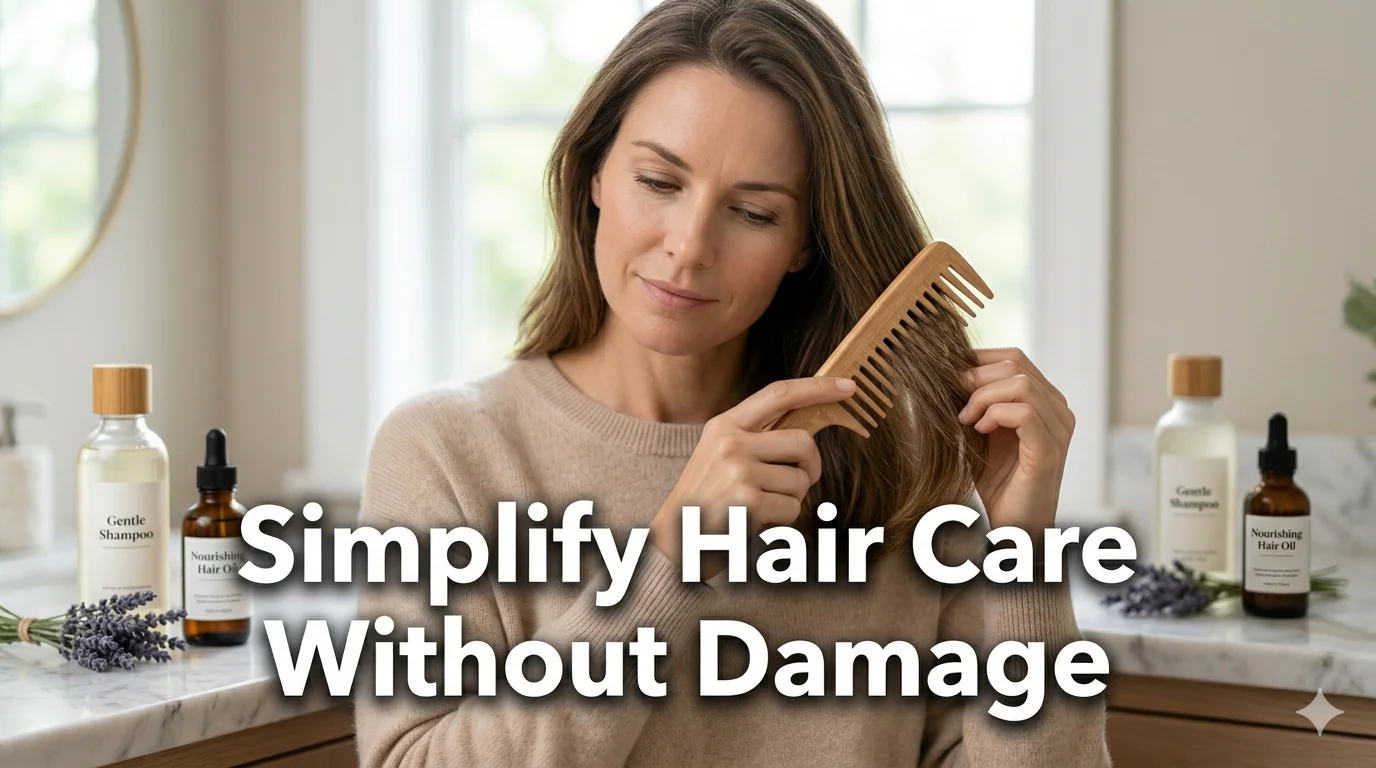
- Gentle Detangling: Use a wide-tooth comb or fingers on damp, conditioned hair, starting from ends and working upward
- Protective Styling: Choose low-manipulation styles that reduce daily stress on hair strands
- Silk or Satin Pillowcases: Reduce friction and breakage during sleep without adding routine steps
These practices protect hair integrity while simplifying your daily routine.
Essential Versus Optional: Building a Minimal Effective Routine
The Non-Negotiables for Healthy Hair
A simplified hair care routine focuses on essential practices that provide maximum benefit with minimum complexity. These non-negotiables form the foundation of healthy hair:
1. Gentle Cleansing
- Use a sulfate-free shampoo appropriate for your hair type and scalp needs
- Wash frequency based on your scalp's oil production, not a fixed schedule
- Focus shampoo on scalp, let suds cleanse lengths as they rinse
2. Adequate Conditioning
- Apply conditioner to mid-lengths and ends where hair is oldest and most prone to dryness
- Use a wide-tooth comb to distribute conditioner and detangle gently
- Rinse with cool water to help seal cuticles and enhance shine
3. Gentle Drying and Styling
- Pat hair dry with a microfiber towel or cotton t-shirt instead of rough rubbing
- Air dry when possible or use low-heat settings with heat protectant
- Style with minimal product and manipulation to reduce stress
4. Basic Protection
- Use a silk or satin pillowcase to reduce nighttime friction
- Protect hair from sun exposure with hats or UV-protective products when needed
- Avoid tight hairstyles that create tension and breakage
These four pillars support hair health without requiring a complex routine or numerous products.
Optional Enhancements Based on Individual Needs
Beyond the essentials, certain practices may benefit specific hair types or concerns. Add these selectively based on your needs:
For Dry or Damaged Hair:
- Weekly deep conditioning treatment with a moisturizing mask
- Lightweight leave-in conditioner or hair oil on ends
- Occasional protein treatment if hair feels overly soft or stretchy
For Fine or Oily Hair:
- Clarifying shampoo once monthly to remove buildup
- Dry shampoo between washes if needed for volume or oil control
- Lightweight styling products that do not weigh hair down
For Curly or Coily Hair:
- Leave-in conditioner or curl cream for definition and moisture
- Protective styling techniques like twists or braids to reduce manipulation
- Regular trims to prevent split ends from traveling up the hair shaft
For Color-Treated Hair:
- Color-safe shampoo and conditioner to preserve vibrancy
- UV protection to prevent color fading
- Occasional gloss or treatment to refresh color and add shine
The key is adding only what your hair genuinely needs, not what marketing suggests you should want.
Practical Strategies for Simplifying Your Hair Routine
Streamline Your Product Collection
Product overload is a common barrier to simplified hair care. To streamline:
- Audit Your Products: Review what you own and eliminate duplicates, expired items, or products that do not work for your hair
- Identify Multipurpose Products: Choose products that serve multiple functions, like a conditioner that also detangles or a styling cream that adds moisture and hold
- Limit Categories: Aim for one shampoo, one conditioner, one styling product, and one treatment as a starting point
- Quality Over Quantity: Invest in a few high-quality products rather than many mediocre ones
- Rotate Seasonally: Adjust products based on seasonal changes rather than keeping everything year-round
A simplified product collection reduces decision fatigue, saves space, and makes it easier to identify what truly benefits your hair.
Establish a Consistent but Flexible Routine
Consistency supports hair health, but rigidity can create stress. Develop a routine that provides structure while allowing flexibility:
Sample Simplified Weekly Routine:
- Wash Day (1-2 times weekly): Gentle shampoo, conditioner, gentle drying, minimal styling
- Mid-Week Refresh: Rinse with water or use dry shampoo if needed, restyle with minimal product
- Treatment Day (Optional, weekly or biweekly): Deep condition or protein treatment based on hair needs
- Daily Maintenance: Gentle detangling if needed, protective styling, silk pillowcase at night
Adjust frequency based on your hair type, lifestyle, and preferences. The goal is a routine that feels manageable and supportive, not burdensome.
Embrace Low-Maintenance Styling
Complex styling routines often contribute to hair damage. Simplify styling with these approaches:
- Work With Air-Dried Texture: Learn to style your hair in its natural air-dried state rather than fighting it with heat
- Master One or Two Easy Styles: Perfect a simple ponytail, braid, or bun that works for multiple occasions
- Use Minimal Product: Apply only what is needed for hold or definition; more is not always better
- Protective Styling: Choose styles that minimize daily manipulation and protect ends from damage
- Embrace Imperfection: Accept that hair does not need to look perfect every day; healthy hair has natural variation
Low-maintenance styling reduces time, product use, and mechanical stress while still allowing you to look and feel your best.
Common Mistakes That Complicate Hair Care and Cause Damage
Overwashing or Using Harsh Cleansers
Many women believe that frequent washing or strong shampoos are necessary for clean hair. In reality, overwashing can strip natural oils, disrupt scalp balance, and lead to dryness or rebound oiliness.
Solution: Wash based on your scalp's needs rather than a fixed schedule. Use gentle, sulfate-free cleansers that remove buildup without stripping. If your scalp feels tight or itchy after washing, your cleanser may be too harsh.
Layering Too Many Products
The belief that more products equal better results leads to product overload, buildup, and confusion about what actually works. Layering incompatible formulations can also cause irritation or reduced effectiveness.
Solution: Start with the essentials and add products only if you identify a specific need. Introduce one new product at a time and observe results before adding more. Less is often more for hair health.
Over-Reliance on Heat Styling
Heat styling can create polished looks but frequent high-heat exposure damages hair over time. Relying on heat to achieve your desired style can create a cycle of damage and repair that complicates your routine.
Solution: Embrace your natural texture and use heat styling sparingly for special occasions. When you do use heat, always apply protectant and use the lowest effective temperature. Explore heatless styling techniques for everyday looks.
Chasing Trends Instead of Listening to Your Hair
The beauty industry constantly promotes new products, techniques, and ideals. Chasing every trend can lead to experimentation that damages hair and complicates your routine without delivering lasting benefits.
Solution: Focus on what works for your unique hair rather than what is popular. Pay attention to how your hair responds to different practices and adjust accordingly. Trust your observations over marketing claims.
Nutrition and Lifestyle Support for Simplified Hair Health
Internal Support for Hair Strength
Healthy hair begins with overall health. Supporting your body from within reduces the need for external interventions to address hair concerns.
Key nutritional considerations:
- Protein: Hair is primarily keratin protein. Ensure adequate intake from sources like lean meats, fish, eggs, legumes, and dairy
- Iron: Iron deficiency can contribute to hair shedding. Include iron-rich foods and pair with vitamin C for absorption
- Omega-3 Fatty Acids: Support scalp health and reduce inflammation. Found in fatty fish, flaxseeds, and walnuts
- B Vitamins: Support hair cell metabolism. Found in whole grains, eggs, nuts, and leafy greens
- Zinc and Selenium: Support hair follicle function. Found in seafood, nuts, seeds, and whole grains
- Hydration: Adequate water intake supports overall cellular health including hair
Rather than focusing on supplements, prioritize balanced nutrition from whole foods. If you suspect deficiencies, consult a healthcare provider for testing and guidance.
Lifestyle Factors That Support Hair Health
Beyond nutrition, several lifestyle practices support simplified hair care:
- Stress Management: Chronic stress can contribute to hair shedding and scalp tension. Practices like mindfulness, exercise, or time in nature support overall wellbeing
- Quality Sleep: Sleep supports tissue repair and hormone regulation. Aim for seven to nine hours per night in a restful environment
- Gentle Movement: Regular physical activity supports circulation, including to the scalp, without adding stress
- Smoking Cessation: Smoking can impair circulation and accelerate hair aging. Quitting supports overall and hair health
- Sun Protection: Protect hair and scalp from UV damage with hats or UV-protective products when spending extended time outdoors
These foundational practices support hair health from the inside out, reducing the need for complex external interventions.
Expert Tips for Long Term Simplified Hair Care
Listen to Your Hair and Adjust Accordingly
Your hair communicates its needs through texture, appearance, and behavior. Learn to read these signals:
- If hair feels dry or brittle, it may need more moisture or less frequent washing
- If hair feels heavy or greasy quickly, it may need lighter products or more frequent cleansing
- If shedding increases, consider stress, nutrition, or hormonal factors
- If scalp feels itchy or irritated, evaluate products or washing frequency
Adjust your simplified routine based on these signals rather than rigidly following a fixed protocol. Flexibility within simplicity supports long-term hair health.
Focus on Prevention Over Correction
Preventing damage is easier and more effective than repairing it. Simplified hair care emphasizes protective practices that maintain hair integrity:
- Use heat protectant before any thermal styling
- Detangle gently on conditioned hair to minimize breakage
- Protect hair from environmental stressors like sun, wind, or chlorine
- Trim ends regularly to prevent split ends from traveling up the shaft
- Avoid tight hairstyles that create tension and traction alopecia
These preventive practices require minimal time and products but yield significant long-term benefits for hair health.
Embrace Progress Over Perfection
Simplified hair care is not about achieving flawless hair every day. It is about creating sustainable practices that support healthy hair over time. Some days your hair will look and feel amazing; other days it may need extra care. Both are normal.
Focus on overall trends rather than daily fluctuations. Is your hair generally healthier, stronger, and more manageable over weeks and months? That is success. Celebrate progress and practice self-compassion when hair does not cooperate.
Frequently Asked Questions
Can I really simplify my hair routine and still have healthy hair
Yes, absolutely. Healthy hair depends more on consistent, gentle practices than on complex routines or numerous products. By focusing on foundational care—gentle cleansing, adequate conditioning, minimal heat and mechanical stress, and basic protection—you can maintain healthy hair with a simplified routine. Many women find that simplification actually improves hair health by reducing damage from over-manipulation and product overload.
How do I know which products to keep and which to eliminate
Start by identifying your hair's core needs based on texture, scalp condition, and lifestyle. Keep products that address these needs effectively. Eliminate duplicates, products that cause irritation or buildup, or items you rarely use. Introduce new products one at a time and observe results before committing. When in doubt, consult a trusted stylist or dermatologist for personalized guidance.
Will simplifying my routine mean I have to give up styling
Not at all. Simplification means focusing on efficient, low-damage styling techniques rather than eliminating styling entirely. You can still achieve polished looks with minimal products and gentle methods. Embracing your natural texture often reduces the need for extensive styling while still allowing you to look and feel your best.
How long does it take to see results from a simplified hair care routine
Initial improvements in hair feel and manageability may be noticeable within two to four weeks of consistent simplified care. Visible improvements in shine, strength, and reduced breakage typically emerge after six to eight weeks. Significant changes in hair health and growth patterns may take three to six months as your hair cycle responds to reduced stress and improved care. Patience and consistency yield the best results.
Can simplified hair care work for all hair types
Yes, the principles of gentle, simplified care apply to all hair types. Specific product choices and techniques may vary based on texture, density, and concerns, but the core approach—minimal manipulation, gentle products, scalp focus, and protective practices—supports healthy hair regardless of type. Adapt the essentials to your unique hair while maintaining the simplicity that reduces damage.
Conclusion: Embracing Simplicity for Healthier Hair
Simplifying hair care without damage is not about deprivation or settling for less. It is about focusing on what truly matters for hair health while eliminating unnecessary complexity that can cause harm. By embracing gentle practices, working with your natural texture, and prioritizing scalp health, you create a foundation for healthy, resilient hair that requires less effort to maintain.
This approach honors both your hair and your time. It reduces decision fatigue, saves money, and creates space for the activities and relationships that enrich your life. Healthy hair becomes a natural outcome of consistent, compassionate care rather than a constant pursuit requiring endless products and interventions.
As you simplify your hair care routine, remember that progress matters more than perfection. Some days your hair will thrive; other days it may need extra attention. Both are part of the journey. Trust your hair's resilience, listen to its needs, and respond with gentle, informed care.
Your hair has carried you through every chapter of your life. By simplifying your care routine, you honor its strength and support its health for the chapters to come. Embrace simplicity not as limitation but as liberation—the freedom to have healthy, beautiful hair without the burden of complexity. Your hair, and your peace of mind, will thank you.


0 Comments