

Soft Living: New Status Symbol for Modern Women
Understanding Soft Living: The Lifestyle Redefining Success
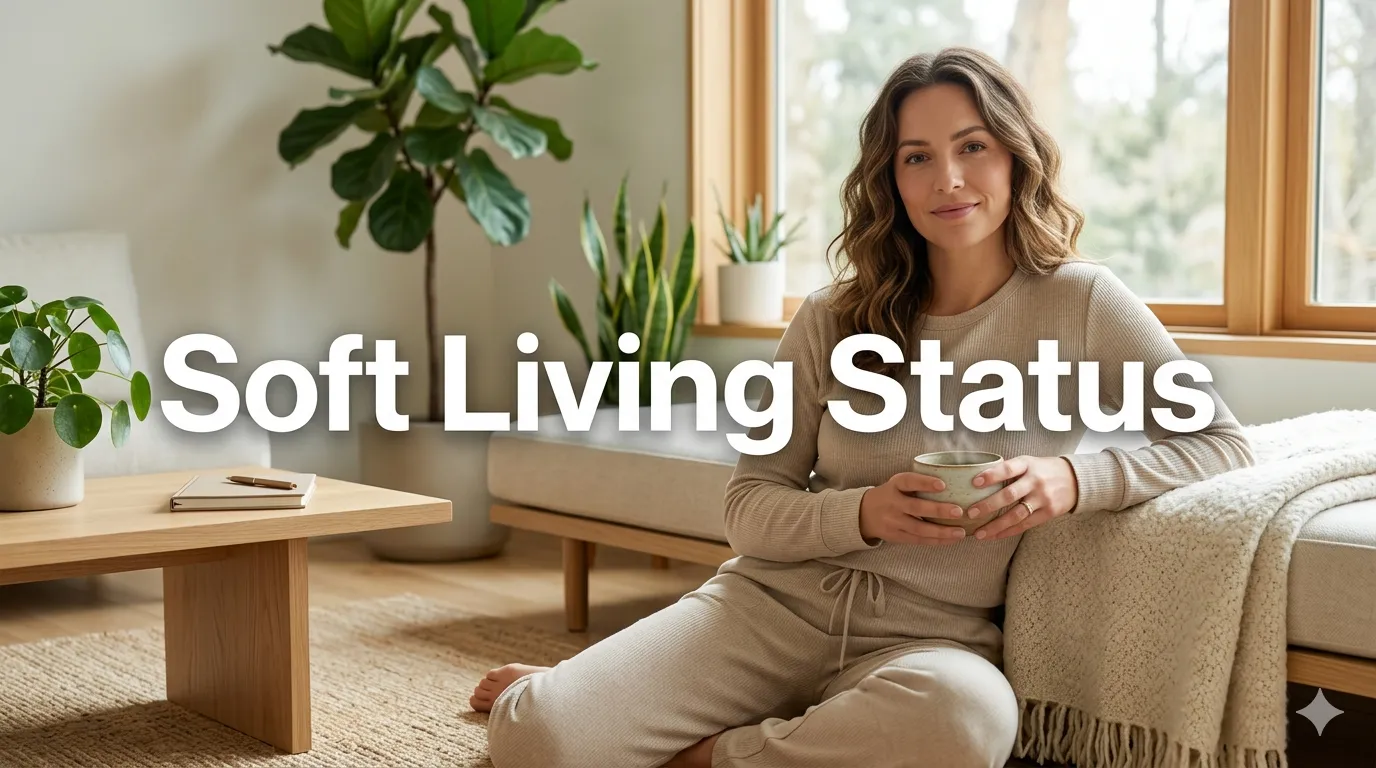
In a world that has long celebrated hustle, grind, and relentless productivity, a quiet revolution is taking place. Modern women are increasingly embracing "soft living"—a lifestyle philosophy that prioritizes ease, intentionality, and gentle boundaries over burnout and constant achievement. What was once dismissed as laziness or lack of ambition is now being recognized as a sophisticated, intentional choice—and increasingly, a new status symbol.
Soft living is not about doing nothing. It is about doing what matters, in a way that sustains rather than depletes. It is choosing quality over quantity, rest over rush, and inner peace over external validation. For women who have spent generations proving their worth through overwork, this shift represents something radical: the freedom to define success on their own terms.
What exactly is soft living? At its core, soft living is a mindset and lifestyle approach that emphasizes:
- Setting firm boundaries to protect time, energy, and mental health
- Prioritizing rest, recovery, and joy as non-negotiable elements of life
- Making intentional choices about work, relationships, and consumption
- Embracing simplicity and rejecting the pressure to do it all
- Valuing presence and experience over accumulation and achievement
This trend has gained momentum through social media, wellness culture, and a broader societal reckoning with burnout. But for modern women, soft living carries additional significance—it is a reclamation of time, energy, and self-worth in a world that has historically demanded their constant sacrifice.
Why Soft Living Has Become a Status Symbol
Traditionally, status was signaled through visible markers: luxury goods, demanding careers, packed social calendars, and the ability to "do it all." In 2026, a new currency of status is emerging—one measured not by how much you can endure, but by how well you can protect your peace.
The shifting definition of success:
- Time as luxury: In an always-on culture, having uninterrupted time for rest, hobbies, or simply being is increasingly rare—and therefore valuable.
- Energy management: The ability to say no, delegate, and protect your mental bandwidth signals emotional intelligence and self-respect.
- Intentional consumption: Choosing fewer, higher-quality items and experiences reflects discernment rather than deprivation.
- Boundary-setting: Clearly communicating limits in work and relationships demonstrates confidence and self-knowledge.
- Wellness as priority: Investing in sleep, nutrition, and mental health is seen as sophisticated self-care, not indulgence.
For modern women, embracing soft living is a subtle but powerful statement: I value my wellbeing enough to structure my life around it. This is not retreat—it is strategic reorientation.
What Makes Soft Living a Status Symbol Now?
Soft living has become aspirational because it requires resources that are increasingly scarce: time, financial stability, emotional support, and the confidence to defy societal expectations. Women who can afford to prioritize ease—by working flexible hours, outsourcing tasks, or simply giving themselves permission to rest—are signaling a form of privilege that is both practical and philosophical. It is status redefined for an era that values sustainability over spectacle.
The Core Pillars of a Soft Living Lifestyle
Soft living is not a single practice but a constellation of choices that create a gentler, more intentional way of being. Understanding its key pillars helps you adopt what resonates with your life.
Pillar 1: Radical Rest and Recovery
Rest is not a reward for exhaustion—it is a foundational requirement for a well-lived life. Soft living treats rest as sacred, not optional.
Practical applications:
- Scheduling rest blocks in your calendar as non-negotiable appointments
- Creating evening rituals that signal your body it is time to unwind
- Taking genuine breaks during the day without guilt or multitasking
- Embracing naps, slow mornings, or digital detoxes as legitimate self-care
The goal is not laziness but sustainability. When you rest intentionally, you show up more fully for the moments that matter.
Pillar 2: Intentional Boundaries
Boundaries are the architecture of soft living. They create the space where ease can exist.
Key boundary practices:
- Learning to say no without over-explaining or apologizing
- Setting clear work-life separation, especially in remote or hybrid arrangements
- Limiting exposure to draining relationships, news cycles, or social media
- Communicating your needs clearly and calmly in personal and professional contexts
Boundaries are not walls—they are gates you control. They allow you to curate what enters your life and energy.
Pillar 3: Mindful Consumption
Soft living extends to how you spend money, time, and attention. It favors quality, meaning, and longevity over quantity and impulse.
Mindful consumption in practice:
- Buying fewer, better-made items that bring genuine joy or utility
- Choosing experiences over possessions when possible
- Unsubscribing from marketing that triggers FOMO or inadequacy
- Supporting brands aligned with your values around sustainability and ethics
This approach reduces decision fatigue, clutter, and the pressure to keep up—freeing mental space for what truly matters.
Pillar 4: Gentle Productivity
Soft living does not reject ambition—it redefines how you pursue goals. Gentle productivity focuses on sustainable progress rather than frantic output.
Principles of gentle productivity:
- Working in focused bursts with built-in rest, rather than marathon sessions
- Prioritizing tasks that align with your values and long-term vision
- Celebrating small wins and progress, not just major milestones
- Allowing flexibility when energy or circumstances shift
This approach reduces burnout and increases satisfaction, making achievement feel nourishing rather than depleting.
Pillar 5: Embodied Presence
Soft living invites you to inhabit your life fully, rather than rushing through it. Presence is both a practice and a privilege.
Ways to cultivate presence:
- Practicing mindfulness or meditation, even for just a few minutes daily
- Engaging your senses: noticing textures, scents, sounds, and flavors
- Putting away devices during meals, conversations, or quiet moments
- Moving your body in ways that feel good, not punitive
Presence transforms ordinary moments into sources of joy and grounding, reinforcing the value of a softened pace.
Soft Living vs. Hustle Culture: A Fundamental Shift
For decades, hustle culture dominated narratives of success, especially for women striving to prove themselves in professional and personal spheres. Soft living represents a conscious departure from that paradigm.
Key differences:
- Hustle culture: Values constant activity, equates busyness with worth, glorifies sacrifice
- Soft living: Values intentional action, equates boundaries with wisdom, honors sustainability
- Hustle culture: Measures success by external metrics: titles, income, visibility
- Soft living: Measures success by internal metrics: peace, fulfillment, alignment
- Hustle culture: Encourages comparison and competition
- Soft living: Encourages self-compassion and community
This shift is not about rejecting ambition but about pursuing it from a place of wholeness rather than lack. Soft living asks: What if success felt good, not just looked impressive?
Is Soft Living Just Privilege in Disguise?
Critics argue that soft living is only accessible to those with financial security, flexible jobs, or supportive networks. This is a valid concern. However, the core principles of soft living—intentionality, boundary-setting, and self-respect—can be adapted to any circumstance. Even small acts, like protecting five minutes of quiet or saying no to one draining commitment, are expressions of soft living. The goal is progress, not perfection, and the mindset itself is available to anyone willing to prioritize their wellbeing.
How to Embrace Soft Living: Practical First Steps
Adopting a soft living approach does not require a complete life overhaul. Small, consistent shifts can create meaningful change.
Start with a Life Audit
Take stock of how you currently spend your time, energy, and attention. Ask yourself:
- What activities drain me versus energize me?
- Where am I saying yes out of obligation rather than desire?
- What would I do differently if I prioritized ease?
This reflection creates clarity about where to focus your soft living efforts.
Implement One Boundary at a Time
Choose one area to protect. Examples:
- No work emails after 7 PM
- One screen-free evening per week
- Declining social events that feel obligatory rather than joyful
Start small to build confidence and momentum.
Curate Your Environment
Your surroundings influence your mindset. Create spaces that support soft living:
- Designate a cozy corner for rest or reflection
- Reduce visual clutter to calm your nervous system
- Incorporate elements that bring you peace: plants, soft lighting, meaningful objects
Practice Gentle Self-Talk
Soft living begins internally. Notice when your inner voice is critical or demanding, and consciously shift to kindness.
Reframe examples:
- Instead of "I should be doing more," try "I am enough as I am right now"
- Instead of "I failed," try "I learned something valuable"
- Instead of "I don't have time," try "I am choosing to prioritize this"
Compassionate self-talk reduces internal pressure and creates space for ease.
Build a Support System
Soft living is easier with community. Connect with others who value intentionality:
- Join online or local groups focused on mindful living
- Share your boundaries with loved ones so they can support you
- Find an accountability partner for gentle goal-setting
You do not have to soften your life alone.
The Psychology Behind the Soft Living Trend
The rise of soft living reflects broader psychological and cultural shifts. Understanding these drivers helps contextualize the trend.
Burnout as catalyst: Years of pandemic stress, economic uncertainty, and information overload have left many women exhausted. Soft living emerges as a protective response—a way to preserve mental and physical health in a demanding world.
Rejection of performative femininity: Traditional expectations often require women to be nurturing, accommodating, and endlessly available. Soft living challenges this by centering the woman's own needs and energy.
Values realignment: As climate concerns, social justice, and mental health awareness grow, many women are reevaluating what matters. Soft living aligns with values of sustainability, authenticity, and compassion.
Generational shift: Younger generations, particularly Millennials and Gen Z, are more likely to prioritize wellbeing over traditional markers of success. Soft living resonates with this worldview.
These factors converge to make soft living not just personally appealing but culturally significant—a quiet rebellion against systems that have long undervalued women's rest and autonomy.
Common Misconceptions About Soft Living
As with any trend, soft living is sometimes misunderstood. Clarifying these misconceptions helps you embrace it authentically.
Misconception #1: Soft living means being lazy or unambitious
Reality: Soft living is about strategic energy management, not avoidance. It enables sustained ambition by preventing burnout.
Misconception #2: You need money or privilege to live softly
Reality: While resources help, the core mindset—intentionality, boundaries, self-respect—is accessible at any income level. Soft living adapts to your circumstances.
Misconception #3: Soft living is selfish
Reality: Caring for yourself enables you to show up more fully for others. You cannot pour from an empty cup.
Misconception #4: Soft living requires a complete lifestyle overhaul
Reality: Small, consistent shifts create meaningful change. Start where you are.
Misconception #5: Soft living is a fleeting trend
Reality: While the term may evolve, the underlying values—rest, intentionality, self-respect—address timeless human needs.
FAQs About Soft Living for Modern Women
How do I start practicing soft living if my life feels chaotic?
Begin with one small, manageable change. Protect five minutes of quiet each morning, say no to one non-essential request this week, or create a simple evening ritual. Consistency matters more than scale. As these small practices become habits, you can gradually expand your soft living approach.
Will embracing soft living hurt my career or relationships?
Initially, setting boundaries may feel uncomfortable, especially if others are accustomed to your constant availability. However, clear boundaries often improve relationships by reducing resentment and increasing authenticity. Professionally, sustainable work habits prevent burnout and can enhance long-term performance. Communicate your choices calmly and confidently.
How do I handle guilt when prioritizing my own needs?
Guilt is common, especially for women socialized to prioritize others. Acknowledge the feeling without letting it dictate your actions. Remind yourself that self-care is not selfish—it is necessary. Over time, as you experience the benefits of soft living, guilt typically diminishes.
Can I practice soft living while raising children or caring for others?
Absolutely. Soft living with dependents looks like setting realistic expectations, asking for help, and carving out small moments for yourself. It may mean lower standards for housekeeping or simpler meals. The goal is not perfection but sustainability. Even brief pauses of presence or rest can make a difference.
Is soft living compatible with ambitious goals?
Yes—soft living and ambition are not opposites. In fact, protecting your energy through boundaries and rest can enhance focus and creativity. The key is pursuing goals from a place of alignment rather than fear or external pressure. Define success on your own terms.
How do I respond to people who don't understand soft living?
You do not owe anyone a detailed explanation. A simple, "This approach works well for me right now" is sufficient. If someone persists, you might share how soft living helps you show up more fully in your relationships or work. Ultimately, your choices do not require universal approval.
The Future of Soft Living: Beyond the Trend
While "soft living" may be the current label, the underlying values point to a lasting cultural shift. As more women embrace this approach, we may see broader changes:
- Workplaces adopting more flexible, humane policies
- Wellness culture emphasizing sustainability over extremes
- Consumer markets prioritizing quality and ethics over fast consumption
- Social narratives celebrating rest and boundaries as strengths
Soft living is not just a personal lifestyle—it is a quiet catalyst for collective change. By valuing ease, intentionality, and self-respect, modern women are redefining what it means to live well.
Conclusion: Soft Living as a Radical Act of Self-Respect
Soft living is more than a trend—it is a reclamation. For modern women who have been taught to equate worth with productivity, choosing ease is a radical act of self-respect. It is a declaration that your time, energy, and peace are valuable, and that you have the right to protect them.
This new status symbol is not about what you accumulate but about what you preserve: your wellbeing, your boundaries, your joy. It is a quiet confidence that comes from knowing your worth is not contingent on constant performance.
Embracing soft living does not require perfection or privilege. It begins with a single choice: to treat yourself with the same kindness you so freely offer others. From that choice, a gentler, more intentional life can unfold.
As you navigate the demands of modern life, remember that softness is not weakness—it is wisdom. In a world that often feels hard, choosing to live softly is a powerful statement. Your peace is your power. Protect it, nurture it, and let it guide you toward a life that feels as good as it looks.


0 Comments