

Why Hair Becomes Less Responsive to Products
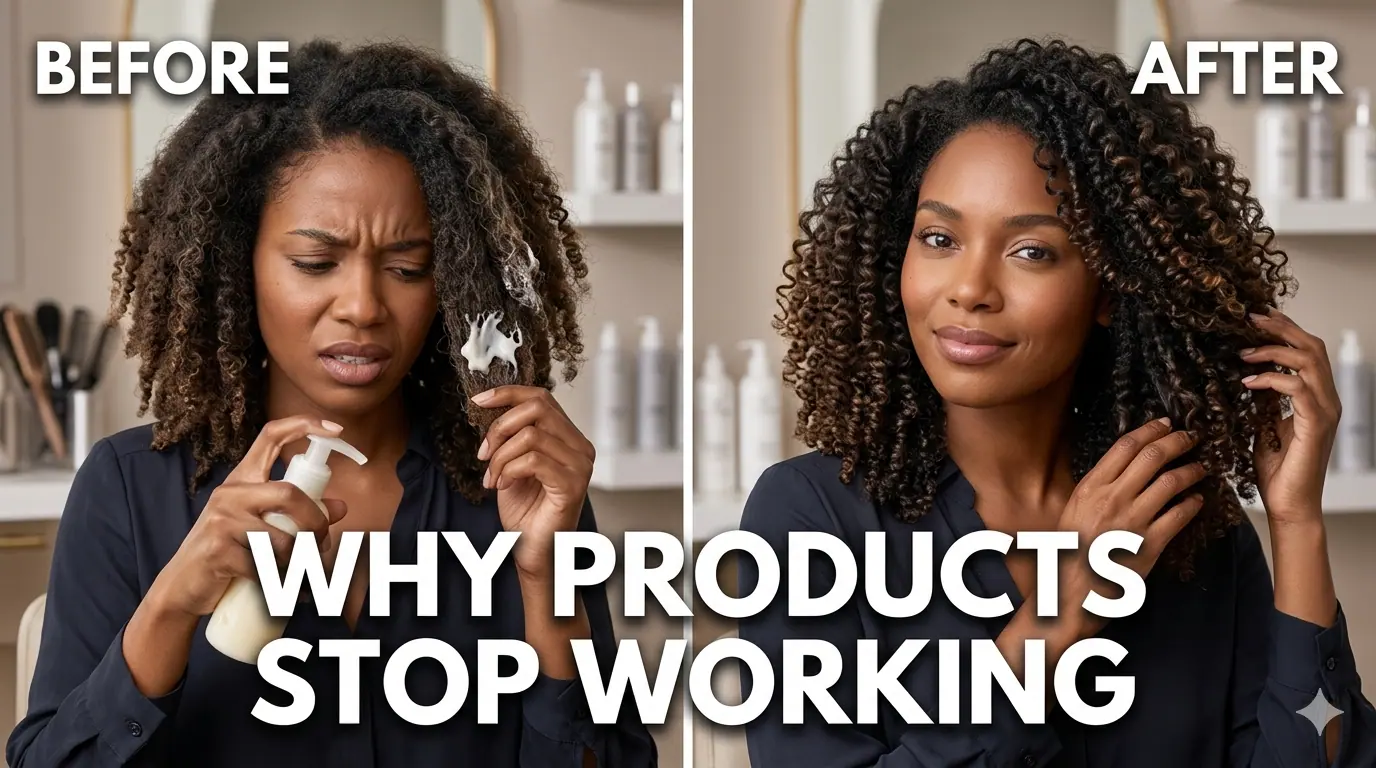
Introduction: When Your Favorite Products Suddenly Stop Working
You've found your holy grail shampoo, your miracle mask, your perfect styling cream. For months, they delivered incredible results—shine, softness, manageability, movement. Then, seemingly overnight, something shifts. The same products that once transformed your hair now seem to sit on the surface, deliver lackluster results, or leave your hair feeling unchanged. You apply more product, try different techniques, even switch brands—but nothing seems to restore that initial magic.
If this sounds familiar, you're experiencing a common but rarely discussed phenomenon: hair becoming less responsive to products. This isn't about product quality, your application technique, or even your hair "getting used to" formulas in a mystical sense. It's about measurable biological and chemical changes that affect how your hair interacts with the products you use.
Understanding why hair loses product responsiveness is the first step toward restoring effectiveness. This comprehensive guide explores the science behind product absorption and efficacy, identifies the hidden culprits that block product performance, and provides evidence-based strategies to reset your hair's receptivity. Because when products work as intended, healthy, beautiful hair follows.
How Hair Absorbs Products: The Science of Efficacy
Before addressing why responsiveness fades, it's essential to understand how healthy hair interacts with products in the first place.
The Pathway of Product Absorption
For a product to work, its active ingredients must reach their target. This process involves several steps:
- Surface contact: Product must evenly coat the hair shaft to begin working
- Cuticle penetration: Ingredients must pass through or between cuticle scales to reach the cortex
- Binding or action: Actives must bind to hair proteins, lipids, or moisture to deliver benefits
- Rinse or retention: Depending on the product, ingredients either rinse away after delivering benefits or remain to provide ongoing effects
When any step in this pathway is blocked, product efficacy diminishes—regardless of formula quality.
Factors That Influence Product Responsiveness
Multiple variables affect how well hair receives and responds to products:
- Cuticle condition: Flat, intact cuticles allow even product distribution; lifted or damaged cuticles create uneven absorption
- Porosity level: Low-porosity hair resists product penetration; high-porosity hair absorbs too quickly, preventing even distribution
- Surface buildup: Residue from previous products, minerals, or environmental pollutants creates a barrier
- Moisture-protein balance: Imbalanced hair may reject certain ingredients or absorb them unevenly
- Scalp health: A congested or inflamed scalp affects product performance at the root
- Water quality: Hard water minerals can bind to ingredients, reducing their availability
Why Responsiveness Changes Over Time
Hair isn't static. It responds to internal shifts (hormones, nutrition, health) and external factors (environment, styling, product use). These changes can alter how hair interacts with products:
- Cuticle damage accumulates, changing absorption patterns
- Buildup layers create physical barriers to penetration
- Hair's moisture-protein needs evolve, making previously effective formulas mismatched
- Scalp condition shifts, affecting root-level product performance
Understanding these dynamics helps you adapt your routine rather than simply switching products in frustration.
Featured Snippet: Hair product efficacy depends on cuticle condition, porosity level, surface buildup, moisture-protein balance, scalp health, and water quality. Responsiveness changes when these factors shift due to damage accumulation, buildup layers, evolving hair needs, or scalp condition changes. Identifying the specific barrier helps restore product effectiveness.
Culprit 1: Product Buildup Creating a Physical Barrier
The most common reason hair stops responding to products is simple: a layer of residue blocks active ingredients from reaching their target.
How Buildup Blocks Product Performance
- Physical barrier: Silicones, polymers, oils, and waxes accumulate on the hair surface, preventing new products from contacting the cuticle
- Ingredient binding: Buildup can bind to active ingredients, neutralizing their efficacy before they penetrate
- Uneven distribution: Patchy buildup causes products to absorb inconsistently, creating spotty results
- Weight accumulation: Heavy residue weighs hair down, masking the benefits of volumizing or lifting products
Common Buildup Sources
- Silicones: Dimethicone, cyclomethicone, amodimethicone create smoothness but accumulate without proper cleansing
- Styling polymers: PVP, VA/crotonates, acrylates provide hold but leave residue
- Heavy oils and butters: Shea butter, coconut oil, castor oil nourish but can build up on fine or low-porosity hair
- Mineral deposits: Hard water minerals (calcium, magnesium) bind to hair and products
- Environmental pollutants: Particulate matter, smoke, and dust adhere to hair surfaces
Signs Buildup Is Blocking Product Absorption
- Products feel like they "sit on top" of hair rather than absorbing
- Hair feels coated, heavy, or greasy shortly after washing
- Styling products don't hold as well or distribute evenly
- Shine appears waxy or artificial rather than natural
- Scalp feels itchy, congested, or flaky despite regular washing
Resetting Hair for Product Absorption
Removing buildup requires strategic cleansing that eliminates residue without damaging hair:
- Clarifying shampoo: Use a gentle clarifying formula with cocamidopropyl betaine or decyl glucoside every 2-4 weeks
- Apple cider vinegar rinse: Mix 1 part ACV with 3 parts water; rinse after shampooing to dissolve mineral and product buildup
- Chelating treatments: For hard water areas, use products with EDTA, citric acid, or phytic acid to remove mineral deposits
- Pre-shampoo oil treatment: Apply light oil (jojoba, argan) before shampooing to help lift silicone and polymer residue
- Scalp exfoliation: Use a gentle scalp scrub or brush weekly to remove root-level buildup
Balance tip: Clarify only as needed. Over-clarifying strips natural oils and can worsen product absorption by damaging the cuticle.
Featured Snippet: Product buildup blocks absorption by creating physical barriers, binding active ingredients, and causing uneven distribution. Signs include products sitting on hair, heavy/coated feel, poor styling hold, waxy shine, and scalp congestion. Reset with clarifying shampoo every 2-4 weeks, ACV rinses, chelating treatments for hard water, pre-shampoo oil treatments, and gentle scalp exfoliation.
Culprit 2: Changing Hair Porosity and Absorption Patterns
Hair porosity—the ability to absorb and retain moisture—significantly influences how products perform. When porosity changes, previously effective products may stop working.
Understanding Porosity Levels
- Low porosity: Cuticles lie flat and tight, resisting product penetration. Products tend to sit on the surface.
- Normal porosity: Cuticles are slightly raised, allowing balanced absorption and retention.
- High porosity: Cuticles are lifted or damaged, absorbing products quickly but struggling to retain them.
How Porosity Changes Over Time
Porosity isn't fixed. It shifts due to:
- Chemical treatments: Coloring, bleaching, perming, or relaxing lift cuticles, increasing porosity
- Heat styling: Repeated heat exposure damages cuticles, raising porosity
- Environmental damage: UV radiation, pollution, and hard water degrade cuticle integrity
- Aging: Natural wear and tear gradually increases porosity over decades
- Hormonal shifts: Changes in sebum production affect cuticle hydration and alignment
How Porosity Shifts Affect Product Performance
If Porosity Increases (Low → Normal/High)
- Previously effective heavy products may now absorb too quickly, leaving hair under-nourished
- Lightweight products may not provide enough coverage or retention
- Protein treatments may cause stiffness if hair now absorbs them too rapidly
If Porosity Decreases (High → Normal/Low)
- Previously effective lightweight products may now sit on the surface without penetrating
- Heat or acidic rinses may be needed to open cuticles for absorption
- Products may need more time or warmth to work effectively
Testing and Adapting to Your Current Porosity
The float test:
- Place a clean strand of hair in a glass of room-temperature water
- Observe for 2-4 minutes
- Floats on surface: Low porosity; needs heat or acidic rinses to open cuticles
- Sinks slowly: Normal porosity; balanced absorption
- Sinks quickly: High porosity; needs protein and sealing oils to retain products
Adapt your routine:
- Low porosity: Use lightweight, water-based products; apply to damp hair; use gentle heat to enhance absorption
- Normal porosity: Most products work well; maintain balance with alternating moisture and protein
- High porosity: Use protein treatments to fill gaps; seal with oils to lock in moisture; avoid over-washing
Featured Snippet: Hair porosity affects product absorption: low porosity resists penetration; high porosity absorbs quickly but retains poorly. Porosity changes due to chemical treatments, heat styling, environmental damage, aging, or hormonal shifts. Test porosity with the float test; adapt products accordingly—lightweight formulas and heat for low porosity; protein and sealing oils for high porosity.
Culprit 3: Moisture-Protein Imbalance Disrupting Product Efficacy
Healthy hair requires a delicate balance between moisture (hydration) and protein (structural strength). When this balance shifts, products may stop working because hair's needs have changed.
How Imbalance Blocks Product Performance
Too Much Moisture, Not Enough Protein
- Hair becomes overly soft and weak, unable to "hold" styling products effectively
- Hydrating products may feel beneficial initially but lead to limp, unresponsive hair
- Protein-based products may be rejected or cause uneven texture
Too Much Protein, Not Enough Moisture
- Hair becomes stiff and brittle, resisting absorption of hydrating products
- Protein treatments may cause further stiffness or "crunchy" texture
- Moisturizing products may sit on the surface without penetrating rigid structure
Signs Imbalance Is Affecting Product Response
- Products that once delivered results now feel ineffective or cause adverse reactions
- Hair feels mushy when wet but frizzy when dry (moisture excess)
- Hair feels stiff, straw-like, or brittle despite using hydrating products (protein excess)
- Styling products don't hold or distribute evenly
- Deep conditioning treatments provide temporary relief but no lasting improvement
Restoring Balance for Product Responsiveness
The strand elasticity test:
- Take a single strand of clean, wet hair
- Gently stretch it between your fingers
- Healthy: Stretches 20-30% and returns to original length
- Moisture-deficient: Breaks immediately with little stretch
- Protein-deficient: Stretches excessively without returning, or feels mushy
Adjust based on results:
- If protein-deficient: Incorporate hydrolyzed keratin, wheat protein, or silk amino acids every 2-4 weeks; follow with moisture to maintain flexibility
- If moisture-deficient: Focus on humectants (glycerin, hyaluronic acid) and emollients (squalane, argan oil); limit protein treatments
- For maintenance: Alternate moisture and protein treatments monthly; reassess with strand tests
Featured Snippet: Moisture-protein imbalance disrupts product efficacy: excess moisture makes hair mushy and unresponsive to styling; excess protein makes hair stiff and resistant to hydration. Test elasticity: healthy hair stretches 20-30% and returns. Restore balance with targeted protein or moisture treatments; alternate monthly and reassess with strand tests.
Culprit 4: Scalp Health and Root-Level Product Performance
Product responsiveness isn't just about the hair shaft—scalp health significantly influences how products perform, especially at the roots where new growth emerges.
How Scalp Condition Affects Product Efficacy
- Sebum production: Excess oil can bind to products, preventing absorption; insufficient oil can cause products to absorb too quickly
- Scalp buildup: Dead skin cells, product residue, and environmental pollutants at the root block product penetration
- Inflammation or sensitivity: An irritated scalp may react negatively to ingredients that previously worked well
- Microbiome imbalance: Disrupted scalp flora can affect how products interact with skin and hair follicles
Signs Scalp Issues Are Blocking Product Performance
- Products work well on mid-lengths and ends but not at the roots
- Scalp feels itchy, tight, or flaky despite using gentle products
- Roots become oily quickly while ends remain dry
- New growth feels different or responds differently to products than older hair
- Scalp-focused treatments (shampoos, serums) cause irritation or provide no benefit
Supporting Scalp Health for Better Product Absorption
- Gentle cleansing: Use sulfate-free shampoos that cleanse without stripping natural oils
- Scalp exfoliation: Use a gentle scalp scrub or brush 1-2x weekly to remove buildup and boost circulation
- Targeted treatments: Apply scalp serums with niacinamide, salicylic acid, or tea tree oil to address specific concerns
- Avoid product overload: Don't apply heavy conditioners or oils directly to the scalp unless specifically formulated for scalp use
- Massage gently: Use fingertips (not nails) to massage scalp during washing to boost circulation without irritation
Featured Snippet: Scalp health affects root-level product performance: excess sebum, buildup, inflammation, or microbiome imbalance can block absorption. Signs include products working on ends but not roots, scalp irritation, oily roots with dry ends, or new growth responding differently. Support scalp health with gentle cleansing, weekly exfoliation, targeted serums, and gentle massage.
Culprit 5: Hormonal and Internal Shifts Changing Hair Needs
Internal factors—hormones, nutrition, stress, health conditions—can alter hair's structure and needs, making previously effective products mismatched.
Hormonal Influences on Hair Responsiveness
- Menstrual cycle: Fluctuating estrogen and progesterone can temporarily alter sebum production and hair texture
- Pregnancy and postpartum: Dramatic hormonal shifts affect hair growth cycles, texture, and product needs
- Perimenopause and menopause: Declining estrogen changes hair density, texture, and moisture retention
- Thyroid function: Hypo- or hyperthyroidism affects hair strength, growth, and product absorption
- PCOS or androgen excess: Elevated androgens can increase oiliness and alter hair texture
Other Internal Factors
- Nutritional status: Deficiencies in protein, iron, biotin, or omega-3s affect hair structure and product response
- Stress levels: Chronic stress elevates cortisol, which can alter hair growth cycles and quality
- Medications: Certain drugs affect hair texture, growth, or scalp condition
- Hydration status: Dehydrated body = dehydrated hair, affecting product absorption
Adapting Your Routine to Internal Shifts
- Track patterns: Note when product responsiveness changes and correlate with cycle, stress, or health changes
- Adjust seasonally: Hair needs may shift with climate; lighter products in humidity, richer in dry conditions
- Support from within: Prioritize protein, healthy fats, vitamins, and hydration to support hair health internally
- Consult professionals: If hormonal or health issues are suspected, seek guidance from a healthcare provider or trichologist
Featured Snippet: Internal shifts affect hair responsiveness: hormonal fluctuations (cycle, pregnancy, menopause), thyroid function, nutritional status, stress, and medications can alter hair structure and needs. Track patterns, adjust routines seasonally, support hair internally with nutrition and hydration, and consult professionals for persistent issues.
Restoring Product Responsiveness: A Strategic Reset Protocol
When hair stops responding to products, a strategic reset can restore absorption and efficacy. Follow this evidence-based protocol.
Phase 1: Clarify and Reset (Week 1)
Goal: Remove buildup and create a clean foundation for product absorption.
- Clarifying wash: Use a gentle clarifying shampoo to remove product residue, minerals, and environmental buildup
- ACV rinse: Follow with apple cider vinegar rinse (1:3 with water) to dissolve minerals and flatten cuticles
- Deep condition: Apply a balanced hydrating mask to replenish moisture after clarifying
- Avoid styling products: Give hair a break from heavy stylers during reset week
Phase 2: Assess and Reintroduce (Weeks 2-3)
Goal: Identify current hair needs and reintroduce products strategically.
- Porosity test: Perform float test to determine current absorption patterns
- Elasticity test: Assess moisture-protein balance with strand stretch test
- Reintroduce one product at a time: Start with your most essential product; wait 3-4 days before adding another
- Observe response: Note how hair feels, looks, and performs with each reintroduced product
Phase 3: Optimize and Maintain (Week 4+)
Goal: Establish a sustainable routine that maintains responsiveness.
- Clarify strategically: Schedule clarifying washes every 2-4 weeks based on product use and water quality
- Alternate treatments: Rotate moisture and protein treatments monthly based on strand tests
- Support scalp health: Incorporate gentle scalp exfoliation 1-2x weekly
- Monitor internal factors: Adjust routine seasonally or with hormonal/lifestyle changes
Troubleshooting Common Reset Challenges
- If hair feels dry after clarifying: Follow with a rich hydrating mask; reduce clarifying frequency
- If products still don't absorb: Try applying to damp (not dry) hair; use gentle heat to open cuticles
- If scalp becomes irritated: Switch to fragrance-free, sulfate-free formulas; consult a professional if irritation persists
- If results are inconsistent: Keep a product journal to track what works under what conditions
Featured Snippet: Restore product responsiveness with a 3-phase reset: Phase 1 (Week 1)—clarify with gentle shampoo, ACV rinse, deep condition, avoid stylers; Phase 2 (Weeks 2-3)—test porosity/elasticity, reintroduce one product at a time, observe response; Phase 3 (Week 4+)—clarify every 2-4 weeks, alternate treatments, support scalp health, monitor internal factors.
Preventing Future Responsiveness Loss: Long-Term Strategies
Once you've restored product efficacy, these habits help maintain responsiveness long-term.
Smart Product Selection and Rotation
- Choose pH-balanced formulas: Products around pH 4.5-5.5 support cuticle health and absorption
- Rotate product types: Alternate silicone-based and silicone-free products to prevent buildup
- Match products to current needs: Reassess porosity and balance quarterly; adjust formulas accordingly
- Read ingredient lists: Avoid harsh sulfates, drying alcohols, or known irritants if your hair is sensitive
Consistent Maintenance Practices
- Regular clarifying: Schedule gentle clarifying washes every 2-4 weeks to prevent buildup accumulation
- Scalp care routine: Gentle exfoliation and targeted serums maintain root-level product absorption
- Protective styling: Minimize mechanical stress that damages cuticles and alters porosity
- Heat and chemical caution: Limit exposure to preserve cuticle integrity and consistent absorption
Internal Support for External Results
- Nutrition: Adequate protein, healthy fats, vitamins, and minerals support hair structure from within
- Hydration: Drink adequate water daily; dehydrated body = dehydrated hair
- Stress management: Chronic stress affects hair quality; incorporate daily stress-reduction practices
- Sleep quality: Prioritize 7-9 hours nightly; hair repair peaks during deep sleep
Seasonal and Life-Stage Adaptation
- Climate adjustments: Lighter products in humidity; richer formulas in dry/cold conditions
- Hormonal awareness: Anticipate changes during cycle, pregnancy, or menopause; adjust routine proactively
- Age-related shifts: As hair naturally changes with age, adapt products to evolving needs rather than clinging to past favorites
Featured Snippet: Prevent future responsiveness loss: choose pH-balanced formulas, rotate product types, match products to current needs; clarify regularly, support scalp health, protect from damage; nourish internally with nutrition, hydration, stress management, sleep; adapt routines seasonally and with life-stage changes.
Frequently Asked Questions (FAQs)
Can hair really "get used to" products and stop responding?
Not in the mystical sense of "building tolerance." However, buildup accumulation, changing porosity, or evolving hair needs can make previously effective products seem less effective. The solution isn't constantly switching products but identifying and addressing the underlying barrier to absorption.
How often should I clarify to maintain product responsiveness?
Most people benefit from clarifying every 2-4 weeks. If you use heavy silicones, live in a hard water area, or style frequently, you may need weekly clarification. If your hair is dry or color-treated, clarify less frequently (every 4-6 weeks) and follow with deep conditioning.
Why do some products work on my ends but not my roots?
This often indicates scalp or root-level issues: excess sebum, buildup, or inflammation at the scalp can block absorption. New growth may also have different porosity than older, chemically-treated hair. Focus scalp care on gentle cleansing and targeted treatments; apply products strategically based on section needs.
Can hormonal changes really affect how products work?
Yes. Hormones influence sebum production, hair texture, growth cycles, and scalp condition. Shifts during menstrual cycles, pregnancy, postpartum, or menopause can alter how hair absorbs and responds to products. Track patterns and adjust your routine to match your current hormonal state.
Should I stop using a product if it stops working?
Not necessarily. First, assess whether buildup, porosity changes, or imbalance might be blocking efficacy. Try clarifying, adjusting application technique, or pairing with complementary products. If the product still doesn't perform after addressing these factors, it may be time to find a better match for your hair's current needs.
How long does it take to restore product responsiveness?
Initial improvements after clarifying may appear in 1-2 washes. Full restoration of absorption and efficacy typically takes 2-4 weeks of consistent, strategic care. If internal factors (hormones, nutrition) are involved, allow 4-8 weeks for systemic changes to reflect in hair responsiveness.
Conclusion: Responsiveness Is a Reflection of Harmony
When hair responds beautifully to products, it's not magic—it's harmony. Harmony between your hair's current needs and the products you choose. Harmony between external care and internal health. Harmony between consistency and adaptation.
Losing product responsiveness isn't a failure; it's feedback. Your hair is communicating that something has shifted—buildup has accumulated, porosity has changed, needs have evolved. Listening to this feedback with curiosity, not frustration, is the first step toward restoration.
Start where you are. Clarify gently. Test thoughtfully. Reintroduce strategically. Support holistically. Over time, these intentional practices restore the connection between your care and your hair's response.
Your hair deserves products that work. And you deserve the confidence that comes from knowing how to make them work. With knowledge, patience, and compassion, you can maintain that connection for the long term.
Because truly healthy hair isn't about finding the perfect product. It's about creating the perfect conditions for any good product to do its job.


0 Comments