

Why Neuro-Developmental Play Kits Are Replacing Traditional Plastic Toys: Science-Backed Guide for Modern Parents
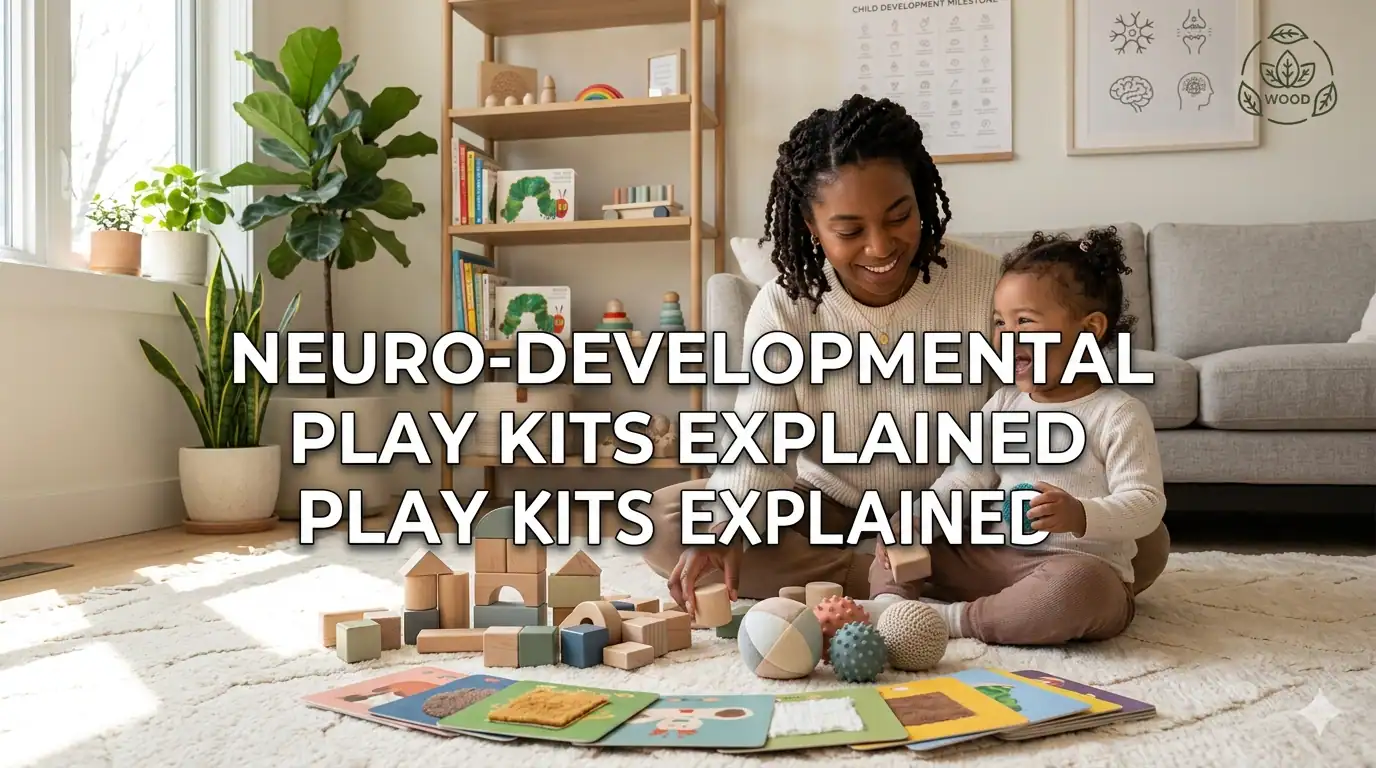
Walk into any modern nursery or toddler playroom today, and you might notice a shift: fewer flashing, battery-operated plastic toys, and more thoughtfully curated collections of wooden blocks, textured sensory balls, fabric books, and open-ended play materials. This isn't just an aesthetic trend—it's a paradigm shift grounded in developmental neuroscience. Neuro-developmental play kits are rapidly replacing traditional plastic toys as parents, educators, and pediatricians recognize that how children play directly shapes how their brains develop.
For decades, toy aisles have been dominated by brightly colored, single-function plastic toys designed to entertain: buttons that make sounds, lights that flash, characters that talk. While these toys can be fun, emerging research reveals they often do the playing for the child rather than inviting the child to play. In contrast, neuro-developmental play kits are intentionally designed to support specific brain-building skills—sensory integration, executive function, language development, motor planning, and emotional regulation—through open-ended, child-led exploration.
In this comprehensive, evidence-based guide, we'll decode the science behind neuro-developmental play, compare it to traditional plastic toys, review the best play kits for different ages and developmental goals, and help you choose play materials that truly support your child's growing brain. Whether you're a new parent building a nursery, a caregiver seeking more meaningful play options, or an educator updating your classroom, you'll learn how to leverage the power of intentional play for lifelong developmental benefits.
What Are Neuro-Developmental Play Kits?
Short answer: Neuro-developmental play kits are curated collections of open-ended, sensory-rich, developmentally appropriate materials designed to support specific brain-building skills like sensory processing, executive function, language, and motor development through child-led exploration.
Unlike traditional toys with a single "right" way to play, neuro-developmental kits prioritize process over product. They're built on principles from developmental psychology, occupational therapy, and neuroscience:
Core Principles
1. Open-Ended Play:
- No predetermined outcome—children decide how to use materials
- Encourages creativity, problem-solving, and imagination
- Examples: wooden blocks, scarves, loose parts, play silks
2. Sensory Integration:
- Materials engage multiple senses (touch, sight, sound, proprioception)
- Supports brain's ability to process and organize sensory input
- Examples: textured balls, weighted blankets, sound shakers, scent jars
3. Developmental Sequencing:
- Kits are curated for specific age ranges and developmental windows
- Materials progress in complexity as skills emerge
- Examples: grasp-to-release toys for infants, pattern blocks for preschoolers
4. Child-Led Exploration:
- Adults observe and scaffold, rather than direct play
- Follows child's interests and developmental pace
- Builds autonomy, confidence, and intrinsic motivation
5. Natural, Sustainable Materials:
- Wood, organic cotton, silicone, stone, metal preferred over plastic
- Natural textures provide richer sensory feedback
- Environmentally conscious and often non-toxic
How They Differ from Traditional Plastic Toys
| Feature | Neuro-Developmental Kits | Traditional Plastic Toys |
|---|---|---|
| Play Style | Open-ended, child-directed | Predetermined, toy-directed |
| Sensory Input | Multi-sensory, varied textures | Limited (often visual/auditory only) |
| Cognitive Demand | High: problem-solving, creativity | Low: passive entertainment |
| Language Support | Rich vocabulary through interaction | Limited to pre-recorded phrases |
| Longevity | Grows with child (years of use) | Often outgrown quickly |
| Materials | Natural, sustainable, non-toxic | Often plastic, batteries, electronics |
| Developmental Focus | Targeted brain-building skills | Entertainment-focused |
The Science: How Play Shapes the Developing Brain
Short answer: Play isn't just fun—it's the primary way young brains build neural connections. Neuro-developmental play specifically strengthens pathways for executive function, sensory processing, language, and emotional regulation during critical windows of brain plasticity (0-5 years).
To understand why play materials matter, it helps to understand early brain development:
Brain Plasticity and Critical Windows
The First Five Years:
- 90% of brain development occurs before age 5
- Neural connections form at a rate of 1 million per second in infancy
- "Use it or lose it": frequently activated pathways strengthen; unused pathways prune
- Play is the primary driver of neural activation in early childhood
Sensitive Periods for Key Skills:
- 0-12 months: Sensory integration, motor planning, attachment
- 12-24 months: Language explosion, symbolic thinking, autonomy
- 2-4 years: Executive function, emotional regulation, social skills
- 4-5 years: Pre-literacy, complex problem-solving, self-concept
Implication: Play materials that align with these windows provide optimal "neural nutrition" for developing brains.
How Neuro-Developmental Play Builds Specific Skills
Executive Function (The Brain's "Air Traffic Control"):
- What it is: Working memory, cognitive flexibility, inhibitory control
- How play builds it: Open-ended materials require planning, switching strategies, resisting impulses
- Example: Building a block tower requires holding a goal in mind (working memory), adjusting when it falls (flexibility), and waiting for a turn (inhibition)
- Research: Children with strong executive function at age 3 have better academic and social outcomes through adulthood (Harvard Center on the Developing Child)
Sensory Processing:
- What it is: Brain's ability to receive, organize, and respond to sensory input
- How play builds it: Multi-sensory materials help brain integrate touch, movement, sound, sight
- Example: A textured sensory ball engages touch (texture), proprioception (weight), and vision (color) simultaneously
- Research: Rich sensory experiences in infancy correlate with better self-regulation and attention in preschool (American Journal of Occupational Therapy)
Language Development:
- What it is: Receptive and expressive language, vocabulary, narrative skills
- How play builds it: Open-ended play invites adult-child conversation, storytelling, labeling
- Example: Playing with animal figures prompts questions ("What sound does a cow make?"), descriptions ("The horse is running!"), and narratives ("The cow is hungry—let's feed her!")
- Research: Children who engage in pretend play with caregivers have 3x larger vocabularies by age 3 (Pediatrics)
Emotional Regulation:
- What it is: Ability to manage emotions, cope with frustration, self-soothe
- How play builds it: Safe, child-led play provides low-stakes practice with challenge and frustration
- Example: A puzzle that's slightly too hard teaches persistence; a sensory bin offers calming tactile input
- Research: Play-based emotional coaching in early childhood predicts better mental health in adolescence (Journal of Child Psychology)
Why Traditional Plastic Toys Fall Short
The "Entertainment Trap":
- Battery-operated toys often do the playing for the child
- Pre-programmed sounds/lights limit creativity and language
- Single-function design reduces problem-solving opportunities
- Overstimulation can overwhelm developing sensory systems
Research Insight: A landmark study in JAMA Pediatrics (2015) found that infants who played with electronic toys had significantly fewer vocalizations, adult responses, and content-specific words compared to those playing with books or traditional toys. The toys weren't just neutral—they actively reduced language-rich interactions.
The Plastic Problem:
- Many plastic toys contain phthalates, BPA, or other endocrine disruptors
- Smooth, uniform textures provide limited sensory feedback
- Bright, primary colors can be visually overstimulating
- Short lifespan: toys are quickly outgrown or break
Key Components of Effective Neuro-Developmental Play Kits
Short answer: Effective kits include open-ended materials (blocks, scarves), sensory-rich items (textured balls, sound makers), language prompts (books, figures), and motor challenges (stackers, puzzles)—all curated for specific developmental stages.
By Developmental Domain
1. Sensory-Motor Development (0-18 months)
- Grasp & Release: Wooden rings, textured teethers, soft blocks
- Tactile Exploration: Fabric books, sensory balls, water beads (supervised)
- Proprioception: Weighted lap pads, resistance bands, push-pull toys
- Vestibular Input: Rocking boards, balance cushions, gentle swings
- Auditory Processing: Sound shakers, chimes, voice-recordable buttons
2. Language & Cognitive Development (12-36 months)
- Symbolic Play: Dolls, animal figures, play food, vehicles
- Vocabulary Builders: Object-labeling cards, simple puzzles, cause-effect toys
- Problem-Solving: Shape sorters, nesting cups, simple mazes
- Narrative Skills: Story stones, felt boards, picture sequence cards
3. Executive Function & Social-Emotional (24-60 months)
- Working Memory: Matching games, "I went to the market" memory chains
- Cognitive Flexibility: Open-ended loose parts (stones, shells, rings), dress-up clothes
- Inhibitory Control: Turn-taking games, "freeze dance," red light/green light
- Emotional Literacy: Emotion cards, feeling mirrors, calm-down sensory bottles
- Social Skills: Cooperative building sets, role-play props, sharing games
Material Considerations
Natural Materials:
- Wood: Warm texture, varied weight, sustainable
- Organic Cotton: Soft, breathable, chemical-free
- Silicone: Flexible, easy to clean, non-toxic
- Stone/Metal: Cool temperature, distinct weight, durability
Sensory Variety:
- Include multiple textures (smooth, rough, bumpy, soft)
- Vary weights (light to heavy) for proprioceptive input
- Offer visual contrast (high-contrast for infants, natural tones for toddlers)
- Include sound-makers with varied pitches/volumes
Safety & Quality:
- Non-toxic finishes (water-based paints, natural oils)
- No small parts for under-3 (choking hazard)
- Durable construction to withstand mouthing/dropping
- Easy to clean (important for shared or daycare settings)
Top Neuro-Developmental Play Kits by Age (2026)
Short answer: Our expert picks include Lovevery Play Kits (best overall), Monti Kids (best for Montessori), Little Feminist (best for diversity), and 4 other excellent options targeting specific developmental goals and age ranges.
0-12 Months: Sensory Foundations
Lovevery The Play Kits (0-12 months)
- What's Included: 8 curated boxes with 24+ developmentally sequenced items
- Key Materials: High-contrast cards, wooden rattles, textured balls, mirror tummy time mat
- Developmental Focus: Visual tracking, grasp reflex, cause-effect, early communication
- Pros: Evidence-based design, beautiful materials, parent guides, grows with baby
- Cons: Subscription model ($80-120/box), limited customization
- Best For: Parents wanting expert-curated, research-backed play from birth
- Price: $80-120 per box (subscription)
Monti Kids Montessori Starter Set
- What's Included: 6 essential Montessori materials for 0-12 months
- Key Materials: Mobiles (Munari, Octahedron), grasping beads, object permanence box
- Developmental Focus: Visual development, hand-eye coordination, independence
- Pros: Authentic Montessori, high-quality materials, online parent course included
- Cons: Higher upfront cost, requires parent education to use effectively
- Best For: Families committed to Montessori philosophy
- Price: $399 one-time
12-24 Months: Language & Exploration
Lovevery The Play Kits (12-24 months)
- What's Included: Quarterly boxes with 20+ items per box
- Key Materials: Wooden puzzle, stacking cups, pretend play props, sensory bottles
- Developmental Focus: Vocabulary, symbolic play, fine motor, emotional regulation
- Pros: Seamless progression from infant kits, research-backed, beautiful design
- Cons: Subscription commitment, some items may feel redundant
- Best For: Families already using Lovevery infant kits
- Price: $80-120 per box (subscription)
Little Feminist Play Kits
- What's Included: Themed boxes celebrating diversity and inclusion
- Key Materials: Diverse dolls, multicultural books, emotion cards, community helper props
- Developmental Focus: Language, empathy, identity development, social awareness
- Pros: Unique focus on representation, high-quality materials, conversation starters
- Cons: Smaller selection than subscription services, less focus on motor skills
- Best For: Families prioritizing diversity, equity, and social-emotional learning
- Price: $45-65 per box (one-time or subscription)
24-36 Months: Executive Function Emergence
KiwiCo Panda Crate (2-4 years)
- What's Included: Monthly themed crate with 5-8 activities
- Key Materials: STEM challenges, art projects, imaginative play props, early literacy games
- Developmental Focus: Problem-solving, creativity, pre-literacy, fine motor
- Pros: Engaging themes, mix of play types, good value, flexible subscription
- Cons: Some activities require significant parent setup, materials vary in quality
- Best For: Families wanting variety and project-based play
- Price: $24.95/month (subscription)
Grimm's Rainbow Stacker + Loose Parts Bundle
- What's Included: Iconic wooden rainbow + curated loose parts (stones, shells, rings)
- Key Materials: 12-piece rainbow stacker, 50+ natural loose parts, play mat
- Developmental Focus: Open-ended creativity, spatial reasoning, fine motor, storytelling
- Pros: Timeless design, endless play possibilities, heirloom quality, eco-friendly
- Cons: Higher upfront cost, requires parent creativity to scaffold play
- Best For: Families valuing open-ended, screen-free play
- Price: $120-180 one-time
36-60 Months: Complex Play & Pre-Academics
Lovevery The Play Kits (3-4 years)
- What's Included: Quarterly boxes with advanced play materials
- Key Materials: Pattern blocks, early writing tools, cooperative games, science explorations
- Developmental Focus: Executive function, pre-literacy/numeracy, social skills, curiosity
- Pros: Research-backed progression, high-quality materials, parent support resources
- Cons: Subscription model, may feel "school-like" for some families
- Best For: Families preparing for preschool with play-based learning
- Price: $80-120 per box (subscription)
Melissa & Doug Wooden Play Food + Kitchen Set
- What's Included: 50+ wooden food pieces + play kitchen accessories
- Key Materials: Realistic wooden food, cutting set, pots/pans, recipe cards
- Developmental Focus: Symbolic play, language, sequencing, social skills, fine motor
- Pros: Durable, classic pretend play, encourages conversation, widely available
- Cons: Less "curated" than subscription kits, requires storage space
- Best For: Families wanting timeless pretend play materials
- Price: $80-150 one-time
How to Build Your Own Neuro-Developmental Play Kit
Short answer: You don't need to buy a subscription—curate your own kit using open-ended materials, natural textures, and developmental principles. Start with 5-10 versatile items and rotate based on your child's interests.
Step 1: Assess Your Child's Developmental Stage
Ask Yourself:
- What skills is my child working on right now? (e.g., grasping, language, turn-taking)
- What sensory preferences do they show? (e.g., seeks movement, avoids loud sounds)
- What play styles engage them most? (e.g., building, pretending, exploring)
Quick Reference:
- 0-6 months: Focus on sensory input, visual tracking, grasping
- 6-12 months: Add cause-effect, object permanence, early communication
- 12-24 months: Emphasize language, symbolic play, fine motor
- 24-36 months: Support executive function, emotional regulation, social play
- 36-60 months: Challenge with complex problem-solving, pre-academics, cooperation
Step 2: Select Core Materials (The "Play Pantry")
Essential Categories:
1. Open-Ended Builders:
- Wooden blocks (various shapes/sizes)
- Nesting cups or bowls
- Cardboard tubes, boxes, fabric scraps
- Why: Encourages creativity, spatial reasoning, problem-solving
2. Sensory Explorers:
- Textured balls (bumpy, soft, weighted)
- Fabric scarves or play silks
- Natural items (smooth stones, pinecones, shells)
- Why: Supports sensory integration, fine motor, curiosity
3. Language & Story Prompts:
- Board books with diverse characters
- Animal or people figures
- Simple puppets or felt pieces
- Why: Builds vocabulary, narrative skills, empathy
4. Motor Challenges:
- Stacking toys or rings
- Simple puzzles (2-4 pieces for toddlers)
- Threading beads or lacing cards
- Why: Develops fine motor, hand-eye coordination, persistence
5. Calming & Regulation Tools:
- Weighted lap pad or stuffed animal
- Calming sensory bottle (glitter + water)
- Emotion cards or feeling faces mirror
- Why: Supports emotional literacy, self-soothing, co-regulation
Step 3: Curate for Quality Over Quantity
The "Less Is More" Principle:
- Start with 5-10 versatile items rather than 50 single-use toys
- Rotate toys weekly to maintain novelty and reduce overwhelm
- Store extras out of sight to reduce visual clutter
- Observe which materials your child returns to—build from there
Material Checklist:
- ✓ Natural textures (wood, cotton, stone)
- ✓ Varied weights and sizes
- ✓ Non-toxic finishes
- ✓ No batteries or screens
- ✓ Open-ended play potential
Step 4: Create a Play-Promoting Environment
Space Design Tips:
- Low, open shelves: Allows child to see and choose materials independently
- Defined play zones: Quiet corner for books, open floor for building, sensory bin area
- Natural light: Supports visual development and mood regulation
- Minimal distractions: Reduce background noise, visual clutter, and screen presence
Adult Role:
- Observe first: Watch how your child plays before intervening
- Scaffold, don't direct: Ask open questions ("What could we build?") vs. giving answers
- Follow interests: If your child loves stacking, add complexity (different shapes, heights)
- Model play: Sit alongside and play with materials yourself—children learn through imitation
Addressing Common Concerns
Short answer: Neuro-developmental play isn't about perfection—it's about intentionality. You don't need expensive kits, your child doesn't need to play "correctly," and plastic toys aren't "bad"—they just aren't optimal for brain development.
"But My Child Loves Their Electronic Toy!"
Reframe: It's not about eliminating favorite toys—it's about balance. Keep beloved electronic toys, but ensure they're not the only play option. Use them intentionally (e.g., a musical toy for dance parties) rather than as default entertainment.
Strategy: Create "yes spaces" where open-ended materials are always available, and limit screen-based toys to specific times/contexts.
"I Can't Afford Expensive Wooden Toys"
Reality Check: Neuro-developmental play doesn't require expensive purchases. Many of the best materials are free or low-cost:
- Free: Cardboard boxes, fabric scraps, natural items (sticks, stones, leaves)
- Low-cost: Thrift store finds (wooden spoons, bowls), DIY sensory bins (rice + cups)
- Invest wisely: Spend on 1-2 high-quality open-ended items (e.g., wooden blocks) that last years
Pro Tip: Join toy libraries or parent co-ops to access varied materials without buying everything.
"My Child Gets Frustrated with Open-Ended Play"
Understanding: Frustration is part of learning! Open-ended play requires more cognitive effort than passive entertainment.
Support Strategies:
- Start with highly scaffolded activities (e.g., simple shape sorter) before moving to fully open-ended
- Model play: "Watch how I stack these blocks—now you try!"
- Validate feelings: "It's tricky when the tower falls. Let's try again together."
- Keep sessions short (5-10 minutes for toddlers) and end on a positive note
"What About Neurodiverse Children?"
Good News: Neuro-developmental play principles are especially beneficial for neurodiverse children (autism, ADHD, sensory processing differences).
Adaptations:
- Sensory sensitivities: Offer choices of textures/volumes; let child control exposure
- Attention differences: Use timers, break activities into smaller steps, incorporate movement
- Communication differences: Pair materials with visual supports, AAC devices, or sign language
- Need for predictability: Create visual schedules for playtime; keep favorite materials accessible
Expert Insight: Occupational therapists often use neuro-developmental play materials in therapy because they're flexible enough to meet individual needs while building foundational skills.
The Environmental & Ethical Dimension
Short answer: Choosing natural, durable play materials isn't just better for brain development—it's better for the planet and future generations. Neuro-developmental play aligns with sustainable, ethical parenting values.
The Plastic Toy Problem
Environmental Impact:
- Most plastic toys are made from petroleum-based materials
- Short lifespan: many are discarded within months as children outgrow them
- Difficult to recycle: mixed materials, small parts, electronic components
- Contribute to microplastic pollution as they break down
Health Considerations:
- Some plastic toys contain phthalates, BPA, or lead (especially imported items)
- These chemicals can leach during mouthing or with heat exposure
- Endocrine disruptors may affect developing hormonal systems
Why Natural Materials Matter
For Child Development:
- Natural textures provide richer sensory feedback than uniform plastic
- Varied weights support proprioceptive development
- Wood, stone, and cotton age beautifully, teaching care and respect for objects
For the Planet:
- Sustainably harvested wood is renewable and biodegradable
- Organic cotton avoids pesticides and synthetic dyes
- Durable materials last for years, reducing waste
- Many brands use ethical labor practices and eco-friendly packaging
For Values:
- Choosing intentional play materials models mindfulness and sustainability
- Teaches children to value quality over quantity
- Aligns play with broader family values around health and environment
Frequently Asked Questions
At what age should I start using neuro-developmental play materials?
Short answer: From birth! Even newborns benefit from high-contrast visuals, varied textures, and responsive interaction. Start simple (black-and-white cards, soft rattles) and increase complexity as your child develops.
How much time should my child spend with these materials?
Short answer: Follow your child's lead. For infants, short bursts (5-10 minutes) several times a day. For toddlers, 20-30 minute play sessions. Quality of interaction matters more than duration—engaged, responsive play for 10 minutes is more valuable than passive play for an hour.
Can neuro-developmental play replace preschool or early education?
Short answer: No—and it shouldn't. These materials complement, not replace, structured learning and social experiences. Think of them as "brain-building tools" that prepare children to thrive in educational settings, not substitutes for them.
What if my child prefers screens or electronic toys?
Short answer: Balance is key. Don't eliminate favorites abruptly. Instead, gradually introduce open-ended alternatives alongside preferred toys. Model engagement: "Let's build a garage for your toy car with these blocks!" Over time, many children discover the deeper satisfaction of creative play.
Are subscription play kits worth the cost?
Short answer: It depends on your needs. Subscriptions offer convenience, expert curation, and developmental sequencing—valuable for busy parents or those new to intentional play. But you can achieve similar benefits by curating your own kit with research and observation. Consider your budget, time, and learning style.
How do I know if a play kit is truly "neuro-developmental" vs. marketing?
Red Flags:
- Vague claims like "boosts brain power" without specific developmental targets
- Overemphasis on academic skills (letters, numbers) for under-3s
- Materials that are primarily plastic, battery-operated, or single-use
- No reference to research, child development experts, or occupational therapy principles
Green Flags:
- Clear explanation of developmental domains targeted
- Materials are open-ended, sensory-rich, and natural
- Includes parent guidance on how to scaffold play
- Developed with input from child development professionals
The Bottom Line: Play Is Brain Building
The shift from traditional plastic toys to neuro-developmental play kits isn't about trendiness—it's about aligning play with what science tells us about how young brains grow. Every time a child stacks a block, explores a texture, or pretends with a doll, they're not just playing—they're building neural pathways that will support learning, relationships, and resilience for a lifetime.
Key Takeaways:
- Play is purposeful: Open-ended, sensory-rich materials actively build executive function, language, and emotional regulation
- Natural > plastic: Wood, cotton, and stone provide richer sensory input and align with sustainable values
- Less is more: A few versatile, high-quality materials outperform dozens of single-use toys
- Follow the child: Observe interests and developmental cues to scaffold play effectively
- You don't need perfection: Start where you are—curate, observe, adjust
- Balance matters: Neuro-developmental play complements, doesn't replace, other valuable experiences
Whether you choose a curated subscription kit, build your own play pantry, or simply add a few intentional materials to your child's world, you're making a powerful investment in their developing brain. The goal isn't to create a "perfect" play environment—it's to offer opportunities for curiosity, creativity, and connection.
Start small. Watch closely. Trust the process. And remember: the best play material isn't a toy—it's you, engaged and responsive, sharing in the joy of discovery.
Here's to play that builds brains, hearts, and a better world.


0 Comments