

Why Over-Exfoliation Leads to Long-Term Texture Issues
The Hidden Cost of Too Much Exfoliation
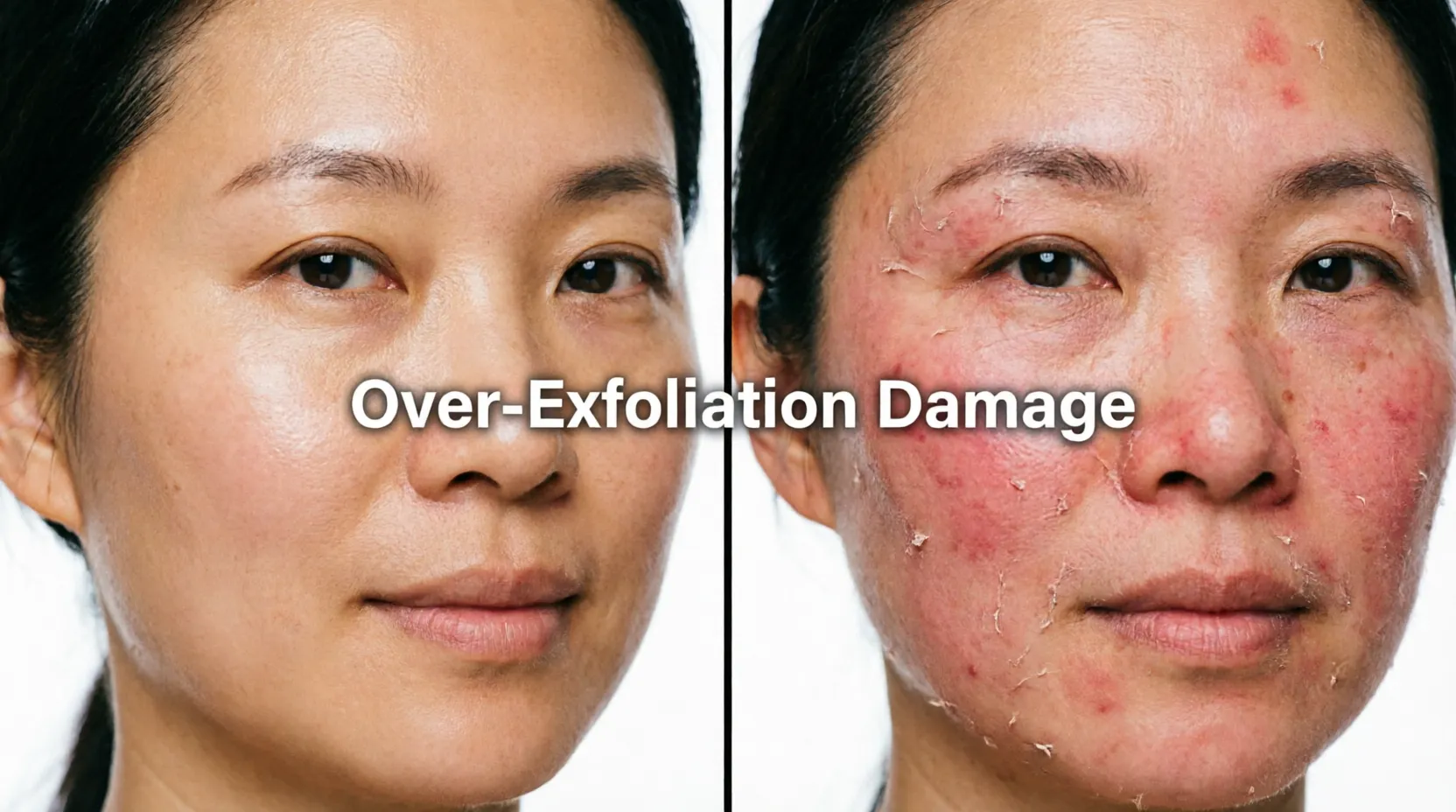
You've been told that exfoliation is the key to smooth, glowing skin. So you exfoliate daily, maybe even twice a day, using multiple products with acids, scrubs, and enzymes. At first, your skin looks amazing—bright, smooth, and refreshed. But then something shifts. Your skin starts feeling rough, looking dull, becoming sensitive, and developing an uneven texture that won't go away. Despite all your efforts to achieve perfection through exfoliation, your skin texture has actually gotten worse.
Over-exfoliation is one of the most common yet underrecognized causes of long-term skin texture problems. What begins as a well-intentioned quest for smoother skin can paradoxically create the very texture issues you're trying to eliminate. The rough patches, persistent dryness, increased sensitivity, enlarged pores, and uneven surface that develop aren't temporary setbacks—they can become chronic issues that take months or even years to fully resolve.
The skincare industry has created a culture of constant exfoliation, with products promising instant smoothness and radiance. But your skin has limits, and when you exceed them, the consequences extend far beyond temporary irritation. Understanding why over-exfoliation leads to long-term texture issues is essential for anyone who wants truly healthy, smooth skin—not just the appearance of it.
This comprehensive guide will explore the science behind over-exfoliation damage, explain how it creates lasting texture problems, and provide evidence-based strategies to repair your skin barrier and restore smooth, healthy texture. Whether you're currently experiencing over-exfoliation symptoms or want to prevent them, this information will help you make informed decisions about your exfoliation routine.
Understanding Exfoliation: The Good, The Bad, and The Too Much
To understand why over-exfoliation causes problems, you first need to understand what exfoliation is supposed to do and how it works.
What Is Exfoliation?
Exfoliation is the process of removing dead skin cells from the surface of your skin. Your skin naturally sheds about 30,000-40,000 dead skin cells every minute in a process called desquamation. These cells move from the deepest layers of the epidermis to the surface over approximately 28-40 days (depending on age), then slough off naturally.
Exfoliation accelerates this natural process through either:
Physical exfoliation: Using abrasive materials or tools to manually scrub away dead cells. This includes:
- Scrubs with particles (sugar, salt, jojoba beads)
- Exfoliating brushes or cleansing devices
- Exfoliating cloths or sponges
- Microdermabrasion
Chemical exfoliation: Using acids or enzymes to dissolve the bonds between dead skin cells, allowing them to shed more easily. This includes:
- AHAs (Alpha Hydroxy Acids): Glycolic acid, lactic acid, mandelic acid—water-soluble acids that work on the skin's surface
- BHAs (Beta Hydroxy Acids): Salicylic acid—oil-soluble acid that penetrates into pores
- Enzymes: Fruit enzymes like papain (papaya) and bromelain (pineapple) that gently digest dead cells
- Retinoids: Vitamin A derivatives that increase cell turnover
The Benefits of Proper Exfoliation
When done correctly and in moderation, exfoliation provides real benefits:
- Smoother texture: Removes rough, dead cell buildup
- Brighter complexion: Reveals fresh, new skin cells
- Improved product absorption: Allows skincare to penetrate more effectively
- Reduced clogged pores: Prevents dead cells from trapping oil and bacteria
- Enhanced cell turnover: Stimulates production of new, healthy cells
- More even tone: Helps fade hyperpigmentation and dark spots
The key phrase is "in moderation." Your skin needs time to regenerate between exfoliation sessions, and the barrier needs protection to function properly.
What Is Over-Exfoliation?
Over-exfoliation occurs when you remove too many layers of skin cells too frequently, compromising your skin's protective barrier faster than it can repair itself. This isn't just about using too many products—it's about exceeding your skin's capacity to maintain its structural integrity.
Over-exfoliation can happen through:
- Exfoliating too frequently (daily or multiple times daily)
- Using too many exfoliating products simultaneously
- Combining multiple strong actives (retinoids + acids + vitamin C)
- Using products that are too strong for your skin type
- Physical scrubbing that's too aggressive
- Not allowing skin recovery time between treatments
The damage accumulates over time. You might not notice immediate problems, but the cumulative effect of barrier compromise leads to long-term texture issues that are difficult to reverse.
The Science: How Over-Exfoliation Damages Skin Structure
Understanding the structural damage caused by over-exfoliation explains why texture problems persist long after you stop exfoliating.
Stratum Corneum Compromise
The stratum corneum is the outermost layer of your epidermis, consisting of 15-20 layers of dead corneocytes (skin cells) embedded in a lipid matrix. This "brick and mortar" structure is your skin's primary barrier.
Over-exfoliation strips away these protective layers faster than they can be replenished:
- Normal stratum corneum thickness: 10-20 cell layers
- Over-exfoliated skin: Can be reduced to 5-10 layers or less
- Recovery time: 2-4 weeks minimum to rebuild
When the stratum corneum is too thin, it cannot effectively:
- Prevent water loss (leading to chronic dehydration)
- Block environmental irritants and pollutants
- Protect against UV damage
- Maintain smooth, even texture
This thinning creates a rough, uneven surface because the remaining cells are immature and not properly organized. Instead of smooth, flat corneocytes, you get irregular, raised cells that create texture.
Lipid Barrier Destruction
The lipid matrix—the "mortar" between skin cells—consists of:
- Ceramides (50%)
- Cholesterol (25%)
- Free fatty acids (15%)
- Other lipids (10%)
These lipids are essential for:
- Maintaining skin hydration
- Keeping skin smooth and pliable
- Preventing transepidermal water loss (TEWL)
- Creating a uniform surface texture
Over-exfoliation dissolves and removes these critical lipids, particularly when using:
- Strong acids that disrupt lipid bonds
- Harsh surfactants in cleansers
- Physical scrubs that physically remove lipids
- Alcohol-based products that dissolve oils
Without adequate lipids, the skin surface becomes:
- Rough and uneven
- Dry and flaky
- More permeable to irritants
- Prone to micro-cracks and fissures
Rebuilding the lipid barrier takes time— typically 2-6 weeks of dedicated repair, during which further exfoliation must be avoided.
Disruption of Natural Moisturizing Factor (NMF)
Natural Moisturizing Factor (NMF) is a collection of water-soluble compounds found within corneocytes that help skin retain moisture. NMF includes:
- Amino acids (40%)
- Pyrrolidone carboxylic acid (PCA) (12%)
- Lactate (12%)
- Urea, sugars, minerals, and other compounds
Over-exfoliation depletes NMF by removing the corneocytes that contain it. Without adequate NMF:
- Skin cannot hold onto water effectively
- Surface becomes dry and rough
- Cells don't shed properly, creating buildup
- Texture appears uneven and dull
This creates a vicious cycle: Dry, rough skin tempts you to exfoliate more, which further depletes NMF, making texture even worse.
Inflammation and Barrier Dysfunction
Over-exfoliation triggers chronic low-grade inflammation in the skin:
The inflammatory cascade:
- Barrier compromise allows irritants to penetrate
- Immune system activates in response
- Inflammatory cytokines are released
- Blood vessels dilate (causing redness)
- Nerve endings become hypersensitive (causing stinging)
- Cells produce more reactive oxygen species (free radicals)
Chronic inflammation disrupts normal skin function:
- Impairs barrier repair mechanisms
- Accelerates collagen breakdown
- Disrupts normal cell turnover
- Causes irregular pigmentation
- Creates uneven texture and roughness
This inflammation can persist long after you stop exfoliating, which is why texture problems don't resolve immediately.
Impaired Cell Turnover and Maturation
Healthy skin follows a precise renewal cycle:
- Basal cells divide and produce new keratinocytes
- Cells migrate upward through epidermal layers
- Cells mature and flatten over 14-28 days
- Cells reach stratum corneum and remain 14 days
- Cells naturally desquamate (shed)
Over-exfoliation disrupts this carefully orchestrated process:
- Forced premature shedding: Cells are removed before they're ready
- Immature cells at surface: Cells that reach the surface aren't fully flattened or organized
- Irregular turnover: Some areas shed too fast, others too slow
- Compensatory overproduction: Skin may overproduce cells in response to damage
The result is chaotic, uneven texture with patches of roughness, flakiness, and irregularity that can persist for months.
Long-Term Texture Issues Caused by Over-Exfoliation
Over-exfoliation doesn't just cause temporary irritation—it creates specific, persistent texture problems that can take significant time to resolve.
1. Chronic Roughness and Uneven Surface
Paradoxically, over-exfoliation creates the rough texture it's meant to eliminate.
Why this happens:
- Stripped barrier cannot maintain smooth surface
- Dehydrated cells become raised and irregular
- Incomplete shedding leaves patches of buildup
- Inflammation causes swelling and textural changes
- Impaired cell maturation creates uneven surface
This roughness feels like:
- Sandpaper-like texture
- Bumpy, irregular surface
- Patches of dry, flaky skin
- General lack of smoothness despite exfoliation
Duration: Can persist 4-12 weeks after stopping exfoliation, sometimes longer if damage is severe.
2. Persistent Dryness and Dehydration
Over-exfoliated skin loses its ability to retain moisture, leading to chronic dryness that affects texture.
Signs include:
- Tight, uncomfortable feeling
- Visible flakiness and scaling
- Dull, lackluster appearance
- Fine lines more pronounced
- Rough, sandpaper-like texture
This dryness creates texture issues because:
- Dehydrated cells don't lie flat
- Lack of moisture prevents smooth shedding
- Compromised barrier allows more water loss
- Surface becomes increasingly irregular
3. Increased Sensitivity and Reactivity
Over-exfoliation makes skin hypersensitive, which manifests as textural changes.
Sensitive skin shows texture changes through:
- Redness and visible irritation
- Burning or stinging with product application
- Reactive bumps or hives
- Broken capillaries (telangiectasia)
- Uneven tone and texture from inflammation
This sensitivity creates a vicious cycle: Irritated skin has uneven texture, tempting you to exfoliate more, which increases sensitivity further.
4. Enlarged Pores and Congestion
Paradoxically, over-exfoliation can make pores appear larger and more congested.
Why this happens:
- Barrier damage: Compromised skin allows debris to accumulate in pores
- Compensatory oil production: Dehydrated skin overproduces sebum
- Inflammation: Swelling around pores makes them appear larger
- Irregular shedding: Dead cells mix with oil, creating congestion
The texture impact:
- Visible enlarged pores create uneven surface
- Congestion creates bumpy texture
- Blackheads and whiteheads add irregularity
- Overall skin appears less smooth
5. Hyperpigmentation and Dark Spots
Inflammation from over-exfoliation triggers post-inflammatory hyperpigmentation (PIH), creating textural and tonal unevenness.
How it happens:
- Barrier damage causes inflammation
- Inflammation stimulates melanocytes
- Excess melanin is produced
- Dark spots and patches appear
- Skin tone becomes uneven
Texture connection: Pigmented areas often have different texture than surrounding skin—either rougher or smoother—creating an uneven surface.
6. Fine Lines and Premature Aging
Chronic over-exfoliation accelerates aging, which affects skin texture.
Mechanisms:
- Collagen breakdown: Inflammation activates enzymes that degrade collagen
- Impaired repair: Damaged barrier cannot support optimal collagen production
- UV vulnerability: Thinned skin is more susceptible to photoaging
- Dehydration: Chronically dry skin shows more fine lines
Texture impact: Fine lines, wrinkles, and loss of elasticity create an uneven, aged texture that's difficult to reverse.
7. Breakouts and Acne
Over-exfoliation can trigger or worsen acne, creating significant texture issues.
Why over-exfoliation causes breakouts:
- Barrier compromise: Allows bacteria to penetrate more easily
- Compensatory sebum: Dehydrated skin overproduces oil
- Inflammation: Creates environment conducive to acne
- Micro-tears: Physical exfoliation creates entry points for bacteria
Acne creates texture problems:
- Active breakouts create bumps and swelling
- Healing lesions leave marks and scars
- Post-inflammatory hyperpigmentation
- Textural scarring (ice pick, boxcar, rolling scars)
Signs You've Over-Exfoliated Your Skin
Recognizing over-exfoliation early can prevent long-term damage. Watch for these warning signs:
Immediate Signs
- Burning or stinging when applying products (even gentle ones)
- Excessive dryness or tightness immediately after cleansing
- Visible redness or inflammation
- Shiny appearance with tight feeling (indicates stripped barrier)
- Increased sensitivity to temperature changes
- Itching or irritation without visible rash
Delayed Signs
- Rough, uneven texture despite regular exfoliation
- Increased breakouts or congestion
- Dull, lackluster complexion
- Flakiness that won't resolve with more exfoliation
- Enlarged pores
- Dark spots or hyperpigmentation
- Products that used to work suddenly cause irritation
Severe Signs (Require Immediate Action)
- Cracked or bleeding skin
- Oozing or weeping
- Severe pain or burning
- Signs of infection (increasing redness, warmth, pus)
- Swelling of face or eyes
If you experience severe signs, stop all exfoliation immediately and consult a dermatologist.
How to Repair Over-Exfoliated Skin and Restore Texture
Repairing over-exfoliation damage requires patience, consistency, and a strategic approach. Here's your comprehensive recovery plan.
Phase 1: Immediate Damage Control (Weeks 1-2)
Stop all exfoliation immediately. This includes:
- All acids (AHAs, BHAs, PHAs)
- Physical scrubs and brushes
- Retinoids and retinol
- Vitamin C (if irritating)
- Enzyme treatments
- Clarifying or deep-cleansing products
Simplify your routine to the essentials:
Morning:
- Gentle, non-foaming cleanser or just water rinse
- Soothing toner or essence (alcohol-free)
- Barrier-repair moisturizer with ceramides
- Mineral sunscreen (zinc oxide or titanium dioxide)
Evening:
- Gentle cleanser (oil or cream-based)
- Soothing serum with panthenol or centella
- Rich moisturizer with barrier-supporting ingredients
- Optional: Facial oil (squalane or jojoba) on damp skin
Key ingredients to focus on:
- Ceramides: Rebuild lipid barrier
- Panthenol (Vitamin B5): Soothes and heals
- Centella asiatica: Reduces inflammation
- Hyaluronic acid: Hydrates (apply to damp skin)
- Niacinamide: Strengthens barrier (if tolerated)
- Allantoin: Calms irritation
Avoid completely:
- Fragrance and essential oils
- Alcohol (denatured alcohol)
- Harsh surfactants (SLS, SLES)
- Any active ingredients
Phase 2: Barrier Rebuilding (Weeks 3-6)
Continue avoiding exfoliation while focusing on barrier repair.
Add supportive treatments:
- Slugging: Apply thin layer of petroleum jelly or healing ointment over moisturizer at night (if not acne-prone)
- Sheet masks: Use hydrating, soothing masks 2-3x weekly
- Facial oils: Incorporate barrier-supporting oils like squalane, jojoba, or rosehip
- Humidifier: Run at night to support hydration
Monitor your skin's response:
- Reduced sensitivity and stinging
- Less redness and inflammation
- Improved hydration
- Smoother texture beginning to return
If skin is still reactive, extend this phase. Don't rush—barrier repair takes time.
Phase 3: Gradual Reintroduction (Weeks 7-12)
Once your barrier feels strong (no stinging, minimal sensitivity), you can cautiously reintroduce actives.
Reintroduction protocol:
- Start with one product only (choose the gentlest option)
- Use once weekly for the first two weeks
- Increase to twice weekly if no irritation
- Wait 4-6 weeks before adding another active
- Never use multiple actives on the same day initially
Best actives to reintroduce first:
- PHA (polyhydroxy acids): Gentler than AHAs/BHAs
- Lactic acid: Milder AHA with hydrating properties
- Low-percentage mandelic acid: Large molecule, gentle penetration
- Encapsulated retinol: Slower release, less irritating
Avoid or use with extreme caution:
- Glycolic acid (small molecule, penetrates deeply)
- High-percentage salicylic acid
- Strong retinoids (tretinoin, adapalene)
- Multiple acids in one product
Phase 4: Long-Term Maintenance (Ongoing)
Once your skin has recovered, establish a sustainable routine that prevents future over-exfoliation.
Healthy exfoliation guidelines:
- Frequency: 1-3 times weekly maximum (not daily)
- One active at a time: Don't layer multiple exfoliants
- Listen to your skin: If it feels sensitive, skip exfoliation
- Adjust for seasons: Less exfoliation in winter/dry conditions
- Always support with barrier care: Moisturize and protect
Signs you're exfoliating correctly:
- Skin feels smooth, not tight or raw
- No stinging with product application
- Healthy glow without redness
- Texture improves over time
- No increase in sensitivity or breakouts
Preventing Future Over-Exfoliation
Once you've repaired your skin, prevent recurrence with these strategies:
Education and Awareness
- Understand your skin type: Sensitive skin needs less exfoliation
- Know your products: Read labels to identify hidden exfoliants
- Recognize warning signs: Don't ignore sensitivity or irritation
- Respect your skin's limits: More isn't always better
Smart Product Selection
- Choose gentle formulations: Lower concentrations, higher pH
- Avoid physical scrubs: Chemical exfoliants are more controlled
- Look for barrier-supporting ingredients: Products that combine exfoliation with repair
- Patch test new products: Always test before full application
Routine Balance
- Follow the 80/20 rule: 80% barrier support, 20% actives
- Schedule exfoliation: Don't exfoliate randomly
- Build in rest days: Give skin time to recover
- Adjust for conditions: Less exfoliation when traveling, stressed, or in harsh weather
When to See a Dermatologist
Seek professional help if:
- Severe damage: Cracked, bleeding, or oozing skin
- No improvement: After 4-6 weeks of proper care
- Signs of infection: Increasing redness, warmth, pus, fever
- Severe pain: Persistent burning or discomfort
- Scarring: Textural changes that don't resolve
A dermatologist can:
- Prescribe barrier-repair medications
- Treat secondary infections
- Provide professional treatments to restore texture
- Rule out underlying conditions
The Bottom Line
Over-exfoliation is a cautionary tale about the dangers of excess in skincare. What starts as a well-intentioned effort to achieve smooth, glowing skin can backfire spectacularly, creating the very texture issues you're trying to eliminate.
The long-term texture problems caused by over-exfoliation—roughness, dryness, sensitivity, enlarged pores, hyperpigmentation, and premature aging—aren't just temporary setbacks. They're the result of structural damage to your skin barrier that takes weeks or months to repair. The rough, uneven texture you experience isn't a sign that you need to exfoliate more; it's a sign that you've exfoliated too much.
The path to recovery requires patience and discipline. You must resist the urge to "fix" rough texture with more exfoliation and instead focus on barrier repair, hydration, and protection. This feels counterintuitive when your skin feels rough, but it's the only way to achieve lasting improvement.
Prevention is far easier than repair. Once you understand that healthy skin doesn't require daily exfoliation, that smooth texture comes from a strong barrier rather than constant cell removal, and that less is often more, you can establish a sustainable routine that maintains smooth, healthy skin without the damage.
Your skin is remarkably resilient, but it has limits. Respect those limits, listen to what your skin is telling you, and remember that true skin health isn't about achieving perfection through aggressive treatment—it's about supporting your skin's natural ability to function, repair, and thrive.
The smooth, glowing skin you want is achievable, but not through over-exfoliation. It comes from balance, patience, and respect for your skin's biology. Give your barrier the care it needs, and your texture will follow.


0 Comments